 Well, 2025 will prove to be an interesting year ahead. …Provincially there are some glimmers of hope for some directional changes to the current trajectory of BC’s forest sector through the appointment of an energized and determined Minister of Forests. At the recent TLA convention, there also seemed to be acknowledgment that the need for change was recognized with the Premier and Minister. …The government’s forestry mandate appears to be granted for firm actions, even more so with our obvious need for more self-reliance as a country. But muddying the background is the reality that anything that needs to be accomplished must be done within the spectre of massive provincial deficits and a hiring freeze. Where to start?
There needs to be a review of all the current policies, legislation, and regulations to ensure they mesh with the overall vision and contribute towards its successful implementation. It is fair to say the cumulative array of constraints over the last decades encircling the forest sector have been decidedly negative. …Albeit a complex and onerous task, the hope is the creation of renewed investment certainty for all those making their decisions towards the future of the sector. …There must be a meaningful transition plan and set of actions in place to ensure the components of the sector survive while these changes are being contemplated and implemented. …An effective transition plan requires government to work hand-in-hand with the industry towards ensuring a level of harvest is agreed upon and delivered to at least minimally sustain all concerned over these next few years. And it means giving decision-makers of permitting and delivery programs the authority and support to make those tough interim decisions. It also means that the short-term harvest level to sustain our sector is not the plus or minus 32 million m3 currently happening.
 Democrats in the U.S. Senate are moving forward on a resolution to block sweeping tariffs targeting Canada as President Donald Trump presses Republican lawmakers to continue backing his trade agenda. Sen. Tim Kaine plans to force a vote on Trump’s use of the International Economic Emergency Powers Act, also called IEEPA, to declare an emergency over fentanyl trafficking to hit Canada with devastating duties. “The president has justified the imposition of these tariffs on, in my view, a made-up emergency,” Kaine said Tuesday. U.S. government data shows the volume of fentanyl seized at the northern border is tiny. The Annual Threat Assessment report, released last week, does not mention Canada in its section on illicit drugs and fentanyl. The vote will test whether Republican senators continue to back Trump’s tariffs on Canada — tariffs that, according to polling, are not supported by most Americans.
 The United States is scheduled to unveil reciprocal tariffs on a wide array of trading partners, including Canada. Dubbed “Liberation Day” by Donald Trump, the measures are meant to even things out with those who, in Trump’s eyes, have unfairly taken advantage of the US with tariffs and other non-tariff barriers. …Aside from steel, aluminum and autos, which are already facing separate tariffs, here are the issues the U.S. has singled out as problematic in their trade with Canada that could factor in to the Liberation Day announcement, and what economists and trade officials have to say about them. What Trump says: He has lumped his anger about dairy and lumber tariffs together, threatening to act immediately on unfair treatment by Canada. He also said the U.S. does not need any Canadian lumber. Reality Check: There is far from enough lumber produced in the U.S. to meet building demand.
 White House aides have drafted a proposal that would levy tariffs of roughly 20% on most imports, the Washington Post reported. The report cited three people familiar with the matter. It also said White House advisers cautioned that several options are still on the table, meaning the 20% tariffs may not come to pass. Another plan being considered is the country-by-country “reciprocal” approach, according to the Washington Post. The report comes a day before April 2, when President Donald Trump is set to announce his larger plans for global trade. The date has loomed over Wall Street, where stocks have been struggling in part due to uncertainty around rapidly changing global trade policy. Unlike the tariffs already announced by the Trump administration, the new plan is expected to be more widespread and permanent as opposed to targeting specific countries or industries.


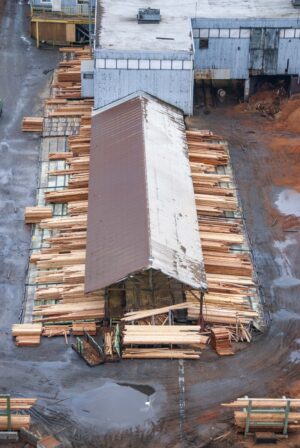 Another wave of sawmill closures swept across British Columbia in 2024, from West Fraser’s Fraser Lake facility to Canfor’s operations in Polar, Vanderhoof, and Fort St. John. As the Northern View reported, Chief Robert Michelle of the Stellat’en warned that “the economic impact for our communities will be dire,” citing job losses not just in the Fraser Lake mill but also among log haulers, restaurant workers and gas station employees… It is clear that current conditions cannot sustain profitable operations, leaving businesses struggling and workers unemployed. The fundamental issue lies in how Victoria approaches forest policy. The government faces mounting pressure from multiple stakeholders. Environmental groups advocate for reduced harvesting levels, while Indigenous communities seek both greater access to timber supplies and a larger role in forest management. While environmental protection and Indigenous rights are important considerations in forest management, and rightly so, the government’s approach has failed to balance these priorities with economic sustainability.
 Vancouver, BC — This week, the BC Council of Forest Industries (COFI) will welcome more than 600 industry, government, and Indigenous leaders to Prince George for a sold-out COFI 2025 Convention, running April 2-4. As one of the largest annual gatherings of the forest sector in Western Canada, the convention focuses on urgent challenges facing the industry—and the path forward. Attendees are set to explore how the sector can respond to rising US tariffs, global trade uncertainty and regulatory complexity. Discussions will center on strategies to improve industry competitiveness, strengthen partnerships with First Nations and sustain local jobs, while positioning BC as a global leader in sustainable forestry. … A highlight of the convention will be the release of a new study comparing international forest jurisdictions by Glen O’Kelly, CEO of O’Kelly Acumen, benchmarking BC’s performance against leading forestry regions—including Sweden, Finland, Austria, the US, and Brazil.

 The Canadian Wood Council (CWC) is pleased to announce the release of five new Environmental Product Declarations (EPDs) for Canadian softwood lumber, oriented strand board (OSB), plywood, trusses, and prefabricated wood I-joists. These EPDs provide comprehensive, transparent environmental data on the potential impacts associated with the cradle-to-gate life cycle stages of these essential wood products. Developed as regionalized, industry-wide business-to-business (B2B) Type III declarations, the EPDs comply with the highest international standards, including ISO 21930, ISO 14025, ISO 14040, ISO 14044, the governing product category rules, and ASTM General Program Instructions for Type III EPDs. This ensures credible, third-party verified environmental impact data, supporting designers, builders, and policymakers in making informed, sustainable material choices. The EPDs are available for download from the Canadian Wood Council’s
 Conservation groups are warning that a proposed Alberta government plan for a sub-region in west-central Alberta would wipe out two caribou populations if implemented. The draft plan for the Upper Smoky sub-region would enable the U.S.-based timber company Weyerhaeuser to entirely clearcut the last winter range forests… A Caribou Task Force, made up of Indigenous groups, industry, municipalities, various user groups and interest groups, had been established to advise the Alberta government on Upper Smoky sub-regional planning. These multi-stakeholder conversations were held from 2019 to 2021; however, none of the task force’s recommendations related to caribou conservation and recovery were reflected in the report. Public engagement runs until June 25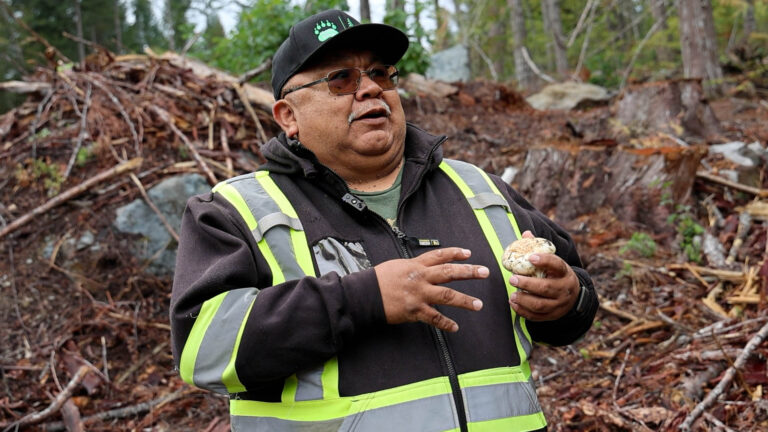

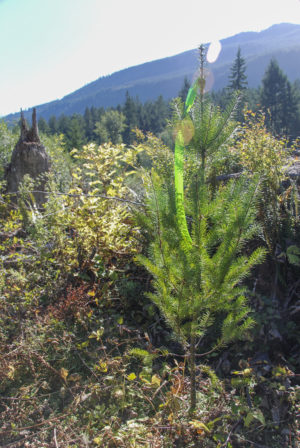 When it comes to reforesting areas made bare by natural causes, it’s the Ministry of Forests’ job to oversee the progress. “Wildfire…really is the biggest thing we’re focusing on,” said Shelley Barlow, the ministry’s regional silviculture specialist for the Cariboo. According to a February 2018 report by the Ministry of Forests, Lands, Natural Resource Operations and Rural Development, 80 per cent of the area affected by the 2017 wildfires in B.C. was in the Cariboo. About one million hectares of forests were burnt in the region, and 609,000 of those hectares were part of the Cariboo’s timber harvesting land base. Prior to 2017, the ministry was planting up to two million trees per year in the Williams Lake forestry district. Since then, Barlow said this number has at least tripled.

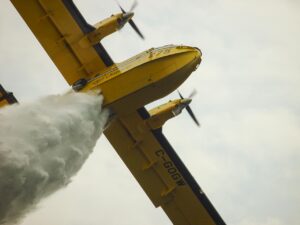 The Province of Ontario says it’s prepared for the fast-approaching 2025 wildland fire season. The new season starts on April 1, and preparations have included filling more than 100 new, permanent positions to help support forest fire fighting operations, said Chris Marchand, fire information officer with Aviation, Forest Fire and Emergency Services (AFFES). …Exactly how busy this season will be remains unknown, Marchand said, as it’s very difficult to predict how intense a fire season will be. …Marchand said the previous winter saw “somewhat normal” snowfall patterns across Ontario. …Marchand noted, however, that the 2024 fire season was slower than usual — 480 fires were reported, down from the 10-year, seasonal average of 700 fires. The Province of Ontario said it partnered with the federal government last year to invest $64 million in the provincial wil
 Ontario is ready to respond to this year’s wildland fire season, which lasts from April 1 until October 31. This year, the government has filled nearly 100 additional permanent positions to support the 2025 fire season and help ensure people and resources are in place to protect communities. “We are ready to protect people, communities and properties across Ontario from wildland fires,” said Mike Harris, Minister of Natural Resources. “When wildland fires hit, our brave and dedicated FireRangers, pilots and support staff are prepared to battle these fires and protect Ontarians.” Last year, the province partnered with the federal government to invest a total of $64 million in the wildland fire program. This investment has allowed Ontario to enhance its firefighting capacity for the 2025 fire season and includes funding for forest fire suppression equipment and technology, such as fuel systems, trucks and emergency management software.