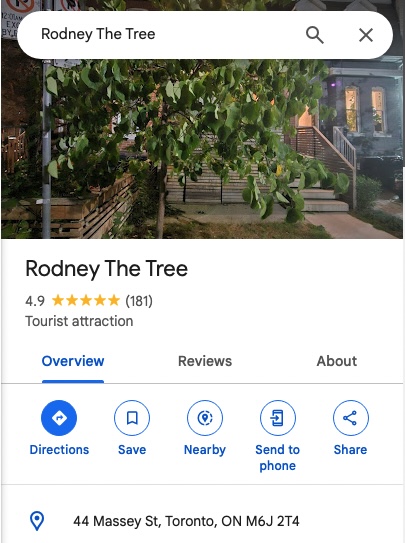
 It just might be Toronto’s most unlikely tourist attraction. It is pipsqueak-ish in size, not much taller than a single storey of a house. Its branches are scrawny and, at this time of year, empty of leaves, buds or nesting birds. It even has steep competition from its own neighbours just south of Trinity Bellwoods, such as the towering maple across the road and the elegant evergreen up the street. But this young Eastern Redbud is the little tree that could. The tree — its name is Rodney, the owners will tell you — has become an oddball local celebrity. Since being planted less than five years ago, Rodney has already gotten its own Google Maps pin, visits from tourists around the world and a handful of viral social media posts in recent days that have sent this unsuspecting tree’s celebrity into the arboreal stratosphere.
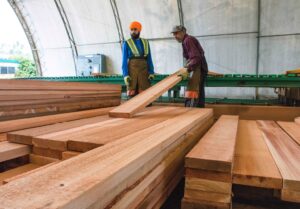 US builders pay a premium for the spruce, pine and fir (SPF) lumber that BC produces and could soon face additional tariffs after Trump’s proclamation that America doesn’t need the province’s wood. They like it, particularly for framing walls because SPF is lighter, stronger and tighter-grained than the more abundant southern yellow pine lumber that has a reputation for warping. …“There’s just this gap between what the U.S. can supply and what their demand is,” said Kurt Niquidet, president of the B.C. Lumber Trade Council. ..“There’s no way American supply, in the short-term, can do anything but rely on Canadian lumber,” Russ Taylor said. “Tariffs are just going to push the price up and create shortages,” Taylor said. “It’s just going to be market chaos, as it will be with OSB panels as it will be with pulp and newsprint.”

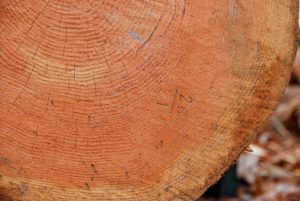 Despite decades of a fractious trade relationship between softwood producers in Canada and those in the U.S., the Canadian softwood lumber industry hasn’t liked to trumpet what it considers the superiority of its product because the two markets are so intertwined. Production has increased at U.S. sawmills in the past decade, including at facilities owned by companies with head offices in Canada. That’s now changing, with Canadian producers wanting to make plain to consumers in Canada, in the U.S. and no doubt, to potential new markets around the world, that the spruce, pine and fir grown north of the 49th parallel is a superior product. That’s because the growth rings are tighter than those found in the lumber in the U.S. South. It takes from 70 to 100 years before spruce, pine and fir (SPF) trees are considered ripe for harvesting in the B.C. Interior. By comparison, southern yellow pine trees are harvested after about 35 years. [a paid subscription is required to read this story]
 As Canada faces an urgent need for housing, BC’s forest sector has a critical role in meeting this demand with sustainable, high-quality wood products. Developing new strategies for how we generate and move wood fibre across the supply chain in partnership with First Nations, utilize the right wood in the right buildings, and deploy innovative pre-fab and off-site construction methods will be essential to increasing the domestic use of wood. Don’t miss this conversation on how we can help address Canada’s housing needs while driving economic growth and supporting sustainable forestry. Panelists:
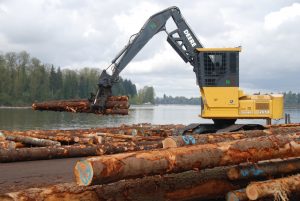 The federal government is providing about $20 million in funding to support BC’s forestry sector. Energy Minister Jonathan Wilkinson says it’s more important than ever to support the sector, which is subject to American duties on softwood lumber and now faces the additional threat of steep tariffs. NRCan says the funding will support 67 projects. …About $11.3 million will flow through the Investments in Forest Industry Transformation program for six projects that are adopting new technologies. More than $7 million will go through the Indigenous Forestry Initiative to 50 projects advancing economic development opportunities. Another $1.6 million will go to nine projects promoting the commercialization of wood-based products in the construction sector, while $600,000 will go to projects aimed at strengthening international partnerships and decreasing market barriers. …Ottawa has also announced $5 million in funding for four projects in B.C. and one in Yukon aimed at helping laid-off workers from the forestry and mining sectors.
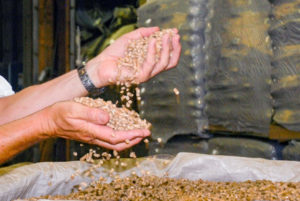 The federal government is providing funding to support BC’s forestry sector. …In what could mark a turning point for the Fort Nelson economy, a long-awaited pellet mill project is poised for significant progress with a $250,000 funding injection. The Fort Nelson First Nation is set to receive the funding, which will bolster its partnership with Peak Renewables. Together, they aim to convert an idle former Canfor sawmill into a large-scale wood pellet plant. …The region, historically reliant on its resource sector, has faced a number of challenges in bringing the project to fruition. In November 2020, the Fort Nelson First Nation extended a $1 million interest-free loan to Peak Renewables to advance the project. Originally, the pellet mill was slated to begin operations in early 2022. Since then, no new timeline has been provided as to when the mill may become operational.
 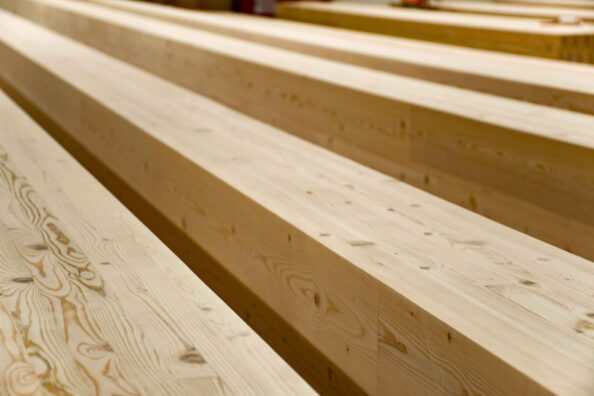 Several Cariboo businesses are receiving money from the BC Government to aid in some of their major projects. …$422,000 will be given to Tsi Del Del Development Corporation, 94 Mile House, to purchase equipment for the creation of a sort yard for biomass that aims to centralize the processing of waste wood … in order to manufacture higher value products. This project will create up to 16 jobs. …OT Timber Frames in 150 Mile House $235,000 to expand their production facility and two CNC machines to scale-up the production of prefabricated homes, including a new product offering, and year-round employment for staff, creating 5 jobs and protecting 20. …And $10,000 to Massive Canada Building Systems in Williams Lake to establish a new 91,000 square foot mass timber modular home manufacturing facility that will prefabricate laneway homes, apartment units, townhouses and commercial projects using mass-timber building products. This project will create 71 jobs. Funds provided through the Manufacturing Jobs Funds.
 Ravi Parmar, Minister of Forests, celebrated the official opening of Canoe Forest Products’ new kiln. The new kiln was made possible with funding from the Province’s BC Manufacturing Jobs Fund (BCMJF). …Canoe received more than $2.2 million in November 2023 to commission a new kiln, boosting both production and sustainability at its operation in Salmon Arm and help protect 200 jobs. …Parmar accompanied Canoe employees, community guests, and Nick Arkle, CEO of the Gorman Group, at an opening ribbon-cutting ceremony. …Parmar is also visited Tolko Industries who received $8 million to help expand Tolko’s Heffley Creek operation. Family-run Gilbert Smith Forest Products in Barriere received $1.1 million to support facility modernization and new equipment. AcuTruss Industries in Vernon received $100,000 to support the purchase and commissioning of equipment to manufacture precision cut I-joists through automation.
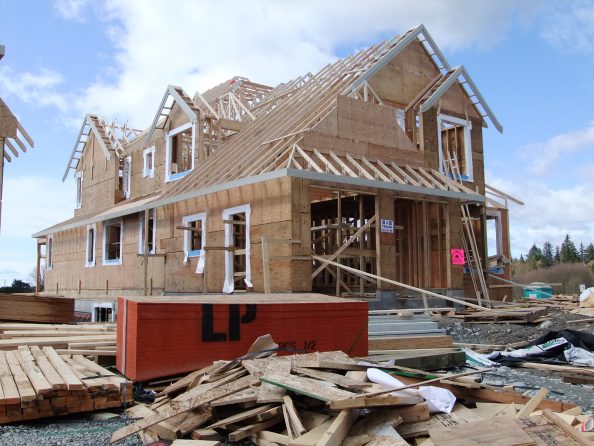 Lumber and other costs could soar … but that’s not even the biggest problem. First, Canada was hit with tariffs. Then it wasn’t. Then came March 4, a.k.a. Tariff Tuesday. Then the U.S. stock markets tanked and big American industries — including the auto sector — ramped up their tariff objections. Then we had Oops Never Mind About Those Tariffs For Now Thursday. …As it stands, Canada has a second tariff reprieve on goods covered under the Canada-U.S.-Mexico Free Trade Agreement. Until April 2. So this trade war is far from over. Whether directly or due to instability, it affects every aspect of our economy — and that includes housing. …While builders can use Canadian lumber, of course, other materials and products are traditionally imported largely from the U.S. These include appliances, glass windows and doors, ceramic tiles, hardware components such as fasteners, and machinery and tools.
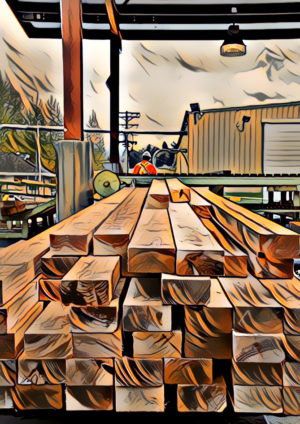 US President Donald Trump’s tariff threat could motivate more Canadian lumber producers to shift to the US southern border while accelerating efforts to find new markets, industry experts said. The levies are the latest in a nearly four-decade dispute between the neighbors over softwood lumber, used in construction, furniture and paper production. Levies on Canadian lumber could hit 40% if current duties of 14.54%, and Trump’s proposed 25% tariffs are added. …”Disparity in log costs and availability are the major drivers here, but Canadian investment in the region has certainly been partially motivated to moving operations where they avoid the impact of duties,” said Dustin Jalbert at FastMarkets. …”In 2004, there were only two sawmills owned by a Canadian manufacturer. Today, we have more than 50,” said Kyle Little, at Sherwood Lumber.” Canadian companies now produce more than a third of the volume of the largest producing region in the US – the US South.”
 If there is a prolonged trade war between the US and Canada, expect insurance rates… to rise in price. The industry notes there’s a lot of uncertainty about tariffs right now. But one outcome the industry can likely count on is increases to home and auto rates, says Steven Harris. …Although home insurance premiums haven’t increased as high as auto rates — in 2024 Q4, for example, personal property premium rates increased 7.3% from the previous year — consumers are likely to see any impacts from the tariffs appear on their home insurance policy renewal much sooner, says Harris. “And if building materials like software lumber are tariffed, and thereby more expensive to import, they’ll cost more to insure. …“Tariffs on building materials directly inflate rebuilding expenses, necessitating higher replacement cost coverage for homeowners.”
 CNN’s Vanessa Yurkevich explains how much US home prices could increase due to President Donald Trump’s tariffs. [Video report only, 2 .5 minutes]
 A surprise jump in inflation and a flood of “noise” in the economy may push the Bank of Canada to pause its interest rate cuts next month, some economists argue. Statistics Canada said that the annual rate of inflation accelerated sharply to 2.6% in February as the federal government’s temporary tax break came to an end mid-month. That marks a sizeable jump from the 1.9% increase seen in January, when Canadians saw GST and HST taken off a variety of household staples. …Economists expect Ottawa’s move to strike the consumer carbon price as of April 1 will take some steam out of the inflation figures next month. But Nguyen argued the pressure from the trade dispute — Trump has threatened another wave of tariffs on April 2 — will “outweigh” the benefits of eliminating the carbon price for consumers.

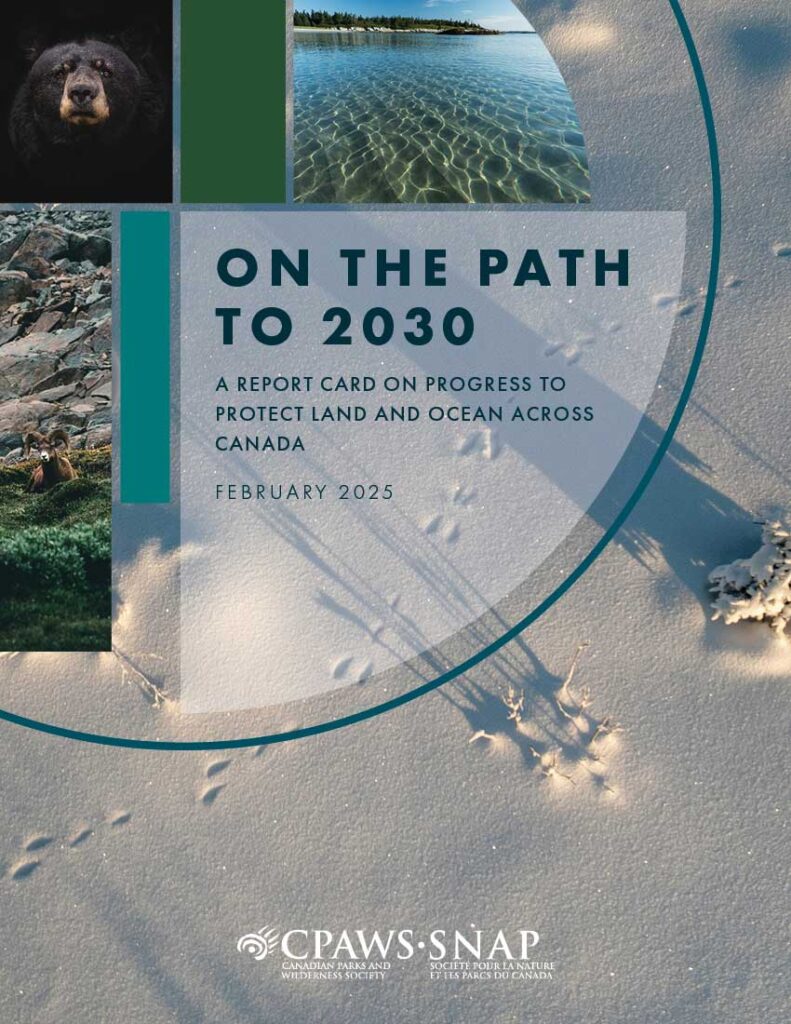
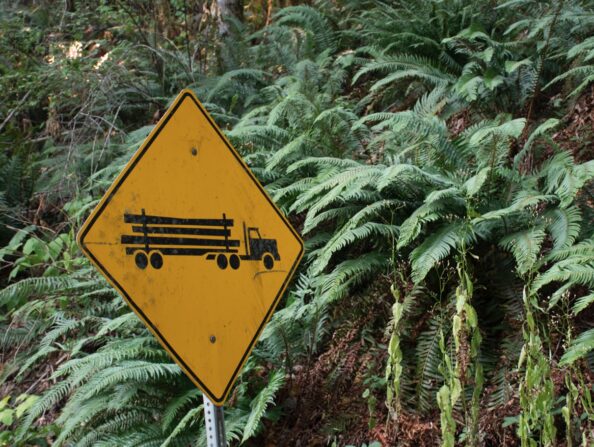 Two-thirds of Canadians agree the next federal government should prioritize action on climate change and protecting nature, a new poll has found. The national poll was carried out by Leger on commission from the B.C.-based environmental group David Suzuki Foundation. A similar share of respondents supported Ottawa investing in renewable energy over fossil fuels. …The poll questioned a panel of 1,548 Canadian adults in an online survey. In a letter sent Tuesday to the leaders of all major federal political parties, the David Suzuki Foundation joined 13 environmental groups calling on the next government to provide tariff relief measures that don’t lead to the over-harvesting of Canadian forests. The letter also lobbies the next federal government to craft tariff relief measures that prioritize funding Canadian workers — not foreign-owned forestry corporations. …“Unsustainable logging practices in Canada put this key export market at risk,” the letter notes. “Canada must acknowledge and reform current industrial logging practices that degrade forest ecosystems.”
 More than $2.3 million in funding is coming to Vancouver Island to help First Nations and forestry businesses. Federal natural resources Minister Jonathan Wilkinson announced the funding this week, saying it shows a commitment to defending and strengthening BC’s forestry sector. In total the federal government is funding 67 projects with $20 million across BC.


 West Kelowna, B.C. – …Ntityix Resources LP (Ntityix), owned by Westbank First Nation (WFN) has undertaken extensive wildfire risk reduction work . They have achieved significant milestones in their ongoing efforts with support from the Ministry of Forests and the Forest Enhancement Society of BC (FESBC). …“Our government has all hands on deck to protect people, communities and forests, but we cannot do it alone. That’s why the work done by organizations like Ntityix is critical, especially in the Thompson Okanagan region where the wildfire risk is high. I thank them for doing their part in the fight against climate change and wildfires,” said Ravi Parmar, Minister of Forests. …Ntityix has been at the forefront of wildfire risk reduction initiatives in the Thompson Okanagan region, leveraging cultural practices and traditional knowledge to enhance fuel modification zones and significantly contribute to long-term wildfire mitigation strategies.
 Two-thirds of Canadians agree the next federal government should prioritize action on climate change and protecting nature, a new poll has found. Sixty-two per cent of those surveyed said Canada should maintain its commitments on climate change despite the U.S. government’s recent decision to pull out of the United Nations Paris agreement to lower greenhouse gas emissions. A similar share of respondents supported Ottawa investing in renewable energy over fossil fuels. The poll questioned a panel of 1,548 Canadian adults in an online survey from March 7-10. Michael Polanyi, a policy and campaign manager at Nature Canada, said his group is concerned the $6.5 billion promised to industry last week does not come with guidelines that would prioritize workers and limit harms to nature. “It’s in Canada’s economic interest in terms of accessing global markets that we’re not further degrading forests,” Polanyi added, pointing to tightening EU regulations. “There’s a risk of closing market off to Canadian forest products.”
 Headlines in this month’s news include: