 The Tree Frog News featured the panels and speakers from last week’s International Pulp Week. In today’s Tree Frog News are links to all of the conference sessions in chronological order.
Day One – June 1, 2025
- Registration and Wecome Cocktail
Day Two – June 2, 2025
- Looking Back, Moving Forward: 20 Years of Industry Insights: Kevin Mason
- Economic Uncertainty: A Macro View on Tariffs and Markets: Joaquin Kritz Lara
- Metsä Fibre’s enhanced position in Softwood Pulp: Mikko Antsalo
- The Global Hardwood Market: Leonardo Grimaldi
- How Carbon Capture and Removal is Unlocking Opportunity: Jonathan Rhone
- Navigating EUDR Compliance with Automation and Digital Tools: Parker Budding
Day Two – June 3, 2025
- Managing Geopolitical Uncertainty and Its Challenges: Robert McKellar
- Reshaping China’s P&P Industry in a Shifting Global Landscape: Haidong Weng
- The Shanghai Pulp Futures Exchange Path to Internationalization: Jin Feifei
- How Luojing Terminal is Meeting China’s Pulp Demand: Tian Jun
- Current Trends in End-Use Markets: Mathieu Wener
- Global Pulp Market: Demand Drivers and Outlook: Emanuele Bona

 A federal appeals court on Tuesday agreed to let many of President Trump’s sweeping tariffs on US trade partners remain in effect for now, extending a pause issued late last month after a separate court ruled the tariffs were illegal. The Federal Circuit Court of Appeals granted the Trump administration’s request for a longer pause after issuing a temporary stay of the lower court ruling last month. The court put the case on a fast track to be resolved by the end of this summer, noting that “these cases present issues of exceptional importance warranting expedited en banc consideration of the merits in the first instance.” The decision comes after the US Court of International Trade ruled on May 28 that Congress did not delegate “unbounded” tariff authority to the president in the International Emergency Economic Powers Act of 1977. Trump appealed the ruling and, hours later, the appeals court granted the temporary stay.
 LONDON — US and Chinese officials said on Tuesday they had agreed on a framework to get their trade truce back on track and remove China’s export restrictions on rare earths while offering little sign of a durable resolution to longstanding trade tensions. …Lutnick said the agreement would remove restrictions on Chinese exports of rare earth minerals and magnets and some of the recent US export restrictions “in a balanced way”, but did not provide details…. adding that both sides will now return to present the framework to their respective presidents for approvals. …The two sides left Geneva with fundamentally different views of the terms of that agreement and needed to be more specific on required actions, said Josh Lipsky. …They have until August 10 to negotiate a more comprehensive agreement, or tariff rates will snap back from about 30% to 145% on the U.S. side and from 10% to 125% on the Chinese side.
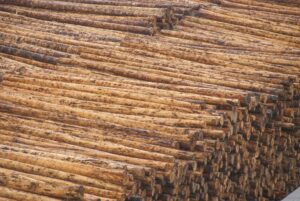 NEW ZEALAND — Forestry Minister Todd McClay has unveiled two-way forestry trade missions with India this year. The inbound visit – supported by industry partners – is expected to showcase New Zealand’s forestry systems and sustainable management practices. “The outbound mission will continue to open doors for deeper commercial and government partnerships,” McClay said. …McClay was speaking at the Fieldays Forestry Hub on Friday. Trade between New Zealand and India was valued at $3.14 billion in 2024. New Zealand’s exports to India last year included forestry products valued at $126 million. New Zealand’s wood exports to India have surged from $9.5 million in 2023 to an estimated $76.5 million this year. Pulp exports have more than doubled, from $20 million to $45.6 million. “India is one of the fastest-growing markets for our forestry exports – and we’re focused on turning that growth into long-term opportunity for New Zealand exporters,” McClay said.

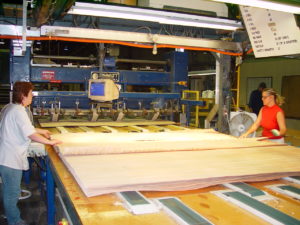 The EU has imposed anti-dumping duties on Chinese plywood imports, just a few days after Beijing tried to ease trade tensions between the two. The provisional levies of up to 62.4% follow a surge in imports of hardwood plywood over the past three years that had damaged domestic producers, the European Commission said. The Greenwood Consortium of EU producers, which brought a complaint against Chinese competitors last year, said it welcomed the move but argued for “definitive duties to be even higher than these provisional levels” when the commission makes a final decision later this year. Brussels has also taken the unusual step of monitoring imports of softwood plywood, which is not subject to duties, after allegations that Chinese exporters were disguising hardwood products in anticipation of the levies. …“The alleged practice consisted of placing very thin outer layers of softwood veneer on top of the hardwood plywood face veneer.

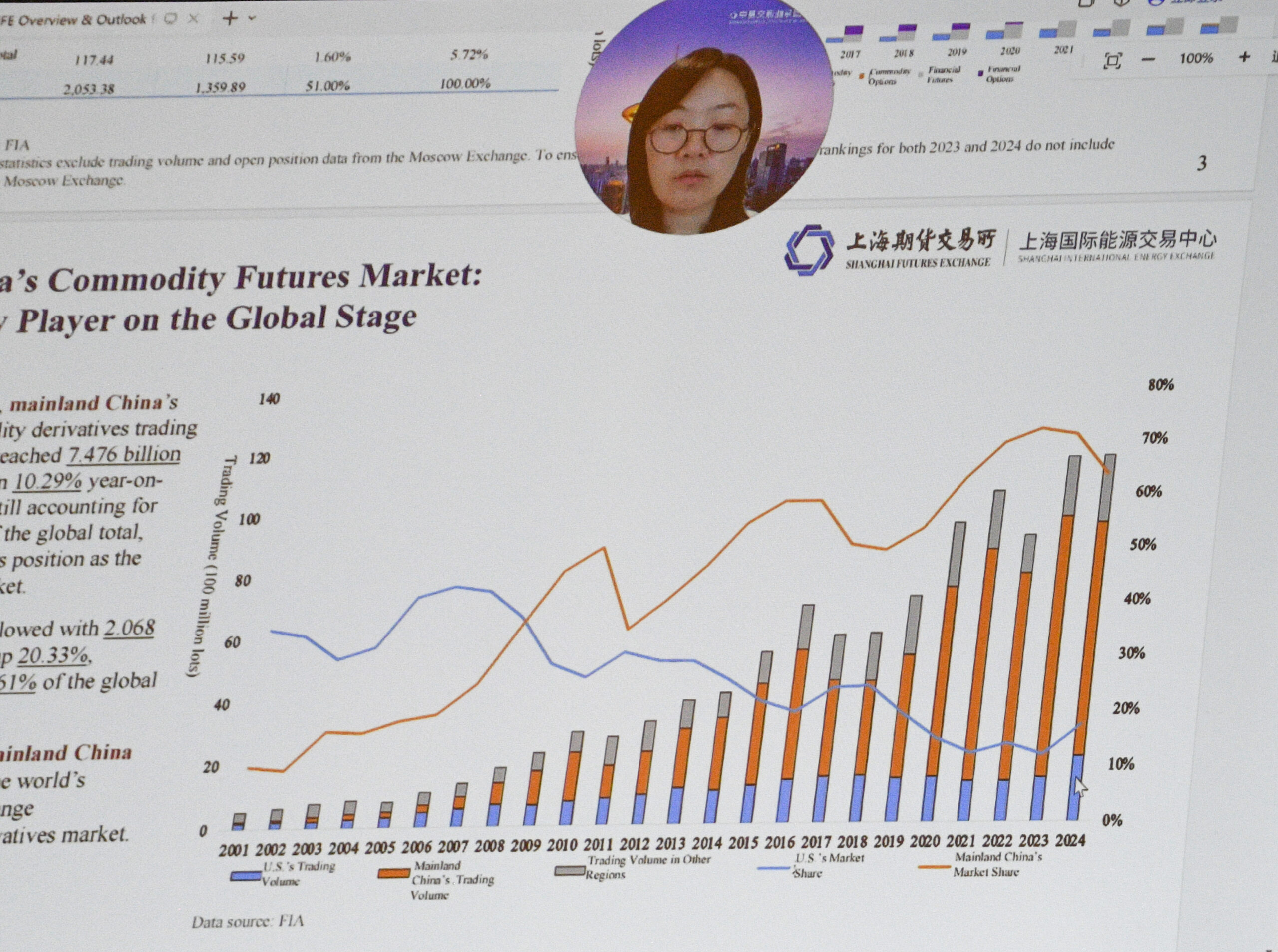 At International Pulp Week, three speakers discussed businesses that connect to China’s role in the global pulp industry — including trading, port logistics and the futures market. Haidong Weng, Executive Vice President of Pulp & Paper Research at Xiamen C&D… explained that after the US implemented its third wave of tariffs, Chinese exports of paper and board to the US fell sharply, with vessel density in major Chinese ports reflecting a significant pullback in trade flows. …He also described the cascading effects on US retail markets. …The scale and resilience of China’s port logistics were front and centre in a presentation by Tian Jun, representing the Shanghai International Port Group’s Luo Jing Terminal. Tian explained that SIPG views pulp as a strategic growth cargo across its network of general cargo terminals. …Another presentation came via video from Chi-Fei Fei of the Shanghai Futures Exchange (SHFE), who provided an overview of China’s pulp futures market.
 At International Pulp Week, Mathieu Wener, Senior Economist at Numera Analytics, provided a detailed overview of current trends in key end-use markets for pulp, with a particular focus on tissue and printing and writing papers. Drawing on recent data and modelling, he examined how these sectors have evolved post-pandemic, what is driving demand patterns today, and what may lie ahead. Wener began with tissue markets, where profitability has remained strong despite considerable cost pressures in recent years. “Producers passed through rising costs since 2022,” he noted, showing how eurozone parent roll and pulp prices had shifted over that period. Although price differentials between pulp and tissue had narrowed, margins remained healthy.” …Wener underscored the importance of tracking both macroeconomic forces and demographic trends in shaping pulp demand. For tissue, slowing population growth and cautious consumer behaviour would temper growth expectations. For printing and writing papers, the secular decline would continue, but at a somewhat more stable pace.
 The final presenter at International Pulp Week, Emanuele Bona, VP of Europe for the Pulp and Paper Products Council (PPPC), provided a comprehensive update on global market pulp demand trends, with a particular focus on the rebound underway in 2025 and the longer-term outlook for key markets and product segments. Bona began by noting that 2024 had been a weak year for market pulp demand, with global chemical market pulp demand falling by 0.9 percent. However, the first months of 2025 showed a marked improvement. “In 2025, after four months, demand is up almost one million tonnes,” he reported. Both softwood and hardwood pulp segments contributed to this recovery. …Looking ahead, Bona projected that global market pulp demand would return to growth but at a more moderate pace. “Growth to average 1.5 percent through 2029,” he said. The long-term trend for softwood pulp was expected to remain flat at best, while hardwood demand growth was projected to slow despite ongoing substitution trends.
 Japan’s government remains cautiously optimistic, sticking to its long-held conviction that the economy should be able to weather both external shocks on already sluggish growth and a cost-led surge in domestic inflation, repeating it is expected to stay on a “modest recovery” track. In its monthly report for June released Wednesday by the Cabinet Office, less than three weeks after the prior report, the government repeated that the economy is “recovering at a moderate pace but confronted by the uncertainty arising from the US trade policy.” Tokyo appears to have brought forward the release of its monthly report by about two weeks so that it could officially update the status of Japan’s economy before the leaders of the Group of Seven major nations gather for their annual summit at Kananaskis in the Canadian province of Alberta from June 15 to June 17.
 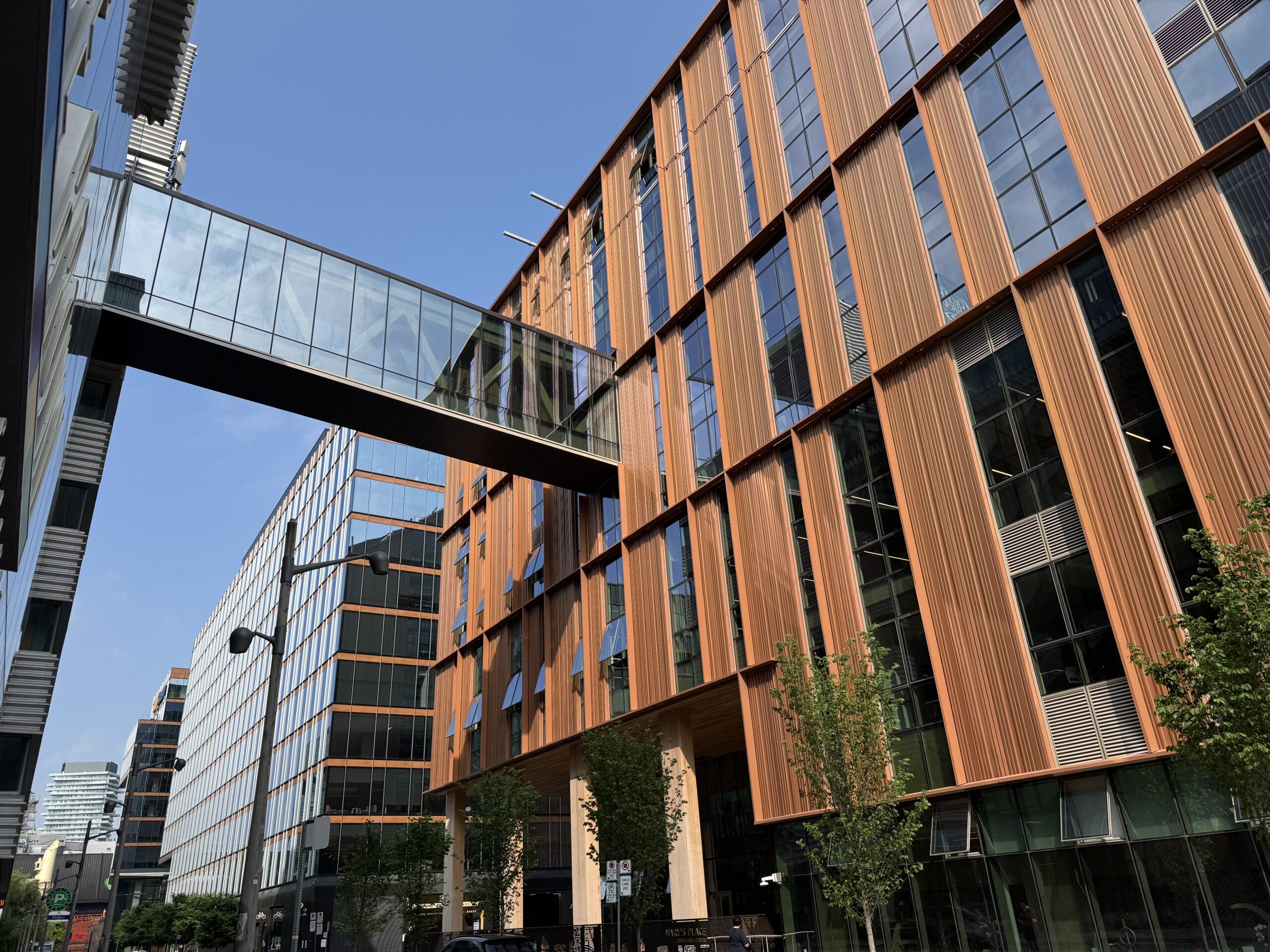 The ultimate problem for architects is that the most sustainable building is always the one that is already there. There is a huge amount written about green buildings, much of it nonsense. There is some confusion about buildings layered in vines and living walls, and buildings that actually are green. Contemporary architecture’s issue is mostly embodied in one material: concrete. …The rate at which we are still using it is astonishing: half of all the stuff manufactured by weight is concrete. From 2011 to 2013, China used more concrete than the US had in the whole of the 20th century. …There are signs, however, that architects are beginning to shake things up. The first credible alternative is, perhaps a little ironically, that oldest of building materials, timber. [A Financial Times subscription may be required to read the full story]
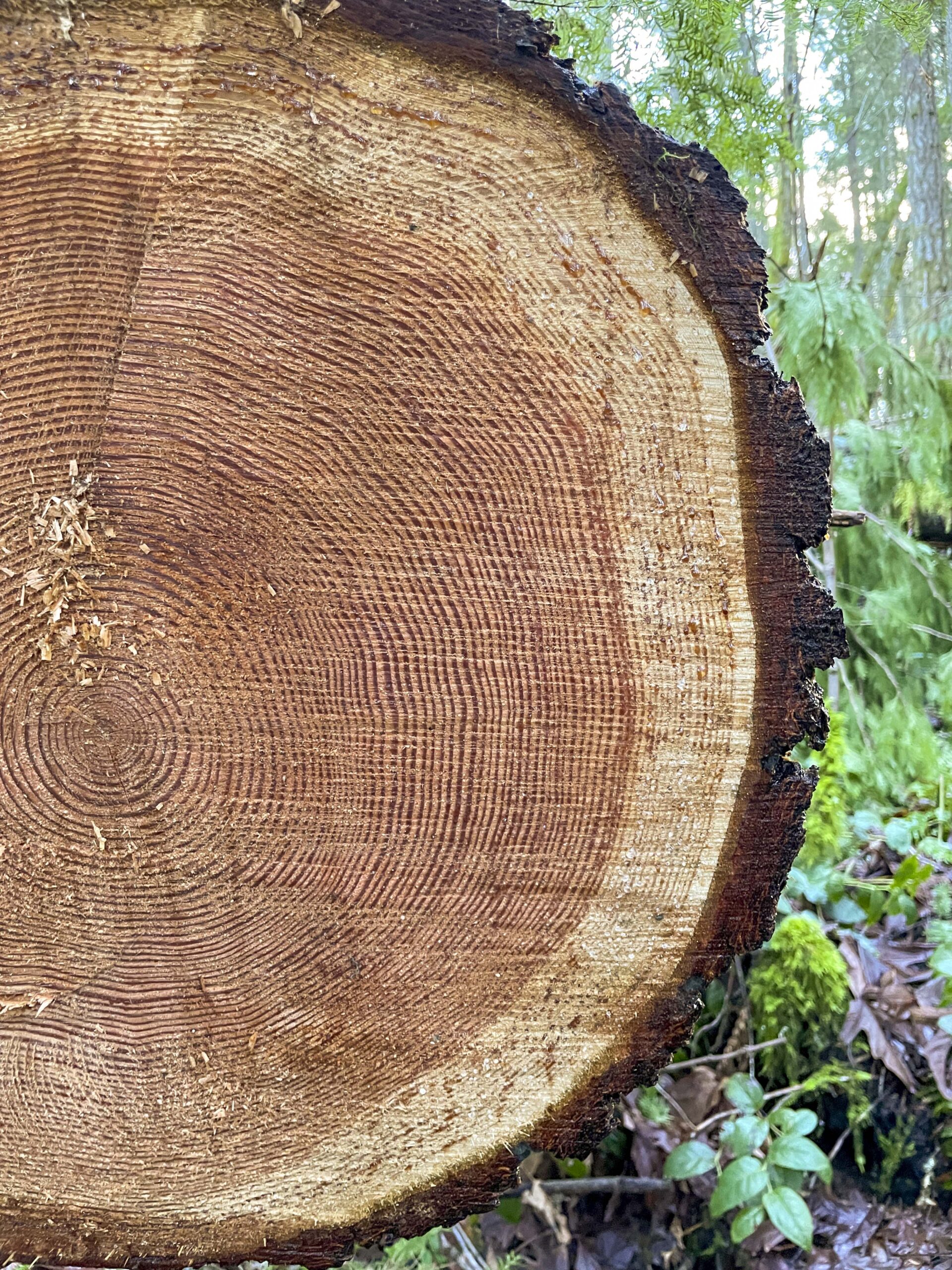 Although a casual observer just sees the bark on a tree, a lumber expert might envision the potential for boards inside, thinking of the bark largely as waste. In many cases, bark does turn into waste in the logging industry. That’s lots of waste, because bark can account for up to 15% of a tree’s weight, and “only a fraction of this is currently being utilized, primarily for landscaping or for energy; the rest is left at the harvest or handling site to naturally decompose,” according to Sumanth Ranganathan, Dr.-Ing, a biochemical engineer at Scion, a research institute in Rotorua, New Zealand, and his colleagues. For some trees, though, that wasted bark is a potential treasure-trove of biopharmaceuticals, from anti-inflammatories to cancer-fighting drugs. …Each year, the country’s logging industry produces about 2.5 million metric tons of bark. Ranganathan’s team envisions feeding that into a bark-based biorefinery.
 IRELAND — The Government is branching out in its bid to solve the housing crisis with a new “Wood First” plan that will see timber become the main building material used to build our homes, schools and libraries. It comes as the Cabinet will today give the green light to emergency legislation to extend rent pressure zones across the country in a scramble to stop greedy landlords cashing in on the Coalition’s rental policy changes. Forestry Minister Micheal Healy-Rae said Ireland has excellent forest resources that are being underused in our construction sector
 Mass timber construction is gaining traction for its sustainability and efficiency, yet it brings distinct insurance and risk management challenges that require industry collaboration and proactive strategies. Key Takeaways from this Article:
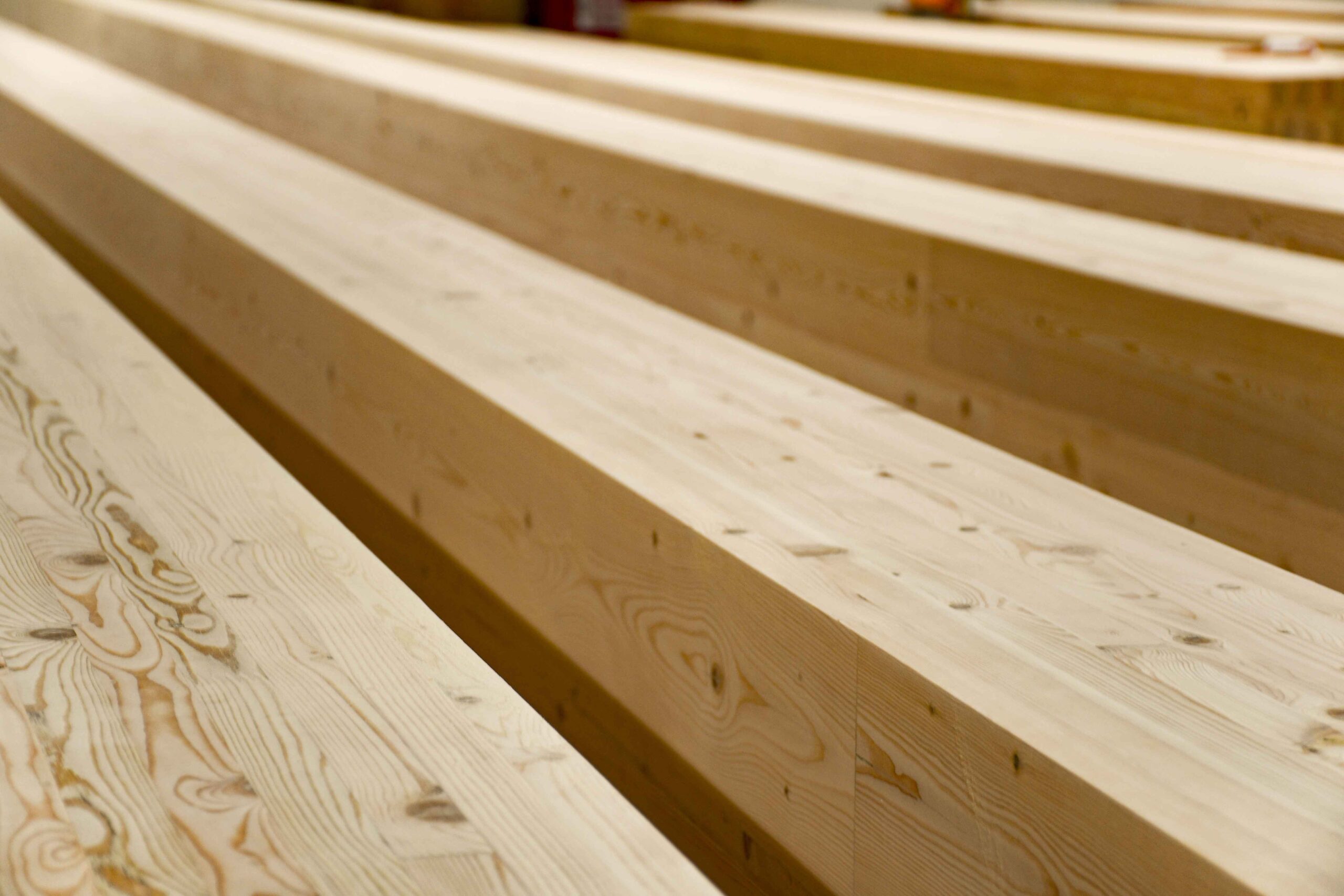 Maximising the use of bio-based products is key to meeting current sustainability targets. Yet according to sustainability consultancy Metabolic, using bio-based products for half of new housing in Europe would require production of engineered timber to increase nearly fivefold, and roundwood by four and a half times. Given the improbability of an uplift in production on that scale, as well as the current rapid growth in global demand and the UK’s own limited timber harvest, using the country’s waste timber to make ‘cross-laminated secondary timber’ – CLST – would seem to make a great deal of sense. Rather than its current fates of combustion for energy recovery, chipping for MDF, dumping in landfill, and other low-grade, non-circular activities, incorporating this plentiful material into supply chains would benefit the construction industry, as well as the country’s economy and environment. And it would also seem to be a highly achievable ambition – so why isn’t it happening?
 Amid the chaos of tariffs and economic uncertainty, Chris Evans is feeling deja vu with regards to the construction supply chain. Evans, the president of Swinerton-owned mass timber firm Timberlab, has helped the company through the process of building up a domestic supply chain. Evans said the company noted a lack of domestic supply, exacerbated by the COVID-19 pandemic. That led company leaders, in 2021, to work toward helping the firm become more vertically integrated, with its own fabrication facilities and domestic supply, and a sawmill coming online in 2027. Timberlab brought its first fabrication facility online in 2020 and a second in 2022, employing computer numerical control fabrication techniques to create cross-laminated timber and glulam, critical mass timber components.
 EDINBURGH, SCOTLAND — The International Sustainable Forestry Coalition (ISFC) welcomes the release by the International Organization for Standardization (ISO) of its new Standard covering the way greenhouse gas accounting should be applied to wood and wood-based products. Until the publication of this Standard, there had not been an internationally agreed upon accounting approach for biogenic carbon emissions and removals – an important piece of the puzzle to support corporate climate action and reach global net zero targets. The new series is ISO 13391 Wood and wood-based products — Greenhouse gas dynamics, and covers all essential components of carbon accounting for the sector: carbon in forests, carbon in harvested wood products and potential greenhouse gas emissions avoided through the use of wood-based products instead of fossil-based products.

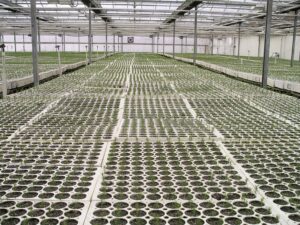 Seeds from two trees that survived the atomic bomb attack on Hiroshima at the end of World War Two are being grown at a Staffordshire university. The seeds were collected from an oriental plane tree in the grounds of the Tenma Elementary School, which was destroyed by the bombing, and a 200-year-old ginkgo tree growing in Shukkeien Garden. Both trees were situated less than a mile from the bomb site on 6 August 1945 and miraculously survived the bombing. They will now be cared for by experts at Keele University until they become tall and sturdy enough to be planted in the ground. The university says it is part of an international project to promote peace and hope. The seeds were sent to Keele through the Green Legacy Hiroshima initiative, which aims to distribute seeds and saplings from ‘survivor trees’ worldwide.
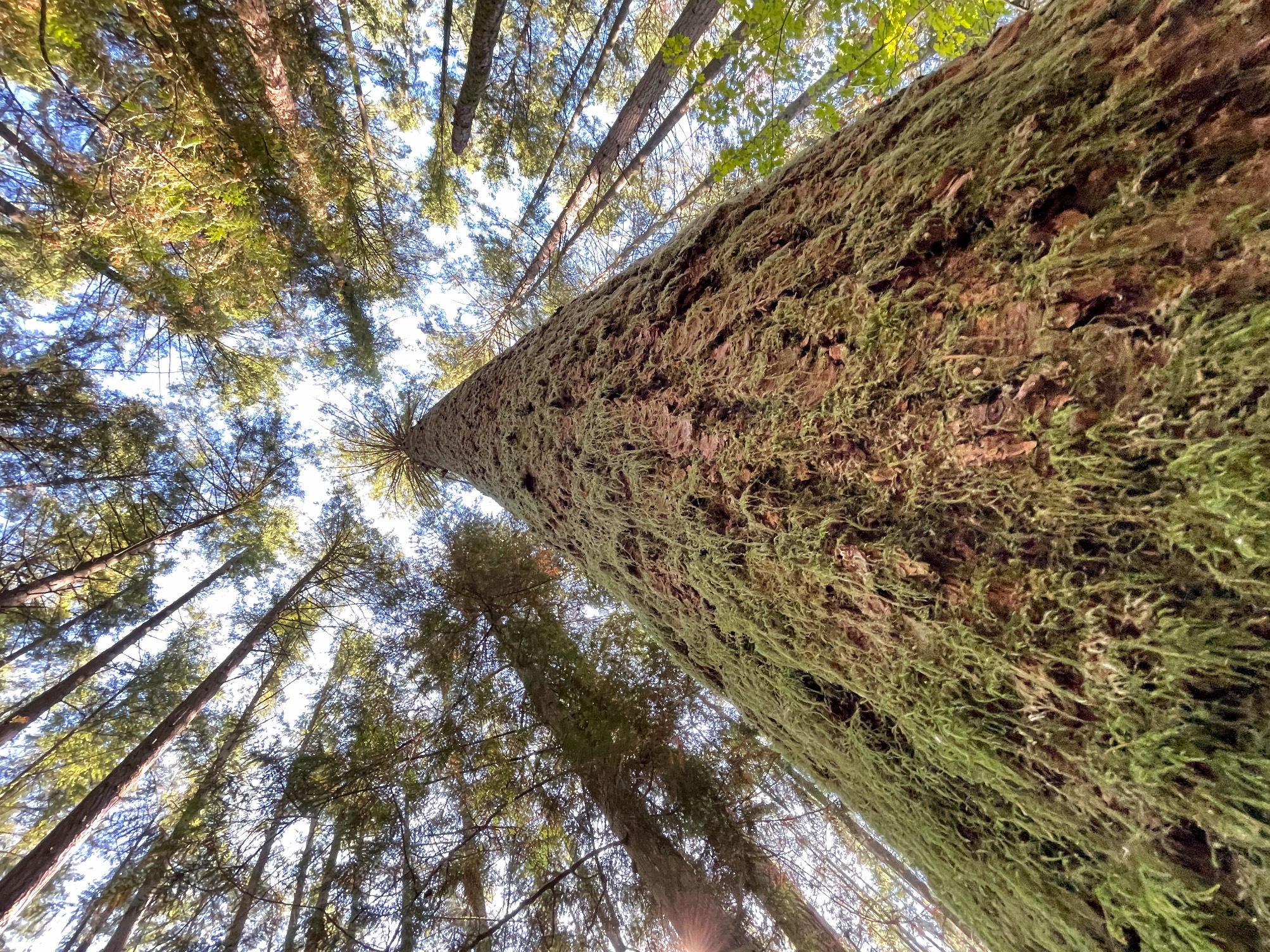 The world’s oldest forests are facing growing pressure from all sides. Their decline isn’t just an environmental concern – it carries serious consequences for people, climate stability and global biodiversity. According to a new
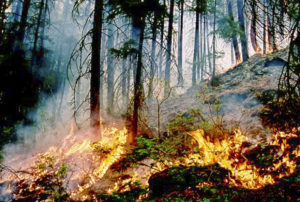 European funds to prevent forest fires have been poorly targeted and sometimes distributed in a hurry, according to a report from the EU’s spending watchdog. The number of forest fires in EU countries has increased dramatically over the last two decades as the climate crisis fuels ever bigger conflagrations. An area twice the size of Luxembourg has been consumed by flames in an average recent year, killing people, destroying homes and wildlife and sending megatonnes of planet-heating emissions into the air. The European court of auditors praised the decision to devote more money to preventing fires but said European-funded projects were not always spent where they could make the biggest difference. In Greece, authorities were using a map drawn up in 1980 to assess the risk of forest fires. In Portugal, one area selected as a priority for funds contained a zone that was underwater due to a recently built dam.
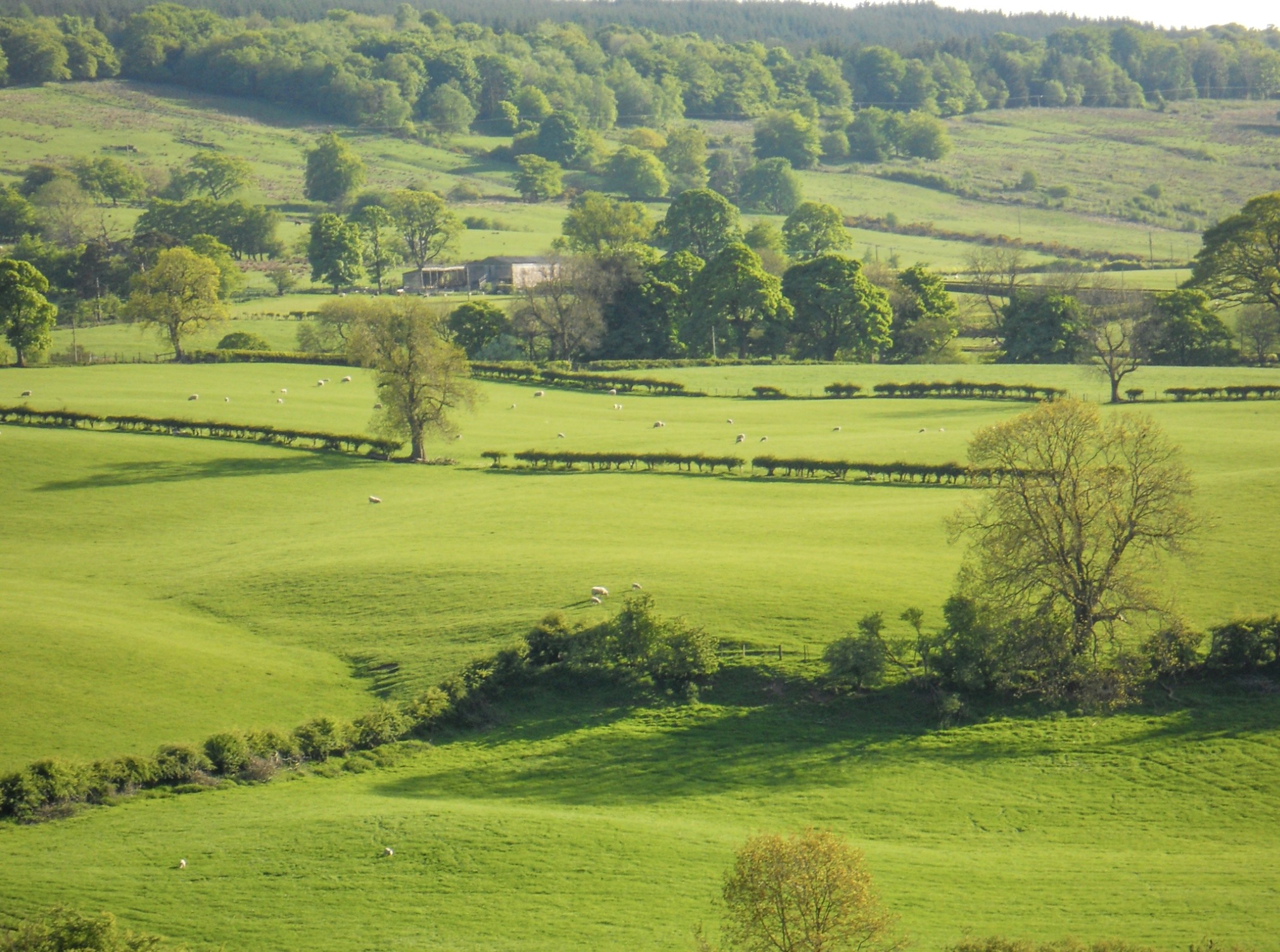 Urgent action must be taken to avoid a loss of wildlife due to the “plummeting” condition of the UK’s woodlands, according to a new report. The report, published by the Woodland Trust on Tuesday, found that the quality of woodland is on the decline, despite a slight increase in tree cover. Woodland covers 24% of Surrey, making it the most wooded county in England. Abigail Bunker, director of conservation and external affairs at the trust, said: “We are calling on the government and others to invest in the management of our woodlands.” She said investing in woodland management would mean wildlife could experience the benefits “of these precious ecosystems”. Woodlands are becoming less effective as habitats for wildlife because they lack complexity, such as having enough trees of differing ages, states and sizes.
 SWEDEN — To combat the growing risks from unsustainable business practices, governments and regulators worldwide require corporates to bring greater transparency and reporting to their sustainability impact. When comes to reporting, however, arguably, not all industries are the same. Forests are key to addressing both climate change and biodiversity loss, two of the most urgent challenges for the global community. …If reporting (and other) regulations are to encourage forestry organizations, and their stakeholders, to make more sustainable choices, more needs to be done to increase understanding of the specific sustainability impacts of the industry. Three key areas should be addressed: reporting models, underlying data, and success cases. …An evolving regulatory environment with potential broad implications for forest companies combined with a fragmented reporting landscape diminishes the useability of information for stakeholders as a steering tool.

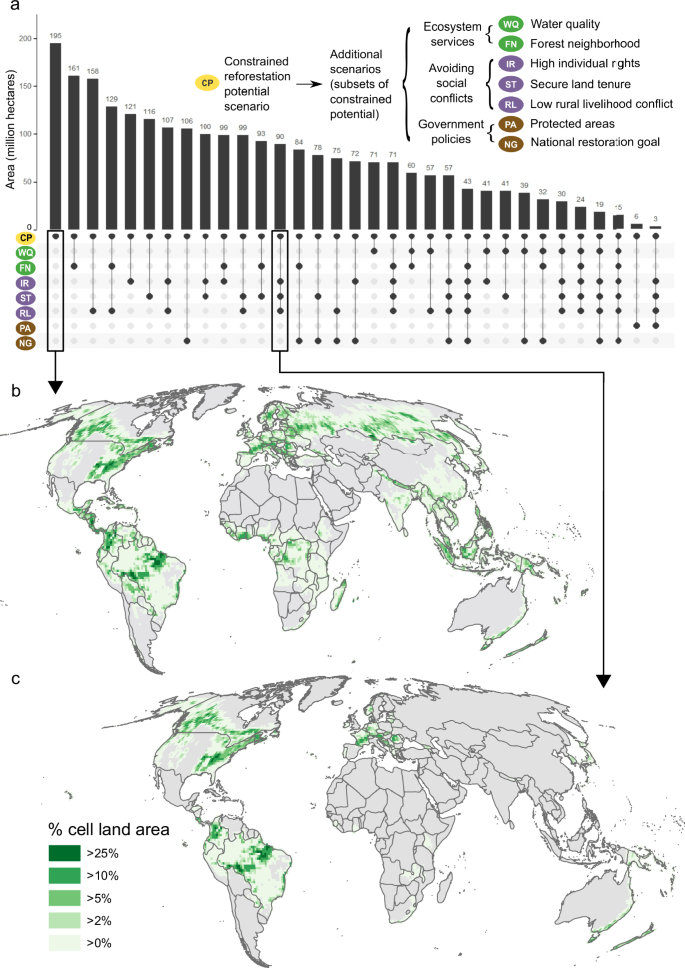

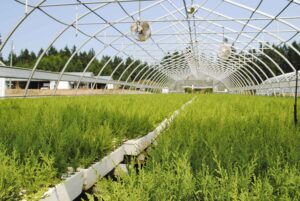 Replanting forests can help cool the planet even more than some scientists once believed, especially in the tropics. But even if every tree lost since the mid-19th century is replanted, the total effect won’t cancel out human-generated warming. …In a new study
  DS Smith has brought online a €90 million biomass boiler at its Rouen paper mill in Normandy, France – one of Europe’s largest mill energy transitions to date. The new system replaces the site’s coal-fired boiler with a low-carbon, circular solution powered by locally sourced biomass waste. The project is expected to cut CO₂ emissions by 99,000 tonnes annually – equivalent to removing 40,000 cars from the road or powering 13,000 French homes each year. The boiler will process around 94,000 tonnes of biomass fuel each year, including industrial and municipal waste wood – mainly from the Paris and Normandy regions – as well as paper production by-products. Up to 70,000 tonnes of wood waste will be diverted from landfill annually, supporting DS Smith’s 2030 zero-landfill target.
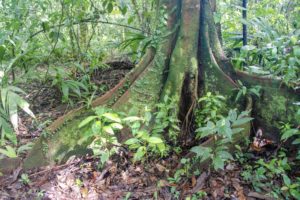 The Phillipines sits on a goldmine of forest and carbon wealth. But an unclear and short-sighted property rights regime is choking its potential; existing rules are partially to be blamed.
 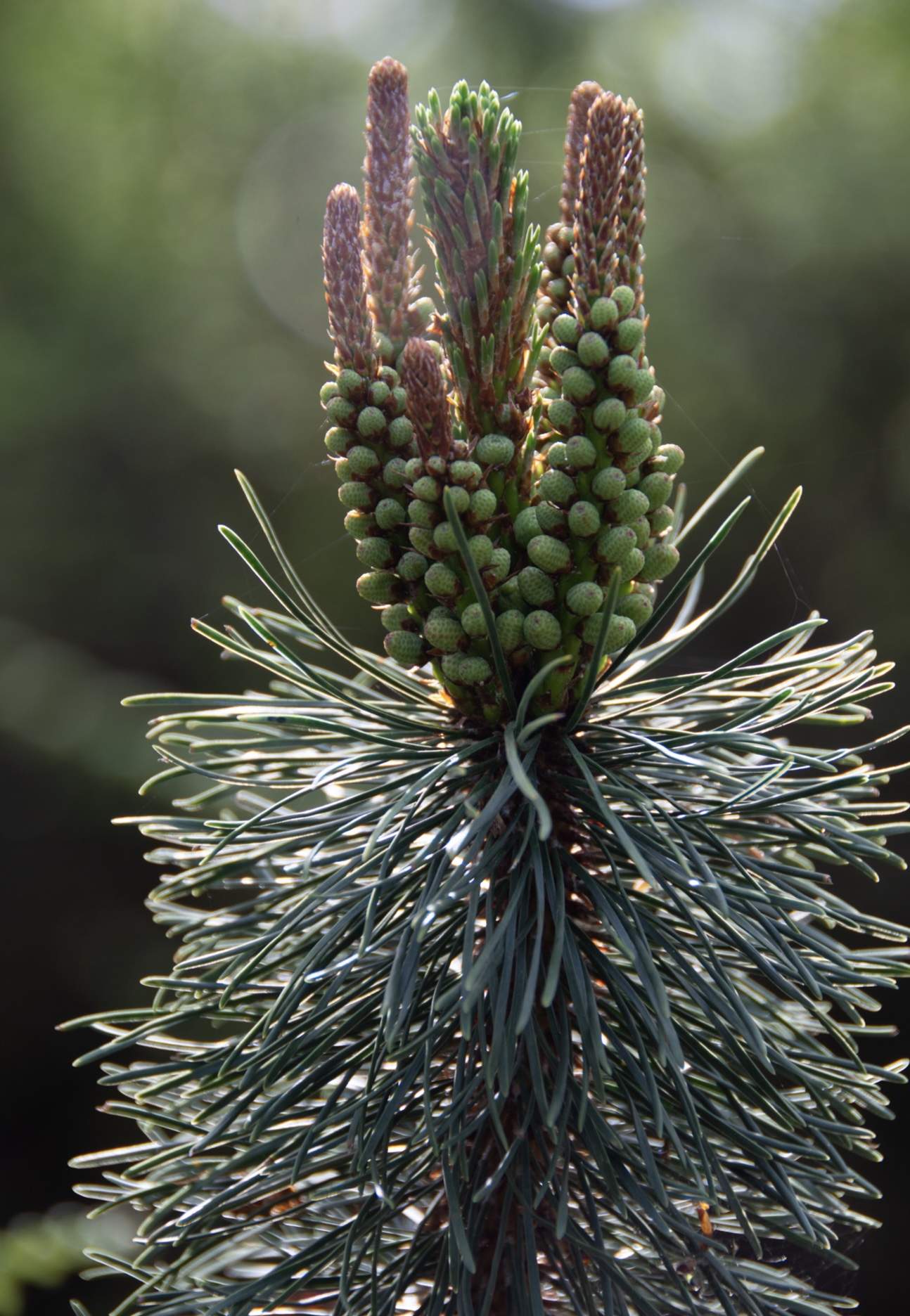 Hundreds of top environment lawyers are suing the New Zealand government over what they say is its “dangerously inadequate” plan to reduce emissions to net zero by 2050. It is the first time the country’s emissions reduction plan has faced litigation, and the lawyers believe it is the first case globally that challenges the use of forestry to offset emissions. …two groups representing more than 300 lawyers filed judicial review proceedings against the government in Wellington’s high court on Tuesday. The groups … claim … the government has abandoned dozens of tools to tackle emissions, failed to adequately consult the public, and too heavily relies on high-risk carbon capture strategies such as forestry. …They claim that the government is relying on “high risk” methods such as planting hundreds of thousands of hectares of introduced pine trees to offset emissions, and capturing carbon underground, with few alternatives to fall back on if something goes wrong.
 The sun and sky had a much more eerie appearance to it on Saturday evening and Sunday morning. It was a sign that smoke from wildfires burning more than 4,000 miles (6,400km) away in central Canada had made it across the Atlantic to sit in the skies over the UK. BBC WeatherWatchers from all corners of the country were out capturing the spectacle. …The change in the appearance of the sun and sky is due to smoke particles in the atmosphere scattering the blue wavelengths of light more, allowing predominantly orange and red hues to reach our eyes. …The presence of wildfire smoke from North America over the UK, whilst not common, does occasionally happen during the summer months. …Here in the UK, the smoke plume is at too high an altitude to affect our air quality.