
Kevin Mason
Economic Outlook: Risks abound for 2026 and beyond but we see little chance of upside surprises for global GDP growth next year. Instead, we forecast modest declines in both US and Chinese GDP in 2026, with the Eurozone growth rate nudging up slightly from depressed levels. US-driven tariffs will stabilize but remain a drag and may become the norm for the next three years. As we’ve noted before, demand won’t be driving upside for the forest sector. Interest rate relief in the US continues to lag earlier expectations (with two further, 25bps cuts expected next year), and a US housing recovery will likely be pushed out to the second half of 2026 at the earliest (potentially 2027). A further weakening of the USD relative to other major currencies will create additional headwinds for US-based producers focused on exports but should also put downward pressure on US imports.
Forest Products Outlook: For most markets, the first half of 2026 will look a lot like 2025, with oversupply resulting in weak prices and lacklustre earnings. Highlights include:
- Housing starts will slip next year to 1.33MM as mortgage rates are expected to move only moderately lower. Affordability issues persist.
- Log prices should trend sideways, with some markets up and others down. Demand from China could rise as its US log ban has ended.
- Lumber prices will move up in 2026 as supply reductions related to high costs (duties, tariffs, etc.) begin to bite harder.
- Panel prices are likely to remain rather low in 2026 due to OSB (particularly) facing oversupply issues as a couple of mills ramp up.
- Pulp prices hinge on supply dynamics; the situation has changed as China has boosted its internal supply. Although prices are moving off their lows, shuts are needed to maintain upward momentum.
- Newsprint demand will drop by double digits next year, but, with some mills currently offline, prices should hold until supply restarts.
- Paper prices will be mixed, with expectations for an increase in uncoated woodfrees; most other grades should hold at/near year-end levels. The removal of tariffs would push prices lower.
- Containerboard producers are expected to drive a price hike in Q1 given the massive capacity shuts this year. Demand will remain sluggish, but rising box shipments aren’t needed to support hikes.



 The negotiations that remade the North American Free Trade Agreement were, as one participant put it, a series of “near-death” experiences. …In the years since the U.S.M.C.A was signed, Mexico and Canada have become America’s top trading partners. Millions of jobs depend on this economic alliance, which exceeds $1.8 trillion in trade. …Last week, Trump suggested that he would exit the U.S.M.C.A.: “We’ll either let it expire or, well, maybe work out another deal with Mexico and Canada.” Some observers discount Trump’s bluster as mere gamesmanship. …He returned to the White House on a promise to create jobs and lower prices—to make the country “boom like we’ve never boomed before.” Instead, tariffs are fuelling inflation, and many experts believe that it is only a matter of time before the economy starts hemorrhaging jobs. …As in the previous round of negotiations, time does not appear to be on Trump’s side.
 Plywood importer InterGlobal Forest, which is seeking a rehearing of its case challenging CBP’s finding that it evaded antidumping and countervailing duties on plywood from China,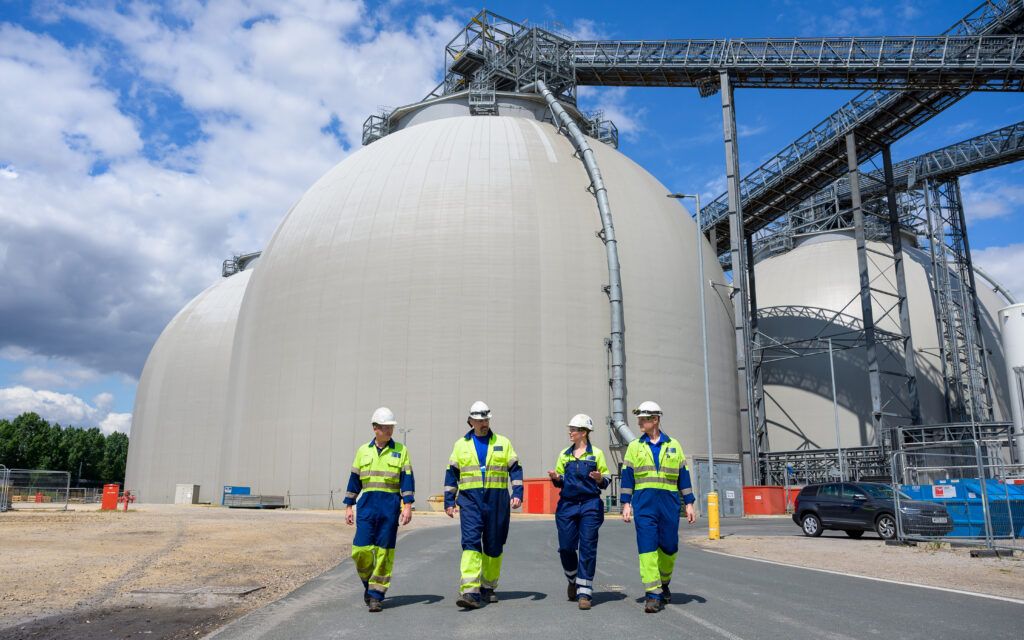


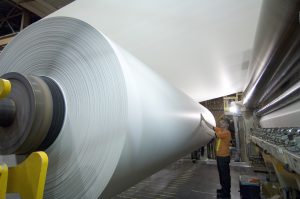 China’s pulp and paper sector is witnessing transformative growth with Huatai Group’s announcement of its monumental 16-billion-yuan investment in a fully integrated forest-pulp-paper project located in Yulin, Guangxi.


 KUCHING, Malasia — Chinese timber companies are struggling in their businesses due to insufficient orders for their products amid a weak global market. They have complained about poor demand in the timber market and intense competition in terms of product prices. Adding to their woes are rising raw material costs, according to the key challenges reported in the Global Timber Index-China Index report in November 2025. …To mitigate the challenges, Chinese enterprises suggested the need to expand into international markets to increase the volume of orders for their products, and called for government policy support for their operations. …Back home, China reported strong domestic retail sales of furniture, reaching 17.9 billion yuan in October, a 9.6 per cent increase from a year ago. …In a related development, China reported a robust export market for its particleboard, which surged by 67 per cent in volume.
 The latest Global Wood Trends report – Softwood Lumber – Tariffs, Turbulence and New Trade Flows to 2030 – says from 2000 to 2024, European lumber output grew slowly at 0.4% per year but still outpaced domestic demand growth. This allowed Europe to expand exports overseas, a trend likely to continue as Russian and Canadian shipments remain constrained. …Production has expanded faster than demand, with exports rising from 10% of output in 2009 to 19% in 2024. Growth has been concentrated in Northern and Central Europe — led by Sweden, Finland, Germany, and Austria — where harvest levels are now close to structural limits. …Global Wood Trends concluded that Europe’s lumber market is entering a period of tightening supply and gradually recovering demand. While production growth is expected to shift toward Northern and Eastern Europe, overall expansion will be limited by structural harvest constraints in Central Europe. Stronger domestic consumption, combined with potentially higher US demand will likely support higher prices for logs and lumber.
 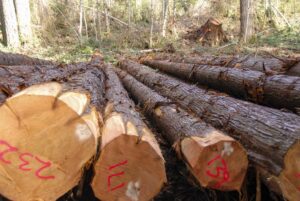 Sweden’s Green Business Index declined in the fourth quarter of 2025 as forestry and crop farming weakened, according to data from the Federation of Swedish Farmers. The total index fell to 100.7 from 106.5 in the previous quarter, marking a broad slowdown across several agricultural industries. The forestry subindex recorded the largest fall, dropping by 19 points to 97.6, its lowest level since spring 2020. The decline reflects weaker export demand, lower prices for sawn wood and pulp, and a soft U.S. dollar that reduced export revenues. New tariffs on Swedish wood products to the United States and a slower global economy further limited profitability. LRF reports that sawmills and pulp producers have experienced tightening margins, while forest owners face lower returns and are reducing harvesting activity.
 B.C.’s largest-ever forestry trade mission to Asia


 Japan-based materials experts have made impressive progress in the search for a better biodegradable plastic. The breakthrough starts with an abundant material: cellulose from wood pulp. Takuzo Aida, RIKEN Center for Emergent Matter Science research lead, said in a news release that “about one trillion tons” are naturally produced annually. Using it successfully as part of a new plastic could have a widespread impact, because most types of the material take decades to hundreds of years to break down. “This technology will help protect the Earth from plastic pollution,” Aida said in the RIKEN report. …Unlike other biodegradable plastics, RIKEN’s innovation also eliminates harmful microplastics, tiny particles that have saturated our world — found in soil, oceans, and even our bodies.
 Recent studies suggest that paper-based advertising may hold a more sustainable footprint than its digital counterpart. This revelation challenges the widely held assumption that ‘going paperless’ automatically equates to environmental responsibility. New data indicates that the full lifecycle impact of digital advertising – encompassing data centers, device manufacturing, and network infrastructure – generates a significantly larger carbon footprint than traditional print methods. The findings, originating from research conducted by the Öko-Institut in Germany and corroborated by analyses from The Telegraph, Emerce, and RetailTrends, highlight the often-overlooked environmental costs associated with the digital world. While paper production undeniably carries its own environmental burdens, advancements in sustainable forestry practices and paper recycling are mitigating these impacts. …Their findings consistently showed that paper-based advertising, particularly when utilizing recycled paper and responsible forestry practices, generated fewer greenhouse gas emissions than comparable digital campaigns.






 The smell of an old book … escapes as a cover is eased open or a stiff page lifted, settling briefly in the air between hand and paper. In libraries and second-hand shops, it is a faint but persistent smell… It is often associated with comfort and habit, yet it has a material basis. Conservators and chemists treat it as evidence of physical change. Paper, ink, glue, and binding age continuously, releasing compounds that remain present long after printing. What is sensed is the slow chemistry of use and storage. …Paper accounts for much of the smell associated with old books. From the nineteenth century onwards, most paper was produced from wood pulp containing cellulose fires and lignin. Over time, these components undergo chemical change. Cellulose chains fracture and shorten. Lignin oxidises and breaks into smaller fragments. These processes release volatile organic compounds that drift from the page surface.



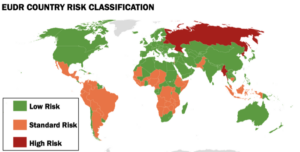 The EU Deforestation Rule has already caused supply chain hurdles for American farmers, ranchers and foresters, and the rule has not even begun being enforced. EU farmers themselves have raised concerns over their compliance requirements and received additional flexibilities, and member governments are still navigating how to implement the complex auditing system. With these logistical challenges clear even to EU officials, the European Commission has voted to once again delay the rule’s implementation until 2026 and 2027 for large and small businesses, respectively. However, as long as the rule stands as currently drafted, agricultural supply chains will be strained from the looming enforcement deadline. Overall, the EU fails to recognize the long-standing position of American farmers and ranchers as global leaders in agricultural production with environmental stewardship. A rule that was originally targeted to penalize bad actors in the global marketplace has now hindered some of the most productive producers in the world.


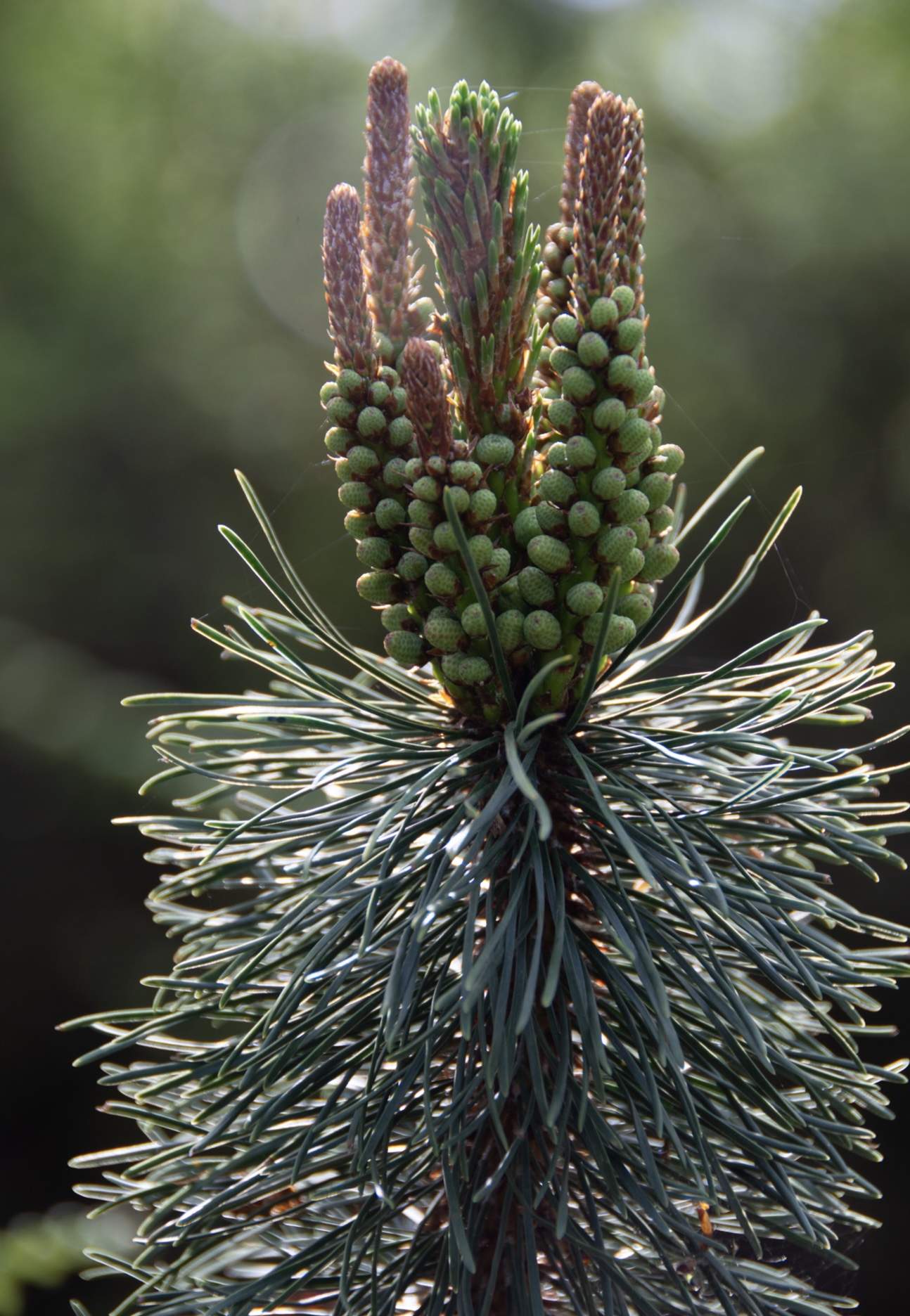 Scots Pines once dominated the landscape of Scotland, part of the vast Caledonian Forest which began to spread some 10,000 years ago after the end of the last ice age. Now only one per cent of the original forest remains in more than 80 pockets scattered mainly across the Highlands. Conservationists say there is an urgent need to improve the protection of these forests as climate change and threats from disease intensify. A new study from the James Hutton Institute in Aberdeen has revealed the environmental importance of preserving native woodlands. The research suggests the Scots pine alone supports nearly 1,600 separate species, including 227 that rely on it entirely. “Very few other tree species will support that range of biodiversity,” said Dr Ruth Mitchell, who led the study. “Species that use Scots pine include birds, mosses, lichens, fungi and invertebrates.”
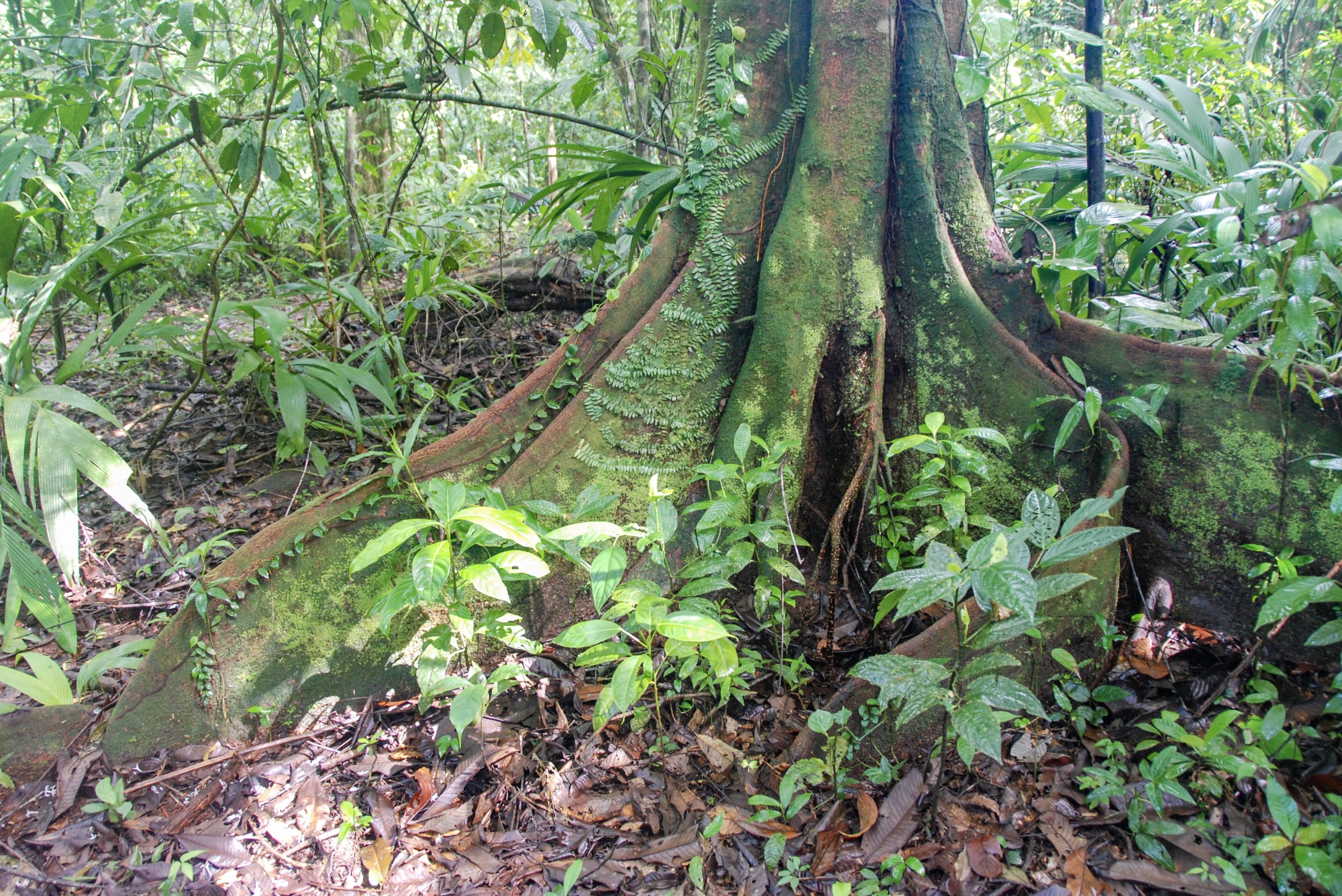 Young tropical forests play a crucial role in slowing climate change. …But, according to a new study, CO2 absorption may be slowed down by the lack of a crucial element that trees need to grow: nitrogen. Published in Nature Communications … the study estimates that if
  The world is losing forests to fire at an unsustainable rate, experts have warned. …in recent decades [wildfire] scale, frequency and intensity in carbon-rich forests have surged. Research from the World Resources Institute (WRI) shows that fires now destroy more than twice as much tree cover as they did two decades ago. In 2024 alone, 135,000km² of forest burned – the most extreme wildfire year on record. Yet fires in other landscapes have not risen in the same way, according to research from the University of Tasmania. While the total area burned globally has fallen for decades as farms have expanded across Africa and slowed the spread of blazes – forests have become a new hotspot. …Four of the five worst years on record have occurred since 2020. Research from the WRI shows that 2024 was the first time that major fires raged across tropical, hot and humid forests such as the Amazon, and boreal forests, such as those spanning Canada’s vast coniferous regions.
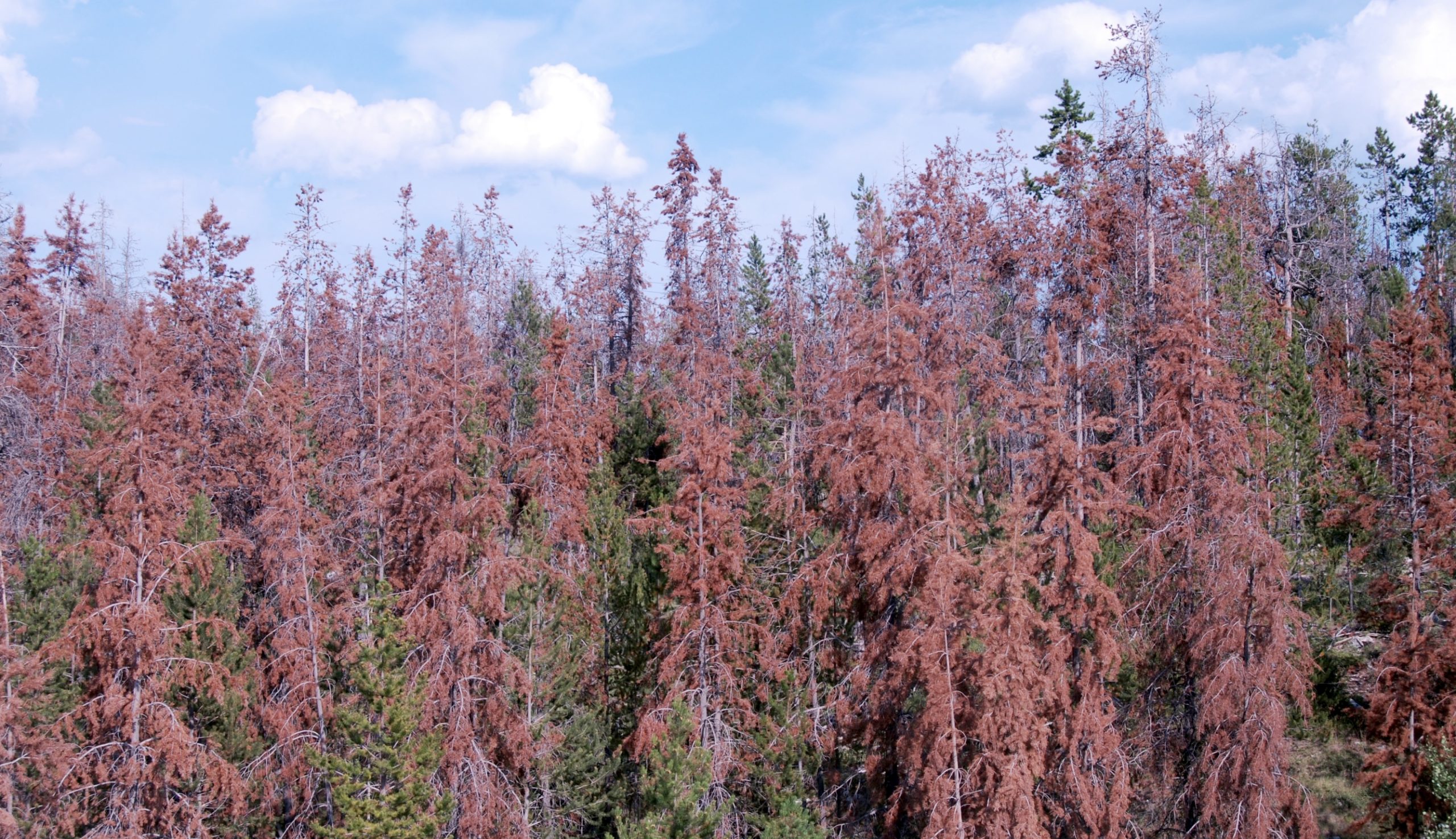 The intense green of spring cannot mask the dead trees in the Harz mountains. Standing upright across northern Germany, thousands of skeletal trunks mark the remnants of a once great spruce forest. Since 2018, the region has been ravaged by a bark beetle outbreak, made possible by successive droughts and heatwaves. …The loss has sparked a reckoning with the modern forestry methods pioneered by Germany that often rely on expanses of monoculture plantations. The ferocity of the beetle outbreak means there is no going back to the old way of doing things: replacing the dead spruce with saplings from the same species would probably guarantee catastrophe once again. Instead, foresters have been experimenting with a different approach: pockets of beech, firs and sycamore have been planted around the surviving spruce to make sure the returning forest is more biodiverse.
 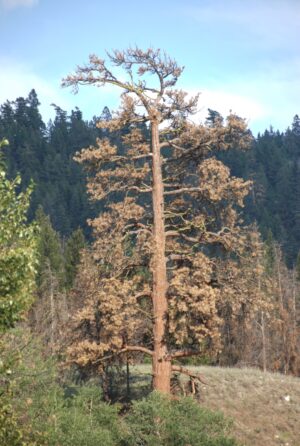 Australia’s trees must contend with many lethal factors, from intense megafires to introduced diseases and invasive species. But beyond these specific pressures, new research indicates the underlying natural death rate of trees in major forests across the country is rising. This increase in tree deaths is due to higher average temperatures from climate change, according to a study
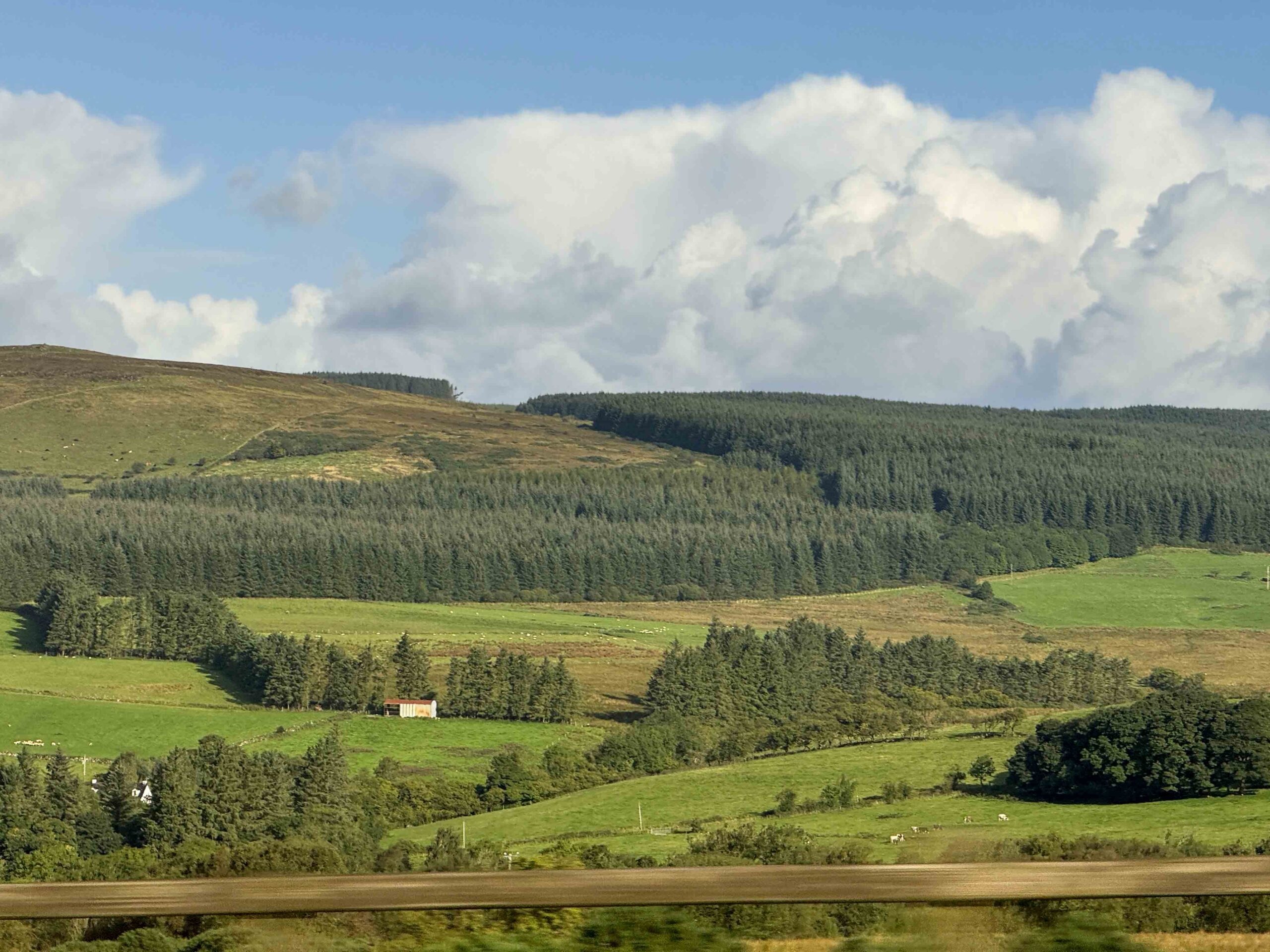 IFA Farm Forestry Chair Padraig Stapleton has acknowledged the establishment of the Group Forest Certification Ireland Board as a positive development for the Irish forestry sector. This follows the inaugural meeting of the Board which was held this week. IFA Forestry Policy Executive Amy Mulchrone has been appointed as a member of the Board by Minister Michael Healy-Rae. “The establishment of the Group Forest Certification Ireland board is a positive initiative by the Minister. The increased focus on voluntary certification of privately-owned forests that this Board will now hopefully bring should significantly scale up the area certified. To date, only 8% are certified, substantially lower than Coillte plantations, which have dual certification from both the Forest Stewardship Council (FSC) and the Programme of Forest Certification (PEFC).”
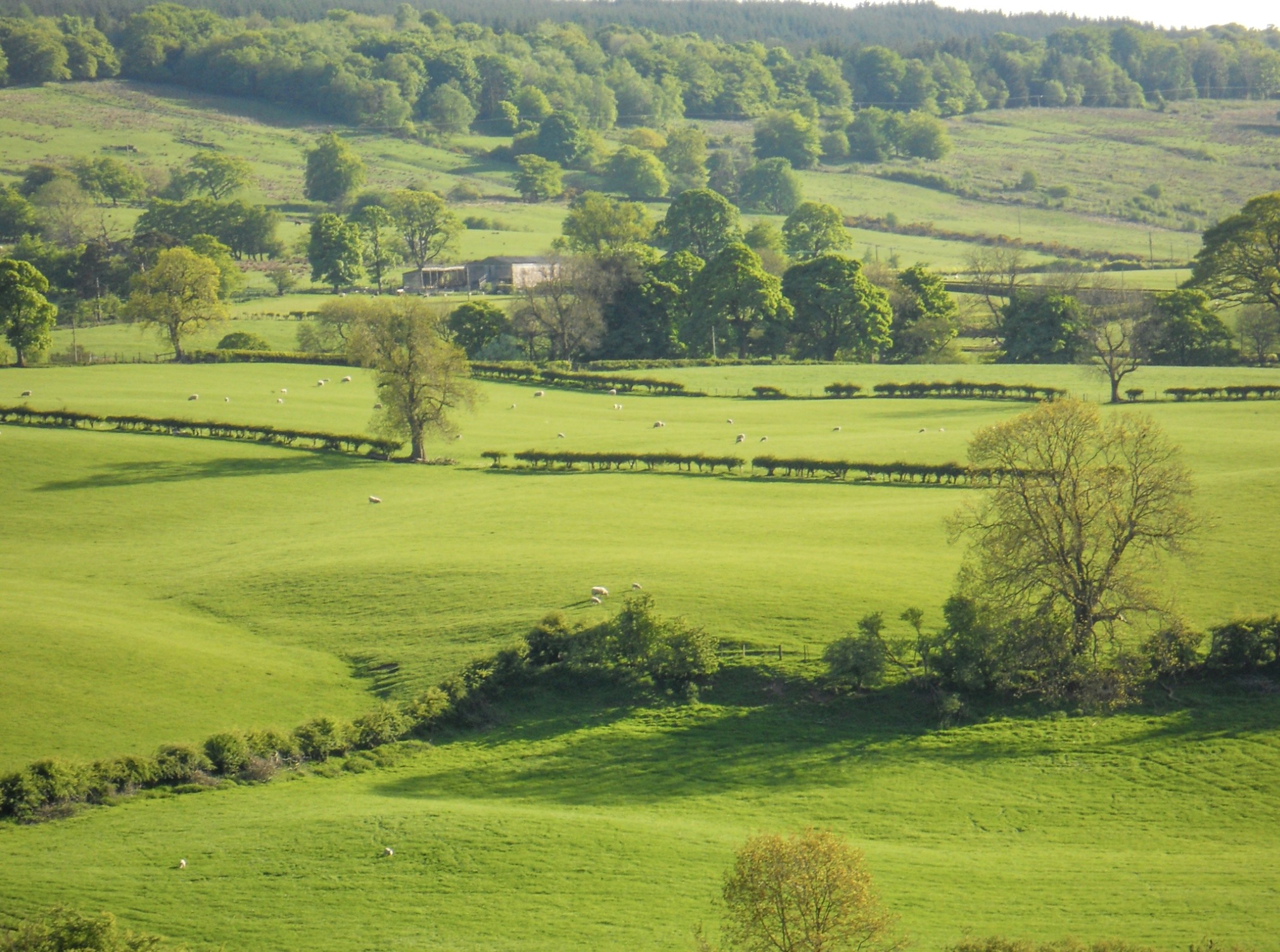 Forestry leaders have warned Scotland will fail to meet its planting targets for yet another year amid concern investment is going elsewhere. Since annual targets for woodland expansion were set, the Scottish Government has missed the goal every year apart from 2018, when it was met for the first time. In recent years, planting rates have often fallen significantly short of the set targets, with the year from 2022 to 2023 seeing only 8,190 hectares of a 15,000 target planted. Jon Lambert, of Goldcrest Land & Forestry Group, an independent UK firm of chartered surveyors and foresters based in Edinburgh, warned the figures are down because of the lengthy and clunky grant application process. “The amount of planting in Scotland is way down than it should be,” said Mr Lambert.
 Douglas-fir may prove to be a productive alternative to Sitka spruce for the UK’s commercial forestry sector. That is one of the early conclusions from ongoing research to test the suitability of 17 tree species as potential options for future timber production. Taking place across a network of nine large-scale experiments (in locations such as the Newcastleton, Cowal, and the Black Isle), the Forest Research-led investigation also found Douglas fir had the promise for further use in the south and east of the country, where the climate is forecast to become significantly hotter and drier than today. While already considered by many as a serious option, the species only makes up around 4 per cent of the UK’s total commercial forest.



 Reforms to Australia’s nature laws have passed federal parliament. A longstanding exemption that meant federal environment laws did not apply to native logging has finally been removed from the Environment Protection and Biodiversity Conservation Act. Native forest logging will now be subject to national environmental standards – legally binding rules supposed to set clear goals for environmental protection. This should be a win for the environment, and some have celebrated it as an end to native forest logging in Australia. But the reality is such celebrations are premature. We don’t have all the details of the new standards, or know how they will be enforced and monitored. Federal Environment Minister Murray Watt has told the forestry industry, including in Tasmania, that native forest operations will continue as usual. In an interview with ABC Radio Hobart, he said the changes keep day-to-day forestry approvals with the state government, but introduce stronger federal oversight.
 The opening of IKEA in New Zealand comes as a rural community worries about the fire risk from pine plantations. Since 2020 IKEA has converted six Central Hawke’s Bay farms into pine forestry…This move, combined with the sale of [local] farms to overseas forestry companies, is sparking concerns from locals about the loss of farmland and the risks associated with converting large areas into pines. …Porangahau farmer James Hunter wants New Zealanders to witness the extent of farmland being planted in forestry. Most of IKEA’s 4300 hectares of forestry in Central Hawke’s Bay is near the village of Porangahau, where about 200 hectares of its pine trees went up in flames in October and took days to extinguish because of the high winds grounding helicopters. It’s fires like this that have rural communities on edge, because they say even if the blaze starts on nearby farmland, the forests contain the fuel that feeds them.


 The Arctic Energy Alliance and the Wood Pellet Association of Canada will co-host the Arctic Bioenergy Summit and Tour this January in Yellowknife—an emerging hub for northern renewable energy innovation. With the speaker roster nearly complete, Day 1 will set the tone with a deep dive into bioenergy’s role across Canada’s North, from evolving policy frameworks to community-led energy solutions. Sessions will explore regional strategies, technology developments, and bioenergy success stories, highlighting what’s working in remote and Indigenous communities and the lessons learned along the way. Speakers will also tackle supply-chain challenges, including logistics, fuel production and distribution, and the unique complexities of operating in northern climates. The program wraps up with a networking reception—an opportunity for delegates to connect, share insights, and build partnerships advancing sustainable energy in the Arctic and beyond.
 When UN Spokesperson Stéphane Dujarric briefed correspondents in New York on Thursday following the release of the White House Memorandum, he insisted that the Organization will continue to carry out its mandates from Member States “with determination.” Wednesday’s memorandum states that the US administration is “ceasing participation in or funding to those entities to the extent permitted by law.” Several of the bodies listed in the memo are funded principally or partially by the regular UN budget, implying that voluntary funding will be impacted, although central funding will continue. However, the White House notes that its funding review of international organisations “remains ongoing,” and it is currently unclear what the impact of the announcement will be. Here’s a breakdown of the 31 UN entities mentioned in the memorandum, and how they are making a positive difference to people, communities and nations, worldwide.

 Forest management has entered a phase defined by competing pressures. Fire risk is rising. Biomass residues are accumulating. Carbon accounting expectations are tightening. Pyrolysis has emerged as a technical lever capable of addressing these constraints simultaneously. Its value lies not in abstract sustainability claims, but in its operational and ecological consequences when integrated into forestry systems. Reducing Fuel Load and Wildfire IntensitymOne of the most immediate benefits of pyrolysis in forest management is fuel load reduction. Thinning operations, deadwood removal, and post-harvest residues generate large volumes of low-grade biomass. When left unmanaged, this material increases wildfire probability and severity. …When treated as an ancillary technology, pyrolysis underperforms. When embedded as a strategic tool, it amplifies the effectiveness of existing management practices. Pyrolysis contributes by connecting fuel reduction, carbon management, soil health, and economic viability within a single operational logic.
  Last year will be remembered as a real test of commitment for the global sustainability agenda. Political uncertainty and regulatory rollbacks, particularly the weakening of flagship EU legislation such as the Corporate Sustainability Reporting Directive and yet another delay in enforcing the European Union Deforestation Regulation, signal a troubling loss of resolve. These decisions reward inaction and deter the very ambition needed to secure long-term economic and environmental resilience. But the crisis of nature loss should not be left to the shifting winds of policy; it requires businesses to step forward and lead the way. As we enter 2026, a pivotal triple-COP year for climate, biodiversity and desertification, it’s time to look past the political noise. While compliance meets today’s requirements, only a deeper commitment to the environment can protect a business against the lasting costs of nature loss.

 Britain’s reliance on burning wood to generate electricity has reached record highs, even as the government moves to curb the controversial use of biomass power. The latest figures supplied by the owner of the giant Drax biomass plant in North Yorkshire have revealed that power generated from burning biomass wood pellets provided 9% of the UK’s electricity in July, its largest ever monthly share. Weeks later, biomass provided almost a fifth (17%) of the UK’s electricity for the first time during one morning in September when renewable energy resources were particularly low. Britain’s record reliance on biomass generation has reached new heights as the government set out its plans to dramatically reduce the controversial energy source under a new subsidy agreement with the FTSE 250 owner of the Drax power plant.