 The Supreme Court ruling does not reverse duties imposed under other statutory authorities available to the president. This includes the approximately 35% combined antidumping and countervailing duties on Canadian softwood lumber, the 10% global Section 232 tariff on softwood lumber, and the 50% global Section 232 tariff on steel and aluminum imports. This tariff uncertainty — along with whether importers and businesses that paid tariffs under IEEPA can receive up to $175 billion in refunds — leaves tariff policy in a state of chaos, which will likely result in additional, complex litigation. American consumers and businesses are unsure how any new tariffs will affect them. In the meantime, more than 60% of builders surveyed by NAHB have reported seeing higher costs because of tariffs. With the nation facing a housing affordability crisis, NAHB continues to urge the president to exempt building materials as part of his tariff strategy.
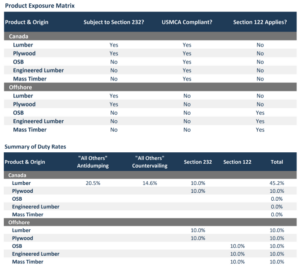 President Donald Trump announced a temporary import duty under Section 122 of the Trade Act of 1974, shortly after the US Supreme Court struck down his tariffs imposed under the International Emergency Economic Powers Act. The Section 122 surcharge is scheduled to take effect February 24 and remain in place for up to 150 days. Under the proclamation, Section 122 duties do not apply to goods that are subject to Section 232 of the Trade Expansion Act of 1962 or that are USMCA compliant. The implications for wood products are as follows:
 Delaware – President Trump’s announcement of a 15% tariff following last week’s Supreme Court ruling has created uncertainty in financial markets. While some retailers and consumer companies may benefit from reduced trade barriers, domestic lumber and packaging firms face increased competition from cheaper imports. …On Monday, domestic lumber companies saw their stock prices drop amid concerns that cheaper foreign imports could undercut their pricing power. The court’s tariff decision threatens to erode the competitive advantage that domestic packaging and lumber businesses previously held against lower-cost foreign competitors, industry analysts warn. RBC analysts identified potential negative consequences for companies including Clearwater Paper, Rayonier, Sylvamo, and Smurfit WestRock. A recent industry survey revealed that most U.S. purchasers reported declining containerboard prices in February, as increased European imports expanded supply and created additional pricing pressures. Monday trading saw Smurfit and domestic competitor International Paper decline by 7% and 6%, respectively.
 US President Donald Trump just lost his biggest emergency tariff weapon at the US Supreme Court – but for Canadian exporters and long‑term investors, the real story is that the pressure has shifted to narrower, more strategic sectors that matter for jobs, growth and returns. …Trump reacted by promising new tariffs through other statutes. …Section 232 now defines Canada’s real exposure. …Softwood timber and lumber: 10 percent tariffs imposed last October, alongside US countervailing and anti‑dumping duties on Canadian lumber that the Commerce Department increased from 14.5 percent to 35 percent earlier this year. …Upholstered wooden furniture, cabinets and vanities: 25 percent tariffs since last October; a planned increase in January was paused. …Dominic LeBlanc, Canada’s minister for US–Canadian trade relations, told CBC News that “what’s hurting the Canadian economy are the sectoral tariffs under a different American law,” and said this “reminds us again of the importance of diversifying our trading relationships.”
 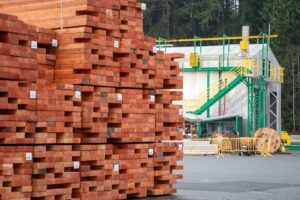 The US Lumber Coalition has expanded its list of complaints against Canadian softwood producers. The group has presented nine “new subsidy allegations,” claiming that Canadian producers benefit from federal government programs, including one that offers refundable tax credits for clean technology such as solar power. …The Commerce Department is investigating the nine new allegations put forward by the group. Canada has repeatedly rejected American arguments that Canadian producers benefit from subsidies and also denies dumping. …One of the group’s complaints targets a federal program in Canada, open to eligible forestry companies, that provides refundable tax credits for carbon capture, utilization and storage. In addition, the group’s allegations name provincial programs in BC, Alberta, Ontario and Quebec. …The Commerce Department deferred a potential probe, suggested by the Coalition, into cases pertaining to alleged subsidies for long-term timber tenures in BC and Alberta. [to access the full story a Globe & Mail subscription is required]
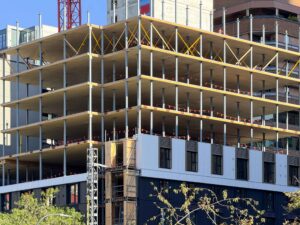 Almost three years after declaring bankruptcy, and more than two years under new owners, legal proceedings for Penticton’s Structurlam are continuing through the courts as it fights with the company that sent it into bankruptcy in the first place. In January, the case returned to the BC Supreme Court in Vancouver to order two Canadian engineering firms to produce documents and reports for the proceedings as Structurlam faces $80 million US in claims from Walmart, according to a decision published on Feb. 11. In 2023, Structurlam began bankruptcy proceedings after Walmart ended its contract to build the company’s new home office campus in Arkansas. …In July, Walmart filed a claim for over $80 million US for allegedly defective, nonconforming, rejected, nondelivered, or returned goods that it had paid for and alleged costs to replace said goods. The January 2026 B.C. Supreme Court decision orders two engineering firms to provide their documentation.

 It took only a few hours after the
  The US Customs and Border Protection agency said it will halt collections of tariffs imposed under the International Emergency Economic Powers Act at 12:01 a.m. EST on Tuesday, more than three days after the US Supreme Court declared the duties illegal. The agency said in a message to shippers on its Cargo Systems Messaging Service that it will de-activate all tariff codes associated with US President Trump’s prior IEEPA-related orders as of Tuesday. The IEEPA tariff collection halt coincides with Trump’s imposition of a new, 15% global tariff under a different legal authority to replace the ones struck down by the Supreme Court on Friday. CBP gave no reason why it was continuing to collect the tariffs days after the Supreme Court’s ruling. The message noted that the collection halt does not affect other tariffs imposed by Trump under the Section 232 national security statute and the Section 301 unfair trade practices statute.





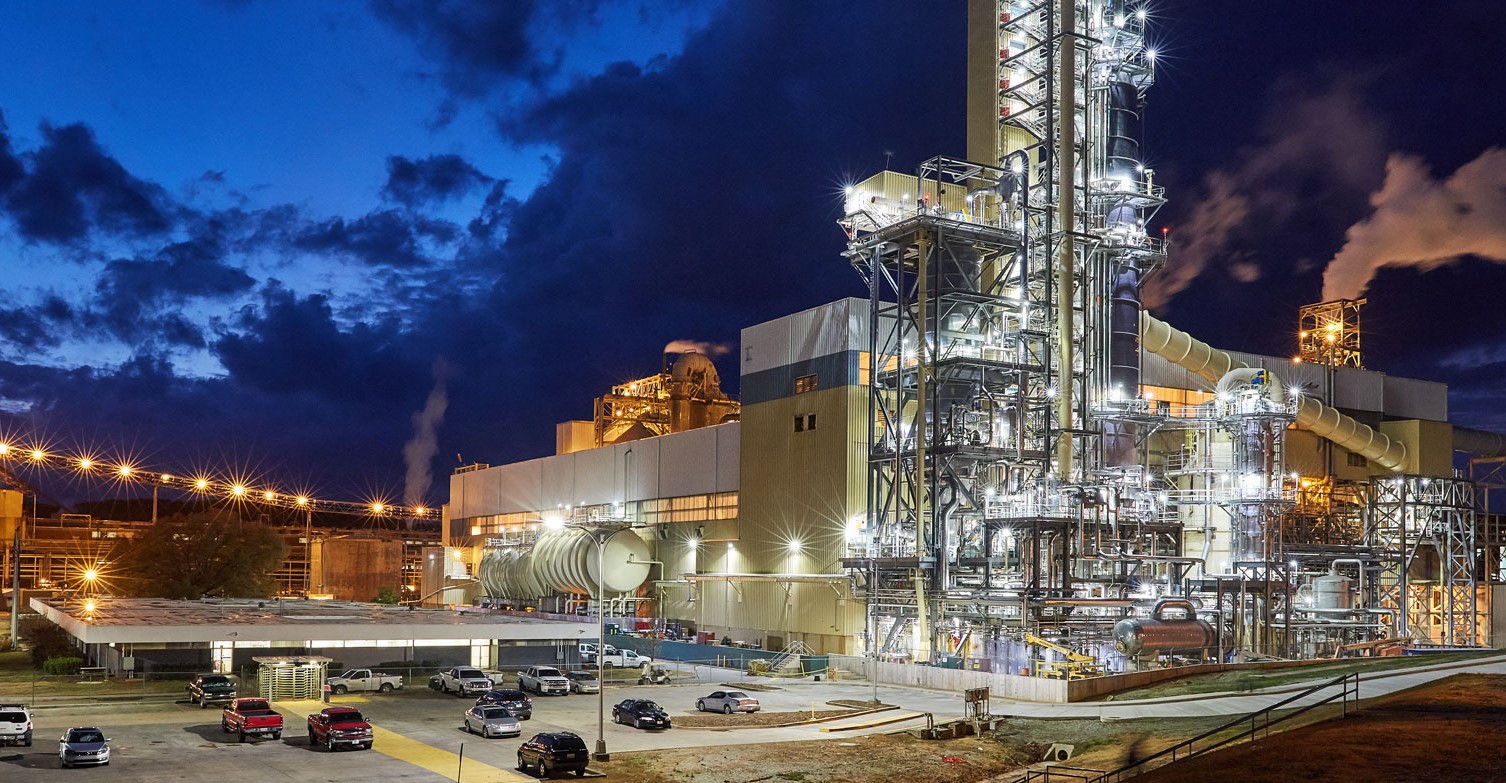
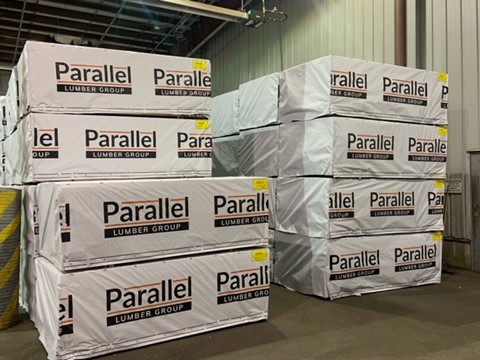

 VANCOUVER, BC – Canfor Corporation announced today that it will record a non-cash asset write down and impairment charge totaling approximately $321 million in its fourth quarter of 2025 results. Of this amount, $215 million relates to the Company’s lumber segment and $106 million relates to its pulp and paper segment. In the lumber segment, the impairment is associated with the Company’s European operations and reflects ongoing log supply pressures in the region, which have resulted in significant increases in log costs and reduced asset carrying values. In the pulp segment, the impairment reflects sustained declines in global US-dollar pulp list prices as well as continued challenges in securing economically viable fibre necessary to support operations. This impairment charge is non-cash in nature and does not affect Canfor’s liquidity position, cash flows or day-to-day operations.
 BURNABY, BC — Interfor recorded a net loss in Q4, 2025 of $104.6 million, compared to a net loss of $215.8 million in Q3’25 and a net loss of $49.9 million in Q4’24. Adjusted EBITDA was a loss of $29.2 million on sales of $600.6 million in Q4’25 versus an Adjusted EBITDA loss of $183.8 million on sales of $689.3 million in Q3’25 and Adjusted EBITDA of $80.4 million on sales of $746.5 million in Q4’24. …During and subsequent to Q4’25, Interfor completed a series of financing transactions. Taken together, these transactions significantly enhance Interfor’s financial flexibility, bolster liquidity and provide meaningful additional runway as the Company continues to navigate volatile lumber market conditions. …Lumber production of 753 million board feet was down 159 million board feet versus the preceding quarter. …Interfor’s strategy of maintaining a diversified portfolio of operations in multiple regions allows the Company to both reduce risk and maximize returns on capital over the business cycle.
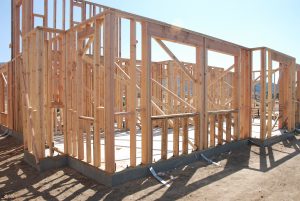 US labor productivity in construction falls 30% from 1970 to 2024, while aggregate US labor productivity more than doubles over the same period, widening a long-running gap between construction and the wider economy. Since 1965, construction labor productivity falls by an average 0.6% per year, while economy-wide productivity grows about 1.6% per year, based on analysis by Goldman Sachs Global Investment Research. The analysis links part of the gap to limited innovation in construction equipment and processes after a period of faster adoption in the 1950s and 1960s. The share of industrial machines in total construction production costs rises from 4% in 1948 to 12% in 1968, then slips to 10% in the 1970s and stays near that level, while pre-fabrication’s share of new residential housing units falls from about one-third at its peak in 1960–1970 to 5%.
 Contractors in certain niches can expect some meaningful materials price reductions after the Supreme Court struck down most of President Trump’s tariffs Friday. The court rejected Trump’s claim to authority to impose reciprocal tariffs. That would drive “a modest but meaningful reduction in materials price escalation” for specialty equipment, HVAC and electrical systems and fixtures, said Anirban Basu, chief economist at Associated Builders and Contractors. …But the administration quickly signaled plans for alternative tariff methods shortly after the ruling. AGC also noted other materials-specific tariffs on lumber, steel, aluminum and copper products are unaffected by Friday’s decision. Taken together, that means the Supreme Court decision “could be short-lived and completely counteracted,” said Basu. That back-and-forth tends to stall construction activity as owners and contractors weigh whether the decision will hold. …AGC has told builders not to hold their breath waiting for refund checks.
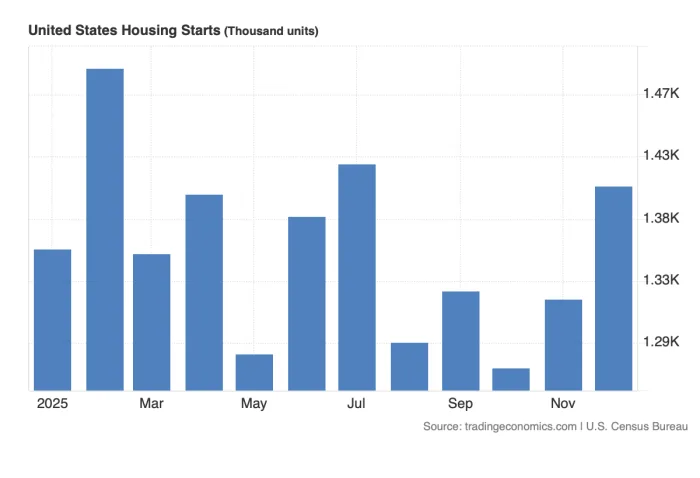
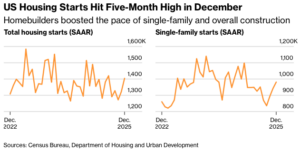 New residential construction in the US rose to a five-month high in December, as homebuilders boosted production to take advantage of lower borrowing costs. Housing starts increased 6.2% to an annual pace of 1.4 million homes in December, according to figures released Wednesday by the government, which were delayed by fall’s federal shutdown. …The advance was broad-based, with both single-family home starts and apartment projects rising at year’s end. The number of one-family homes started was the highest since February. The stronger construction numbers suggest that builders were growing more confident at year’s end even as they continued to sell off a bloated inventory of new houses. For the full year, however, starts notched a fourth-straight annual decline …In December, building permits, which point to future construction, rose 4.3% to an annualized pace of 1.45 million, the highest since March, government data show. Single-family permits fell slightly. [to access the full story a Bloomberg subscription is required]
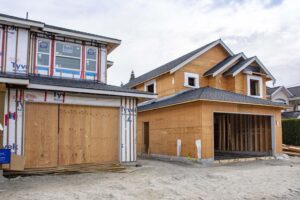 Reality-television stars are rarely consulted on matters of public policy. But in April, Realtor.com asked Tarek El Moussa to comment on the White House’s “Liberation Day” tariffs. The Southern California entrepreneur, who rose to fame on the popularity of HGTV’s Flip or Fop franchise, warned that higher import taxes would harm “new-home builders” and “first-time buyers” the most — after all, “luxury buyers” could absorb greater costs. Aspiring homeowners, he averred, are “usually strapped for cash,” and “doing everything they can just to buy a house.” Now that the second Trump administration has passed its one-year anniversary, all evidence indicates that El Moussa understands his industry well. There is little doubt that his trade war erects a sizable obstacle before those looking to find a place of their own. …The types of wood available in the US are not always the same as what’s available from Canadian imports.




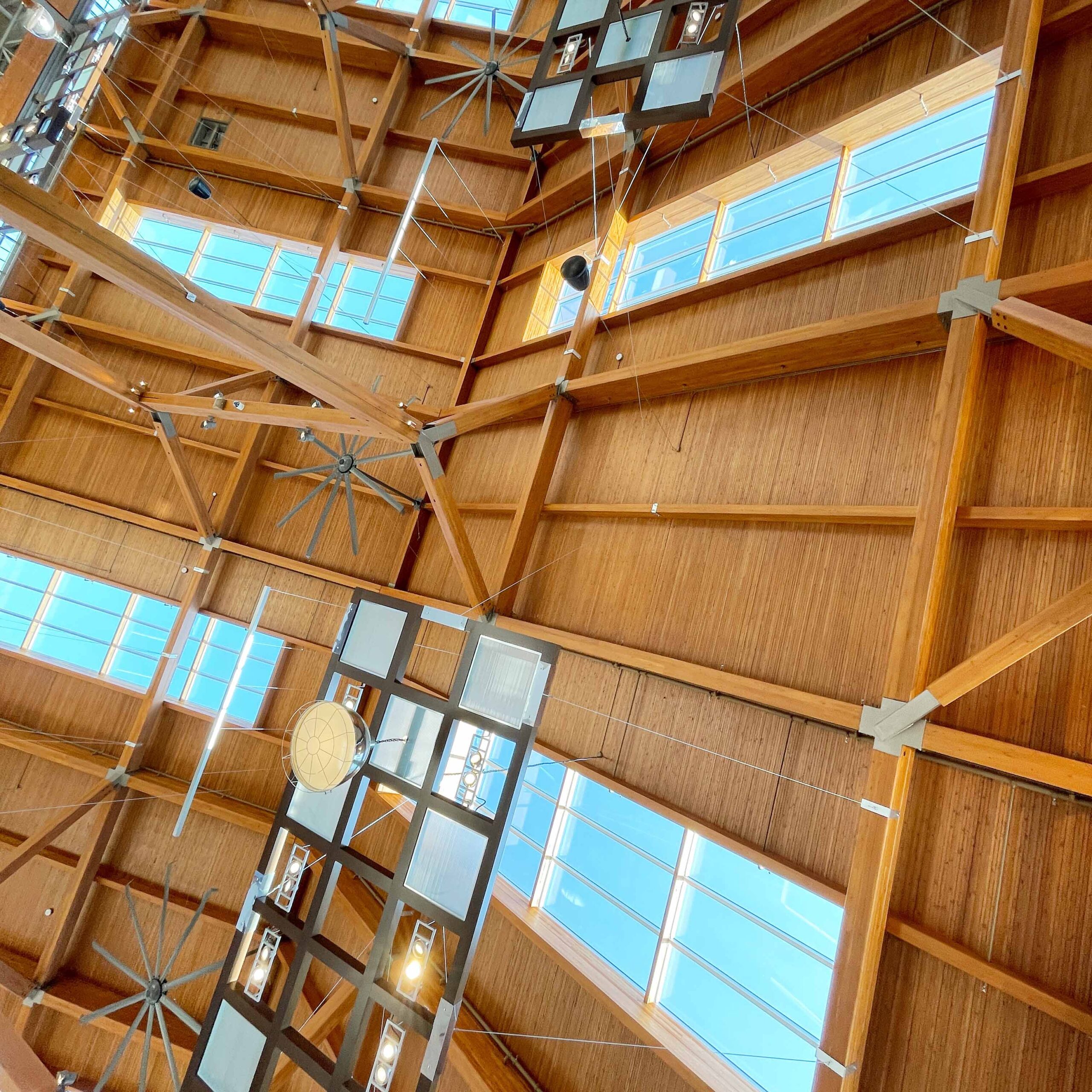 The Wood Innovations Funding Opportunity supports the growth and expansion of U.S. wood products and wood energy markets, advancing sustainable forest management and the long-term stewardship of National Forest System (NFS) lands and other forested areas. …The Wood Innovations Funding Opportunity provides a strategic platform for public, private, and non-profit entities to expand wood markets, promote sustainable forest management, and advance wood energy and mass timber technologies across the United States. By funding projects that create tangible economic and environmental impact, the program strengthens domestic wood product industries while supporting the responsible management of forest resources. Deadline is April 22, 2026

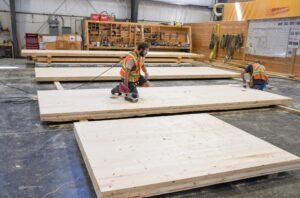 Building homes inside a factory has long been seen as a way to revolutionize the American housing industry, ushering in a new era of higher quality homes at lower price. That dream has never quite panned out. Can California finally make it happen? …For decades engineers, architects, futurists, industrialists, investors and politicians have been pining for a better, faster and cheaper way to build homes. Now, amid a national housing shortage, the question felt as pressing as ever: What if construction could harness the speed, efficiency, quality control and cost-savings of the assembly line? …What if the United States could mass-produce its way out of a housing crisis? …This year, state legislators in California believe the turning-point might actually be here. With a little state assistance, they want to make 2026 the Year of the Housing Factory. At long last.
 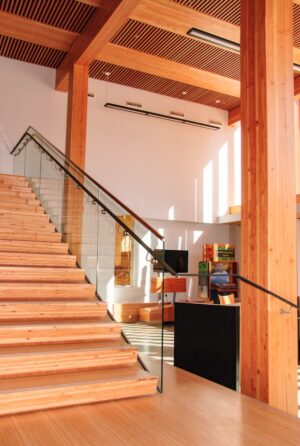 Massachusetts is considering changing state building codes to allow single staircases in multi-family residential buildings up to six stories. Advocates say the change would result in smaller buildings, space savings that could lead to 130,000 new housing units. Before changing the building codes, which currently require two exit stairways, Massachusetts Governor Maura Healey has signed an executive order establishing a technical advisory panel to study potential safety issues. “We’re all about making it easier to build more housing across our state to drive down costs for everyone,” Healey said in a statement. “While the double-stair requirement plays an important role in ensuring safety, it’s also holding us back from the type of housing construction we need to meet demand.” …New York City and Seattle, Washington have “permitted single-stair buildings up to six stories for decades,” the administration says…, as have the states of Tennessee, Montana, and Connecticut.
 A research paper questions a key rationale for expanding road access in national forests. Lifting restrictions on road construction in national forests could lead to more wildfires, according to a newly published study. The research led by a senior scientist at The Wilderness Society — which opposes the Trump administration’s proposal to reopen forests to new roads and logging — reinforces earlier studies finding that fire ignitions are more numerous near forest roads, including for fires started by lightning. The new research, published in the
 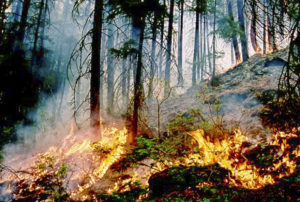 New research from The Nature Conservancy, the University of California, Berkeley and the USDA Forest Service, published in the journal Forest Ecology and Management, details how wildfires could be leveraged to increase forest resilience to future high-severity fires across the Western United States. Wildfires can be a powerful regenerative force for nature. However, modern wildfires in forests across the Western US have become uncharacteristically destructive, largely due to climate change and more than a century of fire suppression. Mechanical thinning and prescribed fire are used to reduce wildfire size and severity, but compliance restrictions and logistical challenges, as well as agency staffing capacity and funding constraints, often limit the scale of their treatment. The paper recommends that forest managers work in and adjacent to recent wildfire footprints to increase the pace and scale of fuel treatments, including low-to-moderate-severity wildfires (beneficial wildfire), and outlines three pathways for effectively leveraging these footprints.
 President Donald Trump on Wednesday issued an executive order invoking the Defense Production Act to promote the domestic production of phosphorus and the weedkiller glyphosate, which he said is critical to both defense and food security. Glyphosate is often targeted by supporters of the Make America Healthy Again movement as a harmful chemical. Trump aligned with the MAHA movement after Secretary of Health and Human Services Robert F. Kennedy Jr. dropped out of the 2024 election. “I find that ensuring robust domestic elemental phosphorus mining and United States-based production of glyphosate-based herbicides is central to American economic and national security,” Trump said in the order. “Without immediate Federal action, the United States remains inadequately equipped and vulnerable.” Glyphosate … has been the subject of controversy over alleged links to cancer. Bayer, the company that makes the glyphosate-based weedkiller Roundup, recently proposed paying $7.25 billion to settle lawsuits claiming the chemical causes cancer.
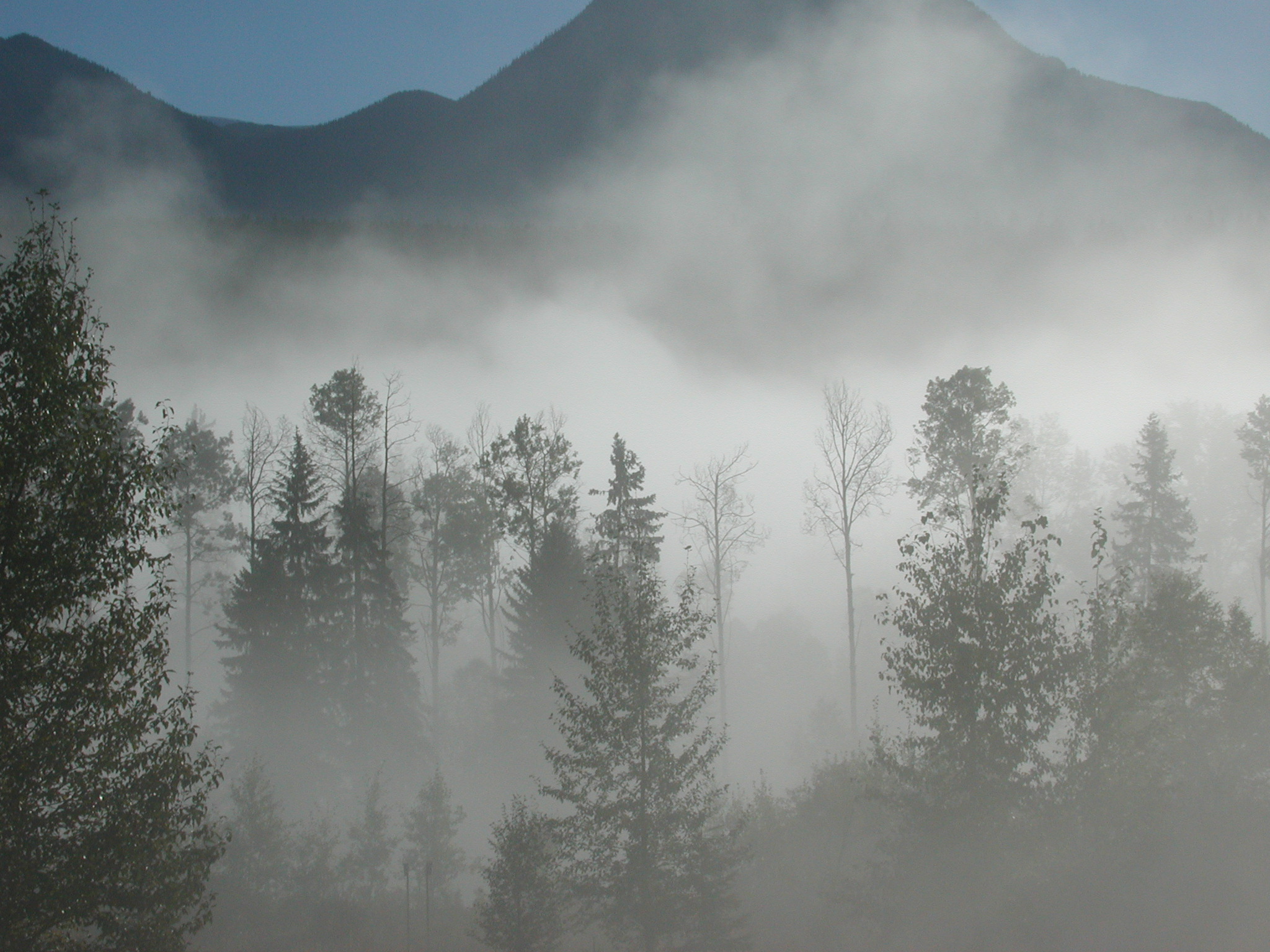 More than 110 million acres of land across the U.S. are protected in 806 federally designated wilderness areas – together an area slightly larger than the state of California. For the most part, these places have been left alone for decades, in keeping with the 1964 Wilderness Act’s directive that they be “untrammeled by man.” But in a time when lands are experiencing the effects of climate change and people are renewing their understanding of Indigenous knowledge and stewardship practices, protecting these places may require action, not inaction. …First, the American ideal that wildlands flourish best in the absence of human management – conflicts with the growing understanding that many wilderness areas are part of the ancestral homelands of Indigenous peoples, who tended those lands for thousands of years. …And second, as climate change and ecological stressors affect wilderness, human intervention could help sustain the very ecological qualities that are protected.
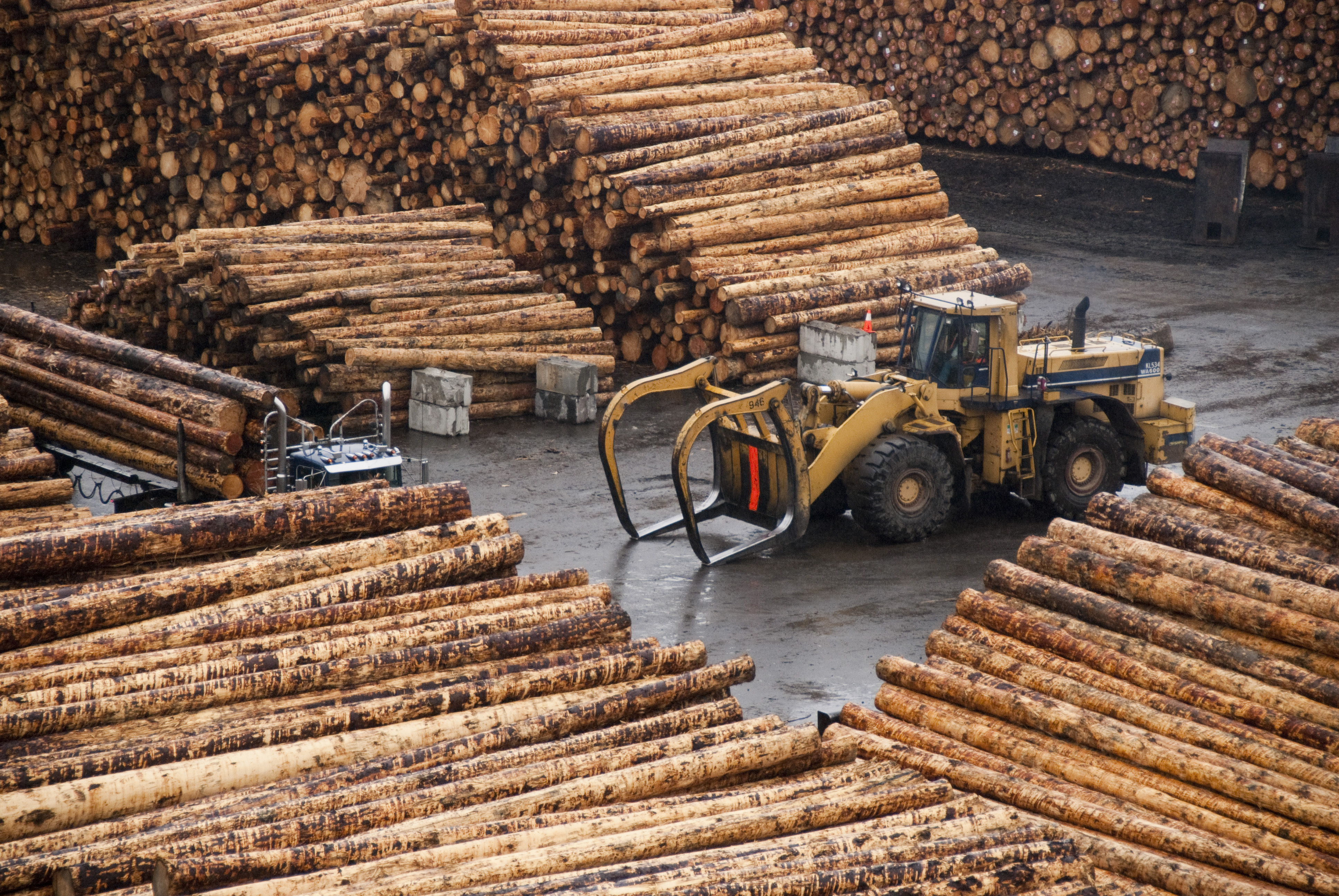 Federal officials are proposing to ramp up logging on 2.5 million acres of western Oregon forests as part of a Trump administration priority to expand domestic timber production. The Bureau of Land Management is asking for public comment on its plan through March 23. The federal agency said last week it would update the Western Oregon Resource Management Plan that governs logging on the state’s checkerboard “O&C forests” located in 18 Oregon counties. Known as O&C lands for having once belonged to the Oregon and California Railroad, the forests produced more than 1 billion board feet of timber annually from 1960 and 1989. …BLM’s latest proposal, issued Feb. 19 … could mean a timber harvest that returns to 1 billion board feet. …Oregon’s timber industry celebrated the latest news… Environmental groups strongly opposed the decision…

 ARIZONA — A coalition of local governments, timber industry representatives and environmental groups plans to tell congressional leaders and US Forest Service officials this week that Northern Arizona’s forests — and the timber industry that depends on them — face collapse without construction of a second, 30-megawatt biomass-burning power plant. The group will carry that message to Washington, DC, arguing that a “biomass bottleneck” threatens forest restoration efforts, watersheds and rural communities. Two concurring reports outline the concern: one issued by the Eastern Arizona Counties Organization and the Natural Resources Working Group in the White Mountains, and another from the Greater Flagstaff Forest Partnership (GFFP) and the Forest Biomass Coalition Working Group. …The report concludes that, while private industry may eventually develop products such as fiberboard or biochar from forest byproducts, only a second biomass-burning plant near Flagstaff or Winslow offers a proven, near-term solution.
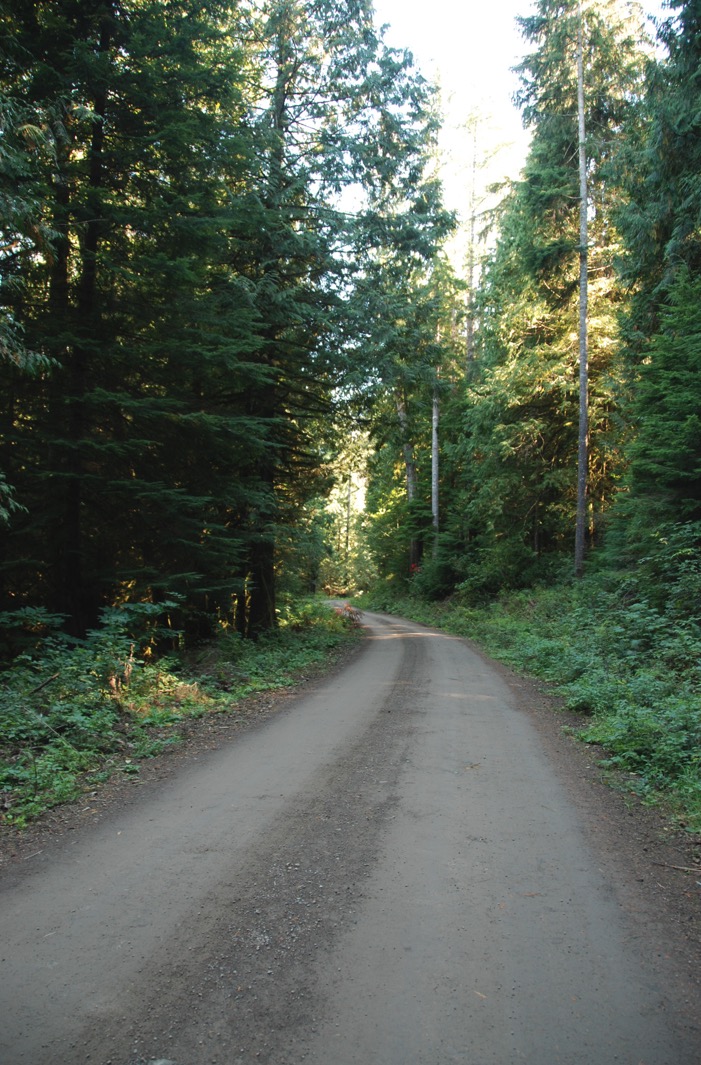 Montana — Punch more roads through the forest, and you’ll get more people starting fires, fewer bull trout and an even heftier maintenance bill. Keep the 2001 Roadless Rule in place, and you’ll ensure elk have a healthy habitat, and you’ll still be able to reduce wildfire risk. Those were some of the arguments former U.S. Forest Service employees made Friday at the edge of the Silver King Inventoried Roadless Area east of Missoula. Montana Trout Unlimited and the Montana Chapter of Backcountry Hunters and Anglers hosted the event as the Trump administration takes steps to repeal the 2001 Roadless Rule. The rule prohibits building roads and harvesting timber on 30% of Forest Service land in the country, or 60 million acres. In Montana, that’s 6.4 million acres, or 37% of Forest Service land in the state.

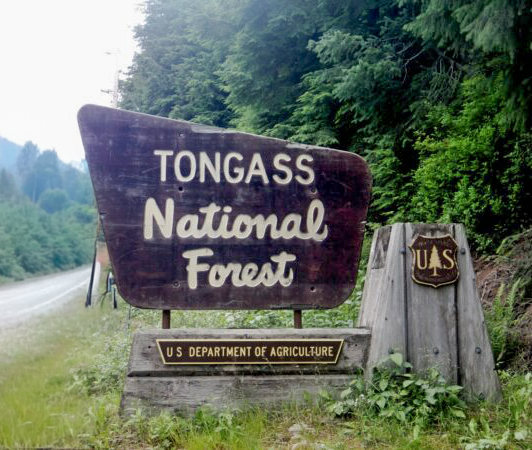 A plan to revise the Tongass National Forest Land and Resource Management plan, with a new emphasis on timber and other resource industries as mandated by President Donald Trump, is set to begin a 30-day public comment period. … The 1979 plan for the 16.7-million-acre forest has been revised three times, most recently in 2016, and the agency hopes to publish a new draft plan by this fall. A forest service press release spells out the past and new parameters that will be considered in the revised draft. “Public comments will help identify changes that are needed to the current plan, adopted in 1997, to align with best available science, as well as laws and regulations, including Presidents Trump’s Executive Order 14225 – Immediate Expansion of American Timber Production to support American economies and improve forest health and Executive Order 14153 Unleash Alaska’s Extraordinary Resource Potential, benefitting the Nation and the American citizens who call Alaska home.”
 SALEM — A bill meant to reward Oregon landowners for wildfire risk mitigation with more affordable insurance rates will survive until the end of the 2026 legislative session. However, supporters of Senate Bill 1540 haven’t yet reached complete agreement with the insurance industry on the proposal, which could threaten its passage given this year’s time constraints. “It is a challenge to get this done in a 35-day session,” said Kenton Brine, president of the NW Insurance Council, which represents the regional industry. In broad terms, SB 1540 will require insurance companies to consider wildfire mitigation actions in their models for assessing risk, which inform pricing and policy decisions. Insurers will have to submit these models for verification with Oregon’s Department of Consumer and Business Services, but if they don’t, they will still have to offer discounts to landowners who undertake wildfire mitigation steps.
 CHEYENNE—A $5.1 million investment that would create the first two ground-based professional wildland firefighting teams in Wyoming history is gaining momentum in the statehouse. On Monday, the Wyoming House of Representatives passed House Bill 36, “Forestry division wildland fire modules.” The bill included an earmark of $2.7 million for one team of firefighters going into the day, but Buffalo Republican Rep. Marilyn Connolly brought an amendment that doubled the funding, providing enough to finance two crews — one each in the eastern and western sides of the state. The former Johnson County emergency management coordinator spoke about her experience being on the ground while wildfires were spreading and resources were lacking. “We need some strike teams, we need engines — and they’re not available,” Connolly said on the House floor.
 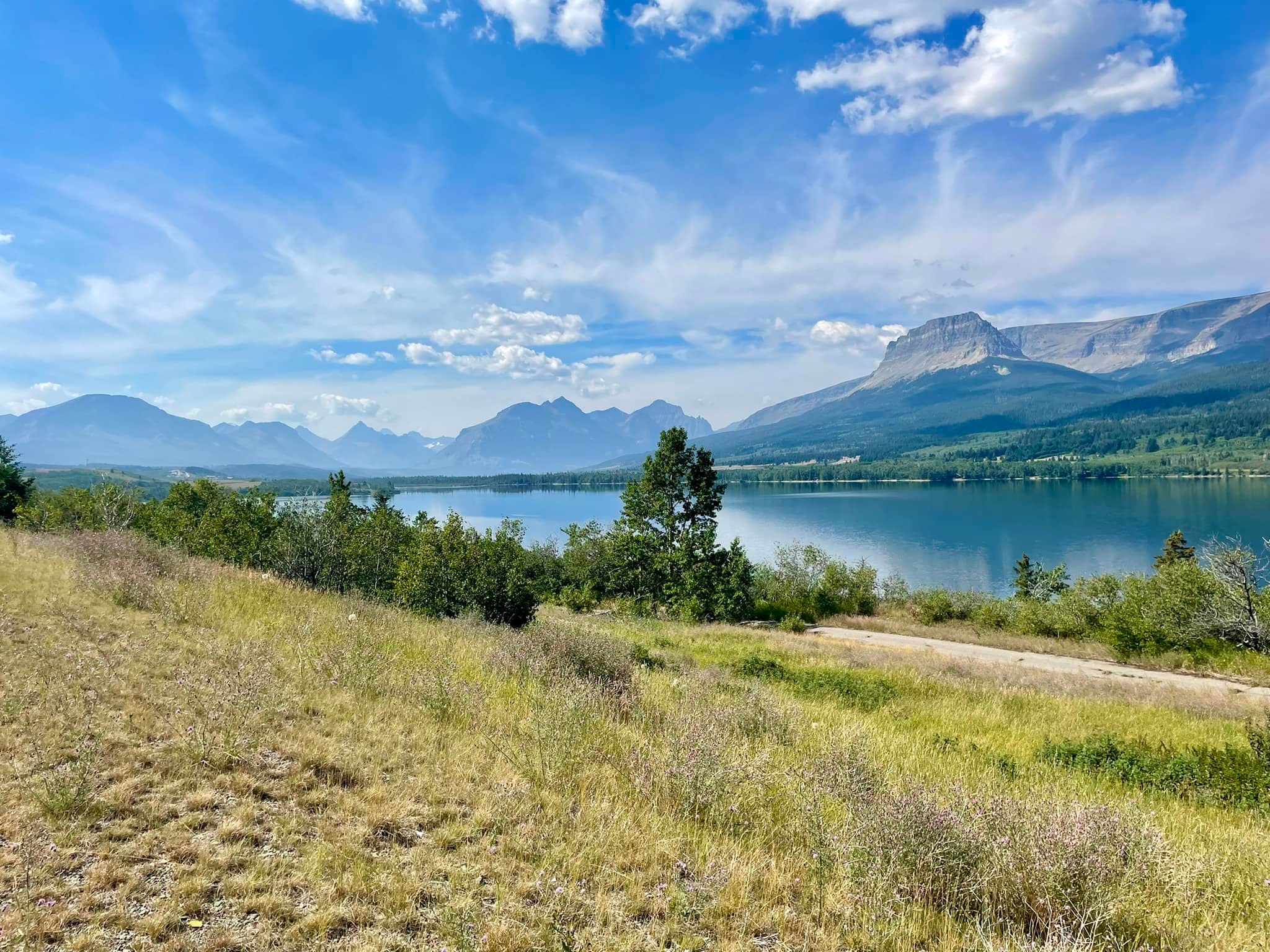 Senator Steve Daines received federal agency backing on Thursday for his bill to downgrade three remote Montana landscapes from potential wilderness to regular public forest. Officials from the U.S. Forest Service and Bureau of Land Management told the Senate Subcommittee on Public Lands, Forests and Mining they supported Daines’ S.3527, the Montana Sportsmen Conservation Act. Chris French, associate chief for the Forest Service, told the subcommittee the Trump administration didn’t support creating new wildernesses or wilderness study designations. BLM state official John Raby added that his agency was intent on fulfilling the president’s agenda supporting “fire management, recreation, access … and domestic mineral production to the maximum practical extent.” Wilderness status is the highest level of protection for public lands. …Outside the hearing, several environmental organizations criticized Daines’ bill. Barb Cestero, The Wilderness Society’s Montana state director, called it “deeply flawed.”
 Oregon entities funded by timber sales want to ensure revenue. For the third consecutive legislative session, a group of Oregon county governments hope to pass a bill requiring more predictable timber harvests in state forests. Similarly to past proposals, House Bill 4105 would require the Oregon Department of Forestry to annually log enough trees to comply with a 10-year “sustainable harvest level” adopted by the agency. If fewer trees are logged than required by the sustainable harvest level, that amount of timber would be added to the next 10-year plan, unless the reduction was due to wildfire, disease or storm damage. …Environmental groups are opposed to HB 4105, similarly to previous versions of the proposal that failed to pass in 2025 and 2024, because they say the ODF already does a good job of estimating logging levels.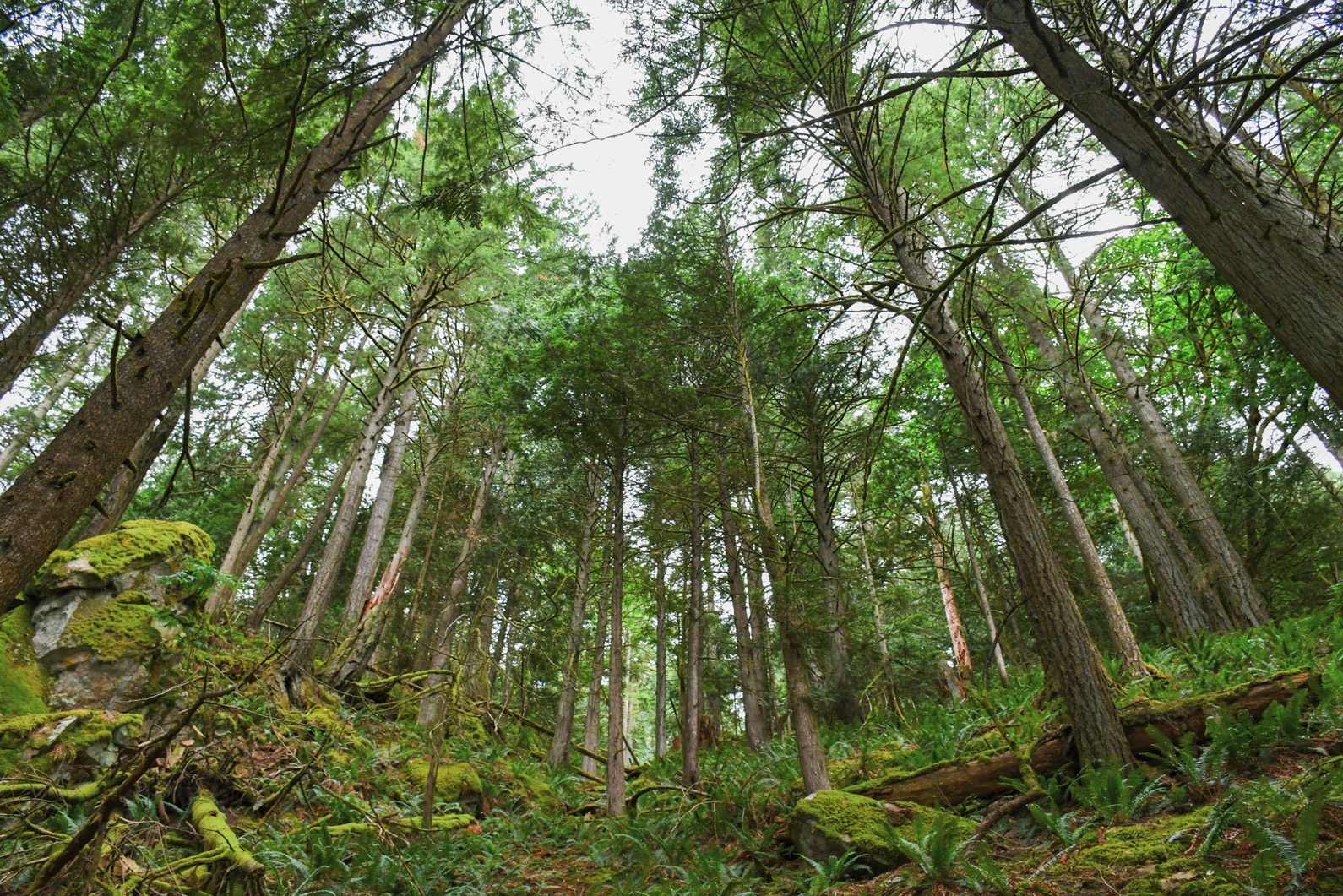
 COLORADO — Forest experts are warning that Boulder’s foothills could look markedly different this year as a mountain pine beetle outbreak intensifies, with potentially far-reaching impacts on recreation and fire risk. Landowners are urged to watch for signs of beetle infestation. The state has taken action: Gov. Jared Polis announced a task force in December aimed at protecting Front Range forests from mountain pine beetle over the next decade. Boulder County has seen increased beetle activity in several areas, including upper Lefthand Canyon and Jamestown. Years of drought, warmer temperatures and overcrowded forests have weakened trees, creating ideal conditions for beetles to spread rapidly and overwhelm remaining healthy stands. …The brood of beetles already in trees and poised to spread this summer is substantial, according to Colorado State Forest Service entomologist Dan West. “It’s kind of this cake that’s already being baked,” West told Boulder Reporting Lab.
 WILMINGTON, N.C. – The N.C. Forest Service (NCFS) is reminding the public to use best practices and common sense with outdoor fires ahead of the state’s spring wildfire season. NCFS officials say escaped yard debris burns are the leading cause of wildfires across the state, often due to carelessness. 99% of wildfires are caused by human activity, officials said, often when people work in their yards in spring and burn yard debris. Other causes of human-caused wildfires include machine and vehicle use, such as dragging tow chains, arson and escaped campfires. “With the recent rainfall combined with multiple winter storms earlier this year, some folks may not realize that most of North Carolina is still experiencing very dry conditions,” said Agriculture Commissioner Steve Troxler. “Our state’s gradual descent into drought and prolonged dry conditions are going to lead to wildfires igniting more easily, burning more intensely and spreading quicker.”
 LITTLE ROCK, Arkansas — The Arkansas Department of Agriculture announced some of its forestry personnel will go to Oklahoma and Tennessee to help with wildfire suppression and winter storm response. Governor Sarah Huckabee Sanders authorized state forestry personnel to support wildfire suppression in Oklahoma and urban tree recovery in Tennessee. …Six wildland firefighters will go to Oklahoma for around two weeks. These firefighters will focus on attacking and suppressing new wildfires to prevent further spread. The Department is also sending four bulldozers and two pick-up trucks to help. Three urban forestry personnel will go to Tennessee to join an Urban Forest Strike Team, a specialized group of certified arborists, foresters, and urban forestry experts. Arkansas forestry personnel will help the UFST with tree damage and risk assessments, hazard mitigation planning, and technical expertise and training.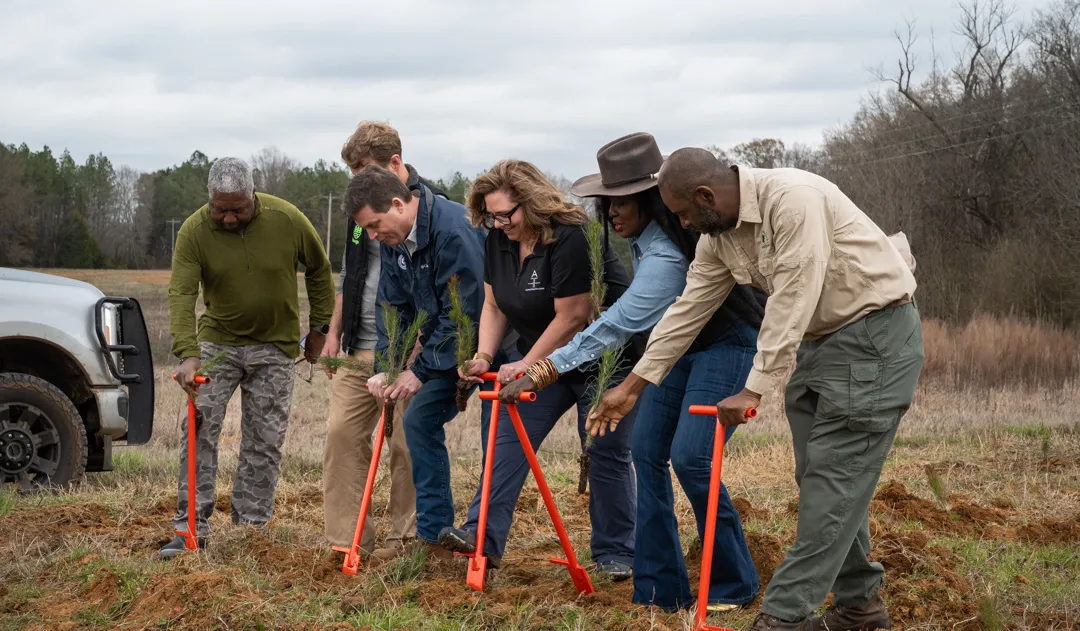
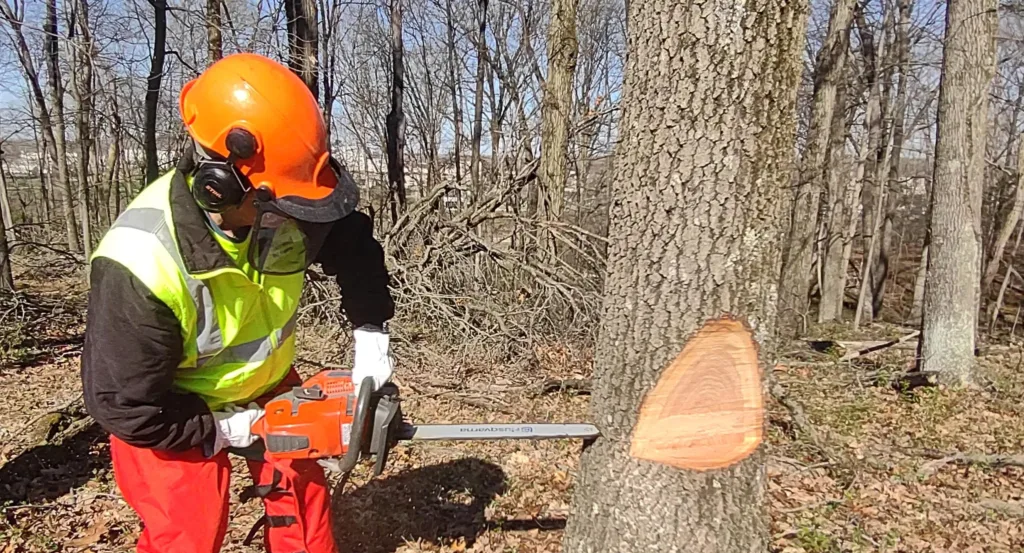


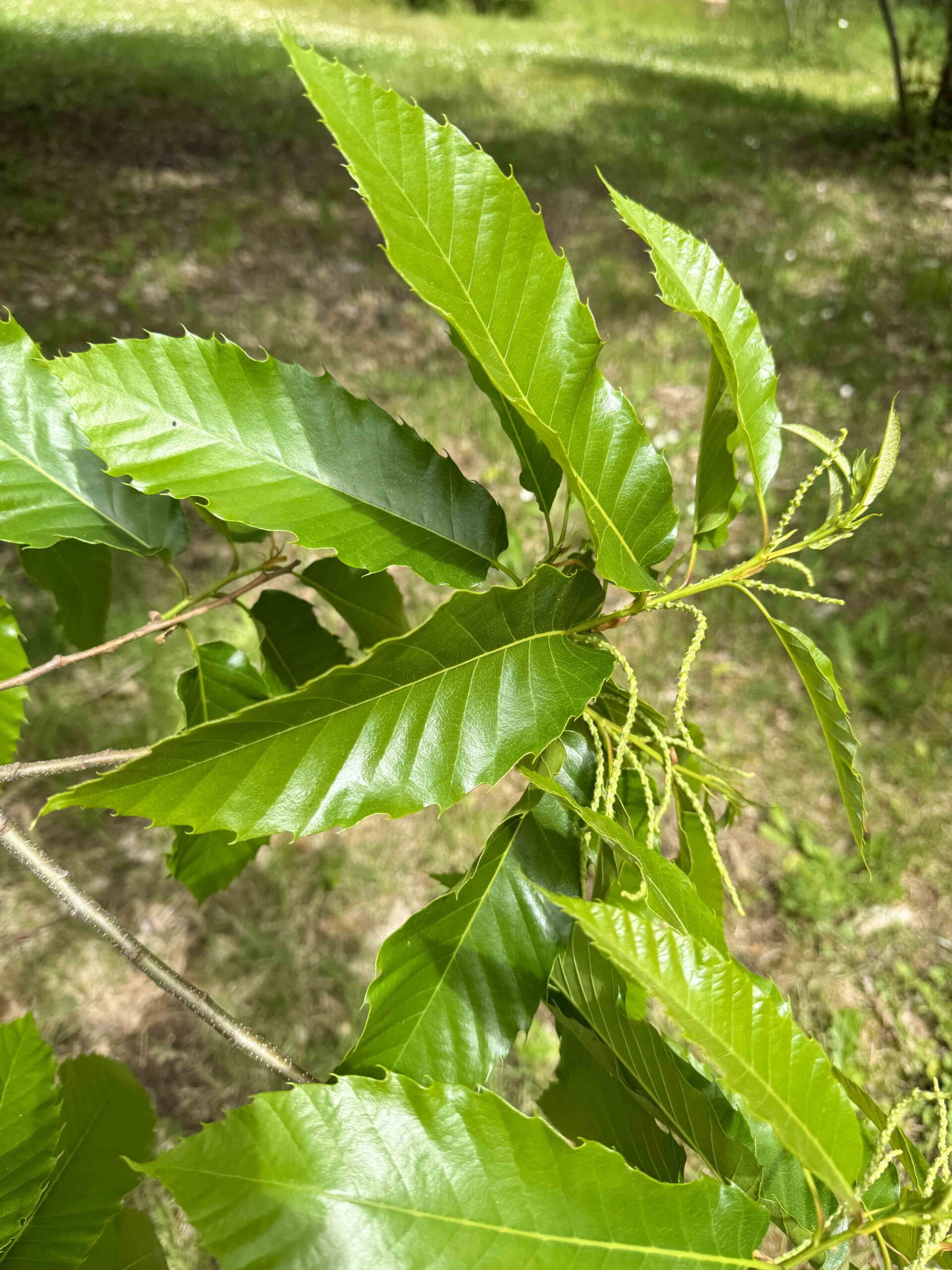 CHARLOTTESVILLE, Va. — Virginia’s forestry leaders are working to address mounting pressures that could undermine the long-term viability of forest management throughout the state. The newly formed Virginia Wood Council convened its inaugural meeting in September, bringing together representatives from various industry groups and government agencies. Participants included the Virginia Farm Bureau, Virginia Forestry Association, Virginia Loggers Association, Virginia Forest Products Association, Virginia Department of Agriculture and Consumer Services, the Virginia Economic Development Partnership, along with loggers, mill operators and manufacturers. “The plan is to understand all the emerging forest product industry issues, and figure out what’s causing them,” said Sabina Dhungana, utilization and marketing program manager for the Virginia Department of Forestry. …The industry operates through collaboration between forest property owners, forestry professionals, loggers, timber purchasers and other specialists who work to maintain a consistent supply of renewable timber resources used for lumber production, paper manufacturing, energy generation and other purposes.
 A coalition of health and environmental groups sued the Environmental Protection Agency (EPA) on Wednesday, challenging the rescinding of a scientific finding that has been the central basis for U.S. action to regulate greenhouse gas emissions and fight climate change. A rule finalized by the EPA last week revoked
  Supporters of the “Make America Healthy Again” strategy have long railed against pesticides, making opposition to them a pillar of the movement. But an executive order issued by U.S. President Donald Trump last week collides with that long-held stance. The order states that glyphosate … is “central to American economic and national security” and calls for an adequate domestic supply. Glyphosate inhibits protein synthesis in plants and microorganisms, leading to their death. Scientists can genetically modify field crops — choosing which survive after glyphosate treatment. US Health and Human Services Secretary Robert F. Kennedy Jr., a key figure in the MAHA movement, has long opposed glyphosate-based pesticides. …He reiterated last month on Katie Miller’s podcast that “I believe glyphosate causes cancer.” But Kennedy sounded a different tone. “Donald Trump’s executive order puts America first where it matters most — our defense readiness and our food supply,” said Kennedy.
 Warm, dry and windy weather in Oklahoma has fueled multiple wildfires and prompted authorities to urge nearly one-third of the residents of the small city of Woodward to flee. Matt Lehenbauer, director of emergency management for Woodward and its nearly 12,000 inhabitants, said the evacuation recommendation covers roughly 4,000 people. It is voluntary, he said, because Oklahoma prohibits mandatory evacuations. The wildfire in Woodward, about 140 miles northwest of Oklahoma City, is approaching a “worst-case scenario,” Lehenbauer said, but it hasn’t moved into the most populated area of the city. A blaze in Beaver County at the base of the Oklahoma Panhandle, about 217 miles northwest of Oklahoma City, has consumed an estimated 15,000 acres alone, Oklahoma Forestry Services said.