
Robert McKellar
Friday’s Tree Frog interview with political risk expert Robert McKellar drew exceptional interest—and for good reason. Given reader response and the ongoing fallout from Trump’s trade policies, we’re featuring it again for those who missed it. McKellar, who divides his time between Turkey and Canada, brings an international perspective to his analysis of Trump’s second-term trade environment and its implications for Canada’s forest sector. His message is clear: US protectionism is not a passing phase. The current tariff and duty structure reflects a broader nationalist realignment that will persist well beyond the Trump presidency. He notes it is unlikely that the upcoming USMCA review will restore pre-Trump-2 market access, and that while Washington is betting tariffs will attract new foreign investment, the result has instead been greater political risk.
McKellar also examines the recent US–China flare-up, concluding it is unlikely to reignite a full-scale trade war. Within the US, he observes that political momentum currently favours the US Lumber Coalition over homebuilders, but that balance could shift if housing affordability again becomes a political flashpoint. Should the housing crisis deepen, Trump has shown he’s willing to adjust course when broader political pressures outweigh protectionist instincts. For Canadian producers, diversification and value-added strategies remain essential—but slow to materialize. That reality underpins McKellar’s central question: “If that’s true—then what?” His answer calls for a fundamental shift in mindset—challenging the sector to rethink its future and chart a course less dependent on the US market. He concludes that companies should view political-risk awareness as a practical framework—linking foresight, market intelligence, and decision-making into a continuous process of adaptation. The tools already exist within most organizations, he says; the opportunity lies in using them more deliberately as part of everyday business planning.


 A U.S.-Canada trade deal on steel, aluminium and energy could be ready for Prime Minister Mark Carney and US President Donald Trump to sign at the Asia-Pacific Economic Cooperation summit later this month in South Korea, the
 BURNABY, BC — Interfor announced today revised operating plans for the fourth quarter of 2025. Due to persistently weak market conditions and ongoing economic uncertainty, Interfor will further temporarily reduce lumber production across its operations in British Columbia, Ontario, the US Pacific Northwest and the US South. These curtailments are expected to reduce lumber production in the fourth quarter of 2025 by approximately 250 million board feet, or 26%, as compared to the second quarter of 2025, which reflected a more normal operating stance. The curtailment volumes are approximately evenly split between Interfor’s Canadian and U.S. operations. …These curtailments are an amendment to Interfor’s previously announced curtailments on September 4, 2025. “Lumber prices in all regions of North America have continued to weaken, from already unsustainably low levels,” said Ian Fillinger, Interfor’s CEO. …While necessary, we fully recognize the impact these actions will have on our employees, contractors, suppliers and communities.”


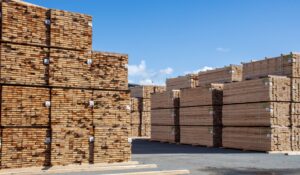 The US imports about 40% of the softwood lumber the nation uses each year, more than 80% of that from Canada. President Trump says that the US has the capacity to meet 95% of softwood lumber demand and directed federal officials to update policies and regulatory guidelines to expand domestic timber harvesting and curb the arrival of foreign lumber. …As researchers studying the forestry sector and international trade, we recognize that the US has ample forest resources. But replacing imports with domestic lumber isn’t as simple as it sounds. There are differences in tree species and quality, and U.S. lumber often comes at a higher cost, even with tariffs on imports. Challenges like limited labor and manufacturing capacity require long-term investments, which temporary tariffs and uncertain trade policies often fail to encourage. In addition, the amount of lumber imported tends to mirror the boom-and-bust cycles of housing construction, a dynamic that tariffs alone are unlikely to change.
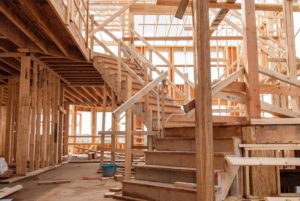 President Trump ushered in new tariffs on imported furniture, kitchen cabinets and lumber on Tuesday, adding a fresh round of levies as he once again threatened to expand his trade war with China. Tariffs ranging from 10% to 50% on foreign wood products and furniture snapped into effect just after midnight. The tariffs are meant to encourage more domestic logging and furniture manufacturing. But critics say that the levies will raise prices for American consumers and could slow industries including home building that rely on materials from abroad. …Critics have called it a stretch to issue the furniture and lumber tariffs under the national-security-related law. …Some American manufacturers lobbied for the tariffs. …Some economists expect the higher price of lumber, along with home furnishings, will slow the pace of home building. That could set back the Trump administration’s goals of improving a weak housing market. [to assess the full story a NY Times subscription is required]
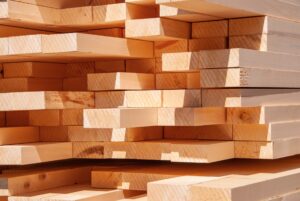 The US is now collecting tariffs on imported timber, lumber, kitchen cabinets, bathroom vanities and upholstered furniture, duties that threaten to raise the cost of renovations and deter new home purchases. …Trump described his wood and furniture tariffs as helping to “strengthen supply chains… and increase domestic capacity utilization for wood products.” Yet

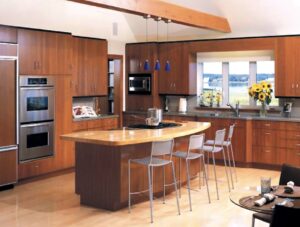 NEW YORK — Cabinet dealers, interior designers and remodeling contractors in the U.S. hope new tariffs on imported kitchen cabinets, bathroom vanities and upholstered wooden furniture will boost domestic production of those products. But several small business owners in the home improvement industry say they expect some short-term pains from the import taxes. Potential customers may postpone kitchen and bathroom renovations until costs — and the economy — seem more stable. …The American Kitchen Cabinet Alliance lobbied for tariffs to help offset what they described as a flood of cheap cabinets from countries such as Vietnam, Malaysia, China and elsewhere in the decades since manufacturing moved offshore. …Although the White House said the tariffs were intended to boost domestic production and protect U.S. businesses from predatory trade practices, some cabinet makers say that will be difficult because their supply chains are multinational.
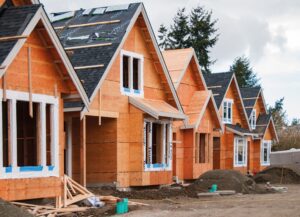 President Trump’s new tariffs on imported lumber and wooden fixtures have taken effect, potentially raising the cost of home construction and renovations. …“These new tariffs will create additional headwinds for an already challenged housing market by further raising construction and renovation costs,” says NAHB Chairman Buddy Hughes. …According to an NAHB analysis, U.S. sawmills are operating at just 64% of their potential capacity, a figure that has dropped steadily since 2017. “It will take years until domestic lumber production ramps up to meet the needs of our citizens,” the trade group says”. …Framing costs, including the roof, averaged about $49,763 for new single-family homes last year, accounting for about 12% of the total cost of a new build, according to an NAHB breakdown. Cabinets and countertops cost $19,056 on average, accounting for 4.5% of the total, the analysis found. …Builder profit margins have already been shrinking, and many companies have pulled back on new construction.
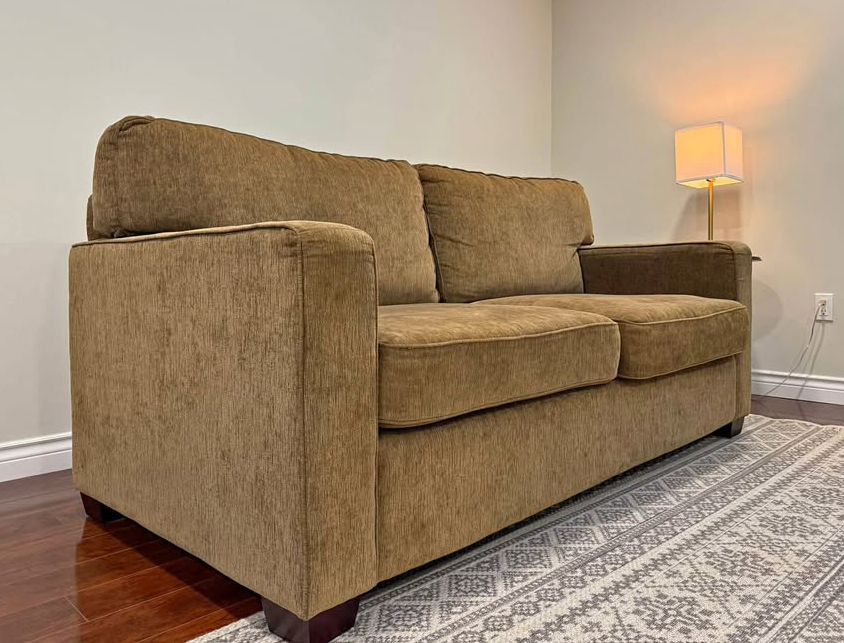 The Trump administration and its advocates have long sold tariffs as a smart and necessary way to reindustrialize the country, bolster national security, and revitalize the economy more broadly. In practice, however, they put tariffs on cabinets and sofas for “national security” reasons, exempt others because of potential political blowback, and do all sorts of other things that likely undermine the economic and security objectives the administration says its tariffs are achieving. And they do it all with little regard for the facts, economics, or law. Throw in some foolish nostalgia (contra the president, furniture manufacturing is today a tiny share of North Carolina’s economy and workforce), and the furniture tariffs make for an almost-perfect example of the canyon between protectionist rhetoric and US tariff reality. The only thing preventing perfection is that there isn’t a “national emergency” or fake “fiscal crisis” attached.




 The Mississippi Department of Environmental Quality permit board on Wednesday reversed a decision from earlier this year and granted wood pellet manufacturer Drax a permit that allows it to release more emissions from a facility in Gloster. The board held a two-day evidentiary hearing after denying the company the permit in April. The permit falls under Title V of the Clean Air Act and allows Drax’s facility Amite BioEnergy, to become a “major source” of Hazardous Air Pollutants, or HAPs. The board voted unanimously in favor of granting the permit said Kim Turner. Evidence from the hearing “sufficiently addressed” concerns the board previously had. MDEQ has found the facility in violation multiple times since Drax opened the Amite County plant in 2016. …Drax applied for the permit in order to better reflect its production capacity. Since violating the current permit, Amite BioEnergy has had to decrease its pellet output.
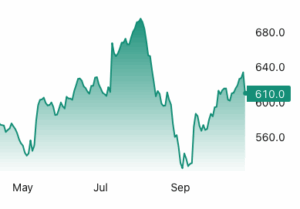 Lumber futures fell below $610 per thousand board feet, their lowest level since October 8 and down 12% from a three-year high in early August, as a slowing US housing market outweighed potential supply curbs from tariffs. August building permits dropped to a seasonally adjusted annualized rate of 1.33 million, the lowest since May 2020, while housing starts fell 8.5%, marking the fourth-lowest reading in over five years. Earlier this month, the US imposed a 10% tariff on Canadian lumber, with the Trump administration stating it aims to expand domestic timber harvesting and reduce reliance on foreign lumber. Looking ahead, expected Federal Reserve rate cuts could stimulate construction and home buying and encourage homeowners to borrow for repairs and renovations, the largest driver of lumber demand. However, signs of a slowing labor market and rising inflation suggest demand may remain subdued.
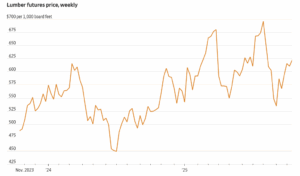 Lumber futures have risen about 19% from a low hit in early September, driven by the production cuts, hopes that declining interest rates will revive the housing market and Trump’s import tax. The 10% levy is on top of steep duties on Canadian lumber, which are adjusted annually in a heavily litigated process that is the result of a decades-long trade dispute. Those antidumping and countervailing duties rose in August to about 35% for most Canadian producers, up from roughly 15%. Canada’s sawmills are by far the largest source of softwood lumber from beyond U.S. borders, fulfilling about 24% of domestic consumption last year. Other significant importers of softwood lumber, the type used to frame houses, include Brazil and European countries such as Germany and Sweden. Homebuilders argue that import taxes will raise construction costs. U.S. lumber producers and timberland owners, however, urged Trump to enact a tariff.
 Section 232 tariffs were once seen as a fortress for US metals. Yet, that fortress now casts a much longer shadow. Companies far removed from the steel and aluminum sector could soon find themselves ensnared in tariffs they never imagined, thanks to the inclusion process for “derivative” products. The Trump Administration has steadily expanded Section 232 authority well beyond their original steel and aluminum targets, to copper, automobiles, trucks, lumber, and even wooden cabinets. These tariffs, which range from 10% (for lumber) to 50% (for steel and aluminum), are layered on top of normal import duties. At first glance, these measures appeared to strike only those industries handling raw materials. But in 2025 the Administration sought to close what it saw as a loophole: downstream products containing tariffed metals that could enter duty-free. As a result, section 232 tariffs were imposed on the raw material and a finite list of derivative products.
 Ikea is increasing the amount of products it makes in the US as the world’s largest home furnishings retailer comes under pressure from US President Donald Trump’s tariffs on furniture and kitchen cabinets. The flat-pack retailer, which made revenues of $5.5bn in the US last year, currently produces only about 15% of products that it sells in the US domestically. That compares with 75% local production in Europe and 80% in Asia. “We want to continue to expand in the US and Canada — how do we optimise a good supply set-up where we secure the right access to materials, to components, to production? That’s very long-term work that we’re doing,” Jon Abrahamsson Ring, chief executive of Inter Ikea. Trump imposed tariffs of between 10% and 50% on imports of foreign furniture and wood products. Ikea, which is responsible for about 1% of total industrial production, is set to take a significant hit.
  With new tariffs taking effect on furniture and lumber, an analysis released by Goldman Sachs finds American consumers are paying for more than half of the cost of the levies imposed by President Donald Trump. In a research note to its clients, the global investment and banking giant said U.S. consumers will absorb 55% of tariff costs by the end of this year. American businesses would pay 22% of the costs, foreign exporters would absorb 18% and 5% would be evaded, according to the Goldman Sachs analysis. Consumers could end up paying 70% of the cost by the end of next year, the report said. “At the moment, however, US businesses are likely bearing a larger share of the costs because some tariffs have just gone into effect and it takes time to raise prices on consumers and negotiate lower import prices with foreign suppliers,” the analysis adds.


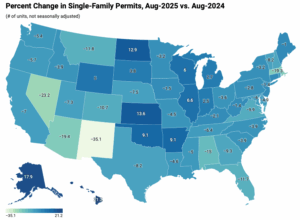 In August, single-family permit activity softened, reflecting caution among developers amid persistent economic headwinds. This trend has been consistent for eight continuous months. On the multifamily front, permitting also cooled in August but remains in the positive territory. While single-family continues to bear the brunt of affordability headwinds, the multifamily space is showing tentative signs of rebalancing. Over the first eight months of 2025, the total number of single-family permits issued year-to-date (YTD) nationwide reached 637,096. On a year-over-year (YoY) basis, this is a decline of 7.1% over the August 2024 level of 685,923. For multifamily, the total number of permits issued nationwide reached 330,617. This is 1.4% higher compared to the August 2024 level of 326,080. HBGI analysis indicates that this growth for multifamily development has been concentrated in lower density areas and among smaller builders.
)
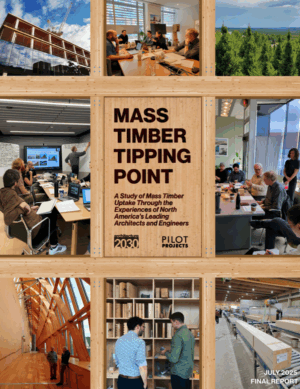 Mass timber is gaining momentum as a structural material that, along with many other attributes, can reduce the embodied carbon in new buildings and retrofits. Despite this potential, and widespread enthusiasm in the design community, the uptake of mass timber has been relatively slow. Architecture 2030 and Pilot Projects Collaborative’s new report,
  As National Forest Products Week is observed each October, the US Endowment for Forestry and Communities is highlighting one of its partner programs that supports and advances US-based manufacturing. The Endowment is administering $5 million of the USDA Forest Service’s $80 million Wood Innovation Grants program, overseeing 18 individual projects across the country. Each project includes matching funds from subaward recipients, resulting in a total impact of approximately $10 million. Together, these investments will advance wood product manufacturing, strengthen forest management and foster energy innovation for timber-producing communities. …“Our forests are only as strong as the markets that sustain them. Through programs like the Wood Innovation Grants, we’re creating new opportunities for innovation while reinforcing the resilience of both ecosystems and the communities that depend on them. Strengthening U.S. wood products manufacturing is necessary to achieve these goals.”
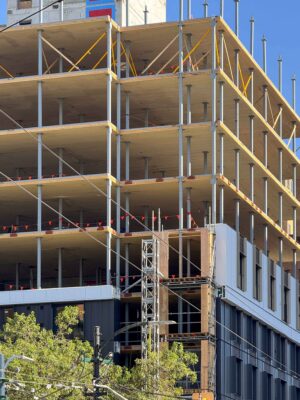 While sustainable solutions are facing drastic funding cuts, mass timber as a sustainable construction material is steadily gaining traction across the US. Construction using mass timber began in 2015 in the US, and since then the number of projects has grown about 20% annually. Today, over 2,500 mass timber projects are built or in progress in the US, including corporate offices for companies such as Google, Microsoft and Under Armour. …“We have lots of tech firms and big companies that say, ‘Hey, we’re battling it out for workers. We want the best space possible,’” said Bill Parsons, COO at WoodWorks. …Legislation that promotes and programs that fund mass timber, such as the Mass Timber Federal Buildings Act and the Wood Innovations Grant Program from the USDA, are still progressing. …Studies have shown that living or working in a mass timber building improves occupants’ mental health and well-being, even lowering their blood pressure and heart rates.
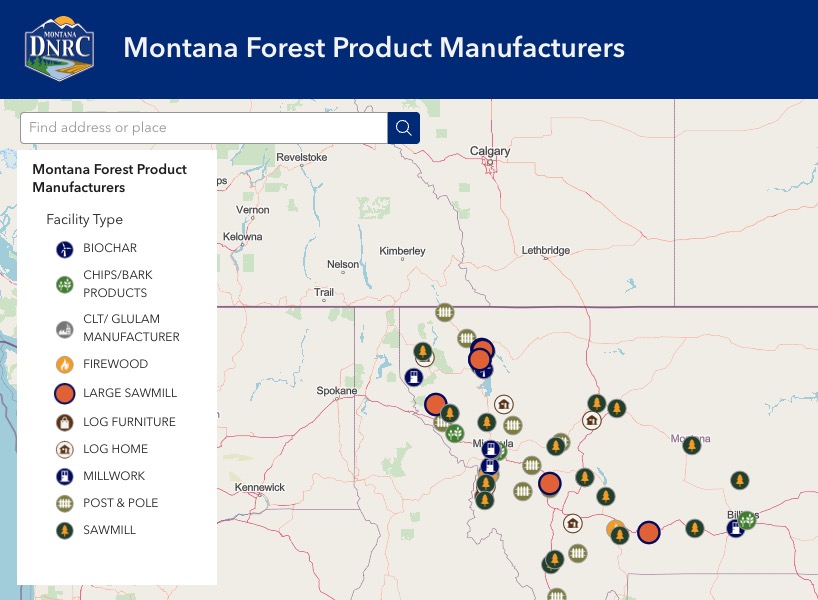 HELENA, Mont. — The Montana Department of Natural Resources and Conservation (DNRC) has launched an online interactive map showing forest product manufacturers across the state. The new tool helps landowners, contractors, and community members locate nearby mills and connect with partners for forest management and wood processing projects. Each facility listing includes details such as product types, wood species used, and company size, with direct links to their websites. “Beyond helping Montanans find nearby mills, the map highlights manufacturing capacity that supports forest restoration, fuels reduction, and local jobs,” said Marc Vessar, DNRC forest practices program manager.

 NASHVILLE, Tenn.– LP Building Solutions (LP) announced the continuation of its partnership with the [US based] Forest Workforce Training Institute’s ForestryWorks® program and a new collaboration with the [British Columbia, Canada] First Nations Forestry Council. Both initiatives aim to develop the next generation of forestry professionals and advance sustainable forest management across North America. …“Programs like ForestryWorks and First Nations Forestry Council help ensure forests remain healthy and productive while supporting the future of sustainable forestry,” said LP Chair and CEO Brad Southern. “By investing in tomorrow’s workforce, we’re also investing in the continued success of renewable, high-performance building solutions.” …“We’re pleased to welcome LP Building Solutions as a program partner in advancing Indigenous participation in forestry through the Indigenous Forestry Scholarship Program,” said BC First Nations Forestry Council CEO Lennard (Suxʷsxʷwels) Joe.
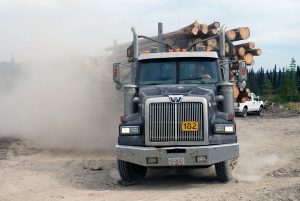 CLANCY, Montana — Healthy forests depend on a strong forest products industry. Sawmills help support thousands of Montana jobs, reduce wildfire risks, and provide a renewable resource. Despite recent mill closures in Missoula and Seeley Lake, Marks Lumber in Clancy continues to carry on. …Both Roseburg Forest Products in Missoula and Pyramid Mountain Lumber in Seeley Lake closed last year. Marks Lumber has been open for 36 years, and they have adapted to industry changes before. “ …In light of the recent closures, they have made some changes, including shifting to more board production (processed wood) rather than the raw tree, which is more expensive to manufacture, and slowing down on how much logging they do. Marks Lumber also had to change where their sawdust and chips go. Roseburg used to buy that material, but now they send them to Weyerhaeuser Forest Products in Columbia Falls.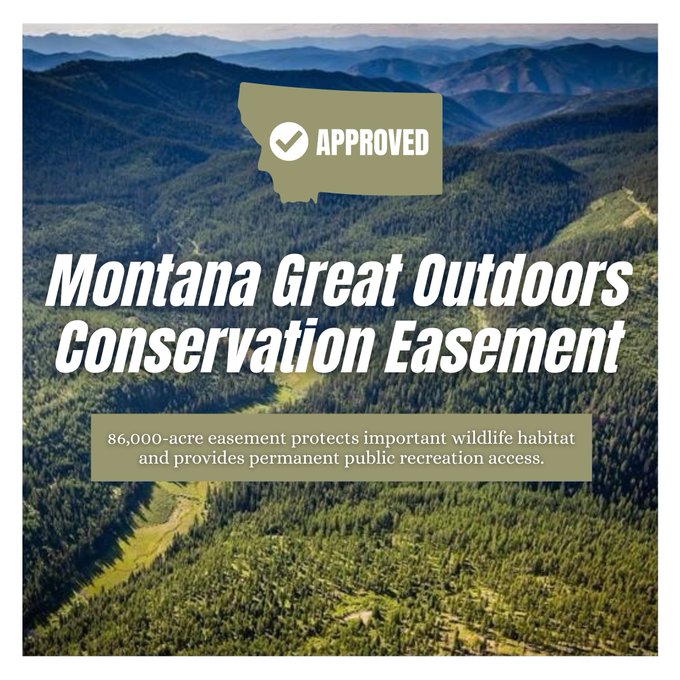
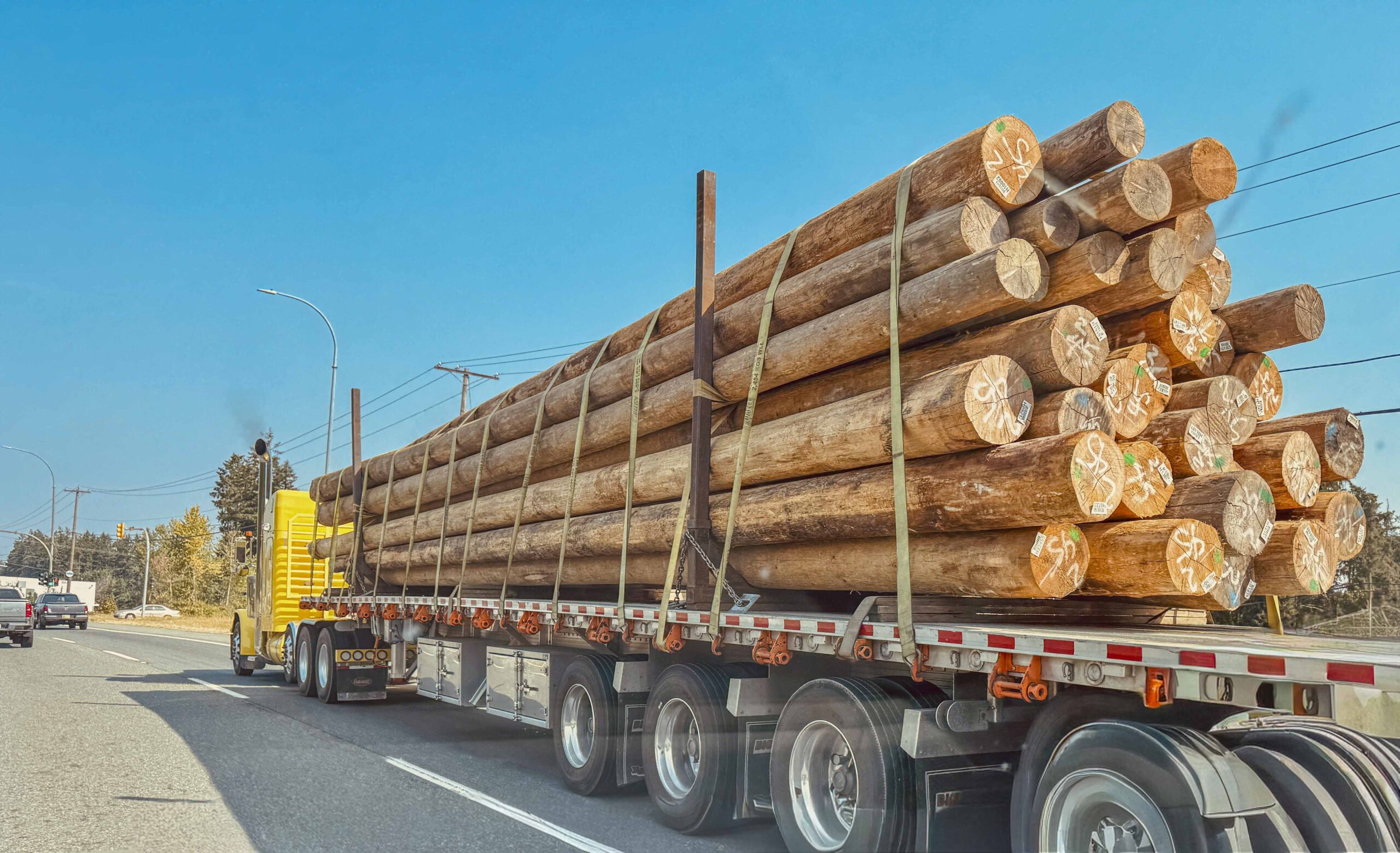 Western Colorado — Communities across the Western Slope need scientifically sound, effective action that actually helps protect our forests and communities. That’s why so many of us are paying attention to the Fix Our Forests Act, now moving through Congress. …The Act leans heavily on boosting logging, and yes, thinning trees in the right places can improve forest health. The problem is that an agenda driven by timber harvesting often causes companies to cut the largest-diameter trees to meet timber quotas set by Washington, D.C. Instead, restoration forestry is the science-backed solution that we really need. …There are real solutions to today’s forestry challenges. …We have the tools – they just need more funding and staff to do the job. …I urge our senators to do all they can to improve the bill before final passage, keeping the public at the table, as they the most to lose if we don’t get this right.


 As the European Commission prepares a further postponement of its Deforestation-free Regulation (EUDR), proposals to simplify the law are abundant in Brussels. The undersigned organizations, representing the U.S. forestry and forest products sector value chain, urge the Commission to avoid a rushed process and take the time necessary to pursue simplification with great care. An additional year provides a valuable opportunity for the Commission to engage in productive dialogue with forest owners and operators in highly forested, low-risk countries like the U.S. to understand implementation challenges and reduce unintended consequences. “Simplifying a law as significant as the EUDR requires thoughtful and purposeful review,” said Eric Gee, executive director of the Southern Forest Products Association (SFPA). “A measured approach will help ensure that any changes both strengthen the law’s effectiveness and uphold fairness for producers in low-risk, sustainably managed regions like the Southeastern United States.”


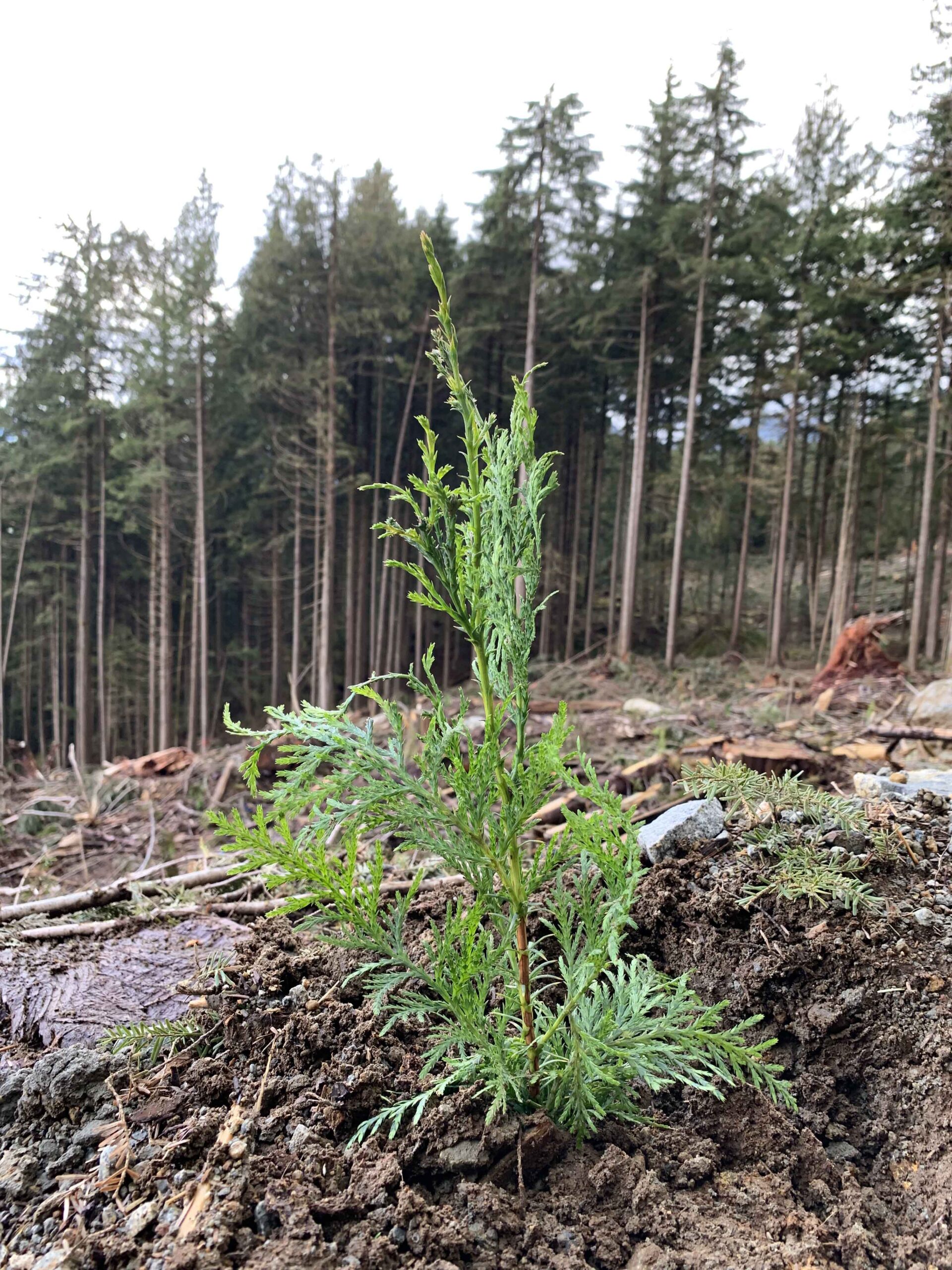 As the planet heats up, we need to reduce emissions of greenhouse gases. …‘nature-based climate solutions’ are human interventions that utilize natural processes to draw down carbon from the atmosphere. According to William Anderegg, director of the Wilkes Center for Climate Science and Policy at the University of Utah, planting forests is an especially promising option. “The central opportunity here is that we can leverage nature,” Anderegg says, “and forests globally have pretty large potential to help with climate change mitigation.” [However], Anderegg says …there are many problems with the programs that seek to plant forests as a climate solution.
  BILLINGS, Montana — A federal judge on Wednesday dismissed a lawsuit from young climate activists seeking to block President Donald Trump’s executive orders promoting fossil fuels and discouraging renewable energy. U.S. District Judge Dana Christensen said the plaintiffs showed overwhelming evidence climate change affects them and that it will worsen as a result of Trump’s orders. But Christensen concluded their request for the courts to intervene was “unworkable” because it was beyond the power of the judiciary to create environmental policies. The 22 plaintiffs included youths who prevailed in a landmark climate trial against the state of Montana in 2023. …Legal experts said the young activists and their lawyers from the environmental group Our Children’s Trust faced long odds in the federal case. …The climate activists will appeal Wednesday’s ruling, said Julia Olson, chief legal counsel at Our Children’s Trust.
 PASCAGOULA, Mississippi — A fire is burning inside one of the wood pellet domes at the Port of Pascagoula. The fire started Monday afternoon inside one of the two Enviva domes at the port. Jackson County Emergency Management Director Earl Etheridge said there is no danger of explosion. Jackson County firefighters are on scene to assist Enviva and port crews. The fire started Monday afternoon inside one of the two Enviva domes at the port. …Etheridge says that Enviva is injecting the dome with pressurized nitrogen to suppress the fire. The fire is contained to the dome. Crews are working to offload the 20,000 metric tons of wood pellets.
  A study finds that replacing natural gas with electric and biomass power, along with improved energy efficiency, could help some pulp and paper mills reach zero net emissions. Researchers began with a simulation of mills defined by two characteristics: whether they used virgin or recycled fibers, and whether they were integrated or not. A virgin mill creates pulp and paper from fresh wood… while a recycled fiber mill re-uses fibers which may have been previously processed. A mill is considered integrated if it has the capability to turn wood and other biomass into pulp and paper on site, whereas a non-integrated mill uses pulp produced and dried off site. …The final strategy researchers analyzed was the use of low-carbon alternatives, like using waste wood in boilers instead of fossil fuels. The effectiveness changed depending on whether or not the mill was integrated, but all types saw reductions in greenhouse gas emissions.
 GLOSTER, Miss. — A group of Gloster residents has filed a federal lawsuit against Drax Biomass and its subsidiaries, alleging that the company’s Amite BioEnergy wood pellet facility in the town has unlawfully released massive amounts of toxic pollutants into their community, violating the federal Clean Air Act and Mississippi law. According to a statement from the law firm that filed the claim, Singleton Schreiber, the lawsuit seeks “injunctive relief, civil penalties, and damages for the harm plaintiffs have suffered, including diminished property values, and the loss of safe use and enjoyment of their homes.” Drax responded to inquiries with the following statement: “We are aware of the lawsuit filed in Mississippi. While we cannot comment on the details of ongoing legal matters, our commitment to the communities where we operate remains unchanged. We strive to be a good neighbor in our communities and to support their wellbeing and prosperity.”