Kevin Mason
In looking across the entire forest products space this year, it is abundantly clear that demand is weak across all segments. There is no expectation of an improvement in 2025 as consumption remains poor and restocking efforts are expected to be limited. As such, any hopes of better supply/demand dynamics are going to come down to supply discipline (slowbacks/downtime/closures). We have some thoughts about how this might play out in the various sectors: Timber and Timberland—Timber harvest guidance will naturally follow wood products demand. Finding a home for pulpwood has been problematic for several years and will only become more difficult amid ongoing downstream capacity shuts. New demand is possible over time, but nothing is expected in the near-term.
Solid Wood—A raft of capacity closures in both Canada and the US had brought the lumber market into better balance to begin 2025. However, with demand weakening further through the first half of 20025 (and given a bleak medium-term outlook), further capacity rationalization will be required to restore balance and lift prices (Canada will be the focus, but the US could also see shuts). In OSB, prices are already at cash- cost levels, demand could slip further in the coming months, and new greenfield capacity is slated for late ’25 and early ’26. Accordingly, closures/downtime are sorely needed. For both lumber and OSB, producers may be awaiting the outcome of the Section 232 investigation before making major changes to operations.
 Canada is open to considering limits on softwood lumber exports to the U.S. to try to ease some trade friction between the neighboring countries, British Columbia Premier David Eby told Bloomberg News in a report published on Wednesday. “One of the asks for years out of the American coalition has been a quota — that there’s a fixed amount of lumber that gets to come from Canada,” Eby told Bloomberg News. “And I think that, for the first time, there’s some willingness to have a conversation about what that could look like.” [to access the full story, a Reuters or Bloomberg Economics subscription is required]
 Donald Trump announced Thursday the US will charge a 35% tariff on Canadian imports starting Aug. 1. In an open letter to Prime Minister Carney, he wrote “if you decide to raise your Tariffs, we will be added onto the 35% that we charge.” …“These Tariffs may be modified, upward or downward, depending on our relationship with your Country.” Carney posted on social media that Canada would work towards a revised deadline of Aug. 1 in reaching a new trade deal with the US. “Canada has made vital progress to stop the scourge of fentanyl in North America,” Carney wrote. …Trump pointed to what he called “unsustainable” trade deficits, as well as the Canadian dairy sector. On Wednesday, Trump announced a 50% tariff on copper imports. The US was Canada’s largest copper importer in 2023, accounting for 52% of the total export value. That same year, Canada’s exports of copper and copper-based products were valued at $9.3 billion.



 NAPLES, Idaho — A fast-moving fire broke out Sunday, scorching 20 acres and causing millions of dollars in damage to two family-run logging businesses, according to one of the families affected. The Clover Fire was 75% contained by 2 p.m. Monday, roughly 24 hours after it began, according to Lizz Bloxsom, an incident command trainee with the Idaho Department of Lands. Full containment is expected by 8 p.m. this evening, ahead of a storm forecast to bring strong winds overnight. …Most of the damage occurred on the neighboring properties of the Sandelin family and the Tweet family. The Sandelins run the small logging business, UTR Land Management, and the Tweets run a family-owned business, SGA Cabin & Timber. A member of the Sandelin family, who requested to remain unnamed, said damage to the lumberyard — including a razed sawmill and barn, over 300 truckloads of lumber, and industrial machinery — will cost their family millions of dollars.
 After funding 5 million seedlings for 289 projects, in 38 states and 4 foreign countries, the Hardwood Forestry Fund (HFF) has decided to voluntarily dissolve its operations. The Board announced its final distribution of $190,000 to the Arbor Day Foundation and One Tree Planted to implement Hardwood Tree plantings in line with the HFF’s mission and goals. The Hardwood Forestry Fund promoted hardwood timber growth, management, education, and environmentally sound uses of renewable forest resources by providing grant funding to partnering organizations. …The HFF was formed in 1990 by members of the Hardwood Plywood and Veneer Association, which eventually became the Decorative Hardwoods Association. …During its 35 years of operation, the
 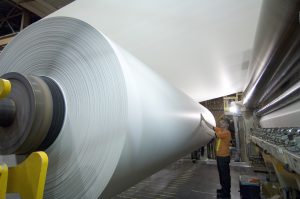 CHILLICOTHE, Ohio — Possibly 18 potential buyers have looked at the Pixelle facility before Thursday’s deadline to make offers. And again, the weekly Monday meeting of the ‘paper mill response team’ was in executive session to be free to hash out plans – as reminiscences from employees, as well as rumors about what is happening there and what is being removed, fill the internet. Mill operator Pixelle – based in Pennsylvania, and owned by H.I.G. Capital of Miami, Florida – has been cooperative with corporate tours of the facility that has been largely shut down. …“The deadline set by HIG for purchase offers to be submitted – July 3 – has passed. To date, no information has been shared with local leaders or regional economic development partners regarding a sale or the future of the mill.
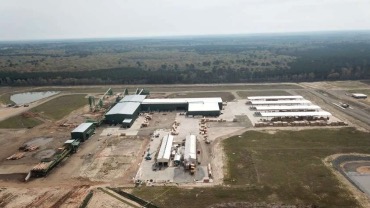 Sumitomo Forestry, a prominent Japanese timber and construction firm, completed July 1, 2025, the acquisition of Teal Jones Louisiana Holdings and plans to launch its first timber industrial complex in the US. This complex may also include taking wood waste and turning it into mass timber. …In addition to outside purchasers, Teal Jones-Plain Dealing (TJPD) plans to supply product to its group operations, such as the Fully Integrated Turn-key Provider operations and its residential property and real estate development operations. Furthermore, the company plans to utilize the approximate 40 hectares of unused land on the site to manufacture and sell mass timber and wood products in preparation for future increased demand. “We are also considering processing wood chips and lumber residue generated from the manufacturing process into biomass power generation fuel, bio-refineries and other,” the company said.
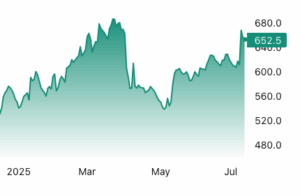 Lumber futures traded above $650 per thousand board feet, hovering near April highs driven by tightening US sawmill output and dwindling import volumes, both of which are near their lowest levels in half a decade. Domestic production in the first quarter slipped year-on-year, and imports, including softwood lumber from Canada, have contracted sharply, leaving US framing material availability at its leanest since 2019. At the same time, builders are contending with looming tariff hikes that could push duties on Canadian lumber from roughly 14.5% today toward the mid-30s, adding several thousand dollars to the cost of new homes. Although a modest pull-back in construction activity has softened recent gains, overall demand remains sufficient to absorb current supply, and without a rapid expansion in US mill capacity or alternative sourcing, these supply constraints, compounded by rising trade barriers, are likely to sustain upward pressure on lumber prices in the months ahead.
 President Donald Trump’s flurry of tariff letters to more two dozen countries has triggered new threats of retaliation. Key US industries are increasingly worried they are going to be collateral damage. The European Union on Monday released a targeted list of $88 billion worth of US goods it plans to tariff if it doesn’t make more progress in trade talks with Trump. Brazil, staring down a 50% duty on its exports to the US over Trump’s frustration with their domestic politics. …While the hardening battle lines in the negotiations could be part of each sides’ effort to force more concessions, domestic business groups aren’t counting on it. Instead, they are mobilizing to try and convince both the Trump administration and foreign governments that it would be a mistake to target their industries. …On Tuesday, the president dismissed the idea that the EU may go through with their proposed retaliatory tariffs.

 In the second quarter of 2025, the NAHB/Westlake Royal Remodeling Market Index (RMI) posted a reading of 59, down four points compared to the previous quarter. While this reading is still in positive territory, some remodelers, especially in the West, are seeing a slowing of activity in their markets. The second-quarter reading of 59 marks only the second time the RMI has dipped below 60 since the survey was revised in the first quarter of 2020. Higher interest rates and general economic uncertainty have affected consumer confidence and are headwinds for remodeling, but not to the extent that they have been for single-family construction, as is evident in June’s negative reading from the NAHB/Wells Fargo Housing Marketing Index (HMI). As a result, NAHB is still forecasting solid gains for remodeling spending in 2025, followed by more modest, but still positive, growth in 2026. …The Current Conditions Index averaged 66, down five points from the previous quarter.
  Economists, researchers and analysts have warned that President Trump’s tariffs on most goods will deliver a taxing blow to consumers via higher prices. However, recent months’ economic data has shown that overall inflation has remained fairly tame. Trump touts the positive economic reports as signs that tariffs are working. However, the chorus of concern is growing: Prices are moving higher, and economists say this is just the beginning. Here’s a look at the mechanisms behind why price hikes, and hotter inflation, are a slow burn: Tariffs have been applied in a staggered manner; …Trade policy and tariffs are in flux; …Shipping takes time; …Domestic supply chains take time, too; …Inventories were loaded up before tariffs hit; …Some costs are being eaten; …Businesses are hesitant to pass on higher prices; …Awareness of goods prices is lower in summer than fall and winter; …Economic data is often lagged; …Inflation indices are comprehensive.
 The top ten builders captured a record 44.7% of all new US single-family home closings in 2024, up 2.4 percentage points from 2023 (42.3%). This is the highest share ever captured by the top ten builders since NAHB began tracking BUILDER magazine data on new single-family home closings in 1989. The 2024 share constitutes 306,932 closings out of 686,000 new single-family houses sold in 2024. However, closings by the top 10 builders only represent 30.1% of new single-family home completions, a wider measure of home building that covers not-for-sale home construction. Also of note, the top 15 builders accounted for more than half of all closings (51%) for the first time ever in 2024.
 WASHINGTON, DC – Fannie Mae published the results of its June 2025
 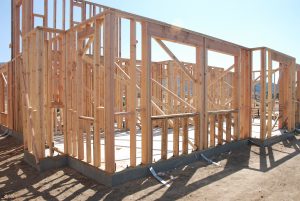 Lumber from Canada? That will be another $534. Major appliances from China? Add a cool $445. New homes in the United States are set to get more expensive thanks to President Donald Trump’s tariff agenda, which is expected to raise the costs of a wide variety of materials that go into building houses. An NBC News analysis of building materials and import data found that the total cost of building a mid-range single-family home could rise by more than $4,000 — an estimate that industry experts who reviewed the analysis called conservative. An April survey from the National Association of Home Builders estimated tariff impacts at $10,900 per home. Neither analysis included labor costs. Robert Dietz, chief economist at the National Association of Home Builders, said the tariffs have an impact beyond their direct cost as they send uncertainty rippling through the supply chain and leave builders unsure how to plan for the future.
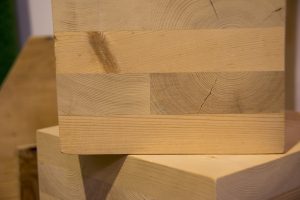 The State, Private and Tribal Forestry division’s budget would be eliminated in a proposed bill in the Senate. The Forest Service division deals most directly with pests that affect forests. The State, Private and Tribal Forestry is the federal leader in providing technical and financial assistance to landowners and resource managers to help sustain the nation’s forests. The federal investment leverages the capacity of state agencies and partners to manage state and private lands and produce ecological, social and economic benefits for the American people. Part of that money goes locally to companies to invest in innovative ways to use lumber. Collins Pine in Kane, Pa., received a $300,000 grant to install dry kilns in 2024. …Nationally, the State, Private and Tribal Forestry division funds research into wood energy and the use of advanced wood products, such as cross laminated timber, in building construction.
 University of Oregon researchers hope to make wood — often overlooked in health care facilities — more commonplace in those settings. Exposed wood, they’ve found, can resist microbial growth after a brief wetting. During the study, wood samples tested lower for levels of bacterial abundance than an empty plastic enclosure used as a control. “People generally think of wood as unhygienic in a medical setting,” said assistant professor Mark Fretz, co-director of the UO’s Institute for Health in the Built Environment and principal investigator for the study. “But wood actually transfers microbes at a lower rate than other less porous materials such as stainless steel.” Numerous studies support those properties of wood. A UO-led research team including scientists from the Salk Institute for Biological Studies in San Diego and Portland State University wanted to explore what happens when wood gets wet and then dries.
 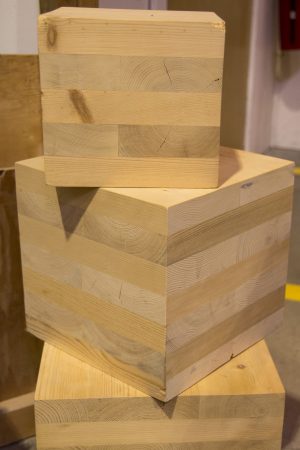 Picture a hospital and you might imagine concrete, stainless steel or plastic. But University of Oregon researchers hope to make wood—often overlooked in health care facilities—more commonplace in those settings. Exposed wood, they’ve found, can resist microbial growth after it briefly gets wet. During their study, wood samples tested lower for levels of bacterial abundance than an empty plastic enclosure used as a control. “People generally think of wood as unhygienic in a medical setting,” said assistant professor Mark Fretz, co-director of the UO’s Institute for Health in the Built Environment and principal investigator for the study. “But wood actually transfers microbes at a lower rate than other less porous materials such as stainless steel.” In a
  Nationwide, women made up 26.4% of the roughly 775,000 people who worked in the paper manufacturing and printing industry in 2021, according to the U.S. Bureau of Labor Statistics. At pulp, paper, and paperboard mills, they made up 14% of positions. That’s what brought the Wisconsin Paper Council and Ahlstrom — a global Finnish company that produces specialty papers and packaging at five plants in Rhinelander, Mosinee, Kaukauna, De Pere and Stevens Point — gifted $20,000 to establish the program in 2023. In 2024, Ashman received $1,000 from the program after graduating from Appleton East High School. Now, at 19, Ashman works as an intern with Thilmany mill in Kaukauna, helping with environmental compliance and coordinating cleanup efforts along the Fox River. The scholarship was used to help pay for her college tuition. She said what was even more valuable was the internship opportunity she landed at the award-giving reception in 2024.
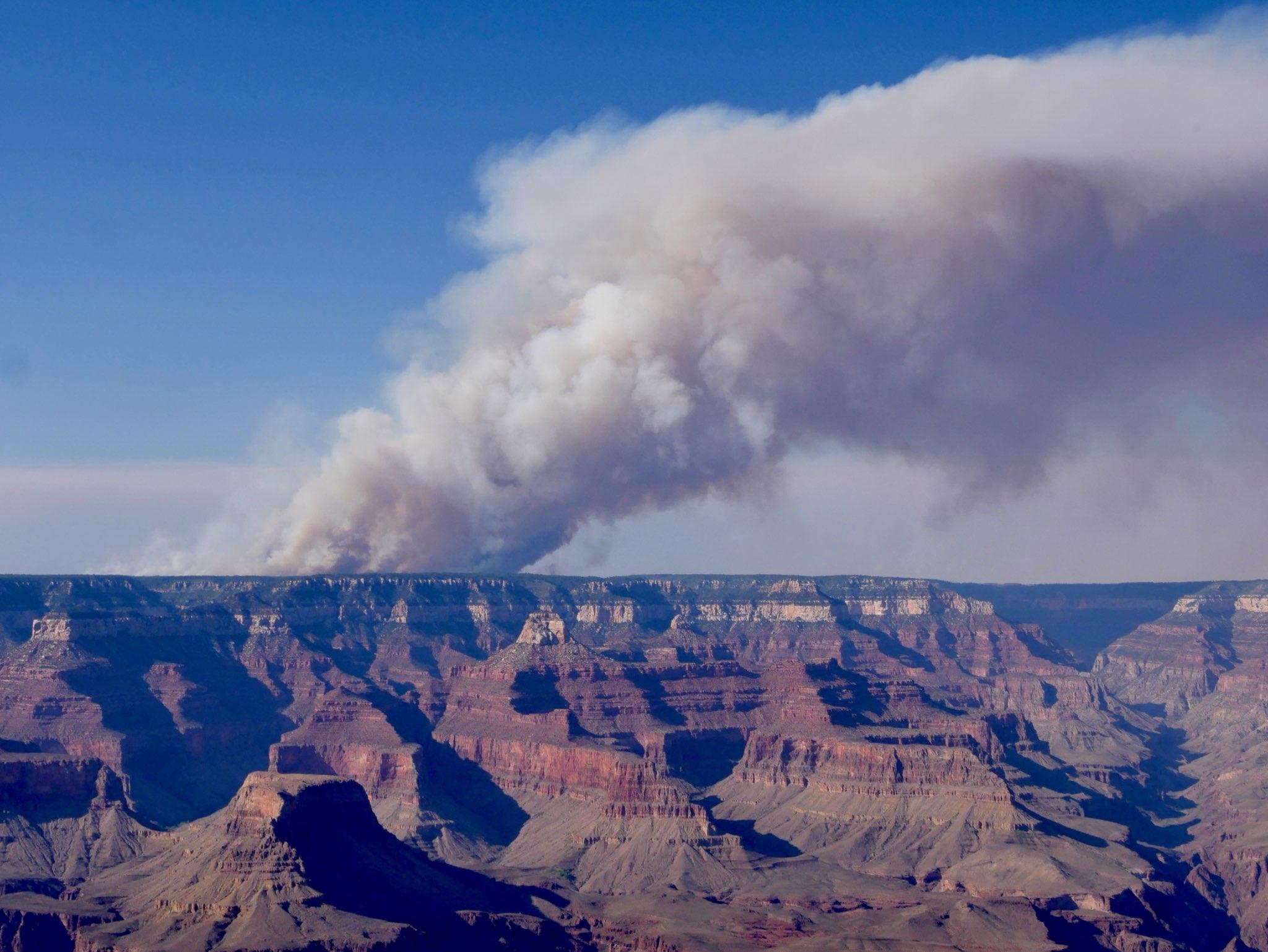
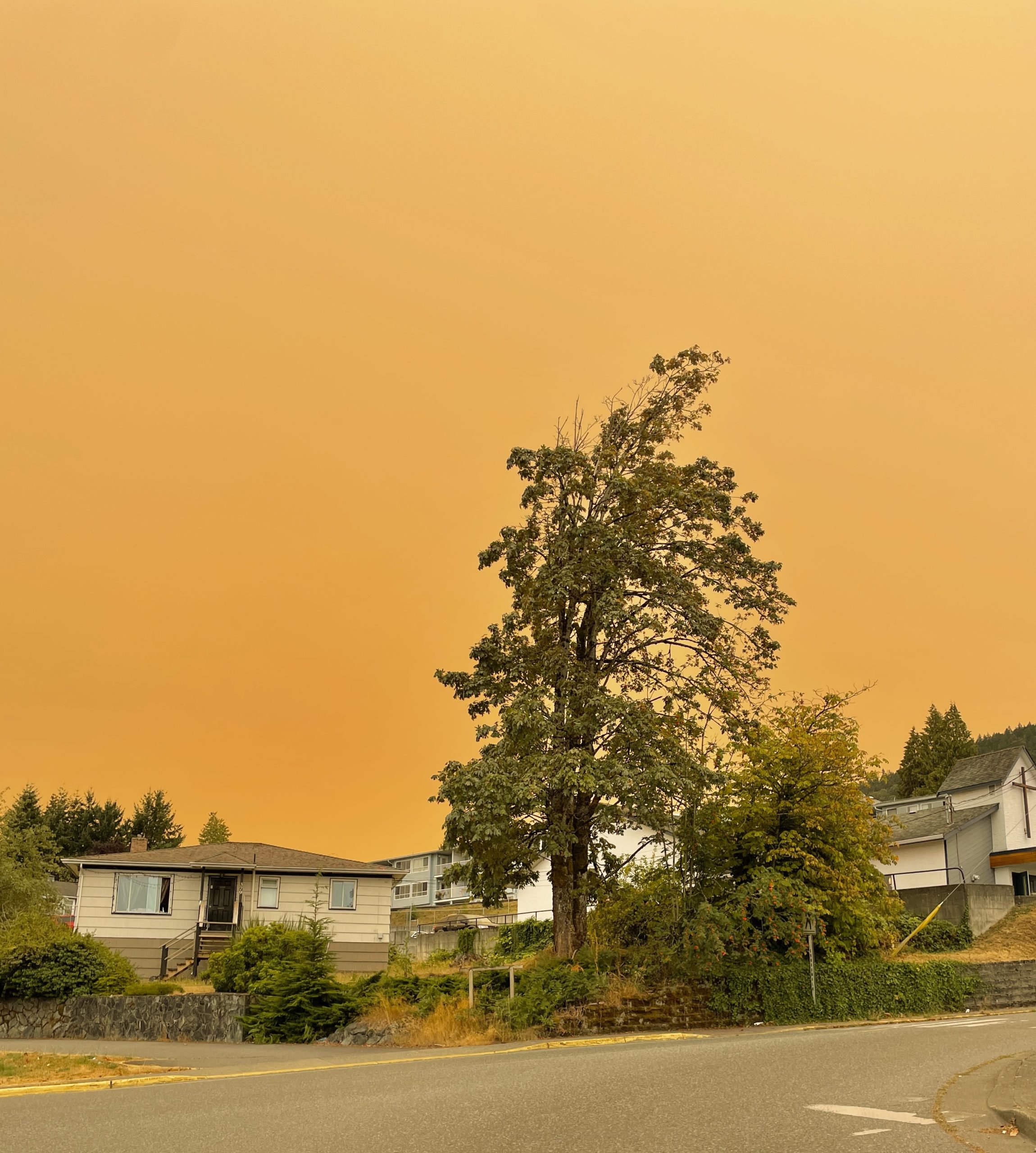 Hundreds of wildfires are burning across the Western states, Alaska and Canada as fire season perks up amid a sprawling heat wave and widespread dry conditions. …Fires are being fueled by widespread high temperatures and dry conditions. …The preparedness level is at 4 out of 5 for the U.S., and 5 out of 5 in Canada. Intense fire behavior was reported in 10 western US states over recent days in regions afflicted by heat and drought. …Alaska has seen major wildfire activity over the past week, with more than 300,000 of the 750,000 acres burned this year going up in flames, according to the Alaska Division of Forestry & Fire Protection. …After a bit of a lull in firestorms in late June to early July, Canadian wildfires returned in a big way. More than 350 fires are burning out of control across the western two-thirds of the nation. Among the most concerning fires flaring, many are in Manitoba. [A Washington Post subscription is required for full access to this story]
 It had to be a joke, right? A group of MAGA lawmakers moaning about “suffocating Canadian wildfire smoke”. …But, no. …It makes no mention of the tens of thousands of Canadians forced to evacuate this year or those who have died. The signatories conveniently ignore the fact that smoke from the US side of the border regularly smothers those of us who live north of it. In fact, the complaint does not mention fires in the US at all, even though more than two million acres have burned so far this year, and Canadian firefighters have deployed to assist their US colleagues, just as US wildland firefighters have been helping in Canada. Given the MAGA credentials of the complainants, you may not be surprised to hear their complaint blames a “lack of active forest management”… admonishes Canada for not preventing arson and makes no mention of climate change whatsoever.
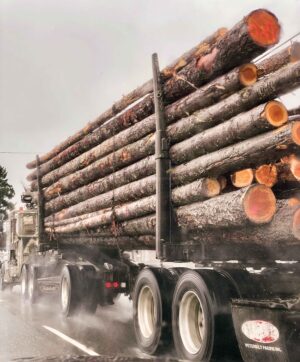 OREGON — Jeff Brink takes pride in working on the same land his father did, in the national forests surrounding Oakridge, Oregon. But in the decades since, less and less timber has been harvested, and more and more megafires have threatened his hometown. “There needs to be some active management, because no management has given us this result,” he said. When the Trump administration announced executive actions aimed at increasing timber production on federal lands, Oregonians had mixed responses. Loggers and timber towns celebrated the attention, while environmentalists sounded the alarm over fears of deregulation and environmental harm. Local stakeholders wonder what forest management will look like in practice. …The timber industry and environmentalists still have questions as to the actual implementation of policy and changes in practices by federal agencies. Oregon Wild is one of many environmental groups that believe the new executive actions threaten landmark environmental laws.
 Members of the U.S. Senate Energy and Natural Resources Committee differed along party lines at a Thursday hearing about how the U.S. Forest Service should partner with states and how the federal wildfire response should be organized. Senators of both parties emphasized the importance of working with state forest managers. But while Republicans praised the efforts of Forest Service Chief Tom Schultz … to reach out to state governments, Democrats noted that President Trump’s
  The U.S. Forest Services plans to cut its budget by $391 million for fiscal year 2026, according to a
  With a paint can in hand, a forester walks step by step through the dense Arizona ponderosa pine forest, marking trees with distinctive orange streaks. The forester is part of a timber-marking crew assessing if each tree should stay or go during harvest, per a prescription from the Forest Service silviculturist. Trees to remain receive the orange marking; the others will be harvested. Timber-marking crews cover thousands of acres of Forest Service lands each year, prepping critical thinning projects to reduce the number of trees and move forest lands toward a condition less vulnerable to catastrophic wildfire. With this laborious operation, many began to ask: Couldn’t there be a more efficient way of marking trees?
 WASHINGTON, D.C. – Northland congressmen are pushing for stronger forest management practices in Canada. Representatives Tom Tiffany of Northwest Wisconsin and Pete Stauber of Northeast Minnesota were included on the letter sent to Canada’s ambassador Kirsten Hillman urging better management of forests to help with wildfire risk. In the letter, the lawmakers wrote: “As I’m sure you know, this is not the first year Canadian wildfire smoke has been an issue. …While we know a key driver of this issue has been a lack of active forest management, we’ve also seen things like arson as another way multiple large wildfires have ignited in Canada. With all the technology that we have at our disposal, both in preventing and fighting wildfires, this worrisome trend can be reversed if proper action is taken.” …The letter asked the ambassador to address the issue with key Canadian agencies, such as the Canadian Forest Service.

 WASHINGTON, D.C. — Colorado Senator Michael Bennet and Representative Joe Neguse, along with other politicians, introduced the Joint Chiefs Reauthorization Act. This legislation would reauthorize the program to better support forest and grassland restoration projects on both public and private lands. “Our Western forests, grasslands, and watersheds are as important to our economy as the Lincoln Tunnel is to New York, but they are under threat from a changing climate and consistent federal underinvestment,” said Bennet. …Bennet mentioned that strengthening the program will ensure that restoring landscapes, protecting water supplies, and reducing wildfire risks can continue for future generations. “Western and Northern Colorado are all too familiar with the increasing frequency and intensity of wildfires,” said Neguse.
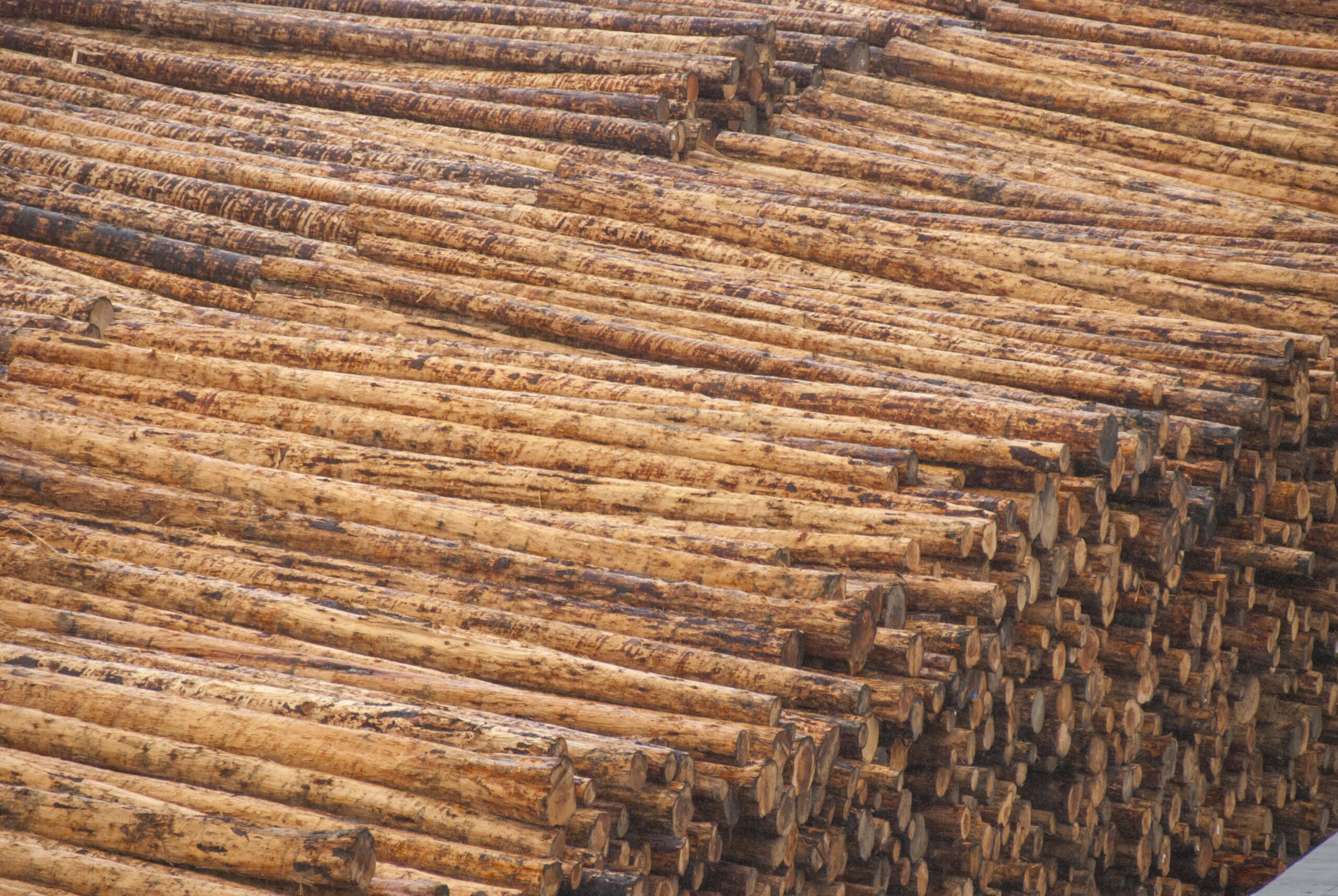 Could President Donald Trump’s strategies help revive Washington’s diminished timber industry? For nearly a century, Washington’s timber industry produced everything from paper and two-by-fours to the massive wood beams that hold up the Tacoma Dome. Lumber mills were the backbone of logging towns throughout the Northwest. But the industry has been on a long decline since the 1990s. Now, Trump wants to reduce foreign competition and increase US logging to bring back those jobs. To find out whether it could work, KUOW visited a sawmill in Morton, a small town in the foothills of Mount Rainier. …Today, the state has about 100,000 timber-related jobs, including mills. That means Washington has lost about a quarter of its timber jobs in the last thirty years. The loss has been devastating to rural communities built around those sawmills, like Morton, Washington. …The Hampton Mill is still the economic heart of the community today. It’s survived the waves of closures over the years.
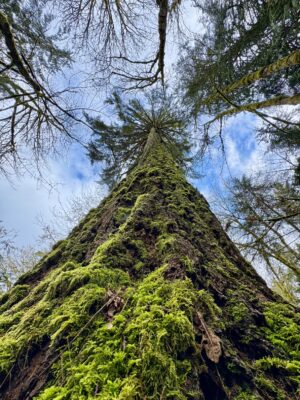 A new analysis reveals that many of Eastern Oregon’s ancient trees are dying at an alarming rate. The study, conducted by a team led by James Johnston, an assistant research professor at the University of Oregon, found that between 2012 and 2023, a quarter of trees over 300 years old in roadless areas of the Malheur National Forest had died. Johnston attributed the decline to a combination of drought, insect infestations, and competition with younger trees. “It’s sad to see so many old trees dying,” Johnston said. He emphasized the need for active management to protect these ancient trees, particularly in the dry forests of Eastern and Southern Oregon. The study, published in the journal
  Forests cover more than 30 million of Oregon’s 62 million acres – almost half of the state’s landmass. According to the Oregon Employment Department’s covered employment statistics, forestry and logging’s 681 establishments employed 8,787 workers statewide and added $717 million in payroll to Oregon’s economy in 2024. The Oregon Department of Forestry (ODF) estimates logging harvests totaled 3.6 billion board feet in 2022. While much of this timber feeds Oregon’s wood products industry, creating jobs and income, many jobs are also created planting, growing, and harvesting this resource. …The high level of forestry activity in Oregon also creates demand for a support activities industry. …Employment Department projections show that the logging industry in Oregon is expected to lose about 200 jobs, or 5% between 2023 and 2033 partly due to continued mechanization. Other industries within timber production, such as timber tract operations and support activities for forestry do not have published Oregon Employment Department forecasts.
 SPEARFISH, South Dakota — The Black Hills of South Dakota and Wyoming are not only a beautiful tourist destination but also a major part of the agricultural industry. Many are working to maintain the important role of forest management as a way of supporting agriculture, economies and public health. Jeremy Dedic, forest partnership coordinator for Wyoming State Forestry said, “It’s not like we’re growing corn, but it’s growing plants, and we can manage that and get our results,” Dedic said. …“Most recently, we’ve had some of our larger operators having to scale back their operations,” said Marcus Warnke, state forester for South Dakota. …“Thinning our forest, giving our trees space so that they have enough water, sunlight and nutrients to be healthy and resilient to fire and bugs,” Pierson said. “Those activities produce logs that we bring to our sawmills and make boards out of for public sale.”
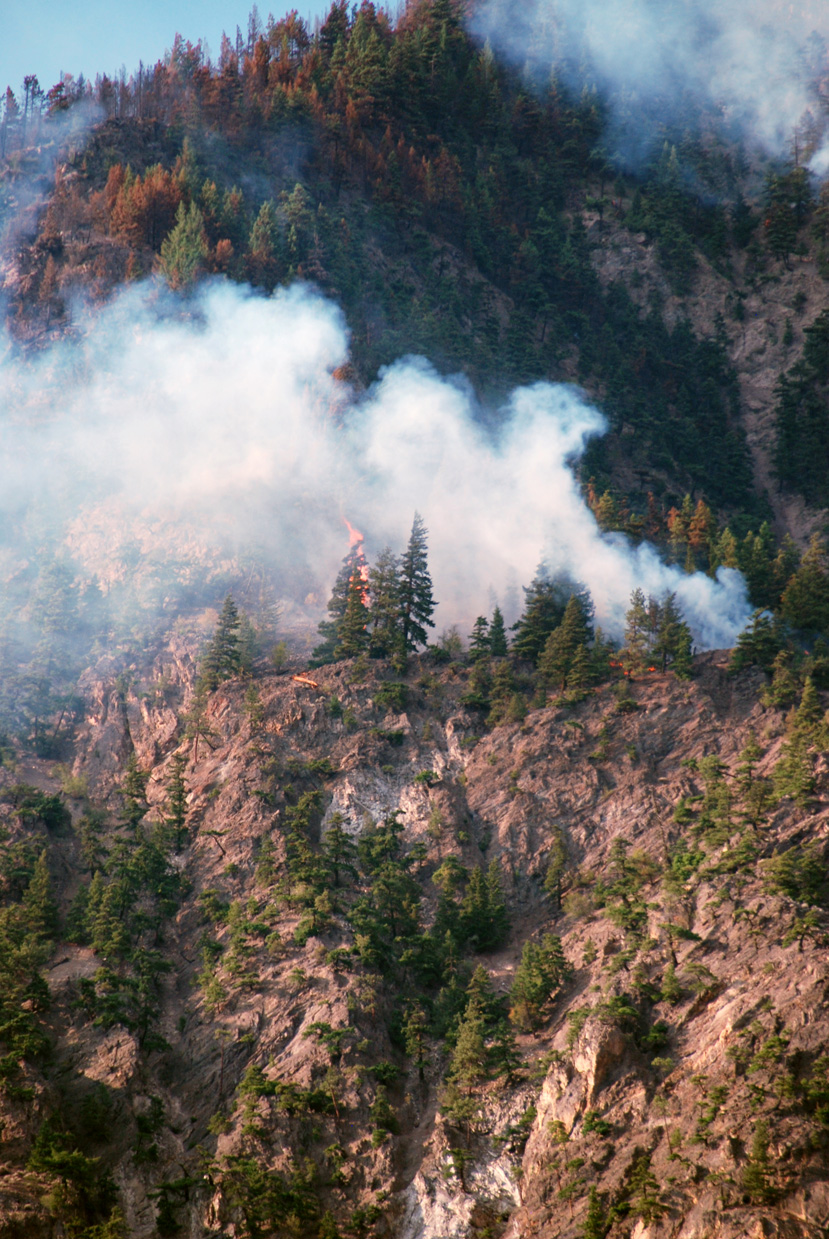 Fire season started early in the Northwest. The Rowena fire sparked in early June near The Dalles and destroyed 56 homes in a matter of days. Since then, as dry thunderstorms and lightning continue to start hundreds of wildfires across the state, the Oregon Department of Forestry and Bureau of Land Management say they have been able to stop most fires before they spread. But as the season intensifies nationwide, they are concerned about competition with other Western states for resources like air tankers. …While an aggressive “initial attack” approach is nothing new, Assistant State Fire Management Officer for the Oregon and Washington BLM, Richard Parrish, said having increased resources such as pre-positioned firefighting teams across the state, aerial water tankers and a Blackhawk helicopter crew — the only one in the nation — has made all the difference.
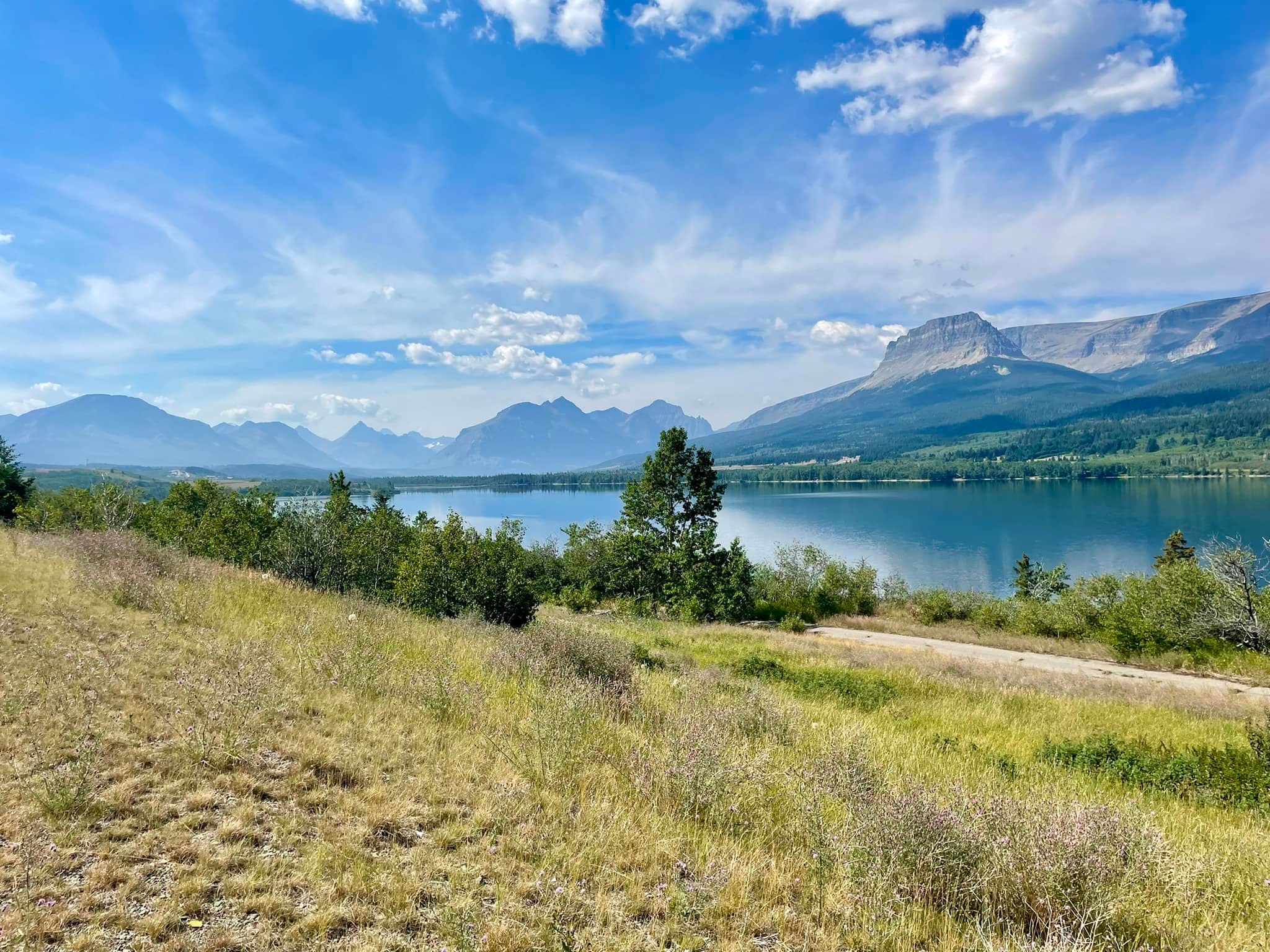 U.S. Department of Agriculture Secretary Brooke Rollins announced last month that the administration was taking steps to rescind a decades-old policy to restrict road building and timber harvests on 58.5 million acres of national forest lands… U.S. Sen. Steve Daines, R-Mont., called it “another huge win for Montana and forest management.” …The impetus for the Roadless Rule tracks back to 1998, when former U.S. Forest Service Chief Mike Dombeck saw the agency’s vast and poorly maintained road system as a major environmental and fiscal problem… “The Roadless Rule was issued to make government more efficient by not building roads in sensitive areas when we already have far more roads than we can afford to maintain,” Keith Hammer, executive director of the Swan View Coalition said. “Rescinding the rule will result in government waste and environmental harm, all at taxpayer expense.”
  The Trump administration announced plans to rescind the 2001 Roadless Rule, changing the political landscape in the Tongass National Forest for the third time in five years. …The U.S. Forest Service owns approximately 78% of the available land, meaning timber operators are dependent on the federal agency for a majority of their supply. Kirk Dahlstrom, co-owner of Viking Lumber Company in Klawock, said the agency is nine years behind on timber supply for the entire Southeast Alaska industry. He said his business will not survive if land management remains under Forest Service control. …Viking is the last remaining sawmill in the world that can produce the high-quality Sitka spruce needed for soundboards for grand pianos… Pacific Legal Foundation filed a lawsuit on March 6 against the U.S. Department of Agriculture on behalf of Alaska Forest Association. Viking Lumber Company and Alcan Timber of Ketchikan joined.
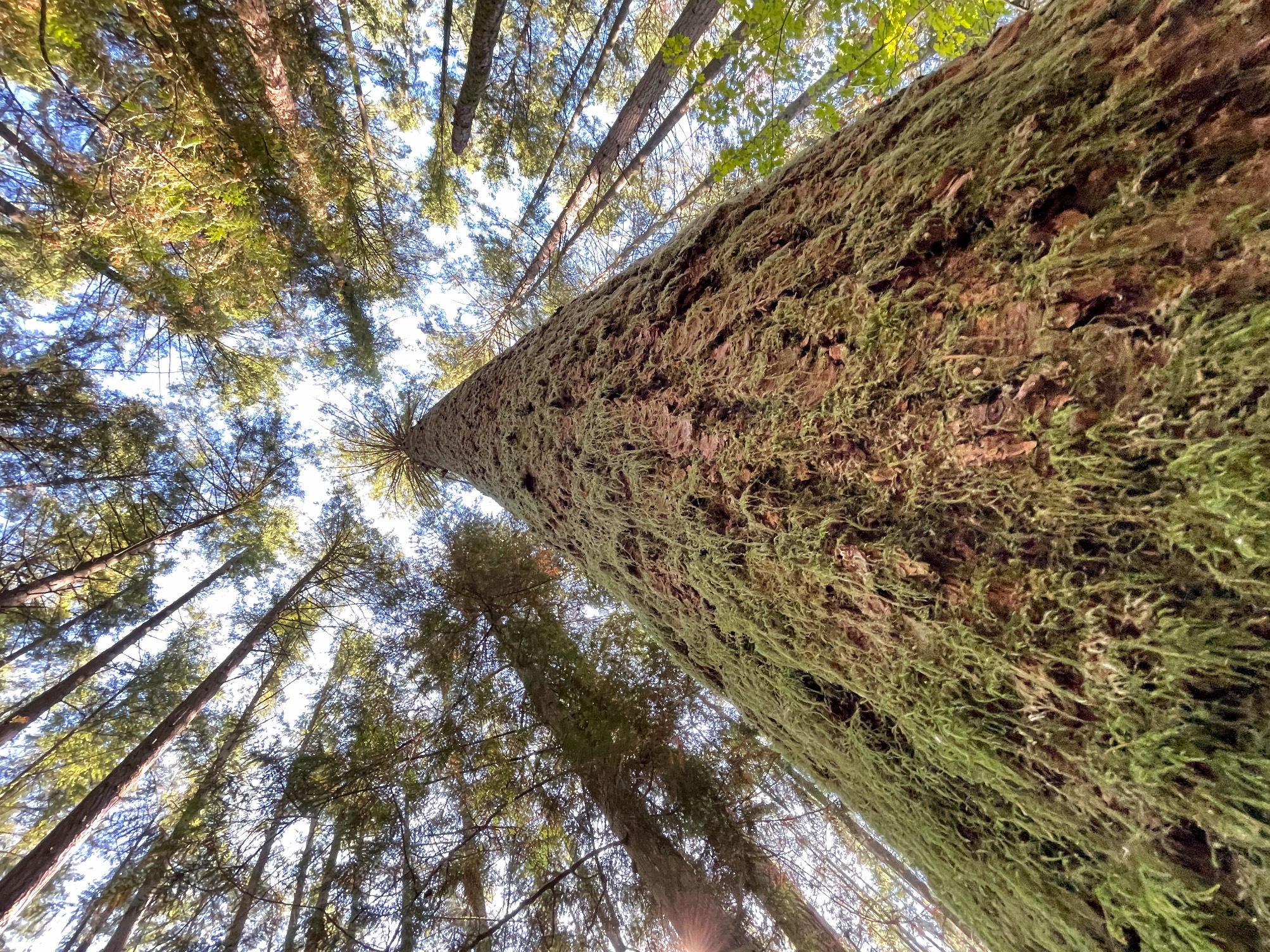 New federal laws could “lock up” timber land for decades at a time, raising concerns big companies could elbow out smaller competitors and that timber revenue for counties could be delayed for years. President Donald Trump’s tax cuts and spending bill, which he signed into law earlier this month, increases the length of federal logging contracts to a minimum of 20 years. The contracts, which determine how long a logging company has to harvest on the land under contract, have typically averaged three to four years, and the longest contracts extended up to 10 years. The concern raised by a coalition of timber companies and local governments is that companies could sign long-term contracts, then wait years to harvest trees. “If the timber volume is tied up in these 20 year contracts,” Doug Robertson, executive director of the Association of O&C counties, said, “that volume then is no longer available to generate revenue for the counties and the state.”
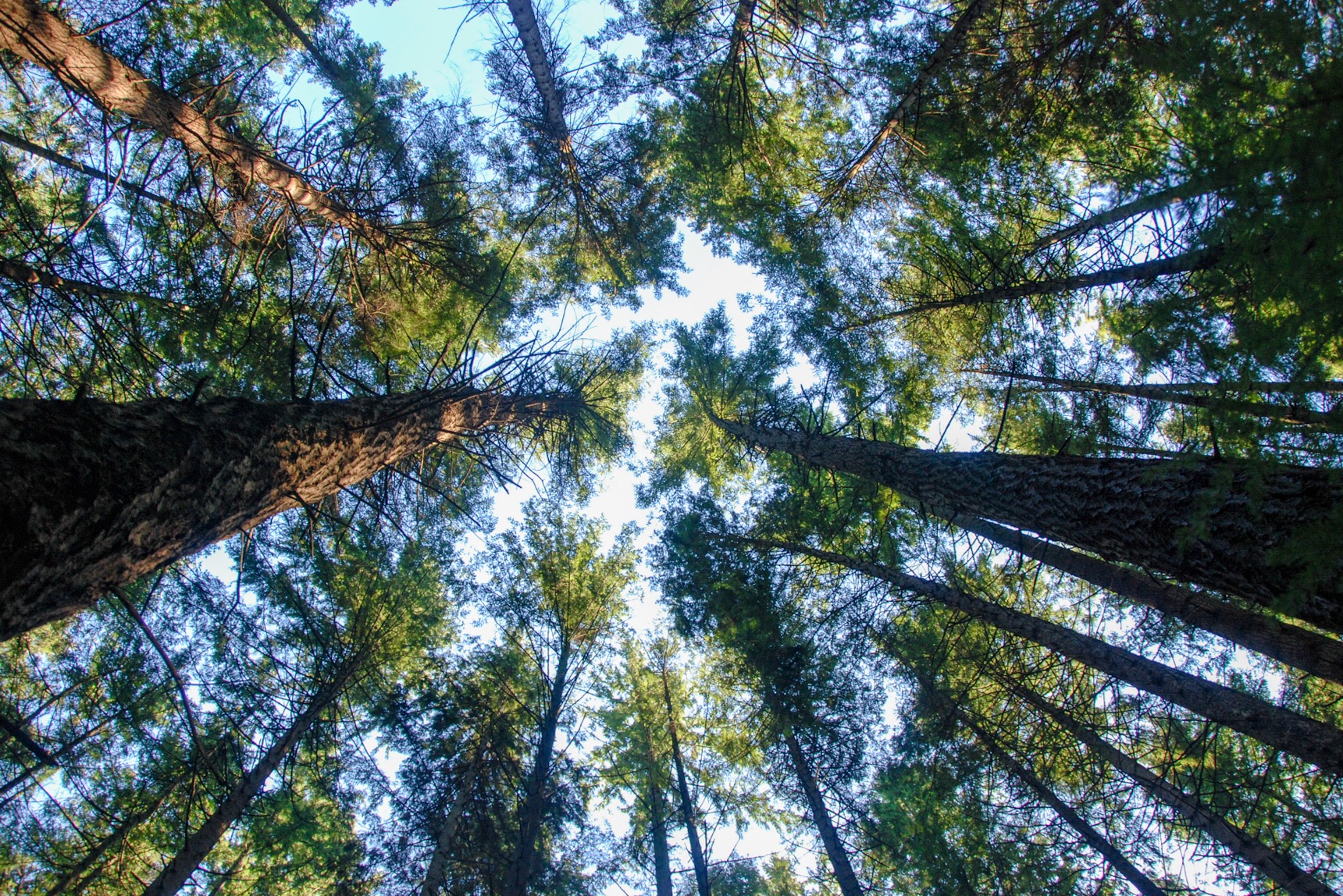 MULLAN, Idaho — The Bureau of Land Management is offering the Gentle Annie Timber Sale, totaling approximately 493,000 board feet, for commercial thinning on 100 acres near Mullan, east of Kellogg in Shoshone County. The harvested timber will supply critical materials for construction and other industries, supporting jobs across Idaho’s Panhandle. This thinning project will remove dead and downed wood caused by insects and disease, leaving an average of 55 trees per acre. The result: a healthier, more fire-resilient forest. “We’re excited to continue our work in the Mullan Urban Interface and hope this timber sale will help reduce the town’s risk of catastrophic wildland fire,” said BLM District Manager Kurt Pindel. “We’ll also be limiting the spread of insects and disease within the timber stand, as well as harvesting some merchantable timber for the local economy.”
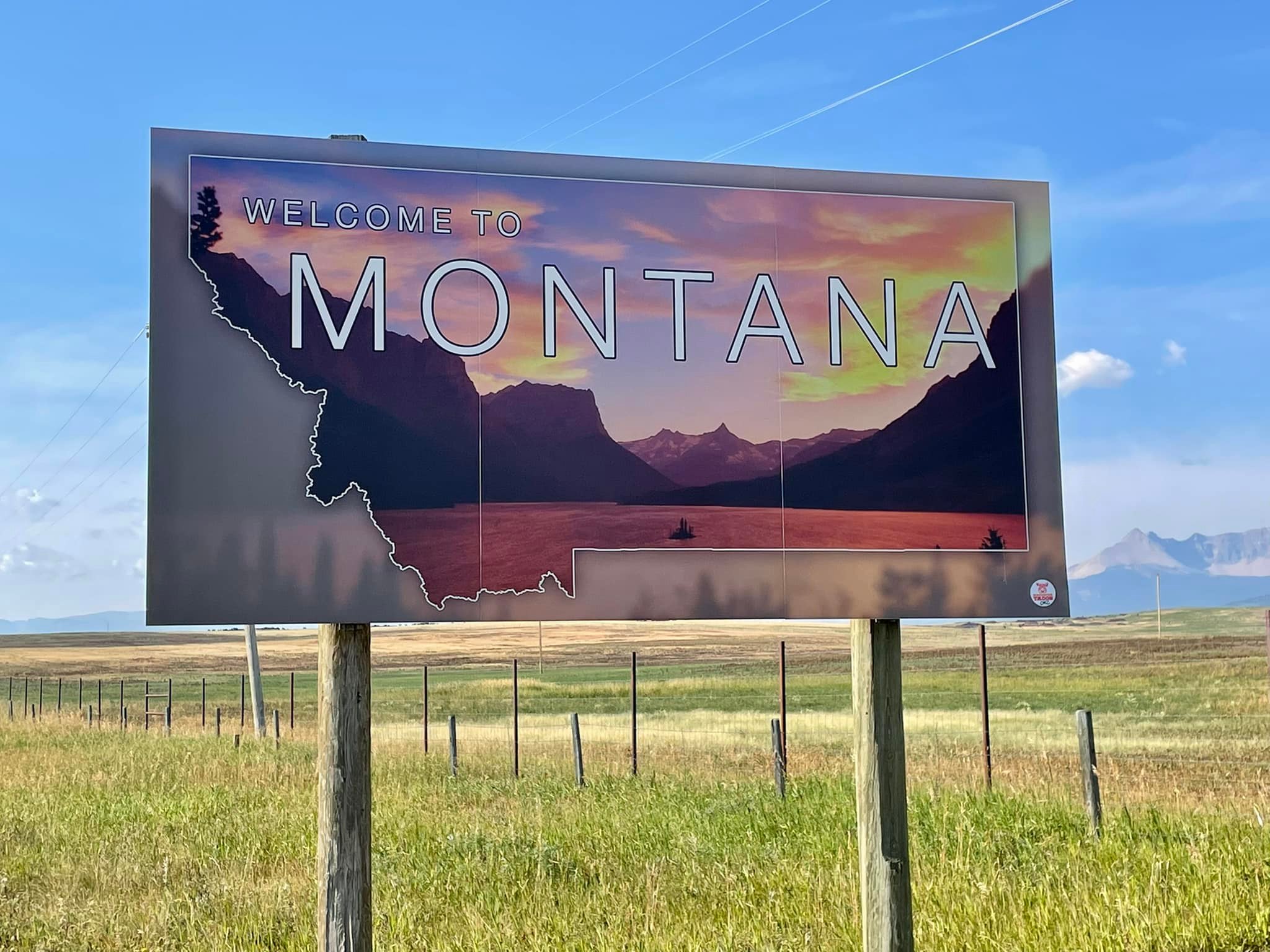 Montana Fish, Wildlife and Parks (FWP) completed its review of a proposal to permanently protect 53,000 acres of private timberland in Flathead and Lincoln counties, recommending the state purchase a conservation easement that would keep the working forest in timber production while guaranteeing year-round public access and preserving wildlife habitat. The Montana Fish and Wildlife Commission is scheduled to vote on the proposal on Aug. 21 in Helena. …In total, the project would encompass 85,752 acres of private timberland owned by Green Diamond Resource Company. The first phase of the project… received final approval in December. The new easement would encompass forestlands in the Cabinet Mountains between Kalispell and Libby. …If approved, Green Diamond would maintain ownership of the land under an easement owned by FWP [allowing them to] sustainably harvest wood, preclude development, protect important wildlife habitat and associated key landscape connectivity, and provide permanent free public access to the easement lands.
 Our many stunning hiking and walking trails in the Columbia-Pacific region offer locals and visitors alike wondrous views of forests of many different stages of succession, from recent clearcuts attempting to come back to life, to ancient old growth stands that somehow avoided the ax and the saw. The beauty of our area is one of its most valuable assets — so it may seem odd to some people that these forests include significant numbers of dead trees. Some call them ugly, while others refer to them as beautiful, but they do in fact have formal names. A standing dead tree is known as a snag, but once it falls to the ground it is a nurse log, so named because its rotting wood nurses young plants and fungi in their first years of life. One could also refer to a decaying stump covered in mosses, lichens, and other green growing things as a nurse stump.
 Streams that wind through Western Washington’s forests are essential habitat for frogs, bugs, and lots of other tiny critters. These streams are also a critical source of clean, cool water downstream. This means these streams are an important part of large watershed ecosystems. For the past 26 years, the timber industry, Tribes, environmental organizations, and Washington State agencies have worked together to address pollution and meet water quality standards through the “Forests and Fish Agreement.” The agreement aims to address pollution that can come from forestry activities like logging and forest road construction and maintenance, while maintaining both a viable timber industry and water quality. This coordination primarily happens through the Forest Practices Board, an independent state agency chaired by the elected Commissioner of Public Lands. Rules adopted by the Board are implemented and enforced by Washington’s Department of Natural Resources.
 In the face of a backlash, Utah Republican Sen. Mike Lee has revamped his public land sell-off measure to target only Bureau of Land Management holdings while also declaring, “we’re just getting started.” A reconciliation budget proposal revised by Lee’s Senate Energy and Natural Resources Committee targets BLM land within five miles of undefined “population centers.” It puts checkerboard BLM holdings back on a priority list for his “mandatory disposal” measure and takes lands under permit for grazing off the auction block. The revision would shift 15% of revenue to local governments and conservation. The bill would appropriate $5 million to carry out the mandatory sales, which are designed to be offered within 60 days of passage and regularly thereafter. …But opposition to Lee’s measure comes from “all walks of life,” said Land Tawney, former president and CEO of Backcountry Hunters and Anglers. That includes “Democrats, Independents, Republicans, hunters, anglers, bird watchers, kayakers, ranchers [and] loggers,” he said.
 Don Hardin’s hillside was largely cleared of trees killed by the mountain pine beetle. Some of the trees have died in just a few weeks with Ips beetles munching their tops and mountain pine beetles coming through their bark in large visible holes. …Across Colorado, mountain pine beetles also are on the rise in Douglas, Jefferson and Gilpin counties, among other areas, said Dan West, forest entomologist with the State Forest Service. The agency’s annual aerial survey shows the number of infected acres increasing from less than 2,000 acres in 2021 to nearly 6,000 acres last year. …To combat the beetle, the State Forest Service is putting small packets on trees to send the message to mountain pine beetles to seek a home elsewhere, West said. The message will be sent through a synthetic replication of beetle pheromones that sends a “no-vacancy signal” to adult pine beetles looking for a healthy tree to infest.
 ALEXANDRIA, Louisiana — Wildfires and drought destroyed over 60,000 acres of trees in the summer and fall months of 2023 and costing the state $71 million in timber loss. …The wildfires came from record-breaking high temperatures and little to no measurable rainfall that summer. Now, as Louisiana continues to revive its timber industry, there is a renewed interest in the Virginia pine trees that are across the state. But that is also being facilitated by the potential for tariffs on Canadian and Chinese wood and wood products. “The issue has been of Canada and China flooding our markets with their products,” Dr. Mike Strain, the commissioner of Louisiana’s Department of Agriculture and Forestry said. “So, all of that together, I think we’re going to see a strengthening in the timber industry.” …Strengthening the timber industry also calls for more paper mills. “We really need a mill in the Florida parishes,” he said.
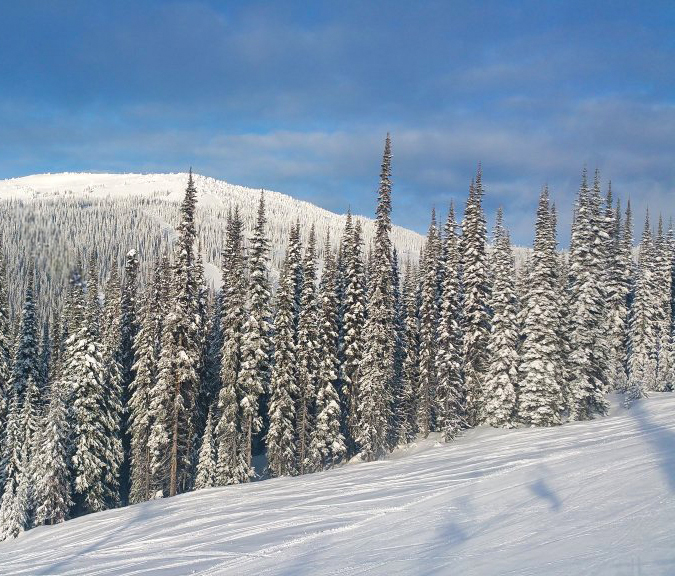 Many forests are losing their winter snowpack as global temperatures rise, and that could substantially slow their growth – and reduce the amount of carbon they remove from the atmosphere. Current projections “are not incorporating that complexity of winter climate change, so they are likely overestimating what the future carbon storage will be”, says
 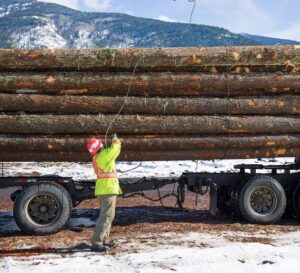 COLLEGE STATION, Texas — Forestry workers could benefit from the use of exoskeletons that support their back and upper limbs, results of a
  The BC Wildfire Service said Tuesday (July 8) afternoon it’s aware of the wildfire in Washington State 16 km southwest of Northport and is assisting in fire suppression. The location is south of Highway 3 between Christina Lake and Trail, and is being referred to as the “Hope Fire”. The fire was first reported at approximately 1:15 p.m. was estimated later in the afternoon to be 600 acres (243 hectares) in size. BC Wildfire said in a social media post that the US Department of Natural Resources is responding and have resources on-site. BC Wildfire has also deployed airtankers to support wildfire suppression efforts. “At this time there is no threat to the Canada-US border,” it said. Stevens County Emergency Management has announced Level 3 (LEAVE NOW) evacuation orders in the area of Three Pines Youth Camp, according to a statement from Stevens County Emergency Management.
 The Laguna Fire approximately 25 miles west of Abiquiú has grown to more than 15,000 acres, and prompted evacuation orders more than two weeks after Santa Fe National Forest officials announced their plans to let the fire safely grow instead of suppressing it immediately. On June 30, the Santa Fe National Forest announced that lightning caused the 176-acre fire and that they were going to “actively manage” the blaze, hoping to encourage low-intensity fire to spread across a roughly 13,000 mile area. Noting that the fire was burning in an area that had undergone a National Environmental Policy Act review, and had previously been subject to prescribed burns and thinning, Santa Fe National Forest Deputy Forest Supervisor Anthony Madrid said the fire presented “an opportunity to create a resilient ecosystem that reduces the future risk of catastrophic severe wildfire to communities.”