
Paul Mackie
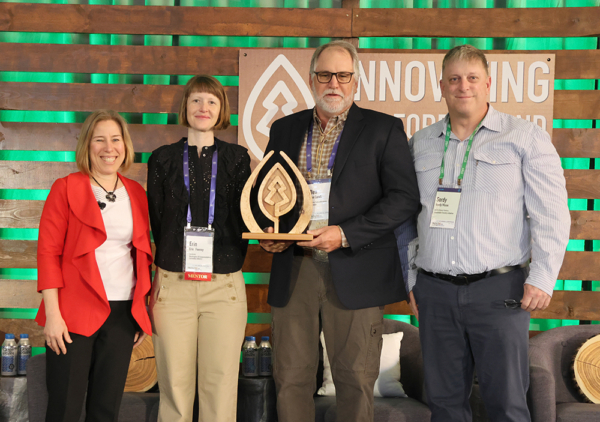
This year, I get to present the Cedar Champion Award to Paul Mackie of the Western Red Cedar Lumber Association. Paul is working for our co-operative marketing organization with a laser focus on ensuring Cedar makes it into projects and markets that will not only work for the members today, but will build the reputation of the association and the species. This triumvirate of Cedar Champions are very different people with very different career paths, but all three share the same trait – they are mission driven individuals who believed that cedar needed to be handled a certain way and never let the easy solutions supplant the right one. …Paul has lived and breathed cedar for nearly 30 years. Every day he seeks to convert someone new into a cedar champion. Paul has shown what a field rep can do when they are mission driven. The board and executive will look to add additional field reps in the near future and that is in no small part because we have watched Paul punch above his weight class for 3 decades. All of us in the association have benefited from Paul’s passion and integrity.









 US Representatives Glenn “GT” Thompson (R-PA) and Terri Sewell (D-AL) have introduced the “
 As Oregon lawmakers frantically search for money to fund roads and wildfire prevention, they have landed on a surprising idea: Dredging up a fight over cap-and-trade that once dominated legislative attention. Recently, there’s been increasing momentum to adopt a cap-and-trade system, where polluters purchase credits for their greenhouse gas emissions, and trade them with other emitters to ensure they are meeting a declining state emissions cap. That push has been led, according sources, by Sen. Bruce Starr, R-Dundee. But it appears to have gained traction as other proposals to raise money for road and bridge maintenance and firefighting face an uncertain fate. Washington and California have cap-and-trade programs, and early talks in Oregon have involved adopting a law similar to Washington’s… Funds generated from gas and diesel suppliers could pay for road projects … wildfires, climate nonprofits, and transit or pedestrian uses.
 ROSEBURG, Ore. —
 GREENVILLE , SC — The U.S. Endowment for Forestry and Communities released its 2024 Annual Report. The report highlights a year of expanded reach with $29.1 million awarded across 109 projects in 30 states and Washington, D.C., through innovative programs that strengthen the links between healthy forests, resilient communities and sustainable markets. The report details the Endowment’s sharpened focus on transformative initiatives, including the launch of an impact investing program, advancements in forest carbon transparency and streamlined market access for domestic wood fibers. “2024 was a pivotal year where we not only supported critical projects but also invested in scalable, sustainable solutions,” said Pete Madden, president and CEO of the Endowment. “By magnifying the connections between working forests, strong markets and vibrant communities, we are helping to drive systemic change across the forestry sector.”
 A German wood paneling maker plans to open a $250 million manufacturing plant in South Carolina’s rural Clarendon County. Homanit announced Wednesday it will build its first United States manufacturing facility on 140 acres near the small community of Alcolu — population 425. The company pledged to employ 300 people in the area located off Interstate 95, about 40 miles north of its intersection with I-26. “This investment marks a significant milestone for our company, and we’re proud to become part of such a vibrant and forward-looking region,” Homanit Managing Director Fritz Homann said in a statement. “The area’s skilled workforce, strategic location and strong infrastructure make Clarendon County the ideal foundation for our next phase of growth in North America.” The announcement marks the largest single investment in Clarendon County economic development history, according to Central SC Alliance President Jason Giulietti.

 Georgia-Pacific has announced it will permanently close its Cedar Springs containerboard mill in Georgia later this year, impacting approximately 535 employees. The company informed workers on May 14 that most positions at the site will be eliminated by August 1, 2025, with all roles eventually affected. While production will continue temporarily to meet existing customer commitments, the mill’s operations are set to wind down in the coming months. Georgia-Pacific cited multiple factors behind the decision, emphasizing that the mill could no longer competitively serve its customers in the long term. The company stressed that the closure is not a reflection of the employees’ performance. “Our focus now is to operate safely and support our employees through this transition,” the company stated, pledging to treat all affected workers with “dignity and respect.”
 Tariff discussions about reducing US dependence on foreign goods became a focus for the second Trump administration. …However, the US forest products industry’s reliance on Canadian wood raises questions about eliminating Canadian wood imports entirely. This piece is the second in a two-part series by the Fastmarkets team.

 WASHINGTON, DC – Total single-family home sales are expected to close 2025 at 4.92 million units, with existing home sales accounting for 4.24 million of those units, according to the May 2025 Economic and Housing Outlook from the Fannie Mae Economic and Strategic Research (ESR) Group. Revisions to the home sales forecast were driven in part by the ESR Group’s lower expectations for mortgage rates, which it now forecasts to end 2025 and 2026 at 6.1% and 5.8%, respectively. The latest outlook also projects real gross domestic product growing at 0.7% in 2025 and 2.0% in 2026 on a Q4/Q4 basis. …We now expect the Consumer Price Index (CPI) to rise 3.5 percent Q4/Q4 in 2025, unchanged from our April forecast. Core CPI is expected to rise 3.8 percent Q4/Q4 in 2025 (down from 3.9 percent previously) and 2.6 percent in 2026 (unchanged).
 Volatile lumber prices are once again rattling the U.S. housing market, squeezing builders and threatening to exacerbate an already dire affordability crisis. Softwood lumber prices in April surged 23% year-over-year, while futures rose sharply in early 2025 amid fears of increased U.S. duties and widespread sawmill closures across North America, according to the National Association of Home Builders. This has weighed heavily on major homebuilders such as Lennar, D.R. Horton and Toll Brothers, which have all seen their stocks slump this spring. …“The unpredictability of lumber prices adds serious complexity to planning and budgeting,” said Steve Martinez, of Idaho-based Tradewinds General Contracting. …Beyond homebuilding, higher lumber costs are hitting renovations, fencing and interiors. The US Forest Products annual market review found that U.S. lumber production inched up… but demand continues to outpace supply. Environmental regulations, aging forests and labor constraints compound the challenge.

 The United States has officially lost its perfect credit rating. On Friday, Moody’s, for the first time in its history, downgraded U.S. government bonds from the gold star rating of “AAA” to “AA1,” the silver medal equivalent. This wasn’t a total surprise. S&P and Fitch had already lowered the U.S. rating, so this was Moody’s catching up to the crowd. But make no mistake: Moody’s didn’t just pick a random Friday in May to make this move. Moody’s wanted to send a message to Republicans in Congress: Rethink the tax bill. Or, better yet, don’t do it. …The Republicans’ bill would add at least $3.3 trillion to the debt over the next decade. …Moody’s cited concern over how big the U.S. debt already is (more than $36 trillion) and how Congress has taken almost no action to stop the annual deficits that keep adding to that tab. [to access the full story a Washington Post subscription is required]
 The Producer Price Index declined 0.5% in April, according to data released Thursday by the US Bureau of Labor Statistics. However, of the 10 key commodities in the hardware and building supply space tracked below, only two (millwork and plywood) index lower compared to a year ago. And only one (plywood) declined from March to April. The softwood lumber index increased 8.6% year-over-year. A month ago, the increase was 12.6%. …Construction input prices decreased 0.1% in April compared to the previous month. Nonresidential construction input prices increased 0.2% for the month. “Construction input prices declined in April, but that was largely due to falling energy prices,” said ABC Chief Economist Anirban Basu. “Materials directly affected by tariffs saw sharp price increases for the month. Steel mill product prices, for instance, rose 5.9%, while copper wire and cable prices increased 5.0%.
 Builder confidence fell sharply in May on growing uncertainties stemming from elevated interest rates, tariff concerns, building material cost uncertainty and the cloudy economic outlook. However, 90% of the responses received in May were tabulated prior to the May 12 announcement that the US and China agreed to slash tariffs for 90 days to allow trade talks to continue. Builder confidence in the market for newly built single-family homes was 34 in May, down six points from April, according to the NAHB/Wells Fargo Housing Market Index (HMI). This ties the November 2023 reading and is the lowest since the index hit 31 in December 2022. …All three of the major HMI indices posted losses in May. The HMI index gauging current sales conditions fell eight points in May to a level of 37, the component measuring sales expectations in the next six months edged one-point lower to 42 while the gauge charting traffic of prospective buyers dropped two points to 23.
 While the Commerce Department released a report on Friday showing a rebound by new residential construction in the U.S. in the month of April, the report also showed a substantial pullback by building permits during the month. The Commerce Department said housing starts shot up by 1.6 percent to an annual rate of 1.361 million in April after plummeting by 10.1 percent to a revised rate of 1.339 million in March. However, economists had expected housing starts to surge by 3.5 percent to a rate of 1.370 million from the 1.324 million originally reported for the previous month. “Soft housing starts in April are another sign that builders are hitting the brakes this year in response to high uncertainty for costs and future demand,” writes Nationwide Senior Economist Ben Ayers. …The smaller than expected rebound by housing starts came as a sharp increase by multi-family starts was partly offset by a continued slump by single-family starts.
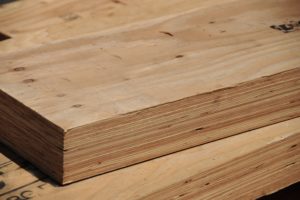 After this year’s fires burned through the Palisades and Altadena neighborhoods, destroying over 16,000 structures, the city is reckoning with 4.5 million tons of debris, according to LAist—”the largest municipal wildfire cleanup operation in recent history.” As a result, the Army Corps of Engineers is sending trucks to 18 different regional facilities including landfills and recycling plants to manage the process of clearing out build remnants and remediating hazardous materials. Trees that appear damaged or unviable are cut down and sent to a local golf course to be mulched—a fact that doesn’t sit right with local sawmill owner Jeff Perry. In the aftermath of the Palisades and Eaton Fires, Perry teamed up with local landscape architects to create Altadena Reciprocity, an initiative that helps homeowners recycle an often-overlooked resource—neighborhood trees—into a product that residents can use for flooring, stair treads, door casings, and much more.
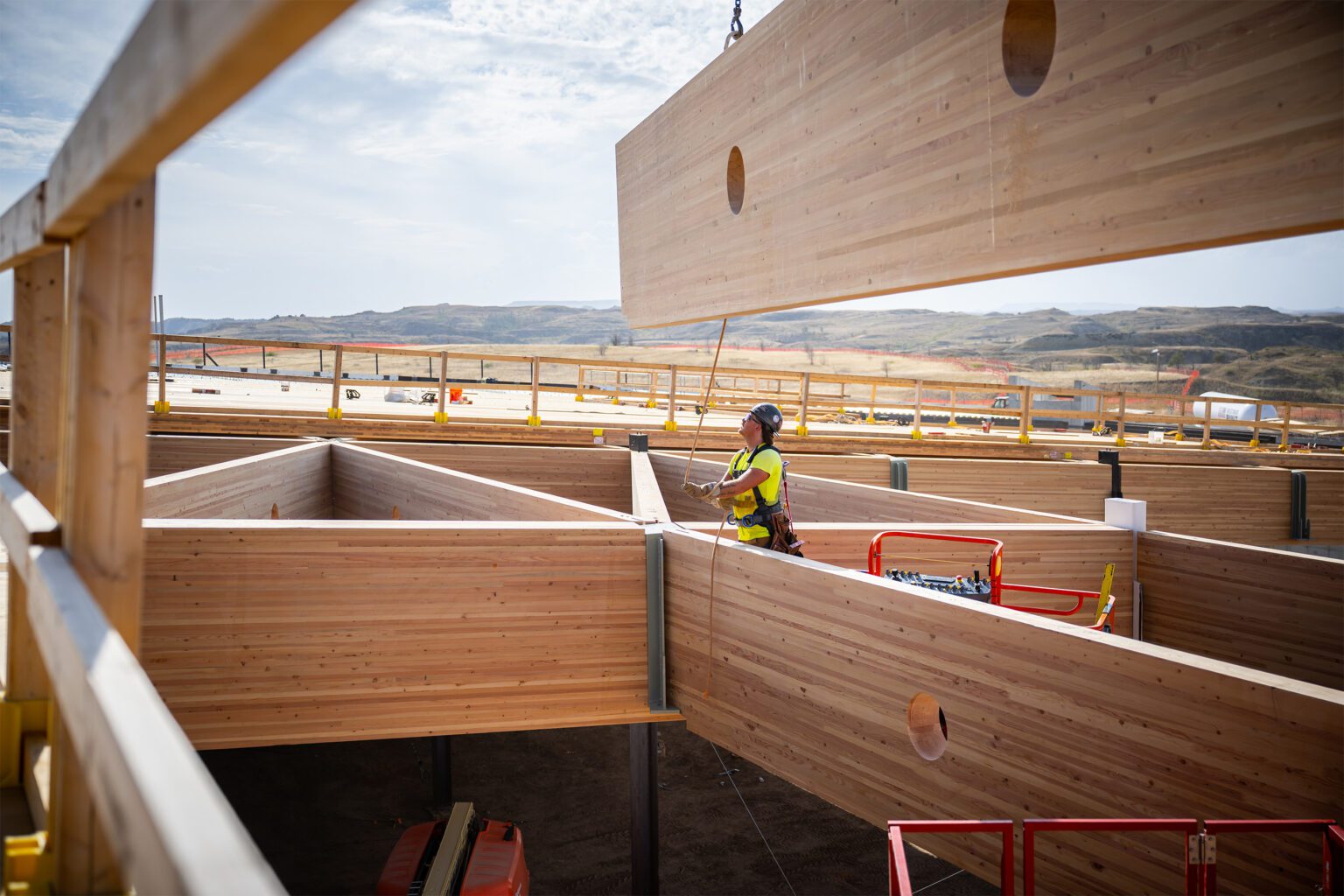

 New York City Mayor Eric Adams and New York City Economic Development Corporation’s Andrew Kimball announced that Artimus and Phoenix Realty Group have been selected to build over 500 new mixed-income housing units along the waterfront on the north shore of Staten Island, with a quarter of the new units set aside for affordable housing. The development will be the largest mass timber residential project in New York City… advancing commitments in Mayor Adams’ “Green Economy Action Plan,” a roadmap to grow the city’s green economy, invests in jobs and sectors that help the city combat climate change, and positions New Yorkers to benefit from the nearly 400,000 projected “green-collar” jobs in New York City by 2040. Mayor Adams… “We are not only building the affordable homes New Yorkers need but using sustainable materials to reduce our carbon footprint and help turn New York City’s waterways into the ‘Harbor of the Future.’”
 A metro Atlanta nonprofit is teaming up with college students to find the exact age of historic buildings using a unique area of study. While historical documents may say a building was constructed in a certain year, the wood used to create the structure could tell us a different story. Cobb Landmarks is using dendrochronology — the study of tree rings — to pinpoint when wood for metro Atlanta buildings was harvested for construction. Trevor Beemon, Cobb Landmarks’ executive director, said they are partnering with University of West Georgia students who, under the guidance of two professors, will take 12 to 15 samples from structures around metro Atlanta. …The partnership is “really the one chance” South Downtown has to learn about these buildings before they are redeveloped, Capps said.

 It could be another dangerously smoky summer for some in the United States as Canada prepares for a busy wildfire season with forecasts also signaling extreme heat is in store for both countries in the coming months. But when it comes to wildfire threats this season, the call is also coming from inside the house for the US: Violent wildfires have already raged in multiple states this year, millions were under red flag warnings this week and an active summer is on the horizon. In Canada, wildfires have scorched tens of millions of acres, displaced hundreds of thousands of people and killed multiple firefighters since the country’s record-breaking 2023 fire season. Some fires from the past two years also poured smoke into large population centers in Canada and the US, cratering air quality and ushering in orange-tinted, apocalyptic-looking skies. …Large wildfires produce dangerous smoke that can reach communities hundreds of miles away.
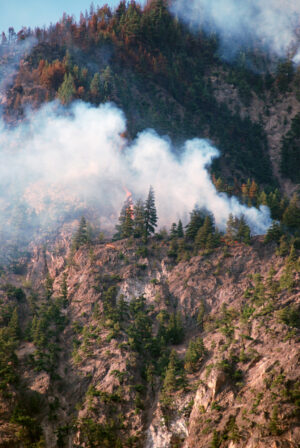 As the U.S. moves towards peak fire season, U.S. Secretary of Agriculture Brooke Rollins has signed a memo signaling the Department of Agriculture’s approach to wildfire response under the Trump administration. The memo – signed on Tuesday 20 May – directs the Forest Service to take several actions over the next 30 days, including policy changes for when the nation’s fire preparedness level is high. At Preparedness Level 3 and above, Rollins directed USFS Chief Tom Schultz to “prioritize and redeploy the non-fire workforce” to support wildfire response. A Preparedness Level 3 is issued when the potential for wildland fires is normal for the time of year, according to the National Interagency Fire Center, meaning it’s likely non-fire personnel will be deployed in 2025… The directive was made just months after the department was forced to hire back all 6,000 USDA workers the Trump administration fired on Feb. 13.
 The Trump Administration aims to increase lumber production in the U.S. while simultaneously reducing wildfire risk on federal lands across the country, including Dixie National Forest. However, some are concerned the president’s decision could make matters worse. On March 1, President Donald Trump signed an executive order, the Immediate Expansion of American Timber Production, to streamline permitting processes. It directs the U.S. Forest Service and the Bureau of Land Management to use the Endangered Species Act’s emergency regulations to the maximum extent possible to “facilitate the Nation’s timber production.” Additionally, the order directs federal members of the Endangered Species Committee to develop and submit a report to the president identifying “obstacles to domestic timber production infrastructures specifically deriving from implementation of the ESA and recommends procedural, regulatory, and interagency improvements.” …According to the Center for Biological Diversity, there are over 400 federally listed species that depend on national forest lands, such as grizzly bears, spotted owls and wild salmon.
 In a May 13 petition, members of Congress from Northern Rockies states once again admonished the U.S. Fish and Wildlife Service for what they say is a “flawed” and “ludicrous” proposal to continue listing the grizzly bear as an endangered species. “This decision punishes Montana, Wyoming, and Idaho’s successful grizzly bear recovery efforts,” states the petition, signed by U.S. Sens. Mike Crapo, R-Idaho, James Risch, R-Idaho, and U.S. Rep. Russ Fulcher, R-Idaho. “The FWS’s ‘Grizzly Bear Recovery Program 2023 Annual Report’ shows that our states have met and far exceeded the most recent set of recovery goals that FWS set for grizzly bears. All of this collaborative work is undermined by the FWS decision to yet again move the goalpost for delisting grizzly populations.” From Greater Yellowstone to the Selkirk Mountains of North Idaho, grizzly bear habitat protections have stalled the timber industry — a pillar of the region’s economy.
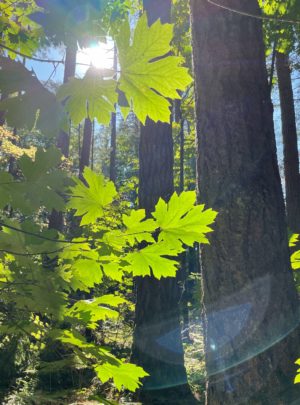 Over one-third of Colorado is forested acreage — 24 million acres of the state’s 66.48 million acres — managed by a variety of local, state and federal entities. The Colorado State Forest Service and the Colorado Forest Restoration Institute, both part of Colorado State University, launched a new online tool to better track completed forest management activities in the state. The
 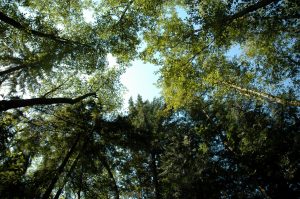 A tree-sit protest, which has blocked logging access to state Department of Natural Resources parcels, is now two weeks old. An injunction hearing regarding the parcels has been scheduled for 9 a.m. Friday in Clallam County Superior Court. If a 90-day injunction is issued, the tree climber will remove themselves from the tree. If the decision is not in favor of the environmentalists, the climber likely will stay up there indefinitely. “It’s going to be crunch time,” activist Peter Stedman said. The tree sit began about 5:30 a.m. May 7, when an unidentified professional tree climber attached themselves to a dunk tank platform 50 to 100 feet up in a tree. That platform was then attached to debris piled in the middle of a logging road. If the Department of Natural Resources (DNR) attempts to remove the debris to gain access to those parcels, the tree climber’s platform will drop.
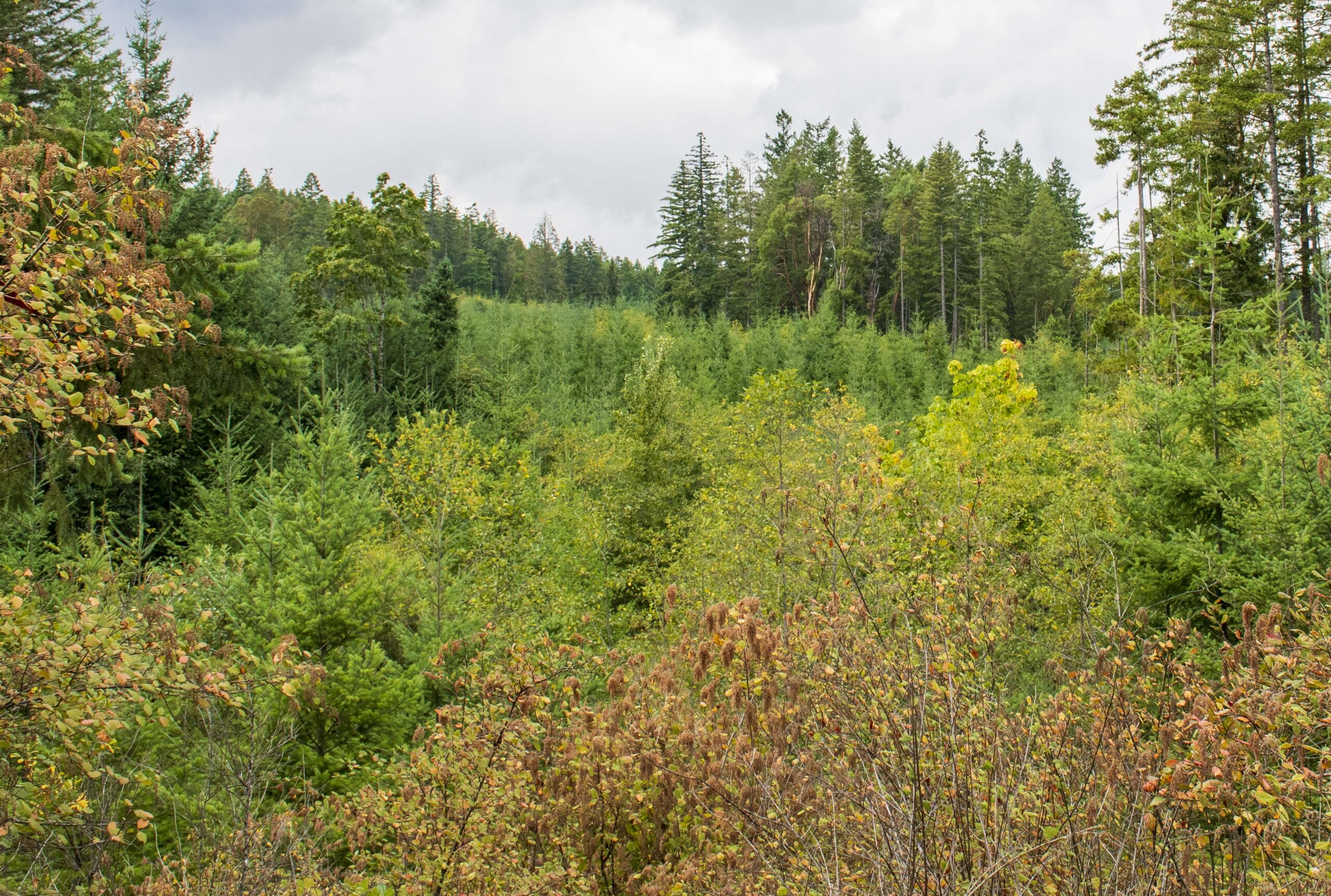 A year-long communication breakdown between concerned residents and state forestry leaders required investigation and halted one state timber sale. Last February, Denise Moore got a letter from the Oregon Department of Forestry that “immediately sent up red flags.” Cullen Bangs, a forest roads manager in the department’s Astoria district office, wrote that surveyors would be around her property in the weeks ahead to review boundaries between the Clatsop State Forest and nearby private property. …But the letter from Bangs became the first of several communications, and miscommunications, between the forestry department and its Astoria office about two planned timber sales to concerned neighbors over the course of a year. The communication breakdown would send those residents, along with community and environmental groups, into a frenzy, eventually leading one timber sale to be paused indefinitely and a Board of Forestry member to resign.
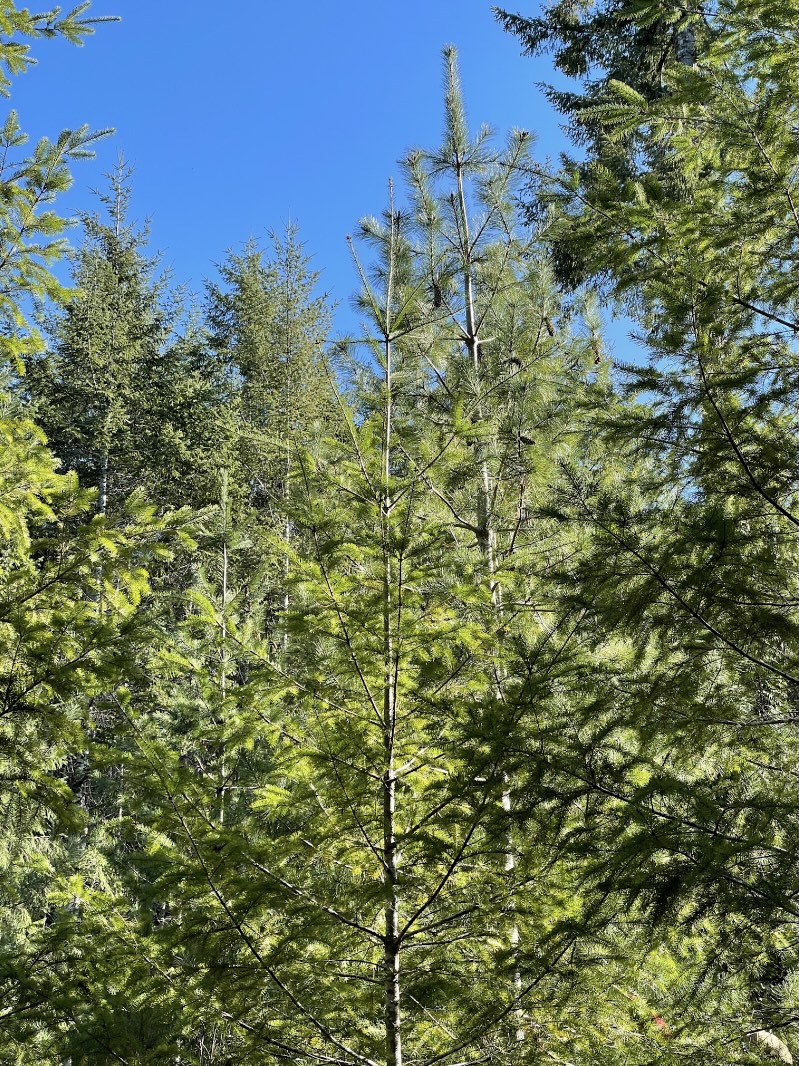 Forests are extremely valuable for watersheds, wildlife, carbon storage, recreation and so much more. The deceptively named Fix Our Forests Act, or FOFA, does nothing to conserve forests to retain these values. Instead, it would emphasize logging and otherwise manipulating forests at a scale we haven’t seen on public lands for many decades, if ever. The misguided bill has already passed the House, and its Senate version was recently introduced by Colorado’s own U.S. Sen. John Hickenlooper and other Western senators. FOFA encourages the Forest Service and Bureau of Land Management…, to avoid a careful examination of impacts from logging and ways to reduce harms under the National Environmental Policy Act. Under FOFA, projects up to 10,000 acres — over 15 square miles — would be excluded from consideration of possible impacts. What’s more, the public would have only one chance to provide input for logging projects and could only object in court.
 Industrial-scale logging in the Tongass National Forest was due to monopolies created by the federal government and taxpayer subsidies… A study by the Southeast Conservation Council calculated the federal government spent $386 million for preparation and sale of Tongass timber while collecting only $32 million in stumpage fees from 1982 to 1988. While the heyday of the timber industry supported about 4,000 jobs, many were nonresidents or recent arrivals who left when the pulp mills closed. Most of my former colleagues at the Sitka mill went “back home” to Washington when the mill ceased operation. The pulp mills closed primarily because of tree farms in warmer climates such as South Africa, where forests grow much faster than the Tongass. Many fruit and vegetable farms in the southern U.S. converted to tree farms… So, are there enough standing old-growth trees to support a vibrant timber industry in the Tongass? It depends upon who you ask.
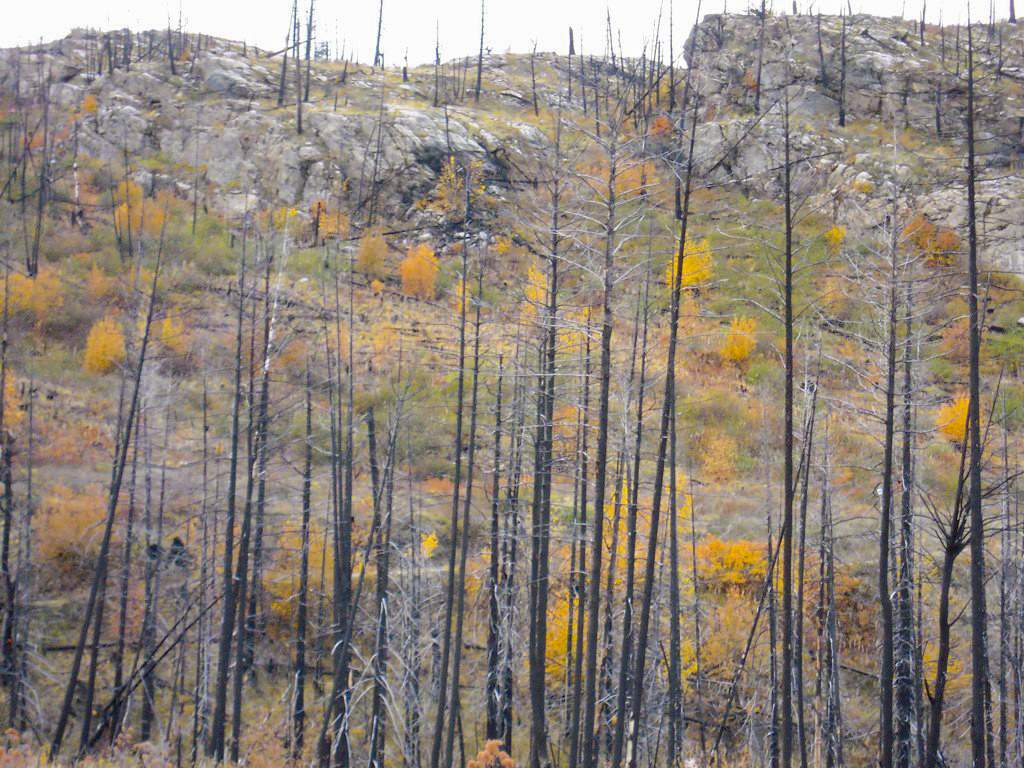 After Oregon’s devastating 2020 Labor Day fires, the Legislature passed a bill that was supposed to lead to more wildfire awareness and resilience. Among other things, Senate Bill 762 created a map of areas at high risk of fire. But that map led to a huge backlash from property owners — a backlash so strong that a few weeks ago, the state Senate voted unanimously to eliminate it. Jeff Golden is a Democratic state senator from the Rogue Valley. He voted to create the map in 2021, now he’s voted to get rid of it. …“We delegated to Oregon State University, which has credentials — among the best in the world in terms of maps like this — and gave them almost no direction, just said, ‘We need a map to fulfill this purpose. Let us have it within the next 18 months.’” At the time, very few lawmakers were worried about what would come next.
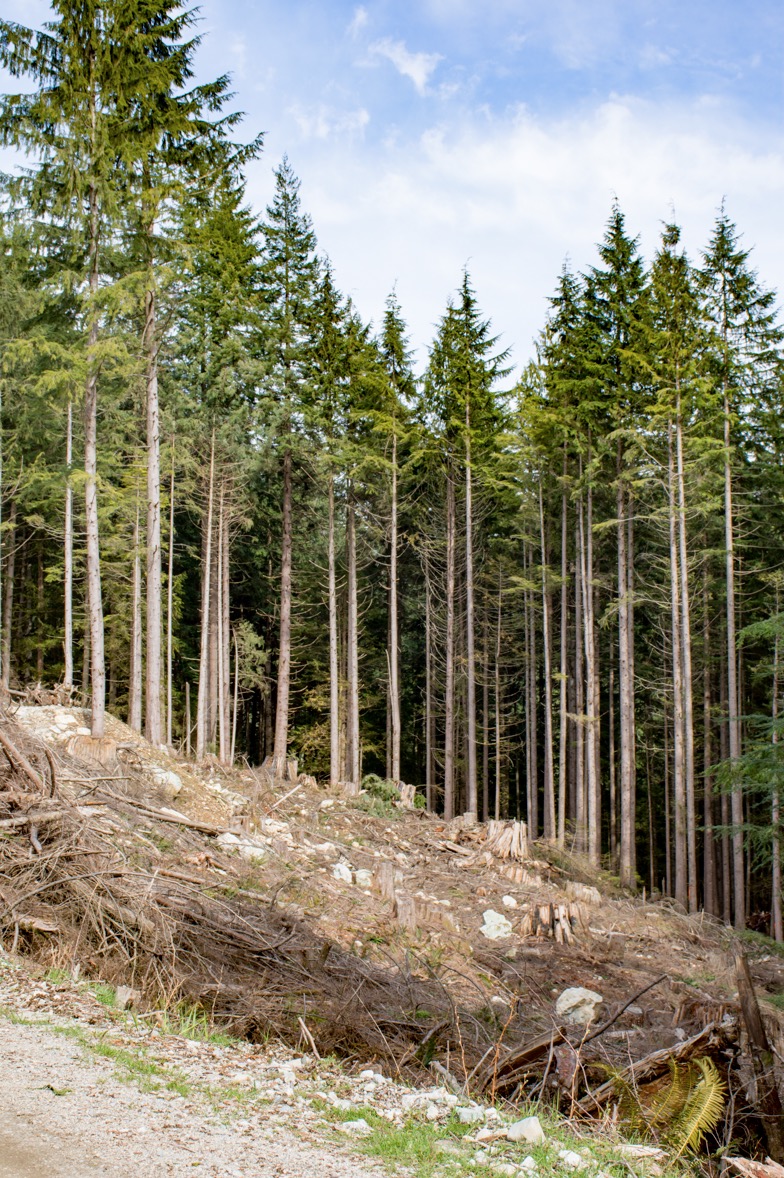 NASELLE, Wash. — One self-service library, high school, and grocery store serve the 519 people of Naselle, Washington. The piles of felled logs along the roadsides dwarf the passing cars, signaling to drivers that this town was built on logging. Many Naselle residents have family roots in the forestry sector, allowing them to be intimately familiar with its demands. They also do not often push back on timber harvests that pose no threat to endangered species or their habitats. But an upcoming harvest will fell trees surrounding one of two creeks that supply the town’s water: this is where most residents draw the line. …The Washington State Department of Natural Resources (DNR) will auction off 105 acres of state-owned forest in Naselle on May 29 after they determined the area was suitable for harvest. The revenue from the highest bid will go to UW. …UW received approximately $20 million from the DNR from 2020 to 2024, $8.6 million of which was from timber sales.

 The first-ever
  Wildfires are burning through thousands of acres of forest in Northern Minnesota damaging buildings and forcing residents to evacuate their homes. The yet-to-be-contained Camp House fire, Jenkins Creek fire and Munger Shaw fire have a small accomplice to thank for their continued destruction: spruce budworms, a well-known pest that has terrorized Minnesota forests for at least half a century, killing trees and making them more susceptible to fire. The fires’ other helper? Humans. “Spruce budworm’s largest impact, in my opinion, is that it can help perpetuate dense stands of balsam fir on the landscape that are fire prone,” said Mike Reinikainen, a silviculture program consultant with the state’s Department of Natural Resources’ forestry division. Much of the area was infected by spruce budworms, whose infestations worsened the Greenwood fire near Isabella, Minn. in 2021.
 Washington, D.C. – Today, Representatives Ryan Zinke (R-MT-01) and Joe Neguse (D-CO-02) introduced the Collaborative Forest Landscape Restoration (CFLR) Program Reauthorization Act of 2025, which would extend and expand a successful program focused on reducing wildfire risk, restoring forest health, and supporting rural economies through proven, locally driven strategies. Senators Mike Crapo (R-ID) and Jeff Merkley (D-OR) introduced companion legislation in the Senate. Originally authorized in 2009, the CFLR program is a model of how communities, industry partners, landowners, and local governments can work together to improve forest conditions and prevent catastrophic wildfires. In its first decade, CFLR projects treated and restored 5.7 million acres of forest, improved 1,000 miles of trails, and maintained over 25,000 miles of forest roads helping keep public lands open and safe.
 [Airplanes produce] a lot of emissions. In fact, the airline industry produces more greenhouse gases than many major countries. Most airlines … are pushing for cleaner fuels—and offering passengers the chance to help them offset a flight’s carbon emissions. Book a trip with a big carrier and you might be asked if you want to invest in forest preservation, saving enough trees to soak up your jet-setting’s environmental emissions. But is that really helping the planet or is it just a way for corporations to look better? A new study co-led by researchers at Boston University and the nonprofit Clean Air Task Force has found some of these efforts, known as forest carbon credit schemes, might not be doing much good. After examining the standards-governing programs … researchers recommend a series of new guidelines and improvements to “the carbon market system that would promote reliably high-quality forest carbon credits.”
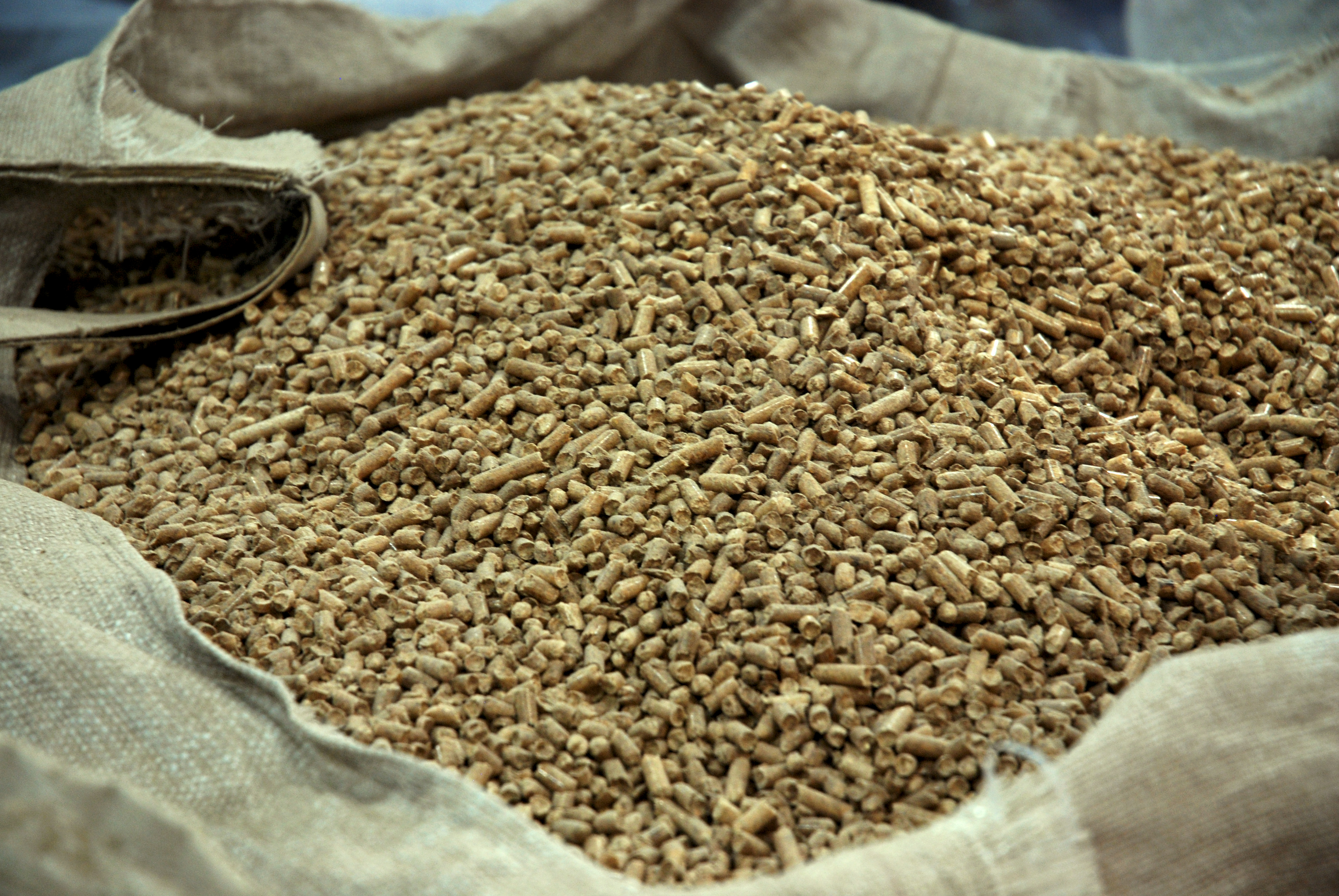 The US agriculture secretary has said the UK could take more US wood pellets as biomass amid ongoing trade talks. Brooke Rollins told reporters the US is ‘100% confident’ that the country’s wood chips adhere to UK sustainability requirements. Rollins met with UK energy secretary Ed Miliband and energy minister Michael Shanks on 13 May. Her visit to London saw her promoting agricultural produce – including US wood pellets. This is despite ongoing questions surrounding the actual sustainability of the biomass sector. In particular, Drax, which is subsidised by the UK taxpayer, has come under scrutiny on several occasions.
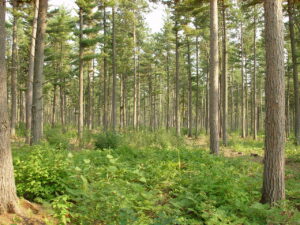 Earlier this week, Clean Air Task Force (CATF), alongside a team of leading U.S. forest carbon scientists, published a deep dive into the rules that govern a wide range of forest carbon credit certifications relevant to North America. The assessment examines rules of the road for quantifying carbon credits and identifies what works well, where there are weaknesses, and opportunities for improvements to ensure that forest carbon credits achieve their promised climate benefits… CATF’s assessment scored some elements of California’s current forest protocol that lays out the requirements for carbon credit certification as robust, such as the 100-year monitoring period for stored carbon in forests, and others as weak, like the risk assessment procedure. While high-quality credits are possible under the current protocol, the bar needs to be raised to guarantee that credits are delivering on their promise.
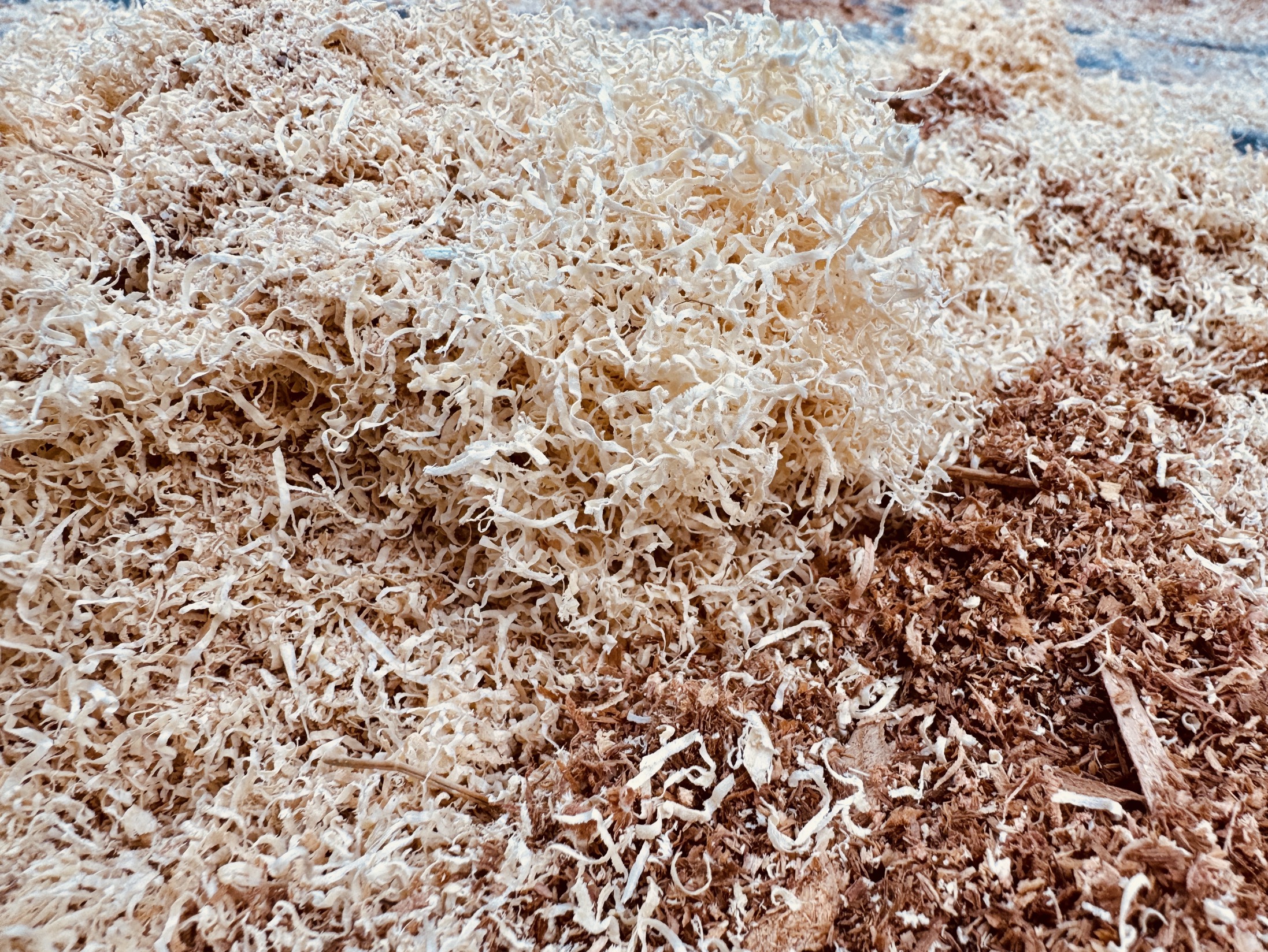 FALLON, Nev. – A proposed wood pellet processing plant in Churchill County is facing significant opposition from nearby residents who say it’s a great project in the wrong place. The facility, which would operate 24/7, is being proposed on McLean Road in Fallon. The man behind the proposal, Alex Pedan, is seeking a special use permit to open the plant, but neighbors are raising red flags over concerns about noise, dust, and declining property values. Amber Sanchez lives near the site and says she was notified about the proposal on April 29. She’s concerned that not everyone in her neighborhood received the same letter. …During Wednesday night’s Churchill County Planning Commission meeting, residents filled the room to speak out against the plan. Some said they supported the idea of a wood pellet business — just not in a residential or agricultural area. …In response to community concerns, Pedan claimed the plant’s equipment would be housed indoors, within a sound-insulated structure.