 The Tree Frog News featured the panels and speakers from last week’s International Pulp Week. In today’s Tree Frog News are links to all of the conference sessions in chronological order.
Day One – June 1, 2025
- Registration and Wecome Cocktail
Day Two – June 2, 2025
- Looking Back, Moving Forward: 20 Years of Industry Insights: Kevin Mason
- Economic Uncertainty: A Macro View on Tariffs and Markets: Joaquin Kritz Lara
- Metsä Fibre’s enhanced position in Softwood Pulp: Mikko Antsalo
- The Global Hardwood Market: Leonardo Grimaldi
- How Carbon Capture and Removal is Unlocking Opportunity: Jonathan Rhone
- Navigating EUDR Compliance with Automation and Digital Tools: Parker Budding
Day Two – June 3, 2025
- Managing Geopolitical Uncertainty and Its Challenges: Robert McKellar
- Reshaping China’s P&P Industry in a Shifting Global Landscape: Haidong Weng
- The Shanghai Pulp Futures Exchange Path to Internationalization: Jin Feifei
- How Luojing Terminal is Meeting China’s Pulp Demand: Tian Jun
- Current Trends in End-Use Markets: Mathieu Wener
- Global Pulp Market: Demand Drivers and Outlook: Emanuele Bona
 Over the past decade, Canadian forestry companies have significantly expanded their footprint in the American lumber industry. While foreign investment remains a key component of a dynamic US economy, industry analysts and policymakers are increasingly scrutinizing the long-term implications of international control over critical domestic manufacturing infrastructure. Canadian-owned firms—including West Fraser, Canfor and Interfor—now operate dozens of sawmills in the US, with many holding more assets south of the border than in their home country. Additional Canadian firms—such as Tolko, Maibec, J.D. Irving, and Kruger—also maintain active operations and land holdings throughout the country. As foreign ownership of US lumber mills grows, several key concerns are emerging: Supply Chain Autonomy… Economic Retention… Market Influence. …Industry stakeholders are urging a closer examination of the issue. Policy suggestions include incentivizing domestic ownership, increasing sourcing transparency, and evaluating regulatory frameworks around foreign investment in strategic industries.
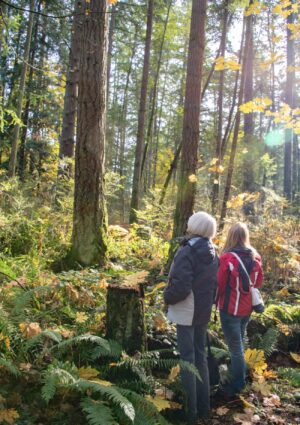 A program that protects privately owned forests for timber and other uses has survived in a megabill being put together in the Senate, after falling victim to House budget cutters in May. The Senate Agriculture, Nutrition and Forestry Committee saved the Forest Legacy Program in its piece of the big tax-cut and spending bill, refusing to cut off $100 million in Inflation Reduction Act funding. “This is a victory not only for forests, but for the families, economies, and ecosystems that depend on them,” said Lesley Kane Szynal, chair of the Land and Water Conservation Fund Coalition, an advocacy group, in a news release Thursday. The Forest Legacy Program pays for conservation easements and land purchases that prevent privately owned forests from being converted to other uses. In many cases, they’ve been used to keep timber operations in business while protecting forest watersheds and allowing for recreational access. [to access the full story an E&E News subscription is required]
 A federal appeals court on Tuesday agreed to let many of President Trump’s sweeping tariffs on US trade partners remain in effect for now, extending a pause issued late last month after a separate court ruled the tariffs were illegal. The Federal Circuit Court of Appeals granted the Trump administration’s request for a longer pause after issuing a temporary stay of the lower court ruling last month. The court put the case on a fast track to be resolved by the end of this summer, noting that “these cases present issues of exceptional importance warranting expedited en banc consideration of the merits in the first instance.” The decision comes after the US Court of International Trade ruled on May 28 that Congress did not delegate “unbounded” tariff authority to the president in the International Emergency Economic Powers Act of 1977. Trump appealed the ruling and, hours later, the appeals court granted the temporary stay.
 LONDON — US and Chinese officials said on Tuesday they had agreed on a framework to get their trade truce back on track and remove China’s export restrictions on rare earths while offering little sign of a durable resolution to longstanding trade tensions. …Lutnick said the agreement would remove restrictions on Chinese exports of rare earth minerals and magnets and some of the recent US export restrictions “in a balanced way”, but did not provide details…. adding that both sides will now return to present the framework to their respective presidents for approvals. …The two sides left Geneva with fundamentally different views of the terms of that agreement and needed to be more specific on required actions, said Josh Lipsky. …They have until August 10 to negotiate a more comprehensive agreement, or tariff rates will snap back from about 30% to 145% on the U.S. side and from 10% to 125% on the Chinese side.


 Lumber futures rose past $610 per thousand board feet, a ten-week high, as steady construction activity met tightening supply and mounting trade barriers. US homebuilding remains steady with single-family starts flat at 1.36 million units in April and permits edging lower, while Canadian multi-unit starts jumped 34%, keeping mill orders firm. Canadian harvests are constrained by pine-beetle infestations, prairie wildfires that have burned more than 200,000 hectares this spring and strict cut limits that left British Columbia nearly 42% below its allowable quota in 2023. In the US, sawmill utilization stalled in the mid-70% range despite recent capacity additions. Tariffs of roughly 14.5% on Canadian softwood, along with threats of higher levies, have discouraged cross-border shipments, while major exporters divert supply to Asian and European markets. Elevated fuel and transportation costs further raise delivered prices.
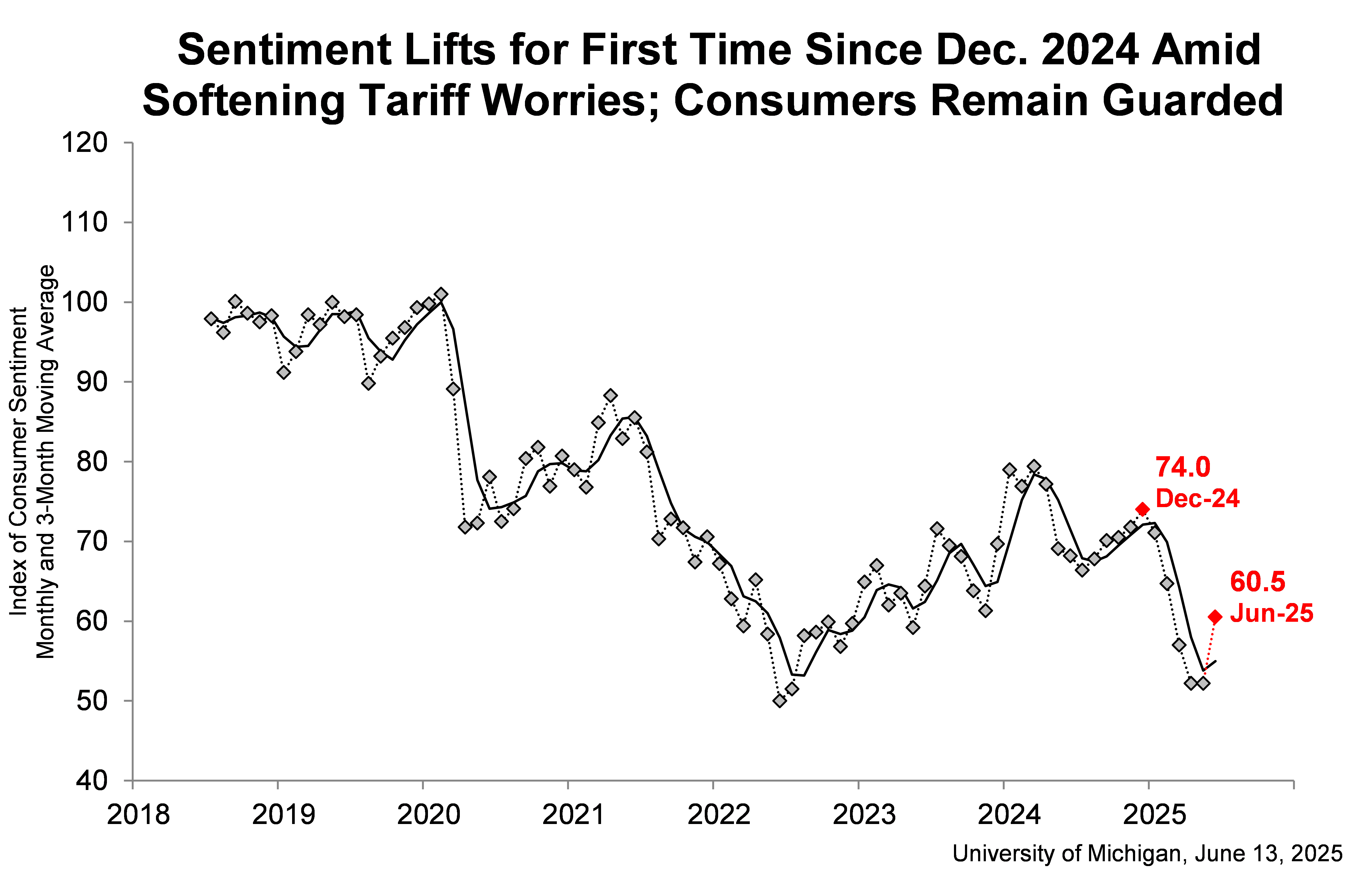


 Stocks wavered Thursday as President Trump threatened setting unilateral tariffs on trading partners in two weeks. The S&P 500 added 0.2%, while the Nasdaq Composite gained 0.1%. …Wall Street awaits further developments on trade policy, especially between the U.S. and China, as talks between the two countries have been a focal point this week. Trump said Wednesday he would be willing to extend a July 8 deadline for finishing trade talks with countries before higher US levies take effect, but that the extensions may not be necessary. …“We still think the primary driver for market direction and to break out to all-time highs would be some resolution for tariffs and how they interlink with the budget and the Fed. And we see a lot of headlines about negotiations or pauses or frameworks, but we still haven’t seen a single signed trade deal,” said Tom Hainlin at U.S. Bank Asset Management Group.
 The American military is looking at the possibility of using 3D printing, additive construction methods and cross-laminated timber (CLT) to build new military barracks and other buildings at various bases. The U.S. Army Corps of Engineers has already built new barracks at Fort Bliss, Texas, using 3D printing. …CLT is also being used in another centre planned at Joint Expeditionary Base Little Creek-Fort Story, also in Virginia. …Engineers at the Air Force Civil Engineer Center of the Air Force Installation and Mission Support Center are leading the way with research and development on the possibility of implementing concrete building construction techniques in future military construction projects. They discussed a number of topics, including additive construction, 3D-printed buildings, high performance cement and concrete mixes, geosynthetics, mass timber, composite materials, industrialized construction, tension fabric structures and carbon fiber-reinforced polymers.
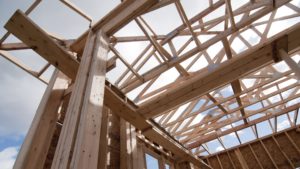 In an age of sleek finishes and synthetic shortcuts, timber framing offers something few modern materials can: substance. There’s a quiet grandeur to exposed beams that hold not only the weight of a home but the stories it gathers over time. The appeal isn’t rooted in nostalgia—it comes from discernment. Choosing timber is a commitment to craftsmanship, to the feel of hand-hewn structure beneath polished design. Bespoke estates, mountain retreats, and coastal getaways are embracing timber as both a form and a functional element. No longer reserved for rustic cabins or historical reproductions, it’s becoming the architectural signature of homes designed with permanence in mind. That kind of durability begins with sourcing, ensuring the materials behind the beauty are as intentional as the design itself. Timber framing is one of the oldest construction methods still in use, with roots stretching back over a thousand years.
 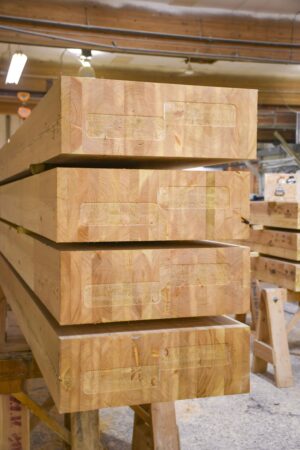 PORTLAND, Oregon – The Port of Portland is leasing a former marine terminal to a mass timber company as part of an effort to spur housing development and job growth in the area. On Wednesday, the Port of Portland approved a lease for Zaugg Timber Solutions to open a factory at the Port’s Mass Timber and Housing Innovation Campus at Terminal 2. …“Our partnership with ZTS marks a major leap forward in developing the Mass Timber and Housing Innovation Campus at T2,” said Kimberly Branam. “Their new manufacturing facility will boost our region’s economy by promoting sustainable forestry practices, creating quality jobs, and increasing housing production.” While the new 100,000-square-foot manufacturing facility is expected to open in 2028, ZTS will produce mass timber modular housing units, industrial and commercial buildings and other building components starting in 2026 in an interim manufacturing facility at the terminal, officials noted.


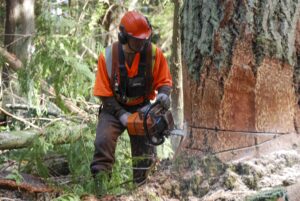 The buzz of saw teeth and scent of crushed pine needles filled the air as Roy Blackburn walked up a muddy path tucked away in the Willamette National Forest. …Timber once drove the economies of states like Oregon. But forest harvests nosedived beginning in the early 1990s due to stricter environmental regulations, a changing lumber market and other factors. President Trump hopes to reverse that trend by executive fiat, ordering the US Forest Service to ramp up logging on federal lands in what environmental groups like Earthjustice call a “cynical attempt to justify destructive logging.” …The amount of timber harvested on Forest Service land has decreased nearly 80% since reaching a high in 1987. …Canadian competition was on Trump’s mind in March when he signed an executive order to immediately expand timber production on federal lands. …Previous administrations allowed environmental groups to drive “the decision-making on our forests.” That’s changing.
 Federal agencies are seeking to reinterpret a key word in the Endangered Species Act that could weaken habitat protections for certain at-risk species, according to two wildlife biologists at North Carolina State University. The U.S. Fish and Wildlife Service and the National Marine Fisheries Service have proposed a rule that would exclude habitat modification and degradation from the regulatory definition of “harm” under the Endangered Species Act. “If we lose critical habitat protections for threatened and endangered species … they could face a heightened risk of extinction,” said Chris Moorman, a biology professor. Roland Kays, a research professor of fisheries, wildlife and conservation biology, added: “The Endangered Species Act, as it is written, is crucial to the protection and recovery of at-risk species across the country. And while there have been many attempts to change the law over the years, it’s held up and worked as intended.”


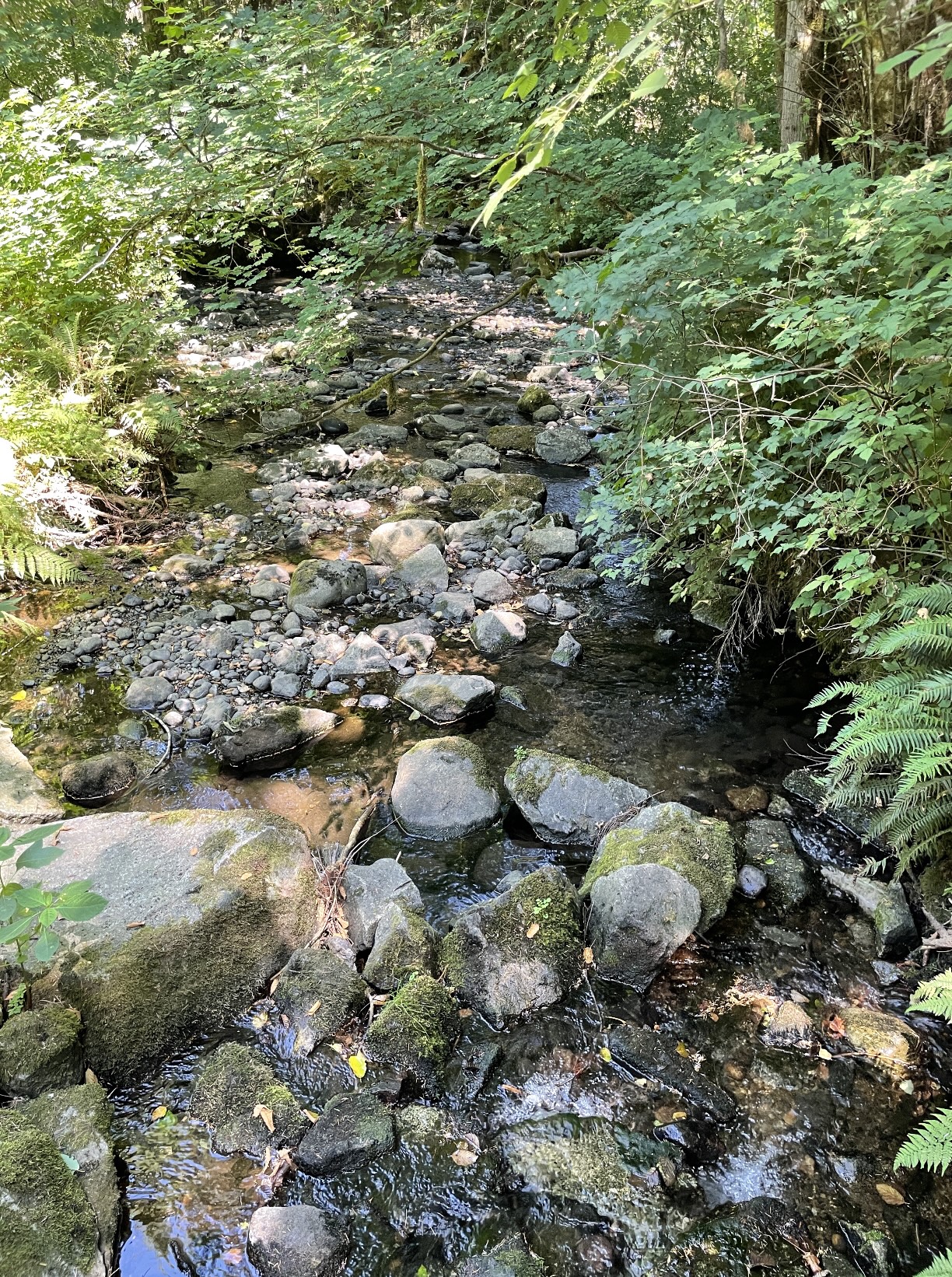
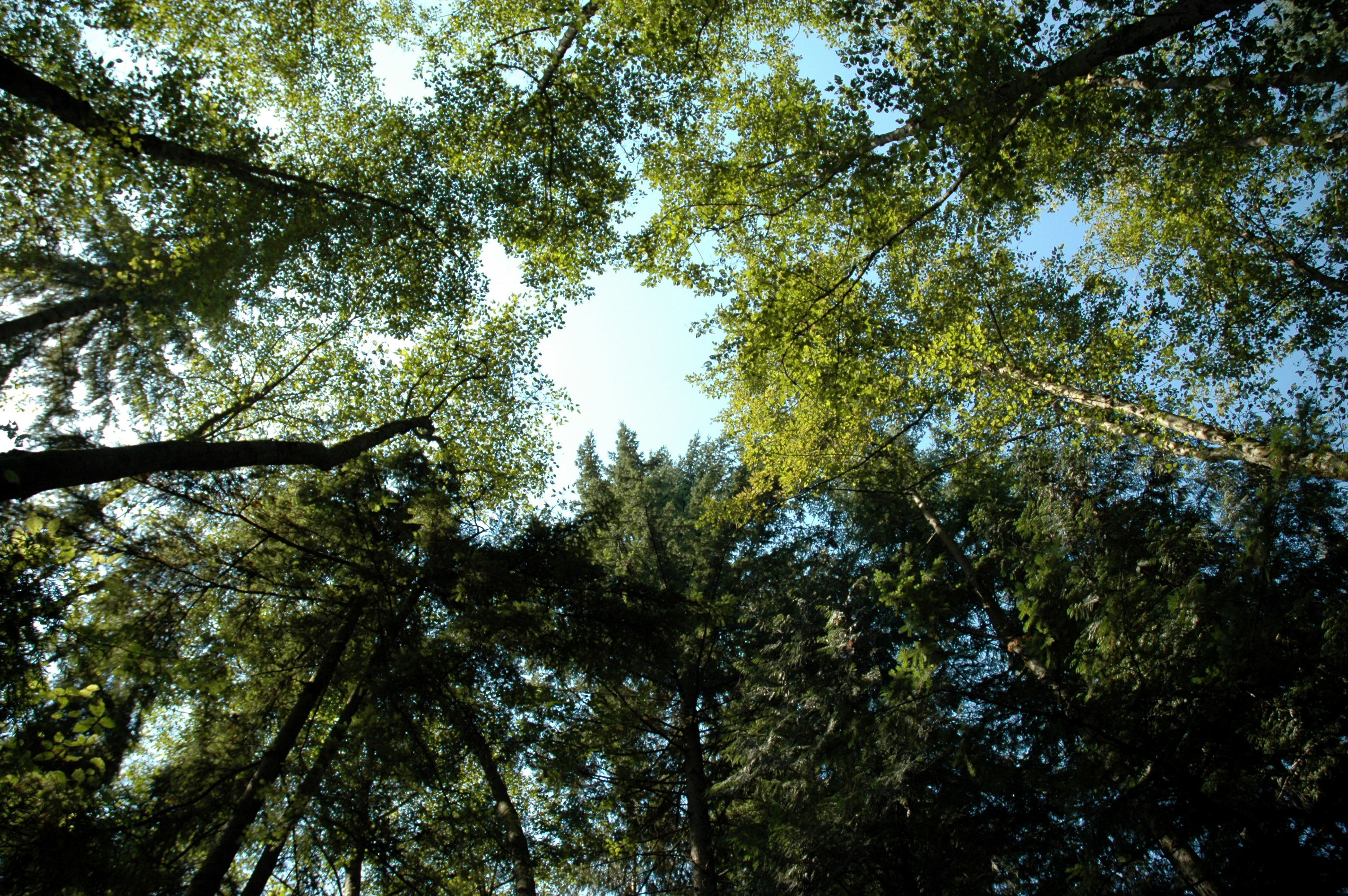 The federal government could start selling off thousands of acres of Oregon public lands if provisions added to the Big Beautiful Bill win Congressional approval. A draft of the legislation was released Wednesday. Housing is also part of this latest push to sell Bureau of Land Management and Forest Service land. US Senator Mike Lee is calling for the heads of the US Interior and Agriculture departments to dispose of between 2.2 and 3.3 million acres of federal BLM and Forest Service land from 11 states – including Oregon. …Separately, the legislation calls for the Forest Service to boost logging by 75% over the next decade. It’s not clear if those logging goals are realistic. The Forest Service has missed its timber targets every year for more than a decade, though it’s possible that tariffs on Canadian lumber could boost demand for logging in the United States, according to industry analysts.

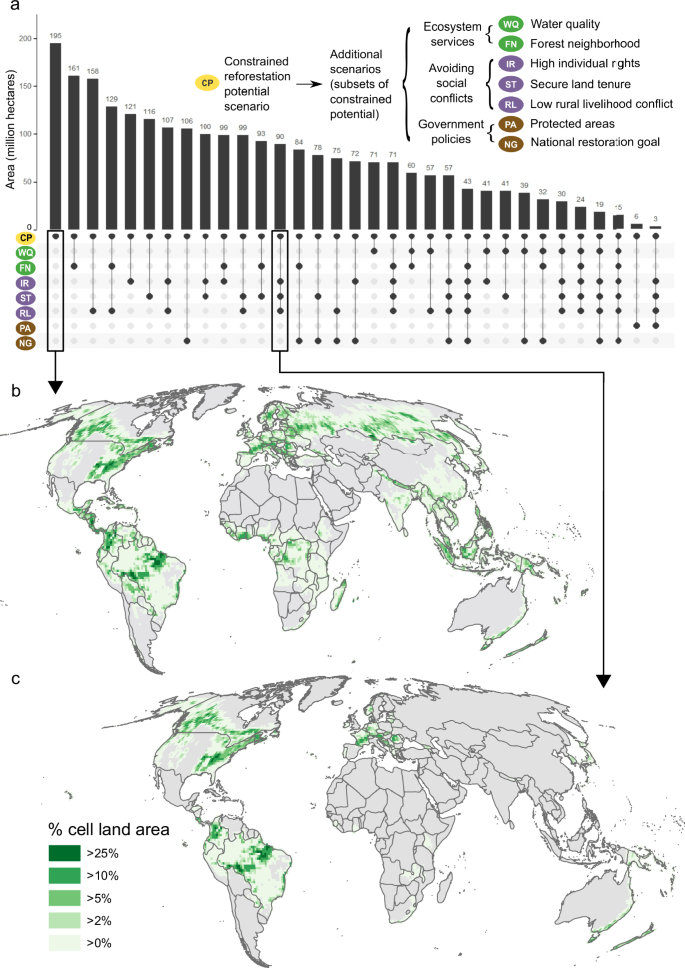
 Satellite data used by archaeologists to find traces of ancient ruins hidden under dense forest canopies can also be used to improve the speed and accuracy to measure how much carbon is retained and released in forests. Understanding this carbon cycle is key to climate change research, according to Hamdi Zurqani, for the Arkansas Forest Resources Center and the College of Forestry, Agriculture and Natural Resources at the University of Arkansas at Monticello. The center is headquartered at UAM and conducts research and extension activities through the Arkansas Agricultural Experiment Station. …In a study recently published in Ecological Informatics, Zurqani shows how information from open-access satellites can be integrated on Google Earth Engine with artificial intelligence algorithms to quickly and accurately map large-scale forest aboveground biomass, even in remote areas where accessibility is often an issue.
 WASHINGTON — On behalf of the American Wood Council (AWC) and the American Forest & Paper Association (AF&PA), AF&PA Vice President of Public Policy Paul Noe gave oral testimony before the House Committee on Energy and Commerce, Subcommittee on Environment in their hearing titled, “Short-Circuiting Progress: How the Clean Air Act Impacts Building Necessary Infrastructure and Onshoring American Innovation.” In his testimony, Noe applauded legislation that would allow the paper and wood products industry to make capital investments to modernize their manufacturing facilities. …discussion was heard by the committee on two bills that would make critical revisions to the National Ambient Air Quality Standard (NAAQS) setting and implementation process that would reduce the type of permit gridlock created when the particulate matter NAAQS was significantly lowered by the previous administration. “We strongly support Congressmen Rick Allen and Buddy Carter in their efforts to address the impacts of air permitting issues on U.S. manufacturing,” said Noe.
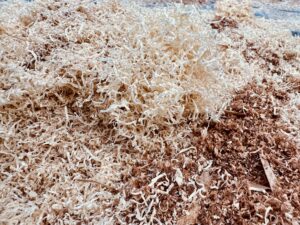 TEXAS — A plan to open a bioenergy plant in Newton County has reached a new milestone with a landmark deal to supply wood for the site in Bon Wier. Mike Lout with KJAS, reports Nick Andrews, President and CEO of the Scottsdale, Arizona-based USA Bioenergy, announced on Tuesday that his company has
 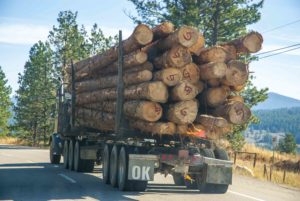 The trucking industry has been facing unprecedented challenges in recent years, with a shortage of qualified drivers, rising fuel and insurance costs… and now economic uncertainty caused by tariffs. …Now, one large lawsuit against a trucking company highlights a dangerous practice that has been going on. …The Estate of Sarah Susman v. Starker Forests, Inc., R&T Logging of Oregon, Wolf Cr. Timber Services, Shane Mcvay – is a $65 million wrongful death claim. Sarah Susman… was driving to work in September 2021 when a logging truck operated by a 67-year-old driver rolled over and lost its load. …Family members of the victim believe that the incident can be attributed to a dangerous injury practice referred to as “double brokering.” …Court filings explained that double-brokering is a practice within the trucking industry where multiple contractors pass hauling jobs between them with very little oversight or enforcement of safety regulations.
 New Jersey — A wildfire that began Friday in the Wharton State Forest in Burlington County is now 80% contained, fire officials said Sunday. The New Jersey Forest Fire Service posted on its Facebook page a total of 5,750 acres were scorched since the blaze began Friday morning. It was first spotted near the Carranza Memorial in the state forest. By 11 p.m. Friday, flames had grown to 3,250 acres, state fire officials had said. The blaze, dubbed the Mines Spung Wildfire, is located within Wharton State Forest in Shamong Township. A wildfire is defined by state fire officials as an uncontrolled fire burning different types of vegetation covering the land, with a “major wildfire” being anything that exceeds 100 acres in size. Crews on Sunday were continuing to mop up hot spots and patrol the fire perimeter, state fire officials said.