 President Trump’s shifting trade policies are creating uncertainty for the Canadian forestry industry. Sean McLaren, CEO of West Fraser Timber, says the potential inflationary effects of tariffs could weigh on future demand. “Looking forward, we see considerable macroeconomic uncertainty, particularly stemming from the US’s evolving tariff policies”. He said the company is planning for multiple scenarios. …RBC’s Matthew McKellar said that the outlook for the paper and forest products industry is highly uncertain when it comes to demand. “All of this uncertainty is bad for business,” said Derek Nighbor, CEO of Forest Products Association of Canada. Nighbor added that any impact on Canadian lumber companies will also affect pulp and paper: “We’ve got all of these downstream industries that depend on those inputs.” …McKellar noted that companies like West Fraser, Interfor and Canfor are geographically diverse, meaning potential softening of demand could be the bigger concern.
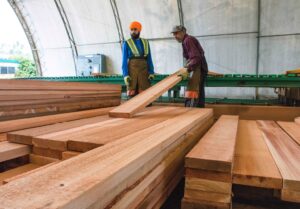 Major softwood producers with head offices in Canada say they have accounted for more than half of the growth in capacity in the US South over the past decade, highlighting their American investments as the Trump administration investigates lumber imports. The US South appeals to forestry companies because of the region’s abundant timber, the Canadian government said in a 57-page filing this month to the US Department of Commerce in a bid to avert potential tariffs. …In seeking to stave off tariffs, the Canadian government and several producers from Canada believe that the foray into the US South should be viewed as evidence of them being aligned with the Trump administration’s “America First” trade and investment agenda. …However, the U.S. Lumber Coalition is arguing that new tariffs are necessary. …Canadian producers are worried that if new lumber tariffs hit 25 per cent… total levies could reach nearly 60%. [to access the full story a Globe & Mail subscription is required]
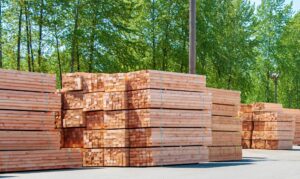 James Furney, mayor of Port McNeill, BC… is trying to stay upbeat, but his lumber town was already suffering before the threat of Trump’s trade war. …“To think that anyone is going to be insulated from what is going on with Trump would be delusional,” Furney said. “We are a forestry town and people around town are already watching their wallets and curtailing their spending, and businesses that should be ramping up now to hire summer students aren’t going to be hiring.” …In short, B.C. has plenty of wood and plenty of potential buyers for it, especially in the US, which was a $5.69-billion export market for the province in 2024, but not enough of that wood has been getting cut in recent years. That makes for gloomy days on the West Coast; a malaise that could spread to Ontario and Quebec and push the industry to the brink of collapse.

 President Trump and Treasury Secretary Scott Bessent hinted at a trade-war deescalation with China, as Wall Street hoped the US was preparing for an off-ramp from the weeks-long trade battle. “145% is too high, it will come down substantially,” Trump said of the level of tariffs on Chinese imports. He said he was optimistic about trade talks, adding that he plans to be “very nice” to China to reach a deal. Trump’s comments came after Bessent told investors in a closed-door summit Tuesday that he sees a deescalation in the US-China tariff situation, prompting a US stock rally on Tuesday that carried into Wednesday. Bessent called the tit-for-tat tariffs with China unsustainable, echoing the sentiments shared with Yahoo Finance last week that he was optimistic about “clarity” on tariffs. …China said it is open to trade talks with the US but struck a still-defiant tone.
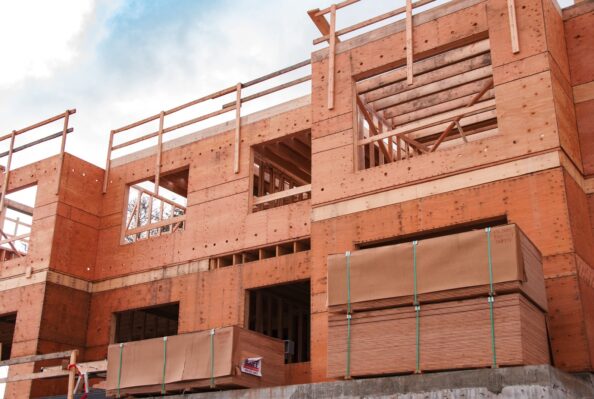 Developer Greg Drobot hope to sell the houses they’re building in Coos Bay for around $400,000. …Keeping costs down means paying attention to the price for every detail. Drobot said instead of plywood, the project was going to use a less-expensive oriented strand board from Canada. “When the tariffs hit, it made it almost cost-prohibitive for us to use that,” Drobot said. …Tariffs are almost certain to put Oregon’s new home construction goal further out of reach. Imported
 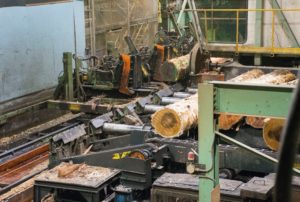 Once Oregon’s largest manufacturing industry, employment in the wood product manufacturing industry has gone through large, well-publicized losses since the early 1990s. Its employment has dropped below that of computer and electronic manufacturing and food manufacturing in recent years, but it remains the third largest manufacturing industry. Despite the losses, wood product manufacturing is still a large industry in Oregon and is especially important to rural areas of the state. Over the long term, between 1990 and 2020, annual average employment in wood product manufacturing dropped 24,100, or 52%. Similar losses were experienced in all its subsectors. Sawmills and wood preservation dropped 5,900 (49%); plywood and engineered wood products dropped 9,500 (53%). …Even with the long-term decline, wood product manufacturing is still a large industry in Oregon. In 2024, there were 22,400 jobs and roughly $1.5 billion in total payroll in the industry.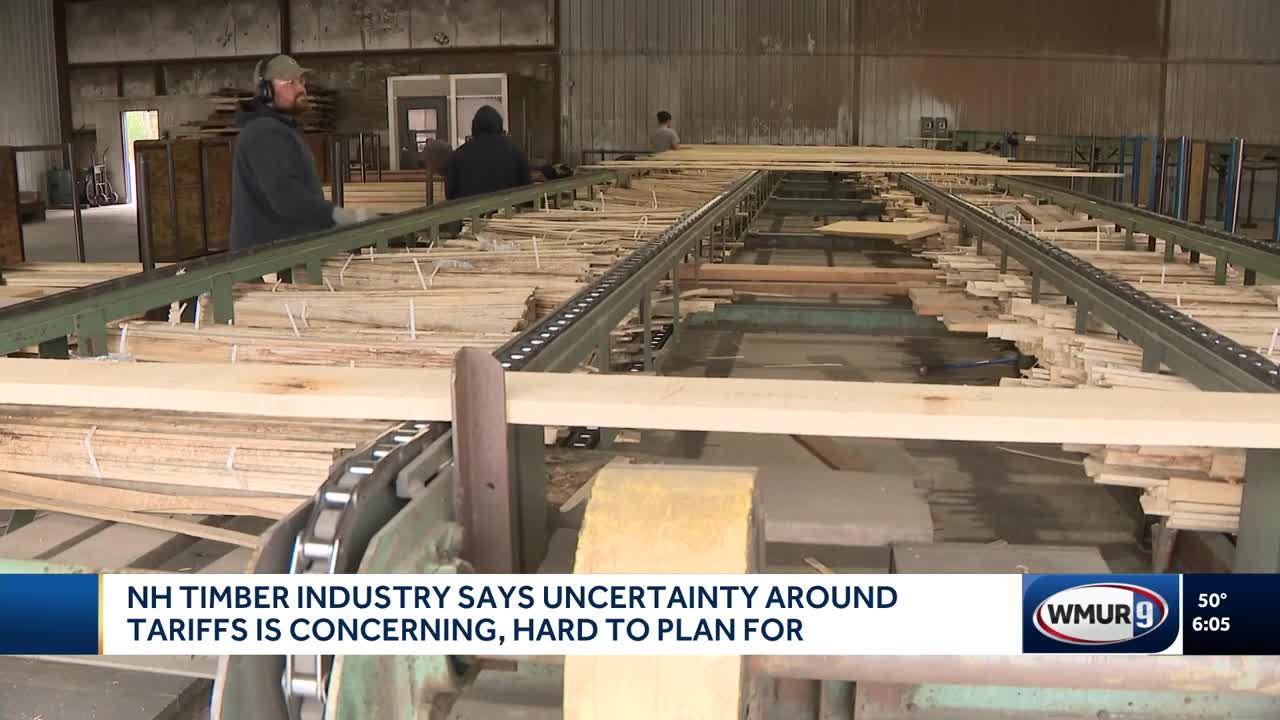
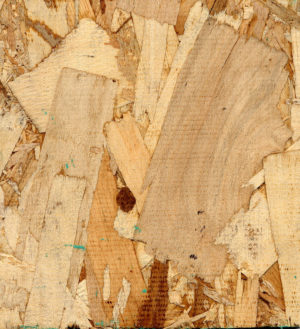 Tariffs could impact efforts to rebuild a former paper mill in Jay that was destroyed in an explosion almost five years ago. Godfrey Wood Products is looking to build a new factory on the property that would manufacture oriented strand board, a type of structural wood paneling. The company says that they have all of the permits they need, but they haven’t been able to move forward with construction because of uncertainty with tariffs. A lot of the equipment they need would come from Europe. “The stated goal of all of this tariff business is to, incentivize domestic manufacturing. Well, hell, I’m trying my level best to become a domestic manufacturer of OSB in Jay, Maine, and it seems like the public policy of the country is trying to thwart that,” said John Godfrey, owner of Godfrey Wood Products.
 VANCOUVER, BC – West Fraser Timber reported first quarter results of 2025. …First quarter sales were $1.459 billion, compared to $1.405 billion in the fourth quarter of 2024. First quarter earnings were $42 million, compared to a loss of $62 million in the fourth quarter of 2024. The fourth quarter included a non-cash impairment loss of $70 million. …First quarter Adjusted EBITDA was $195 million compared to $140 million in the fourth quarter of 2024. ..The Lumber segment has experienced a slower than expected start to the year, owing to transportation and weather challenges that have influenced shipments as well as uncertainty related to demand impacts from the U.S. administration’s shifting tariff policies. …The global pulp market has begun to experience disruption with the economic impact of US tariffs creating considerable demand uncertainty in Chinese markets. As such, we anticipate NBSK pricing weakness over the near- to medium-term and a potentially significant adverse financial impact on our Pulp & Paper segment.
 President Trump is reshaping America’s timber industry, directing federal agencies to boost domestic lumber production while investigating whether foreign imports pose a national security threat. The US construction market consumes more than 50 billion board feet of lumber annually, with domestic production currently meeting only 70% of demand. Canada fills most of the gap, supplying roughly a quarter of America’s lumber needs. …His executive order instructs the Forest Service and Department of Interior to increase timber sales from public lands. Industry experts, however, question the feasibility of such rapid transformation. Pete Stewart, of ResourceWise, points out significant challenges: “The U.S. would have to build 70 new sawmills to make up the difference.” The geographic reality also presents obstacles. While Southern forests from Virginia to eastern Texas grow 30% more trees than local sawmills demand, forests in the Northwest are already harvesting at capacity. …Critics also question the national security rationale.
 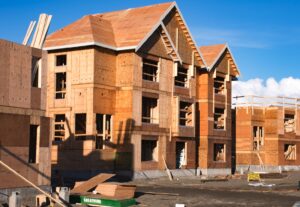 This is the USD 64,000 question. …What we currently know is that Canadian softwood lumber carries a 14.5% tariff rate, which could expand to 34.45% later in 2025. …If we split the difference between the NAHB’s and FEA’s estimates, the average sized new home consumes 34,000 bf of lumber. As such, should the tariff increase to 34.45%. …,Should the administration levy an additional 25% “immigration and Fentanyl tariff” on Canadian lumber (which is currently exempt), the cost/home would rise to approximately USD 1,100/home. …In reality, total wood usage in home construction includes a variety of wood types including softwood lumber, oriented strand board, engineered lumber and plywood. Each category has its own pricing and supply dynamics. One additional point… It is estimated that the repair and remodel (R&R) market accounts for 35-40% of lumber demand while single-family home construction accounts for an additional 35%. …For more on the latest real estate trends,
  President Trump is forging ahead with his aggressive tariff campaign, moving on from “reciprocal” tariffs to the sector-specific tariffs he promised. To do so will involve Trump’s continued application of Section 232 of the Trade Expansion Act of 1962, which allows a president to impose tariffs to protect or bolster domestic industries if there are deemed potential national security threats. What used to be a rarely employed trade provision has been a favorite instrument. The Commerce Department previously launched Section 232 probes into copper and lumber. And earlier this month, the administration started investigating pharmaceuticals and semiconductors. …Softwood lumber is a critical and preferred ingredient for homebuilding, and 30% of it is imported by the US. Homebuilders warn that tariffs on softwood lumber and other materials could further exacerbate the housing affordability crisis. Higher costs of lumber imports could also affect other products, such as furniture and even toilet paper.



 WASHINGTON, DC – Following national home price growth of 5.8% in 2024, a panel of more than 100 housing experts forecasts home price growth to average 3.4% in 2025 and 3.3% in 2026, according to the Q1 2025 Fannie Mae Home Price Expectations Survey (HPES), produced in partnership with Pulsenomics. The panel’s latest estimates of national home price growth represent revisions from last quarter’s expectations of 3.8% for 2025 and 3.6% for 2026, as measured by the Fannie Mae Home Price Index (FNM-HPI).
 February 2025 Southern Pine lumber exports (treated and untreated) were up 4.7% to 40.8 Mbf over January but were down 15% over February 2024, according to February 2025 data from the USDA’s Foreign Agriculture Services’ Global Agricultural Trade System. When looking at the report by dollar value, Southern Pine exports are down 4% compared to the first two months of 2024 at $32 million. Mexico led the way at $8.4 million, followed by the Dominican Republic at $6.7 million, and Canada at $3.3 million. The total global value in February, however, hit a five-month high of $16.5 million. Treated lumber exports, meanwhile, were down 8% to $18.3 million through the first two months of 2025 compared to a year ago led by Jamaica at $3 million, the Leeward-Windward Islands at $2.6 million, and the Netherlands Antilles with $2 million.
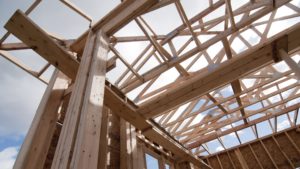 NEW YORK — Associated General Contractors of New York State CEO Mike Elmendorf says that under the tariffs proposed by President Trump, the cost for any kind of construction could further skyrocket. “When tariffs go on a material that is sourced from outside the United States, a funny thing happens,” Elmendorf said. “In many cases, domestic producers or suppliers of that material raise their price too because they can. Not as much as the tariff, but it sort of, it pushes everything up.” …Canadian lumber is one of the most critical imports needed for U.S. construction. “Especially the builders up in Western New York are concerned it’s going to affect them quicker and harder than the rest of the state,” said New York State Builders Association Executive Director Mike Fazio. Elmendorf said what might be an even bigger issue than the tariffs themselves is the uncertainty surrounding them.”
 The FSC Leadership Awards recognize excellence in the use of FSC-certified products, materials, and commitment to responsible forest management across industries, as well as in advocacy, conservation and individual leadership in the FSC community. Submissions are due Friday, July 25, 2025. Categories for submissions for people, organizations, and projects in the United States and Canada:
 The Agriculture Research Service researchers are helping to mitigate a destructive tree and insect that continue to spread across the United States. With its lush tropical canopy and ability to quickly grow toward the sky, the Tree of Heaven seems as angelic as its name suggests. However, Tree of Heaven is proving to be a devil. The invasive tree is aggressive and damaging as it spreads rapidly across Mid-Atlantic and Midwestern states. …Not only is Tree of Heaven an environmental menace, it is also “the most favored host” of the invasive spotted lanternfly, according to Tracy Leskey, a research entomologist in Kearneysville, WV. Leskey and university partners are working to reduce both Tree of Heaven and spotted lanternfly populations through ARS’ Area-Wide Pest Management program. Their goal is to suppress the populations of both invasive species … all while alleviating the impact on native pollinators and plants.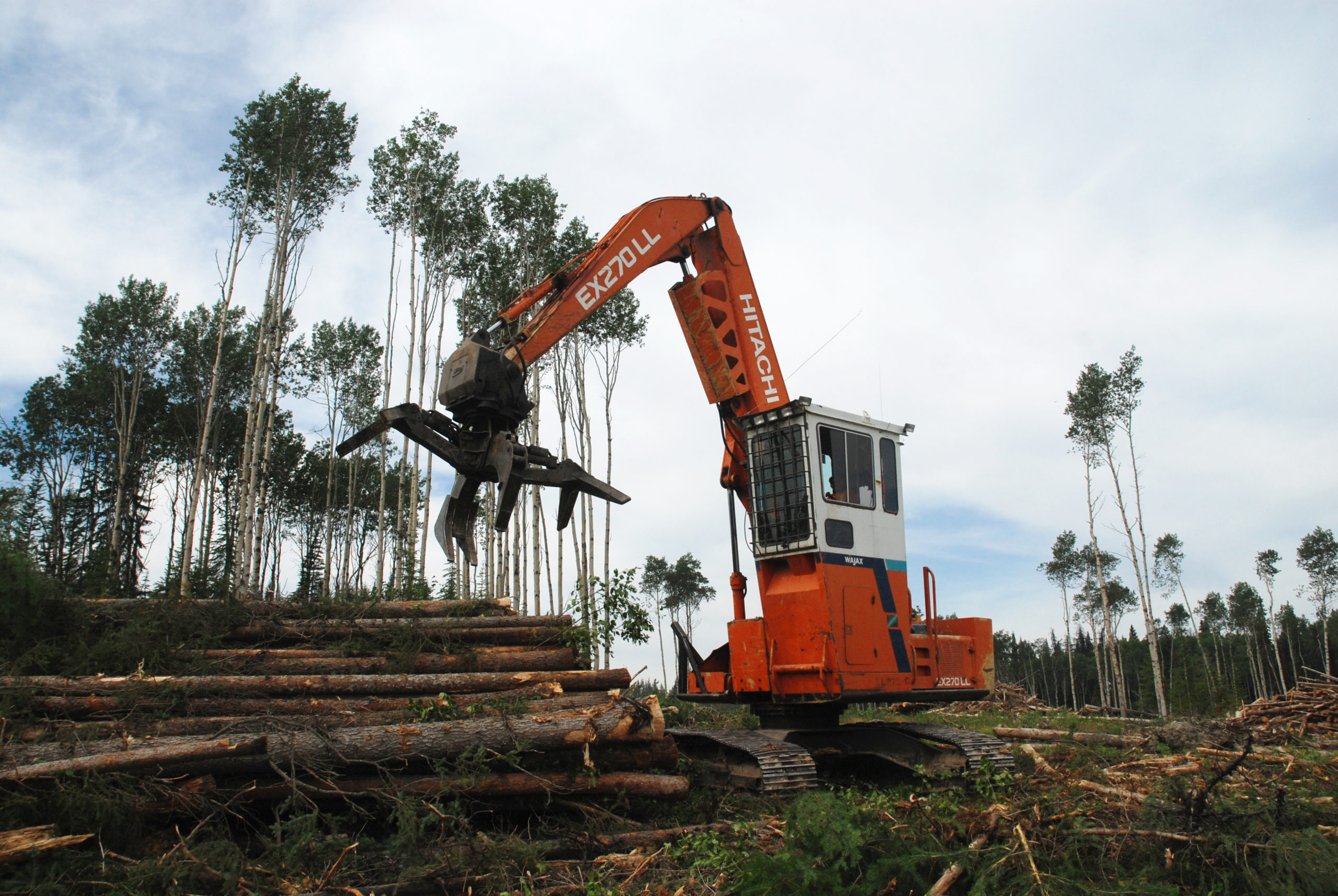
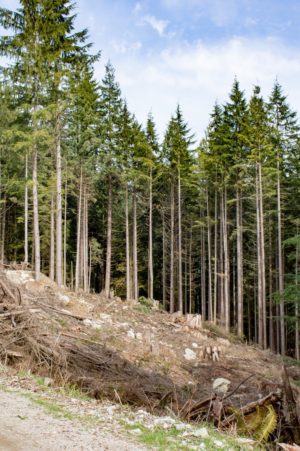 The Trump administration plans to eliminate habitat protections for endangered and threatened species in a move environmentalists say would lead to the extinction of critically endangered species because of logging, mining, development and other activities. At issue is a long-standing definition of “harm” in the Endangered Species Act, which has included altering or destroying the places those species live. Habitat destruction is the biggest cause of extinction, said Noah Greenwald, endangered species director at the Center for Biological Diversity. The US Fish and Wildlife Service and National Marine Fisheries Service said in a proposed rule issued Wednesday that habitat modification should not be considered harm because it is not the same as intentionally targeting a species, called “take.” Environmentalists argue that the definition of “take,” though, has always included actions that harm species, and the definition of “harm” has been upheld by the US Supreme Court.
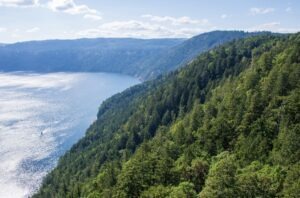 In an emergency directive issued late last week, U.S. Department of Agriculture Secretary Brooke Rollins announced her department’s plan to expand logging and timber production by 25% and, in the process, dismantle the half-century-old environmental review system that has blocked the federal government from finalizing major decisions concerning national forest lands without public insight. Under Rollins’s direction and following an earlier executive order signed by President Donald Trump, the U.S. Forest Service would carry out the plan that designates 67 million acres of national forest lands as high or very high wildfire risk, classifies another 79 million acres as being in a state of declining forest health, and labels 34 million acres as at risk of wildfire, insects, and disease. All told, the declaration encompasses some 59% of Forest Service lands. …Environmentalists say the administration’s plans are likely to only escalate wildfire risk and contribute more to climate change. …A
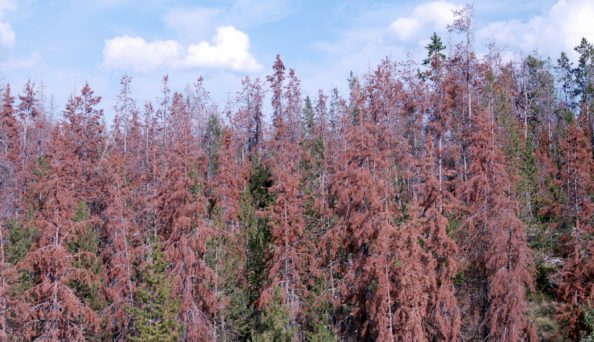 …a relatively wet 2023 for much of the state bolstered many trees against the spread of the mountain pine beetle, the separate spruce beetle and the spruce budworm. But a dry 2024 set the pests marching again by sapping forests of the water they need to stay healthy and fight off infestations, said Dan West, entomologist with Colorado State Forest Service. Colorado’s higher-altitude forests need several normal to wet seasons in a row to build up true resiliency, he said. One dry season meant Western spruce budworm affected 217,000 acres of state forests in 2024, up from 202,000 acres in 2023… Mountain pine beetle… grew to 5,600 acres of impact. The Douglas-fir beetle impacted 21,000 acres in 2024, its largest total damage in almost 10 years… Western balsam bark beetle …is still the … most widespread by acreage. The acres affected by the balsam bark beetle held steady at 27,000, but more of those trees die.
 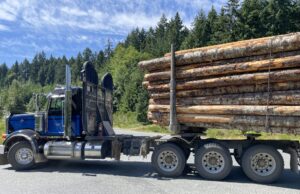 Logging is not necessarily a dirty word in the environmental dictionary. There, I said it. Provided sustainable practices are used, namely the careful choice over what trees get chopped down, logging can have a positive impact on the health of our forests as part of an effective management strategy that includes mechanical thinning and prescribed burning. Selective logging can also mitigate the risk and destructive power of wildfires. …This is my way of saying logging shouldn’t automatically be perceived as an environmental threat – despite what history tells us is the result when chainsaws and bulldozers are employed by the wrong hands. …Environmental groups reacted with outrage to Trump’s order, calling it a thinly veiled attempt to bypass environmental laws in order to justify widespread commercial logging under the false pretense that such actions will reduce wildfire risk.
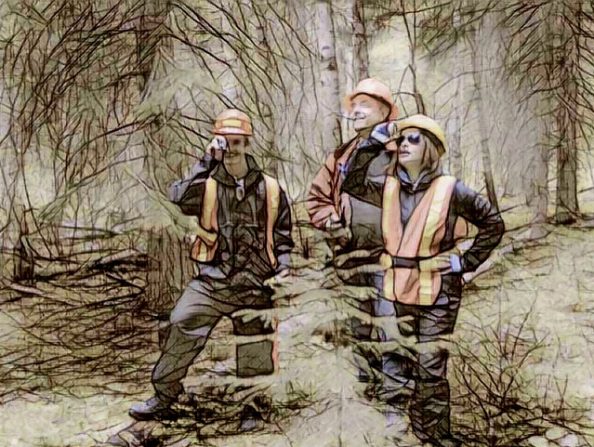 Imagine you’re a college senior who just landed your dream job working for the U.S. Forest Service
 From the summit of Katahdin, the view is of forests stretching in all directions. …Forty-five years ago this scene would have been quite different. A voracious insect called the spruce budworm was ravaging Maine’s North Woods, killing mountainsides of balsam fir and red spruce. …Today, foresters and landowners are nervously tracking a renewed spruce budworm presence in the North Woods. The insects have already stripped hundreds of thousands of forest acres in Quebec and Ontario. After decades of heavy logging, scattered tracts are being managed with ecological timbering methods that strive to maintain natural systems — but most are not. Questions abound over how the state’s forests, both the northern timberlands and smaller, privately owned tracts throughout the state, will fare in a world beset by climate change. …And there’s the coming spruce budworm invasion.
  FORT STEWART, Ga. — This week, NASA scientists have been on the ground with the Fort Stewart forestry team, studying different aspects of prescribed wildfires. It’s an unlikely duo, learning a lot from each other, in this partnership between the federal space agency and Army’s forestry team on post. The team ignites 115,000 acres annually, during the Dec. 1 to June 30 season. …they do it to lower wildfire risk, to keep military training missions moving, and to rejuvenate the environment. …“The prescribed fire program here at Fort Stewart is very successful,” said scientist Jacquelyn Shuman, with NASA Firesense. Shuman and her researchers needed a place to safely study different parts of wildfires, what better place than Fort Stewart, Shuman says. “NASA has been collecting information about fire for decades,” Shuman said. NASA scientists are studying the fires’ emissions, how it releases its heat, and how wind changes the behavior of the blaze.
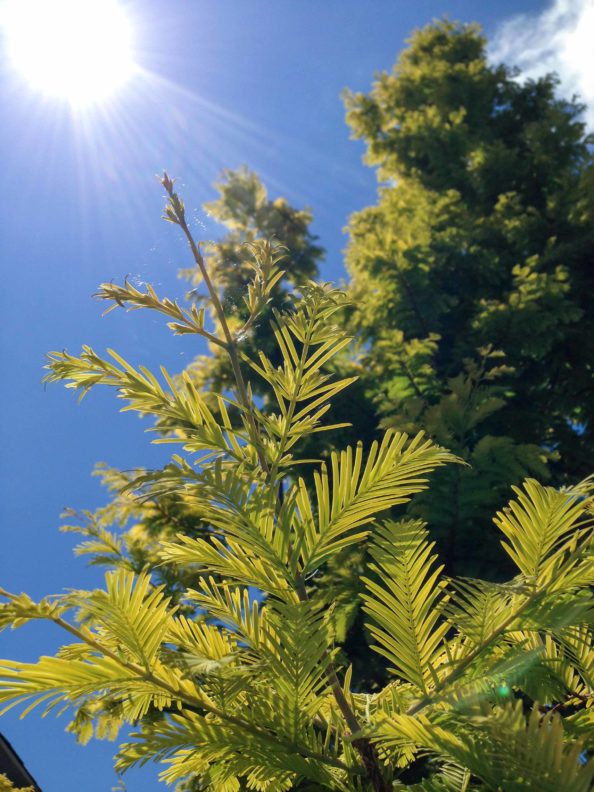 Environmentalists are voicing outrage over the Trump administration’s move to invoke emergency powers to ramp up timber production from national forests in northern New England and across the country. The bulk of the White Mountain National Forest in New Hampshire and much of the Green Mountain National Forest in Vermont were included in US Agriculture Secretary Brooke Rollins’s announcement earlier this month that an “emergency situation” exists across 112.6 million acres of federally managed land. Heightened risks for wildfires and infestation by insects and disease have contributed to “a full-blown wildfire and forest health crisis” across more than half of all National Forestry System land, Rollins wrote. …Zack Porter, executive director of Standing Trees, an advocacy group that has opposed increased logging on public lands, said the secretary’s memo is an “outrageous” effort to bypass public input on how national forests should be used.
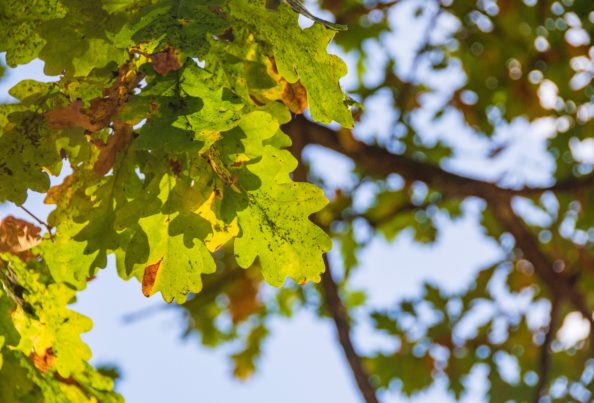 Virginia — …Slowly but steadily, the oak is disappearing from our forests and from our landscape. To use just one typical measure: In Shenandoah National Park, the oak canopy has shriveled by 20 percent over the past 20 years, according to a study funded by the Shenandoah National Park Trust. The oak’s decline is accelerating in a vicious arboreal cycle. There are many reasons for this, but one rises above all others. Oaks are fire-dependent, meaning they require frequent fires to regenerate. But fire-suppression efforts over the past century have broken this timeless pattern. Fire-intolerant trees with far less ecological value — maple, beech, basswood, black gum, tulip trees — have risen to replace the oak, hickory and pine forests, which need regular fire to open the forest canopy, bring in light and eliminate competitors. The best way to save the oak, and the countless critters that rely on it, is to return fire to our landscape. [A Washington Post subscription is required for full access]
 In the months after Hurricane Helene leveled thousands of acres in Pisgah National Forest, John Beaudet and other volunteers cleared downed trees from the Appalachian National Scenic Trail. Chopping them up and moving them aside was back-breaking work, but essential to ensuring safe passage for hikers. So he was dismayed to learn that a section of the trail in western North Carolina could remain closed for more than a year because the National Forest Service wants that timber left alone so logging companies can clear it… The fast-track approach to environmental review following Helene has many people concerned that the public isn’t being given any chance to inform the process. According to forest advocates who have been in communication with the Forest Service, the government reportedly plans to announce 15 salvage projects in western North Carolina. Volunteers, scientists, and hikers are asking for transparency in a process they say could prioritize profit over ecosystems.
 The Wisconsin Department of Natural Resources (DNR) is proud to join communities, organizations and individuals throughout the state in celebrating trees and forests during Forest Appreciation Week, which runs from April 21 to Arbor Day (April 25) and includes Earth Day (April 22). Forest Appreciation Week is a time to reflect on the importance of urban and rural forests. “Everyone has a role in ensuring that forests continue to serve a vital role in the ecological, cultural and economic health of our state, our local communities and our individual lives,” said Carmen Hardin, DNR Applied Forestry bureau director. 17 million acres of forests cover nearly half of Wisconsin and millions of urban trees provide many benefits; to maintain these many benefits, we need to be good stewards of the forest resources.