 Stacked doughnuts and “damn fine coffee” welcomed a small but eager group of visitors Thursday morning to the World Forestry Center. These die-hard fans had traveled — at least one from out of state — to see the log. But not just any log. This lump of ponderosa pine, hand selected by David Lynch, is the most famous prop from his cult classic TV series, “Twin Peaks.” It was lovingly carried by actress Catherine Coulson, who portrayed the wise and mysterious Margaret “The Log Lady” Lanterman on the show. The pop-up exhibit, “What the Log Saw: Honoring the legacy of Catherine ‘The Log Lady’ Coulson,” celebrates both the on-screen character and the woman who portrayed her, while making connections between “The Log Lady” and sustainable forestry practices. …Coulson’s daughter, Zoey Yinger of Portland, approached the World Forest Center in January about displaying the log after the devastating Los Angeles wildfires.




 WASHINGTON, DC — The American Kitchen Cabinet Alliance (AKCA) recently submitted formal comments as part of the Section 232 investigation on Timber, Lumber and Derivatives (including cabinets). Unfairly traded cabinet imports many of them sold at prices that are often over 60% below that of the domestic market are flooding into the US. …“American cabinet manufacturing plants cannot compete with foreign countries flooding the market with unfairly traded cabinets which has resulted in an estimated $6.5 billion in lost revenue to the domestic industry over the last five years,” remarked Perry Miller, President of Kountry Wood Products. “Foreign imports primarily from Cambodia, Malaysia, Mexico, Thailand, Vietnam that are heavily subsidized are destroying American cabinet jobs. …“The domestic cabinet industry is on the brink of collapse. “We are asking for a Section 232 tariff of at least 60%, to level the playing field and stop the cheating as we seek to protect over 250,000 American jobs.”
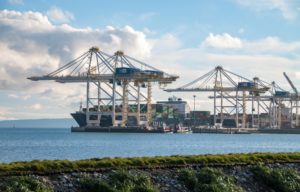
 New York — Some of the last cargo ships carrying Chinese goods without crippling tariffs are arriving at US ports. Come next week, that will change. Cargo on ships from China loaded after April 9 will carry with them the 145% tariff President Donald Trump slapped on goods from that nation last month. Next week there will be fewer ships carrying less cargo. For many importers, it is too expensive to do business with China. Yet China is still one of America’s most important trading partners. It’s where we get most of our clothes, footwear, electronics and microchips, which power appliances, thermostats and anything else that beeps. …Forty-five percent of supply chain leaders expect they’ll pass the higher cost from tariffs down to their customers, according to a new survey by Gartner, a corporate research firm. …With fewer cargo ships expected at US ports, local economies will suffer immediately, Gene Seroka, executive director of the Port of Los Angeles said.
 WASHINGTON – The US Commerce Department said on Wednesday it is opening a probe into national security impacts of imports of medium-duty and heavy-duty trucks and related parts into the United States. The “Section 232” investigation could form the basis of grounds to impose new tariffs on work trucks, buses, vans and other larger vehicles. Tariffs would hurt Mexico, as it is the largest exporter of trucks to the US. …Canada and Japan are also large exporters of larger trucks to the US. The Commerce Department is seeking public comment by mid-May on the extent to which domestic production of trucks and truck parts can meet domestic demand. …It also wants comments on the impacts on prices “due to foreign unfair trade practices and state-sponsored overproduction”. …Higher tariffs on commercial vehicles could put pressure on transportation costs.
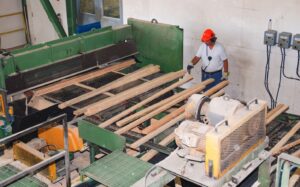 SALEM, Oregon — The Oregon Senate on Monday passed a bill to establish a lumber-grading pilot training pilot program. “This bill opens the door for small sawmill operators to participate in local housing solutions,” said Sen. Todd Nash, R-Enterprise, the bill’s sponsor. “Forty years ago, Eastern Oregon had 69 mills. Today, only seven remain. This is a practical step to support rural economies and increase housing options using locally sourced materials.” Senate Bill 1061, otherwise known as the Oregon Forests to Homes Act, would operate through Oregon State University’s Extension Service, in partnership with the Department of Consumer and Business Services. …Once certified as a grader, a mill owner could sell his lumber directly to a builder. Certified small sawmill operators will be able to sell lumber directly to homeowners or their agents for use in single-family homes or duplexes.


 Risks are high that the global economy will slip into recession this year, according to a majority of economists in a Reuters poll, in which scores said US President Donald Trump’s tariffs have damaged business sentiment. Just three months ago, the same group of economists covering nearly 50 economies had expected the global economy to grow at a strong, steady clip. …While Trump has suspended the heaviest tariffs imposed on almost all trading partners for a few months, a 10% blanket duty remains, as well as a 145% tariff on China, the United States’ largest trading partner. …Showing unusual unanimity… three-quarters of economists cut their 2025 global growth forecast, bringing the median to 2.7% from 3.0% in a January poll. …China and Russia were forecast to grow 4.5% and 1.7% respectively, outperforming the US. However, growth forecasts for Mexico and Canada were downgraded from January by some of the largest margins, to 0.2% and 1.2%.
 Gross domestic product (GDP) contracted in the first quarter by 0.3%, with imported goods being a large contributor to the decline as the suppliers prepared for President Trump’s tariff proposals once he took office. NAHB estimates this should even out in the second quarter. Other economic data of note are inflation, which is still elevated but creeping downward, and the unemployment rate, which remains low but may edge up among economic uncertainty. …NAHB Chief Economist Robert Dietz hasn’t hit the panic button yet. And I still think that we don’t know what President Trump’s economy really is yet. It’s been policy by sledgehammer, and now they’re going to start putting the pieces back together.” NAHB Senior Officers and staff continue to actively engage with lawmakers on this and other policies, including a special BUILD-PAC Capital Club event this week featuring an interview with Sen. Tim Sheehy.
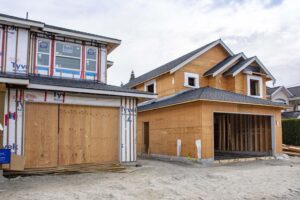 Tuesday marked the 100th day of President Trump’s second term in office and there are signs of stress and jitters in the US construction industry, with rising prices, falling confidence, and a sharp uptick in abandoned projects. “Lumber and metals prices shot up in March, while contractors’ inboxes are bulging with ‘Dear Valued Customer’ letters announcing further increases for many products,” said Ken Simonson, chief economist at AGC. “Rapid-fire changes in tariffs threaten to drive prices higher for many essential construction goods,” he added. The price of materials and services used in nonresidential construction rose 0.4% in March, the third monthly increase in a row, AGC said. It was the first time since September 2023 that input prices had risen for three consecutive months, and comes after more than a year of stable or falling prices, Simonson said. …Within the 0.4% hike, lumber and plywood rose 2.7%.
 To kick off National Home Remodeling Month in May, which promotes the benefits of hiring a professional remodeler, the National Association of Home Builders (NAHB) has highlighted
 The US economy contracted in the first three months of 2025 on an import surge at the start of President Trump’s second term in office as he wages a potentially costly trade war. Gross domestic product fell at a 0.3% annualized pace, according to a Commerce Department report adjusted for seasonal factors and inflation. This was the first quarter of negative growth since Q1 of 2022. Economists had been looking for a gain of 0.4% after GDP rose by 2.4% in the fourth quarter of 2024. However, over the past day or so some Wall Street economists changed their outlook to negative growth, largely because of an unexpected rise in imports as companies and consumers sought to get ahead of the Trump tariffs implemented in early April. …The more telling number for the future of the expansion was consumer spending, and it grew, but at a relatively weak pace,” said Robert Frick.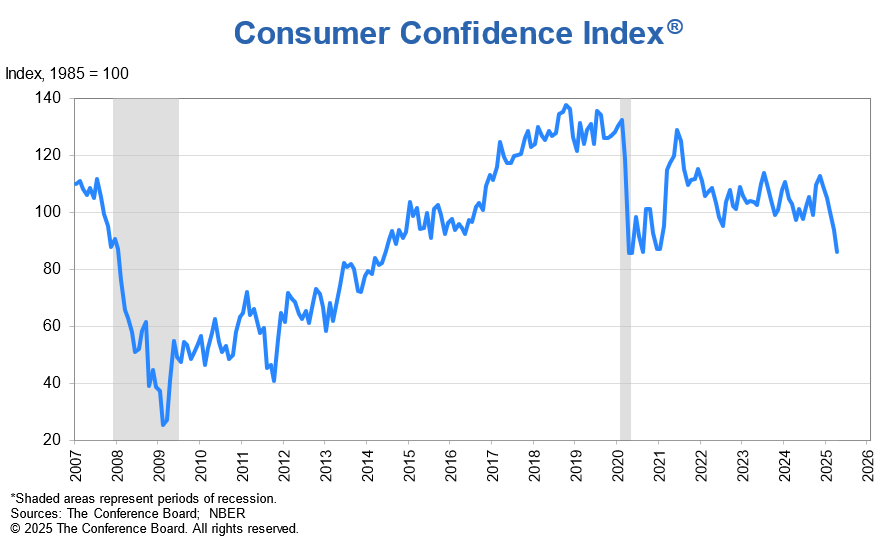

 The clock is ticking on trade deals that the US will need to strike with many nations, most notably China, to avoid what Trump’s Treasury Secretary has described as an “unsustainable” tariffs war. But in the U.S. farming sector, the damage has already been done and the economic crisis already begun. US agriculture exporters say the global backlash to President Trump’s tariffs is punishing them, especially a decline in Chinese buying of US farm products, leading to cancelled export orders and layoffs. Peter Friedmann, of the Agriculture Transportation Coalition …says “massive” financial losses are already being shared by its members. …A wood pulp and paperboard exporter reported to the trade group the immediate cancellation or hold of 6,400 metric tons in a warehouse and a hold of 15 railcars sitting in what is known in the supply chain as “demurrage,” when fees are charged for delayed movement of goods.




 The April Monthly Update includes these stories and more:


 The Trump administration’s attempt to weaken the Endangered Species Act is easy to criticize. This month, it proposed a rule that would limit what constitutes “harm” under the law to only direct actions against wildlife, such as hunting, wounding or trapping. Destroying their habitats would no longer count. …As scientists warn that the world is entering a period of mass extinction, lawmakers would be wise to rethink federal conservation strategies. This means reforming the Endangered Species Act to better incentivize citizens to protect the country’s precious biodiversity. …The government could, for instance, turn protected species into assets by giving landowners financial incentives to assist in conservation efforts. …President Donald Trump and his party are unlikely to embrace these reforms. But Congress in recent years has shown that there is strong bipartisan appetite to strengthen protections for endangered species. The best way forward is to embrace market-oriented strategies.

 The Washington State Department of Natural Resources recently began a multi-faceted forest restoration project across approximately 150 acres of the Mount Baker-Snoqualmie National Forest near Verlot. The Pilchuck Restoration Project is led by the Department of Natural Resources (DNR) Federal Lands Program under the agency’s Good Neighbor Authority agreement with the USDA Forest Service. Established in 2014, the GNA allows DNR to leverage its resources with federal and local partners to perform a variety of restoration activities on federal lands. Operators are following a carefully designed prescription focused on thinning out the small-diameter, younger trees that, due to past management practices, are overcrowding tree stands to the detriment of the larger, older trees.
 A big change could be coming to U.S. wildlife conservation policy. In mid-April, the National Oceanic and Atmospheric Administration and U.S. Fish and Wildlife Service announced a proposal to change how the term “harm” would be defined in the Endangered Species Act. …According to Paula Swedeen, policy director at Conservation Northwest, the goal of the change is to bring the definition of “harm” in the ESA closer to what the Trump administration believes is its originally-intended meaning. …Washington state has its own conservation plans that are already in place on state lands. According to Swedeen, there’s reason to think that the changes to the ESA won’t impact those too much. …According to Swedeen, the spotted owl is one of the best examples of how endangered species could be put at risk by the proposed new ESA reading. …changes could also impact other endangered species in Washington, like the grizzly bear
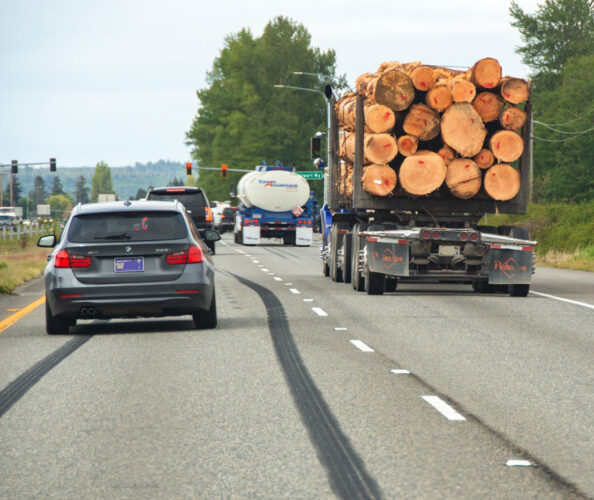 Increased timber production may be coming to the Volunteer State, impacting the Appalachian forests in East Tennessee. A new emergency order from the U.S. Department of Agriculture allocated 59% of national forests across the country for timber production. …However, the economics benefits of logging come at a steep price, according to The Wilderness Society. “Don’t be fooled: the Trump Administration and its allies in Congress aren’t trying to solve the wildfire crisis or protect communities threatened by it. Instead, they are aiming to deepen the pockets of private industry to log across our shared, public forests, while sidestepping public review,” said Josh Hicks, Conservation Campaigns Director at The Wilderness Society. …A majority of the impacted U.S. Forest Service areas are in the western half of the United States. However, the USDA declaration also impacts Appalachia and East Tennessee. The affected areas total more than 112 million acres of U.S Forest Service land.
 In Ocean County, the Jones Road Wildfire continues burning into its sixth day. Roads are now back open including Wells Mills Road. The command post sits at Wells Mills County Park. As of Sunday, over 15,000 acres have burned, and it is now 65% contained. Four structures were threatened as of Sunday. Evacuations have been 100% lifted for residents previously evacuated in Lacey and Ocean townships. Crews Sunday were working on hotspots and patrolling the fire perimeter.
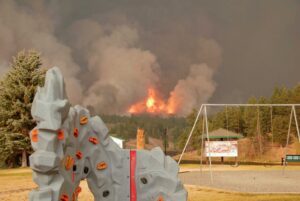 A New Jersey teenager is being charged with arson following a