 WASHINGTON — Canadians are waking up to a new and uncertain reality after U.S. President Donald Trump’s deadline for economy-wide tariffs passed with no relent overnight, triggering a continental trade war. The president’s executive order hitting Canada and Mexico with 25 per cent across-the-board tariffs, with a lower 10 per cent levy on Canadian energy, took effect at 12:01 a.m. ET. …Prime Minister Justin Trudeau is set to hold a press conference in Ottawa Tuesday morning with Finance Minister Dominic LeBlanc, Foreign Affairs Minister Mélanie Joly and Public Safety Minister David McGuinty. Canada’s response is to start with tariffs on $30 billion worth of goods immediately and tariffs on the remaining $125 billion worth of American products 21 days later. The S&P 500 dropped two per cent in Monday afternoon trading. The Dow Jones Industrial Average dropped 1.5 per cent and the Nasdaq composite slumped 2.6 per cent. Ontario Premier Doug Ford warned Americans that Canada would have a strong response and suggested he could shut down the movement of critical minerals and energy into the United States. He said Trump needs to pull back for the sake of Americans and Canadians.
In related coverage:
- The Whitehouse: Trump Proceeds With Tariffs On Canada and Mexico
- Forbes: Trump’s Tariffs Start Today—Here’s How They Could Impact Prices
- NY Times: China and Canada retaliate with Mexico to counter on Sunday
- 11News Colorado: Experts weigh in as Colorado and the country prepare for tariffs
 GENEVA — Canada has requested consultations with the United States on “unjustified tariffs” at the
  OTTAWA — Steve Verheul used to get under the American trade negotiator’s skin. …Eventually, the Americans forged a deal with the Mexicans and Canadians, and in 2018 signed the U.S.-Mexico-Canada Agreement. …Now, as Trump slams Canada and Mexico with new tariffs, Verheul and a pair of trade veterans want to save the USMCA. …Verheul is co-launching the Coalition for North American Trade, a three-nation business group advocating for the long-term benefits of free trade. The CNAT is the brainchild of Kevin Brady, the Republican former chair of the House Ways and Means Committee. …Earlier this year, the trio launched their coalition and today, they’re bringing their pitch to Washington. …But until tariffs disappear, Verheul sees no prospect for productive talks. “I think the only hope is that the impact on the US economy, and the stock market, and various companies is extreme enough to create pushback within the US,” he says.

 US President Trump on Saturday
 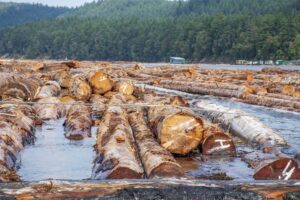 Donald Trump has ordered a probe into dumping in the US lumber market, setting the stage for the industry to join the widening basket of commodities targeted by Washington’s global trade war. The president directed the Department of Commerce to investigate whether imports of lumber and wood products were undermining domestic loggers in a way that posed a risk to US national security, days after ordering a similar review of the copper industry. …Forestry is big business for Canada. In 2022, the sector contributed C$33.4bn to real GDP, or about 1.2%. In the same year Canada’s forest product exports were valued at C$45.6bn, with the majority destined for the US. …Derek Nighbor, FPAC president, said any increase in tariffs on lumber would hurt forest sector employees on both sides of the border. …But Andrew Miller, chair of the US Lumber Coalition, said: “Canada’s unfair trade comes at the direct expense of US companies and workers.”




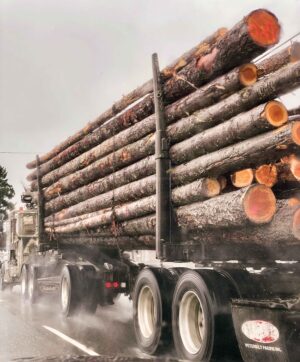 China suspended on Tuesday the soybean import licences of three U.S. firms and halted imports of U.S. logs, stepping up its retaliation for Donald Trump’s decision to impose an extra 10% duty on China. …The suspension of U.S. logs was a direct response to Trump’s move on March 1 to order a trade investigation on imported lumber. Trump had earlier told reporters that he was thinking about imposing a 25% tariff rate on lumber and forest products. “The announcement of import restrictions on U.S lumber and soybeans linked with phytosanitary issues follows a long history of similar measures by Beijing,” said Even Pay, agriculture analyst at Trivium China. …China is one of the world’s largest importers of wood products and the third-largest destination for U.S. forest products. It imported around $850 million worth of logs and other rough wood products from the U.S. in 2024, according to Chinese customs data.


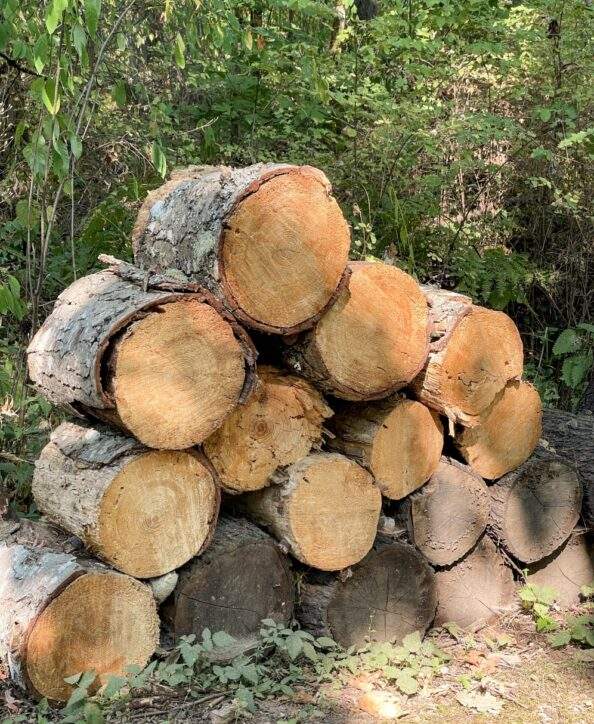 BEIJING – China suspended on Tuesday the soybean import licenses of three U.S. firms and halted imports of U.S. lumber, stepping up retaliatory action after the United States imposed additional tariffs on Chinese goods. Earlier in the day, China also imposed import levies covering $21 billion worth of U.S. agricultural and food products… Customs said it detected ergot and seed coating agent in imported U.S. soybeans while the suspension of U.S. lumber imports was due to the detection of small worms, aspergillus and other pests. …Beijing’s retaliatory measures were in response to U.S. President Donald Trump’s decision to impose an extra 10% duty on China, effective Tuesday, resulting in a cumulative 20% tariff in response to what the White House considers Chinese inaction over drug flows. …The suspension of U.S. lumber was a direct response to Trump’s move on March 1 to order a trade investigation on imported lumber.



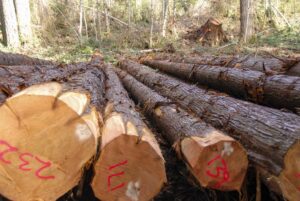 AUGUSTA, Maine — Tariffs on Canadian imports and Ottawa’s retaliation on American goods could sever—or at least strain—the close ties between the forest product industries of Maine and eastern Canada. The state exported $775 million in forest products to Canada in 2023. …Much of the wood Maine sends across the border is in the form of raw logs, according to Dana Doran of Professional Logging Contractors of the Northeast. The timber goes to Canada for processing… and the finished wood products are then frequently re-imported and sold in Maine. …Doran has doubts that these tariff efforts will achieve their intended effect of boosting domestic production. “Most of those Canadian manufacturers have already invested in the United States,” Doran said. …However, others acknowledge that—even if foreign companies benefit—shifting the processing of wood back into the U.S. aligns with the White House’s protectionist aims.
 NEKOOSA, Wisconsin — Partnering with Omya, a producer of essential minerals, the mill built an on-site plant to ensure a reliable source of precipitated calcium carbonate, a key papermaking ingredient. The new PCC plant came online in September 2024, solving several supply challenges. …In 2020, the PCC plant that supplied multiple Wisconsin paper mills, including Domtar’s Rothschild and Nekoosa facilities, closed. …Domtar and Omya researched constructing a four-story PCC plant at the Nekoosa mill. …In July 2022, the companies agreed to build a 27,500 dry-ton-per-year Omya-designed, owned and -operated PCC plant within the Nekoosa mill’s existing footprint. …“By executing this high-ROI, three-year project with a strategic partner, Nekoosa now has an unlimited supply of PCC on-site that allows for flexibility in our papermaking schedules and effective grade development,” says Jason McCauley, Nekoosa mill general manager.
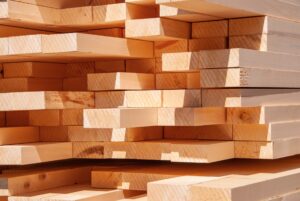 Lumber prices have risen to their highest level in more than two years on news that U.S. President Donald Trump has ordered an investigation into softwood imports from Canada. The lumber probe is the latest salvo in an escalating trade war between the neighbouring countries. Analysts say that the investigation lays the groundwork for potential new %Tariffs on Canadian lumber, notably softwood imports. …Consequently, lumber futures on the Chicago Mercantile Exchange have risen 3.5% over the past day to trade at $657 U.S. per 1,000 board feet, the highest level since mid-2022. However, while lumber prices are marching higher on the threat of U.S. tariffs, the stocks of Canadian lumber companies are tanking. Shares of Interfor fell 9% while the stock of %Canfor declined 6% in Toronto trading on March 4, the day that the 25% tariffs went into effect.


 The perpetually moving target of tariffs on Canadian lumber shipments to the US frustrated traders and had broad impacts on sales in many species. Despite middling demand, the threat of tariffs combined with relatively tight supplies left many prices higher for the week. The delay in announcement of preliminary AD rates by the Commerce Department injected further uncertainty. Despite inconsistent trading throughout February, the Random Lengths Framing Lumber Composite Price recorded its fourth straight increase and hit $461. That is its highest level since July 2023. Western S-P-F sales were steady but uneventful. Canadian mills weighed their responses to potential tariffs with plans ranging from adders on quoted levels to managing production and focusing sales to non-US destinations. Lumber futures were extremely volatile, swinging aggressively to every news report. The Southern Pine market was in disarray as traders processed a constant flow of mixed signals.
 The Trump administration is moving at a record pace on a varied list of priorities, but insiders hope a focus on housing will remain at the top of the agenda in 2025. With housing affordability a central focus, bills addressing zoning, permitting, workforce development, and taxes are taking shape. …Despite all these areas of concern, one concern looms largest – tariffs. Approximately 22% of the products used in the average home are imported from China, 70% of lumber used in construction is sourced from Canada, and Mexico is the largest provider of gypsum. …The NAHB has advocated for an exemption for building materials, and the association continues to engage in conversations with lawmakers about the harmful effects these tariffs could have on housing affordability. NAHB’s Karl Eckhart says “These Canadian and Mexican tariffs are going to have a direct and painful impact on the price to build a house.”
 On Tuesday, President Donald Trump’s administration imposed new tariffs on imports from Canada and Mexico while increasing existing tariffs on goods from China, a move expected to raise prices for new homes, according to a recent CoreLogic report. That’s largely because tariffs affect essential home construction materials, including wood products, cement, steel, aluminum and appliances, so homebuilding costs are projected to rise. As a result, construction costs could increase by 4% to 6% over the next 12 months, adding roughly $17,000 to $22,000 to the sticker prices for new homes, according to CoreLogic. With the cost of a newly constructed home averaging around $422,000, these added expenses may further strain affordability for first-time homebuyers, the study says.
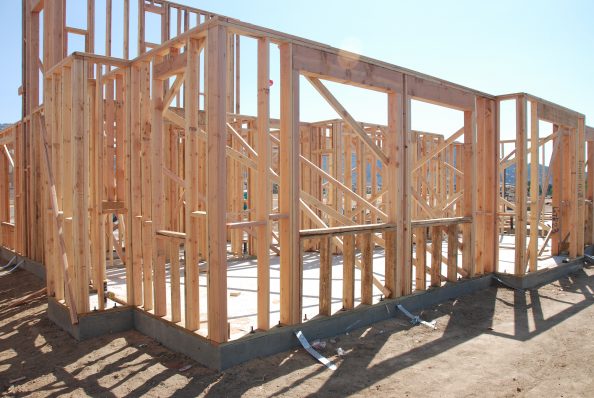 CHINO, Calif. — Where some just see lumber, Marc Saracco, a sales manager at wholesale distributor Capital Lumber Company, sees the building blocks of new communities. Although with the 25% tariffs President Donald Trump is placing on imports from Mexico and Canada, Saracco said those building blocks are expected to get more expensive. “I estimate that the tariffs from appliances to lumber would cost a homeowner between $30,000 and $40,000 per house,” Saracco said. He said it could exacerbate the current housing shortage. “We as an industry rely heavily on what they produce. About 30% of the lumber that we consume in the United States comes from Canada,” Saracco said. …”You’re talking about $600 million just in the scale of the rebuild in additional tariffs to meet those 15,000 homes that absolutely need to be rebuilt,” Saracco said. …With domestic sawmills closing, Saracco said it would take 10 to 20 years before the U.S. can internally meet lumber demand.
 The full scope of the new investigation is not yet certain. The

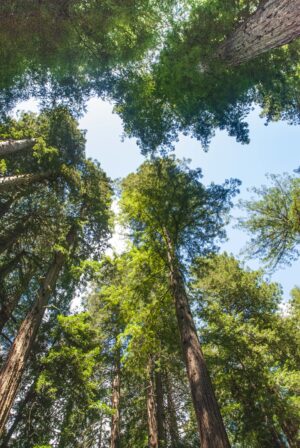 President Trump is promising to unleash the US timber industry by allowing companies to raze swaths of federally protected national forests. …His order — which calls for the ramping up of the domestic timber production to avoid reliance on “foreign producers” — was followed by sweeping 25% tariffs on Canadian products, including lumber. …However, it’s more complex than simply swapping out Canadian imports for homegrown timber, said industry experts. …Meanwhile, environmental groups say clearcutting national forests will pollute the air and water and exacerbate climate change. Anna Kelly, White House deputy press secretary, referred to multiple organizations that have released statements of support about opening up federal land for logging, including the American Loggers Council, the American Forest Resource Council and the Forest Landowners Association. Increasing logging on federal lands would increase the supply of logs for US industry, said FEA’s Rocky Goodnow… but it won’t replace Canadian imports in the near term.
 Thousands of fired workers at the Department of Agriculture must get their jobs back for at least the next month and a half, the chair of a federal civil service board ruled Wednesday. The ruling said the recent dismissals of more than 5,600 probationary employees may have violated federal laws and procedures for carrying out layoffs. The decision from Cathy Harris, the chair of the Merit Systems Protection Board, is a blow to the Trump administration’s effort to drastically and quickly shrink the federal bureaucracy. Though it applies only to the USDA, it could lay the groundwork for further rulings reinstating tens of thousands of other probationary workers whom the Trump administration has fired en masse across the government. But it’s far from a final resolution of the legality of the mass terminations.

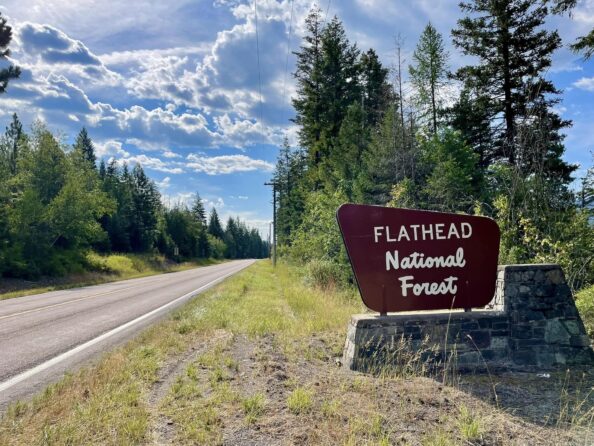 President Donald Trump’s plans to use the “God Squad” and emergency provisions of the Endangered Species Act to promote widespread logging on public lands are likely illegal and little more than rhetoric without the force of law, legal experts say. …The timber order’s directives say they must comply with existing law and do not create any enforceable law, making them little more than “a lot of hot air,” said John Leshy, a former Interior solicitor in the Clinton administration in San Francisco. “It’s core could be summed up as ‘study, consider, recommend,’” Leshy said. The caveats that end the order “deprive even those exhortations of any enforceability or effect.” Murray Feldman, a partner at Holland & Hart LLP in Boise, Idaho, said the executive order is an “aspirational statement.” The order doesn’t satisfy the qualifications for an emergency under ESA regulations, the use of which is generally limited to human health risks, he said.
 President Trump has promised to “drill, baby, drill.” Now, he also wants to log.
  WASHINGTON – President Trump issued an executive order that seeks to ramp up logging across federal forests. …In response to the executive order, members of the Climate Forests Coalition, including Center for Biological Diversity, Sierra Club, Earthjustice, Oregon Wild, and WildEarth Guardians issued the following statement: “This executive order will decimate our federal forests. It will use tax dollars to line the pockets of corporate logging interests, undermine environmental laws, and take public forests out of public hands. This directive is part of a pattern to undermine science, gut the federal workforce, and privatize our public lands. Clearcutting our public lands for private profit will destroy mature and old-growth forests, pollute our air and water, and in bypassing the Endangered Species Act, actively drive vulnerable wildlife to extinction.” The order is being introduced just after a timber industry executive was appointed as the new Forest Service Chief.





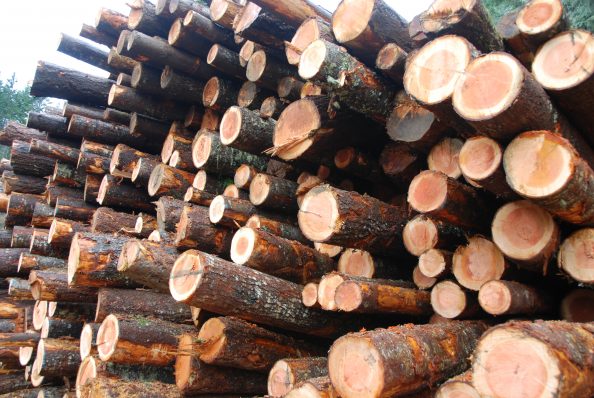 RAPID CITY, S.D. – South Dakota Gov. Larry Rhoden says during one of his several meetings with USDA Secretary Brooke Rollins last week, he and Wyoming Gov. Mark Gordon had an extensive conversation about the Black Hills and timber contracts. “Just what’s at stake for the Black Hills as far as wildland fires, dangers, the insect infestations and just our timber industry and the future of that in general,” said Rhoden. Rhoden continued on saying he was “very encouraged by the conversation we had with her, that we’re going to take steps to rectify that.” Rhoden says the current amount of timber harvested is far below what is allowed. “Not even close, and under the Biden administration we were just banging our heads against the wall. We would provide the facts and the data, and they were ignored,” the governor explained.
 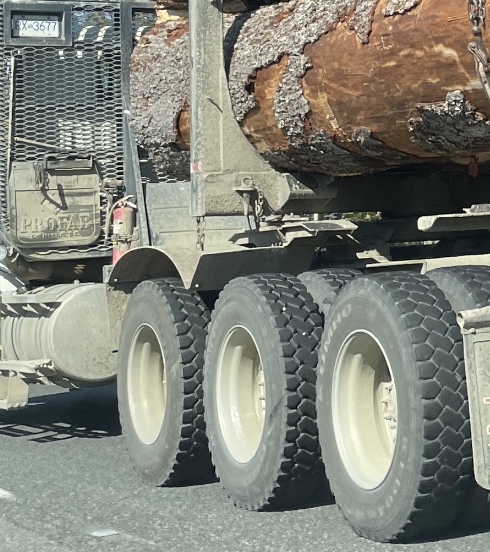 Legislation introduced by the Alabama Forestry Association would significantly worsen the condition of local and state roads and bridges, as well as hinder safety inspections of commercial vehicles. “The legislation is to allow significantly heavier axle weights to be hauled by large trucks — a move that is difficult to comprehend when the truckers already complain of sky-high liability insurance rates and serve as the primary target of advertising by personal injury law firms,” said Alabama Department of Transportation Deputy Director George Conner… “The math is simple: heavier truck axle weights are exceptionally dangerous and destroy roads and bridges; even heavier axle weights will be more dangerous and will destroy roads and bridges even more quickly.” …The Forestry Association’s proposal would increase the legal limit for a single axle from 20,000 pounds to 22,000 pounds while increasing the legal limit for two axles (tandem axles) from 34,000 pounds to 44,000 pounds.
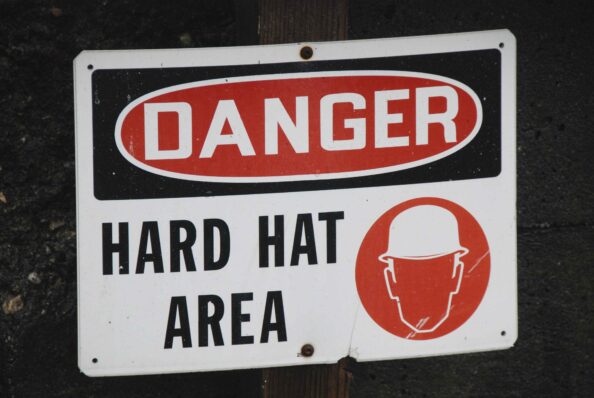 A Washington timber company has been fined nearly $115,000 for child labor violations after a 17-year-old worker was injured while working in a logging operation. The Washington State Department of Labor & Industries issued the citation against MVR Timber Cutting Inc. following an investigation into the incident. The investigation began in May 2024 when L&I received a report of a workplace injury involving the teen, who fractured his foot while jumping between tree stumps. Upon learning that the minor was working as a member of the company’s logging crew, L&I expanded its investigation. …In January, L&I fined MVR Timber Cutting Inc. $56,000 for allowing the minor to work in logging operations 56 times. State regulations prohibit minors under 18 from working in jobs requiring more extensive personal protective equipment than boots, gloves, and safety glasses. Additionally, state law bans teens from working in hard hat zones, prompting L&I to issue an additional $56,000 fine for the 56 violations of that regulation.