
Kelly McCloskey
We reached out to Robert McKellar at Harmattan Risk in August 2024 for comment on the increasing pace of change in the forest sector, shaped by political forces and government intervention. Robert’s op-ed offered a thoughtful analysis of how inherent political risks—especially those linked to Canada–US trade friction—could rapidly unsettle an industry long reliant on stability. At the time, Trump’s potential political comeback was still largely speculative. Since that op-ed, the political landscape has shifted dramatically. Trump’s re-emergence is no longer a remote possibility but a concrete reality that has intensified uncertainty across the sector. With these developments in mind, we reconnected with Robert to update his analysis and explore how the risks he foresaw have become even more pronounced. [full disclosure, Robert McKellar is Tree Frog co-editor Sandy McKellar’s brother]
 WASHINGTON — U.S. President Donald Trump said again Wednesday he plans to hit Canada and Mexico with devastating duties — but a White House official confirmed on background that the tariff plans could change through negotiations. …He signed an executive order to implement “reciprocal tariffs” by raising U.S. duties to match the tax rates that other countries charge on imports starting April 2. He ordered 25% tariffs on all steel and aluminum imports into the United States on March 12. Trump also floated the idea of imposing tariffs on automobiles and forest products in April. …Trump himself seems to be having a hard time keeping track of his massive tariff agenda. …Many experts say Trump’s actions are intended to shake up Canada and Mexico ahead of a review of the continental trade pact. The Canada-U.S.-Mexico Agreement was negotiated during the first Trump administration to replace the North American Free Trade Agreement.
  Yesterday, we featured an op-ed by political risk management expert Robert McKellar on how Donald Trump’s re-election is changing the political risk landscape for the Canadian forest sector. While U.S. trade disputes are not new, the unpredictability of Trump’s approach to trade policy creates new challenges that Canadian exporters must assess and manage. McKellar presents a structured way to evaluate these risks using the devil’s advocacy approach, a method that considers both worst- and best-case scenarios to develop a balanced assessment. Trump has proposed three different types of tariffs—bi-national, product-specific, and reciprocal—which, if applied together, could significantly impact the sector. By examining multiple possibilities, McKellar provides companies with a way to better prepare for potential disruptions rather than reacting in crisis mode. And as today’s
  The U.S. Department of Commerce initiated the
 Canadian producers of softwood lumber are bracing for a decision this week from the U.S. Department of Commerce that could mean a surge in anti-dumping duty rates, compounding the industry’s worries over President Donald Trump’s threats for sweeping tariffs on all imports from Canada. Most Canadian producers are currently paying 7.66% in anti-dumping duties, but that could jump to 20 per cent, trade experts say. The Commerce Department’s decision, slated for Thursday, will be preliminary, with an effective date in August. …Analysts are [also] predicting that there will be higher countervailing duty rates, with the Commerce Department scheduled to issue a preliminary ruling in May. Forestry analyst Russ Taylor forecast that countervailing duties could rise to about 10%. Most Canadian softwood producers are paying countervailing and anti-dumping duties that currently total 14.4 per cent. …The Commerce Department’s administrative review is based on softwood markets in 2023, when prices were low. [to access the full story, a Globe and Mail subscription is required]
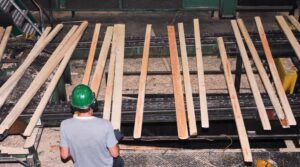 Another day, another tariff threat for markets to digest. This time it’s lumber getting whipsawed, as U.S. President Donald Trump says he is going to bring in tariffs on Canadian lumber imports to the U.S. soon. Speaking to reporters on Wednesday evening, Trump added lumber to the list of items he plans to slap tariffs on in the near future. …Canada would feel any such policy directly, but perhaps not as painfully as you might think. As is the case with oil, lumber is one front in the trade war where Canada can do a lot of collateral damage of its own. …While the U.S. theoretically has enough trees to meet its own needs, ramping things up both in terms of the logs and the capacity to process them would be next to impossible in the short term. Recall during the pandemic when Canadian lumber prices spiked by more than 300%, yet U.S. buyers kept buying.
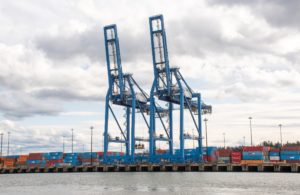 The Trump administration has opened a broad new front in its global trade conflict, proposing to affix levies reaching $1.5 million on Chinese-made ships arriving at American ports. Such fees would apply even on vessels made elsewhere — an approach that risks increasing costs on raw materials to factory goods. …It is engineered to discourage reliance on Chinese vessels in supplying Americans with products, while aiming to spur the revival of a domestic shipbuilding industry after a half-century of veritable dormancy. …The proposal would isolate China while diminishing American reliance on its industry. …The plan was the result of an investigation, started during the Biden administration, into the dominance of the Chinese shipping industry, in response to a petition filed by labor unions. Almost one-fifth of container vessels arriving at American ports are made in China. [to access the full story a NY Times subscription is required]
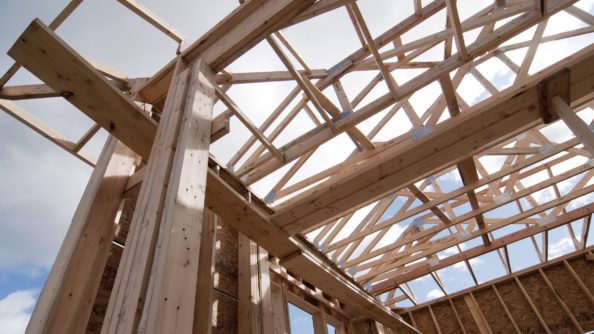 BOZEMAN, Mont. – The Trump administration’s tariffs are stirring discussions in Montana, with concerns about their impact on local economies. At Montana State University, Dr. Nicole Karwowski, an assistant professor of economics … explains that while tariffs can benefit certain business and factory owners, as well as shareholders of domestic firms, the broader impact tends to be negative. She highlights that these beneficiaries gain from the increased costs international companies face when competing in the U.S. market. The local economy in Bozeman is particularly affected, Karwowski says, due to the rising cost of construction materials. “We import a lot of our timber from Canada. And housing prices are already skyrocketing in places like Bozeman especially. So the different types of construction materials and raw materials are increasing in cost because of these tariffs. Then we’re going to see it harder to be building more in places like Bozeman,” she said.
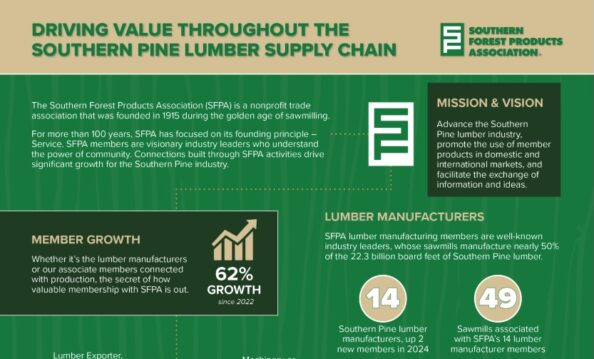 The Southern Forest Products Association believes strong partnerships are essential for sustaining growth and success. That starts with our most valuable partnership — our members. Their commitment is the driving force behind our success. The 2024 SFPA Value Report recaps the association’s: International market development and success in driving demand for Southern Pine lumber exports; A new, consolidated website; Digital promotion efforts; Membership growth; and Industry collaboration.
 TUPPER LAKE, N.Y. — Immigrations and Customs Enforcement conducted a raid Feb. 18 at Tupper Lake Pine Mill in New York state and detained nine employees. In a statement …the parent company of the mill, The Matra Group, said that the employees were authorized to work in the U.S. …“Nine employees were detained, all of whom were, to our knowledge, authorized to work in the United States, as we verify all employees through the I-9 process,” Nicholas Drouin, Matra co-president and director of manufacturing said. All U.S. employers must follow that process to verify workers’ identities and employment eligibility. …The mill — formerly known as the Tupper Lake Hardwoods Inc. — is owned by the Quebec-based Matra Group, a lumber harvesting and distribution company.
  WASHINGTON —
  If Canada is hit with 25% tariffs… the trade impacts for the forest products sector will be wide ranging. …Lumber is the most talked about commodity with respect to tariffs, largely due to the size of the market but also the fact that tariffs would be in addition to duties which are already being paid and are set to rise come August. The US can’t supply its own lumber demand and will have to continue to import Canadian lumber. Prices will rise. …The US is even more reliant on OSB from Canada. …In softwood, ~70% of demand is met by imports and in hardwood the proportion is even higher, at 89%. Canada is the largest softwood pulp supplier to the US, representing 74% of imports; a 25% tariff on Canadian goods would inevitably result in higher costs for US customers that produce paper, packaging and tissue. There are no easy near-term substitution options.
 Home Depot’s CFO said people are “moving on” from today’s high mortgage rates and have started investing more in their homes. The home improvement company reported strong fourth-quarter results, although CEO Ted Decker said consumers are still reluctant to make larger investments like a kitchen remodel. Experts say people may start to view today’s mortgage rates as normal, especially when compared to historic rates. …“Housing is still frozen by mortgage rates,” Richard McPhail, said. Yet McPhail said Home Depot, which reported strong Q4 results Tuesday, has seen sales growth in nearly 80% of its U.S. geographic regions. …For Q4, 2024, Home Depot saw a 14.1% year-over-year increase in sales, which “exceeded our expectations,” Ted Decker CEO, said. …“We saw greater engagement in home improvement spend, despite ongoing pressure on large remodeling projects,” Decker said

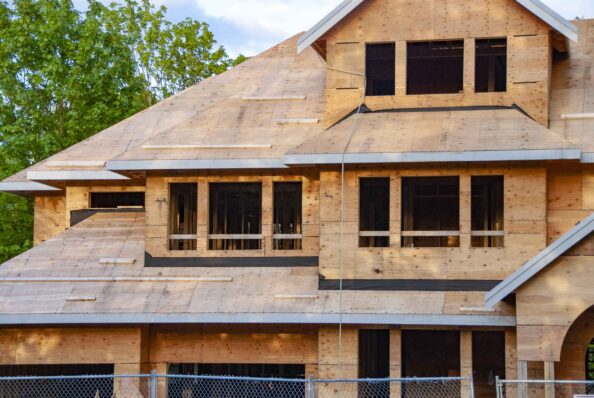 President Donald Trump “thrives on unpredictability”, said Lawrence Yun, chief economist for the National Association of REALTORS. In the last 30 days alone, multiple tariffs by Trump have been announced, imposed, called off and hotly debated. Now, the tariffs are beginning to take shape. And homebuilders are wary. …The real outcry, though, regards lumber. Roughly 30% of the lumber used in the United States last year was imported – more than 85% from Canada. …the housing industry is sharing concerns. Shortly after Trump’s inauguration, the NAHB applauded his day-one executive order that urged government agencies to take action to lower housing costs and expand supply. But NAHB chairman Carl Harris said raising tariffs will have the opposite effect. …“Tariffs on lumber and other building materials increase the cost of construction and discourage new development, and consumers end up paying for the tariffs in the form of higher home prices,” Harris said in a press release.


 For the past 25 years, the Federal Emergency Management Agency (FEMA) has helped develop building codes, the construction standards that help houses survive hurricanes, wildfires and earthquakes. Now, the Trump Administration has ordered that to stop. …FEMA is dropping out of the latest effort to improve building codes. …The recommendations FEMA submitted were filed with the International Code Council, an independent association that develops building codes used by states and local governments. The proposals FEMA is retracting its involvement from focus on helping homes survive strong winds, seismic shaking and rising floodwaters. …The ICC convenes experts and stakeholders in the building industry to review and improve building codes every three years, and is developing a new set of standards now. After they’re approved, many local and state governments across the country adopt the codes, which set the mandatory construction rules in their communities.

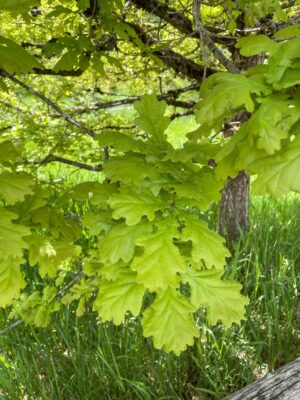 After a century of wildfire suppression across the West, it’s no secret that the approach to forest management has needed to change. And change is, and has been, underway. But newly proposed changes, now in the form of legislation that would let fuel mitigation projects, including logging, in high-risk zones like the forest surrounding Durango skirt the public input process have some environmental groups up in arms. The
 …More than 150 scientists and experts had collectively spent thousands of hours working on a draft report, a first-of-its-kind assessment of nature across the United States. But President Trump ended the effort, started under the Biden administration, by executive order. On Jan. 30, the project’s director, Phil Levin, sent an email telling team members that their work had been discontinued. But it wasn’t the only email he sent that day. “This work is too important to die,” Dr. Levin wrote in a separate email to the report’s authors, this one from his personal account. “The country needs what we are producing.” Now key experts who worked on the report, called the National Nature Assessment, are figuring out how to finish and publish it outside the government. …Rajat Panwar, a professor of responsible and sustainable business at Oregon State University who was leading the chapter on nature and the economy, was preparing slides to present his section when he got the news.
 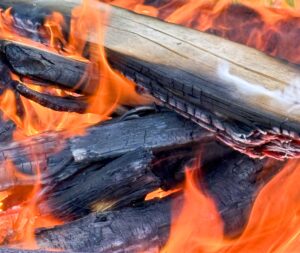 For over a century, the American environmental movement has been animated by an intuitive and simple idea: Protecting trees means leaving forests alone. This stance—championed by figures like John Muir—was based on the belief that any alteration, including thinning or intentional burning, of wilderness harms it. While this ideology helped prevent widespread destruction by timber companies, it also created unintended consequences. Research now shows that overgrown forests are fueling unnaturally severe wildfires, causing irreparable ecological damage and massive economic loss… A key issue remains limited funding. Budget cuts to state and federal land management agencies have reduced the resources available for proactive fire prevention… Insurance and legal concerns further complicate matters. While the need for improved wildfire mitigation is widely recognized, legislative gridlock, environmental regulations, and partisan divisions have slowed progress.
 Each spring, the U.S. Forest Service hires dozens of seasonal biologists to venture into remote Northwest forests on federal land and set up acoustic recorders to monitor for sounds indicating the presence of northern spotted owls, a threatened species. There are only as many as 5,000 northern spotted owls left in the Northwest… The counting is crucial for preventing the owls’ extinction. But President Donald Trump ordered a hiring freeze that means the Forest Service cannot hire more than 40 seasonal scientists to count the owls, according to Taal Levi, an associate professor at Oregon State University who works on owl monitoring. The monitoring typically involves about 60 scientists working from central California to Canada, Levi said. It also means the agency will likely go without dozens more scientists needed to monitor threatened and endangered salmon, frogs and other fragile species….
  …On Monday, the Ninth Circuit Court of Appeals upheld Missoula federal district judge Donald Molloy’s rulings on a few counts that will require the Kootenai National Forest to keep the Black Ram logging project on hold for a while longer. The appeals court upheld rulings on two of four claims that the U.S. Forest Service challenged, so the agency must redo parts of its project analysis. First, the justices agreed that the Forest Service failed to comply with Kootenai Forest Plan because the agency didn’t show whether or how it included unauthorized roads in its road density calculations. …Second, the justices agreed that the Forest Service didn’t take “a hard look,” as required by the National Environmental Policy Act, at unauthorized road use and its effects. The justices pointed at the agency’s unsupported claims of sporadic use of roads and prompt barrier repair as proof.
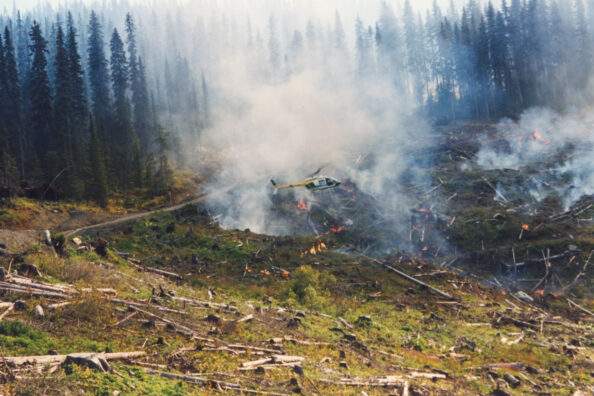 SEATTLE — The termination letters that ended the careers of thousands of U.S. Forest Service employees mean fewer people and less resources will be available to help prevent and fight wildfires, raising the specter of even more destructive blazes across the American West, fired workers and officials said. The Forest Service firings …are part of a wave of federal worker layoffs, as President Donald Trump’s cost-cutting measures reverberate nationwide. Workers who maintained trails, removed combustible debris from forests, supported firefighters and secured funds for wildfire mitigation say staffing cuts threaten public safety, especially in the West, where drier and hotter conditions linked to climate change have increased the intensity of wildfires. …U.S. Rep. Kim Schrier, a Washington state Democrat, said on the social platform X that the Forest Service layoffs are already hurting the state, “and it is only going to get worse. Fire season is coming.”
 Fewer wildfires occur in North American forests today than in past centuries, but this decline has increased the risk of more intense wildfires, according to a study published in Nature Communications. While it may seem unexpected, frequent low-intensity surface fires help maintain forest health by naturally reducing fuel buildup over large areas. Researchers from the Cooperative Institute for Research in Environmental Sciences at the University of Colorado Boulder and the U.S. Forest Service’s Rocky Mountain Research Station compared wildfire frequency across two periods: 1600 to 1880 and 1984 to 2022. Using data from 1,850 tree-ring records in historically burned areas, they assessed past fire activity and compared it with modern fire perimeter maps from Canada and the United States. The findings show modern-day fires are much less frequent than they were in past centuries, despite recent record-breaking fire years, such as 2020.
  PORTLAND, Ore. — An environmental nonprofit is sounding the alarm over the federal funding cuts and hiring freeze instituted by President Donald Trump’s administration, which it said could threaten the population of Oregon’s endangered spotted owl. The widespread layoffs and cuts instituted by the Trump administration have set off a series of protests across the country and around Portland, some of which have focused specifically on the thousands of U.S. National Parks and Forest Service workers who have been fired. The Northwest Forest Plan and the U.S. Bureau of Land Management (BLM) require the endangered owl population to be monitored, but the Center for Biological Diversity said in a news release that the federal freeze means the monitoring “either won’t occur or will be greatly reduced.”
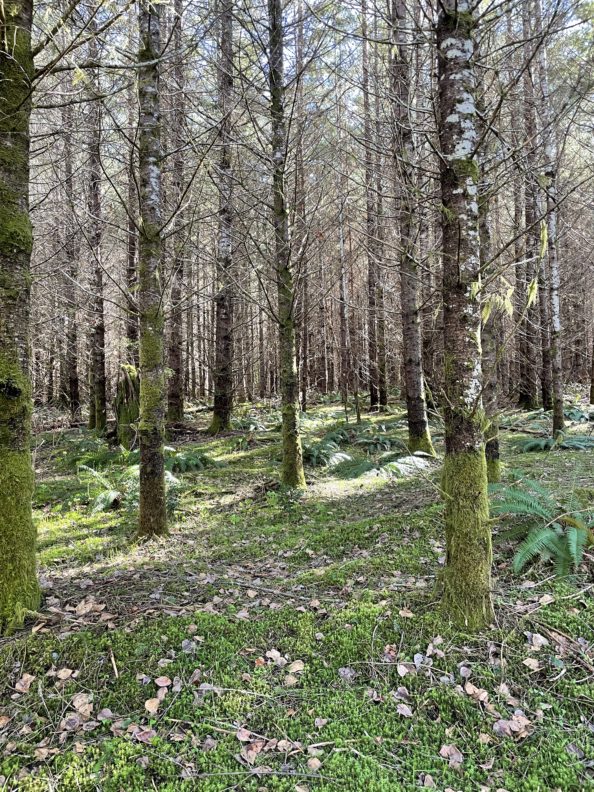 There’s no two ways about it: the U.S. Forest Service is at an impasse, seized by uncertainty like hardly ever before. In its quest for a supposedly leaner, more decentralized government, the Trump administration, led by DOGE chieftain Elon Musk, is taking an ax to the federal workforce. The Forest Service in particular is hemorrhaging manpower: it was reported on Friday that Trump had pink-slipped 3,400 workers. That is roughly one-tenth of USFS personnel. “These cuts are particularly impactful for the Northwest because we have vast expanses of national forest and public land,” says Rep. Kim Schrier. However much the PNW has to lose, this is no mere regional issue. It’s an affront to Mother Nature herself, Schrier says, because “we’re taking away people who do what we call ‘wildfire mitigation’: they do the work that thins the forests to prevent catastrophic wildfires. They do that year-round so we aren’t choking on smoke all summer.”
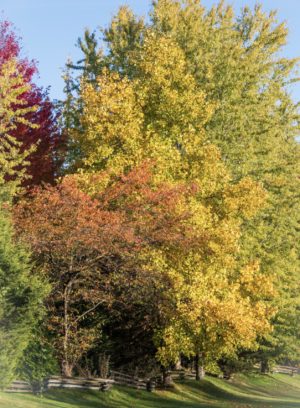 The US Department of Agriculture revoked a federal tree-planting grant to Keep Indianapolis Beautiful in a move the nonprofit’s CEO Kranowitz said may be the result of anti-DEI initiatives coming from the Trump Administration. The money would have helped KIB plant more trees throughout the city, and those plantings should not be all the same kind of tree, Kranowitz explained. The $400,000 grant for urban forestry projects was awarded to the organization in January through the Arbor Day Foundation, but was then clawed back on Tuesday. There’s growing evidence that words like “biodiversity” are being targeted by federal agencies bent on terminating Diversity, Equity and Inclusion initiatives across the country. U.S. Secretary of Agriculture Brooke Rollins recently cancelled a federal contract in Hawaii for an agency meeting on biodiversity and has identified and canceled other training programs on environmental justice claiming they run “contrary to the values of millions of American taxpayers.”
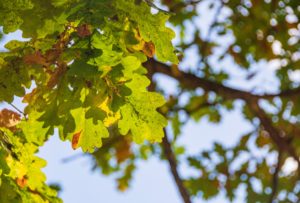 A group of scientists has been quietly working for decades on a project to improve tree genetics, with white oaks among the target species for the UT Tree Improvement Program. For those who are curious, genetics in organisms refers to the study of genes and how they are passed down from generation to generation. Genetics in trees, however, focuses on the study of genes within tree species and examines how their genetic makeup influences traits such as growth rate, wood quality, and resilience to environmental stresses. Scott Schlarbaum, a distinguished professor of forestry at UTIA, leads the UT Tree Improvement Program and is among the co-authors of the paper that describes the white oak genome and how local adaptations may have implications for the species in relation to heat and drought stress. Photo by A. Mains, courtesy UTIA.

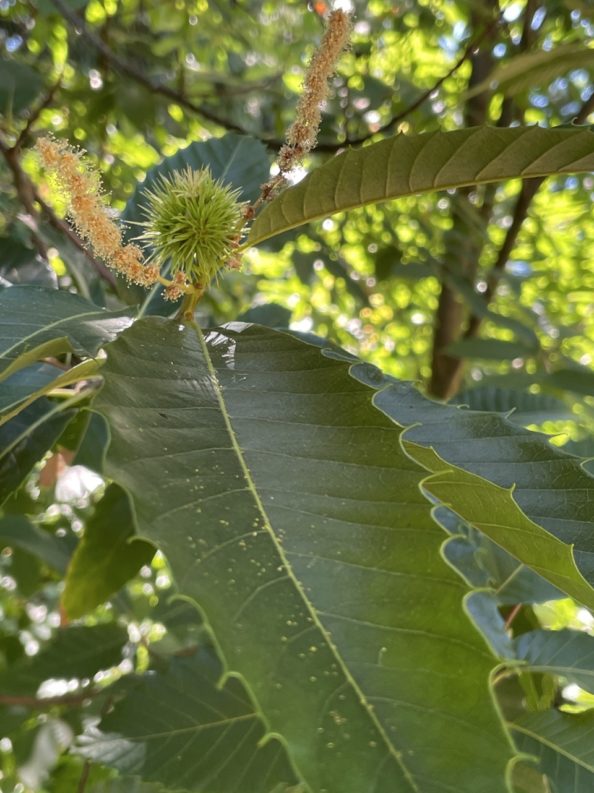 NEW YORK — Chestnut Carbon, a leading developer of nature-based carbon removal solutions, announced today that they have completed the first issuance and sale of Improved Forest Management (IFM) credits sourced from their conservation membership program branded as Forest Carbon Works. The issuance of more than 64,000 credits, or tons of carbon removal, were sold to multiple corporate buyers, including JPMorganChase. These transactions totaled $2.2 million. Chestnut’s U.S.-based IFM membership program, Forest Carbon Works, provides an opportunity for private forest owners to access income-generating carbon markets while preserving the integrity and legacy of their land. The program includes landowners in 36 states with more than 150,000 acres enrolled as of February 2025. These carbon removal credits are certified through Verra on the voluntary carbon market (VCM) and undergo rigorous third-party audits.