
Robert Dietz
The Trump 2.0 administration is underway and disruption is the word of the day in Washington, D.C. The new Trump team hit the ground running, with policy action expected in the areas of regulatory reform, a smaller and more efficient federal workforce, extension of the 2017 tax cuts, tariffs as revenue generators and negotiation tools, and more to come on immigration actions and a more secure border. The sheer breadth of policy actions is a lot for the economy to digest. These policies will offer home builders and remodelers both positive and negative risks in the months ahead. This dual set of risks has been reflected in financial markets, with stocks valuing the focus on growth and efficiency but the bond market reflecting inflation and budget deficit concerns. As a result, investors have pushed long-term interest rates higher since last fall, with the 10-year Treasury rate in the 4.5% to 4.6% range. Mortgage rates remain elevated near 7%.
NAHB projects more economic growth in the quarters ahead, albeit with some disruption in the presidential transition. There is a solid base to build on, with fourth quarter GDP growth coming in at a better-than-expected 2.3% annualized rate. Housing’s share of GDP registered at 16.2% at the end of 2024. The Federal Reserve is undecided on future risks to both inflation and unemployment and will likely hold the federal funds rate at the current top target of 4.5% until at least the third quarter. …However, home sales and building conditions will depend greatly on which policies are for negotiation (such as a proposed 25% tariff on Canadian and Mexican imports) and which policies are intended to be long-term changes to the economy (regulatory reform, for example).Tariffs on Canadian lumber are a near-term concern, with the existing duty rate speculated to increase from a current 14.5% rate to near 30% later this summer.
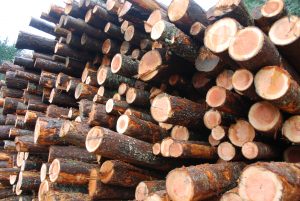 LONDON/BRUSSELS — The US paper and pulp industry is lobbying the Trump administration to ask the EU to declare the US deforestation-free, a step that could make it easier for exporters to meet the bloc’s new environmental rules. From December, the European Union’s anti-deforestation policy will ban imports of commodities linked to forest destruction. Brussels already delayed the policy’s launch by a year. …”A delay does not solve our concerns with the regulation’s complex requirements and significant technical barriers,” said Heidi Brock, CEO of the American Forest and Paper Association (AF&PA). …The law does not contain a category of countries deemed to be deforestation-free – despite EU lawmakers attempting unsuccessfully to add a new “no risk” category of countries which would face even lighter rules. Any changes to the EU law would require a legal proposal from the Commission, and approval from EU lawmakers and member states.
 WASHINGTON — President Trump is taking a blowtorch to the rules that have governed world trade for decades. The






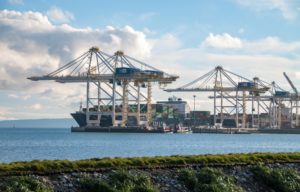 U.S. President Donald Trump in an all-caps post on Truth Social Thursday teased a new round of sweeping reciprocal tariffs, matching the higher rates other nations charge to import American goods. …Reciprocal tariffs were one of Trump’s core campaign pledges — his method for evening the score with foreign nations that place taxes on American goods and to solve what he has said are unfair trade practices. …He is set to share more details on the tariffs ahead of his visit with Indian Prime Minister Narendra Modi, White House press secretary Karoline Leavitt told reporters on Wednesday. …The tariffs are likely to hit developing countries hardest, especially India, Brazil, Vietnam and other Southeast Asian and African countries, given that they have some of the widest differences in tariff rates charged on U.S. goods brought into their countries compared to what the U.S. charges them.
 Reciprocal tariffs are straightforward in theory: The U.S. would pose the same levies on imported goods from a given country that the other country imposes on their U.S. imports. But it gets far murkier in practice, as countries often charge different tariffs on different classes of goods. Goldman Sachs economists outlined three approaches Trump could take. “Country-level reciprocity” is the “simplest” strategy which would have the U.S. impose the same average tariffs. “Product-level reciprocity by country” would have the U.S. place marching tariffs on a good-by-good basis by trading partner.” Reciprocity including non-tariff barriers” is the “most difficult” approach as it would encompass a complicated web of inputs including inspection fees and value-added taxes. …4.8% is the U.S.’ weighted average tariff rate if Trump implemented the country-level strategy. …Goods from the 20 countries the U.S. has free trade agreements with, including Australia, Canada, Mexico and Panama, won’t be affected – though Trump has targeted several of those countries in recent weeks.



 Lumber futures have recently surged past $610 per thousand board feet, reaching a near three-month high as market conditions tighten. A combination of mill closures, reduced North American production capacity, and tariff concerns has led to increasing volatility in the lumber market. Investors and traders are closely watching these developments, as the outlook for lumber futures remains uncertain amid ongoing supply and trade disruptions. …One of the primary drivers behind the latest rally in lumber futures is the ongoing reduction in North American production capacity. …Adding to the supply concerns is the looming increase in U.S. tariffs on Canadian softwood lumber. For traders, this means increased volatility in lumber futures as market participants react to policy changes. Higher tariffs could discourage Canadian exports, forcing buyers to seek alternative sources or absorb the additional costs, further driving up lumber futures prices.
 BURNABY, BC — Interfor recorded a net loss in Q4, 2024 of $49.9 million compared to a Net loss of $105.7 million in Q3, 2024 and a net loss of $169.0 million. Adjusted EBITDA was $80.4 million on sales of $746.5 million in Q4, 2024. …For the full year, Interfor reported a net loss of $304 million in 2024, a 14% increase from the $267 million net loss in 2023. Total sales fell 9% to $3 billion, down from $3.3 billion in the previous year. …Near-term volatility could be further impacted by a potential tariff on Canadian lumber exports… however, the Company is well positioned with a diversified product mix in Canada and the U.S., with approximately 60% of its total lumber produced and sold within the U.S. …Despite challenges, the company remains positioned to adjust production and capital spending in response to market conditions. …The company plans to invest $85 million in 2025, including the continued rebuild of the Thomaston, Georgia sawmill.
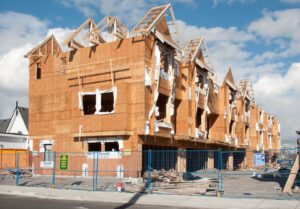 Pressing ahead with steep tariffs on Canada and Mexico risks exacerbating the US housing crisis and threatening the broader economy, dozens of congressional Democrats have warned Donald Trump. …In a letter to Trump seen by the Guardian, Democrats noted that the US imports key construction materials worth billions of dollars – from lumber to cement products – from Canada and Mexico each year. “Given the severe housing shortage, compounded by rising construction costs, persistent supply chain disruptions, and an estimated shortfall of 6m homes, these looming tariffs, while intended to protect domestic industries, risk further exacerbating the housing supply and affordability crisis while stifling the development of new housing,” they wrote. More than 40 Democrats urged the White House to consider housebuilding industry estimates that the proposed tariffs will raise the cost of imported construction materials by up to $4bn.

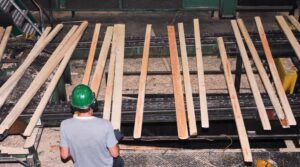 Experts told us that, in theory, if the US stopped importing crude oil and lumber from Canada and Mexico, it still would be able to meet domestic demand using natural resources available in the U.S. But, in reality, they said, the transition would be costly and take some time to implement, among other complications. “Sure: we could probably meet most of our lumber needs domestically,” said Marc McDill at Penn State University. “The reasons why we don’t boil down to two things: 1) sometimes imports are cheaper than our own suppliers, and 2) we value our forests for a lot of other things.” He added that without lumber from Canada, “1) prices would go up, 2) we would harvest more of our own trees, and 3) we would import more from countries.” …Rhett Jackson at the University of Georgia, said that differences in the lumber produced in the US and Canada may be problematic. …“All lumber is not created equally.”
 The cement industry is at a crossroads as decarbonization is expected to take its toll, resulting in a significant decline in demand, according to a paper by the World Cement Association (WCA). “The cement industry is undergoing an unprecedented transformation,” explains WCA CEO Ian Riley. “As we move towards a decarbonized future, understanding the true demand for cement is critical to ensuring that policies, technologies and investments align with reality.” The white paper examines disruptive factors such as alternative materials. …The report challenges prevailing forecasts and projects demand for cement and clinker will dip, mainly due to the rise of timber, greater use of admixtures, the move towards decarbonization of the industry as well as design practices that will reduce the concrete used. ..According to the paper, timber has replaced concrete and steel in many highrise buildings but limitations on the supply of timber are expected to curb its growth.
 Ending the forced use of paper straws: Today, President Donald J. Trump signed an Executive Order to end the procurement and forced use of paper straws. The Federal government is directed to stop purchasing paper straws and ensure they are no longer provided within Federal buildings. The Order requires the development of a National Strategy to End the Use of Paper Straws within 45 days to alleviate the forced use of paper straws nationwide. Bringing back common sense: The irrational campaign against plastic straws has forced Americans to use nonfunctional paper straws. This ends under President Trump. …President Trump has made it a top priority to promote a clean and healthy environment for the American people.
 The demand for sustainable, nontoxic furniture is rising as consumers become more conscious of their environmental impact and indoor air quality. While many brands claim to be “eco-friendly,” not all live up to the promise. From responsibly harvested wood to green packaging, truly sustainable furniture goes beyond marketing buzzwords. Understanding the end-to-end process of furniture manufacturing can help consumers make informed choices and avoid greenwashing. Interior designers play a crucial role in guiding homeowners toward authentic selections that prioritize longevity, health and environmental responsibility.
 WASHINGTON, D.C. – Senator Mike Lee (R-Utah), Chairman of the Senate Committee on Energy and Natural Resources, and Senator John Curtis (R-Utah) joined Representatives Mike Kennedy (R-Utah-03), Burgess Owens (R-Utah-04), Blake Moore (R-Utah-01), and Celeste Maloy (R-Utah-02), to introduce the Utah Wildfire Research Institute Act. This bill establishes a federal wildfire research institute at Utah State University to study wildfire ecology and develop innovative solutions to reduce wildfire risks. The institute will collaborate with local, state, and federal partners to improve forest and rangeland management and implement strategies for long-term ecological restoration. “Robust forest management strategies are essential to protecting Utah’s nearly 22 million acres of forests from catastrophic wildfires. The Utah Wildfire Research Institute Act will significantly enhance our state’s wildfire preparedness by bolstering the tools and resources available to proactively manage and protect our forests and communities,” said Chairman Lee.
 U.S. Senator Jon Ossoff is introducing a bipartisan bill to help grow Georgia’s forestry industry. Sen. Ossoff and Sen. Bill Cassidy, M.D. (R-LA) introduced the bipartisan Forest Data Modernization Act, which would modernize and improve the U.S. Forest Service’s Forest Inventory and Analysis program to ensure reliable data is available to inform forest management decision making. The bipartisan bill would require the Forest Service to prepare an updated strategic plan to expand data collection and further integrate advanced remote sensing technology. According to the forestry industry, the improvements would unlock new economic opportunities for foresters and better protect the environment. The companion bipartisan bill is being introduced by Representatives Kim Schrier (D-WA-08) and Barry Moore (R-AL-01) in the U.S. House of Representatives …“The Georgia Forestry Association (GFA) commends Senators Ossoff and Cassidy for their bipartisan leadership in re-introducing the Forest Data Modernization Act.
 Another 29,800 acres of timberland just got conserved under easement as working forest, the third phase in Columbia Land Trust’s project of protecting about 75,000 acres, sold by SDS lumber company in 2021. Columbia Land Trust hopes to conserve almost everything except the mill itself, buying the most important 15,000 acres of habitat outright. They hope to put the other 60,000 under conservation easements. In this case, Washington’s Department of Natural Resources will hold some of the rights over the 29,800 acres of land. It can be sold, but never developed; it must always remain working forest. This is the trust’s biggest project to date… SDS Lumber was the last family-owned, vertically-integrated (meaning it owned and operated most stages of its own supply chain) timber company in this part of the Northwest.

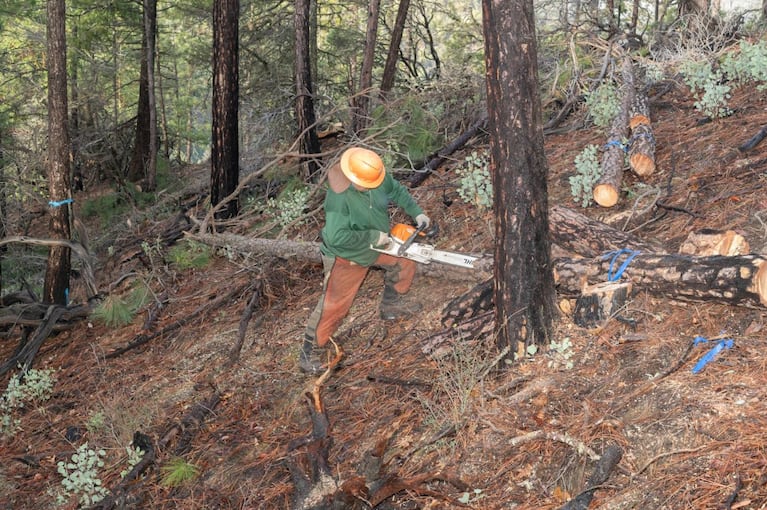
 WASHINGTON – A bipartisan group of lawmakers has introduced the Future Logging Careers Act, a bill aimed at allowing teenagers from logging families to gain early hands-on experience in the industry under parental supervision. The legislation, introduced by U.S. Senators Jim Risch (R-Idaho) and Angus King (I-Maine), along with U.S. Representatives Glenn “GT” Thompson (R-Pa.) and Jared Golden (D-Maine), would amend the Fair Labor Standards Act to permit 16- and 17-year-olds to work in certain mechanized logging operations. Similar exemptions currently exist for youth working in family-owned farms. Supporters of the bill, including the American Loggers Council and the Associated Logging Contractors of Idaho, argue that the measure would help sustain family-run logging businesses by allowing younger generations to gain experience before entering the workforce as adults. Industry representatives have pointed to labor shortages and the challenges of retaining workers as key reasons for the bill’s introduction.
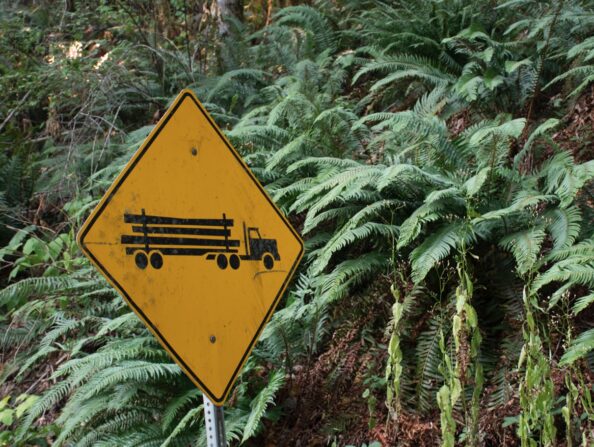 Alabama’s roads and bridges are already under immense strain, but two bills moving through the Legislature could accelerate their decline—adding 150 million dollars in maintenance costs annually, reducing highway lifespan by up to 30 percent, and forcing weight restrictions on hundreds of bridges. Senate Bill 110 and House Bill 204 would allow heavier log trucks to operate on Alabama highways while simultaneously limiting enforcement by requiring state troopers to escort overweight trucks to permanent platform scales—effectively halting roadside safety inspections for extended periods. Experts warn that these changes could have devastating consequences for infrastructure durability, public safety, and taxpayer-funded repairs. The push for heavier loads is being driven by logging and timber industry interests, which stand to benefit financially from relaxed restrictions. However, transportation and infrastructure experts warn that the cost to the public far outweighs any economic gain.
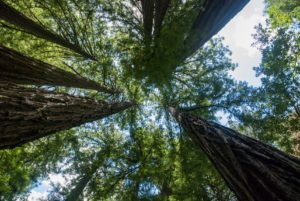 Senator Mike Rounds has re-introduced a bill that would require National Forest superintendents to submit remediation plans if their timber production falls well below the allowable amounts laid out in forest plans. The remediation plans would be required to bring timber production in the respective forests back to at least 75% of their allowable amounts. Rounds says timber production in the Black Hills has far below its allowable 181,000 units. “Three years ago, we did about 80,000, the year before last we did about 60,000, and we’re down to about 59,000 units this year, and so the bottom line is not even a third of what we should be harvesting in the Black Hills is actually being done,” Rounds said. “But it also means some of those forests that could be more properly managed, based upon their own plan are not being harvested, the plan is not being followed,” Rounds said.

 Can you fly airplanes with wood? The answer is: yes. It’s a very qualified “yes” — and it may not happen for many years — but the potential exists to manufacture sustainable aviation fuel from residual wood products and other non-petroleum-based sources that can reduce an airplane’s carbon footprint. “The technology to fly airplanes with wood exists but needs to be scaled up to show the true potential,” Rick Horton, executive vice president of Minnesota Forest Industries, told the House Agriculture Finance and Policy Committee at an informational hearing Monday. Horton was one of several testifiers who said using sustainable aviation fuel to power airplanes is in its infancy and needs large-scale development — and probably government subsidies — to make it economically viable… Sustainable aviation fuel currently costs two to five times more than conventional jet fuel.