 WASHINGTON — Canadian officials are set to meet with the U.S. commerce secretary in Washington today — days after a dust-up with U.S. President Donald Trump that ended with Ontario pausing its surcharge on electricity exports to the United States. Finance Minister Dominic LeBlanc, Ambassador to the U.S. Kirsten Hillman and Ontario Premier Doug Ford are meeting with Howard Lutnick, and Ford says his goal for the meeting is to get a coherent sense of the Trump administration’s plans for tariffs. …Elsewhere in the American capital, Trump’s choice for the next U.S ambassador to Canada is set to take questions today as the relationship between the two countries is strained by tariffs and threats of annexation. Pete Hoekstra, a former Michigan congressman, is scheduled to appear before the Senate Foreign Relations Committee for a nomination hearing.

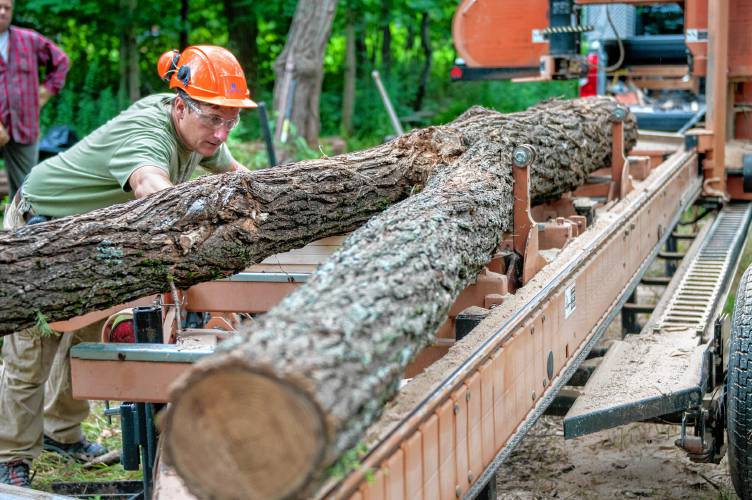
 The Commerce Department’s Bureau of Industry and Security (BIS) has formally launched two Section 232 investigations that could lead to import restrictions on copper and lumber and timber, according to Federal Register notices scheduled for publication on Thursday. Trump signed an executive order on Feb. 25 ordering the copper probe and another on March 1 for lumber and timber. Both instructed Commerce Secretary Howard Lutnick to start the investigations, which threaten to further strain trade relations with Canada and other trading partners. The Section 232 law allows up to 270 days for a probe, but White House officials said they expect Lutnick to move faster. In one sign of that, BIS set an extremely short period for public comment in the two investigations, ending on April 1. that coincides with the deadline for executive branch agencies to compete a number of trade reports for the White House. [to access the full story a PoliticoPro subscription is required]
 European industry is scrutinising the list of products drawn up by the European Commission in response to US tariffs on steel and aluminium, and not everyone is pleased. EU tariffs on American products are adversely affecting EU manufacturers of wines, plastics and pulp among other sectors relying on imported products hit by tariffs or caught as collateral victims of the trade war between both sides of the Atlantic. …The European pulp and paper industry has also reacted after seeing imports of the products from the US on the EU list. The EU imported €962 millions’ worth of pulp and €650 millions worth of paper and board from the US in 2023. In exchange European exports of pulp and paper and board were worth €238 million and €2.4 billion respectively. The sector has no interest in a trade war with the Americans. Jori Ringman, Director General, said that “EU and US consumers who need basic hygiene products” were going to be impacted as well as “a whole range of sectors using paper packaging.”

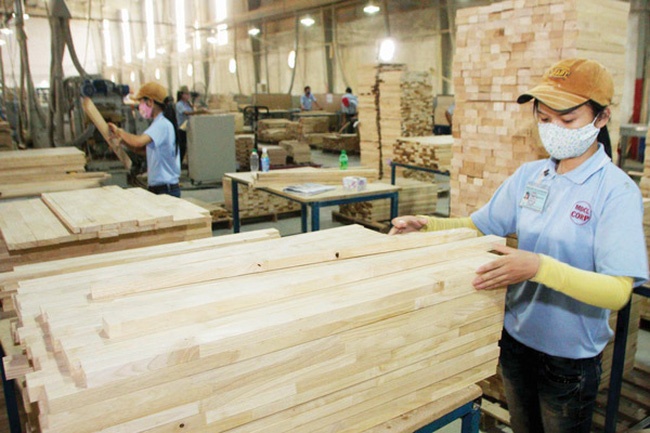

 Now that a 25% tariff on lumber from Canada is looming, will this cause crazy wood pricing to return? To some extent, that is very probable, and here’s why. In 2024, our country got about 72% of its lumber from its own forests. The rest was imported from various countries, especially Canada, from which we purchased 28.1 million cubic meters last year. Canada accounts for 84.3% of all softwood lumber imports. …While it might be possible to switch to importing more lumber from other countries, none has Canada’s large production capacity. Also, supply chains — especially for lumber — are complex and costly to change, says Frederik Laleicke, at NC State University. …As long as demand for lumber doesn’t drop, a 25% tariff on Canada will likely make lumber—and therefore new houses and renovations—more expensive since US companies will raise the price of Canadian-sourced lumber to compensate for the tariffs.
 Lumber futures rebounded to around $650 per thousand board feet, nearing the two-and-a-half-year high of $658 touched earlier this month as escalating U.S. tariff threats on steel, aluminum, and dairy—along with the prospect of sharply higher auto tariffs—stoked fears of further trade restrictions, reversing the recent plunge. The renewed trade war tensions have heightened concerns that lumber could be the next target, prompting traders to reassess supply risks. Earlier, prices had dropped to around $600 after President Trump delayed a 25% tariff on Canadian softwood for the second time, temporarily easing supply concerns. The proposed levy, which would raise total duties to as much as 52%, could significantly strain North American production and push construction costs higher. However, the latest escalation in the trade war has reversed sentiment, with traders wary that lumber could still face new restrictions, driving speculative buying. [END]
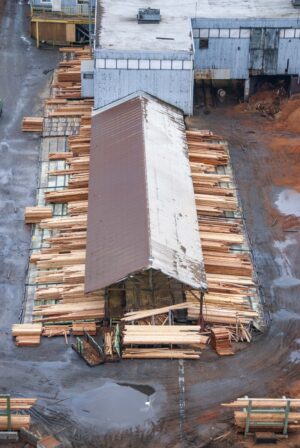 I have received several questions from owners and contractors regarding what to expect with lumber prices given the tariffs (or the potential of tariffs, depending on the day). The short answer is prices will go up. The long answer is much more complicated and hinges on a number of factors and considerations. 1. Almost 30 percent of the lumber used in the U.S. each year comes from Canada. …2. Any tariffs or potential for tariffs creates opportunistic price increases. …3. Demand, however, doesn’t seem to be particularly strong for new construction at this time. …4. Tariffs do help to onshore manufacturing (a long-term positive), but the trees aren’t all in America. …In the short-term, tariffs create more uncertainty and increased pricing, which only further adds to the inflation story. In the long-term, tariffs on lumber won’t achieve the level of onshoring that can happen in other industries.
 President Trump’s tariffs could increase material costs for the average new home by as much as $10,000, according to the National Association of Home Builders. The trade group said it has received anecdotal reports from members that Trump’s plan would raise material prices by between $7,500 and $10,000 for the average new single-family home. …The NAHB said softwood lumber is mainly sourced from Canada, while gypsum, a component of drywall, comes primarily from Mexico. Other materials like steel and aluminum — in addition to completed home appliances — are imported to the U.S. from China, the group said. An implementation of the 25% tariff on Canada and Mexico as previously laid out by Trump would raise total costs for imported construction materials by more than $3 billion, according to the NAHB.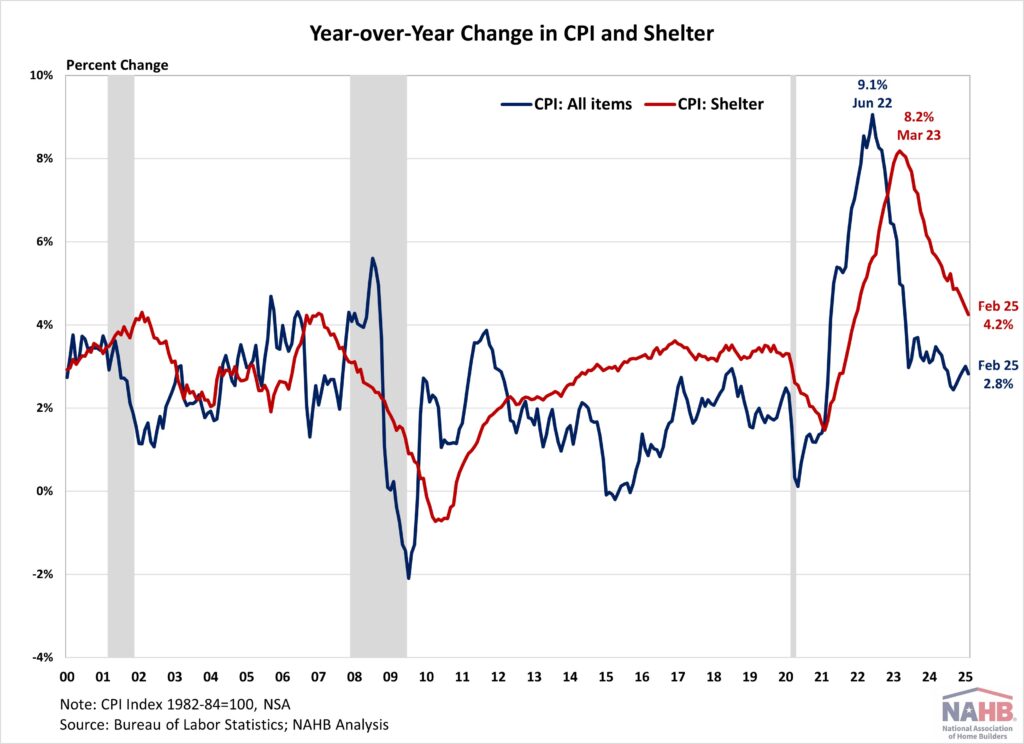
 LOS ANGELES —
 What are Musk, Trump and the congressional right really after? Anyone who works in land management knows these agencies have long gone underfunded and unsupported by Republicans, rendering them less and less effective as the demands on them grow ever more pressing. Now this bloodletting is accelerating, and soon it will be time to go for the throat. As these agencies flounder, turning their lands over to private administration — to timber, mineral and oil extraction or to private ownership and development — will begin to seem logical and even appealing. While sustainable logging can be a valuable forest management tool, research shows that when lands are managed primarily for resource extraction, they become less resilient to wildfire. This is a shortsighted, profit-driven turn toward a land-use model that is ultimately unsustainable. What will the public be left with? Will we still have places to hike, fish, hunt, dirt-bike and ski? Or will a new landlord be setting new rates?
 With $2.6 billion in hurricane-recovery money on its way to the national forests of North Carolina, Jenifer Bunty, a US Forest Service disaster-recovery specialist, spent much of the week of February 10th working on a plan to start spending the money. Four months after Hurricane Helene, this meant deciding which bridges urgently needed to be rebuilt, which road repairs prioritized. …“The days of rule by unelected bureaucrats are over,” Donald Trump declared in his speech to Congress last week. For the White House, the firing of tens of thousands of federal workers like Bunty is evidence of “promises made, promises kept.” But for the Forest Service the loss of at least two thousand workers will make it harder to fight ever-worsening wildfires and storms across the country. …After the Trump cuts, a spokesperson for the USDA said that they didn’t include “operational firefighters,” a term Bunty had never heard.
 It’s now clear that some moves President Trump has authorized his pal Elon Musk and the so-called Department of Government Efficiency to make will thwart at least a few of Trump’s own often-repeated priorities. …Then there are two moves that figure to make the next fire season, coming up in late spring or early summer, as bad as or worse than recent ones. Trump legitimately repeats the conviction that cleaning forest floors can reduce the intensity and frequency of wildfires. He consistently and falsely blames California’s government for not doing this. …With Musk’s aid, though, he fired 3,400 Forest Service workers in mid-February who were still on probation in their first year of employment, many of whom had been hired to do the job Trump calls critical to stopping fires. …If he knew these firings completely contradict priorities he has trumpeted, why would he have approved them?
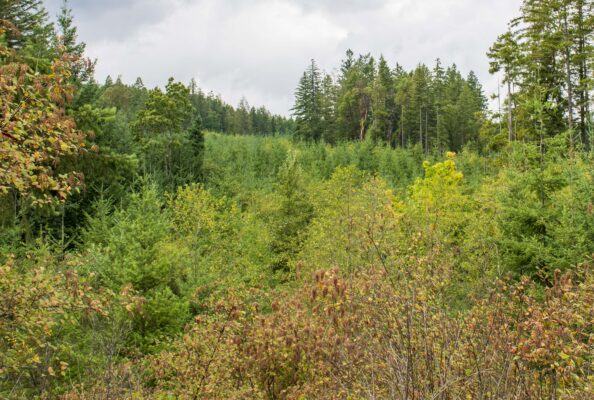 Businesses, communities, and wildlife across a vast portion of western Washington, western Oregon, and northwestern California rely on healthy national forests. Since 1994, the Northwest Forest Plan (NWFP) has guided conservation, recreation, timber production, and other uses of these 19.2 million acres of species-rich and economically important lands and rivers, and now, as it does periodically, the U.S. Forest Service is updating the NWFP… The scientists and land managers who authored the original NWFP recognized the importance of drawing on the best available science. They also had the foresight to incorporate ways to monitor the forests and adjust management if their assumptions—for example, about the plan’s impact on nature and communities—proved wrong… The Forest Service is
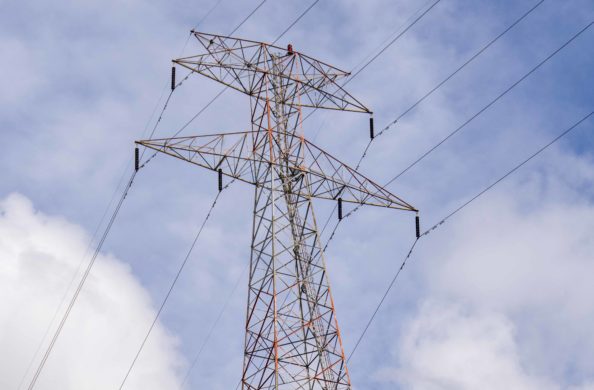 Oregon lawmakers are considering a legislative package that would provide some protection to utility companies whose equipment sparks wildfires. House Bill 3917, introduced Tuesday by Rep. Pam Marsh, D-Ashland, would create a fund to help people who lose homes or businesses to utility-caused wildfires — as long as they agree not to sue utility companies for that damage. Marsh is also sponsoring a complementary bill, House Bill 3666, which would allow the Oregon Public Utility Commission to grant a safety certificate to utilities it deems are “acting reasonably with regard to wildfire safety practices.” The wildfire assistance fund created by HB 3917 would be seeded by utility companies that are regulated by the state’s Public Utility Commission, including Pacific Power and Portland General Electric. Half of their their seed contribution could come from ratepayer dollars, and the other half would come from the share of rates designated for profits.


 HORRY COUNTY, S.C. — The

 HORRY COUNTY, S.C. — As the Covington Drive fire in Carolina Forest reaches Day 11, the South Carolina Forestry Commission told News13 the agency will cover all its costs associated with fighting the blaze but that it’s “too early to know” what the actual price will be. “We will cover all our costs associated with the fire — personnel, food, lodging, equipment, etc,” the agency said. “Since the Southeast Compact was activated, we will reimburse the Florida IMT for their costs — personnel, food, lodging, equipment. As with all large incidents of this type, there will be expenses we don’t even know about yet that we will have to pay for.” The forestry commission said since the fire management assistance grant was approved, FEMA will reimburse agencies and fire departments for 75% of approved costs.
  Donald Trump’s administration is to reconsider the official finding that greenhouse gases are harmful to public health, a move that threatens to rip apart the foundation of the US’s climate laws, amid a stunning barrage of actions to weaken or repeal a host of pollution limits upon power plants, cars and waterways. Trump’s Environmental Protection Agency (EPA) issued an extraordinary cavalcade of pollution rule rollbacks on Wednesday, led by the announcement it would potentially scrap a landmark 2009 finding by the US government that planet-heating gases, such carbon dioxide, pose a threat to human health. The so-called endangerment finding, which followed a supreme court ruling that the EPA could regulate greenhouse gases, provides the underpinning for all rules aimed at cutting the pollution that scientists have unequivocally found is worsening the climate crisis.
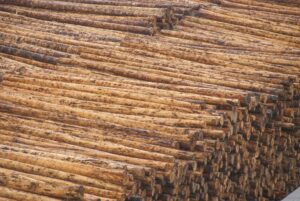 President Trump is pushing federal agencies to expand timber harvests… The U.S. Forest Service is already set to increase the number of trees it harvests to one of the highest levels since 2019, a result of Biden-era policies. But advocates argue that we need trees now more than ever and that this increase in timber harvest doesn’t make sense. The Forest Service is facing a lawsuit
  WASHINGTON — The Supreme Court on Monday rejected a lawsuit from Republican attorneys general in 19 states aimed at blocking climate change suits against the oil and gas industry from Democratic-led states. The justices acted on an unusual Republican effort to file suit in the Supreme Court over the Democratic states’ use of their own state courts to sue fossil fuel companies for deceiving the public about the risks of their products contributing to climate change. The Supreme Court typically hears only appeals, but the Constitution gives the court authority to hear original lawsuits states file against each other. Justices Clarence Thomas and Samuel Alito said they would have allowed the lawsuit to proceed for now. The justices don’t have the discretion to reject the complaint at this stage, Thomas wrote in a dissent that did not deal with the merits of the claim.