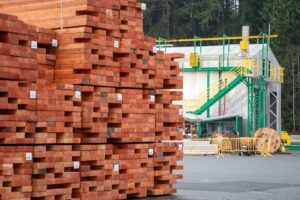
 President Donald Trump is prepared to impose tariffs on many Canadian products that are shipped to the United States. Included on the list of tariffs are the wood products industry, which is facing a 25 percent tariff on products shipped south of the border. In response to the President’s actions, the Vermont House Committee on Agriculture and Forestry took testimony from two employees at the Agency of Natural Resources last week… In the past two years Vermont has lost two sawmills, becoming more reliant on Canada. Vermont imported $52 million in sawmill and wood products from Canada in 2024. Pierson said some of the wood was shipped from Vermont to Canada where it was processed and shipped south.
 Willis, a business of WTW, and The Nature Conservancy (TNC) have launched a new $2.5 million wildfire resilience insurance for the Tahoe Donner Association in Truckee, California. Described as “first-of-its-kind,” this policy directly links insurance costs to proactive wildfire risk mitigation efforts. Developed in partnership with UC Berkeley’s Center for Law, Energy and the Environment, the policy aims to demonstrate how ecological forest management practices can lead to reduced premiums and increased insurance availability. Such techniques include tree thinning to improve the health and growth of the remaining trees and planned fires to clear out flammable vegetation, both proven to reduce wildfire risk and make forests healthier. Tahoe Donner has completed forest management projects over 1,520 acres since 2015. …This new policy, covering 1,345 acres of Tahoe Donner’s land, secures a 39% lower premium and an 89% lower deductible than would have been possible without the nature-based forest management.
 CALIFORNIA — The US Department of Justice (DOJ) announced that it had reached an $8.1 million settlement in a civil False Claims Act case based on alleged customs violations by defendants Evolutions Flooring, a San Francisco-based importer of wood flooring, and its owners Mengya Lin and Jin Qian. …The complaint shows how DOJ and relators may formulate such cases. Evolutions and its owners were accused of knowingly evading customs duties, including antidumping duties, countervailing duties, and section 301 tariffs, on wood flooring manufactured in the People’s Republic of China. Acting at the direction of its owners, Evolutions allegedly mispresented the country of origin of certain flooring imports – declaring them as Malaysia-origin – to avoid the high duties applicable to China-origin products. Evolutions also allegedly falsely declared the true manufacturer of the imported merchandise.
 The Oregon Building Codes Division (BCD) has published its first permit-ready plan under the state’s updated Permit-Ready Plans Program. The building plans, available free to the public, are for a code-compliant residential deck. The Permit-Ready Plans Program creates an efficient pathway for the state to develop and make publicly accessible building plans that meet the requirements of the state building code. Plans are published to the BCD website. …The first plan published is a single-level, wood-framed, exterior deck attached to a building regulated by the Oregon Residential Specialty Code. BCD anticipates publishing more permit-ready plans for other residential accessory structures such as pole buildings, detached garages, patio covers, and carports later this year. The division will start developing plans for smaller detached dwelling units by the end of 2025.


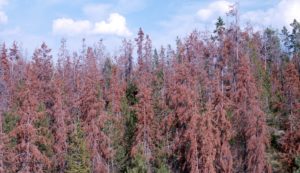 An insect known for turning entire mountainsides the color of rust could be making a resurgence in Colorado. The pest is none other than the mountain pine beetle. After a roughly decade-long period of relatively lower populations, the bugs are rebuilding their numbers along the Front Range and in southwest Colorado, according to an annual forest health report published by the Colorado State Forest Service in late March. “I’m a little concerned moving in this summer because we really haven’t had any precipitation,” said Dan West, the forest entomologist for the Colorado State Forest Service. “I’m worried bark beetles are going to increase their populations in these drought-stricken trees.” Few bugs have had a more visible impact on forests across the western U.S.


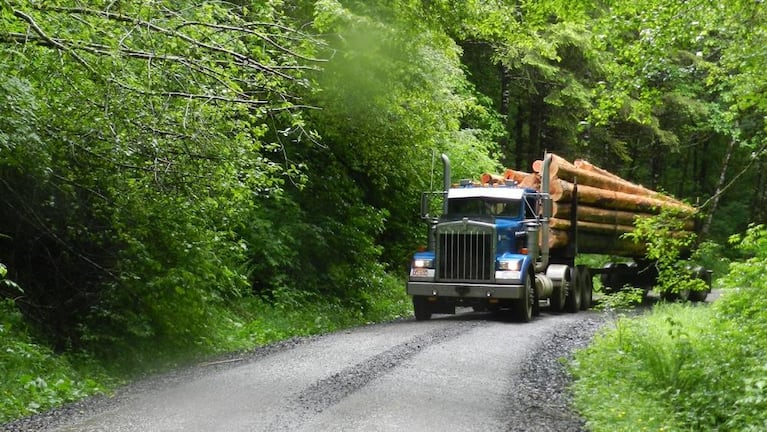


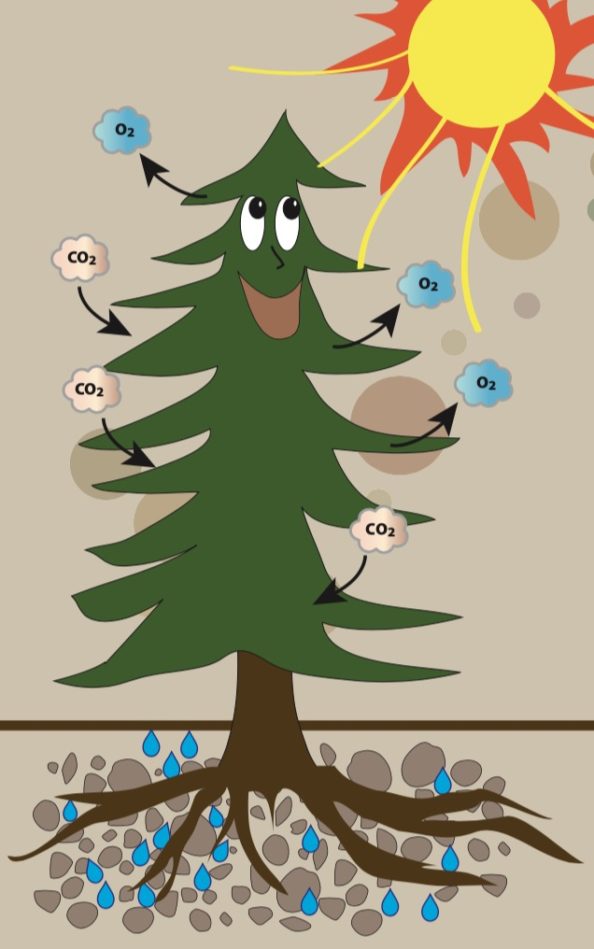 A recent study published by the Colorado State Forest Service took a deeper look into the impact of Colorado’s trees and how they store carbon. The findings reported that some of Colorado’s forests release more carbon than they draw due to dying trees that are actively decomposing. …it should be kept in mind that this data applies to recent years, and results fluctuate and can be nuanced. “(The) bigger picture of this report found that Colorado’s forests hold a lot of carbon, and that continues to this day, and it’s just in recent years that it’s releasing slightly more carbon than it adds,” Vorster said. “But when you just put it in perspective, if you were to compare the amount of carbon that it holds compared to what it releases, it’s like 0.06%, so a very tiny fraction of it at least every year. … It’s pretty close to a balance.”
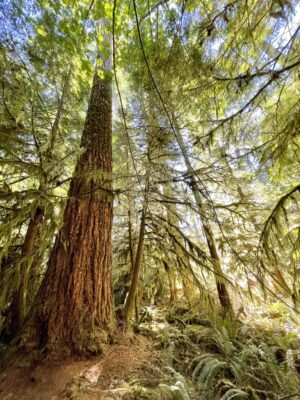 The Pacific Northwest is fortunate to have vast forests and ideal conditions for growing trees quickly. These forests have long been a cornerstone of our rural economies while also protecting streams, sequestering carbon and supporting wildlife. However, we face a troubling trend: a decline in local timber production and a growing reliance on imported lumber. We use science for active forest management with the toughest regulations in the world, we do forestry the best here. It’s time to prioritize local timber and rebuild a robust, sustainable industry right here in Washington… Prioritizing local wood production is a win-win for the Pacific Northwest. Wood is good, but local wood is best if we want to restore a vital, create economic stability and protect our environment.
 It’s a cold day at Sun Mountain Lumber in Deer Lodge, Montana. Outreach Forester Sean Steinebach walks toward the mill’s massive kiln where freshly cut two-by-fours are dried. You can feel the heat radiating off the fresh boards. He stops and inhales. “It smells fresh and it smells bright and it smells wild,” he says. The mill’s lumber yard is filled with stacks of Douglas fir and lodgepole pine logs that will soon become lumber. Having a steady and reliable supply of logs is crucial to keeping the mill in business, says Steinebach. “We drive the economics of Powell County for sure, Anaconda, Deer Lodge County. We’ve got a lot of employees that live there. Granite County, we’ve got employees there. We’re a big impact in the whole state, I think. Forest products in general is a huge impact in the state of Montana.”
 Earlier this month, President Donald Trump signed
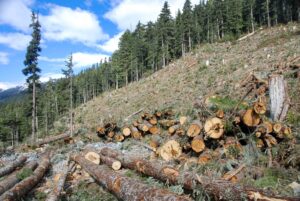 President Donald Trump’s March 1 executive order calling for “immediate expansion of American timber production” generated lots of enthusiasm in the Northwest wood products world. But analysts added equal amounts of concern that Trump’s Department of Government Efficiency-driven federal cuts might keep the woods quiet. “It’s going to be a good thing in terms of helping stimulate activity on national forests,” the University of Montana’s Todd Morgan said… but also recognizes the uncertainty spiraling around Washington, D.C. “A lot is going to depend on who’s left in federal agencies at the end of the day, the week, the next four years,” he said. “All this funding- and budget-cutting is going to interfere with the stated goals.” …Trump’s order also calls for timber production targets. That’s something that has been missing from federal land management for a long time, according to Montana Wood Products Association Director Julia Altemus.
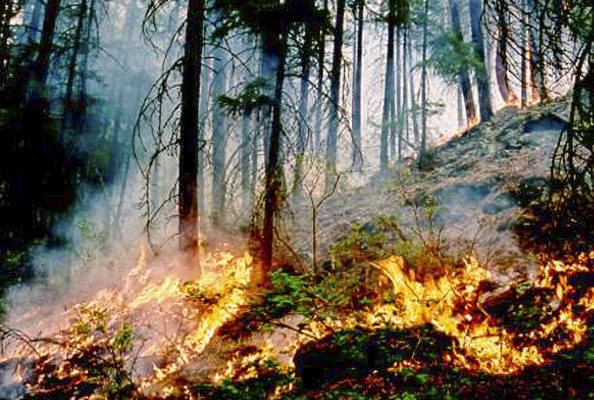 Washington’s Department of Natural Resources says it’s coming up with backup plans to address the growing threat of serious wildfires in the state. The typically close working relationship with federal forest managers has frayed under the Trump Administration. It started in mid-February, when the U.S. Department of Agriculture cut thousands of probationary employees at the U.S. Forest Service. The USDA is in charge of stewarding places like the Mount Baker-Snoqualmie National Forest and the Gifford-Pinchot National Forest. Altogether, about 2,000 employees across the country were fired. The USDA emphasized that no “operational firefighters” had been let go, and argued the critical work of responding to wildfires would not be interrupted. …Grassroots Wildland Firefighters estimated that three-quarters of the employees laid off had secondary wildland firefighting duties, meaning firefighting wasn’t their primary job, but they were pulled in to fight fires as needed.
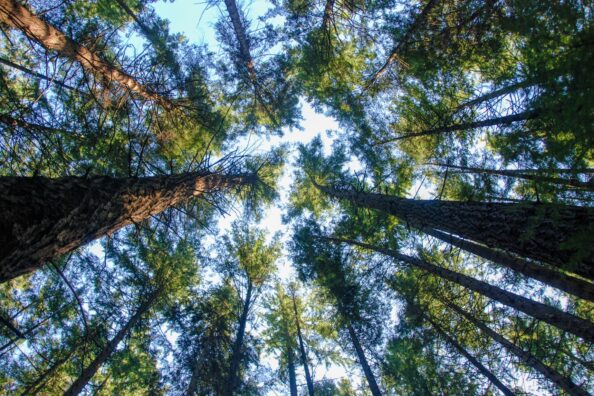 The Alaska Forest Association and two of its members have taken legal action against the US Forest Service. The lawsuit … seeks to compel the federal agency to comply with the Tongass Timber Reform Act’s mandate for timber sales, a move that could help revive the struggling timber industry in southeast Alaska. “Federal law requires the Forest Service to sell enough timber every year to meet market demand,” said Frank Garrison, attorney with the Pacific Legal Foundation, which represents the plaintiffs that include Viking Lumber and Alcan Timber. “…the agency has violated federal law three times over.” The dispute stems from the US Forest Service’s 2016 Management Plan, which outlined a gradual transition from selling old-growth timber to younger trees over a ten-year period. … However, the plaintiffs argue that the agency abandoned the plan, ceasing old-growth timber sales immediately and failing to provide sufficient young-growth timber as promised.
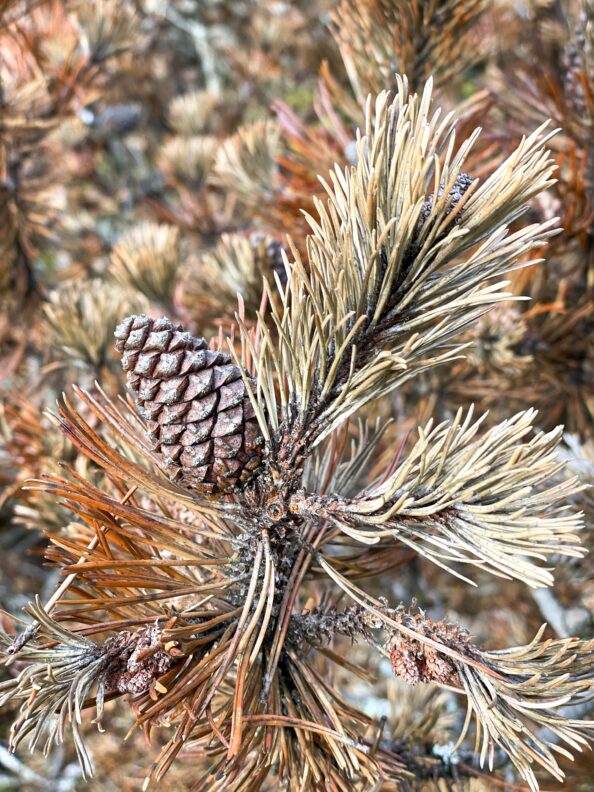 It’s now clear that some moves President Trump has authorized his pal Elon Musk and the so-called Department of Government Efficiency to make will thwart at least a few of Trump’s own often-repeated priorities. …Then there are two moves that figure to make the next fire season, coming up in late spring or early summer, as bad as or worse than recent ones. Trump legitimately repeats the conviction that cleaning forest floors can reduce the intensity and frequency of wildfires. He consistently and falsely blames California’s government for not doing this. …With Musk’s aid, though, he fired 3,400 Forest Service workers in mid-February who were still on probation in their first year of employment, many of whom had been hired to do the job Trump calls critical to stopping fires. …If he knew these firings completely contradict priorities he has trumpeted, why would he have approved them?
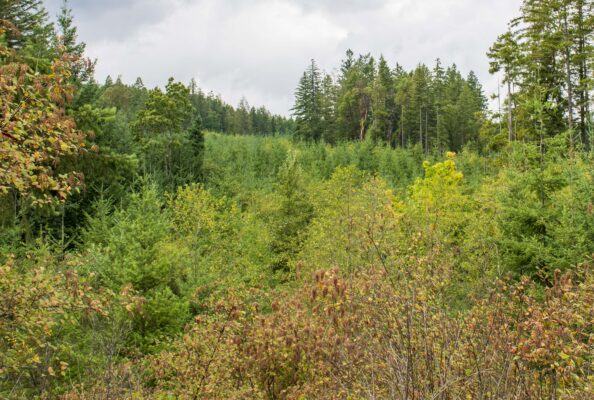 Businesses, communities, and wildlife across a vast portion of western Washington, western Oregon, and northwestern California rely on healthy national forests. Since 1994, the Northwest Forest Plan (NWFP) has guided conservation, recreation, timber production, and other uses of these 19.2 million acres of species-rich and economically important lands and rivers, and now, as it does periodically, the U.S. Forest Service is updating the NWFP… The scientists and land managers who authored the original NWFP recognized the importance of drawing on the best available science. They also had the foresight to incorporate ways to monitor the forests and adjust management if their assumptions—for example, about the plan’s impact on nature and communities—proved wrong… The Forest Service is
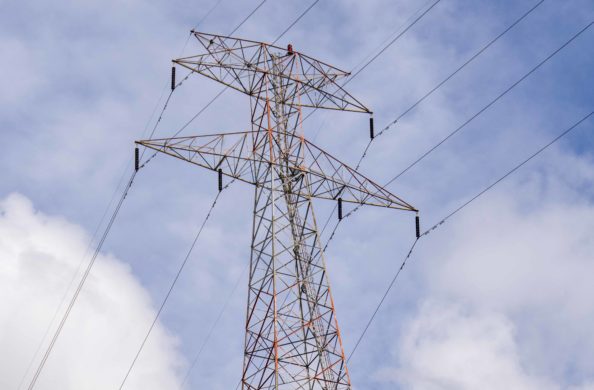 Oregon lawmakers are considering a legislative package that would provide some protection to utility companies whose equipment sparks wildfires. House Bill 3917, introduced Tuesday by Rep. Pam Marsh, D-Ashland, would create a fund to help people who lose homes or businesses to utility-caused wildfires — as long as they agree not to sue utility companies for that damage. Marsh is also sponsoring a complementary bill, House Bill 3666, which would allow the Oregon Public Utility Commission to grant a safety certificate to utilities it deems are “acting reasonably with regard to wildfire safety practices.” The wildfire assistance fund created by HB 3917 would be seeded by utility companies that are regulated by the state’s Public Utility Commission, including Pacific Power and Portland General Electric. Half of their their seed contribution could come from ratepayer dollars, and the other half would come from the share of rates designated for profits.
 A bipartisan group of lawmakers on Monday urged the Trump administration to scrap plans to kill more than 450,000 invasive barred owls in West Coast forests as part of efforts to stop the birds from crowding out a smaller type of owl that’s facing potential extinction. The 19 lawmakers claimed the killings would be “grossly expensive” and cost $3,000 per bird. They questioned if the shootings would help native populations of northern spotted owls, which have long been controversial because of logging restrictions in the birds’ forest habitat beginning in the 1990s, and the closely related California spotted owl. Barred owls are native to eastern North America and started appearing in the Pacific Northwest in the 1970s. They’ve quickly displaced many spotted owls, which are smaller birds that need larger territories to breed.
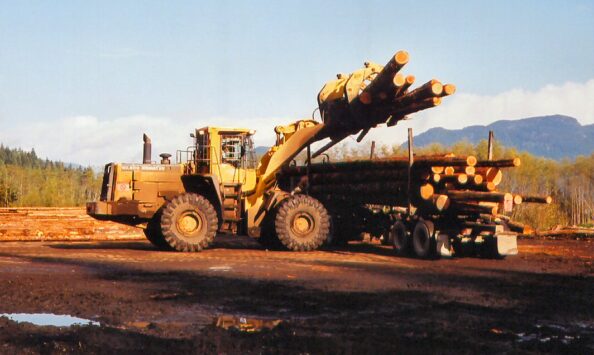 Northeastern Minnesota loggers and the nation’s forest products industry could get a lift under an executive order issued by President Donald Trump. New guidance or updates to facilitate increased timber production, sound forest management, reduced timber delivery time, and decreased timber supply uncertainty, are by the end of March to be issued by the U.S. Secretary of the Interior, Secretary of Agriculture, and U.S. Forest Service chief, under Trump’s “Immediate Expansion of American Timber Production,” order. National and Minnesota timber products officials say Trump’s order is a positive step toward boosting American timber production. “We’ve had nearly 150 mills close across the U.S. in the past 24 months,” Scott Dane, American Loggers Council (ALC) executive director said. “We need to turn the dismantling of the American timber industry around before it is too late. President Trump’s “immediate” increase in lumber production is the beginning of that turnaround.”
 Federal officials are preparing to disband an advisory committee tasked with guiding policies for millions of acres of national forests in the Pacific Northwest. …The 21 members of the Northwest Forest Plan federal advisory committee… have been meeting since summer 2023, hashing out how to tackle wildfires, pests and diseases across nearly 25 million acres of national forests in Oregon, Washington and Northern California. On Thursday, officials with the US Forest Service told committee members the agency was likely to dissolve the group in the coming weeks. Some members said they had been expecting this news. …The Forest Service pulled the committee together to help amend the decades-old Northwest Forest Plan, a set of policies that came out of the timber wars of the 1980s and ’90s. …The committee delivered its recommendations to the Forest Service last year.
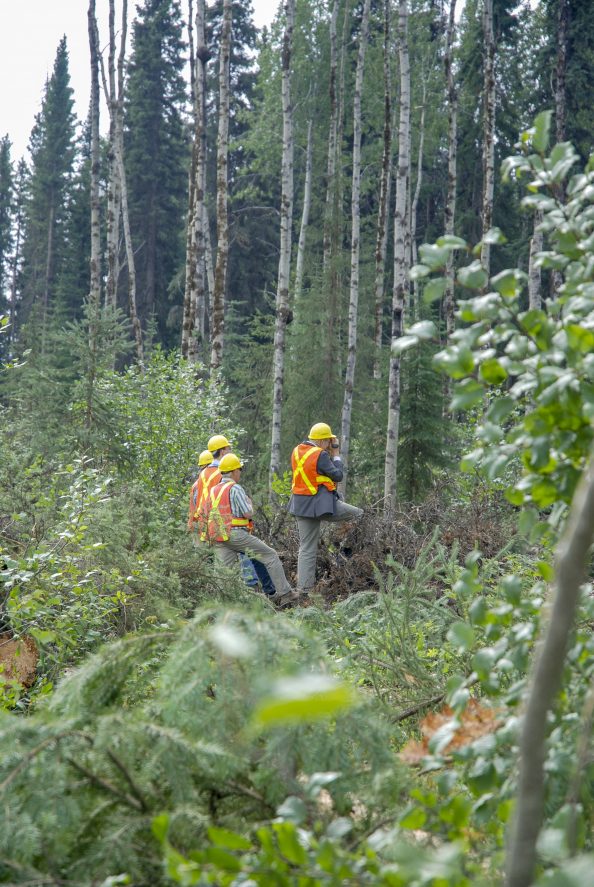 …in the early 2000s, a group of scientists and businessmen began arguing that forest thinning was too much for the government to take on. If Arizona had any hope of decreasing the risk of catastrophic forest fire, private industry would have to play a part. From this debate emerged Arizona Forest Restoration Products, a company that had planned to make oriented strand board from the low-dollar trees. …But …the Forest Service unexpectedly awarded the contract in 2012 to Pioneer Associates, a group it favored, even if they were arguably less qualified and had gathered almost no funding for their proposal. …Pioneer quickly went defunct, and the company that took over its contract, Good Earth, only thinned a fraction of what it promised. …And a cautionary tale as we fall into a pattern of on-again, off-again federal infrastructure funding cuts and threatened tariffs, which were enacted and then delayed on Canada and Mexico until April.
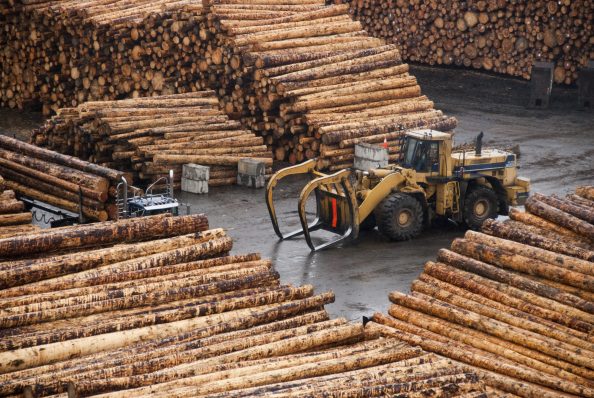 Republican-led policy directives could rewrite forest policies that affect public lands in Oregon and the rest of the West. New executive orders from the Trump administration call on federal agencies to fast-track logging projects by circumventing endangered species laws, and to investigate whether lumber imports threaten national security. …Some experts say it’s too soon to tell how these directives will affect Oregon’s timber market, particularly Trump’s order on fast-tracking timber sales to benefit logging companies and mills. Mindy Crandall, associate professor of forest policy at Oregon State University, said Canadian imports make up a large chunk of the U.S.‘s softwood lumber supply. Oregon also leads the nation