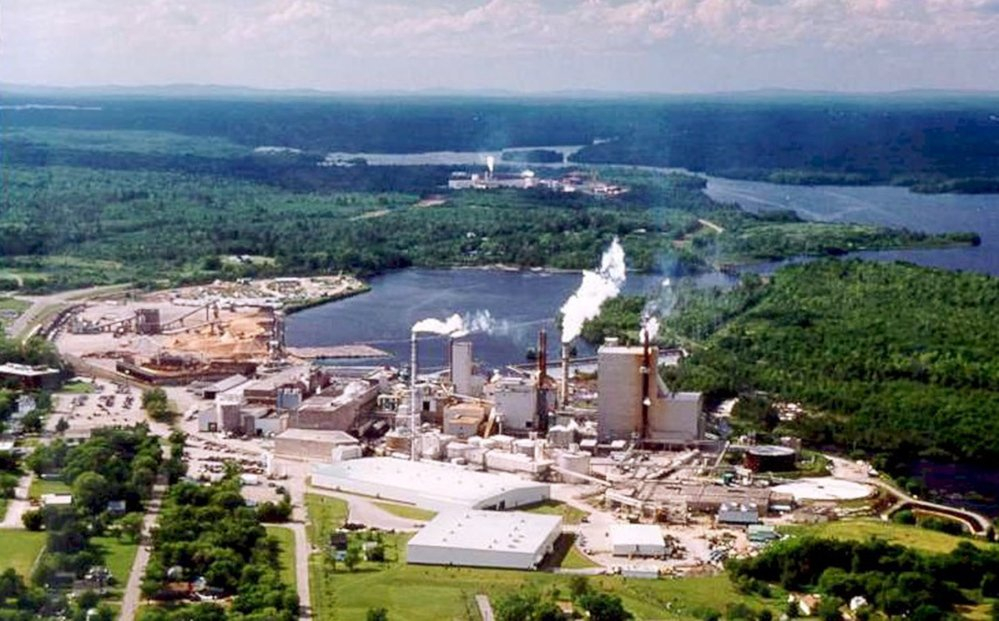
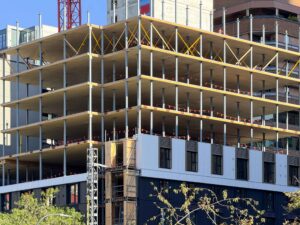
 Almost three years after declaring bankruptcy, and more than two years under new owners, legal proceedings for Penticton’s Structurlam are continuing through the courts as it fights with the company that sent it into bankruptcy in the first place. In January, the case returned to the BC Supreme Court in Vancouver to order two Canadian engineering firms to produce documents and reports for the proceedings as Structurlam faces $80 million US in claims from Walmart, according to a decision published on Feb. 11. In 2023, Structurlam began bankruptcy proceedings after Walmart ended its contract to build the company’s new home office campus in Arkansas. …In July, Walmart filed a claim for over $80 million US for allegedly defective, nonconforming, rejected, nondelivered, or returned goods that it had paid for and alleged costs to replace said goods. The January 2026 B.C. Supreme Court decision orders two engineering firms to provide their documentation.
 WINDSOR, Ontario — For months, trade negotiations between Canada and the United States have been stalled. This week that all changed when US President Trump announced negotiations were back on. During his social media tirade about Windsor, Ontario’s Gordie Howe Bridge, and a list of other perceived transgressions, Trump wrote… we will start negotiations, IMMEDIATELY.” While Trump’s political speed bump threatens to derail the planned opening of the commercial corridor, some industry leaders see an opening to accelerate negotiations. “Trade conversations have now restarted, a few weeks ago conversations weren’t happening. I see this as a positive,” says Canadian Association of Moldmakers Nicole Vlanich. …With Trump restarting trade negotiations that he once brought to a screeching halt, business leaders in Windsor hope this will be an important first step towards paving a clearer picture for economic growth for both the Canadian and US economies.
 WASHINGTON, DC — In a vote that GOP leaders fought hard to avoid, a half dozen Republicans sent a blunt message to President Trump that they do not support the tariff regime that he has made the centerpiece of his second term. Six Republicans joined with Democrats in the vote to effectively repeal the president’s tariffs on Canada, the culmination of months of consternation in the GOP over the president’s trade war that has quietly rattled even some of his staunchest loyalists in Congress. …The Senate has already passed a similar measure to cancel Trump’s tariffs on Canada, which — unlike most measures — can be passed with a simple majority rather than 60 votes. But even if the Senate does agree to this same House measure, Trump would still have the power to veto it. The House did not secure enough votes to protect a veto override.
 Some of Canada’s major labour organizations are urging Ottawa to put workers at the centre of any renegotiation of the Canada-US-Mexico Agreement as preparations begin for the pact’s mandatory 2026 review. Leaders met with Dominic LeBlanc, the federal minister responsible for Canada–US trade, for what they described as a high-level roundtable on the future of CUSMA amid rising trade tensions and renewed threats of U.S. tariffs. Canadian Labour Congress president Bea Bruske said unions delivered a “clear and urgent message” that Canada should not accept a revised trade deal that weakens domestic industry or costs Canadian jobs. …Bruske was joined by leaders from several large manufacturing and building trades unions representing sectors heavily exposed to trade policy decisions, including auto manufacturing, construction and resource-based industries. Bruske said the upcoming CUSMA review should strengthen Canadian industries and working-class communities, not “hollow them out” in the rush to renew the agreement.

 The only thing more surprising than the collapse of the co-operation agreement between the BC Greens and NDP would have been if the two sides had agreed on a new deal. …The Co-Operation and Responsible Government Accord (CARGA)… didn’t seem to be meeting anyone’s needs. For the NDP, the deal was supposed to act as a safety net for a slim one-seat majority. …It worked for last year’s budget. But outside of that, the Greens refused to back the NDP on three other confidence matters. And for that, the government agreed to advance the Green causes… [including] an early review of CleanBC and another review of the forestry system. For the Greens …it was a mixed bag, at best. The NDP did launch reviews of CleanBC and forestry, but then didn’t accept the resulting recommendations. The documents seem destined for that dusty shelf in the legislature library where unwanted reports go to die.
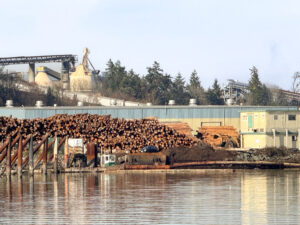 Efforts to support forestry workers displaced by the closure of the Crofton pulp mill and the ongoing curtailment at the Chemainus sawmill are expanding, as local leaders press the federal government for clearer and more robust income supports. The District of North Cowichan says its Mill Closure Response Working Group met for the first time last week, bringing together municipal, provincial and federal representatives, along with labour, industry and impacted workers, to coordinate next steps. …“The stories we heard at the first working group meeting show how urgent this is,” North Cowichan Mayor Rob Douglas said. “This is why we’re continuing to press the federal government to extend employment insurance supports for all impacted workers and to release the forestry industry support funding announced last summer. People need income security while they plan their next steps.” Updates and resources for affected workers and businesses are available at









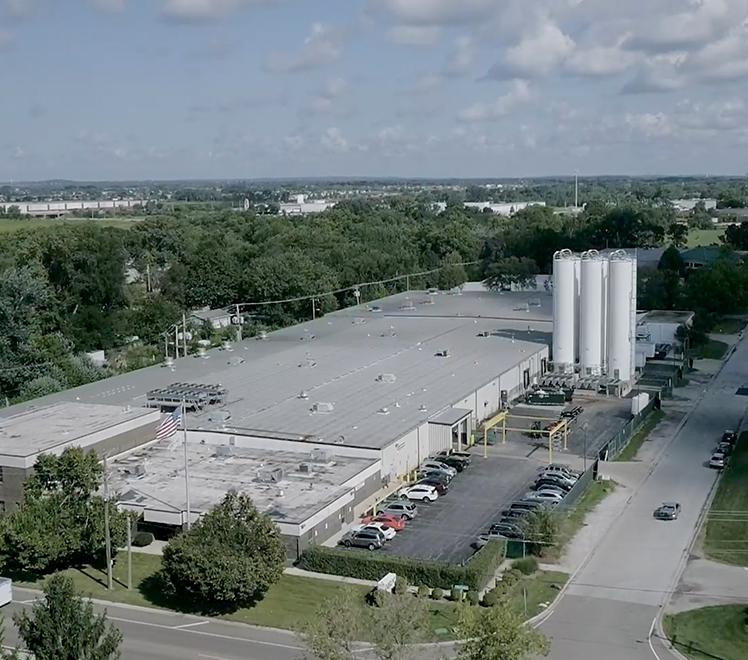
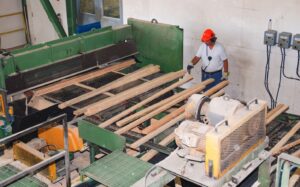 Duties on Canadian imports are driving up domestic sales at some Maine lumber companies. …Protection from historically lower Canadian lumber prices has given Pleasant River Lumber the confidence to add an additional manufacturing shift in Enfield, according to co-owner Jason Brochu. Photo by Katherine Emery. …Historically Canadian companies have both outbid them for timber harvested in Maine and undercut American lumber prices when they export the finished lumber product back across the border. …An industry analyst and two other mill leaders said that inflation and a sputtering housing market make it unclear whether the tariffs will have a positive or negative effect on business in the long run. The effects of the tariffs will also vary based on the different products sawmills make. …Sawmills rely on certainty, said Alden Robbins, of Robbins Lumber, and neither the markets nor foreign trade relationships have been stable recently.
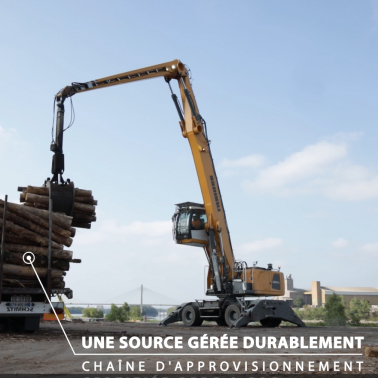
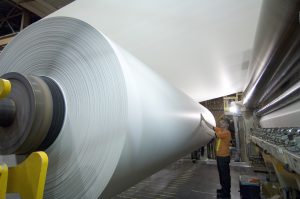 Finland’s forest industry could be forced to reduce capacity again as rising raw material costs and weaker market conditions weigh on profitability. That assessment comes from Juha Varis, senior portfolio manager at S-Bank. …The warning comes amid a more challenging environment for pulp and paper producers. Wood prices remain elevated while demand for several forest industry products has developed more weakly than expected, increasing investor expectations that production cuts may follow. …Björn Wahlroos said that a large and modern pulp mill in Finland could be forced to shut down due to a lack of raw material. His remarks triggered wider discussion within the sector. …Varis said overcapacity in the European forest industry is evident across several segments. He added that investors expect some reduction in capacity but that it remains unclear which companies or plants might be affected.
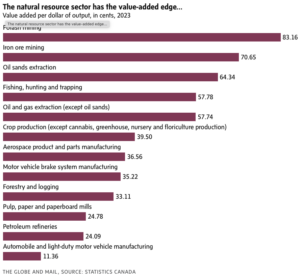 It’s been nearly a century since political economist Harold Innis popularized the phrase “hewers of wood and drawers of water” in decrying Canada’s dependence on natural resources. …Underpinning that cry is the (wrongheaded) assumption that natural resources such as mining, agriculture and energy are second-grade economic activity, less desirable than manufacturing. …That mistake is the foundation for many public policy blunders over many decades. The numbers demolish that myth, and tell a very different story, one in which energy, mining and other natural resources sectors create enormous economic value and are globally competitive. …The federal government needs to get itself out of the way of some of the strongest parts of the Canadian economy. Stop subsidizing inefficient sectors. Stop raising protective tariffs that harm other parts of the economy. Focus on rolling back unjustified regulatory barriers that harm the ability of the entire economy, particularly globally exposed natural resources sectors, to compete. And, most of all, stop the undervaluing Canada’s great natural advantage in natural resources. [to access the full story a Globe & Mail subscription is required]
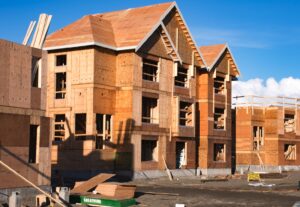 The pace of homebuilding in Canada continues to slow with no near-term signs of a turnaround, said Canada Mortgage and Housing Corp. on Monday. The national housing agency said the seasonally-adjusted annual pace of housing starts declined 15% in January. Housing starts can vary considerably month-to-month as big projects get started, but the agency’s six-month moving average for annual starts also showed a 3.5% decline. “The six-month trend has decreased for the fourth consecutive month,” said CMHC deputy chief economist Tania Bourassa-Ochoa in a news release. “We expect new construction to continue trending lower going forward as trade and geopolitical uncertainty, high construction costs, weaker demand, and rising inventories continue to constrain developer activity.” She said a near-term turnaround is looking unlikely, and reflects what the agency has been hearing from developers over recent months. The pullback comes amid a variety of pressures, including lower immigration numbers and US trade policy.
 Canada’s annual inflation rate edged down to 2.3% in January, Statistics Canada said on Tuesday, driven downward by a decline in the cost of gasoline. Economists were largely expecting the rate to remain unchanged from December’s 2.4%. Pump prices put pressure on the headline rate, having fallen 16.7% in January compared to the same period last year. With gas excluded, January’s inflation rate came in at 3%. The Bank of Canada’s preferred measures of core inflation, which strip away volatility from one-time tax changes and gas prices, all ticked down in January — bringing those rates closer to the central bank’s two per cent inflation target. “Overall, this is an encouraging result for the Bank of Canada, with inflation finally nearing the [2%] target on a broader basis,” wrote Douglas Porter, chief economist at Bank of Montreal. ›
 BURNABY, BC — Interfor recorded a net loss in Q4, 2025 of $104.6 million, compared to a net loss of $215.8 million in Q3’25 and a net loss of $49.9 million in Q4’24. Adjusted EBITDA was a loss of $29.2 million on sales of $600.6 million in Q4’25 versus an Adjusted EBITDA loss of $183.8 million on sales of $689.3 million in Q3’25 and Adjusted EBITDA of $80.4 million on sales of $746.5 million in Q4’24. …During and subsequent to Q4’25, Interfor completed a series of financing transactions. Taken together, these transactions significantly enhance Interfor’s financial flexibility, bolster liquidity and provide meaningful additional runway as the Company continues to navigate volatile lumber market conditions. …Lumber production of 753 million board feet was down 159 million board feet versus the preceding quarter. …Interfor’s strategy of maintaining a diversified portfolio of operations in multiple regions allows the Company to both reduce risk and maximize returns on capital over the business cycle.
 NEW YORK, New York — Mercer International reported fourth quarter 2025 Operating EBITDA of negative $20.1 million compared to positive $99.2 million in the same quarter of 2024 and negative $28.1 million in the third quarter of 2025. In the fourth quarter of 2025, net loss was $308.7 million compared to net income of $16.7 million in the fourth quarter of 2024 and a net loss of $80.8 million in the third quarter of 2025. The net loss in the fourth quarter of 2025 included total non-cash impairments of $238.7 million. This included non-cash impairments of $203.5 million recognized against long-lived assets at our Peace River mill due to the continued down-cycle environment of hardwood pulp markets, $12.2 million against certain obsolete equipment and $23.0 million against pulp inventory due to low prices and high fiber costs. …Mr. Juan Carlos Bueno, CEO: “We continue to prioritize improving liquidity and working capital, committing to rebalancing our asset portfolio and maintaining operating discipline.”
 VANCOUVER, BC

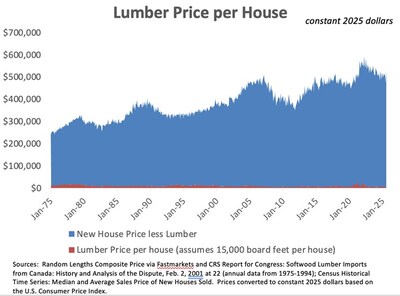
 VANCOUVER – Western Forest Products reported adjusted EBITDA of negative $6.2 million in the fourth quarter of 2025. In comparison, the Company reported Adjusted EBITDA of $14.4 million in the fourth quarter of 2024 and Adjusted EBITDA of negative $65.9 million in the third quarter of 2025, which included a non-cash export tax expense of $59.5 million related to the determination of final duty rates from the sixth Administrative Review. Net loss was $17.5 million in the fourth quarter of 2025, as compared to a net loss of $1.2 million in the fourth quarter of 2024, and net loss of $61.3 million in the third quarter of 2025. …For the full year 2025, the net loss was $82.4 million compared to to a net loss of $34.5 million in 2024. …“Despite more challenging markets and higher softwood lumber duties and tariffs in 2025, we enter 2026 with a significantly improved balance sheet to navigate the expected near-term market uncertainty,” said Steven Hofer, President and CEO of Western Forest Products.
 EDMUNDSTON, New Brunswick – Acadian Timber reported financial and operating results for the three months ended December 31, 2025 as well as for the full 2025 fiscal year. “While 2025 brought a multitude of challenges, Acadian delivered steady operational performance in New Brunswick, helping to offset weather-related challenges, trucking constraints, and productivity issues in Maine,” said Adam Sheparski, President and Chief Executive Officer. …During the fourth quarter, Acadian generated sales of $22.0 million compared to $20.2 million in the fourth quarter of 2024. Acadian generated $5.2 million of Adjusted EBITDA and declared dividends of $5.3 million. During 2025, Acadian generated revenue from timber sales and services of $87.0 million, compared to $91.6 million in the prior year. The sale of 752,100 voluntary carbon credits contributed an additional $24.6 million to total sales in 2024 while no sales of carbon credits occurred in 2025.
 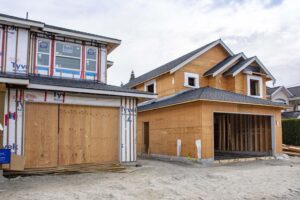 Reality-television stars are rarely consulted on matters of public policy. But in April, Realtor.com asked Tarek El Moussa to comment on the White House’s “Liberation Day” tariffs. The Southern California entrepreneur, who rose to fame on the popularity of HGTV’s Flip or Fop franchise, warned that higher import taxes would harm “new-home builders” and “first-time buyers” the most — after all, “luxury buyers” could absorb greater costs. Aspiring homeowners, he averred, are “usually strapped for cash,” and “doing everything they can just to buy a house.” Now that the second Trump administration has passed its one-year anniversary, all evidence indicates that El Moussa understands his industry well. There is little doubt that his trade war erects a sizable obstacle before those looking to find a place of their own. …The types of wood available in the US are not always the same as what’s available from Canadian imports.

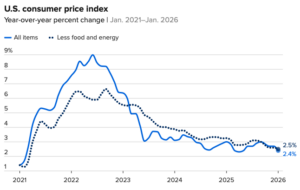 The cost of goods and services rose at a slower annual rate than expected in January, providing hope that the nagging U.S. inflation problem could be starting to ease. The consumer price index for January accelerated 2.4% from the same time a year ago, down 0.3 percentage point from the prior month, the Bureau of Labor Statistics reported Friday. That pulled the inflation rate down to where it was the month after President Donald Trump in April 2025 announced aggressive tariffs on U.S. imports. Excluding food and energy, the core CPI was up 2.5%. Economists surveyed by Dow Jones had been looking for an annual rate of 2.5% for both readings. On a monthly basis, the all-items index was up a seasonally adjusted 0.2% while core gained 0.3%. …Though the category accounted for much of the CPI gain, shelter costs rose just 0.2% for the month, bringing the annual increase down to 3%.

 Russia’s lumber industry is entering a period of sustained pressure as production volumes continue to fall and regulatory risks increase. Official data shows that lumber output declined by more than 2.5% last year, reinforcing concerns across the forestry and wood processing sectors. According to Rosstat, Russia’s lumber production dropped from 29.2 million cubic metres in 2024 to 28.48 million cubic metres in 2025. Output remains well below historical highs. Current production is estimated to be 2 to 3 million cubic metres lower than the 2019 peak of roughly 32 million cubic metres. The downturn reflects structural challenges rather than short-term disruption. Domestic demand has weakened. Export markets have narrowed. Access to European machinery and technology has been reduced. These pressures are being felt across both logging and downstream processing operations. China now absorbs more than 70% of Russia’s lumber exports. …Softwood lumber production fell by 3.5% last year. Output declined to 25.7 million cubic metres.
 As Denmark has recently tightened its standards for new construction with the aim of reducing embodied carbon, what lessons can Canada draw from this experience? In 2023, the Danish Building Code made life-cycle assessment (LCA) mandatory for all new buildings over their first fifty years. …The government also mandated researchers to provide practitioners with a list of generic material data for cases where an Environmental Product Declaration (EPD)—required to perform an LCA. When the regulation came into force in 2023, the entire construction industry was opposed to it, recalls Thomas Graabaek. “ And then slowly there was a movement within architects and engineers that actually we need to have even stricter demands.” …“Unfortunately, in Canada, [architects] have been educated only around operations, [not on its entire life cycle],” explains Kelly Alvarez Doran. He advocates for the establishment of embodied-carbon targets at different regulatory scales.
  The federal government
  Walk through any design-forward neighbourhood… and you’ll notice something the catalogues haven’t caught up with yet. The windows are changing. After decades dominated by vinyl, aluminium, and composite frames, timber is making a decisive return to high-end residential architecture. And the architects driving this shift aren’t motivated by nostalgia. They’re choosing wood because, for the homes they’re designing, nothing else performs quite the same way. The broader design world has been moving in this direction for several years. Mass timber construction, reclaimed wood interiors, rammed earth walls, natural stone — the 2025–2026 architectural conversation is dominated by what designers call “material honesty.” The idea is straightforward: use materials that are what they appear to be. No laminate pretending to be oak. …The knock against timber windows has always been practical: they need maintenance, they warp, they cost more. Two decades ago, much of that was fair. Modern engineered timber has changed the equation.
 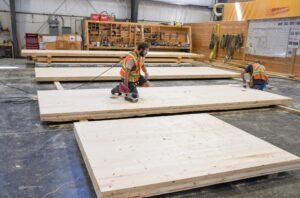 Building homes inside a factory has long been seen as a way to revolutionize the American housing industry, ushering in a new era of higher quality homes at lower price. That dream has never quite panned out. Can California finally make it happen? …For decades engineers, architects, futurists, industrialists, investors and politicians have been pining for a better, faster and cheaper way to build homes. Now, amid a national housing shortage, the question felt as pressing as ever: What if construction could harness the speed, efficiency, quality control and cost-savings of the assembly line? …What if the United States could mass-produce its way out of a housing crisis? …This year, state legislators in California believe the turning-point might actually be here. With a little state assistance, they want to make 2026 the Year of the Housing Factory. At long last.
 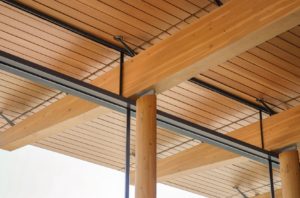 LANSING, Michigan – A state program to aid mass timber projects in Michigan has been extended for the Upper Peninsula after the region submitted no applications for funding in 2026. …A supplemental call for proposals makes available $50,000 through March 2. Those awards will be announced March 16. The awardees are:
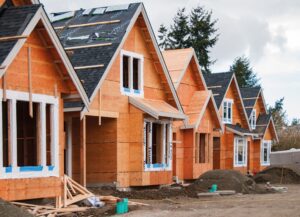 At COP 30 in Belém, Brazil, the 2025 United Nations climate conference was widely seen as an “implementation COP”. …Here, USGBC shares concrete initiatives from COP 30 for a people-centered transition of the buildings sector and what will shape the agenda in 2026. …Public procurement and low-carbon construction – The ICBC adopted a Global Framework for Action on Sustainable Procurement, recognizing that public spending, around 13–20% of GDP, can serve as a strategic lever to create demand for low-carbon construction materials and practices. By leveraging the purchasing power of national and local governments, policymakers can send the long-term market signals needed to shift the construction sector toward net zero, given that construction and infrastructure together account for the largest share of public authority budgets. Ministers and over 300 stakeholders also endorsed the Principles for Responsible Timber Construction, promoting bio-based, circular building practices and ensuring the sustainable management of wood resources as demand grows.
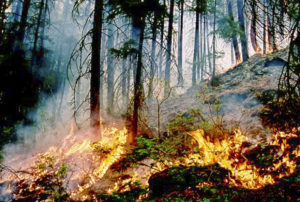 Fire departments across BC are concerned about changes to the FireSmart program and how funding is provided to communities as they plan for wildfires. The Ministry of Forests says it’s moving to a more “holistic approach” based on where risk is the highest but the fire chief who was at the centre of the Wesley Ridge wildfire on Vancouver Island last summer says the program is too important to change. Nick Acciavatti says funding from the provincial FireSmart program was instrumental in saving numerous homes in the Wesley Ridge fire. …The program provides funding to local fire departments that then go into local neighbourhoods to educate and undertake fire prevention work like brush clearing and cleaning properties of combustible materials. But that money may no longer be available to any fire department that applies for it is something Acciavatti is concerned about, considering the changing wildfire conditions here on Vancouver Island.
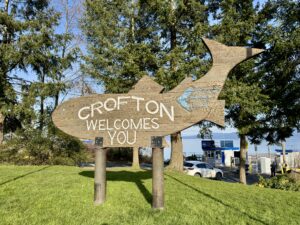 NORTH COWICHAN, BC — A representative for mill workers in North Cowichan addressed council to oppose the idea of a special task force to identify why mills are closing in the region. Adrian Soldera, president of Public and Private Workers of Canada Local 8… said everyone already knows why the mills are closing and that a new task force would be a waste of time. …He said the Crofton mill is ending several jobs at its plant and that the Chemainus sawmill now faces extended curtailment efforts due to a fibre crisis. Soldera added that putting another group together to investigate why the mills are closing would be redundant. …“its like asking for a committee to study why a house is on fire while the roof is already collapsing,” Soldera said. “Every day this task force spends sitting in a boardroom another family in a mill town wonders if they can pay their mortgage.”
 BC NDP Forests Minister Ravi Parmar avoided the usual political pledges to accept recommendations from the latest in-depth analysis of the province’s troubled forest industry. The NDP government’s appointed experts, the Provincial Forest Advisory Committee, tabled their findings on February 2 after a six-month review of an industry that is moving from decline to collapse. …Parmar took the NDP’s familiar path, rather than address the sweeping recommendations to restructure the entire forest land base… he said the mill closures that are devastating communities across the province are mostly Donald Trump’s fault. …The
 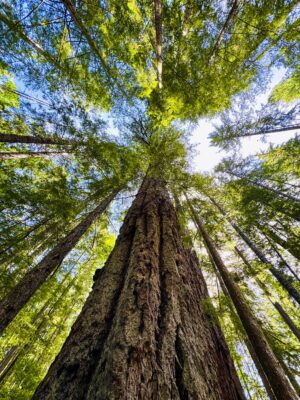 The Provincial Forest Advisory Committee’s (PFAC)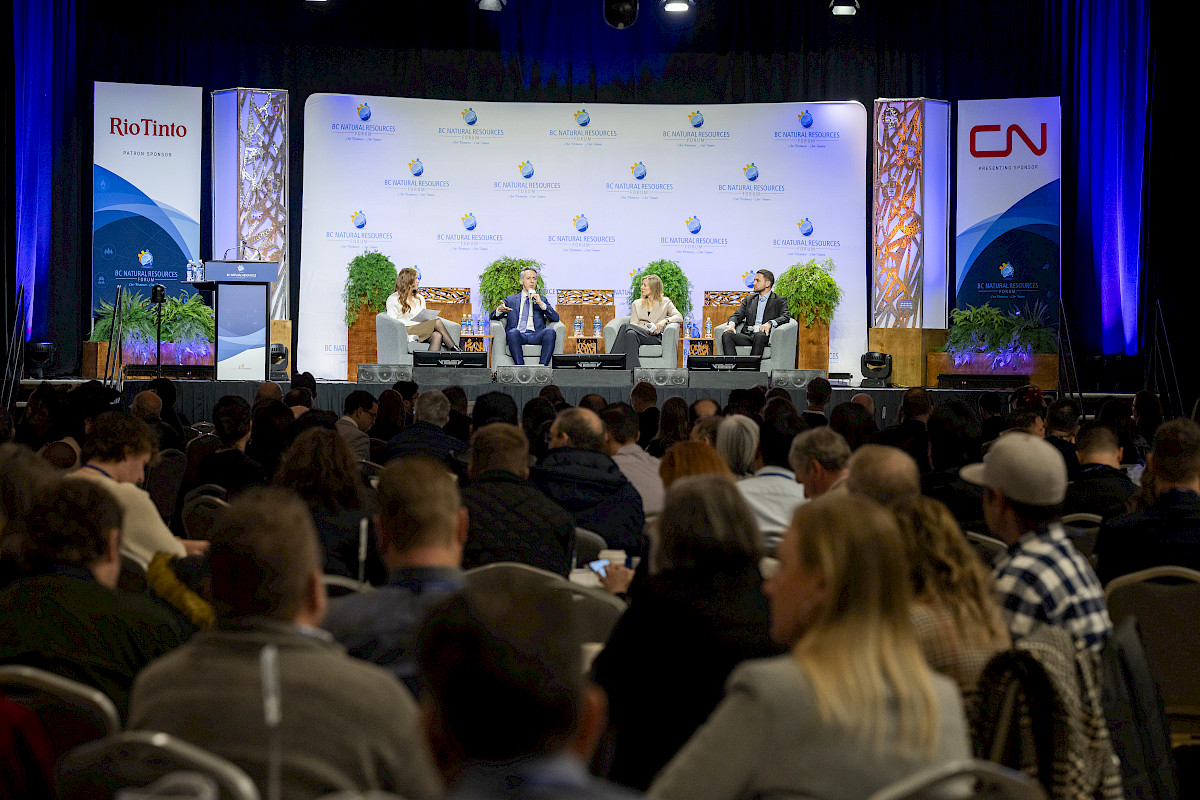
 For the first time, researchers have been able to confirm that our planet’s boreal forests are on the move. Using nearly a quarter million Landsat satellite images spanning 36 years, scientists have confirmed for the first time that Earth’s boreal forest—the planet’s largest forested biome—is shifting northward, revealing unprecedented changes in this critical ecosystem that stores more than a third of the world’s forests and helps regulate our global climate. [5 min. video]
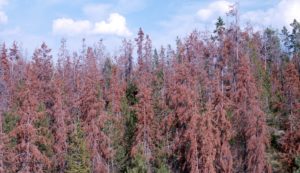 COLORADO — Forest experts are warning that Boulder’s foothills could look markedly different this year as a mountain pine beetle outbreak intensifies, with potentially far-reaching impacts on recreation and fire risk. Landowners are urged to watch for signs of beetle infestation. The state has taken action: Gov. Jared Polis announced a task force in December aimed at protecting Front Range forests from mountain pine beetle over the next decade. Boulder County has seen increased beetle activity in several areas, including upper Lefthand Canyon and Jamestown. Years of drought, warmer temperatures and overcrowded forests have weakened trees, creating ideal conditions for beetles to spread rapidly and overwhelm remaining healthy stands. …The brood of beetles already in trees and poised to spread this summer is substantial, according to Colorado State Forest Service entomologist Dan West. “It’s kind of this cake that’s already being baked,” West told Boulder Reporting Lab.
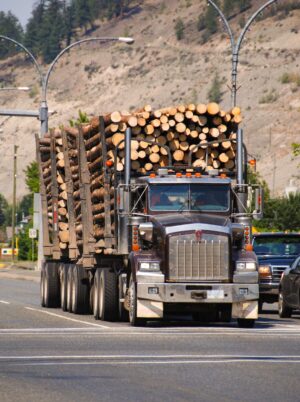 MISSOULA, Montana — Forester Sean Steinebach felt stunned when US District Court Judge Donald Molloy in Missoula vacated a federal magistrate judge’s favorable recommendations about the proposed South Plateau timber project. “Judge Molloy is a thorn in my side,” said Steinebach, outreach forester for Sun Mountain Lumber, based in Deer Lodge. …Molloy’s ruling was filed Dec. 11, vacating March 31 recommendations by Magistrate Judge Kathleen DeSoto that had allowed the project to proceed. Sun Mountain Lumber operates a sawmill in Deer Lodge and one in Livingston. …Steinebach said incessant lawsuits by environmental groups like the Alliance for the Wild Rockies, the Center for Biological Diversity and the Council on Wildlife and Fish sabotage timber projects, threaten sawmill communities, loggers and others. …One key issue for Judge Molloy was secure habitat for grizzly bears, but Canada lynx habitat was also a concern. Both are considered threatened species under the Endangered Species Act.
 University of Oregon Assistant Research Professor James Johnston said he was taught that when a large fire burned a moist, Western Cascade forest to the ground, and the area didn’t burn for hundreds of years afterward, that’s what created a complex, old-growth landscape. Instead, his study found that ancient tree stumps in the Mount Hood and Willamette National Forests had burn scars from multiple fires over their long lives. It’s the first time tree-ring scars have been used to document fire records in the region. Johnston said forests are complex because of—not in spite of—lower-severity wildfires which don’t kill many of the trees. …Johnston said to figure out the best ways to foster healthy forests, relatively recent upheavals also need to be considered. Those include clearcuts, human infrastructure at the margins of forests, and hotter and drier weather patterns.
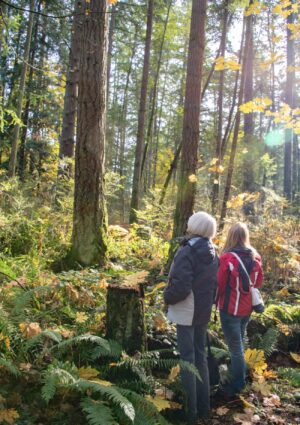 NEW YORK — BTG Pactual Timberland Investment Group has acquired approximately 107,000 acres of sustainably managed timberlands in Central Virginia from the Weyerhaeuser Company. The acquisition represents one of the largest recent timberland transactions in Virginia, significantly expanding BTG Pactual TIG’s footprint in the region and bringing the firm’s total US portfolio to approximately 1.6 million acres under management. The property is Sustainable Forestry Initiative (SFI) certified, consisting primarily of loblolly pine, and will be well-integrated with BTG Pactual TIG’s existing regional operations. …The acquisition also enables BTG Pactual TIG to further expand conservation efforts in the region through its long-term collaboration with NatureVest, The Nature Conservancy’s (TNC’s) in-house impact investing and nature finance team. A preliminary assessment of the asset conducted by TNC found that 25% of the property falls within areas of high ecological and biodiversity value.
 The Trump administration on Thursday revoked a scientific finding that long has been the central basis for US action to regulate greenhouse gas emissions and fight climate change, the most aggressive move by the president to roll back climate regulations. The rule finalized by the Environmental Protection Agency rescinds a 2009 government declaration known as the endangerment finding that determined that carbon dioxide and other greenhouse gases endanger public health and welfare. The endangerment finding by the Obama administration is the legal underpinning of nearly all climate regulations under the Clean Air Act for motor vehicles, power plants and other pollution sources that are heating the planet. …Legal challenges are certain for an action that repeals all greenhouse gas emissions standards for cars and trucks, and could unleash a broader undoing of climate regulations on stationary sources such as power plants and oil and gas facilities, experts say.
 With European manufacturing output down by up to 40% since 2018, and 200,000 industrial jobs lost last year, the European Confederation of the Paper Industry (Cepi) wants to put biomass, circularity and decarbonization financing back at the heart of the industrial debate. The trade organization relies on a report commissioned from Deloitte. According to this analysis… the use of biomass and efficiency in the circularity of materials are structural advantages for European industry in the face of imported fossil products. The report highlights the fact that the forestry and timber industry, which is already governed by national legislation, has to contend with over a hundred additional European regulations. In Cepi’s view, this overlap is holding back biomass-related industrial development. Moreover, paper collection and recycling remains fragmented across the member states. This heterogeneity complicates the optimization of secondary material flows, despite the fact that paper is one of the most recycled materials in Europe.
 FREMONT, Nebraska — Fremont wood processor Horizon Biofuels will be fined up to $147,500 by the Occupational Health and Safety Administration for “willful and serious safety violations after a deadly explosion at the company’s Fremont facility in July 2025,” the US Department of Labor announced. Horizon has until Feb. 19 to decide whether it wants to appeal the citation, according to a spokesperson with the Kansas City OSHA office. …The explosion killed 32-year-old employee Dylan Danielson and his two daughters, both under the age of 12. The violations include “combustible dust buildup, failure to ensure equipment within the facility was protected from creating an ignition source and lack of fall protection for employees working at heights greater than four feet,” the Department of Labor said. …The Nebraska State Fire Marshal’s office also has a pending investigation.