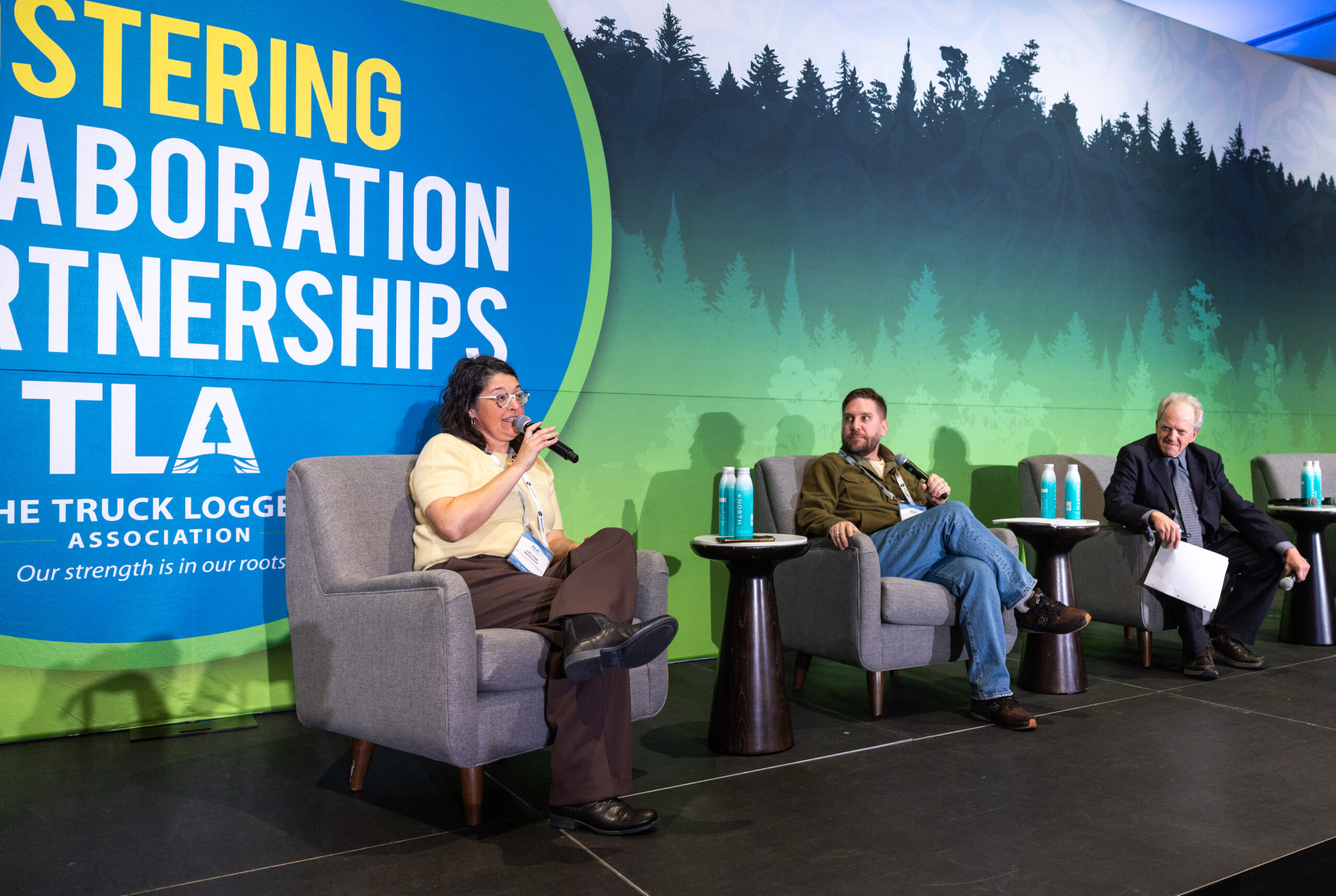
 Day Three of the Truck Loggers Association convention opened with a private screening of BC Is Burning, a documentary produced by professional forester Murray Wilson examining British Columbia’s escalating wildfire crisis and the forest conditions shaping fire behaviour. Introduced by moderator Vaughn Palmer as an “urgent, powerful documentary,” the film explores how fuel buildup, insect damage, drought, and decades of fire suppression have contributed to larger, more intense wildfires, while highlighting a range of forest management approaches being applied in BC and elsewhere, including California. The screening was followed by a Q&A moderated by Palmer with Dr. Carolyn Smyth of Natural Resources Canada, Rob Schweitzer of the Ministry of Forests and BC Wildfire Service, and Jim McGrath of Tk’emlúps te Secwépemc, all of whom also appeared in the film. Discussion focused on fuel mitigation, fire salvage, carbon dynamics, and policy and permitting constraints.
 The
The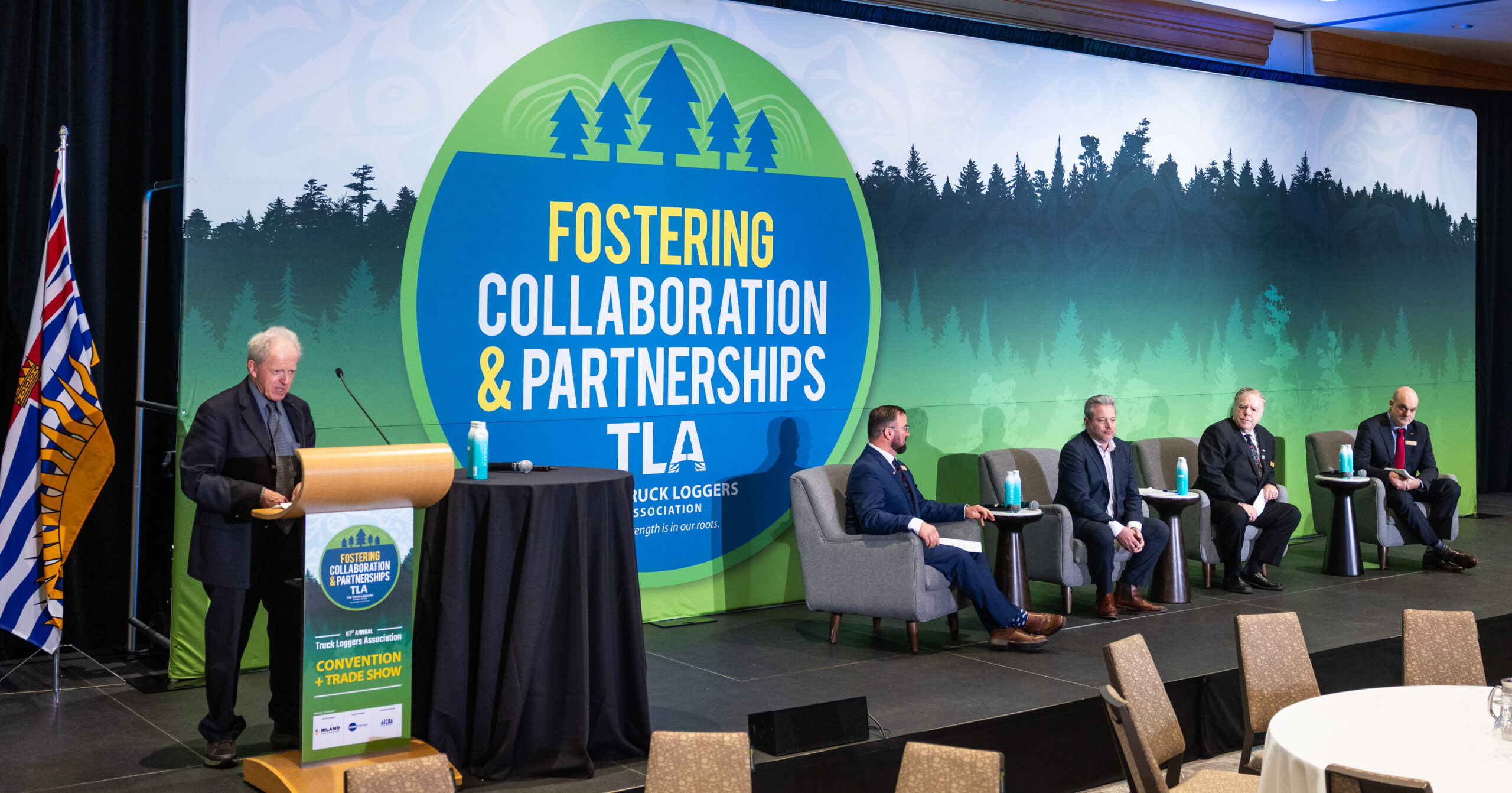 The final session of the Truck Loggers Association convention featured an on-stage conversation with Trevor Halford, Interim Leader of the Conservative Party of BC and current Leader of the Opposition, moderated by Vaughn Palmer. Joined by TLA President Dorian Uzzell, Vice President Bob Marquis, and Past President Aaron Service, the discussion focused on forestry policy, investment certainty, and regulatory conditions affecting contractors and communities. Halford pointed to permitting delays, regulatory complexity, and policy uncertainty as barriers to investment, arguing that businesses are prepared to invest but are being held back by slow approvals. Responding to questions on DRIPA, fibre supply, and the closure of the Crofton mill, Halford framed his party’s call for repeal and his broader critique around the need for clarity, predictability, and timely decision-making. Audience questions reinforced concerns about risk aversion within government and the need for clearer authority and accountability to sustain forestry employment across the province.
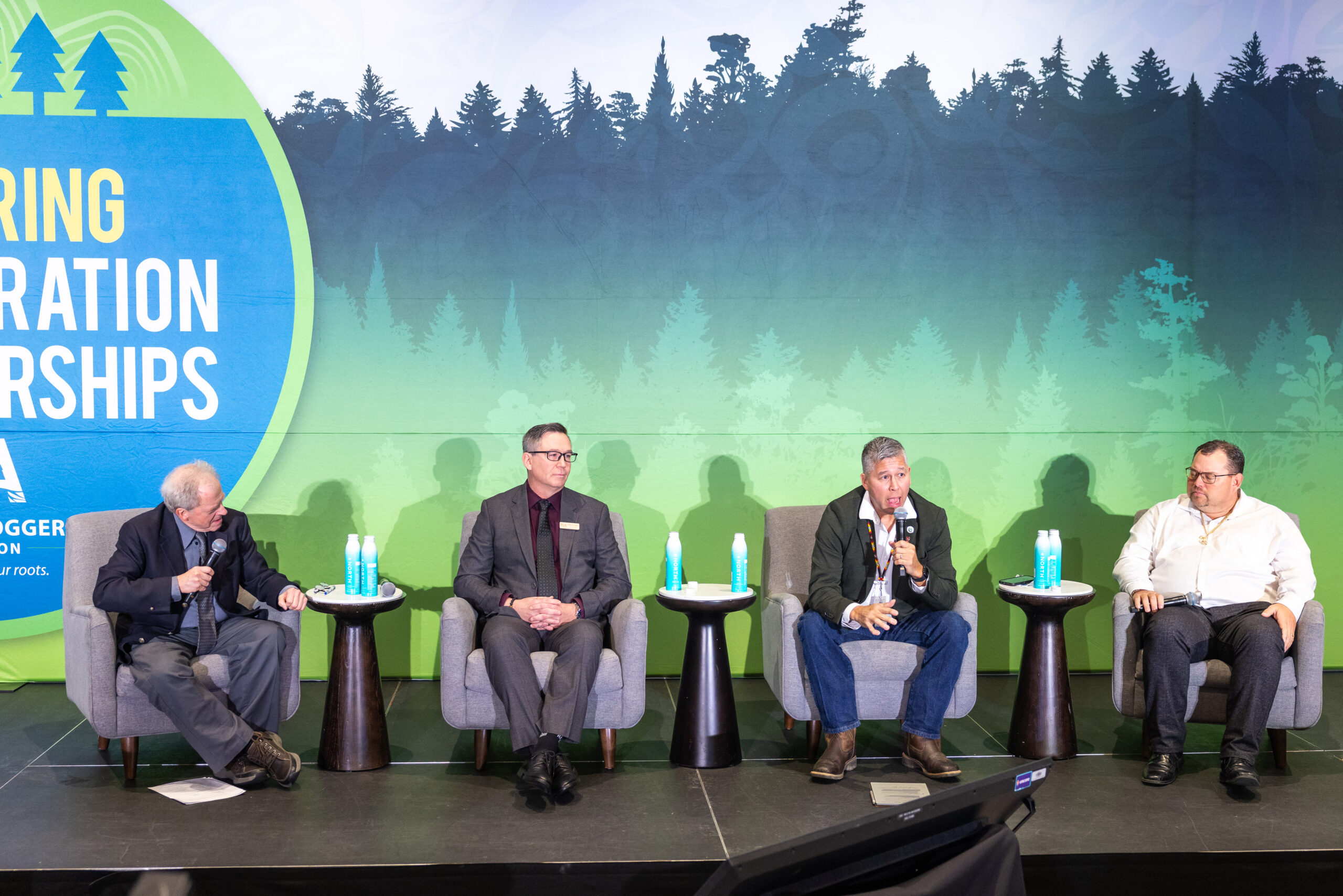 Day 2 of the TLA Convention opened with a panel on First Nations partnerships, examining how collaboration between Indigenous communities and industry is reshaping forestry in BC. Moderated by Vaughn Palmer, the session featured Lennard Joe, CEO of the BC First Nations Forestry Council; Chief Ronnie Chickite of the We Wai Kai Nation; and Klay Tindall, General Manager of Lil’wat Forestry Ventures. Joe outlined the rapid growth of First Nations tenure and investment, emphasizing operational feasibility, workforce capacity, and the need for partnerships grounded in mutual benefit. Chickite described We Wai Kai’s expansion from small licences to controlling nearly 220,000 cubic metres annually, highlighting reinvestment in employment, education, and long-term community stability. Tindall shared how partnerships helped transform Lil’wat Forestry Ventures, supporting capacity building, wildfire risk reduction, and stewardship in sensitive areas. In a discussion touching on DRIPA, the speakers emphasized inclusion, local economic benefit, and the importance of durable, collaborative governance in forestry.
 At the TLA Convention’s Leader’s Luncheon, Forests Minister Ravi Parmar outlined the BC government’s current priorities for the forest sector, following a pre-recorded message from Premier David Eby, who is on a trade mission to India. Speaking from abroad, Eby emphasized strengthening international trade relationships and promoting BC products amid global uncertainty. Parmar said forestry is facing a convergence of challenges, including market volatility, high costs, trade pressures, and wildfire risk. Beginning with wildfire, he announced an expansion of the Risk Reduction Equipment Support Trust (REST) program, increasing provincial cost-sharing from 10% to 25% for eligible equipment and modifications used in fuel management and mitigation work. He also addressed fibre supply and Path to 45, stressing the need to remove operational barriers and improve planning certainty, and pointed to ongoing reforms at BC Timber Sales. Parmar emphasized balancing economic viability, environmental responsibility, and reconciliation, while underscoring the importance of international markets for BC’s forest products.
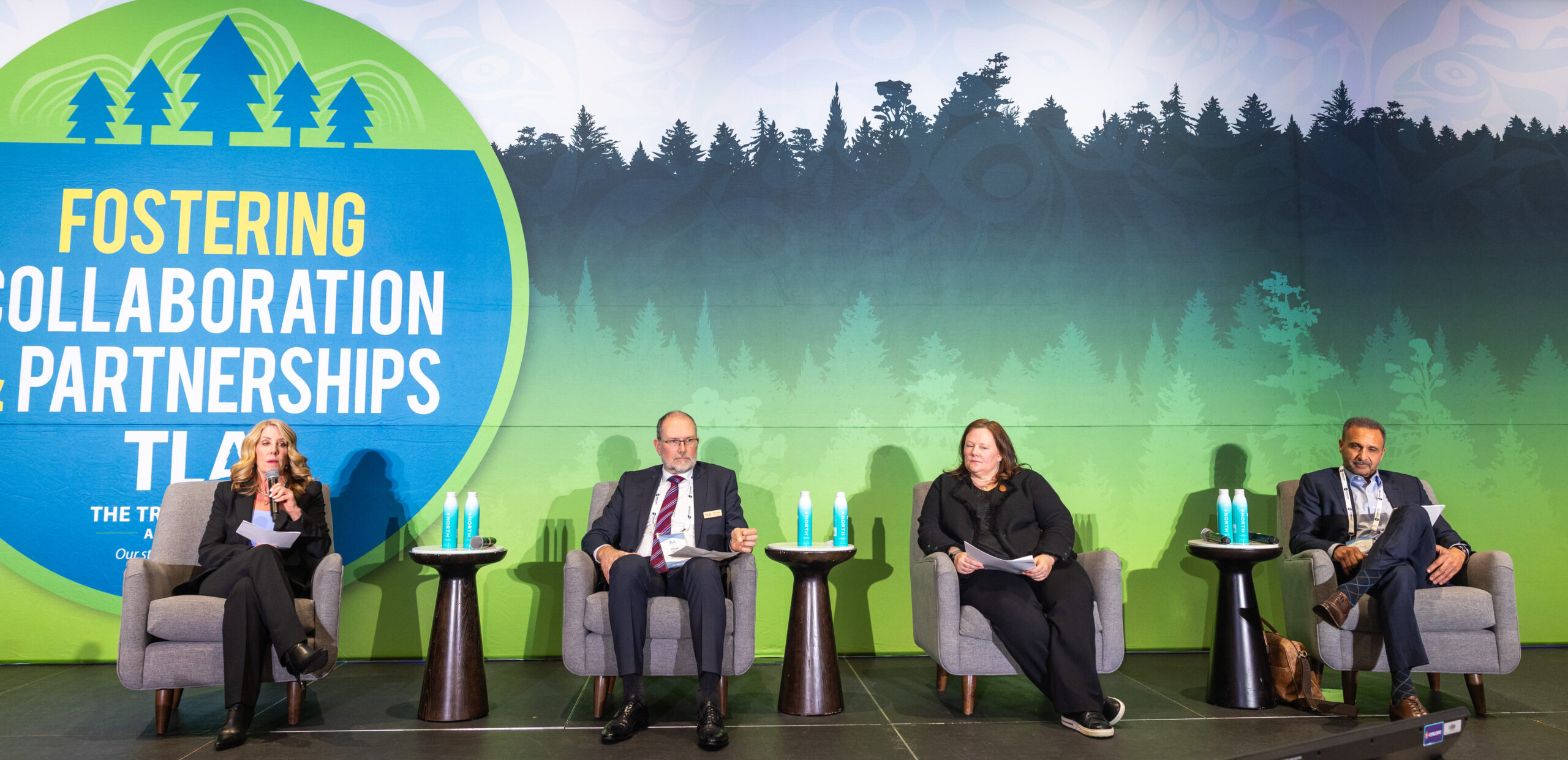 The second “fostering collaboration” panel of Day 2 at the TLA Convention brought together senior leaders from forestry and the broader business community to share organizational perspectives on BC’s economic and forest-sector challenges. Moderated by Vaughn Palmer, the session featured Bridget Anderson, President and CEO of the Greater Vancouver Board of Trade; Peter Lister, Executive Director of the Truck Loggers Association; Kim Haakstad, President and CEO of the BC Council of Forest Industries (COFI); and Joe Nemeth, General Manager of the BC Pulp & Paper Coalition. Anderson addressed the wider provincial economic context, including growth, fiscal pressures, and business conditions. Lister focused on the state of the forest industry, fibre access, costs, and investment certainty. Haakstad examined competitiveness, tenure obligations, employment trends, and economic reconciliation. Nemeth spoke to the pulp and paper sector, highlighting cost structures, fibre availability, and conditions required for future investment.
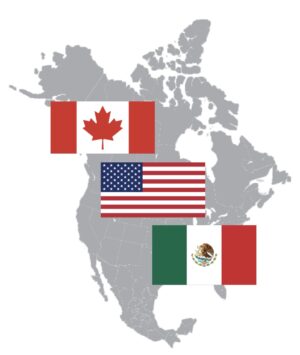
 Canada has “no intention” of pursuing a free trade deal with China, Prime Minister Carney said, after US President Trump threatened to slap punitive tariffs on Ottawa. Carney said that the country respects its obligations under the Canada-US-Mexico trade agreement, known as CUSMA in Canada and the USMCA in the US, and will not pursue a free trade agreement without notifying the other two parties. Carney’s remarks come after Trump threatened to put a 100% tariff on Canadian exports if Ottawa “makes a deal” with Beijing. …Treasury Secretary Scott Bessent also echoed Trump’s sentiments on Canada and China, saying that the UScould not “let Canada become an opening that the Chinese pour their cheap goods into the US.” …Carney said: “What we have done with China is to rectify some issues that have developed in the last couple of years,” adding that the deal was “entirely consistent with CUSMA.”
)

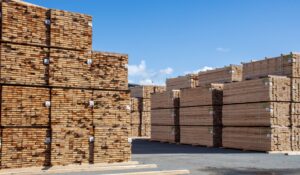 The Nova Scotia government is defending itself after three other provinces levelled accusations that it is being secretive and undermining Canada’s fight against the United States over softwood lumber. Nova Scotia is urging the US Department of Commerce to reject requests from Quebec, Alberta and Ontario for the Atlantic province to provide much greater detail on how it calculates fees charged for harvesting timber. …Nova Scotia asserts that it should not be blamed for its surveys of private timberland owners that could result in higher fees for cutting down trees when compared with other provinces. The US has levied countervailing duties, arguing that other provinces have tree-harvesting fees that are too low when compared with Nova Scotia, which is exempt from US lumber duties. …Lawyers for Quebec, Alberta and Ontario urged the Commerce Department to make inquiries, saying the US should even consider abandoning the private surveys as a benchmark. [to access the full story a Globe & Mail subscription is required]
 The Canadian and American economies are woven together tightly. So when Donald Trump slapped 25% tariffs on Canadian imports last year, many economists—myself included saw a disaster looming. …The most exposed sectors were those most dependent on US demand: steel, aluminum, autos, energy and lumber. …In our worst-case scenario, we expected it would shrink Canada’s GDP by 2.6 per cent, leading to a moderate recession and shaving nearly $2,000 a year off income for every Canadian. So far, however, that doomsday scenario hasn’t materialized. This was possible because of the Canada-US-Mexico trade agreement. …Avoiding the worst of the tariffs doesn’t mean we’ve won or even survived the trade war. Communities across the country are still hurting. …Regions in Quebec and British Columbia are under strain, with key industrial sectors—steel, aluminum, copper, lumber—are facing additional tariffs under Section 232 authority.
 A wood chip facility primarily owned by the ʼNa̱mǥis Nation on north Vancouver Island says it is permanently shutting down as a result of the recent mill closure in Crofton, BC. Atli Resources CEO Jonathan Lok says the Atli Chip LP directly employed nine people, but the closure will affect many more in the small community of Beaver Cove, near Port McNeill. …Lok says a contractor the company hired to bring wood fiber into the facility would be affected as well, along with the 10 to 15 positions it hires. …Lok says the company announced the closure on Jan. 20. He expects the facility to operate until the end of February. Atli Resources is majority owned by the ʼNa̱mǥis Business Development Corporation. Its other two partners include Domtar. Lok says all of the materials from the facility were shipped to the Crofton pulp mill, which Domtar announced in December would permanently close by April.


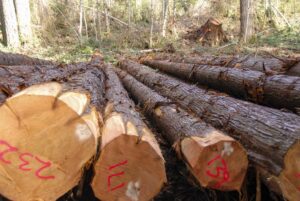 VANCOUVER ISLAND — About 100 unionized forestry workers on the north Island who’ve been on strike since June have reached a tentative agreement with La-kwa sa muqw Forestry Limited Partnership. The United Steelworkers Local 1-1937 and the LKSM Partnership announced in a joint statement that the agreement is subject to a ratification vote by the union, and no details are being released. “The USW bargaining committee has advised that they will be recommending that its members accept this agreement,” said the joint statement. The deal was reached with the assistance of the BC Labour Relations Board. …LKSM LP is the former Western Forest Products mid-Island forest operation, which remains majority-owned by Western Forest Products. The LKSM partnership is made up of the Tlowitsis, We Wai Kai, Wei Wai Kum and K’ómoks First Nations, all members of the Nanwakolas Council. …The operations cover about 157,000 hectares near Campbell River and Sayward.


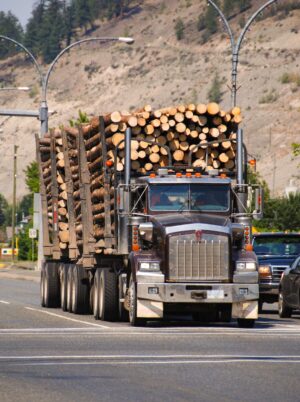 A letter from the Carleton-Victoria Forest Products Marketing Board to New Brunswick’s natural resources minister points to frustration building within the province’s forestry industry. The board’s general manager Kim Jensen, says some prices are the lowest they’ve seen in a decade. Jensen writes that US tariffs have been hard on the entire sector, including mills, but there’s been little support for private producers. “I have already heard from landowners who have changed their mind about having their woodlots cut,” she states. “Is the government’s long-term plan for the private forestry sector to just disappear? Because that is what is happening. Under your watch.” …Natural Resources Minister John Herron acknowledged that prices have declined since October. …But Herron didn’t mention any possible provincial support.” …J.D. Irving said 97% of the company’s lumber is under contract and not impacted by the price changes cited in the letter.


 The National Lumber & Building Material Dealers Association (NLBMDA) released its


 OTTAWA — Many economists expect no change in the Bank of Canada’s benchmark interest rate later this week — and, possibly, for the rest of the year. The central bank will make its first interest rate decision of 2026 on Wednesday. Financial market odds for a rate hold this week stood at nearly 90 per cent as of Monday morning, according to LSEG Data & Analytics. The Bank of Canada held its policy rate steady at 2.25 per cent in December, coming off two consecutive quarter-point cuts in the second half of 2025. At that decision, governor Tiff Macklem said the central bank believes monetary policy is at “about the right level” to balance a turbulent economy and lingering inflationary pressures. TD Bank economist Rishi Sondhi said in a note Friday that forecasters ought to take the Bank of Canada at its word when it comes to rate expectations.
 In November, the volume of cargo carried by Canadian railways was up slightly (+0.5%) from November 2024 to 31.4 million tonnes. Higher volumes of intermodal shipments (mainly containers) as well as higher carloadings of wheat largely contributed to the increase in November 2025. The overall freight volume in November was on par with the five-year average of 31.5 million tonnes for the month. …Growth in non-intermodal freight loadings in November was moderated by declines in several commodities. Loadings of other oil seeds and nuts, and other agricultural products were down sharply by 35.4% (-312 000 tonnes) year over year—the largest drop in tonnage since December 2018. In November 2025, loadings of iron ores and concentrates decreased 6.4% (-287 000 tonnes) compared with November 2024, while loadings of lumber were down 22.1% (-143 000 tonnes), a fourth consecutive month of year-over-year decline.
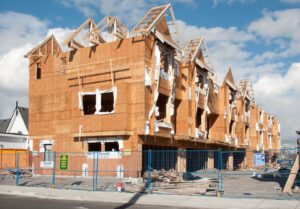 Canada’s six largest CMAs recorded a 3.9% rise in housing starts in 2025, driven by a 58% jump in Montréal and record starts in Calgary and Edmonton, while Toronto fell 31% and Vancouver slipped 3%, CMHC said. CMHC said the metro gains helped lift the national annual total for all areas in Canada to 259,028 housing starts in 2025, up 5.6% from 245,367 in 2024 and ranking as the fifth highest annual total on record. …The year-over-year increase was driven by a second consecutive year of record rental housing starts, which made up just over half of all housing starts in Canada’s urban centres, CMHC said. …Among Canada’s three largest cities, CMHC said all posted year-over-year increases in December. Toronto recorded a 151% increase, driven by higher multi-unit starts. Montréal posted a 123% increase, driven by higher starts across all dwelling types. Vancouver reported a +17% increase, also driven by multi-unit starts.
 Canada’s annual inflation rate ticked up to 2.4% in December compared to the same period last year, when the federal government implemented a GST break that brought some prices down, Statistics Canada said. The temporary tax cut, which began on Dec. 14, 2024, lasted for two months. It reverberated through monthly inflation data for part of 2025 but officially fell out of the year-over-year movement last month, sending price growth accelerating, according to the data agency. December’s rate was a smidge higher than the 2.2% rate seen in November. It was partly offset by a year-over-year decline in gas prices. With energy excluded, inflation rose to 3% in December. …”The main takeaway here is that after a year of some wide divergences, almost all of the main measures of inflation are now very close to [2.5%], in tune with the Bank of Canada’s view on the pace of underlying inflation,” wrote BMO’s Douglas Porter.
 VANCOUVER, BC – Canfor Pulp Products announced the expiration of the go-shop period provided for in the previously announced arrangement agreement dated December 3, 2025 between Canfor Pulp and Canfor Corporation, pursuant to which Canfor Corp will acquire all of Canfor Pulp’s issued and outstanding common shares not already owned by Canfor Corp and its affiliates. Under the terms of the Arrangement Agreement, each shareholder of Canfor Pulp will have the option to receive: 0.0425 of a common share of Canfor Corp per Canfor Pulp Share held, or $0.50 in cash per Canfor Pulp Share held. …During the Go-Shop Period, Canfor Pulp was permitted to actively solicit, evaluate and enter into negotiations with third parties that expressed an interest in acquiring Canfor Pulp. …The Go-Shop Period expired on January 19, 2026. Canfor Pulp did not receive any Acquisition Proposals.

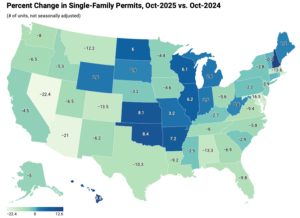 In October, single-family building permits weakened, reflecting continued caution among builders amid affordability constraints and financing challenges. In contrast, multifamily permit activity remained steady and continued to perform relatively well. Together, these trends suggest that while demand for new housing persists, builders are adjusting residential construction activity in response to evolving market conditions. Because permits typically precede construction starts, these patterns offer insight into the near-term outlook for residential building activity. Over the first ten months of 2025, the number of single-family permits issued nationwide reached 787,122. On a year-over-year basis, this represents a 7.0 percent decline compared with the October 2024 year-to-date total of 846,446. Multifamily permitting activity was stronger, with 426,352 permits issued nationwide, marking a 5.7 percent increase from the same period last year.
 Global markets plunged Tuesday after President Trump reignited fears of a US trade war with the European Union, America’s largest trading partner. The president showed no signs of backing off his threat from Saturday to hit seven EU countries and the United Kingdom with new tariffs unless they supported his push for American control of Greenland. Asked if he would be willing to use force to seize the semi-autonomous Danish territory, Trump replied, “No comment,” on Monday. The S&P 500 sold off by around 1.3% in early trading, while the Nasdaq Composite plunged 1.7%. The Dow Jones Industrial Average dropped more than 600 points. The S&P 500 has erased its gains for the year so far. Investors also sold off U.S. government bonds, driving up interest rates. Rising returns on US treasuries usually translate into higher mortgage rates and interest on new personal loans.
 Southern Pine lumber exports (treated and untreated) are almost equal to 2024 year to date through October 2025 at 488 MMBF, according to October 2025 data from the USDA’s Foreign Agriculture Services’ Global Agricultural Trade System. October 2025’s 60 MMBF of exports were up 47% over October 2024 and up 33% compared to September 2025. When looking at the report by dollar value, Southern Pine exports are up 4% YTD ($190 million) compared to 2024. Meanwhile, the October value of $25 million is the highest mark since June 2022, when the value hit $29 million. Mexico leads the way YTD 2025 at $56 million, followed by the Dominican Republic at $39 million, and India at $18 million. Treated lumber exports, meanwhile, are down 4% through the first 10 months of the year compared to 2024. The Leeward-Windward Islands market leads the way through October at $18 million, followed by Jamaica at $16 million, and Belize at $10 million. Softwood lumber imports are running 8% behind 2024 levels.
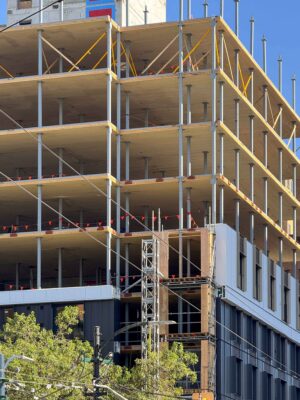 The Canadian Board for Harmonized Construction Codes (CBHCC) has released the 2025 editions of the National Model Codes which bring forward new revisions but some provinces – such as BC – have already implemented new standards or have outstripped the current codes. “The 2025 National Model Codes aim to create a harmonized framework that addresses building safety, accessibility, energy efficiency and climate adaptation,” said Silvia Garcia, co-chair of the CBHCC. The 2025 National Model Codes include the National Building Code (NBC), National Energy Code, National Plumbing Code and National Fire Code. …BC‘s building code (BCBC) allowed 18-storey encapsulated mass timber construction (EMTC) in 2024 with Ontario joining in a year later. The 2020 NBC set the structures at 12 storeys and 42 metres in height while the new 2025 NBC code retains the 12 storeys (for residential or Group C structures and office occupancies or Group D) but raises the height to 50 metres.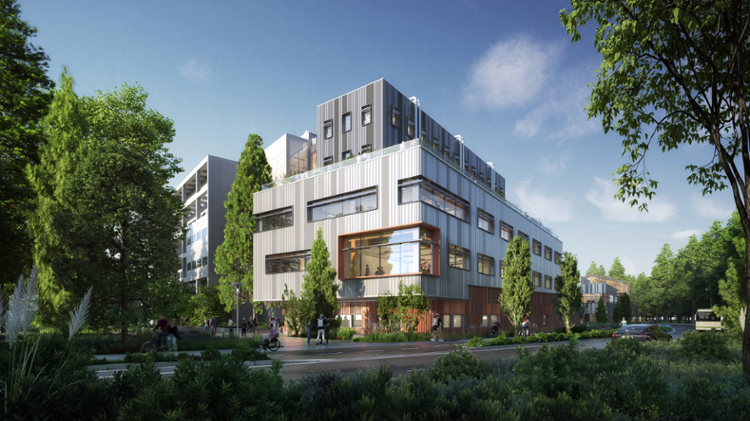
 On this episode of This is Oregon Podcast, we’re joined by Judith Sheine, Professor of Architecture and Director of Design of the TallWood Design Institute at the University of Oregon. She shares her work with helping mass timber become more accessible and discusses it potential to create affordable, sustainable housing. Sheine also discusses the challenges and opportunities in advancing mass timber development and what its future could look like for the Pacific Northwest and homeowners. This is part two of our conversation with Judith Sheine. Part one is titled:
  ST. LOUIS — What is the life cycle of a building? Each year, in the United States, new home construction accounts for 50 million tons of carbon emissions. The majority stem from harvesting, manufacturing and transporting building materials — from lumber and masonry to glass and tile to roofing and mechanical systems. But what happens at the end of the cycle? When a building is no longer inhabitable or needed, what happens to all the energy invested in those materials? “It’s demolished,” Hongxi Yin said. “It goes to the landfill.” Yin, an expert on sustainable construction, is the InCEES professor in advanced building systems and architectural design in the Sam Fox School of Design & Visual Arts at Washington University in St. Louis. Over the last decade, he has led a series of research studios exploring ways to improve building efficiency, supply chains and construction processes.





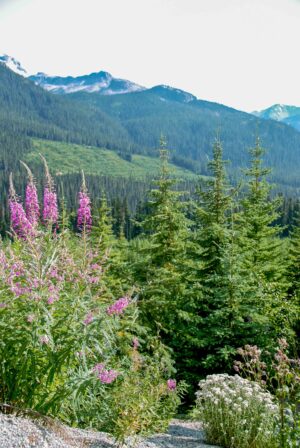 Together, we have served as US Forest Service chiefs for both Republican and Democratic administrations. We know that forest management decisions never come without debate, opinions and — more often than not — disagreement. Each of us has had to strike the difficult balance between leaving some forests intact, while sustainably using others to benefit communities and economies. But regardless of who is in the White House, one thing has always remained true: Americans value their national forests, and they want to see them protected for the benefits they provide us, like clean air, water, abundant recreation opportunities and sustainable economies. …The current administration needs to know: Repealing the Roadless Area Conservation Rule would not be in the long-term interest of the American people, the National Forests or the communities they serve. Each of us has been faced with tough decisions. Keeping backcountry and healthy forests free of unnecessary roads was never one of them.
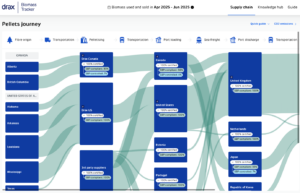 Drax launched its Biomass Tracker, a new digital tool that provides greater visibility into the journey our woody biomass takes through the company’s global supply chain. The interactive tool shows the countries and states where Drax sources its biomass, the types of fibre used in Drax’s own woody biomass, how it is transported, and the carbon associated with each stage of its journey to Drax Power Station or to third-party customers. It also includes data on independent sustainability certifications, helping to strengthen accountability across the sector. The Biomass Tracker uses quarterly real-world data presented through an interactive Sankey diagram, allowing users to explore each stage of the supply chain from fibre origin (for Drax-own pellets), pelletising to transport, storage and use. …The tool is available to access on


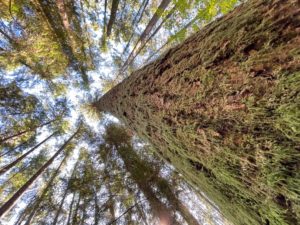 MONTANA — A proposal to use thinning and prescribed burning to remove vegetation across portions of the Flathead National Forest bordering the Middle Fork Flathead River has gained wide attention for its inclusion of sensitive management areas in the project’s 67,536-acre footprint, which provides wildlife with critical habitat and is one of the region’s most popular havens of outdoor recreation. But even as conservation groups push for additional layers of environmental review, proponents of the project, including industry leaders, recreation advocates and residents, say it’s needed to reduce the risk of wildfire in a corridor brimming with untreated fuels that threaten infrastructure and communities on US Highway 2, as well as to support local timber mills and improve forest health. If approved, portions of the project would occur in recommended wilderness areas, although the scope of that work would be confined to whitebark pine restoration and tree planting with hand tools.
 Tribes in Wisconsin and beyond are opposing the Trump administration’s proposal to end protections for millions of acres of roadless areas on national forest land. …But Wisconsin Ojibwe tribes said the move was conducted without consultation and threatens natural resources they rely on, said Conrad St. John, chairman of the St. Croix Chippewa Indians of Wisconsin. “They want to log it for the mature timber… which is revenue-based to create money for big corporations,” St. John said. …In Wisconsin, roadless areas account for less than 5 percent of the national forest’s 1.5 million acres. But Dylan Bizhikiins Jennings said they make up a vital portion of the region’s national forests, saying the administration’s actions show disregard for tribal sovereignty and treaty rights. He’s director of public information for the Great Lakes Indian Fish and Wildlife Commission, which represents 11 tribes in Wisconsin, Michigan and Minnesota.
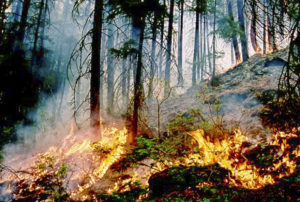 BOGOTA, Colombia — Chile is reeling from one of its most serious wildfire emergencies in years. Deadly flames sweeping across central and southern parts of the South American country have turned large swaths of forest and towns to ash. Fire scientists say the blazes are being driven not only by extreme heat, drought and wind, but also by how human-shaped landscapes interact with changing climates — a lethal mix that makes fires harder to control. …The fires have razed forests, farmland and hundreds of homes. …What distinguishes Chile’s current fire season isn’t an unusual surge in the number of fires, but the amount of land they are burning. …Miguel Castillo, at the University of Chile… “almost tripling the amount of affected area,” even though the number of fires so far is “within normal margins.” That means fewer ignitions are causing far greater damage — a pattern increasingly seen in extreme wildfire seasons around the world.
 Negotiations between the European Commission, European Council, and European Parliament, often referred to as the “trilogue”, have reached a significant conclusion regarding the European Union’s Deforestation Regulation (EUDR). On December 4, 2025, an agreement was reached, which promises to ease the administrative burden on the timber industry across Europe. This marks an important milestone, with changes that significantly affect the way the sector will handle the regulation moving forward. The EUDR, designed to combat global deforestation, will now come into effect in January 2027, offering a twelve-month delay for businesses to adjust. One of the most crucial changes in the reform is the elimination of the complex process requiring the forwarding of reference numbers throughout the entire supply chain. This has been hailed as a victory by many industry leaders, including Dr. Erlfried Taurer, Chairman of the Austrian Timber Industry Association.
 The Quebec government says it’s pushing back its greenhouse gas reduction target by five years to protect the economy and jobs. Environment Minister Bernard Drainville announced today that the government will not meet its goal of reducing emissions by 37.5 per cent below 1990 levels by 2030. This target has now been set for 2035— a timeline the government describes as ambitious yet realistic. Drainville says in a news release that Quebec has reduced its greenhouse gas emissions by approximately 20 per cent since 1990. He says achieving the other half of the target in just five years would risk economic damage at a time of uncertainty and tariff threats from the US. In response, environment group Equiterre says the government is letting young Quebecers down.

 New Hampshire and its counties may soon be barred from enrolling publicly owned lands in carbon sequestration programs. “We don’t see sequestration as a traditional use,” said Rep. Mike Ouellet, a Colebrook Republican, at a hearing before the House Committee on Municipal and County Government on Tuesday. The committee later voted, 13-1, to recommend passage of House Bill 1205, which would prohibit “carbon sequestration projects” on state- and county-owned lands. …No county- or state-owned land is currently listed on the registry of New Hampshire carbon sequestration projects. But the long duration of forest carbon contracts and the possibility they would impose restrictions on land use were two reasons bill proponents cited for preventing them on public lands in the future. …Others said timber harvest could be an important source of revenue for counties and the state, and worried the contracts would have a negative impact on the timber industry.
 PRINCE GEORGE, BC — On the anniversary of the Babine Forest Products mill explosion, the United Steelworkers union is remembering the two workers killed and the more than 20 others injured in the 2012 tragedy, while welcoming long-overdue reforms to BC’s combustible dust safety regulations. Fourteen years ago, two workers went to work at the Babine sawmill near Burns Lake, BC, and did not return home after a powerful explosion caused by combustible wood dust. The disaster remains one of the deadliest industrial workplace tragedies in the province’s history. …At its November 2025 meeting, WorkSafeBC’s Board of Directors approved significant amendments to Part 6 of the Occupational Health and Safety Regulation to modernize how combustible dust hazards are regulated in BC. …The new requirements include mandatory combustion risk assessments, written combustible dust management programs, stronger controls on ignition sources and dust accumulation, and enhanced training and worker consultation. The amendments will come into force on Jan. 4, 2027.
Deposits $10.6 Billion CAD + Interest 2.6 Billion + FX Gain 0.5 Billion = Total $13.7 Billion
Canadian softwood lumber exporters are currently paying a combined duty deposit rate of 45.16% on lumber imported into the United States.