
Kevin Mason
Economic Outlook: Risks abound for 2026 and beyond but we see little chance of upside surprises for global GDP growth next year. Instead, we forecast modest declines in both US and Chinese GDP in 2026, with the Eurozone growth rate nudging up slightly from depressed levels. US-driven tariffs will stabilize but remain a drag and may become the norm for the next three years. As we’ve noted before, demand won’t be driving upside for the forest sector. Interest rate relief in the US continues to lag earlier expectations (with two further, 25bps cuts expected next year), and a US housing recovery will likely be pushed out to the second half of 2026 at the earliest (potentially 2027). A further weakening of the USD relative to other major currencies will create additional headwinds for US-based producers focused on exports but should also put downward pressure on US imports.
Forest Products Outlook: For most markets, the first half of 2026 will look a lot like 2025, with oversupply resulting in weak prices and lacklustre earnings. Highlights include:
- Housing starts will slip next year to 1.33MM as mortgage rates are expected to move only moderately lower. Affordability issues persist.
- Log prices should trend sideways, with some markets up and others down. Demand from China could rise as its US log ban has ended.
- Lumber prices will move up in 2026 as supply reductions related to high costs (duties, tariffs, etc.) begin to bite harder.
- Panel prices are likely to remain rather low in 2026 due to OSB (particularly) facing oversupply issues as a couple of mills ramp up.
- Pulp prices hinge on supply dynamics; the situation has changed as China has boosted its internal supply. Although prices are moving off their lows, shuts are needed to maintain upward momentum.
- Newsprint demand will drop by double digits next year, but, with some mills currently offline, prices should hold until supply restarts.
- Paper prices will be mixed, with expectations for an increase in uncoated woodfrees; most other grades should hold at/near year-end levels. The removal of tariffs would push prices lower.
- Containerboard producers are expected to drive a price hike in Q1 given the massive capacity shuts this year. Demand will remain sluggish, but rising box shipments aren’t needed to support hikes.
 A central pillar of US President Trump’s protectionist trade policy could be struck down early in the new year, but lawyers and trade experts expect the President to rapidly reconstruct his tariff regime using other legal tools while questions remain about whether companies will be able to secure refunds. …A negative decision would be an indictment of the haphazard way Trump has pushed through his protectionist agenda over the past year, and would create a headache for the US government, which has collected more than US$130-billion in tariff revenue using IEEPA that may need to be refunded. …Dozens of companies have already filed lawsuits in the US Court of International Trade to try to protect their right to a refund or position themselves at the front of the line for one. Canada has less of a stake in the Supreme Court case than some other countries. [to access the full story a Globe & Mail subscription is required]
 President Trump has delayed new tariff increases on upholstered furniture, kitchen cabinets, and vanities for a year, pushing their implementation to 2027, according to a
 The
The 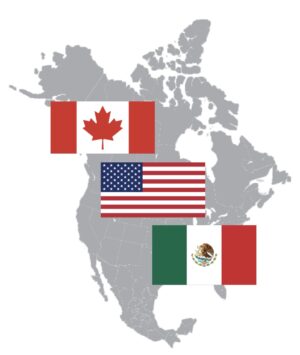 Prime Minister Mark Carney said Canada probably won’t reach a near-term deal with the United States to lower tariffs on sectors such as steel and aluminum, and negotiations are likely to be rolled into next year’s review of the US-Mexico-Canada Agreement. Canada and the US were close to a pact on metals tariffs, but President Donald Trump then terminated talks in October. …“My judgment is that that is now going to roll into the broader CUSMA negotiation, so we’re unlikely, given the time horizons coming together, to have a sectoral agreement,” Carney said on Thursday. “Although if the United States wants to come back on that in those areas, we’re always ready there — we’re very ready.” …Canada is “very ready on forest products to strike an agreement,” the prime minister added. The U.S. has placed roughly 45% duties and taxes on imports of Canadian softwood lumber, to the frustration of US homebuilders.
 The trade war launched by Donald Trump continues to intensify, striking Canadian workers. In addition to the 50% tariffs on steel and aluminum imposed earlier this year and the duties on non-CUSMA-compliant automobiles and parts, Washington added a 50% tariff on copper in July. More recently, a new 10% duty on softwood lumber was introduced, on top of the existing countervailing and anti-dumping duties. …Thanks to the mobilization and constant pressure of the United Steelworkers, several long-standing union demands have finally been adopted in Ottawa. …The federal government announced that it will now require the use of Canadian-made products in publicly funded projects and has announced new investments to strengthen Canada’s industrial capacity and the resilience of our supply chains. …Canada must go further and adopt a strong industrial strategy to reduce our dependence on the U.S. market, protect jobs, and ensure that we never again find ourselves in such a vulnerable position.
 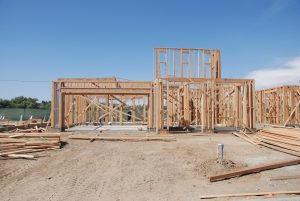 The federal government’s “Buy Canadian” policy for procurement for large infrastructure and defence projects kicked in on Tuesday as the U.S. trade war continues, Procurement Minister Joël Lightbound says. The policy was announced by Prime Minister Mark Carney in September and is essentially a mandate for the federal government to source components used in major government projects from domestic manufacturers. The procurement policy will extend immediately to government contracts valued at $25 million and over, but will expand to contracts valued at $5 million and over by the spring of 2026, Lightbound said. …Additionally, large federal construction and defence projects valued at $25 million or more will be required to use Canadian-produced steel, aluminum and wood products where the basic supply is available, he added. …In July, Carney had announced Canada would “restrict and reduce foreign steel imports entering the Canadian market.” In August, the policy was extended to Canadian lumber.
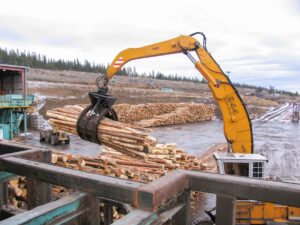 Since 2018, notes forestry watcher David Elstone, the British Columbia government has introduced more than 43 measures, policies, plans, systems, laws, reviews and reports about and affecting the BC forest sector. Meanwhile, there have been a series of closures and curtailments (permanent, temporary or indefinite) of sawmills and pulp mills, and thus workforce reductions. “And the fibre-supply crisis has continued to worsen, and . . . the industry is in far worse condition than ever before.” Elstone’s basic message: “Government has been busy designing change rather than figuring out solutions and moving forward. …Kim Haakstad, CEO of the BC Council of Forest Industries (COFI) echoes the analysis “There’s been a significant amount of change that hasn’t settled itself into the system, and there’s been no look at what regulatory efficiency can be achieved to make processes clearer, more transparent, and more accountable.”
 SUNDRE, Alberta – The general manager of what will soon become the former West Fraser – Sundre Forest Products said there will be no impact on staff or operations amid a corporate reorganizing. According to a December letter to vendors, West Fraser is “undertaking an internal corporate reorganization, whereby Blue Ridge Lumber, Spray Lake Sawmills, Crowsnest Forest Products, Sundre Forest Products, and Manning Forest Products will be amalgamated into one company and renamed West Fraser Alberta Wood Products Ltd.” The new entity is to remain a wholly-owned subsidiary of West Fraser Mills Ltd., and the amalgamation and rebranding will be effective as of end of day on Dec. 31. “There’s zero impact to operations,” said Jason Foote. “This restructure is administrative”.

 MACKENZIE COUNTY, Alberta — An agreement with Calgary-based PowerWood Canada Corp. will bring two new wood pellet manufacturing facilities to the Mackenzie County region in Northern Alberta, Canada. Josh Knelsen, Mackenzie County Reeve, announced Dec. 23 the agreement. “This is a leading-edge, first-of-its-kind project in Canada that turns wildfire-damaged wood into clean energy and helps reduce reliance on coal,” said Knelsen. The two facilities represent the potential for up to 300 direct jobs,” with many more across forestry, construction, transportation, and local businesses. …Construction on two sites is expected to begin by mid-2026. …The facilities will also see the introduction of Canada’s first steam explosion pellet production process – developed by leading industrial systems engineers Valmet and capable of producing black wood biofuel pellets with 94% less carbon release than coal. …PowerWood Canada plans to open a second Alberta plant and has developed expansion plans for further plants in New Brunswick and Nova Scotia.
 Nine more forestry companies are being supported to modernize, innovate and diversify their product lines and fibre sources to make more high-value, made-in-BC products, and help protect and create jobs. “It’s no secret our forestry sector is facing many challenges, making these investments timely,” said Minister of Forests, Ravi Parmar. …Through the BC Manufacturing Jobs Fund, the Province is contributing $2.5 million to plan or complete capital projects. For example, Canadian Bavarian Millwork and Lumber in Chemainus will receive as much as $1.4 million to help build its new facility. …Additional investments include:
 CHEMAINUS, BC — Western Forest Products’ value-added division in Chemainus is receiving up to $7.5 million from the province to add two new continuous dry kilns to its manufacturing operations. The investment, from the province’s BC Manufacturing Jobs Fund, will allow WFP’s facility on River Road to expand the production of high-value products and create new opportunities for second-growth hemlock to produce higher-value products, as well as increasing the stability of the forest company’s operations on Vancouver Island. Minister of Jobs and Economic Growth Ravi Kahlon and Forest Minister Ravi Parmar joined Steven Hofer, CEO of WFP, to make the funding announcement, which is expected to strengthen Vancouver Island’s manufacturing sector. In addition, the ministers announced that
 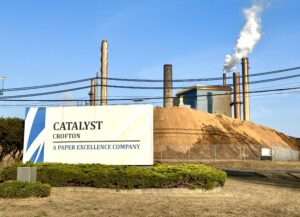 For Crofton mill workers it was like getting a lump of coal in their stockings. Last week owners of the Domtar pulp mill announced they were shuttering the operation …Who and what is to blame is a complicated tangle, encompassing questions about the future of the forest industry in this province. …While we must confront these questions, the closure also highlights the dangers of community dependence on a particular operation, or even industry. While the workers will, of course, be the most affected, North Cowichan residents will also feel the pain from the mill closure, as it is the municipality’s single biggest taxpayer. ….We can all hope that there will still be a future for the Crofton mill site… but that’s in no way a given. The municipality will be facing some very difficult decisions about services and what it can afford. The larger community will also feel the loss of all of those well paying jobs.
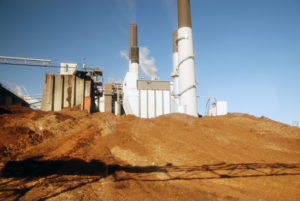 NANAIMO — Exploratory discussions around potentially restricting industrial business activities in Nanaimo irked representatives of Nanaimo Forest Products (NFP), which operates Duke Point’s Harmac Pacific pulp mill. The narrowly approved Nov. 17 notice of motion from Nanaimo city councillor Paul Manly. …Harmac Pacific is actively attempting to rezone a pair of adjacent Phoenix Way lots involving a combined 244 acres bordering Cedar’s Cable Bay Trail. “If this bylaw were to become a reality, it would threaten the ability of our business to continue. …Mayor Leonard Krog is heavily opposed to the motion. “This motion basically says to anyone who wants to invest in this community ‘Don’t bother going to Nanaimo, don’t bother worrying about whether the land is zoned for heavy industry because Nanaimo wants to limit everything that might actually create some real jobs…’” …Harmac Pacific employs roughly 340 employees at its specialty pulp operation, which features a unique employee-owned ownership model.
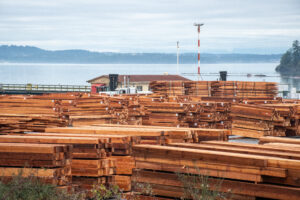 Many laid-off workers at Western Forest Products’ Chemainus sawmill are increasingly frustrated with the company for the delays in the reopening of the mill, and with the state of the coastal forest industry overall. Brian Bull, Randy Robertson and Robert Joyce, who collectively have 95 years working in the forest industry, have been laid off since WFP temporarily curtailed operations at the mill on June 18. WFP recently announced that the shutdown at the mill, which employees approximately 150 workers, would extend into 2026 due to poor market conditions, high American lumber tariffs, and log-supply issues. Robertson said the company has not given the workers any indication of when the mill will reopen. …Bull said the mill’s workers’… employment insurance benefits are running out and they’re only making about half of the money they make at the mill even with the EI benefits.
 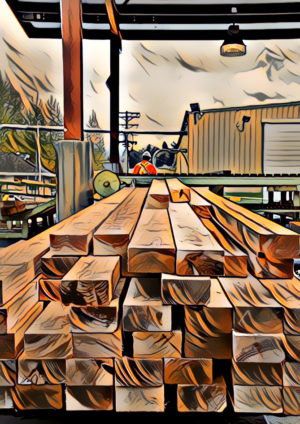 The Scierie St-Elzéar in Quebec, Canada, isn’t just a lumber mill; it’s a glimpse into the future of forestry. A $32.7 million investment in modernization, particularly in artificial intelligence (AI) and automation, is transforming the 80-year-old cooperative into a highly efficient, technologically advanced operation. …The core driver behind this shift is a growing labor shortage. …The St-Elzéar mill has reduced the number of personnel needed for planing operations from 16 to 8, while tripling productivity and boosting product quality by nearly 50%. This isn’t about replacing workers; it’s about shifting their roles. …The integration of AI isn’t limited to a single process. At Scierie St-Elzéar, AI-powered systems now identify wood species, allowing for the creation of more homogenous lumber batches for drying – a critical step in quality control.


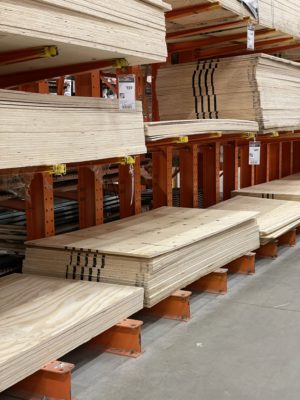 Plywood importer InterGlobal Forest, which is seeking a rehearing of its case challenging CBP’s finding that it evaded antidumping and countervailing duties on plywood from China,
 The Court of International Trade on Dec. 18 again
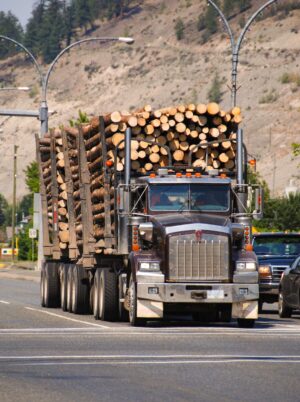 Maine timber companies are in line to receive substantial incentives to manage forests and grow healthier, more valuable trees. A $32 million award to the New England Forestry Foundation was recently finalized by the US Department of Agriculture. The funding package, through the Advancing Markets for Producers initiative, replaces similar funding provided under the “climate smart commodities” program. While there are some adjustments to the program, it achieves the same purpose, according to the foundation Deputy Director Andi Colnes. The grant will largely subsidize commercial and pre-commercial thinning, Colnes said. It will also provide funding to expand market opportunities, particularly for mass timber construction, she added. …According to Colnes, the program is able to cover about 50,000 acres of New England forests, mostly commercial timberland in Maine. The foundation said 23 commercial, conservation and public forest owners are already enrolled in the project.
 NORTH CAROLINA — After reviewing public comments, the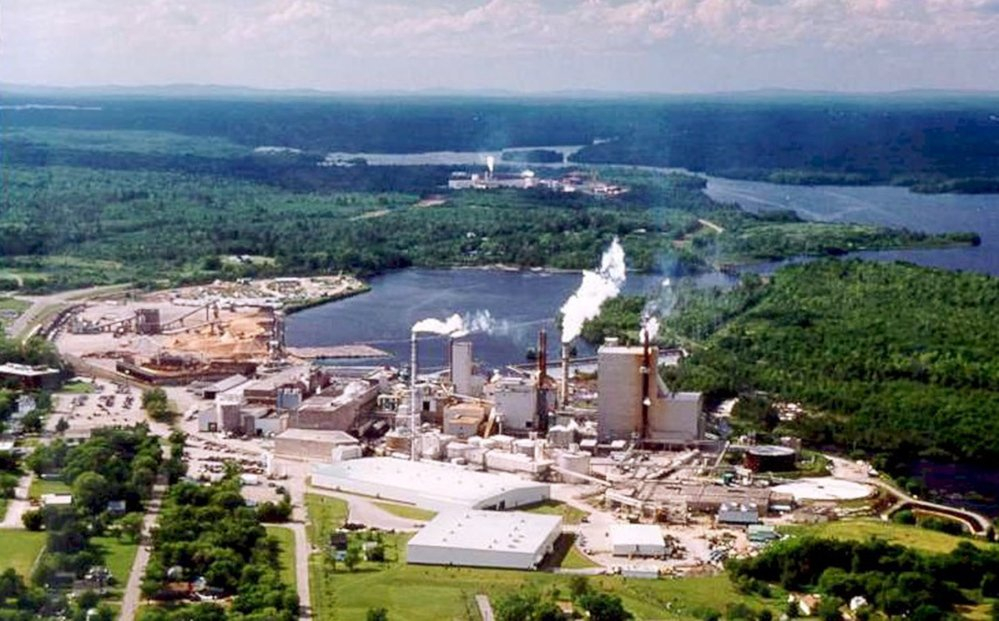
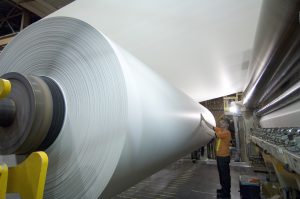 China’s pulp and paper sector is witnessing transformative growth with Huatai Group’s announcement of its monumental 16-billion-yuan investment in a fully integrated forest-pulp-paper project located in Yulin, Guangxi.
 President Trump’s tariff and trade policies dominated the world’s political discourse through 2025. …The good news is that the BC economy has been fairly resilient through 2025. …BC trade resilience can also be attributed to a broader export commodity mix, dominated by forestry, agricultural and seafood products, as well as mining and oil and gas. …Forest products were tagged with a sectoral tariff of 10 per cent in October 2025, on top of new anti-dumping and countervailing tariffs on softwood lumber. …This has put tremendous pressure on an industry. …It’s difficult to disentangle the impact of tariffs from overall adverse trends in the BC forest industry, many mill closures and curtailments in recent years. BC forestry exports are among the most exposed to the US market, with about 75% of forestry exports headed south. Exports of softwood lumber were down 26% in August 2025 compared to August 2024. Pulp and paper exports were also down 9% on a year-to-date basis compared to 2024.





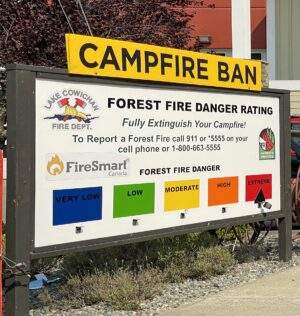 In 2025, the BC Wildfire Service (BCWS) worked tirelessly with people and communities to fight wildfires and build community resilience throughout the province. “We’re coming off our second-worst wildfire season in Canadian history,” said Ravi Parmar, Minister of Forests. “From technology to equipment and training, all to protect people and communities, the BC Wildfire Service has shown us that they are a global leader in wildfire work. Thanks to the dedicated members working tirelessly to fight the threat of wildfire. In 2026, we will raise the bar even higher. …Since April 1, 2025, more than 1,350 wildfires burned an estimated 886,360 hectares of land in B.C. The 2025 season compared to the past five years:
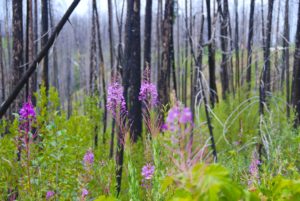 VICTORIA — The BC government says cutting red tape has allowed provincial pulp mills to more than double their use of timber salvaged from forest fires. The Ministry of Forests says in a statement that mills processed more than one million cubic metres of wildfire chips in 2024-25, up from 500,000 cubic metres in 2023, and representing about seven per cent of all processed wood. Forests Minister Ravi Parmar says that BC can’t let anything go to waste, including logs that have been burned in wildfires.” The statement says pulp mills rarely accepted burned timber before 2022, but both government and industry recognized the opportunity of turning wildfire-affected fibre into wood chips. It says that faster permitting and stronger partnerships between government and industry made it even easier to use that type of timber and the work will continue in 2026.
 The BC Conservative leader fostered fear and falsehoods in his
 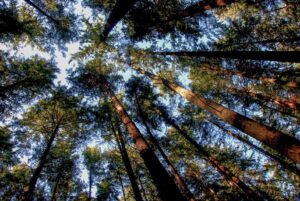 Over an hour of discussion followed BC Timber Sales’ (BCTS) presentation at the Sunshine Coast Regional District’s (SCRD) Dec. 11 committee of the whole meeting. …BCTS representatives, a delegation at the committee meeting, faced a direct ask from Gibsons area alternate director Annemarie De Andrade to pause harvesting activities on TA0519, in the Gibsons aquifer recharge area pending further study of the impacts of such logging. “We can continue to listen and continue with a light footprint, but we cannot pause,” was the response from BCTS’s Chinook Business Area timber sales manager Stacey Gould. She explained BCTS has a role as a revenue generator for the province. …That “lighter” BCTS footprint… is havesting about half of the volume it is permitted to on the lower Sunshine Coast. To make up for that, higher levels of harvesting need to be undertaking in other locations.
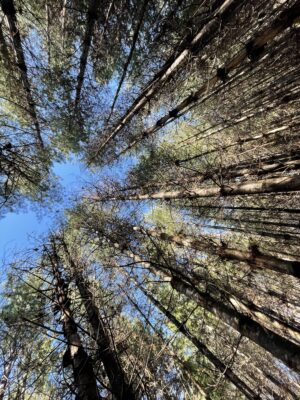 QUEBEC — A rare old-growth forest in Quebec’s Mauricie region is at the centre of a growing conflict between conservation advocates and the provincial government, after forestry roadwork was authorized in an area currently under review for protected status. The forest, known as the Grandbois Lakes forest, is located near Sainte-Thècle, in the Mékinac Regional County Municipality, northeast of Shawinigan. Composed largely of red spruce trees, the ecosystem is considered one of the last intact forests of its kind in southern Quebec. Despite its ecological value, the Ministry of Natural Resources and Forests has approved the construction of a winter road through part of the forest — a step that could lead to logging in the coming months. The roadwork is slated to be carried out by the forestry company Forex Langlois. …Environmental groups and local residents gathered to oppose what they say is a threat to an irreplaceable ecosystem.
 USDA on Monday published a notice in the Federal Register looking to update the reporting requirement for foreign land ownership under the Agricultural Foreign Investment Disclosure Act (AFIDA). …The proposed changes come as Congress and state lawmakers have demanded more updates and better reporting on foreign ownership from USDA, spurred mainly by Chinese ownership of agricultural land. …USDA’s latest report on foreign agricultural land holdings shows people from outside the country own nearly 45 million acres of land, as of the end of 2023. That takes up about 3.5% of all privately-held agricultural land. Foreign holdings also increased by more than 1.5 million acres from 2022. Nearly half of foreign land holdings, 48%, are forest land, with 29% being cropland and 21% pastures. Canadian investors make up about one-third of all foreign holdings, or 15.3 million acres, followed by the Netherlands, Italy, the United Kingdom and Germany.
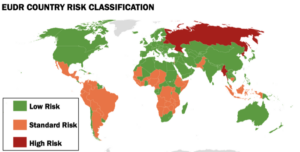 The EU Deforestation Rule has already caused supply chain hurdles for American farmers, ranchers and foresters, and the rule has not even begun being enforced. EU farmers themselves have raised concerns over their compliance requirements and received additional flexibilities, and member governments are still navigating how to implement the complex auditing system. With these logistical challenges clear even to EU officials, the European Commission has voted to once again delay the rule’s implementation until 2026 and 2027 for large and small businesses, respectively. However, as long as the rule stands as currently drafted, agricultural supply chains will be strained from the looming enforcement deadline. Overall, the EU fails to recognize the long-standing position of American farmers and ranchers as global leaders in agricultural production with environmental stewardship. A rule that was originally targeted to penalize bad actors in the global marketplace has now hindered some of the most productive producers in the world.
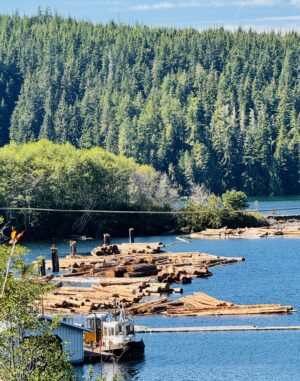 OREGON– The Bureau of Land Management’s state office in Oregon increased its timber sales in 2025, leading to one of its largest years for sales by board-feet and dollars in decades. The increase coincides with a provision of the tax and spending bill approved by Congress in July, that requires BLM to increase the timber it makes available for harvest by 20 million board-feet each year through 2034. BLM data show that the timber sales through the office totalled 290.6 million board-feet this year, an increase of 66.8 million from the previous year. …2025 was the third-highest year for BLM timber sales through the Oregon office by both board-feet and sale price, topped only by 2019 and 2021. Sales this year brought in $63.7 million.

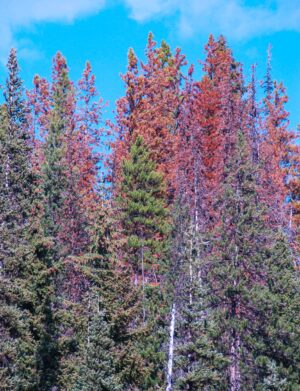 DENVER — Vast swaths of the ponderosa pine forests that blanket Colorado’s Front Range mountains could turn rust-colored and die over the next five years as pine beetles begin to spread aggressively, new federal forecasts show. Aerial surveys conducted by the U.S. Forest Service over the last year found evidence of rapidly spreading beetle infestations along the mountains and foothills that stretch from southern Larimer County to southern El Paso County, including the western flank of metro Denver. Already, pockets of dead trees are visible from Interstate 70 and U.S. 285. The rapid uptick in beetle-killed trees near the state’s largest cities and major highways prompted state leaders to form a task force this month to grapple with the outbreak. Gov. Jared Polis
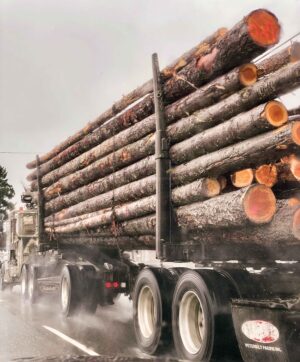 STARKVILLE, Mississippi — For all the major investments and structural changes in 2025, marked by significant sawmill expansions, shifting market dynamics and continued pressure in the pulp and paper sector, Mississippi’s timber industry observed limited monetary change. The state’s total timber value for 2025 is estimated to be $1.47 billion, which is down 1% from last year. This year’s harvest amounted to 36.4 million tons of timber products, which is down slightly from last year based on timber severance tax receipts. The value of standing timber paid to landowners as stumpage was $660 million, a 9% decline from 2024. The harvest and trucking industries, however, added $807 million to timber’s value in 2025, which was 7% more than last year. Eric McConnell, associate professor of forest business, said the industry experienced a sizable increase in the small pine sawtimber. …The forestry industry also faced pulp and paper headwinds.
 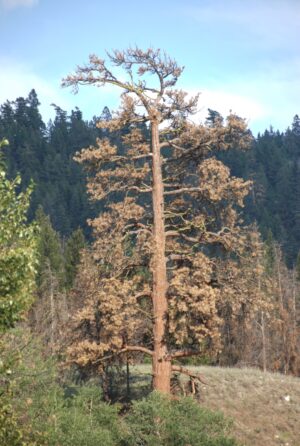 Australia’s trees must contend with many lethal factors, from intense megafires to introduced diseases and invasive species. But beyond these specific pressures, new research indicates the underlying natural death rate of trees in major forests across the country is rising. This increase in tree deaths is due to higher average temperatures from climate change, according to a study
  NEW YORK, NY – Mercer International announced that its subsidiary, Mercer Peace River Pulp (MPR), and Svante Technologies (Svante) have commenced operation of a previously announced carbon dioxide (CO₂) capture demonstration unit at the Mercer Peace River pulp mill in northern Alberta. The pilot project is designed to evaluate Svante’s solid sorbent carbon capture technology on biogenic CO₂ emissions from the mill’s recovery boiler flue gas. As a cost-efficient step, this stage builds on the previously announced Front-End Engineering and Design Phase 2. …“Commissioning this demonstration unit… allows us to evaluate carbon capture performance in our operating environment and gather practical data on what would be required for any future scale-up,” said Bill Adams. “The results from this on-site demonstration will help us evaluate the decarbonization potential of this technology for biogenic emissions and inform longer-term planning across our pulp operations.”
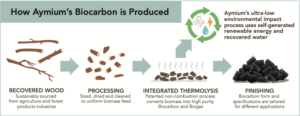 Weyerhaeuser, America’s largest private landowner, said it has launched a venture to turn runty trees and sawdust from its fleet of mills into a replacement for metallurgical coal used in steel making. The forest-products company said it expects production to begin in 2027 at a facility being built next to its sawmill in McComb, Mississippi—the first of several biocarbon plants planned by Weyerhaeuser and partner Aymium. It is the latest effort to find a market for the trees too small or otherwise unsuitable for making lumber. Such wood has typically been sent to pulp and paper mills, but U.S. wood-pulp consumption capacity has plunged due to waning paper demand. …Stockfish said he envisions the venture with Aymium operating as many as 10 or 11 biocarbon production facilities across Weyerhaeuser’s U.S. properties. …Aymium CEO James Mennell said the company’s process works with all species of wood as well as agricultural residues. [to access the full story a WSJ subscription is required]
 WISCONSIN — Hayward is the “first choice” for a German company considering building a $1.5 billion plant to convert wood and wood waste into sustainable aviation fuel, but the company also is talking to Minnesota, Michigan and other states, said Matthias Mueller, CEO of Synthec Fuels. …Hayward has good access to energy and to rail and highway transportation, it is not far from the Minneapolis and Chicago airports, and it is home to Synthec’s partner Johnson Timber, Mueller said. European investors have committed to providing $1.5 billion to build that plant, but Wisconsin lawmakers are working to make the state more attractive with the Forestry Revitalization Act that would provide $210 million in tax credits and loans. …The proposed plant annually would use 890,000 tons of woody biomass to produce 48 million gallons of sustainable aviation fuel.
  Last year will be remembered as a real test of commitment for the global sustainability agenda. Political uncertainty and regulatory rollbacks, particularly the weakening of flagship EU legislation such as the Corporate Sustainability Reporting Directive and yet another delay in enforcing the European Union Deforestation Regulation, signal a troubling loss of resolve. These decisions reward inaction and deter the very ambition needed to secure long-term economic and environmental resilience. But the crisis of nature loss should not be left to the shifting winds of policy; it requires businesses to step forward and lead the way. As we enter 2026, a pivotal triple-COP year for climate, biodiversity and desertification, it’s time to look past the political noise. While compliance meets today’s requirements, only a deeper commitment to the environment can protect a business against the lasting costs of nature loss.