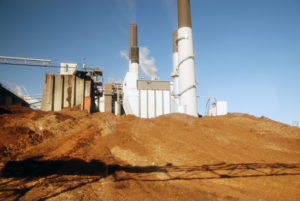
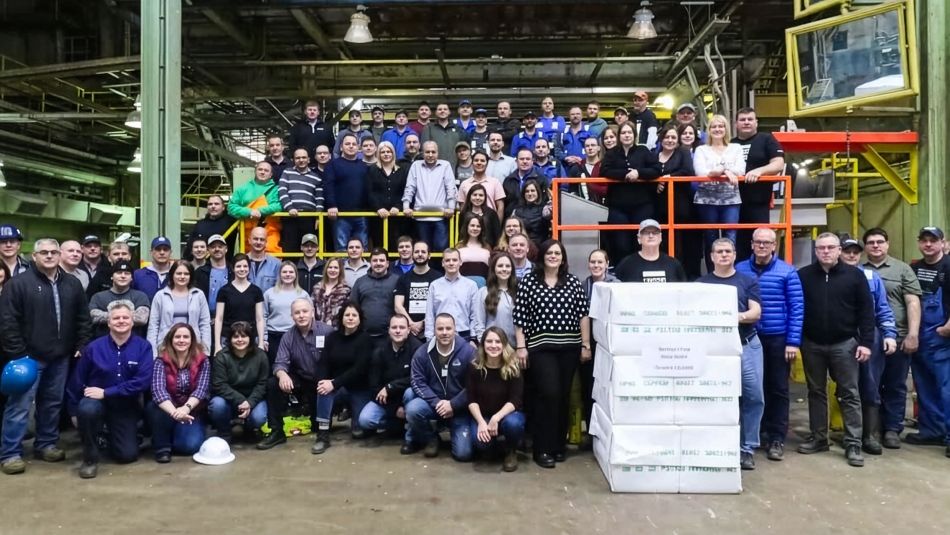
 When the City of Nanaimo tabled a zoning amendment to Bylaw 4500 that could effectively change the heavy industry zoning in Nanaimo on Nov. 17, there was one main target: Nanaimo Forest Products. NFP owns Harmac Pacific, ‘the little pulp mill that did,’ which continues to pay around 350 full-time employee-owners while maintaining consistent profitability, and is a major Vancouver Island success story. They’ve done that thanks to an employee ownership model that sees workers share in its profits, as well as clever leadership which has made several key investments. …One of NFP’s key strategic moves was purchasing the 61 hectares adjacent to Harmac, which is industrial land. Developing that will benefit NFP and its worker-shareholders, companies that want to set up business in Nanaimo with ocean access, Harmac employees and taxpayers.
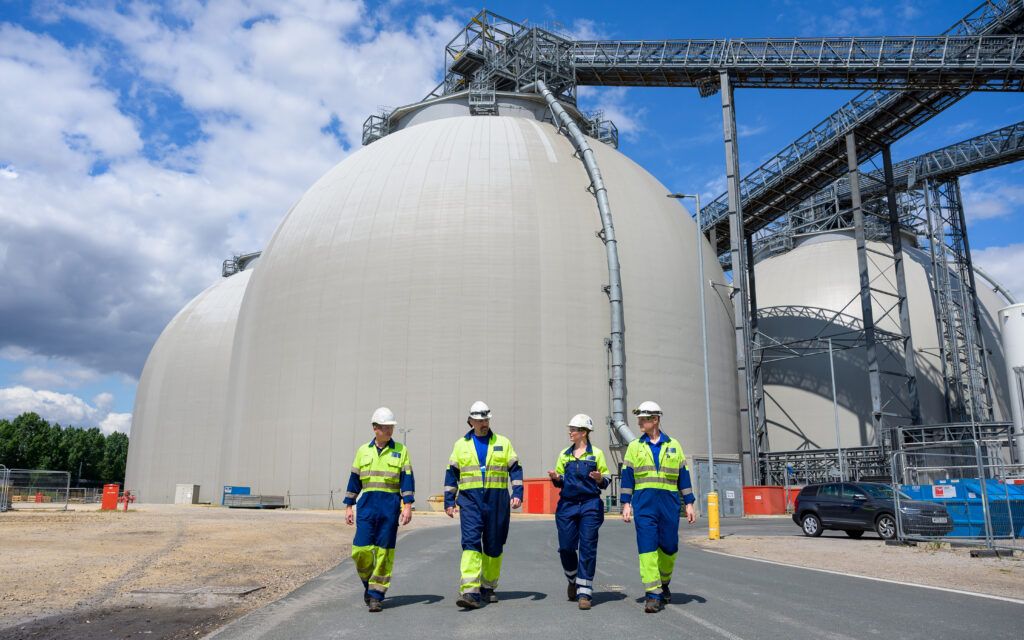
The anti-Harmac bylaw specifically targets bio-mass/cogeneration, thermal electricity generation from fossil fuels or biomass, liquefied natural gas, petroleum refineries, and anything else that might produce a whiff of emissions. Not to mention that Harmac uses biomass to supply most of its energy needs and they use 100 per cent biomass to produce all of the electricity it supplies to BC Hydro. It would make sense that future operations should include similar companies as fuel costs rise. The original goal of having Harmac where it is – and Duke Point – was to move the industrial land out of town where exhaust wouldn’t impact local residents. This motion aims to curtail that. …NFP has been progressive in its thinking and pro-active in its movements. Jobs on that site will be good for them and for the local economy. An expanded industrial tax base could be expected to keep residential taxes lower.


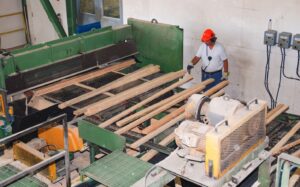 “We’re just waiting for the dust to settle.” That sentiment was expressed recently by Nick Arkle, CEO of Gorman Bros., regarding the current 45% tariff on Canadian lumber exported to the US. In other words, what the industry is seeking more than anything else is clarity. …Complicating this scenario for lumber producers—and one that should not and cannot be overlooked—is provincial government policy, especially in BC, Ontario and Quebec. …If there is a potential silver lining in Canada to the ongoing tariff soap opera, it’s the promise by the Canadian Liberal government to build 500,000 new, affordable homes per year, thus theoretically creating significant domestic demand for building materials like softwood lumber. …While the experts are skeptical that the federal government will meet its goal of building 500,000 new homes per year… it will be worthwhile watching to see if Canadian softwood lumber producers will step up and benefit from this initiative.
 Hopes for relief on the tariffs front are likely on hold until the new year now that the US Supreme Court has adjourned for the holiday season before ruling on the matter of President Trump’s illogical and, likely, illegal trade tariffs. Their decision could come in January, which is a long wait for affected economies around the world. …It took just 35 days for lower courts to decide Trump’s use of the act for tariffs was invalid, which he appealed. …Rampant speculation is outlined by Daniel Schramm In the Missouri Independent: “
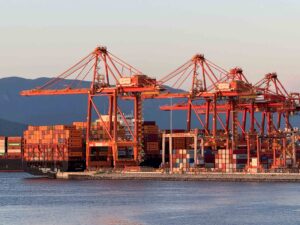 Canada-US Trade Minister Dominic LeBlanc says the door is open for American officials to restart trade talks with Canada. …”Canada believed it was making progress with the Americans — and talks would eventually move to automobiles and softwood lumber — but Trump “decided to suspend those negotiations. That’s regrettable.” …Canadian, American and Mexican officials are gearing up to review CUSMA, which offers Canada crucial protection from many of U.S. President Donald Trump’s tariffs. …On Thursday, Canada’s ambassador to the U.S. Kristen Hillman downplayed signals from the Trump administration about breaking down the trilateral pact and said she hasn’t “heard any indication from the US side that they want to change that foundation.” …All three countries must indicate by July 1 of next year whether they want to extend the agreement, renegotiate its terms or let it expire. LeBlanc said in private the conversations are “much more reassuring” about CUSMA.
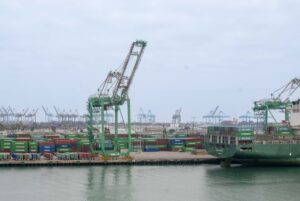 The Office of the US Trade Representative (USTR) held a hearing regarding the six-year review of the United States-Mexico-Canada Agreement (USMCA). Though some stakeholders advocated for maintaining the current framework, many called for targeted updates. Despite varied perspectives, there was broad consensus that USMCA should be preserved. Transshipment and circumvention of Section 232 tariffs emerged as recurring concerns, particularly from the automotive, steel and aluminum, and wood and lumber sectors. …Stakeholders from the wood products, millwork and cabinetry industries raised serious concerns about how USMCA’s current rules of origin are being exploited to circumvent U.S. trade remedies and undermine domestic manufacturers. …The organization’s representative urged the adoption of Labor Value Content (LVC) rules for wood products modeled after those used in the automotive sector to ensure that qualifying goods reflect substantial North American production and fair labor practices.
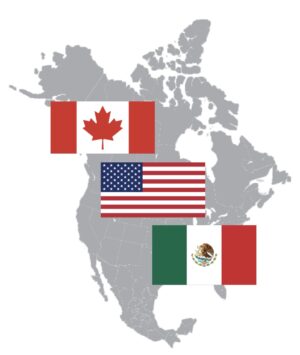 The negotiations that remade the North American Free Trade Agreement were, as one participant put it, a series of “near-death” experiences. …In the years since the U.S.M.C.A was signed, Mexico and Canada have become America’s top trading partners. Millions of jobs depend on this economic alliance, which exceeds $1.8 trillion in trade. …Last week, Trump suggested that he would exit the U.S.M.C.A.: “We’ll either let it expire or, well, maybe work out another deal with Mexico and Canada.” Some observers discount Trump’s bluster as mere gamesmanship. …He returned to the White House on a promise to create jobs and lower prices—to make the country “boom like we’ve never boomed before.” Instead, tariffs are fuelling inflation, and many experts believe that it is only a matter of time before the economy starts hemorrhaging jobs. …As in the previous round of negotiations, time does not appear to be on Trump’s side.
 As US President Trump sticks with his campaign of tariffs on imports from Canada, some American industries are accusing Canadian competitors of using cheap materials from China in ways that violate free trade rules and undercut U.S. companies. The accusations emerged during recent public hearings in Washington into the future of the Canada-U.S.-Mexico Agreement (CUSMA). …Luke Meisner, counsel for the American Kitchen Cabinet Alliance, told the hearings that Canada and Mexico have become conduits for products from China, circumventing the hefty countervailing duties the US imposed on Chinese-made cabinets and materials in 2020. …Over the past five years, Canada “dramatically increased” its imports of made-in-China cabinets and cabinet materials — such as plywood, medium-density fibreboard (MDF) and moulding — while at the same time boosting exports of finished cabinets to the US, Meisner said. …The Canadian Kitchen Cabinet Association defends its products as Canadian-made.






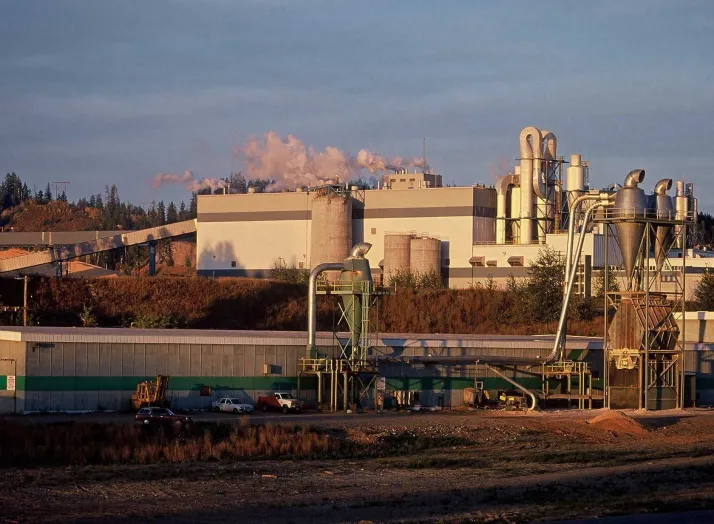
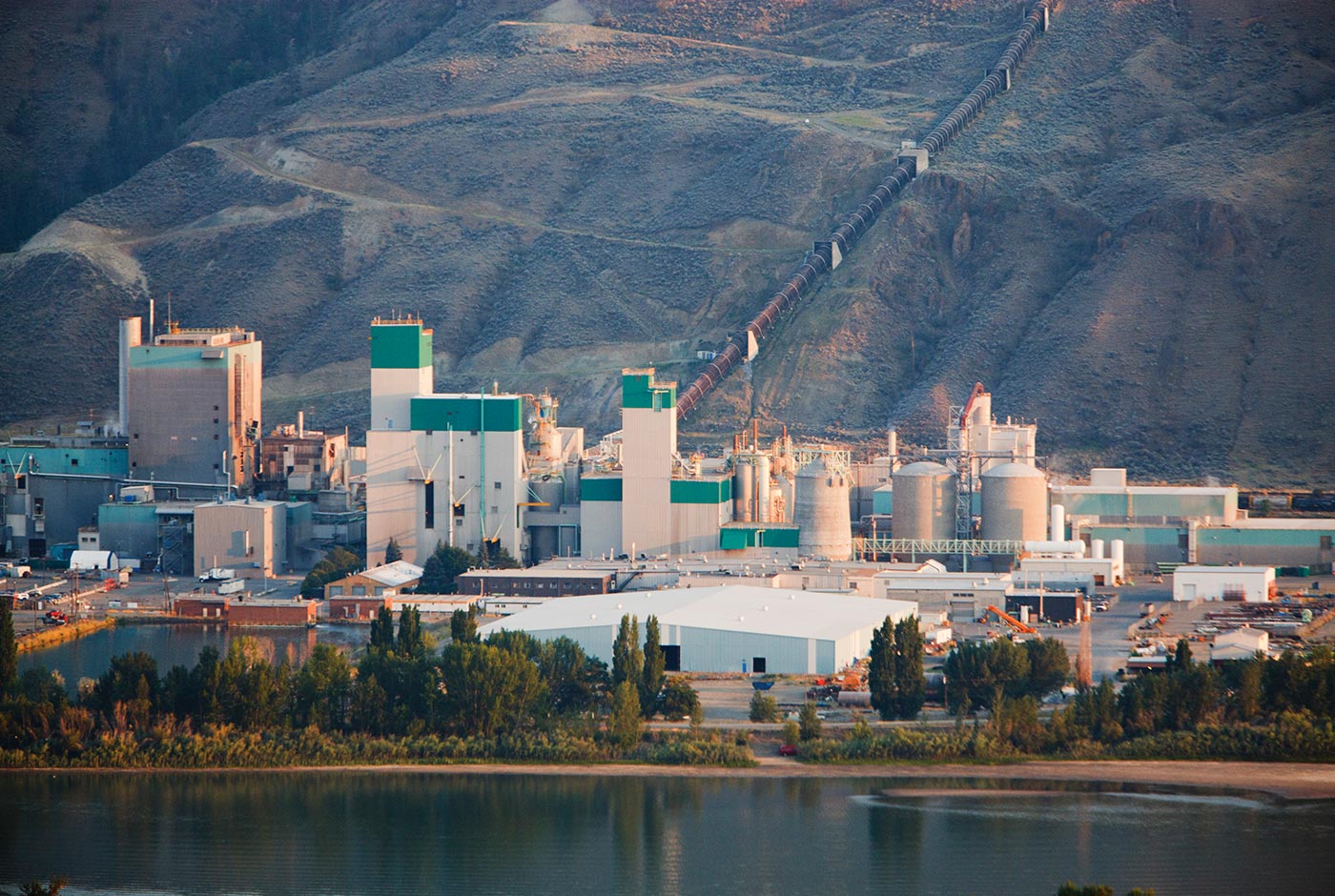
 Western Forest Products says the temporary curtailment at its Chemainus sawmill will extend into the new year, while work slowdowns are expected at its other mills across Vancouver Island in December. The WFP curtailment in Chemainus began in June, affecting about 150 workers, with work yet to resume. …Meanwhile, reduced hours are expected at other work sites on the Island later this month. “In the latter half of December, we will take temporary downtime at our Saltair mill in Ladysmith, Duke Point mill in Nanaimo, and Cowichan Bay mill in Duncan,” said Babita Khunkhun, senior director of communications at WFP. “This will involve reduced operating hours, an extended holiday break and adjusted shift schedules.” Khunkhun says regular operations are expected to resume at all of those mills – except for Chemainus – on Jan. 6 “depending on market conditions and available log supply.”










 The
The 

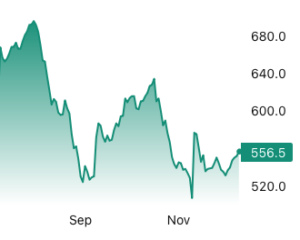 Lumber futures traded above $550 per thousand board feet as markets absorbed a dovish turn from the Federal Reserve that brightened the demand outlook for construction materials. The Fed’s widely anticipated 25bp cut and Chair Powell’s dovish rhetoric pushed traders to price additional easing next year, which should put downward pressure on mortgage rates and lift homebuilding and renovation activity. Those interest rate dynamics have heightened the incentive for builders and distributors to restock, while persistent tariff and trade frictions have constrained supply. Canadian log exports are down year to date even as shipments into the US have risen, Canadian manufacturing output has slipped and US lumber exports are lower, a mix that reduces available millfeed and forces buyers to compete for the supplies that remain.
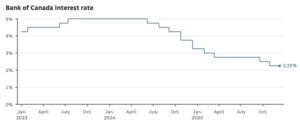 The Bank of Canada is holding its key interest rate at 2.25%, a move that was widely expected after an encouraging round of third-quarter data showed the Canadian economy has withstood some trade war-induced turmoil. Central bank governor Tiff Macklem wrote in his opening remarks that the current rate is at “about the right level” to give the economy a boost while also keeping inflation close to its 2% target rate. Canada’s economy proved more hardy than expected in the third quarter, with GDP and jobs growth beating expectations, and the unemployment rate dropping to 6.5% in November. Inflation is hovering just above 2%, and the Bank of Canada’s core measures of inflation are trending closer to 3%. While the steel, aluminum, auto and lumber sectors have been pummelled by US tariffs, which is weighing more broadly on business investment, “the economy is proving resilient overall,” Macklem said.
 Nonfarm payrolls grew slightly more than expected in November but slumped in October while unemployment hit its highest in four years, the Bureau of Labor Statistics reported Tuesday in numbers delayed by the government shutdown. Job growth totaled a seasonally adjusted 64,000 for the month, better than the Dow Jones estimate of 45,000 and up from a sharp decline in October. The unemployment rate rose to 4.6%, more than expected and its highest level since September 2021. A more encompassing measure that includes discouraged workers and those holding part-time jobs for economic reasons swelled to 8.7%, its peak going back to August 2021. In addition to the November report, the BLS released an abbreviated October count that showed payrolls down 105,000. While there was no official estimate, Wall Street economists were largely expecting a decline following a surprise increase of 108,000 in September.

 ATLANTA — Home Depot gave a cautious outlook for fiscal 2026 as the housing market continues to lag. Shares of the home-improvement retailer fell 2.4% to $341.62 in premarket trading on Tuesday. The company expects sales to rise between 2.5% to 4.5% in fiscal 2026, the midpoint of which is up from its guidance for 3% growth this fiscal year. Analysts polled by FactSet were looking for growth of 4.5%. …Home Depot said it expects those metrics to rise at a faster clip if the housing market gains momentum and there is increased spend on larger projects, driven by pent-up demand. The Atlanta company’s market-recovery case forecasts sales will grow about 5% to 6%, earnings per share will increase about mid- to high-single digits and comparable sales will be up 4% to 5%. “We believe that the pressures in housing will correct and provide the home improvement market with support for growth faster than the general economy”.
 The US Federal Reserve is poised to deliver its third straight interest rate cut Wednesday, while simultaneously firing a warning shot about what’s ahead. Following a period of remarkable indecision about which way central bank policymakers would lean, markets have settled on a quarter-percentage point reduction. If that’s the case, it will take the Fed’s key interest rate down to a range of 3.5% to 3.75%. However, there are complications. The rate-setting Federal Open Market Committee is split between members who favor cuts as a way to head off further weakness in the labor market and those who think easing has gone far enough and threatens to aggravate inflation. That’s why the term “hawkish cut” has become the buzzy term for this meeting. In market parlance, it refers to a Fed that will reduce, but deliver a message that no one should be holding their breath for the next one.
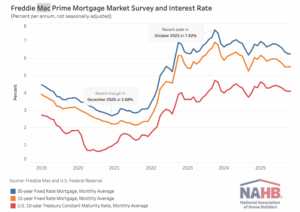 The average mortgage rate in November continued to trend lower to its lowest level in over a year. According to Freddie Mac, the 30-year fixed-rate mortgage averaged 6.24% in November, 2 basis points (bps) lower than in October. Meanwhile, the 15-year rate increased 3 bps to 5.51%. Both the 30-year and 15-year rates remain lower than a year ago, dropping by 57 bps and 52 bps year-over-year, respectively. …Falling mortgage rates have shown some impact on housing activity. Mortgage application activity continues to strengthen, led by increases in adjustable-rate mortgages and refinancing applications. Additionally, existing home sales rose to an eight-month high in October. There is no data available for new home sales in October due to the government shutdown.
 The Canadian Wood Council (CWC) welcomes the announcement made today by the Honourable Tim Hodgson, Minister of Energy and Natural Resources. The event celebrated funding for projects that strengthen Canada’s forestry sector and foster innovation in wood-based solutions. CWC received $8.5 million since 2023 to expand the use of wood-based products, broaden education on wood construction and contribute to the advancement of the National Building Code. …This funding has allowed CWC and its WoodWorks program to support design and construction professionals with expert resources, tools, and guidance that help accelerate the adoption of wood construction nationwide. As we continue this work, we will help catalyze sustainable demand for construction solutions that are not only innovative but also replicable and rapidly deployed, approaches that will help address Canada’s housing and affordability challenges at scale.
 Mark Latino is the CEO of Lee Display, a Fairfield, California-based company… that still makes artificial Christmas trees, producing around 10,000 each year. Tariffs shone a twinkling light this year on fake Christmas trees — and the extent to which America depends on other countries for its plastic fir trees. Prices for fake trees rose 10% to 15% this year due to the new import taxes, according to the American Christmas Tree Association, a trade group. Tree sellers cut their orders and paid higher tariffs for the stock they brought in. Despite those issues, tree companies say they aren’t likely to shift large-scale production back to the US after decades in Asia. Fake trees are labor-intensive and require holiday lights and other components the US doesn’t make. …About 80% of the US residents who put up a Christmas tree this year planned to use a fake one. …That percentage has been unchanged for at least 15 years.
 Dr. Richard Karban, a trained ecologist and member of the UC Davis Entomology Department… who covers an array of intriguing topics, from “eavesdropping” plants to distinct plant “personalities”, is fully aware of the controversy surrounding his field. But he emphasizes that plant communication isn’t a fantasy; it is a biological response to specific cues. …Decades ago, little was known about it. Today, many researchers, such as Dr. Karban, argue that forests are highly communicative biological networks. These are sophisticated behaviors, but Karban attributes them to evolution and natural selection, not hidden sentience. He cautions against projecting human emotions onto biology, but suggests that to understand plants, we must understand their version of a “Hierarchy of Needs.” …Dr Kathryn Flinn, an ecologist at Baldwin Wallace University, believes that while mycorrhizal networks move resources, this does not mean the tree sending those resources is making a strategic or selfless decision. …Another notion gaining attention is that of a ‘Mother Tree’ recognising family members.
 Band-aid solutions are not going to fix the flooding problems in the Chemainus River watershed, Chief James Thomas from the Halalt First Nation told North Cowichan’s council on Nov. 19. He said the watershed and its salmon are in jeopardy mainly due to logging practices that were conducted upstream in the watershed over the past 50 years. Thomas said the Halalt and its partners, who are working on finding solutions to the watershed’s issues, didn’t create the problem, they inherited it. There is general community consensus that gravel and sediment accumulation, scoured banks, and increased debris, largely from logging operations upstream, have increased in recent years causing extreme flooding downstream, including on Halalt reserve lands. …Thomas and Cheri Ayers from Waters Edge Biological Consultants made a presentation to council on the Chemainus Watershed Initiative. The initiative began following two flooding events in 2020 and 2021.
 Four people were arrested, one for the second time, at an old growth logging protest encampment in Upper Walbran, according to RCMP. On Sept. 12, a judge granted an injunction to Tsawak-qin Forestry, which is co-owned by Western Forest Products and the Huu-ay-aht First Nations. RCMP have been enforcing the injunction, going into the forest for the third time. On Dec. 8, RCMP says four men were arrested for allegedly breaching the injunction. One is being held for breaching release conditions from his arrest on Nov. 25. One person was arrested for criminal obstruction of police for allegedly resisting arrest. RCMP says when officers arrived on Dec. 8, they found “physical structures” had been set up on the only bridge leading to a work site where the employees needed access. …Solène Tessier said “Why would the Eby keep clearcutting ancient forests instead of protecting the communities that rely on this dying industry?”
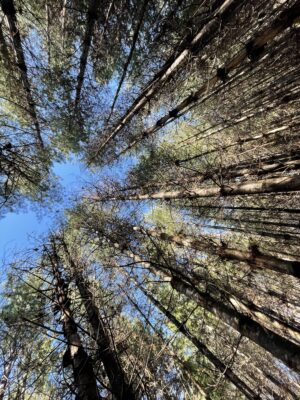 PRINCE GEORGE – Conservation North is calling out Premier David Eby for what they see as inconsistencies in his stance on old-growth logging. They highlight his opposition to logging old-growth forests to keep a Vancouver Island pulp mill running, while remaining quiet about the ongoing old-growth logging happening in the northern regions. …Conservation North argues that in central BC, nearly all the wood supplied to pulp and pellet mills still comes from primary forests, including old-growth areas. …The provincial government said “The interior of B.C. is home to a vast network of lumber sawmills, specialty wood manufacturing facilities, and pulp, paper, and pellet plants. This interconnected sector uses every part of the tree. …The pulp and paper sector is integral to this supply chain, buying lumber sawmill residuals, like sawdust, shavings, and chips, and harvest residuals like branches and bark. …The pulp and paper sector has also been leading the way in using wildfire salvaged wood.
 NOOTKA SOUND, BC — Optimism for the future of Chinook salmon is swimming up Muchalat River near the town of Gold River, BC in Mowachaht/Muchalaht First Nations (MMFN) territory. Kent O’Neill, of the Nootka Sound Watershed Society (NSWS), says he observed hundreds of fish using a newly restored gravel spawning pad this fall. …Navigating a storm of challenges from historical logging practices to droughty summers, Chinook salmon in the region were assessed as Threatened by the Committee on the Status of Endangered Wildlife in Canada in 2020. To revive local Chinook salmon stocks, a collective effort led by NSWS, Ecofish Research, a Trinity Consultants Canada team, MMFN and the Pacific Salmon Foundation (PSF) was hatched. …Western Forest Products (WFP) also played a major role by providing the gravel and access to the forest service roads. “We wouldn’t have been able to do this project without WFP,” said O’Neill.

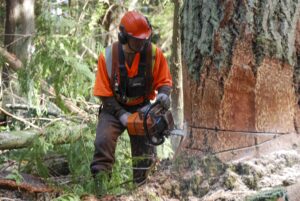 President Trump swept into office with a promise to ramp up the timber business on national forests. So far, they’re just treading water. The Forest Service reported relatively flat timber harvests and sales for the fiscal year that ended Sept. 30. …According to the agency’s cut-and-sold reports, national forests cut 2.52 billion board feet of timber for the fiscal year, down slightly from the 2.66 billion board feet cut during the last full fiscal year of the Biden administration. Sales volume totalled 2.95 billion board feet, a slight increase from the prior year but a drop from 3.08 billion board feet the year before that. The suppressed returns reflect some of the challenges in meeting Trumps’s directive to use national forests to reduce the nation’s reliance on wood imports. Those include wildfires, market conditions… and the Forest Service’s ability to set up and run timber sales after the administration whittled the workforce. [to access the full story, an E&E News subscription is required]
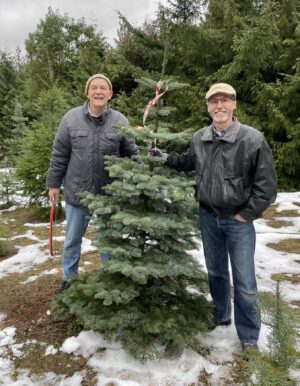 TEXAS — At Santa’s Christmas Trees in Grapevine, owner Kevin Keck has a simple motto: “Every tree deserves a home, and every home deserves a tree.” To keep people happy in a challenging economy, he has not raised his prices. …Part of why he’s able to keep his prices down is that his trees aren’t impacted by tariffs. “No, our trees come from Oregon, so they’re all United States-grown and shipped,” Keck said. “So, the tariffs won’t affect us any.”…But artificial trees are impacted. According to the National Christmas Tree Association, about 80% of fake trees in the US are manufactured in China. Some U.S. importers say those tariffs could raise the prices on trees by 10-20%. Keck thinks that the increase will make more people consider live trees.
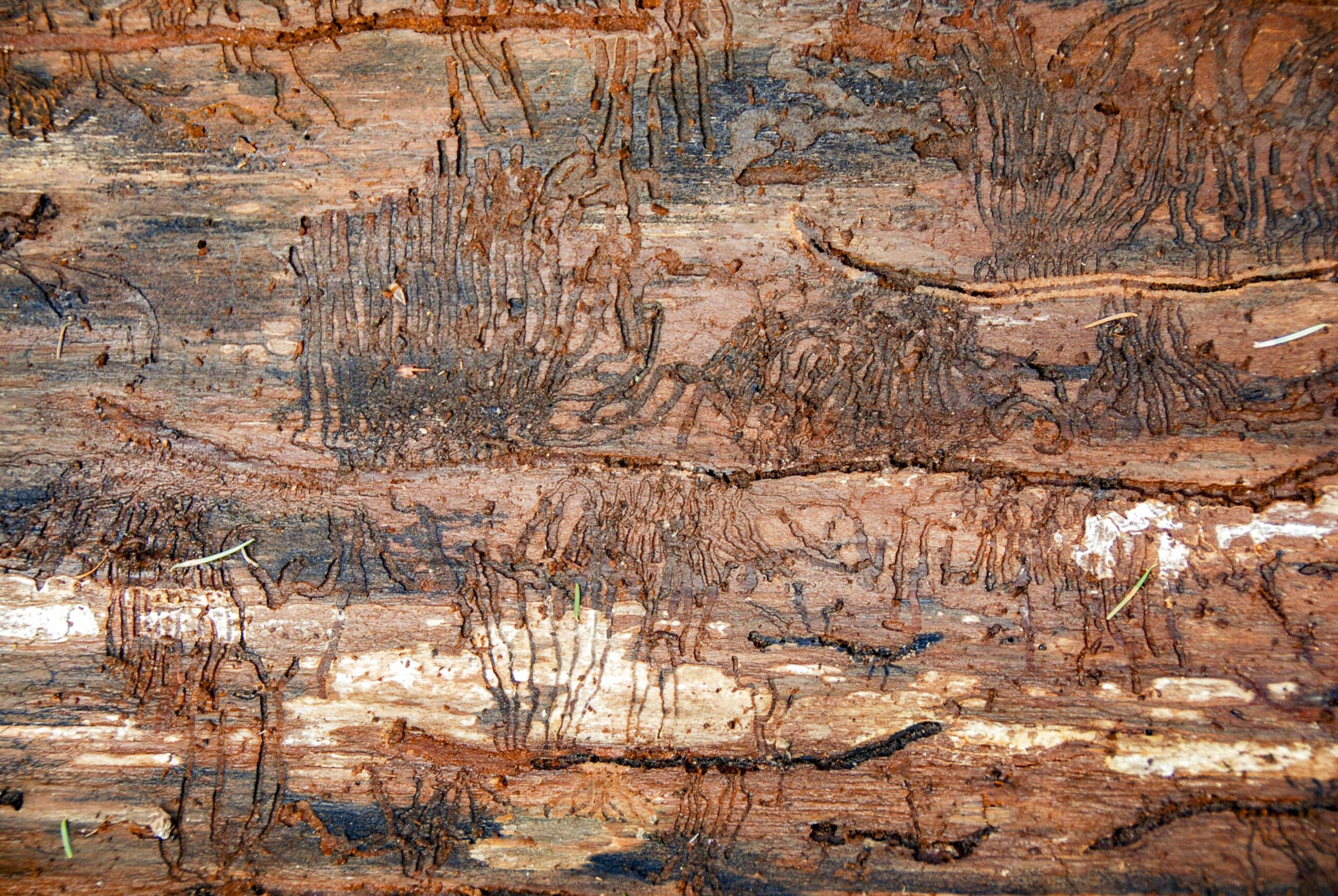 Gov. Jared Polis signed an
 WARREN COUNTY, Pittsburgh — Local leaders and timber industry professionals are hoping for an economic boost as logging increases in the Allegheny National Forest. The timber industry has strong roots in the four counties that contain the Allegheny National Forest: Elk, Forest, McKean, and Warren. With fewer than 150,000 residents, it’s a small enough region where almost everyone knows everyone else in the business. …“If you’re somebody who lives here, almost everybody is touched in some way by the timber industry,” said Julia McCray, at the Allegheny Forest Alliance, a coalition dedicated to the national forest’s health that includes local officials and people from the timber industry. As logging expands on federal lands amid a Trump administration push for more timber, the effects could be felt for years to come — in the forest and beyond. A single logging operation relies on a multi-step chain of work that employs many.