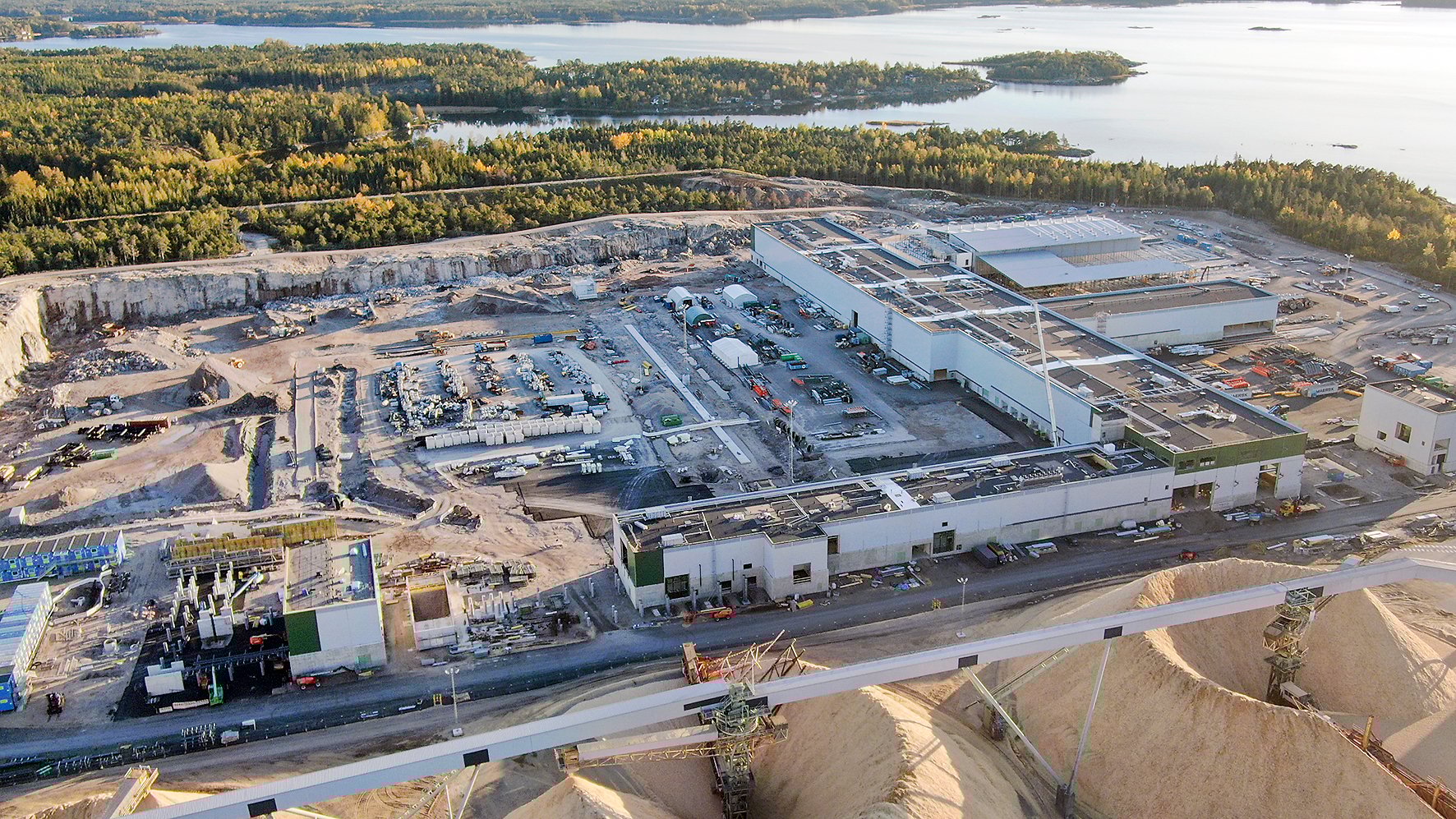
 BC Wood’s 22nd Annual Global Buyers Mission (GBM) opened in Whistler, BC on Friday morning, with Premier David Eby declaring the tradeshow floor open and underscoring the value-added sector’s critical role in British Columbia’s economy and its importance to international markets. …Nearly 600 participants attended this year’s gathering, including specifiers, government representatives, and international buyers from across Asia and beyond. BC Wood CEO Brian Hawrysh welcomed the attendees… and Board chairperson Kelly Marciniw of Zirnhelt Timber Frames, introduced the Honourable Premier of British Columbia, David Eby. …Eby emphasizing the importance of BC’s international buyers, pointing to his recent experience at Expo 2025 Osaka. …At the same time, he acknowledged the dual challenges of natural and man-made disruptions, from wildfires and the mountain pine beetle to softwood lumber duties.
“Our friends and allies in the United States, who remain friends and allies, but are under the leadership of an individual who somehow sees affordable BC timber products as a threat to the United States, at a time when the government is simultaneously recognizing a housing crisis in the United States and a need to improve affordability for people,” he said. He argued that Canada and the US have an opportunity to reset their relationship, suggesting that the $8 billion currently held in a tariff account could be used “to promote wood products across North America for a net win for everybody.”…Eby also outlined steps the provincial government is taking to support the industry, including a pause on stumpage payments. …”There are so many opportunities for us right now, and they are matched, unfortunately, by threats. But we will be successful as a group if we push together in ensuring we’re expanding those markets.”


 CORNER BROOK, Newfoundland — Kruger is going to resume operations in Corner Brook on Monday. The pulp mill shut down after the province instituted a province-wide fire ban in light of the wildfires and a high forest fire index. Their forestry operations resumed about ten days ago. In preparation for the restart, the company is actively rebuilding its wood inventory. The Deer Lake hydro plant will gradually resume operations starting today, gradually increasing until Tuesday. That will result in higher water flows and rising water levels in Deer Lake and the Humber River, both of which are currently at low levels. Kruger also noted that it is still waiting on a formal response to its diversification plan on the long-term sustainability of the operation. That proposal calls for financial involvement from the provincial government.
  Donald Trump has called on the European Union to hit China and India with tariffs of up to 100% to force Russian president Vladimir Putin to end the war in Ukraine. The US president made the demand during a meeting between US and EU officials discussing options to increase economic pressure on Russia. …Last month, the US imposed a 50% tariff on goods from India, which included a 25% penalty for its transactions with Russia. Although the EU has said it would end its dependency on Russian energy, around 19% of its natural gas imports still come from there. If the EU does impose the tariffs on China and India it would mark a change to its approach of attempting to isolate Russia with sanctions rather than levies.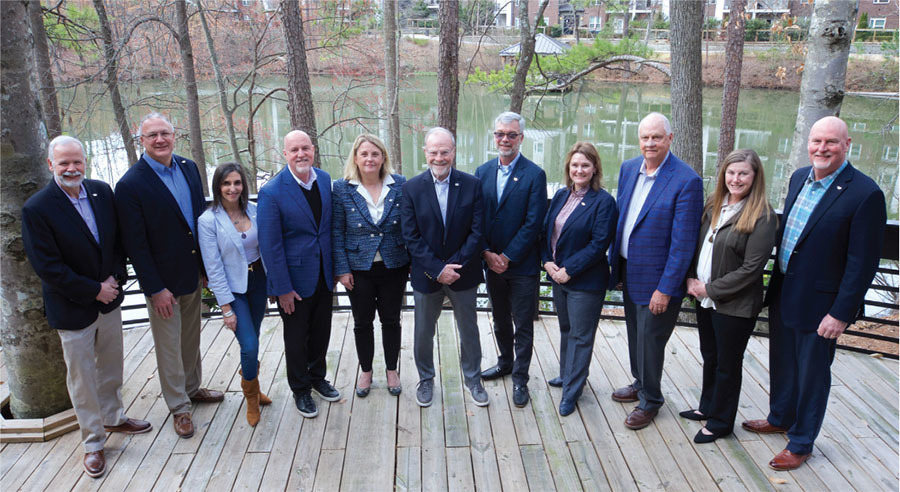


 EUGENE, Oregon — President Trump’s demand that the US increase timber output by a quarter is running into a math problem: Lumber companies may not make as much money on wood in the coming months. A steep drop in lumber futures prices nationally is jolting the wood products business just as the Trump administration is prodding the industry — including the government’s own forest managers — to ramp up production so the US doesn’t have to rely on imports. Futures prices on lumber at the end of last week dipped to $527 per MFBM, the lowest point in a year. For Weyerhaeuser, which operates a mill in Cottage Grove, Oregon, the pricing signal isn’t sounding alarms just yet. The mill’s in the middle of a multiyear modernization said representatives who figure the market is doing one of its usual seesaws. [to access the full story an E&E News subscription is required]
 SHERIDAN, Oregon — The Oregon Department of Environmental Quality (DEQ) has fined a Yamhill County wood treating company $1,055,825 for numerous violations of environmental regulations for water quality, hazardous waste and spill response and cleanup.

 BEMIDJI, Minnesota — The West Fraser wood engineering plant west of Bemidji was one of three companies to receive part of $4.2 million in business expansion grants from the state. The state’s Department of Employment and Economic Development stated in a news release that the three projects are expected to create or retain 587 jobs and leverage more than $270 million in private investment. West Fraser plans to renovate an existing building and improve the operating site in the small community of Solway. The operation there produces engineered wood products, such as OSB or particle board, that are used widely in construction and other industries. The project will receive more than $1 million in financing from the state’s Job Creation Fund, with the company expected to invest $137 million. The project is expected to retain 132 jobs.




 The Canada Mortgage and Housing Corporation (CMHC) released its
 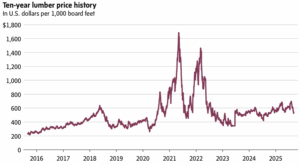 A “normal” annual softwood lumber price cycle sees prices dropping from Labour Day until early in the new year when buying starts again for the spring construction season. We are also expecting three interest rate cuts this year from the US Federal Reserve. With lower mortgage rates expected, will we see increasing demand for lumber? …The short term outlook for lumber prices continues to see weakness with price projections as low as US$450 per thousand board feet until the spring construction season. Looking into 2026 and 2027, prices are expected to recover to the mid-US$500 to low-US$600 per thousand board feet range. Ongoing duties, the upcoming court rulings on tariffs and the protracted housing shortage will all impact the price of lumber over the next two years. [to access the full story, a Globe & Mail subscription is required]
 Falling lumber prices are sounding an alarm on Wall Street about potential problems on Main Street. Wood markets have been whipsawed of late by trade uncertainty and a deteriorating housing market. Futures have dropped 23% since hitting a three-year high at the beginning of August and ended Friday at $535 per thousand board feet. The price drop might have been greater—but two of North America’s biggest sawyers said last week that they would curtail output, slowing the decline. Crashing wood prices are troubling because they have been a reliable leading indicator on the direction of the housing market as well as broader economic activity. …Analysts and traders say there will have to be further cuts to ease the glut of wood. That might not be a problem, given how higher duties have pushed up Canadian sawmills’ break-even prices while demand wanes. “We anticipate further closures or curtailments,” said Truist Securities analyst Michael Roxland. [to access the full story a WSJ subscription is require]


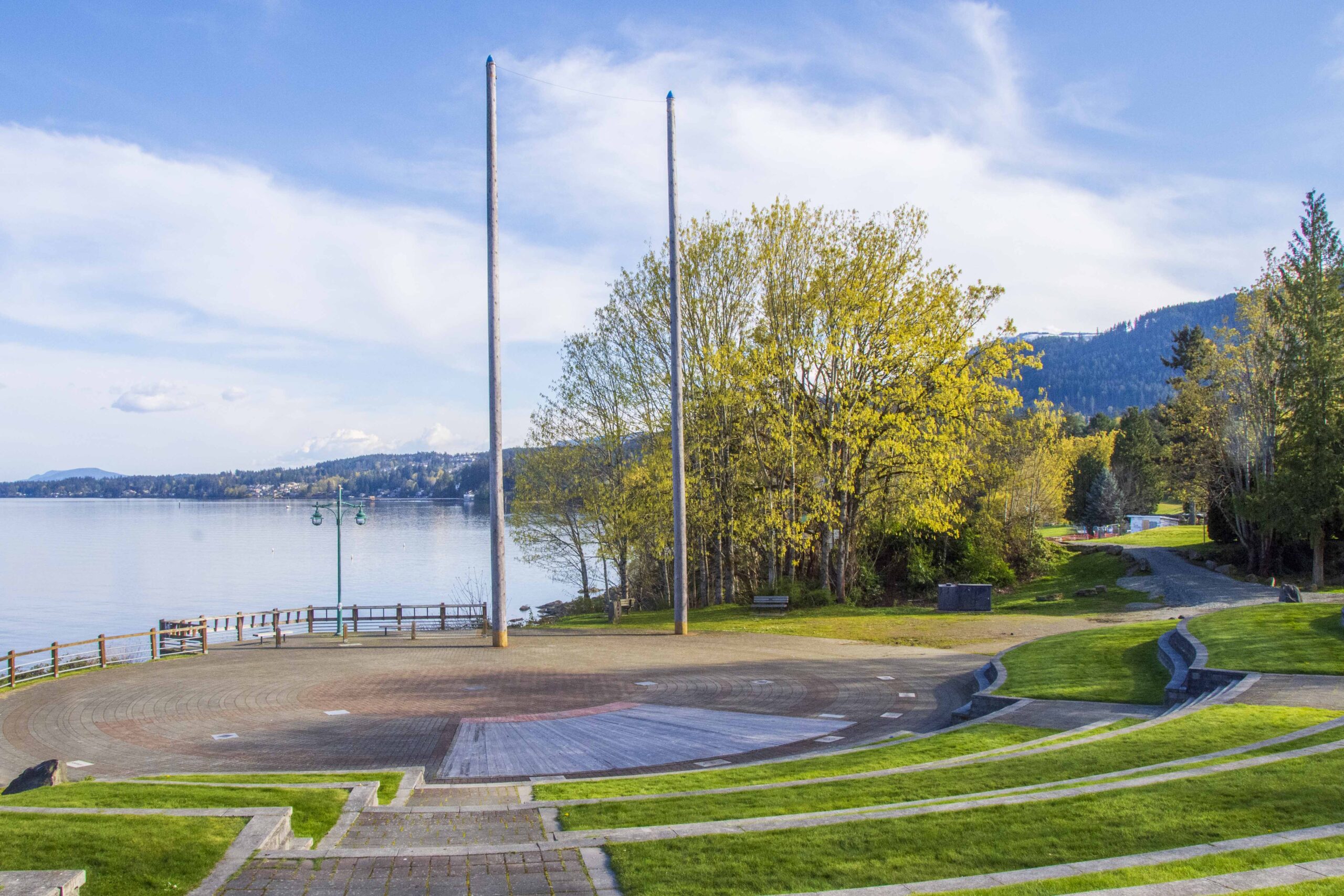 The tools of BC’s traditional industry will take centre stage in Ladysmith on Sunday, Sept. 14 for Ladysmith Loggers’ Sports. The event supports the Cops for Cancer Tour de Rock, an annual bike tour across Vancouver Island that raises funds for childhood cancer research and support programs. The loggers’ sports exhibition event will take place at the Transfer Beach amphitheatre starting at 2 p.m. …Among the upgrades this year are three massive dummy logs donated by Western Forest Products. This year’s key supporters include Spuzzum Contracting, LCU Insurance Agencies, Mosaic Forest Management and the Town of Ladysmith.
 NOVA SCOTIA — Mikmaq have begun blocking logging trucks from leaving Hunters Mountain. Madonna Bernard began the blockade on Monday afternoon when she stood in front of two logging trucks. She was then joined by other Mi’kmaq seeking to stop harvesting from the Cape Breton Highlands. …“This is not a protest, this is a protection. We’re willing to stay as long as it takes.” A large RCMP presence has gathered and more Mi’kmaq supporters are arriving. …Port Hawkesbury Paper mill manager Bevan Lock said that the supercalendered paper relies on wood coming from the highlands for a significant part of its woods fibre. He said some 70 people work for forestry and logging contractors operating in the area. “The province and RCMP have taken steps to remove the blockade and allow travel on a public road,” said Lock.
 After years of wildland firefighters developing cancer, lung disease and other health issues while not being allowed to wear masks as they work, the US Forest Service will now allow these crews to wear masks. The policy turnaround comes as the Forest Service posted new guidance on Monday “acknowledging for the first time that masks can protect firefighters against harmful particles in wildfire smoke,” per
  National forests and wildfire will return to the congressional agenda this week with a pair of House subcommittee hearings on Forest Service programs. The Trump administration’s challenges in managing the 193-million-acre forest system with a sharply reduced workforce — and a big agency reorganization still to come — are likely topics for both the Agriculture and Natural Resources subcommittees. In the Natural Resources hearing, the Subcommittee on Federal Lands will take testimony on the state of national forests, picking up on a hearing that was initially scheduled for July 9. In the Agriculture hearing, the Subcommittee on Forestry and Horticulture will focus on improved active forest management, such as increased thinning of national forests to reduce potential wildfire fuel. [to access the full story an E&ENews subscription is required]

 Today’s Lookout
 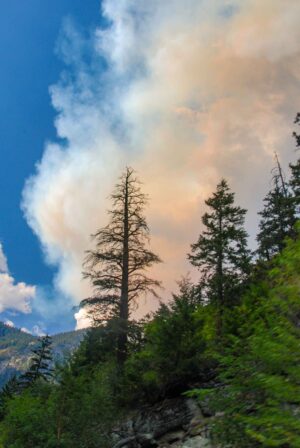 The western United States is facing another destructive wildfire season. …As US forests burn, Congress and federal agencies are asking an important question: What role should federal land management play in reducing fire risk? …Several of the current federal proposals for managing fire risk focus on increasing timber harvesting on federal lands as a solution. They also propose speeding up approvals for those projects by limiting environmental reviews and public oversight. As experts in fire science and policy, we see some useful ideas in the proposed solutions, but also reasons for concern. While cutting trees can help reduce the severity of future fires, it has to include thinning in the right places to make a difference. Without oversight and public involvement, increasing logging could skip areas with low-value trees that need thinning and miss opportunities for more effective fire risk-reduction work.
 STEVENS POINT, Wisconsin — The Trump administration blitzkrieg on the environment is rumbling along, and 45 million acres of remote national forest lands are in their sights. These are areas protected by the Roadless Rule, adopted in 2001. …The administration is rushing the public comment period, with a deadline of Sept. 19. …There’s a good chance the administration has already made up its mind. But there’s something to say in this moment about being on the right side of history. …Why should Wisconsin care about the Roadless Rule, which is a huge deal in the West? Mike Dombeck, a Wisconsin native, was chief of the USDA Forest Service when the rule was adopted.” …It’s an important niche between wilderness and development. …It took a long time for us to recognize that suppressing fire actually contributes to uncontrollable wildfires. Fire has been a forest management tool for eons.