Earlier this year, British Columbia appointed a new deputy minister for the Ministry of Forests. Raised in the heart of the forestry sector, born into the family of a truck logger and growing up in a forestry camp, Makenzie Leine has been tasked with supporting a sector facing significant challenges. …Working with Minister of Forests Ravi Parmar and the ministry team to fulfill a mandate focused on both immediate, short-term improvements and long-term sustainability for the sector, there are a series of deliverables she is supporting. These include increasing value by supporting value-added and innovative forest products; diversifying wood products in domestic and international markets; bringing groups together in forest landscape planning tables to chart a path forward for the stewardship of BC’s forests and forest industry; improving permitting efficiency; and, working toward ensuring a sustainable land base to enable the harvest of 45 million cubic metres a year, while fulfilling the Province’s commitment to old growth.
Easy, right? And all this with the added challenge of combatting the impacts of American tariffs—including those on softwood lumber and other protectionist measures—the price crisis in the timber sector, the impacts of wildfires and insect infestation on supply, and increasing wildfire activity due to impacts of climate change. “We’re in a very unique time right now, and it’s very, very tough,” Leine says. “It’s a time that is probably different than anything we’ve seen. …”I don’t think we can come to the table with the answers. I think we have to come to the table with our own understanding of our accountability and our part in it and work together to figure out how we sort through it, together.” Ultimately, Leine says, it can only be achieved by bringing together industry, First Nations, communities, and other interested parties to work together toward these goals, with government being stewards of the work ahead.

 WASHINGTON — Prime Minister Carney is set to return to Ottawa today with no deals to remove US tariffs from Canadian goods, but he’s leaving his key minister on Canada-US trade behind to keep pressing the Canadian case. US President Trump lavished praise on Carney during a meeting in the Oval Office on Tuesday and said the prime minister would walk away “very happy.” The president showed no signs of relenting on tariffs, however, and no deal was announced. Carney was scheduled to have a working breakfast this morning with Joshua Bolten, CEO of the Business Roundtable, while Foreign Affairs Minister Anita Anand was set to meet with Secretary of State Marco Rubio. Canada-US Trade Minister Dominic LeBlanc will be staying behind in Washington. LeBlanc told reporters Tuesday that substantial progress was made in the White House talks this week.
 TORONTO – United Steelworkers union National Director Marty Warren issued the following statement as Prime Minister Mark Carney travels to Washington, D.C., to meet with US President Trump. …“Canada’s softwood lumber industry is on the brink of collapse. Thousands of workers and entire communities are hanging by a thread while Trump’s tariffs deindustrialize our economy and threaten good jobs across the country. We need urgent action – not more concessions. If free and fair trade in strategic sectors cannot be restored, the federal government must be ready to retaliate and take all necessary measures to protect the integrity of Canadian industrial production and employment. …We cannot allow foreign producers to use Canada as a back door for cheap, dirty, or diverted imports. …If Washington wants access to our market, it must come with respect for fair trade and for the workers who keep our economy running.”
 The Canadian Lumber Trade Alliance (CLTA) issued the following statement. …Luc Theriault, President, Wood Products at Domtar and Co-Chair of the Canadian Lumber Trade Alliance, said “The U.S. government’s decision to impose a further 10% tariff – on top of existing duties of 35% – is disappointing. These measures unjustly punish Canadian producers, while also driving up costs for our neighbors in the US.” …“Canadian lumber does not pose a national security risk to the United States. Our industry directly supports 200,000 jobs and sustains over 300 forest-dependent communities across Canada. We will continue to work closely with the Government of Canada to defend against these unfortunate trade actions and to safeguard Canadian forestry jobs.” …In its recent Section 232 proclamation, the US signaled a willingness to pursue negotiations. The Canadian industry is ready to engage. It is essential that the Government of Canada match this commitment and play an active role in defending our industry.

 Canada’s forest products sector strongly opposes the US administration’s decision to impose additional punitive tariffs not only on softwood lumber but also on derivative products, including furniture and kitchen cabinets. The targeting of Canada’s forestry products under Section 232 of the Trade Expansion Act is unjustified and disregards decades of evidence and cooperation that confirm Canadian forest products strengthen, rather than threaten, US national security. This broad action further undermines a deeply integrated North American supply chain that supports housing affordability, infrastructure, manufacturing, and shared prosperity and security on both sides of the border. …The new Section 232 tariffs pushes the total duty burden to over 45%. This compounds pressure, distorts markets, threatens jobs on both sides of the border, and escalates trade tensions. …This misguided move risks raising housing costs in the United States and undermines the integrated trade relationship that has provided jobs, investment, and prosperity in both countries,” said Nighbor.
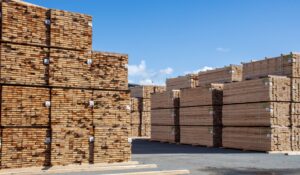 President Trump on Monday ordered significant new tariffs on wood and various wooden products, including imported lumber, timber, kitchen cabinets and upholstered furniture – potentially adding costs to homebuilding and furnishing, which have surged in price in recent months. In a proclamation, Trump said the United States would begin charging a 10% tariff on foreign softwood lumber and timber, used in a wide variety of building materials. He also announced a 25% tariff on kitchen cabinets, vanities and upholstered wooden furniture. Those rates are set to go into effect October 14. On January 1, Trump will boost the tariff on cabinets to 50% and upholstered furniture to 30%. He first announced those new tariffs on Thursday. …“In my judgment, the actions in this proclamation will strengthen supply chains, bolster industrial resilience, create high-quality jobs, and increase domestic capacity utilization for wood products such that the US can fully satisfy domestic consumption while also creating economic benefits through increased exports,” Trump wrote.


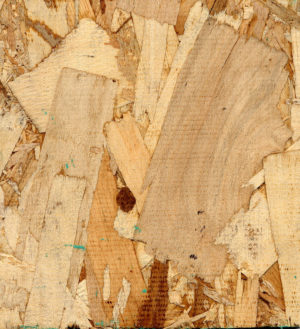 PRINCE ALBERT, Saskatchewan — “It’s taking way too long, and harder than we were hoping, but we have not given up.” That’s the message being delivered by those involved with One Sky Forestry Products‘ OSB mill project planned for Prince Albert. Last week, the Saskatchewan NDP said the mill was the latest in a string of major economic projects delayed or cancelled under a Sask. Party government. …However, a source at the OSB mill project said while they were in somewhat of a holding pattern because of the trade uncertainty with the US, the board of directors had a meeting last week and made the unanimous decision not to cancel or shelve the project, but instead look at ways to move it along. …They added the timing of the project that was supposed to be completed in 2027 and provide 700 jobs, will depend on whether they can tap into financing support sooner rather than later.

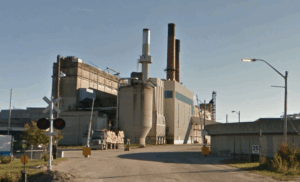 ONTARIO — Upper levels of government have reached funding agreements to support the Town of Kapuskasing’s Paper Mill, averting a planned closure and providing what local leaders are calling “a critical step” toward securing the region’s economic future. Kap Paper announced the newfound support in a social media post on Friday evening. “Next week, we’ll be working out the details for a restart plan,” the post said, adding that updates would be shared “as soon as everything is confirmed.” Kapuskasing Mayor Dave Plourde, called the deal a “critical step forward for Kapuskasing and the entire region,” in a statement posted to the town’s social media page. …“We now have a second chance – a window of opportunity to come together, calmly and deliberately, to build a plan for modernization and long-term competitiveness,” said Plourde …“Today, I am pleased to confirm that both the federal and provincial governments have agreed to provide support.”
 Companies reliant on New Brunswick’s softwood lumber industry are bracing for hard times after US President Trump announced new tariffs on Sept. 30. …In a letter to Prime Minister Mark Carney, New Brunswick Premier Susan Holt pleaded for the federal government to make softwood lumber tariffs a top priority. “In some communities in New Brunswick, one in every 11 workers depends directly on forest products,” Holt wrote. …Ron Marcolin, the New Brunswick vice-president with Canadian Manufacturers and Exporters, said the latest tariffs and duties are a big deal in a long-running drama over softwood lumber. …While New Brunswick may largely rely on the American market, Marcolin said Americans also rely on New Brunswick’s products. …”The thing is, too, they realize their product is inferior. Their softwood lumber is not as good as a Canadian stick of lumber.”

 THUNDER BAY, Ontario — The Ontario government is investing a further $30 million to support businesses, workers and communities dependent on the province’s forest sector. This funding will build and maintain more forestry access roads and provide immediate support for Ontario sawmills to find new markets for their woodchips. These investments will strengthen Ontario’s forestry sector, create jobs and increase the sector’s competitiveness in the face of increased US softwood lumber duties and the threat of tariffs. …An additional $20 million is being invested through the Provincial Forest Access Roads Funding Program, bringing the government’s total funding for the program to over $79 million this year. …The government is also providing immediate support to sawmills by investing $10 million in the Ontario Sawmill Chip Support Program. The funding provides immediate support to sawmills while they find new, innovative markets for their wood chips such as energy production or alternatives for single-use plastics.
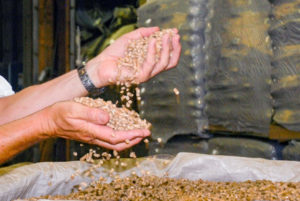 Much of the federal government shutdown in the early hours of Oct. 1 after federal lawmakers failed to reach a funding deal. If the shutdown persists, work related to federal data reporting, rulemakings and other regulatory initiatives could face delays. Ahead of the shutdown, many federal agencies published contingency plans on how work at those agencies may be impacted in the short term. …The USDA is expected to furlough 42,256 of its 85,907 employees, equating to more than 49% of the agency’s workforce. Data products and website updates offered by the USDA’s National Agricultural Statistics Service and Foreign Agricultural Service are among agency activities that are expected to cease during the funding lapse. …FAS also publishes a variety of data of interest to bioenergy producers, including monthly export data on ethanol, distillers grains, biodiesel and wood pellets. FAS also publishes reports that provide insight on foreign markets for biofuels and wood pellets.
 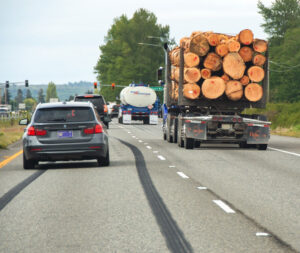 The Trump administration on Monday announced tariffs on imported wood products, targeting softwood lumber, timber, kitchen cabinets, vanities and upholstered furniture. …Trump’s proclamation said wood product imports were weakening the US economy, resulting in a persistent threat to the US supply chains and harming the domestic wood industry. “Because of the state of the United States wood industry, the US may be unable to meet demands for wood products that are crucial to the national defense and critical infrastructure,” the proclamation said. …Critics of the tariffs have voiced concern that the new duties will inflate costs for American consumers and builders. Former US Rep. Matt Cartwright, (D-Pennsylvania), said safety will suffer as a result of the new tariff on imports of trucks. …“A lot of these companies are already on shoestring budgets, and unfortunately the first thing that gets cut when costs go up is safety,” Cartwright said.
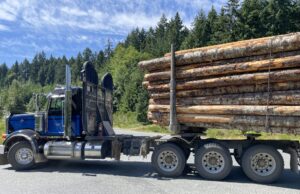 NEW ZEALAND — News that US President Trump imposed a tariff of 10 percent on imported timber has come as a relief to industry, which expected a higher figure. Mark Ross, chief executive of the Wood Processors and Manufacturers Association, said it was a relief as they thought it would be higher. “We’ve been working through the essential impact of a tariff on our products since March this year so it wasn’t a shock because we were, at one point, expecting a 50% tariff. “So 10% is a bit of relief. It is still going to have a financial impact on the wood processing industry in New Zealand. …Ross said they were working with exporters to work out how to handle the extra costs. …Ross said the United States was New Zealand’s third-largest export market and continued to grow.
 The Commerce Department in a shutdown contingency plan released Monday said it will continue “the necessary work to address the effect of imported articles on national security.” The contingency guidelines mark a subtle shift from the previous plan, which said investigations would continue with unexpired funds if Congress failed to approve additional spending by the end of the fiscal year on Sept. 30. By claiming a national security rationale for the investigations, the administration can continue work on probes being conducted under Section 232 of the Trade Expansion Act. That provision allows for the imposition of tariffs on goods deemed critical to national security. …Section 232 investigations could take on even greater weight if the Supreme Court strikes down Trump’s use of the International Emergency Economic Powers Act. [to access the full story a Bloomberg subscription is required]
 Canada’s merchandise trade deficit widened in August to C$6.32 billion ($4.53 billion) as exports fell faster in both value and volume than the rise in imports on a monthly basis, official government statistics showed on Tuesday. The trade deficit in August was led by drop in exports not only to its top trading partner the U.S. but also because its shipments to the rest of the world shrank in the month. Canada’s international trade numbers took a beating early this year as US President Trump imposed sectoral tariffs on the country, forcing businesses to reorient supply chain from its biggest trading partner. But the shift has been volatile and erratic. Analysts polled by Reuters had forecast the August trade deficit at C$5.55 billion, up from an upwardly revised C$3.82 billion in the prior month. Total exports dropped by 3% while imports increased 0.9%, StatsCan said.
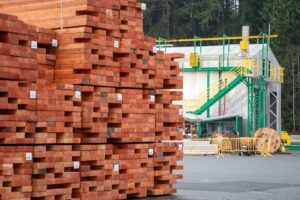 It’s hard to find anything good to say about Canadian forestry stocks right now. Some of the biggest names in the sector have been on a downward slide for the past three years. … But the onslaught of grim news has highlighted some bargains. …Okay, the definition of attractive rests on an assumption that risk-averse investors might not want to embrace just yet: Despite Mr. Trump’s bluster, the US still needs Canadian lumber in a big way to feed its lumber-intensive home construction industry. Says who? The National Association of Home Builders, for one. …Some analysts believe that US forestry companies will struggle to replace Canadian softwood. Ben Isaacson, at Bank of Nova Scotia, estimates that US producers would have to build 50 new mills to become fully independent of Canadian lumber. Just two companies build the specialized equipment required in mills. They would struggle to supply even two mills a year. [to access the full story a Globe & Mail subscription is required]
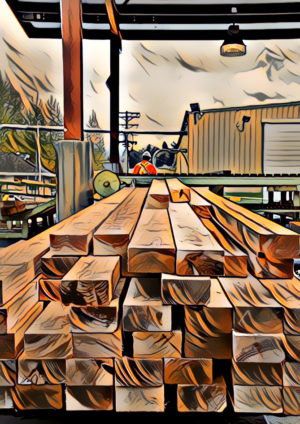 The softwood lumber trade dispute between the US and Canada, which has led to ever-higher US import duties on Canadian lumber, has lasted for decades. …Canadian lumber has the backing NAHB, which sees lumber tariffs as exacerbating high costs for builders and worsening the US housing affordability crisis. There is currently a “Wall of Wood” in the US, after Canadian producers increased shipments to the US in anticipation of the hike to existing ADD and CVD duties in August. Expectations that a large increase in duties would force the closure of Canadian sawmills, lead to shortages, and a boost in lumber prices, overlooked the current weak US demand for lumber, according to Matt Layman. …As US homebuilders now face additional tariff-driven costs, including a 50% tariff on cabinets and vanities, it’s hard to see the lumber demand situation improving, even if more Canadian suppliers have to curtail production or close sawmills.
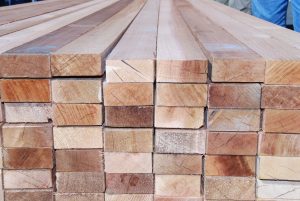 The Trump administration’s latest tariffs on housing materials could raise the average cost of building a single-family home by nearly $9,000, according to a report Tuesday from UBS. Research analyst John Lovallo said the new levies include “an incremental 10% Section 232 tariff on softwood timber and lumber imports, as well as 25% levies on kitchen cabinets, vanities and upholstered wood products.” UBS estimates the lumber tariff will add about $720 per home, while cabinet and vanity tariffs could tack on another $280. Upholstered wood products were not included in the calculation because they are generally purchased by homeowners rather than builders. “As a result, we now estimate the total tariff impact on the cost to construct an average home at approximately $8.9K,” Lovallo wrote. …“Importantly, we continue to believe this cost impact will be spread throughout the entire housing value chain, with the builders perhaps best positioned to push back on suppliers,” he said.
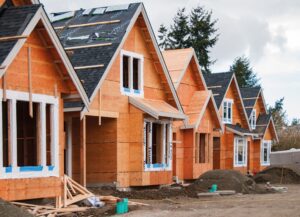 President Trump ordered fresh tariffs on softwood timber, lumber, and wood furnishings, even as housing groups warn the move could drive up construction costs and furniture-industry advocates said the levies would lead to US job losses. The tariffs may, however, prove more legally durable than Trump’s reciprocal country-by-country penalties because they fall under Section 232 of the Trade Expansion Act, the same legal tool the White House has used to justify duties on steel and aluminum. …The measures hit Canada especially hard because the country already faces duties of more than 35%, a result of recent but separate trade initiatives. Publicly traded lumber producers most directly exposed include Canada’s West Fraser Timber, Canfor, and Interfor. In the US, Weyerhaeuser, Boise Cascade, and Louisiana-Pacific are the closest listed peers, with stocks prices that often move in step with lumber tariffs and demand. US-based furniture retailers may also experience pain, with many dependent on foreign wood.
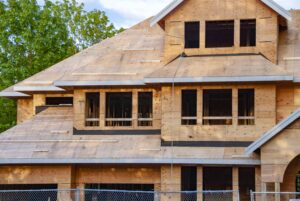 President Donald Trump has reignited debate over the nation’s housing shortage, calling on Fannie Mae and Freddie Mac to spur a wave of new home construction. Trump accused large homebuilders of “sitting on 2 million empty lots, a record,” and likened their behavior to OPEC’s control of oil prices. …“I’m asking Fannie Mae and Freddie Mac to get Big Homebuilders going and, by so doing, help restore the American Dream!” The president’s comments come as housing inventory has rebounded from historic lows in 2022, but builders continue to face limited incentives to ramp up construction. …Since taking office, Trump has made housing a central policy focus, including an executive order for emergency price relief and a campaign to pressure the Federal Reserve for lower rates. …Despite Trump’s calls, the mechanics of how Fannie and Freddie might spur more homebuilding remain unclear.
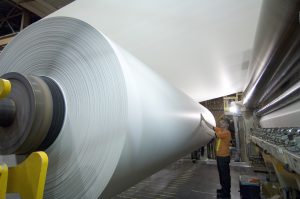 Shares in packaging and paper group Mondi fell sharply on Monday after the company issued a cautionary outlook, citing weak demand and falling prices across pulp and paper grades. The warning rattled investor confidence in the paper and packaging sector, dragging Mondi shares to a 12-year low. The company said volumes remained subdued and selling prices declined in most grades, particularly in fine paper and corrugated segments. Citing fragile demand, Mondi described the trading environment as challenging and flagged continued weakness for the rest of the year. CEO Andrew King told analysts that demand for packaging “has not become worse, nor has it become better,” and that weakness in the fine paper market persisted. …Mondi’s warning underscores continued strain across the paper and packaging industry. Oversupply in key markets, weak industrial demand in Europe, and aggressive pricing competition are pressuring margins and volumes across the sector.
 FORT MILL, South Carolina — In a major stride towards its ambitious 2030 sustainability strategy, Domtar released its sustainability report. The report, entitled
  The Chemainus River reveals its secrets in strange and unexpected ways. For years, I have wandered the forests near my North Cowichan home in search of the last few ancient trees, finding a few nice specimens here and there. In the heavily logged, 5,000-hectare Municipal Forest Reserve — popularly known as the Six Mountains, an hour north of Victoria — they are as elusive as the last rhinos of Sumatra. With a bit of luck, I hope my persistence may yet pay off. I don’t know it at the time, but my quest will launch me on a journey from the river’s headwaters to its mouth in pursuit of questions fundamental to the Chemainus and its future. How have human activities like industrial logging shaped the river, its watershed, and its salmon? …In my search for answers, I will discover modern challenges that bedevil other B.C. coastal rivers.
 Do you remember the hydrological cycle that you learned about in school? Rain and snow fall from the sky. Tree leaves and branches slow the fall of rain. In the spring, snow slowly melts, the melt slowed because trees shade the snow and cool the air. Some of the rain and melted snow infiltrate deep into the ground, aided by the presence of tree roots, to become part of the ground water that flows downhill, slowed by tree roots. …Transpiration from tree leaves, and evaporation from the land, lakes and ocean return the water to the sky and the cycle starts over again. But wait. Remove a major part of the trees from the cycle and what happens? Rain and snow land directly on the ground. Less rain infiltrates the soil and, with no tree roots, what ground water there is flows downhill more quickly.
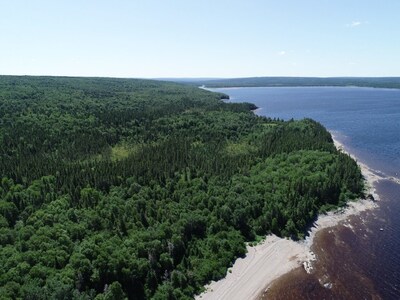
 ATLANTA — Forest Stewardship Council US announced the approval of the revised
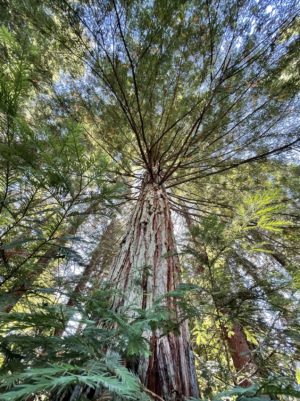
  Roughly 500 years ago in California’s High Sierra, pine cones dropped to the ground and a cycle began. …Half a millennia later, US Forest Service scientists began testing strategies to save these now ancient and massive trees in the little-known area east of Fresno called the Teakettle Experimental Forest. They had plans to light a huge prescribed burn to clear overgrowth next year. But then the Garnet Fire ignited and scorched all 3,000 federally protected acres on its path through the Sierra National Forest. …Scott Scherbinski, a biologist at the Climate & Wildfire Institute, said “It will be a start-over event for this forest.” …Malcolm North, a Forest Service ecologist said…fires with less intensity can be beneficial in California’s fire-adapted landscapes, but the Garnet Fire, when it burned through in September, may have killed most trees and sterilized the ground — making it unlikely the forest can rebound without intervention. [to access the full story a San Francisco Chronicle subscription is required]
 Major agri-food companies including Nestle, Ferrero and Olam Agri have warned that European Union delays to its anti-deforestation law are endangering forests worldwide. The EU last month proposed delaying the launch of its anti-deforestation law for a second time, citing concerns about the readiness of information-technology systems needed to support the law. The delay could postpone the ban on imports of commodities such as palm oil linked to forest destruction for another year. The law faces major opposition from industry and EU trade partners such as the United States and Brazil. EU Commissioner Jessika Roswall said last week the delay was not linked to U.S. concerns about the policy. …Contrary to the EU’s aim of simplifying rules for business, any changes at this stage would introduce uncertainty, annoy shareholders and risk the rules being watered down further, the companies said. The EU deforestation law was due to take effect on December 30.
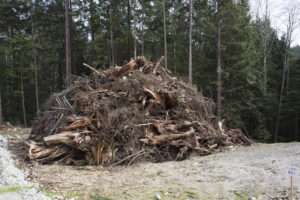 THUNDER BAY — A number of stakeholders, largely from the forestry and energy sectors, got to provide regional input into a series of ongoing cross-province talks about energy policy. The Vaughn and Thunder Bay Chambers of Commerce held a roundtable discussion in the city on Oct. 2. The goal was for regional interests to provide requested input into an issues paper on energy being developed by the Toronto-based business lobby. …In Northwestern Ontario, she said, that includes longstanding sources like hydroelectricity and natural gas, but also continually-emerging opportunities connected to forestry and biomass. “We also talked a lot about the opportunities through the forest sector and biomass and the many things that can be created by harnessing forest products into energy,” Robinson said. “I think the most important thing was talking about how, from a forestry perspective, it really does check all the boxes.”
 WASHINGTON — The US Supreme Court on Monday declined to hear a high-profile challenge to Washington’s Climate Commitment Act, marking yet another victory for the state’s keystone climate policy. The lawsuit started with the private operator of a natural gas power plant in Grays Harbor County. The plant is required to buy pollution allowances to pay for the many tons of greenhouse gasses it emits into the atmosphere under the 2021 “Cap and Invest” law. The plant’s owner, Chicago-based Invenergy, sued Laura Watson, then-head of Washington’s Department of Ecology, in late 2022, arguing that the state’s carbon market is unconstitutional. The lawsuit claimed that the state law discriminated against privately operated natural gas plants. In 2023, US District Court Judge Benjamin Settle dismissed the case. The company appealed. …The Supreme Court on Monday denied Invenergy’s petition outright. The justices did not publish any written justification for their decision.
 The failure of carbon offsets to cut planet-heating pollution is “not due to a few bad apples”, a
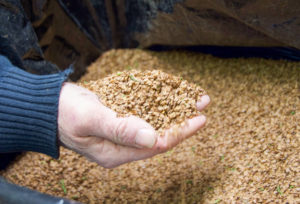
 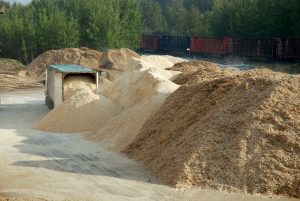 AUSTRALIA — The Federal Government’s National Bioenergy Feedstock Strategy
 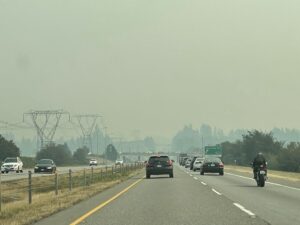 NOVA SCOTIA — Unseasonably warm temperatures proved challenging Monday as the fight against an out-of-control wildfire in Nova Scotia’s Annapolis Valley entered its second week. The Department of Natural Resources estimated that the fire at Lake George had grown slightly in 24 hours to just over 2.8 square kilometres, mainly because of dry and windy conditions. Monday’s forecast for the area near Aylesford, N.S., called for a high of 28 C — the average daily high in the region for October is normally below 15 C. “I can’t believe it — in October we normally get frost and cold,” Dave Corkum, mayor of the Municipality of the County of Kings, said in an interview. “There is some rain in the forecast in a few days and hopefully we will get it.” Despite the conditions, Corkum said there are no reports of damage to structures in the area.