 WASHINGTON — CNN published an article citing the Canadian Chamber of Commerce… claiming that tariffs on Canadian building materials, with an emphasis on lumber, will drive up the cost of housing for US consumers. This is incorrect. …”In order to continue seeing the massive growth of US softwood lumber production capacity that we have seen over the last nine years as a result of US trade law enforcement, it is essential that President Trump takes all necessary steps to downsizing Canada’s unsustainable 8 billion board feet of excess lumber capacity that is stifling continued US growth,” said Andrew Miller. …”Canadian softwood lumber companies, not U.S. consumers, directly pay the import duties through their U.S. subsidiaries. …”Canada is desperately trying to avoid paying their bill to the US taxpayers. …They are suggesting relieving Canada from having to pay future duties while continuing to dump their excess lumber into the US market,” added Zoltan van Heyningen.
 VANCOUVER, BC – Canfor announced today that its 77%-owned subsidiary, Vida AB, has entered into an agreement to purchase AB Karl Hedin Sågverk from Mattsbo Såg AB and certain minority shareholders for a purchase price of $164 million, including working capital of ~$39 million. AB Karl Hedin Sågverk operates three sawmills located in Central Sweden and will add approximately 230 million board feet to Vida’s annual production capacity. Following completion of this acquisition, Vida will have annual production capacity of approximately 2.1 billion board feet. Annual synergies of approximately $15 million are expected to be achieved within three years as a result of this transaction principally related to alignment of marketing programs as well as log procurement and operational practices. …These operations have access to exceptionally high-quality timber and are well positioned to complement Vida’s high-value product offering,” said CEO Susan Yurkovich. …The transaction is expected to close over the next several months.
 Through the Domtar Connects program, employees lead impactful local initiatives—ranging from education and environmental projects to support for Indigenous communities—reflecting a long-term, values-driven commitment to social responsibility. …With nearly 14,000 employees across more than 60 locations, Domtar’s footprint is large, but its approach is local. The Domtar Connects community investment program responds directly to the unique needs of each operating community, ensuring that support is tailored, meaningful and led by employee input. Recent highlights include:
  The US and Canada… have feuded over “softwood” lumber since the 1980s. …Canada has long resisted changing its trade practices on lumber. But as the Trump administration has become more bellicose about its trade relationship with Canada, the country’s stance may be softening. On July 16, BC Premier Eby said Canadian officials are now open to a quota. …Any added fees from the US would likely further hamper an already struggling Canadian industry and benefit the US South. But the US would likely struggle to offset the lumber it gets from Canada in the short-term, driving up housing prices. …Though the US has some spare capacity to turn more timber into construction materials, a fully domestic supply chain would likely still require the construction of new sawmills and additional trained workers to operate the facilities. …Another factor for US suppliers and buyers is that US and Canadian lumber are not a perfect swap. [to access the full story a Bloomberg subscription may be required]
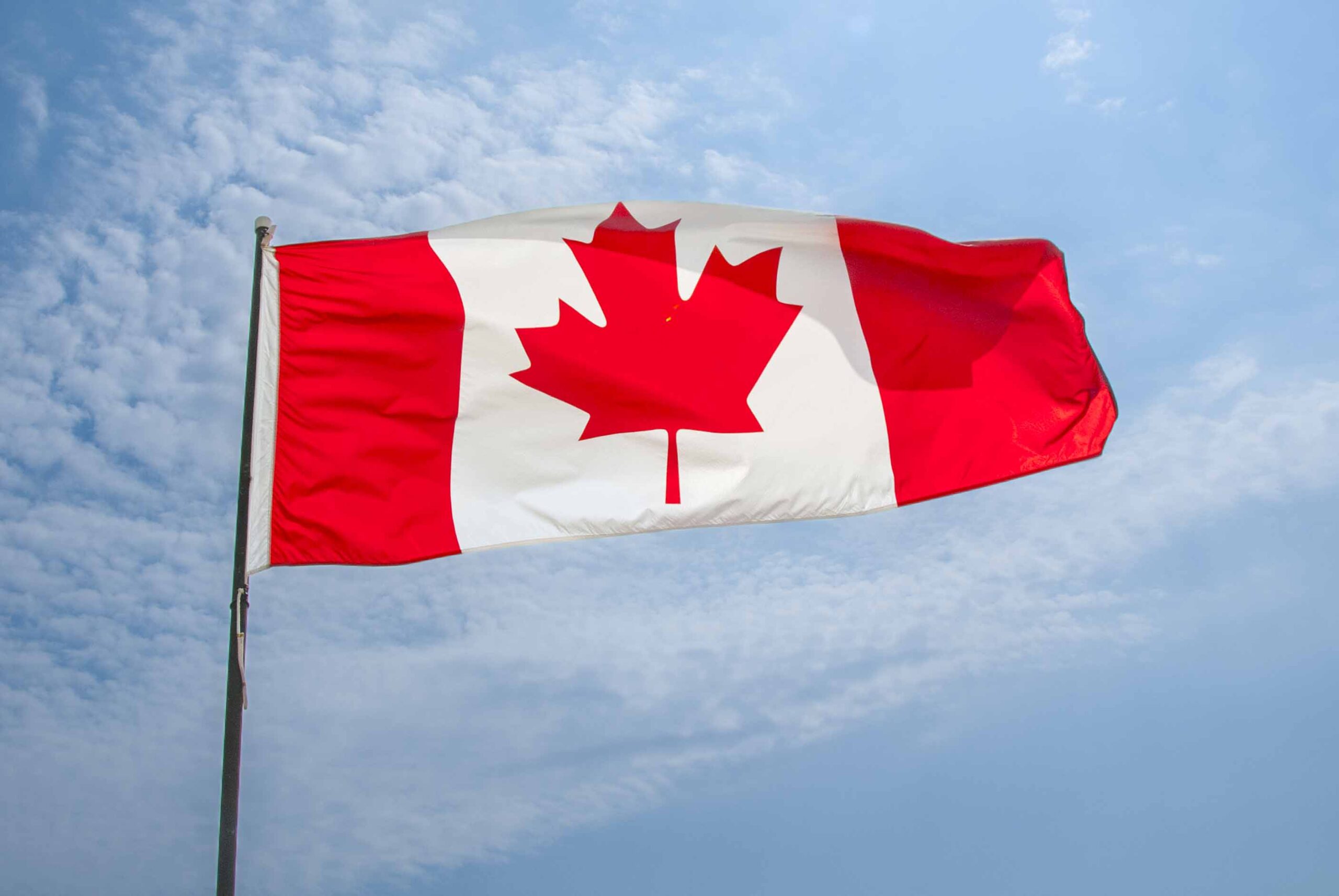 Canada’s premiers’ summer gathering in Muskoka will also feature a meeting with Prime Minister Mark Carney, as trade talks with the US are expected to intensify. Most of what the premiers are likely to discuss stems from President Trump’s tariffs: trade negotiations, the direct impact on industries such as steel and aluminum, the increased pushes to remove interprovincial trade barriers and speed up major infrastructure and natural resource projects. …“Canada is not open to us,” he said. “They need to open their market. Unless they’re willing to open their market, they’re going to pay a tariff. Lutnick also said Trump intends to renegotiate the Canada-U.S.-Mexico agreement next year, when the pact is slated to undergo a joint review. Carney has said Canada is trying to get an agreement on softwood lumber exports included in the current round of negotiations with the United States.
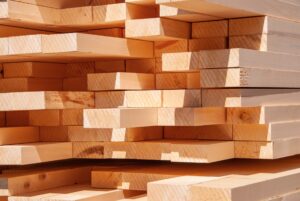 The Canada-US softwood lumber trade relationship has dealt with ups and downs for decades. …Canadian firms will soon receive word from the US Commerce Department… with the rate expected to jump from around 14% to 34%. …“Canfor’s rate will be ~45%,” said Andrew Miller, chair of the US Lumber Coalition. …Then there’s the threat of tariffs from President Donald Trump’s ongoing national security investigation of Canadian lumber imports under Section 232 of the Trade Expansion Act. …The US Lumber Coalition is playing for keeps. …Miller isn’t shy about the goals: “A countrywide quota with no exemptions and no carveouts, and a single-digit market share” for Canadian lumber. …The coalition is pushing for a tariff rate from the Section 232 investigation that starts at 15 to 20% and goes higher from there. That, Miller explained, will incentivize U.S. sawmill owners struggling with thin margins to hire more people and invest in upgrades, bolstering U.S. production.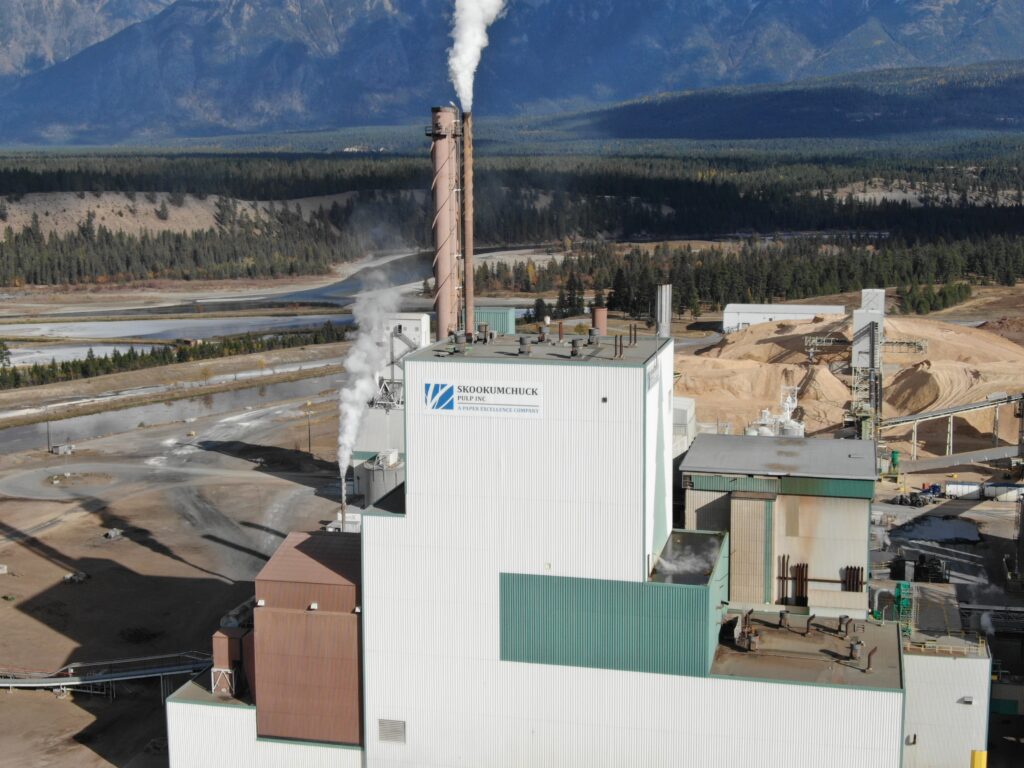
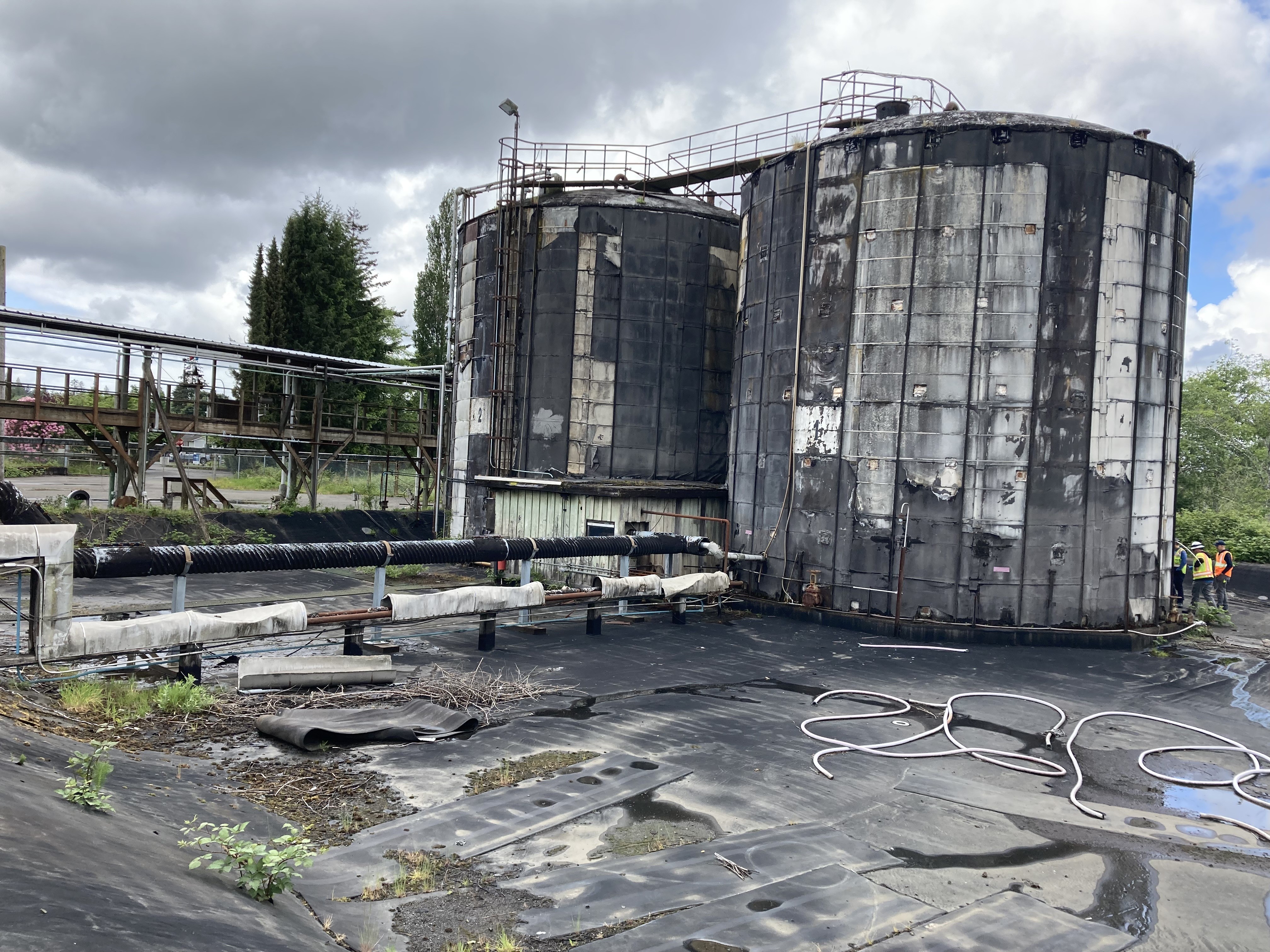

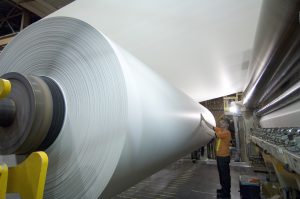 WASHINGTON – American Forest & Paper Association (AF&PA) President and CEO Heidi Brock today reacted to recent US-EU trade negotiations: “We appreciate President Trump and his administration’s efforts to further enhance fair and reciprocal trade with key partners like the European Union. Addressing tariff and non-tariff trade barriers is crucial to ensuring a positive trade relationship for the pulp, paper, packaging and tissue products manufacturing industry. “The EU’s deforestation free regulation (EUDR), which has been identified as a non-tariff trade barrier by the U.S. Trade Representative, risks over $3.5 billion in annual forest products exports to the EU. “We encourage President Trump and his administration to continue working towards a fair and reciprocal trade relationship with the EU that fixes this regulation while improving other aspects of trade for U.S. paper manufacturers.”
 Is Brazil playing fair when it comes to trade? An investigation launched July 15 by the Office of the United States Trade Representative (USTR) aims to find the answer. The Section 301 investigation will seek to determine whether acts, policies, and practices of the Government of Brazil related to a host of trade issues — including ethanol market access and forestry practices — are “unreasonable or discriminatory and burden or restrict U.S. commerce.” “Brazil has walked away from its willingness to provide virtually duty-free treatment for U.S. ethanol and instead now applies a substantially higher tariff on U.S. ethanol exports,” the USTR office wrote in announcing the investigation. The announcement also said Brazil appears to be failing to effectively enforce laws and regulations designed to stop illegal deforestation — which undermines the competitiveness of U.S. producers of timber and ag products.
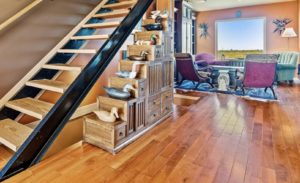 Amid global economic uncertainties and tightening trade policies, Việt Nam’s wood industry is navigating through significant headwinds. While long considered a strong export sector, local enterprises are now re-evaluating their strategies to not only sustain growth but also reposition Vietnamese wood products on the global trade map. According to Nguyễn Liêm, chairman of the Bình Dương Furniture Association, major shifts in trade policies among importing countries have been felt since early this year. …The US remains the largest market, accounting for nearly 50% of the industry’s export value. …Recently, the US Department of Commerce (DOC) initiated anti-dumping and countervailing investigations into plywood imported from Việt Nam. …Besides the US, the European Union has also implemented new technical and legal requirements. Regulations such as the EU Deforestation Regulation (EUDR), the Carbon Border Adjustment Mechanism (CBAM), and the Corporate Sustainability Reporting Directive (CSRD) are demanding more rigorous environmental and traceability standards.
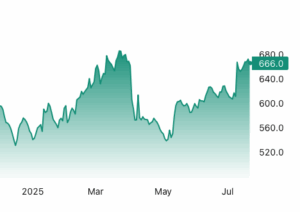 Lumber futures traded above $680 per thousand board feet, approaching the two-and-a-half-year peak of $685 recorded on March?24th, driven by a squeeze on supply meeting unfaltering construction demand. On the demand front, US housing starts held surprisingly steady at an annualized 1.6?million units in June even as existing-home sales slipped 2.7% to a nine-month low, ensuring that framing requirements remained robust. At the same time, US softwood lumber tariffs on Canadian imports continue to add roughly 9% to landed costs, while Pacific Northwest mills have withdrawn nearly 20% of regional capacity for mid-season maintenance, sharply curtailing shipments to distributors. Internationally, imports from Europe and New?Zealand are throttled by 25% duties on Russian lumber and persistent ocean-freight bottlenecks, collectively depleting distributor inventories to their lowest levels in more than two years and reinforcing today’s sharp advance in futures prices. [END]
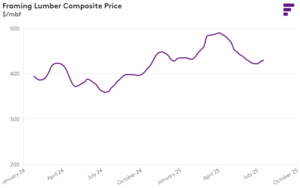 Lumber markets remained flat this week as vacation time, industry gatherings, sweltering heat and general economic uncertainty contributed to sluggish sales. Minimal immediate needs limited replenishment purchases to modest volumes while a lack of clarity regarding near-term prospects stifled speculative trading across North American framing lumber markets. 2×4 led gains in many species, but the increases were modest. Seasonal factors, including unusually heavy rainfall and normal summer heat, contributed to the ongoing sluggish pace across the South. Mills worked hard to capture modest premiums. The coming hike in duties on Canadian shipments to the US did little to alter the ongoing lack of urgency among buyers. …Sales of Western S-P-F were governed by tepid demand and uncertainty regarding the timing and scope of higher duties and potential tariffs. …Sales in the Coast region were lukewarm with most lumber markets trends holding.
 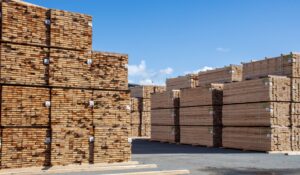 A CUSMA Chapter 10 binational panel remanded [for further explanation] two statistical methodologies in the US Department of Commerce’s Administrative Review 1 antidumping duty determination on Canadian softwood lumber, requiring Commerce to reassess its use of the Cohen’s d test and to apply weighted pooled variances in its meaningful-difference analysis according to the panel’s Decision and Order. …The panel affirmed all other aspect of the results challenged in this appeal…The review stems from a December 22, 2020 request by Resolute Forest Products and the Ontario Forest Industries Association. …The panel remanded Commerce’s application of Cohen’s d because the Federal Circuit’s decision in Marmen Inc. v. United States Wind Tower Trade Coalition requires that the test’s key assumptions, normal data distribution, equal variances and adequate sample size, be demonstrated before use. …The panel also remanded Commerce’s pooling of variances, directing the Department to use weighted pooled variances that reflect differing sample sizes. …Commerce must respond by October 20, 2025.
 VANCOUVER, BC
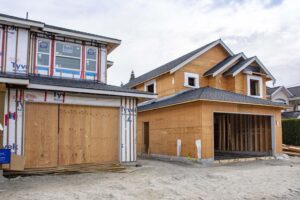 President Trump’s tariffs could have an unintended side effect: making homeownership even less affordable for many Americans. A new report from the Canadian Chamber of Commerce estimates that the average cost of building a US home could rise by an additional $14,000 by the end of 2027 if tariffs on Canadian imports remain in place, even as many experts estimate that America needs millions more affordable homes. In 2023 alone, Canada accounted for 69% of US lumber imports, 25% of imported iron and steel and 18% of copper imports, all key construction materials, the report said. The White House pushed back on the assertion that tariffs would increase costs for Americans. …The report underscores that Trump’s tariff policy, intended to support American industry, may instead worsen housing affordability. Taking into account tariffs first imposed during Trump’s first term, the total added cost from tariffs could reach $20,000 per home by 2027, the Canadian Chamber of Commerce found.
 During April’s election campaign, the Carney government promised to double the pace of homebuilding in Canada by 2035—an unlikely outcome in light of Canada’s shortage of construction workers and investment dollars. But even if homebuilding were miraculously doubled, it would not solve Canada’s housing affordability crisis. That’s the sobering conclusion of a recent
.png)
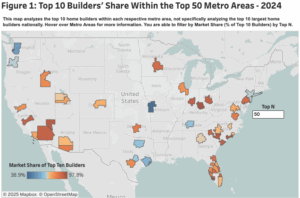 An earlier post described how the top 10 builders


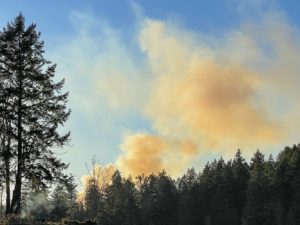 A contractor’s appeal of a B.C. Wildfire Service (BCWS) order to pay more than $1.8 million in compensation and penalties will be heard after a May 22 decision by the Forest Appeals Commission. Panel chair Ian Miller found “special circumstances” led to last summer’s two-day delay in filing a notice to appeal and granted the extension to Jaikle Contracting. “The delay was brief, the explanations and reasons are reasonable and credible, and there would be substantial prejudice to the appellant if the right to appeal is denied,” said Miller’s ruling. On July 12, 2024, designated decision maker Laurence Bowdige of BCWS issued a contravention order against Jaikle, under the Wildfire Regulation, for harvesting timber near Mackenzie in August 2021. “Specifically, that the appellant did not keep an adequate fire suppression system at the activity site while carrying out a high-risk activity within 300 metres of forest land,” said the Miller ruling.
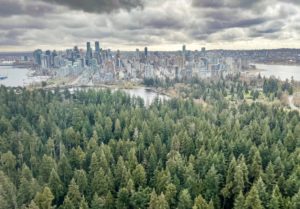 Vancouver Park Board staff are seeking commissioners’ approval to proceed with the next phase of a tree removal project in Stanley Park due to an extensive looper moth infestation. Work has been underway to cut down thousands of trees in Vancouver’s biggest park since the summer of 2023, due to fire and public safety risks posed by dead and dying trees. …While the tree removal plan has faced sharp criticism staff say they have a plan that will see the least number of trees removed. “This aims to balance key public safety risks resulting from the hemlock looper outbreak while leaving a moderate extent of internal forest areas to undergo natural forest stand regeneration,” the staff motion says of its preferred approach. If commissioners approve of the staff plan, planning for tree removal and mitigation work would begin later this year and conclude in the first quarter of 2027.

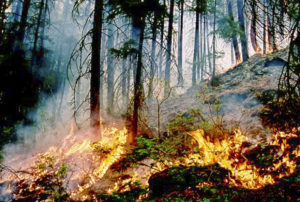 As wildfires become more frequent and intense across Canada, fire officials are seeing stark differences between northwestern and northeastern Ontario. They say it all comes down to what’s burning, how it burns, and where. More than 2.2 million hectares have burned in Ontario’s northwest since 2015, compared with around 287,000 hectares in the northeast. “The three things that we need to consider are the weather, the fuels and the topography,” said Chelene Hanes, a wildland fire research scientist at the Great Lakes Forestry Centre in Sault Ste. Marie. Northwestern Ontario typically gets a minimal amount of rain, whereas the northeast has a wetter climate and vast peatlands, she explained. …”On the [northwest] side of the province, and moving into the prairies, they’ve experienced a bit more drought, which is influencing the moisture of the fuels. So that is causing more ignitions to happen as well, because it’s drier,” Hanes said.
 The Trump administration aims to end the prohibition on logging on tens of millions of acres of roadless areas in national forests by the end of next year, according to a draft schedule at the Forest Service. The draft timeline… sets a schedule for drafting the new policy, conducting public comment sessions and consulting with tribes before making a final decision in November or December of 2026. Agriculture Secretary Brooke Rollins has already said she’s decided to rescind the roadless-area protections, which have blocked road construction, timber harvesting. The rule applies on 58.5 million of the forest system’s 193 million acres, with Alaska’s Tongass National Forest having the most in any one place. In a June 23 statement, Rollins said, “Once again, President Trump is removing absurd obstacles to common sense management of our natural resources by rescinding the overly restrictive roadless rule.” [to access the full story an E&E News subscription is required]
 WYOMING — The future of roadless areas in the Bighorn National Forest and other national forest system lands is uncertain after the Trump administration announced that it would rescind the 2001 roadless rule. …Of the Bighorn National Forest’s 1.1 million acres, 600,000 acres are managed as inventoried roadless areas. In these areas, road construction and reconstruction and timber harvesting are prohibited. Rollins’ action will require environmental analysis, compliance with the Endangered Species Act, tribal consultation and coordination with affected states, according to the U.S. Forest Service. So, at this point, how the proposal will impact forest management is uncertain. …Bighorn National Forest Supervisor Andrew Johnson said he planned to seek a technical correction to the forest’s roadless boundaries from Forest Service Chief Tom Schultz. Johnson said that roughly 50% of the forest’s suitable timber base is located in areas designated as roadless.
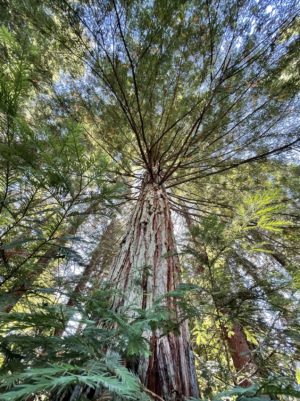 On May 23, 2025, Maine’s Governor Janet Mills signed into law “An Act to Require Landowners to Report Their Participation in a Forest Carbon Program or Project”. The new law requires landowners enrolled in forest carbon credit programs or projects to report, on an annual basis, basic data on their participation in such programs to the state of Maine. …The purpose of the reporting requirement is to provide the state with visibility into the emerging carbon credit market and the amount of land in Maine enrolled in such programs. …However, a potential challenge arises if these credits are sold in external markets to offset emissions elsewhere. Maine’s robust forest products industry also has an interest in understanding how carbon credit project enrollment may impact the overall amount of land available for harvest.