 The Tree Frog News featured the panels and speakers from last week’s International Pulp Week. In today’s Tree Frog News are links to all of the conference sessions in chronological order.
Day One – June 1, 2025
- Registration and Wecome Cocktail
Day Two – June 2, 2025
- Looking Back, Moving Forward: 20 Years of Industry Insights: Kevin Mason
- Economic Uncertainty: A Macro View on Tariffs and Markets: Joaquin Kritz Lara
- Metsä Fibre’s enhanced position in Softwood Pulp: Mikko Antsalo
- The Global Hardwood Market: Leonardo Grimaldi
- How Carbon Capture and Removal is Unlocking Opportunity: Jonathan Rhone
- Navigating EUDR Compliance with Automation and Digital Tools: Parker Budding
Day Two – June 3, 2025
- Managing Geopolitical Uncertainty and Its Challenges: Robert McKellar
- Reshaping China’s P&P Industry in a Shifting Global Landscape: Haidong Weng
- The Shanghai Pulp Futures Exchange Path to Internationalization: Jin Feifei
- How Luojing Terminal is Meeting China’s Pulp Demand: Tian Jun
- Current Trends in End-Use Markets: Mathieu Wener
- Global Pulp Market: Demand Drivers and Outlook: Emanuele Bona
 Over the past decade, Canadian forestry companies have significantly expanded their footprint in the American lumber industry. While foreign investment remains a key component of a dynamic US economy, industry analysts and policymakers are increasingly scrutinizing the long-term implications of international control over critical domestic manufacturing infrastructure. Canadian-owned firms—including West Fraser, Canfor and Interfor—now operate dozens of sawmills in the US, with many holding more assets south of the border than in their home country. Additional Canadian firms—such as Tolko, Maibec, J.D. Irving, and Kruger—also maintain active operations and land holdings throughout the country. As foreign ownership of US lumber mills grows, several key concerns are emerging: Supply Chain Autonomy… Economic Retention… Market Influence. …Industry stakeholders are urging a closer examination of the issue. Policy suggestions include incentivizing domestic ownership, increasing sourcing transparency, and evaluating regulatory frameworks around foreign investment in strategic industries.
 Western Forest Products says it will curtail all operations at its Chemainus sawmill next week, sidelining 150 employees for an indefinite period. The company said the curtailment, set to start June 18, is due to market challenges that include weaker lumber demand and higher US softwood lumber duties, as well as a lack of available viable log supplies. The company also blamed market conditions and a lack of log supplies for a similar shutdown in the spring of last year. Western Forest Products’ other mills at Duke Point, Ladysmith, Saltair and Cowichan Bay, and a value-added remanufacturing plant in Chemainus, will continue to operate, said Babita Khunkhun, senior director of communications for Western Forest Products. She said there is no end date for the curtailment at the Chemainus mill at this point, as the company monitors conditions. The mayor of North Cowichan said he was initially told 55 workers were facing layoffs.
 TORONTO – The Ontario government released
 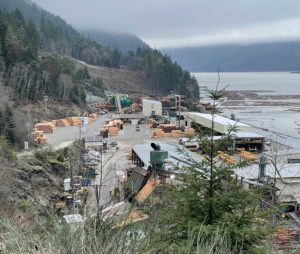 The major assets of the beleaguered San Group are under contract to be sold, awaiting only court approval. The monitor overseeing the credit-protection process has applied to the courts for approval of the sale. A court date is set for this week. …The largest creditors support the sales, despite the fact “they will suffer a significant shortfall on their debt.” The main properties in question are the Coulson manufacturing sawmills and San Group’s value-added facility in Port Alberni. There is also a mill in Langley and an adjacent agricultural parcel. The Surrey-based Fraserview Cedar has agreed to buy the Coulson facility in Port Alberni. The group has said it expects to have the mill up and running this year if the deal closes. A numbered BC company has entered into an agreement to buy the value-added facility. The buyers will lease the site to Ucluelet-based IGV Housing, which specializes in manufacturing scalable housing that combines pre-fab and on-site processes.
 SLAVE LAKE, Alberta — On Saturday, May 24, West Fraser’s Slave Lake Veneer plant celebrated its 50th anniversary with the community of Slave Lake. Several hundred community members, elected officials, Indigenous leaders, employees and retirees joined the company for a day of festivities, including lunch, bouncy castles, face painting and an opportunity to learn more about the history of Slave Lake Veneer’s operations. These directly employ 150 local residents, mostly in the mill, but also in the woodlands department, as well hundreds of more with contractors that supply the operation. …West Fraser acquired Slave Lake Veneer in 1999, as part of its acquisition of Zeidler Forest Products. At the time, the mill operated as both a veneer plant and a stud mill. In 2016, all lumber production was transferred to the newly-acquired sawmill in High Prairie. Today, veneer output is almost 13 times higher than when the plant opened in 1973.
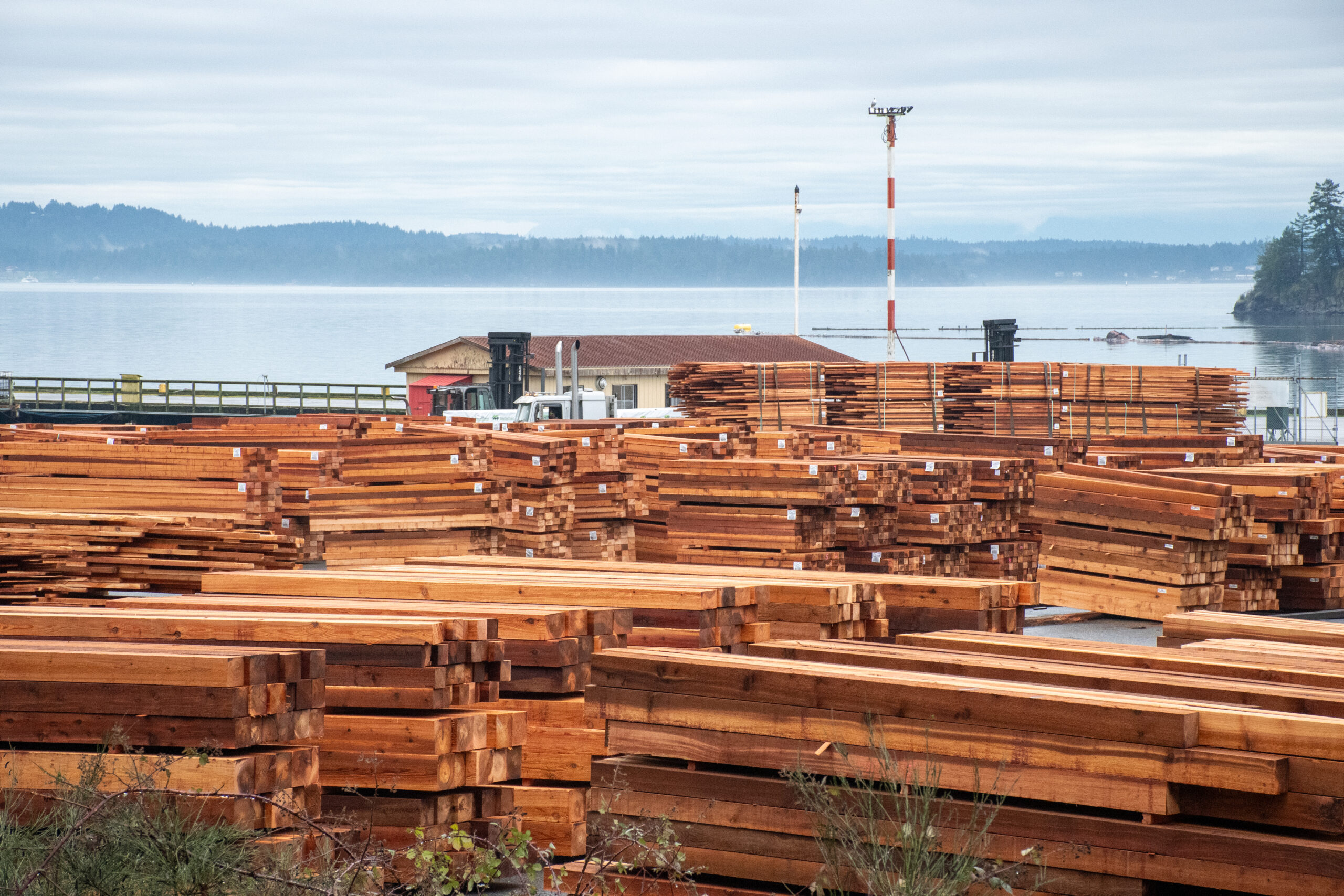 CHEMAINUS, BC — Fifty-five workers are scheduled to be laid off after a shortage of viable logs has forced production at the Chemainus Sawmill starting this month. According to North Cowichan mayor Rob Douglas, Western Forest Products has informed the municipality they intend to start curtailment of the jobs on Jun. 18. “The company has indicated the reason for the shutdown is due to their inability to find a viable supply of fiber,” Douglas says. “We don’t have a date as to when Western Forest Products is going to resume operations at the Chemainus Mill, but we hope it’s very short term.” …“I have reached out to the forest minister (Ravi Parmar),” he says. …Delays in permits and cutting fiber is a long-standing issue in BC, which has led to shutdowns and impacting production, but Douglas says he has been reassured by Parmar that the province is addressing the issue.
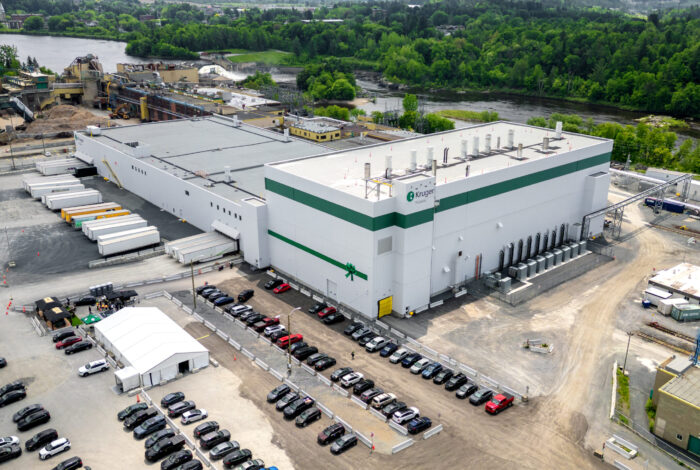
 LONDON — US and Chinese officials said on Tuesday they had agreed on a framework to get their trade truce back on track and remove China’s export restrictions on rare earths while offering little sign of a durable resolution to longstanding trade tensions. …Lutnick said the agreement would remove restrictions on Chinese exports of rare earth minerals and magnets and some of the recent US export restrictions “in a balanced way”, but did not provide details…. adding that both sides will now return to present the framework to their respective presidents for approvals. …The two sides left Geneva with fundamentally different views of the terms of that agreement and needed to be more specific on required actions, said Josh Lipsky. …They have until August 10 to negotiate a more comprehensive agreement, or tariff rates will snap back from about 30% to 145% on the U.S. side and from 10% to 125% on the Chinese side.
 A federal appeals court on Tuesday agreed to let many of President Trump’s sweeping tariffs on US trade partners remain in effect for now, extending a pause issued late last month after a separate court ruled the tariffs were illegal. The Federal Circuit Court of Appeals granted the Trump administration’s request for a longer pause after issuing a temporary stay of the lower court ruling last month. The court put the case on a fast track to be resolved by the end of this summer, noting that “these cases present issues of exceptional importance warranting expedited en banc consideration of the merits in the first instance.” The decision comes after the US Court of International Trade ruled on May 28 that Congress did not delegate “unbounded” tariff authority to the president in the International Emergency Economic Powers Act of 1977. Trump appealed the ruling and, hours later, the appeals court granted the temporary stay.
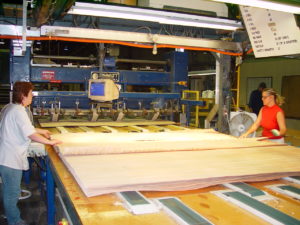 The EU has imposed anti-dumping duties on Chinese plywood imports, just a few days after Beijing tried to ease trade tensions between the two. The provisional levies of up to 62.4% follow a surge in imports of hardwood plywood over the past three years that had damaged domestic producers, the European Commission said. The Greenwood Consortium of EU producers, which brought a complaint against Chinese competitors last year, said it welcomed the move but argued for “definitive duties to be even higher than these provisional levels” when the commission makes a final decision later this year. Brussels has also taken the unusual step of monitoring imports of softwood plywood, which is not subject to duties, after allegations that Chinese exporters were disguising hardwood products in anticipation of the levies. …“The alleged practice consisted of placing very thin outer layers of softwood veneer on top of the hardwood plywood face veneer.
 Lumber futures rose past $610 per thousand board feet, a ten-week high, as steady construction activity met tightening supply and mounting trade barriers. US homebuilding remains steady with single-family starts flat at 1.36 million units in April and permits edging lower, while Canadian multi-unit starts jumped 34%, keeping mill orders firm. Canadian harvests are constrained by pine-beetle infestations, prairie wildfires that have burned more than 200,000 hectares this spring and strict cut limits that left British Columbia nearly 42% below its allowable quota in 2023. In the US, sawmill utilization stalled in the mid-70% range despite recent capacity additions. Tariffs of roughly 14.5% on Canadian softwood, along with threats of higher levies, have discouraged cross-border shipments, while major exporters divert supply to Asian and European markets. Elevated fuel and transportation costs further raise delivered prices.
 The CME’s physical lumber futures have been in a bullish trend since the July 2024 low of $455.50 per 1,000 board feet. The weekly chart indicates that lumber futures have formed higher lows and higher highs, reaching a peak of $699 per 1,000 board feet in March 2025. While the price has dropped below the $600 level, the pattern of higher lows remains intact in June 2025. …Seasonality suggests that a lumber rally may need to wait until 2026… Lumber tends to be a seasonal commodity, with prices peaking during late winter and early spring as the weather improves and construction activity increases. In 2021, the old random-length lumber futures rose to a record high of $1,711.20 per 1,000 board feet in May, and in 2022, reached a lower high of $1,477.40 in March. …Keep an eye on interest rates as declines could ignite pent-up demand for new homes, which could light a bullish fuse under the lumber futures arena.
 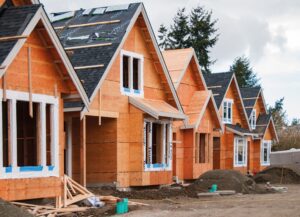 A final tally of which Ontario municipalities hit their housing targets and how many fell short last year has been finished since mid-February, according to government documents obtained, despite the province refusing to release the data for months. For the past two years, the Ford government has set targets for new homes in towns and cities, promising them extra cash if they meet those goals. The numbers Ontario uses to assess whether or not cities have hit their goals are made up of new homes, long-term care beds and additional units like basements or garden suites. The government set up a website to show which cities had hit their goals. Around October 2024, however, with housing starts across the province stuttering, the government stopped updating the tracker. …While the tracker has appeared abandoned for close to half a year, the government has had “finalized” data for months.
 Stocks wavered Thursday as President Trump threatened setting unilateral tariffs on trading partners in two weeks. The S&P 500 added 0.2%, while the Nasdaq Composite gained 0.1%. …Wall Street awaits further developments on trade policy, especially between the U.S. and China, as talks between the two countries have been a focal point this week. Trump said Wednesday he would be willing to extend a July 8 deadline for finishing trade talks with countries before higher US levies take effect, but that the extensions may not be necessary. …“We still think the primary driver for market direction and to break out to all-time highs would be some resolution for tariffs and how they interlink with the budget and the Fed. And we see a lot of headlines about negotiations or pauses or frameworks, but we still haven’t seen a single signed trade deal,” said Tom Hainlin at U.S. Bank Asset Management Group.


 WASHINGTON, DC – Fannie Mae published the results of its May 2025 National Housing Survey® (NHS), which includes the
 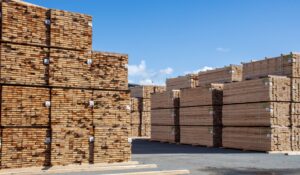 SACRAMENTO, California — There is already a crisis of available and affordable housing in America. But now, political uncertainty and economic volatility could make home buying even less attainable. …The proposed Trump tariffs on building materials are creating financial volatility that could send housing prices up significantly. Since his announcement of widespread tariffs on April 2, the additional costs imposed on imported lumber, gypsum, aluminum, electronics and other related materials delayed the nation’s housing starts in April, according to NAHB. …“More tariffs equal more anxiety and uncertainty for American businesses and consumers,” said David French, at the National Retail Federation. “Tariffs are a tax paid by the U.S. importer that will be passed along to the end consumer. …One of the largest material costs for housing construction is lumber, and the largest amounts are imported into the US from Canada.
 Japan’s government remains cautiously optimistic, sticking to its long-held conviction that the economy should be able to weather both external shocks on already sluggish growth and a cost-led surge in domestic inflation, repeating it is expected to stay on a “modest recovery” track. In its monthly report for June released Wednesday by the Cabinet Office, less than three weeks after the prior report, the government repeated that the economy is “recovering at a moderate pace but confronted by the uncertainty arising from the US trade policy.” Tokyo appears to have brought forward the release of its monthly report by about two weeks so that it could officially update the status of Japan’s economy before the leaders of the Group of Seven major nations gather for their annual summit at Kananaskis in the Canadian province of Alberta from June 15 to June 17.
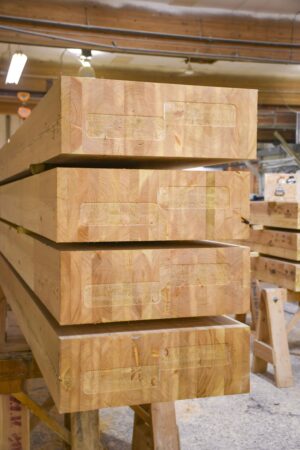 PORTLAND, Oregon – The Port of Portland is leasing a former marine terminal to a mass timber company as part of an effort to spur housing development and job growth in the area. On Wednesday, the Port of Portland approved a lease for Zaugg Timber Solutions to open a factory at the Port’s Mass Timber and Housing Innovation Campus at Terminal 2. …“Our partnership with ZTS marks a major leap forward in developing the Mass Timber and Housing Innovation Campus at T2,” said Kimberly Branam. “Their new manufacturing facility will boost our region’s economy by promoting sustainable forestry practices, creating quality jobs, and increasing housing production.” While the new 100,000-square-foot manufacturing facility is expected to open in 2028, ZTS will produce mass timber modular housing units, industrial and commercial buildings and other building components starting in 2026 in an interim manufacturing facility at the terminal, officials noted.


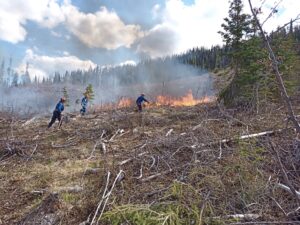 Trump administration officials on Tuesday warned of an ominous-looking fire season ahead as they repeated the case for unifying federal wildland firefighting agencies and thinning overgrown forests. Convening with the president in the White House Oval Office, Interior Secretary Doug Burgum and Agriculture Secretary Brook Rollins alternated lavishing praise on President Donald Trump with a fire-fighting call to arms and an insistence that their respective departments will be ready. “This is going to be an above-normal fire season,” Rollins said, standing near Trump, who was sitting behind the oak Resolute Desk. “This means that there is a higher likelihood of large and intense wildfires than is typically expected for this time of year for the next few months.” There were 64,897 wildfires reported in 2024, compared to 56,580 reported in 2023, according to the Boise, Idaho-based National Interagency Fire Center. The wildfires consumed 8.9 million acres in 2024 compared to 2.6 million acres in 2023. [to access the full story an E&E News subscription is required]
 The federal government could start selling off thousands of acres of Oregon public lands if provisions added to the Big Beautiful Bill win Congressional approval. A draft of the legislation was released Wednesday. Housing is also part of this latest push to sell Bureau of Land Management and Forest Service land. US Senator Mike Lee is calling for the heads of the US Interior and Agriculture departments to dispose of between 2.2 and 3.3 million acres of federal BLM and Forest Service land from 11 states – including Oregon. …Separately, the legislation calls for the Forest Service to boost logging by 75% over the next decade. It’s not clear if those logging goals are realistic. The Forest Service has missed its timber targets every year for more than a decade, though it’s possible that tariffs on Canadian lumber could boost demand for logging in the United States, according to industry analysts.
 SWEDEN — To combat the growing risks from unsustainable business practices, governments and regulators worldwide require corporates to bring greater transparency and reporting to their sustainability impact. When comes to reporting, however, arguably, not all industries are the same. Forests are key to addressing both climate change and biodiversity loss, two of the most urgent challenges for the global community. …If reporting (and other) regulations are to encourage forestry organizations, and their stakeholders, to make more sustainable choices, more needs to be done to increase understanding of the specific sustainability impacts of the industry. Three key areas should be addressed: reporting models, underlying data, and success cases. …An evolving regulatory environment with potential broad implications for forest companies combined with a fragmented reporting landscape diminishes the useability of information for stakeholders as a steering tool.

 TEXAS — A plan to open a bioenergy plant in Newton County has reached a new milestone with a landmark deal to supply wood for the site in Bon Wier. Mike Lout with KJAS, reports Nick Andrews, President and CEO of the Scottsdale, Arizona-based USA Bioenergy, announced on Tuesday that his company has
  GEORGETOWN, South Carolina — Over 650 Georgetown residents have signed a petition opposing a proposed biomass plant at the site of the International Paper mill that closed last year. The group Citizens for Georgetown says it is working to revitalize the town’s waterfront through “thoughtful redevelopment.” 653 people are opposing the plant that would generate energy for Santee Cooper from tree waste. …Citizens for Georgetown Chairman Tom Swatzel. “Now, we face a critical choice: leave decades of pollution in the land and water, continue with heavy industry OR clean up the site and reimagine these properties into a vibrant, sustainable future that benefits all residents.” …State Sen. Stephen Goldfinch expressed cautious optimism over the proposed plant, saying that it could involve an investment of nearly $4 billion and create new jobs.