 President Trump’s shifting trade policies are creating uncertainty for the Canadian forestry industry. Sean McLaren, CEO of West Fraser Timber, says the potential inflationary effects of tariffs could weigh on future demand. “Looking forward, we see considerable macroeconomic uncertainty, particularly stemming from the US’s evolving tariff policies”. He said the company is planning for multiple scenarios. …RBC’s Matthew McKellar said that the outlook for the paper and forest products industry is highly uncertain when it comes to demand. “All of this uncertainty is bad for business,” said Derek Nighbor, CEO of Forest Products Association of Canada. Nighbor added that any impact on Canadian lumber companies will also affect pulp and paper: “We’ve got all of these downstream industries that depend on those inputs.” …McKellar noted that companies like West Fraser, Interfor and Canfor are geographically diverse, meaning potential softening of demand could be the bigger concern.
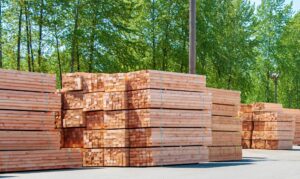 James Furney, mayor of Port McNeill, BC… is trying to stay upbeat, but his lumber town was already suffering before the threat of Trump’s trade war. …“To think that anyone is going to be insulated from what is going on with Trump would be delusional,” Furney said. “We are a forestry town and people around town are already watching their wallets and curtailing their spending, and businesses that should be ramping up now to hire summer students aren’t going to be hiring.” …In short, B.C. has plenty of wood and plenty of potential buyers for it, especially in the US, which was a $5.69-billion export market for the province in 2024, but not enough of that wood has been getting cut in recent years. That makes for gloomy days on the West Coast; a malaise that could spread to Ontario and Quebec and push the industry to the brink of collapse.
 An appeal contesting a 12-month notice period awarded to an operations specialist who had been recruited from a long-term, secure position
  President Trump and Treasury Secretary Scott Bessent hinted at a trade-war deescalation with China, as Wall Street hoped the US was preparing for an off-ramp from the weeks-long trade battle. “145% is too high, it will come down substantially,” Trump said of the level of tariffs on Chinese imports. He said he was optimistic about trade talks, adding that he plans to be “very nice” to China to reach a deal. Trump’s comments came after Bessent told investors in a closed-door summit Tuesday that he sees a deescalation in the US-China tariff situation, prompting a US stock rally on Tuesday that carried into Wednesday. Bessent called the tit-for-tat tariffs with China unsustainable, echoing the sentiments shared with Yahoo Finance last week that he was optimistic about “clarity” on tariffs. …China said it is open to trade talks with the US but struck a still-defiant tone.
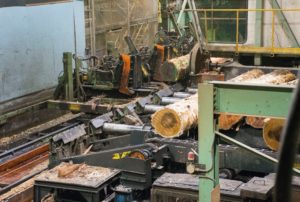 Once Oregon’s largest manufacturing industry, employment in the wood product manufacturing industry has gone through large, well-publicized losses since the early 1990s. Its employment has dropped below that of computer and electronic manufacturing and food manufacturing in recent years, but it remains the third largest manufacturing industry. Despite the losses, wood product manufacturing is still a large industry in Oregon and is especially important to rural areas of the state. Over the long term, between 1990 and 2020, annual average employment in wood product manufacturing dropped 24,100, or 52%. Similar losses were experienced in all its subsectors. Sawmills and wood preservation dropped 5,900 (49%); plywood and engineered wood products dropped 9,500 (53%). …Even with the long-term decline, wood product manufacturing is still a large industry in Oregon. In 2024, there were 22,400 jobs and roughly $1.5 billion in total payroll in the industry.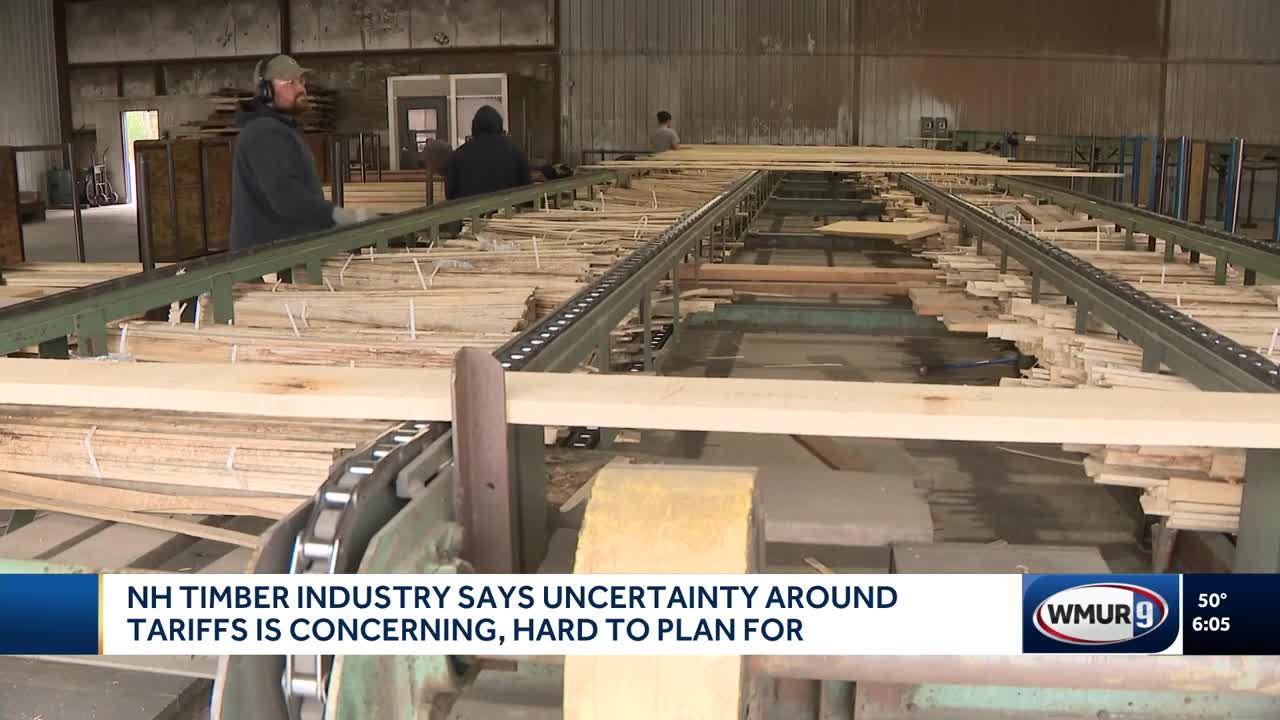
 VANCOUVER, BC – West Fraser Timber reported first quarter results of 2025. …First quarter sales were $1.459 billion, compared to $1.405 billion in the fourth quarter of 2024. First quarter earnings were $42 million, compared to a loss of $62 million in the fourth quarter of 2024. The fourth quarter included a non-cash impairment loss of $70 million. …First quarter Adjusted EBITDA was $195 million compared to $140 million in the fourth quarter of 2024. ..The Lumber segment has experienced a slower than expected start to the year, owing to transportation and weather challenges that have influenced shipments as well as uncertainty related to demand impacts from the U.S. administration’s shifting tariff policies. …The global pulp market has begun to experience disruption with the economic impact of US tariffs creating considerable demand uncertainty in Chinese markets. As such, we anticipate NBSK pricing weakness over the near- to medium-term and a potentially significant adverse financial impact on our Pulp & Paper segment.
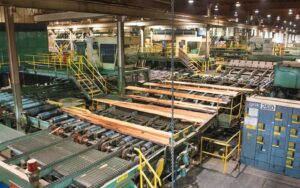 President Trump is reshaping America’s timber industry, directing federal agencies to boost domestic lumber production while investigating whether foreign imports pose a national security threat. The US construction market consumes more than 50 billion board feet of lumber annually, with domestic production currently meeting only 70% of demand. Canada fills most of the gap, supplying roughly a quarter of America’s lumber needs. …His executive order instructs the Forest Service and Department of Interior to increase timber sales from public lands. Industry experts, however, question the feasibility of such rapid transformation. Pete Stewart, of ResourceWise, points out significant challenges: “The U.S. would have to build 70 new sawmills to make up the difference.” The geographic reality also presents obstacles. While Southern forests from Virginia to eastern Texas grow 30% more trees than local sawmills demand, forests in the Northwest are already harvesting at capacity. …Critics also question the national security rationale.
 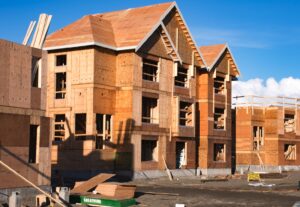 This is the USD 64,000 question. …What we currently know is that Canadian softwood lumber carries a 14.5% tariff rate, which could expand to 34.45% later in 2025. …If we split the difference between the NAHB’s and FEA’s estimates, the average sized new home consumes 34,000 bf of lumber. As such, should the tariff increase to 34.45%. …,Should the administration levy an additional 25% “immigration and Fentanyl tariff” on Canadian lumber (which is currently exempt), the cost/home would rise to approximately USD 1,100/home. …In reality, total wood usage in home construction includes a variety of wood types including softwood lumber, oriented strand board, engineered lumber and plywood. Each category has its own pricing and supply dynamics. One additional point… It is estimated that the repair and remodel (R&R) market accounts for 35-40% of lumber demand while single-family home construction accounts for an additional 35%. …For more on the latest real estate trends,
  Tariff uncertainty continued to weigh on Vancouver’s housing market in March, deepening the slowdown in activity. Escalating US trade actions have fuelled fears of a recession, job losses and equity market volatility, pushing many potential buyers to the sidelines. The latest data from the Greater Vancouver and Fraser Valley real estate boards showed a deepening of the sales pullback in March. MLS sales fell 17.6% year over year. …The severe drop in home sales aligns with declining business confidence, which has plunged to record lows—a pretty good bet that weak confidence is playing out in housing. With sales held back, inventory has ballooned. Active listings were up 43% year over year and marching higher. …Meanwhile, after recording a surplus in merchandise trade balance for two consecutive months, Canada’s trade balance shifted to a deficit in February as exports retreated significantly following a frontloading of US imports.


 February 2025 Southern Pine lumber exports (treated and untreated) were up 4.7% to 40.8 Mbf over January but were down 15% over February 2024, according to February 2025 data from the USDA’s Foreign Agriculture Services’ Global Agricultural Trade System. When looking at the report by dollar value, Southern Pine exports are down 4% compared to the first two months of 2024 at $32 million. Mexico led the way at $8.4 million, followed by the Dominican Republic at $6.7 million, and Canada at $3.3 million. The total global value in February, however, hit a five-month high of $16.5 million. Treated lumber exports, meanwhile, were down 8% to $18.3 million through the first two months of 2025 compared to a year ago led by Jamaica at $3 million, the Leeward-Windward Islands at $2.6 million, and the Netherlands Antilles with $2 million.
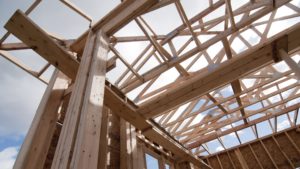 NEW YORK — Associated General Contractors of New York State CEO Mike Elmendorf says that under the tariffs proposed by President Trump, the cost for any kind of construction could further skyrocket. “When tariffs go on a material that is sourced from outside the United States, a funny thing happens,” Elmendorf said. “In many cases, domestic producers or suppliers of that material raise their price too because they can. Not as much as the tariff, but it sort of, it pushes everything up.” …Canadian lumber is one of the most critical imports needed for U.S. construction. “Especially the builders up in Western New York are concerned it’s going to affect them quicker and harder than the rest of the state,” said New York State Builders Association Executive Director Mike Fazio. Elmendorf said what might be an even bigger issue than the tariffs themselves is the uncertainty surrounding them.”
 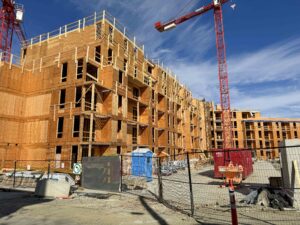 CALGARY — The one constant of Trump’s tariff plan seems to be that it is in a constant state of flux. “The time is now to start planning for what those impacts could possibly be and develop the mitigation strategies and tracking mechanisms…so that as they (tariffs) evolve in real time you are prepared to deal with them,” said Rick Moffat. Moffat moderated a webinar panel recently on legal and practical strategies for managing the impacts of the tariffs on construction projects in Canada. …Stressing the importance of detailed contingency plans that account for potential cost hikes caused by tariffs, Bulut Cinar said contractors would benefit by including “multiple scenarios” illustrating how their contingencies help manage their costs. …If contractors consider delay-causing tariffs a force majeure event, but the contract deals with tariffs differently they might be “precluding themselves” from compensation, he added.
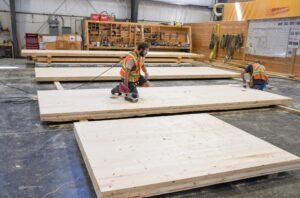 To reach Ontario’s bold goal of 1.5 million homes by 2031… we have a proven solution — and much of what we need, from innovative building techniques to mass timber and Canadian steel, is right here in Ontario’s backyard. …The Ontario Real Estate Association (OREA) released a new policy report, titled Building More, Building Faster, outlining the importance of embracing factory-built homes as a key part of the solution to address Ontario’s ongoing housing supply and affordability crisis. …Factory-built, or prefabricated housing, is a fast-growing area of homebuilding where homes are constructed in a factory — often using prefabricated 3D components — and assembled at their final address. …OREA’s new report highlights five policy recommendations that would cut red tape and create favourable conditions for investment to significantly boost factory-built housing construction with “Made-in-Ontario” solutions that can eventually scale nationally.
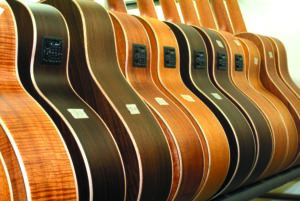 UK — Nearly half of birch wood certified by leading sustainability schemes is misidentified and does not come from the labelled country of origin, according to new testing. The analysis raises fears that large quantities of sanctioned wood from Russia and Belarus are still illegally entering Britain. New research by World Forest ID… scrutinised the accuracy of dozens of harvesting-origin claims on birch products, which had almost entirely been approved by FSC and PEFC sustainability schemes. The samples of birch – a popular hardwood used in furniture, kitchens panels and musical instruments – were labelled as originating in Ukraine, Poland, Estonia and Latvia. But tests using the wood’s “chemical fingerprint” showed that 46% of certified samples did not come from the origin on the label. …While the tests did not specify the country where the wood was grown, experts said Russia and Belarus were the only plausible origins.
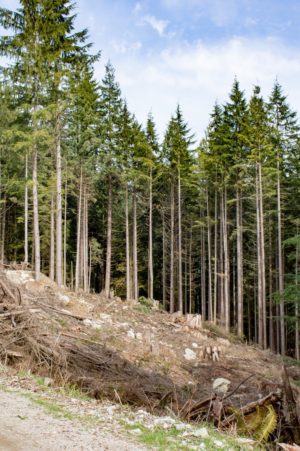 The Trump administration plans to eliminate habitat protections for endangered and threatened species in a move environmentalists say would lead to the extinction of critically endangered species because of logging, mining, development and other activities. At issue is a long-standing definition of “harm” in the Endangered Species Act, which has included altering or destroying the places those species live. Habitat destruction is the biggest cause of extinction, said Noah Greenwald, endangered species director at the Center for Biological Diversity. The US Fish and Wildlife Service and National Marine Fisheries Service said in a proposed rule issued Wednesday that habitat modification should not be considered harm because it is not the same as intentionally targeting a species, called “take.” Environmentalists argue that the definition of “take,” though, has always included actions that harm species, and the definition of “harm” has been upheld by the US Supreme Court.
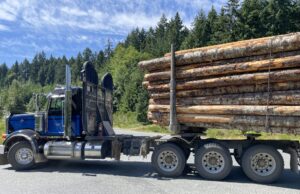 Logging is not necessarily a dirty word in the environmental dictionary. There, I said it. Provided sustainable practices are used, namely the careful choice over what trees get chopped down, logging can have a positive impact on the health of our forests as part of an effective management strategy that includes mechanical thinning and prescribed burning. Selective logging can also mitigate the risk and destructive power of wildfires. …This is my way of saying logging shouldn’t automatically be perceived as an environmental threat – despite what history tells us is the result when chainsaws and bulldozers are employed by the wrong hands. …Environmental groups reacted with outrage to Trump’s order, calling it a thinly veiled attempt to bypass environmental laws in order to justify widespread commercial logging under the false pretense that such actions will reduce wildfire risk.
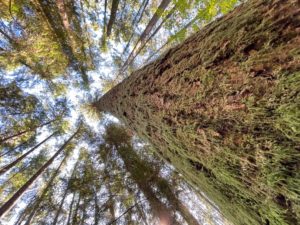 From the summit of Katahdin, the view is of forests stretching in all directions. …Forty-five years ago this scene would have been quite different. A voracious insect called the spruce budworm was ravaging Maine’s North Woods, killing mountainsides of balsam fir and red spruce. …Today, foresters and landowners are nervously tracking a renewed spruce budworm presence in the North Woods. The insects have already stripped hundreds of thousands of forest acres in Quebec and Ontario. After decades of heavy logging, scattered tracts are being managed with ecological timbering methods that strive to maintain natural systems — but most are not. Questions abound over how the state’s forests, both the northern timberlands and smaller, privately owned tracts throughout the state, will fare in a world beset by climate change. …And there’s the coming spruce budworm invasion.