
Tony Kryzanowski
Canadians faced with escalating fuel costs, crushing grocery bills and higher rent are understandably less concerned about the environment these days, according to the latest public opinion polls. And predictably, politicians eager for re-election are following the polls in terms of their own priorities. But the numbers don’t lie. The world is becoming warmer and climate change is real. The consequences go far beyond the recent ferocity of repeated massive forest fires right across Canada. Given what appears to be a more muted voice in environmental advocacy these days, this is the forestry sector’s moment to present itself as Canada’s strongest champion for the environment because we undeniably have a great story to tell. …A good starting point for industry to develop its environmental advocacy strategy is to take stock.
We should revisit past important research and development initiatives as it relates to wood fibre as the feedstock. This includes further commercialization of bio-based nanotechnology from cellulose, expanding the market for mass timber products, exploring afforestation potentially with fast-growing wood species to grow the wood basket while also expanding the forest footprint to achieve greater carbon sequestration, substituting wood pellets for diesel to provide power to northern communities, and rehabilitating landscapes marred by industrial activity. …It’s astounding to think of how many billions of dollars of investment are being considered for such unproven practices as carbon dioxide sequestration from Canada’s oil and gas industry, when trees represent the largest, single natural carbon sequestration tool on the planet—and Canada has the second largest landmass in the world. …The field is now so much more wide open and desperately looking for a champion to remind us that climate change is here to stay—unless we take action and that forestry can and should be a much bigger part of the solution.

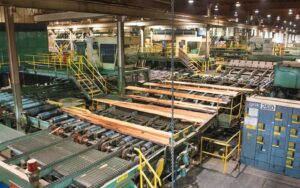 The Trump administration’s latest tariff onslaught won’t just hurt Canadian forestry workers during already tough times, but will also undermine U.S. efforts to make housing more affordable, says the head of the Forest Products Association of Canada. “Overall for us, 98 tariff line items were added for forestry, which is a direct assault on our sector and on our workers here in Canada,” Derek Nighbor, president and CEO of the association, said in an interview Wednesday. …“If implemented, these sweeping 50 per cent tariffs represent a drastic and unjustified barrier to a highly integrated North American supply chain,” said Ian Dunn, president and CEO of the Ontario Forest Industries Association. …The BC Council of Forest Industries counts 21 lumber mills that have closed since 2023. The council “urges a fair, long-term solution that avoids further economic harm in both countries,” said CEO Kim Haakstad, who was in Washington for meetings with US lawmakers.
  United Steelworkers union (USW) Canadian National Director Marty Warren said… “President Trump has once again chosen confrontation over co-operation, directly threatening the livelihood of Canadian workers, and the future of industries and communities. The USW is particularly concerned with the Trump administration’s targeting of Canadian forest and wood products in this latest round of tariffs. Canadian forestry workers and producers are already under immense pressure because of illegal U.S. section 232 tariffs and unreasonable anti-dumping duties. These measures have nothing to do with fair trade and everything to do with leverage. They are another attempt to use economic coercion to force Canada into concessions that serve the interests of the United States. …When countries negotiate and sign an agreement such as CUSMA, each party should be expected to respect and honour its commitments. …The federal government should continue to negotiate, but we cannot be bullied.

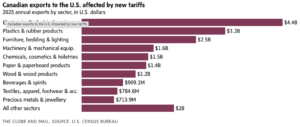 The White House has ramped up its trade war with Canada by threatening tariffs on a seemingly esoteric list of goods that would deliver a serious blow to companies caught in the crosshairs, even if the broader impact on the country’s economy should be limited. President Trump issued a trio of executive orders imposing 50% tariffs on more than 500 categories of products, ranging from larger sectors such as electronic equipment and furniture to a hodgepodge of products including hockey sticks, Canadian whisky and even some antiques. The tariffs would apply to roughly US$20-billion of imports from Canada, which represents roughly 5% of Canada’s shipments to the US in 2025. …The new tariffs are also set to impact a broad range of Canadian forest products. …Expanding the tariffs is deeply disappointing, Derek Nighbor, president and CEO of Forest Products Association of Canada said. [to access the full story a Globe and Mail subscription is required]
 Donald Trump’s most consequential construction project may be his tariff wall. His latest threat to raise tariffs to 50% on some Canadian goods, as drastic as it is, is not nearly as significant as what’s coming next. By the end of this month, the administration is expected to introduce major tariffs on dozens of countries. Unlike most previous rounds of tariffs, the new ones are backed by monthslong investigations into alleged unfair trade practices. No court has ever overturned this kind of tariff. But the biggest obstacle to undoing Mr. Trump’s tariffs after 2028 will be financial. With the national debt clocking in at a staggering $39.6 trillion, the market responsible for selling this debt has quickly grown addicted to the money coming into the government from tariffs. …In less than a year, America’s financial markets needs them to help cope with the country’s deficit. [to access the full story a NY Times subscription is required]
 US President Trump has
 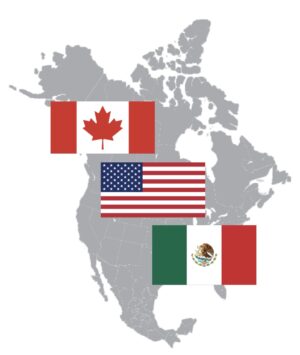 It may appear that Trump’s move to hit many Canadian products with new tariffs of 50% came out of the blue, but there are clear signs of what’s driving the tactic. The announcement comes as the US pushes for significant changes to the Canada-U.S.-Mexico Agreement. …The Trump administration wants to wipe out as much of Canada’s leverage in those talks as possible. Some of that leverage comes from eight Canadian provinces banning the import and distribution of US alcohol products. …But retaliation for that boycott is just one of three ostensible reasons US trade representative Jamieson Greer gave. …”Canada has given better market access to dairy products from the EU, and has put a cap on US vehicle exports from companies reshoring to the US,” Greer said. …The US has listed nearly 500 product categories impacted, some of which clearly relate directly to trade irritants. But dozens seem chosen at random.
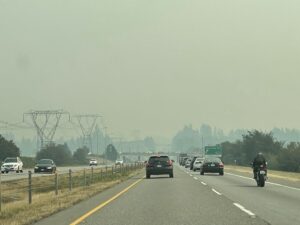 US Ambassador to Canada Pete Hoekstra says President Trump‘s threat to impose new tariffs over smoke from Canadian wildfires should be taken seriously. Smoke from Canadian wildfires has blanketed several major American cities. “We are holding Canada responsible for the fact that they are not properly maintaining their Forests, and Brush therein,” Trump wrote on Truth Social. He said the wildfire smoke amounts to “Willful Negligence” and is “costing the US Billions of Dollars.” He added that the cost of the pollution “is incalculable” and should be “added to the tariffs Canada currently pays.” …Hoekstra would not say how large any potential tariffs could be or what legal mechanism the administration might use to impose them. But he said Canada could face consequences if the issue is not addressed. …The criticism comes despite the administration’s own moves to scale back US climate action.
 Ontario Premier Doug Ford on Saturday blasted the criticism leveled at the Canadian government by the Trump administration and congressional Republicans over its handling of raging wildfires as “totally unacceptable.” “We’re trying to get through this,” Ford said, calling the rhetoric coming from some in the US “shameful.” President Trump threatened on Friday to impose additional tariffs on Canada over what he described as the government’s “willful negligence” and refusal to engage in “basic Forest Management”. The president said he planned to call Prime Minister Mark Carney to “find out what they are going to do” about the hundreds of wildfires raging across Canada. There were 955 active fires as of Saturday. Ford described current conditions as a “terrible scenario”. …Ford suggested those lawmakers have a “short, short memory,” noting how Canadian hydro-linemen and water bombers assisted in battling wildfires in California, Georgia and South Carolina last year.

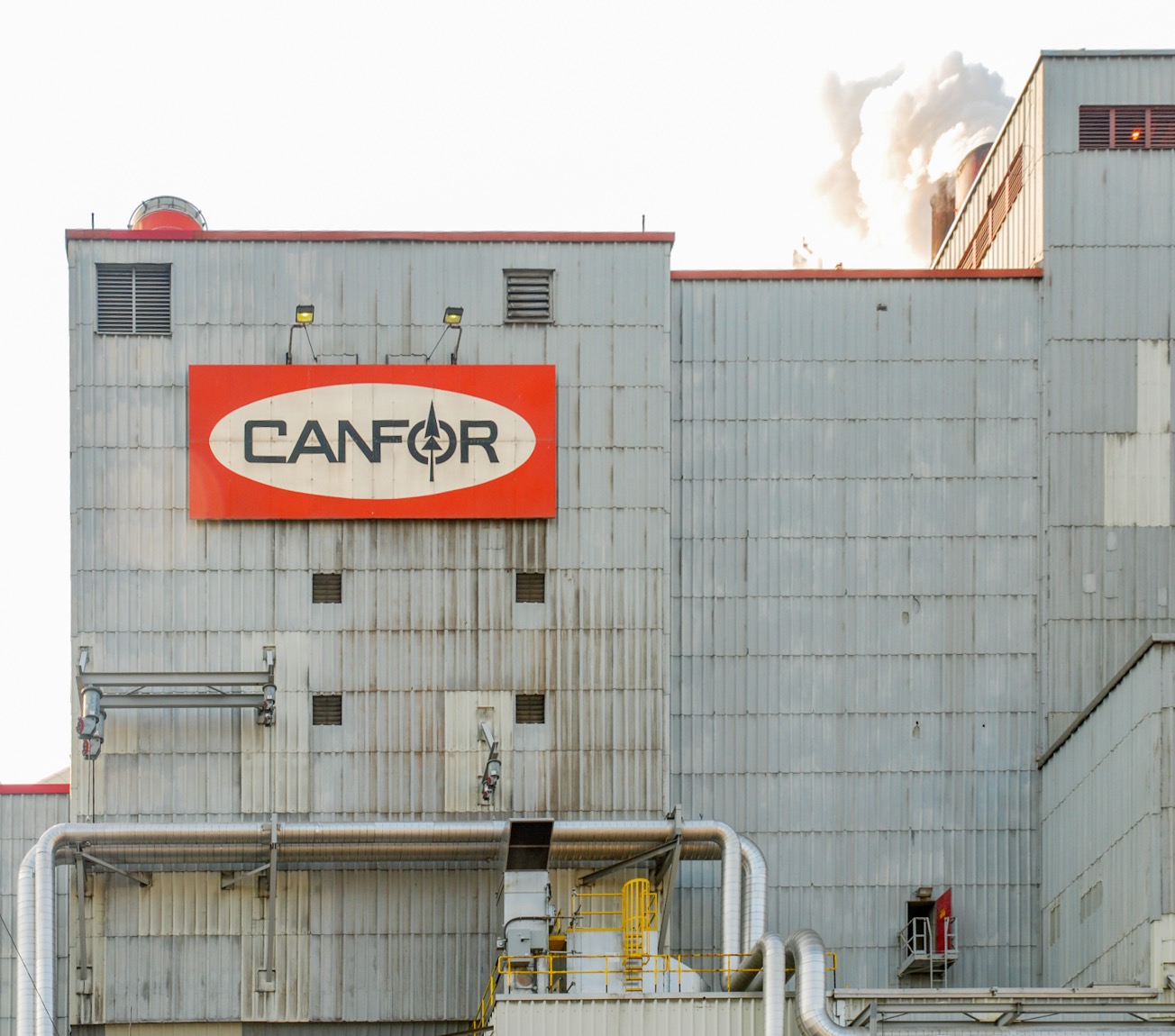
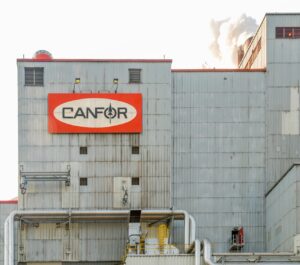 PRINCE GEORGE, BC – The closure of Canfor’s Northwood pulp mill is putting renewed pressure on governments to support forestry workers in Prince George, with both union and political voices pointing to retirement bridging as one of the most urgent needs for workers facing job loss. The Northwood closure has left workers trying to understand what comes next, including when their jobs will end and whether there will be comparable work available in the region. Chuck LeBlanc, National President of PPWC, says many workers are still processing the announcement. …But finding similar work in Prince George could be difficult as there are fewer options left following years of mill closures and downsizing. …LeBlanc says one support that has been pushed before is bridging to retirement, a program that could help older workers leave the workforce with financial assistance while opening up jobs for others lower on the seniority list.


 KINGSPORT, Tennessee — The next steps in a federal lawsuit against Domtar Corp. over Kingsport odor are to determine whether or not the lawsuit can proceed as a “class-action” lawsuit, according to legal documents. Two Kingsport residents and Domtar, the plaintiffs and the defendant, respectively, are expected to attend private mediation over the lawsuit by Dec. 15. Both parties agreed to separate parts of the lawsuit into different phases — whether the lawsuit should move forward as a class-action lawsuit, and the merits issue of the case — “for purposes of efficiency and to make this case significantly more manageable,” according to legal documents. The latest document related to the case available in PACER, an electronic database that provides public access to federal court documents, outlines deadlines throughout 2027 to litigate the lawsuit’s class designation.
 The U.S. Department of Commerce
 The US will impose a 25% tariff on most imports from Brazil starting July 22, the U.S. Trade Representative’s office said on Wednesday — the first action under the Trump administration’s new tariff strategy that could eventually affect dozens of countries. …Wednesday’s announcement follows a proposal by the Trump administration in June to impose a punitive tariff of 25% on many imports from Brazil after deciding its practices were unfair on a range of issues from digital trade to illegal deforestation. The tariffs would apply to thousands of Brazilian imports, including sugar, agricultural machinery, apparel, electrical machinery, paper and steel. The U.S. said it would exempt all the products proposed for exemption in the June notice, except high-purity dissolving pulp and non-pharmaceutical applications of certain products. The exemptions include beef, coffee, rare earths, energy products, aircraft and aircraft parts.


 GERMANY — Mercer Torgau announced strategic actions at its Torgau facility in Germany including an expected overall workforce reduction of approximately 350 positions. …Mercer Torgau has been impacted by ongoing uncertainty in the global economy as well as heightened raw material and energy costs. …These strategic actions involve initiatives to streamline Mercer Torgau’s organization and processes, along with adjustments to its product portfolio. Among other things, Mercer Torgau’s production capacity and workforce structure will be realigned with market conditions. An initial reduction of approximately 100 contractor positions is expected in July 2026, and Mercer Torgau expects an overall workforce reduction of approximately 350 positions. Strategic actions have commenced and are expected to be completed in stages, completing in or about the second quarter of 2027. …Mercer Torgau manufacturing focuses on lumber for construction and packaging, pallets, planed wood products, wood pellets and briquettes.
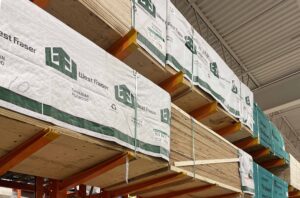 West Fraser, North America’s top lumber producer, is taking a hit from President Trump’s latest round of tariffs on Canada. Its stock is one of the day’s worst performers among forest and building-products shares. The BC company that has sawmills and other wood-products facilities on both sides of the border is already contending with Trump’s 10% national-security tariff on lumber as well as the long-standing duties on Canadian softwood exports. The 50% tariffs Trump announced exempt softwood lumber but include plywood and specialty engineered wood products. West Fraser’s exposure should be minimal because most of its products slated for the 50% levy are sold in Canada, according to TD Cowen analysts. They estimate that just 1% of West Fraser’s aggregate sales would be exposed. And that is assuming that the tariffs stick. [to access the full story a WSJ subscription is required]
 RUSS TAYLOR provided the latest quarterly report from the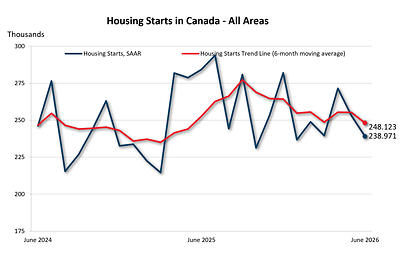

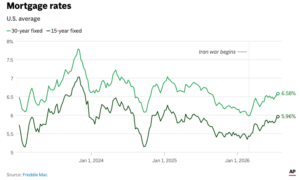 The average long-term U.S. mortgage rate climbed this week to its highest level in nearly 12 months, pushing up borrowing costs for prospective homebuyers at a time when
  Congress’ historic effort to boost the nation’s housing supply passed both chambers with overwhelming bipartisan support and became law earlier this month. It also left a mountain of paperwork for Washington’s significantly shrunken federal agencies, which are now tasked with turning dozens of new policies into reality. Some of the lawmakers who pushed for the law worry that the Department of Housing and Urban Development — which has shed more than 30% of its core policy workforce in just three years following budget cuts — is too understaffed to quickly issue new rules and implement its provisions, aimed at making building and buying homes cheaper and easier. HUD Secretary Scott Turner is “up to the task, but you’ve got to have the underlying organization to get it done,” Sen. Thom Tillis (R-N.C.) told reporters. …HUD’s budget estimates show the offices that run the department’s programs shed more than 1,800 staff since 2023.

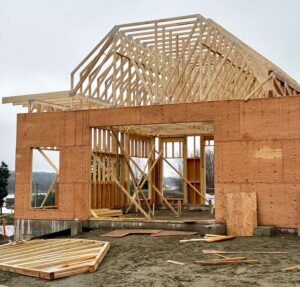 US single-family homebuilding and permits for future construction fell in June, weighed down by higher mortgage rates and inventory of unsold new homes on the market. Single-family housing starts, which account for the bulk of homebuilding, slipped 0.2% to a seasonally adjusted annual rate of 895,000 units. Single-family homebuilding dropped 3.2% year-on-year in June. Permits for future construction of single-family homes dropped 2.4% last month to a rate of 871,000 units. They fell 0.2% year-on-year in June. The rate on the popular 30-year fixed-mortgage has increased by nearly 60 basis points since the US and Israel attacked Iran at the end of February. …Building permits for multi-family housing projects dropped 4.9% to a rate of 445,000 units last month. Overall building permits fell 3.0% to a rate of 1.367 million units. They declined 2.3% year-on-year in June.


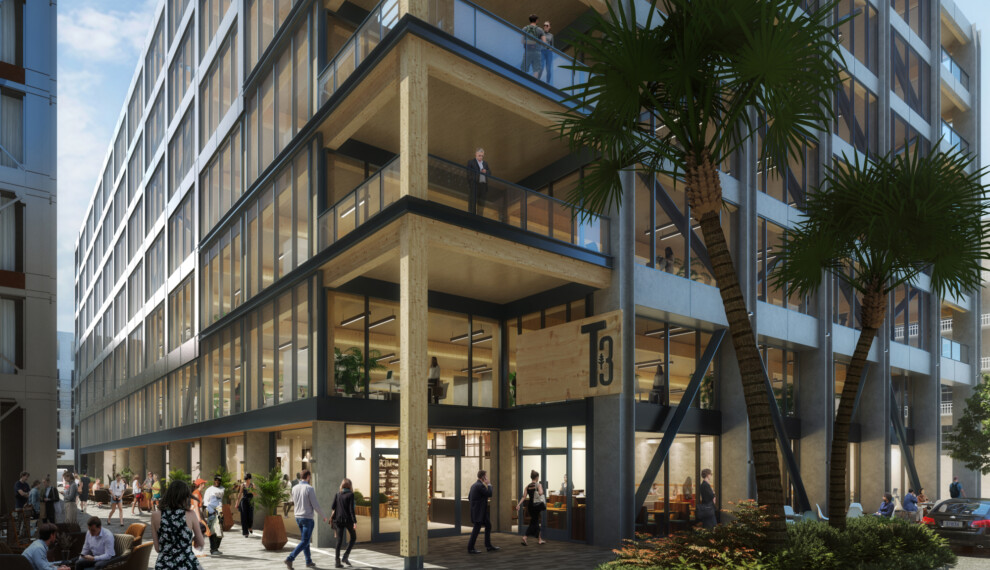

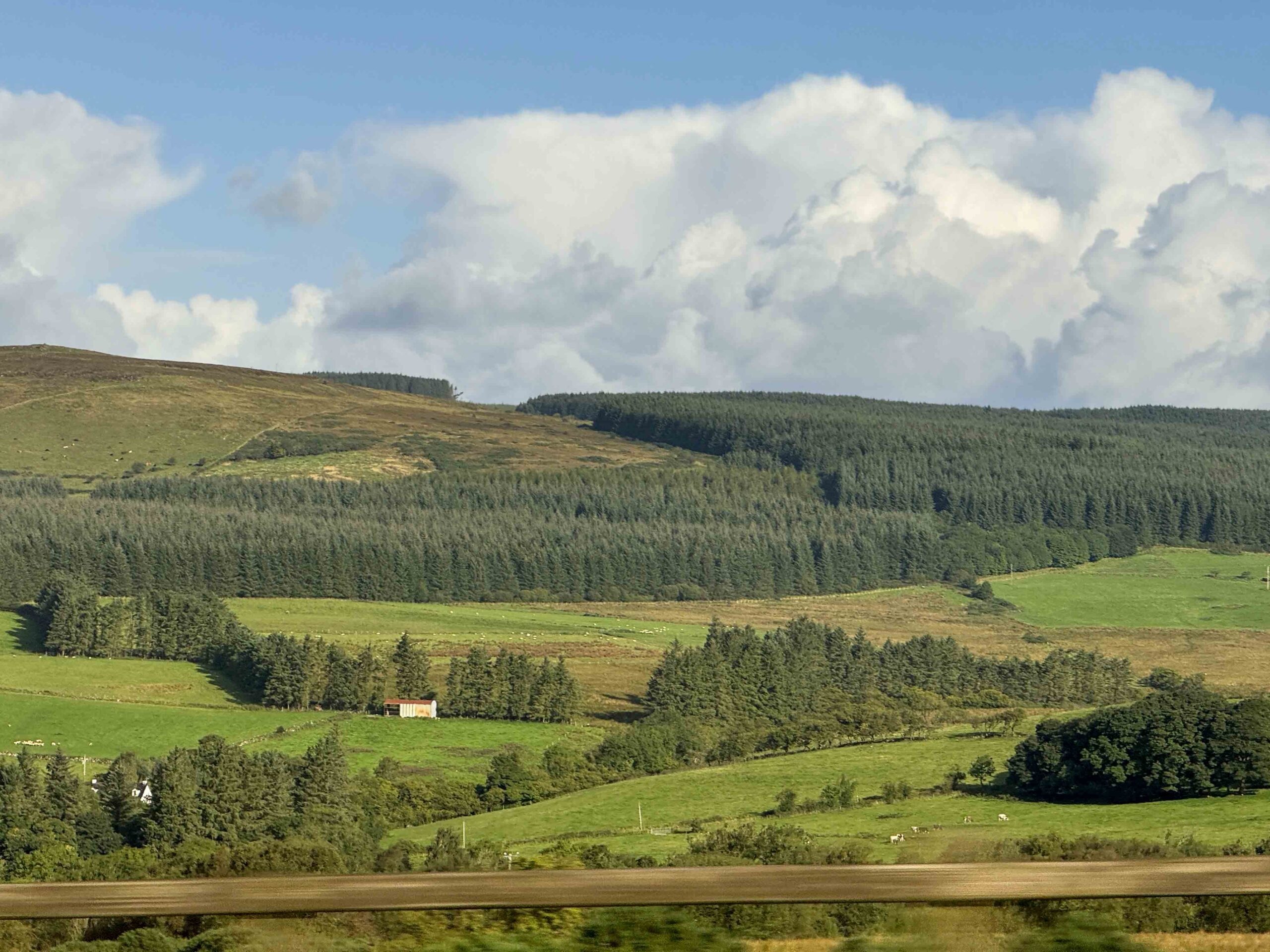 IRELAND — Timber construction is moving from the margins of Irish residential development to its mainstream. An
  ASHEVILLE, North Carolina — The fourth floor of the new apartment building on Long Shoals Road is designed like the upper levels of countless other rental blocks: A staircase on one end of the floor is connected by a long corridor to another set of stairs at the opposite end. Floor plans with two sets of stairs are mandated by decades-old building-code requirements based on outdated fire-safety concerns. …Eliminating the second-staircase rule would cut construction costs and open up more income–generating living space. …Citing such potential benefits, state Sen. Julie Mayfield, and Sen. Tim Moffitt co-sponsored a bill, that would end the second-staircase mandate for apartment buildings up to 75 feet tall. Firefighting groups oppose the bill, not all local builders are convinced it will be a difference maker, and its progress stalled. …The effectiveness of such features can be seen in New York City and Seattle.
 A Saanich councillor’s attempt to recognize trees’ right to live will have to wait until next term. Saanich council voted down Coun. Nathalie Chambers’ motion to have the district endorse the principles of the Universal Declaration of the Rights of the Tree, which recognizes trees as vital living beings, deserving protection including the right to life, natural growth, integrity and regeneration. While all members of council took the opportunity to stress their love of trees, none supported the motion. Coun. Zac De Vries said the declaration was well-intentioned, but more clarity is needed about how it would affect current policies. …Chambers’ inspiration for the motion was the Quebec town of Terrasse-Vaudreuil, which last month voted to recognize trees as living beings with rights.
 In the battle against one of the most significant forest fires of this summer, the BC Wildfire Service says that for the first time in Canada it has used a drone to ignite a controlled burn. …The wildfire service began testing remotely piloted aircraft systems on prescribed fires several years ago with the intent of using them alongside traditional aircraft and to support ground crews. The drones use a plastic sphere dispenser to drop fire into specific areas “controlling the spacing and intensity of the fires and avoiding placing firefighters in challenging or dangerous terrain.” …“The drone used for ignition is accompanied by observation drones outfitted with infrared and imaging capabilities, which gives us project intelligence not just during ignitions but through all phases of operations”. …The new technology improves firefighter safety and decision-making and helps the wildfire service “better protect communities and the environment,” it said.
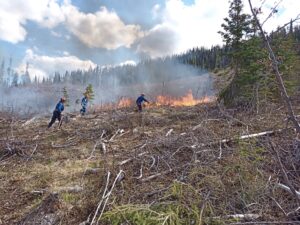 It was more than a decade ago that the Ontario government started to worry about its wildland firefighting program. Back in 2016, a

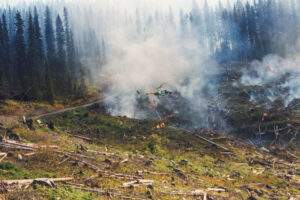 America’s top forester has fronted Congress as US wildfires burn through more than 3.9 million acres, with the 2026 fire season on track to rank among the most severe in recent years. That is according to Dan Newhouse, chairman of the House Agriculture Subcommittee on Forestry and Horticulture, who told Wednesday’s hearing with US Forest Service Chief Tom Schultz that crews are battling 72 large fires among more than 40,000 recorded nationwide this year. Newhouse, a Republican whose central Washington district has lost hundreds of homes to fires still burning, used his opening statement to link the crisis to a “generational decline” in the health of the nearly 200-million-acre National Forest System. A fire that started in the north of his district at the end of last week has already grown to nearly 70,000 acres, he said. Overgrowth, invasive species outbreaks, underused management tools, litigation, and maintenance backlogs are dragging the system down, Newhouse said.
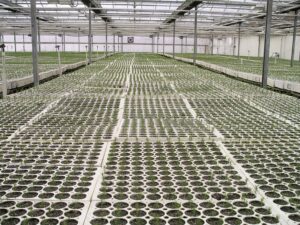 A windowless warehouse on the outskirts of Davis shelters pieces of California’s forests. …“This is like the mothership of forestry in California right here,” said Stewart McMorrow, staff chief for wildfire resilience at Cal Fire, standing outside the heavy metal door of the state seed bank at Cal Fire’s Lewis A. Moran Reforestation Center in Davis. Private landowners especially rely on these seeds — some now more than a half-century old — to reforest property destroyed by wildfire. At the pace California is burning, it’s nowhere near enough. Climate change and more than a century of overzealous fire suppression are now fueling wildfires so severe that they’re wiping out the very forests that need fire to thrive — leaving iconic landscapes at risk of turning into brush and scrub, permanently. Over the past quarter century, high-severity wildfires have burned 2.3 million acres of California’s forestland so completely that the trees are unlikely to return on their own.

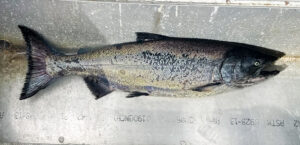 Two Western Washington tribes are suing the Trump administration to save endangered-species habitats nationwide. The lawsuit, filed in the US District Court in Seattle by the Swinomish Indian Tribal Community and the Squaxin Island Tribe, follows the Trump administration’s recent reinterpretation of the Endangered Species Act. The Interior Department and the Department of Commerce announced they were nixing the decades-old interpretation of the act: Damage to an endangered species’ habitat would no longer be viewed as “harm” to the species. The species act would only be used to prevent directly injuring or killing endangered wildlife. “It’s devastating because of the impacts on the ESA-listed Chinook salmon,” Swinomish tribal chair Steve Edwards said. …Noah Greenwald said companies would have little incentive to enter into or continue habitat conservation plans. …Nick Smith said the new rule could make projects like tree thinning in fire-prone forests easier to carry out.
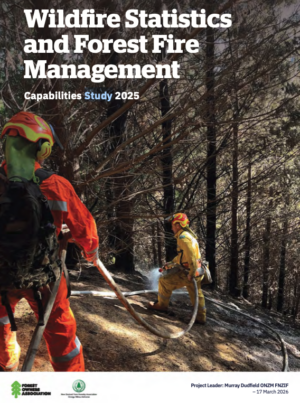 NEW ZEALAND — With El Nio forecast to bring drier, windier conditions and elevated fire danger across many parts of New Zealand this summer, maintaining a strong level of readiness will be particularly important. A
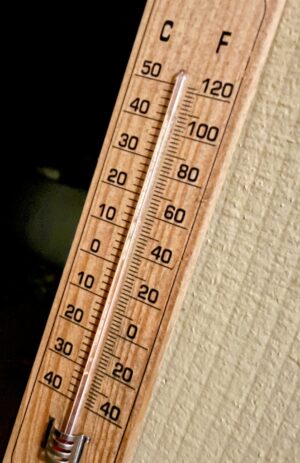 The long-anticipated El Niño is here. …In its monthly update in June, the US National Oceanic and Atmospheric Administration (NOAA), issued an El Niño advisory, confirming that the warmer conditions had developed in the specific part of the Pacific Ocean known as Niño 3.4. In order to be considered an El Niño, temperatures need to be 0.5 C above the average. Ocean temperatures are now close to 2 C above average. …The strongest El Niño in recent years was the one in 2015-2016, where the ocean temperature anomaly was roughly 2.75 C. ….Nat Johnson, a meteorologist at NOAA’s geophysical fluid dynamics laboratory, said the transition from a La Niña to El Niño has been very quick. …Meanwhile, in Canada, the effects will be seen in the winter months, bringing milder temperatures, but also drier conditions, something that is of great concern for wildfire development in the spring in Western Canada.
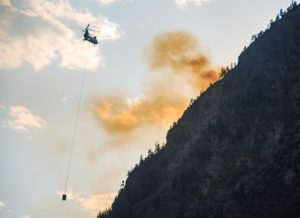 BC’s wildfire emissions in 2023 exceeded those of seven of the world’s ten largest national emitters. …At the same time, provincial policy has systematically reduced the managed forest harvest and shuttered 21 mills since 2023. …The policy of locking forests away from active management—while presented as environmental protection—is contributing to the very climate outcome it claims to prevent. Decadent, unmanaged stands are the fuel that feeds catastrophic wildfire. A well-managed, productive forest economy would reduce Canada’s climate impact more than any policy of exclusion. …The argument for locking forests away from harvest assumes that standing forests are always a carbon sink—absorbing more CO₂ than they release. This is true for young, actively growing forests. It is not true for old, decadent stands. …The solution is not less forestry. It is more forestry—done well, done sustainably, and done with the explicit goal of reducing Canada’s greenhouse gas emissions: uncontrolled wildfire in unmanaged forests.
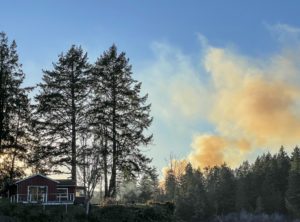 IDAHO — On the afternoon of July 6, I looked toward the foothills from the Boise Bench and saw smoke. …With all the other fires burning in the West, wondered when our turn would come. Eighty-five percent of wildfires are human caused — and while the cause of the Claremont Fire has yet to be determined, it is certain that human activity played an important role. Science journalist and meteorologist Bob Henson writes that “extreme heat is among the most studied consequences of human-caused climate change, and the connections between a warming planet and amplified, localized extreme heat are not only intuitive but well-documented.” …Professor Friederlile Otto of Climate Science at Imperial College London writes, “we remain on a one-way trip towards a more dangerous future, and it’s time we hit the brakes… and implement solutions to protect our health and the health of the place we call home.”
 The perils of wildfire smoke don’t stop at the lungs or the heart. They can also affect the brain. Recent research shows tiny particles from wildfire smoke — known as PM2.5, fine particulate matter — are so small they can travel deep into the lungs. But they don’t always end their journey there. Some slip into the bloodstream, or get to the brain directly through the nose, says Dr. Bhavini Gohel of the University of Calgary’s O’Brien Institute for Public Health. When toxins reach the brain, they can cause inflammation, resulting in fogginess, lack of focus and headache, she says. Increasing exposure to these harmful particles can also cause long-term damage to brain cells leading to cognitive decline. …The Climate Health System Alliance, says an increasing exposure to this air can lead to dementia. …A study found people living in areas with higher air pollution scored worse on memory tests.
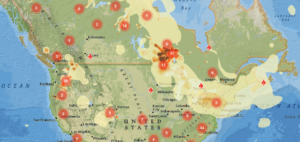 Thick, choking plumes of smoke from Canadian wildfires are pouring into major cities across the Great Lakes, Northeast and Mid-Atlantic, bringing dangerous air quality to more than 100 million people. The polluted air will last through at least Saturday in some areas as new waves of smoke waft south. …More than 100 million people in 18 states are under air quality alerts, many of which note that the air pollution is so high, even healthy adults will be affected. “The risk of health effects is increased for everyone,” the DC, air quality council said. …The smoke is being carried south from Canada in the wind. On Friday, the plume pushed farther south, making the DC area the new East Coast-epicenter of air pollution. Relief is coming as the wind pushes the smoke back into the Northeast and rain and storms are in the forecast
