Blog Archives

Today’s Takeaway

Chemical tank implosion at Washington paper mill leaves 1 dead, 9 missing

Tree Frog Forestry News
May 27, 2026
Category: Today's Takeaway

Chemical tank implosion at at Nippon Dynawave Packaging in Longview, Washington leaves 1 dead, 9 unaccounted for. In related news: investigators say the Maine lumber mill explosion began in a sawdust silo; Weyerhaeuser, Alberta is fined for 2023 sawmill incident; a Tennessee lumber company is struck by tornado; and Domtar responds to lawsuit over mill odours. In other Business news: Ontario invest $14M to strengthen forest competitiveness; US trade officials push a ‘Fortress North America’ approach to manufacturing; Canada’s trade diversification shows mixed results; and tensions continue ahead of USMCA negotiations.

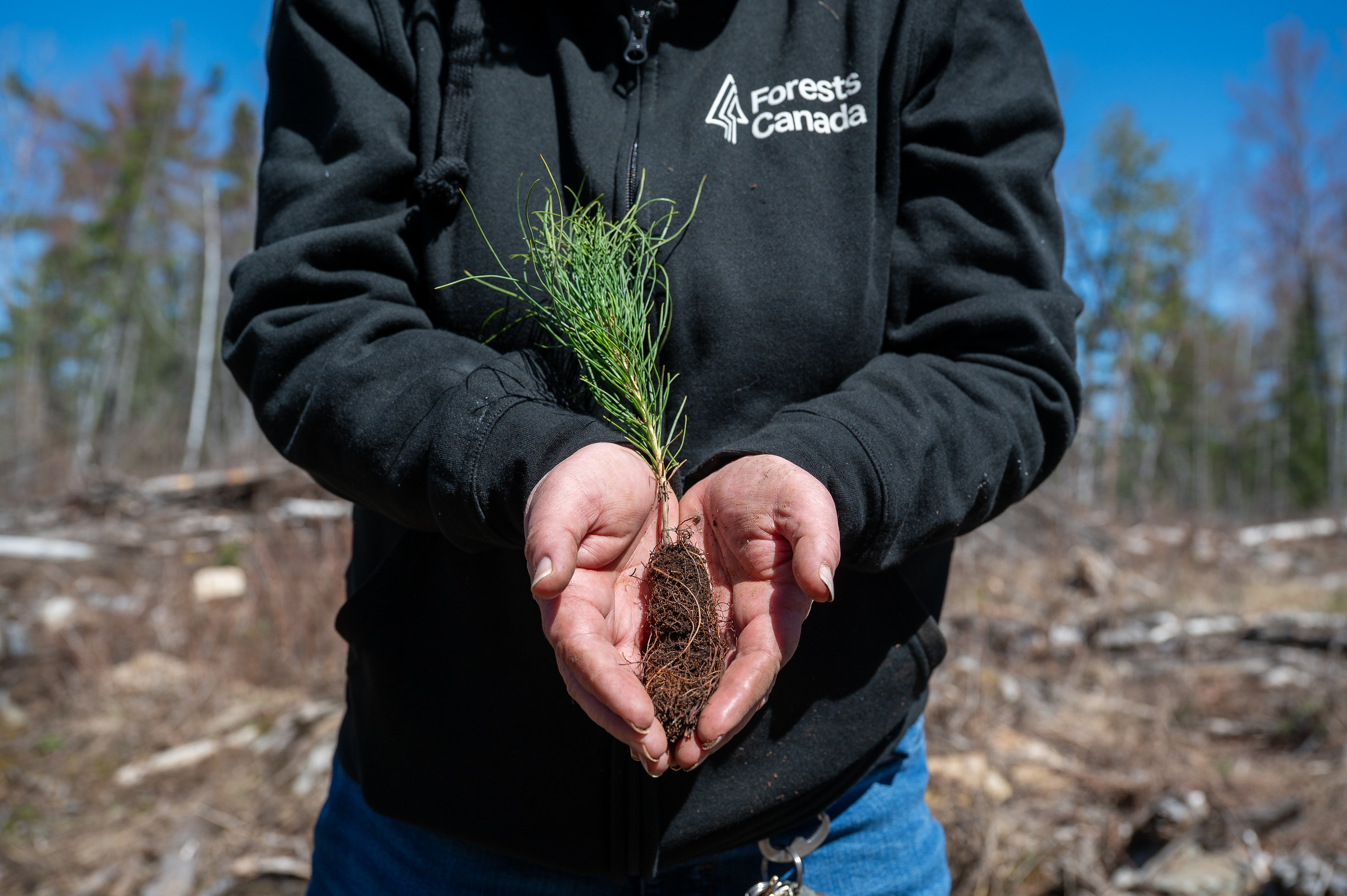
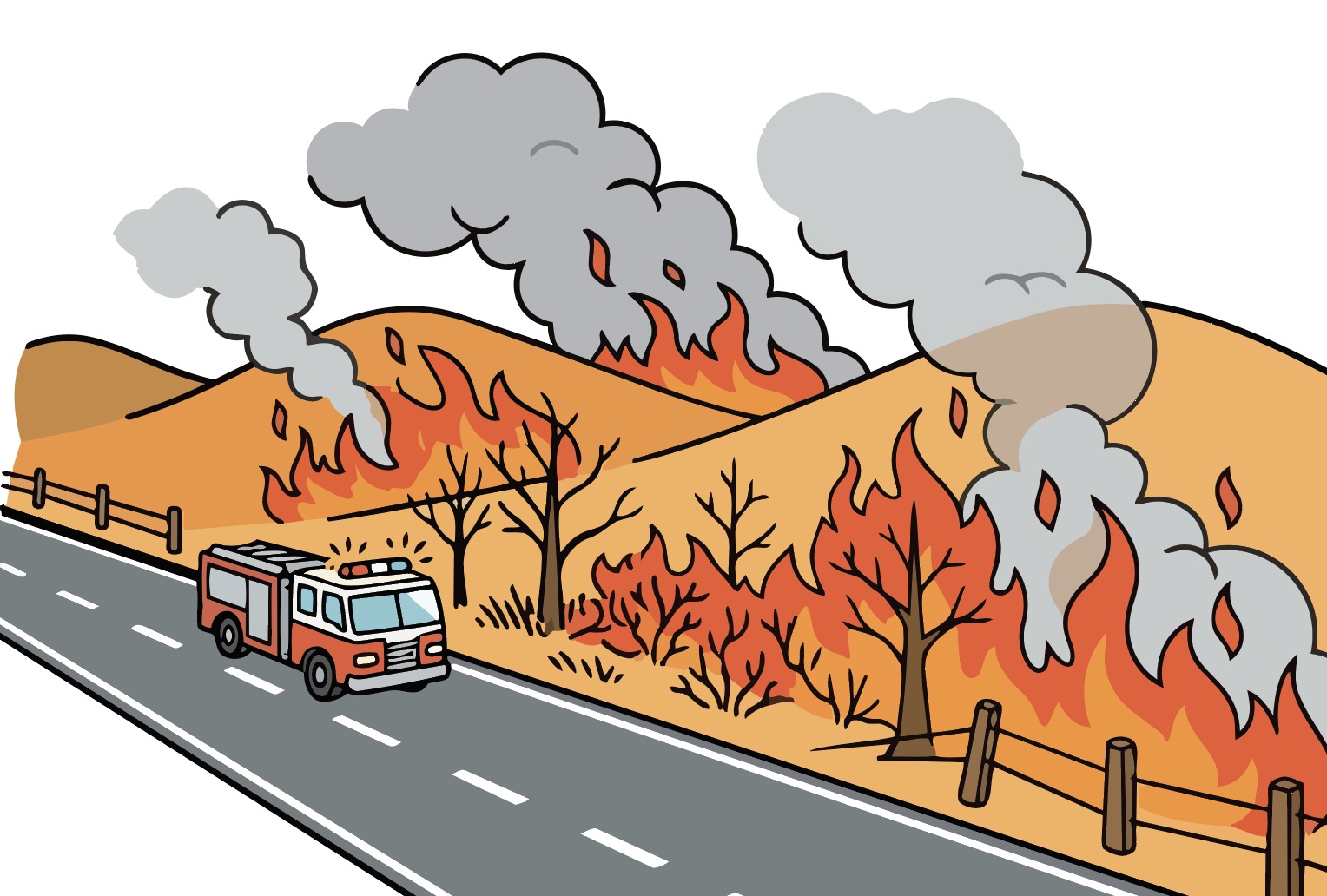
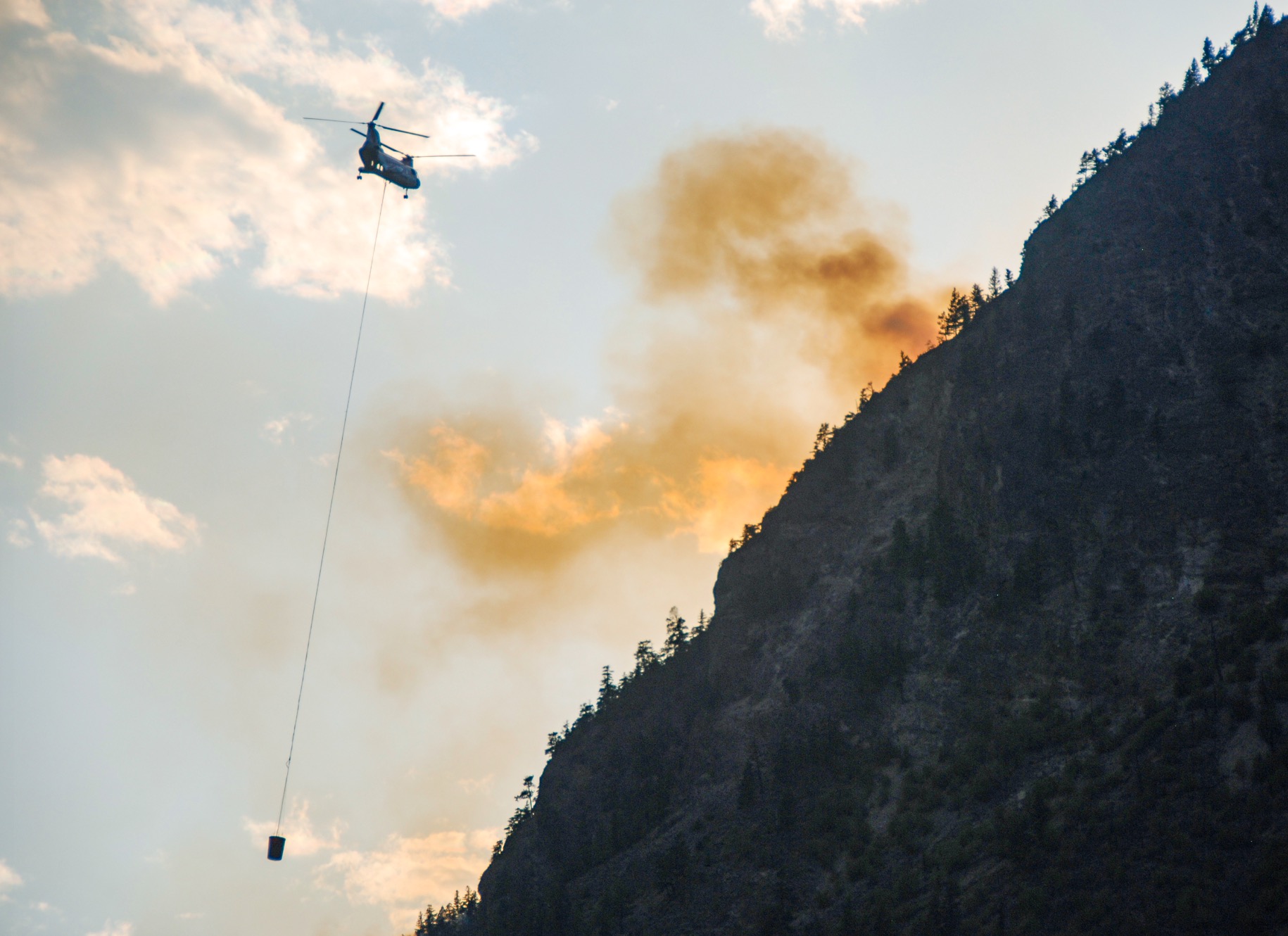
In Forestry news: Forests Canada and Ontario Parks restore nine provincial parks; BC explains what ‘out of control’ means in wildfire management; UBC forestry instructors help lead a UN forest report; a BC aviation firms join Canada’s new firefighting fleet; SFI announces five Climate Smart funding recipients; and Kerry Rouck is appointed to the BC Forest Practices Board.

Finally, on Day 3 of Forest Safety Week: worker competency assessments, tick safety, and the lasting lessons from a devastating sawmill injury.

Kelly McCloskey, Tree Frog News Editor

Read More

Canada launches first national aerial firefighting fleet for 2026 wildfire season

The Tree Frog Forestry News
May 26, 2026
Category: Today's Takeaway

Ottawa launched Canada’s first-ever national reserve of firefighting aircraft to boost provincial wildfire response capacity. In related news: Alberta utilities plan for wildfire power-shutoffs; Oregon questions the US Forest Service’s wildfire readiness; and Ukraine tallies its forest fire damage due to the war. Meanwhile: Canada Wood secures recognition of Hem-fir (N) in Japan; and Finland’s industry urges government to boosts its wood use.

In other Forestry news: the BC Forest Practices Board will audit BC Timber Sales near Hazelton; Washington state’s Pacific yew helped produce a breakthrough cancer drug; and restoring Virginia’s longleaf pines and New England’s elm—one seed at a time. In other news: San Group is fined and sanctioned for hiring migrant workers; Stora Enso is closing a softwood pulp line in Sweden; and the latest NAHB data on multifamily, custom home and single-family housing starts.

Finally, on Day 2 of Forest Safety Week: how supervisor training, wildlife awareness, and employer-led investigations can prevent future incidents.

Kelly McCloskey, Tree Frog News Editor

Read More

Forest Safety Week kicks off in partnership with the BC Forest Safety Council

The Tree Frog Forestry News
May 25, 2026
Category: Today's Takeaway

Forest Safety Week—delivered in partnership with the BC Forest Safety Council—kicks off today with four stories. They include manufacturing hazard identification and risk assessment; combustible dust cleanup; preventing congestion in forest operations; and prioritizing mental health.

In Forestry news: Nova Scotia moves against the spruce budworm; Alaska faces renewed logging debate; researchers say woodchips may reduce ticks; and the EU delays chemical restrictions for forestry. Meanwhile, an ENGO questions Mosaic’s role in Mount Underwood fire; Lake Tahoe breaks ground on fire and forestry training complex; and new wildfire risk warnings for BC and Oregon.

In Business news: Prime Minister Carney walks a tightrope, as US Trade Rep. Greer says re-shoring manufacturing is key; the American Wood Council and AF&PA support EPA’s new formaldehyde risk assessment; Nova Scotia buildings plan to switch to wood heat; US consumer sentiment hits record low; and what the lumber & gold futures say about the US economy.

Finally, Don Pigott’s latest forestry memoir turns a 1984 cone-collecting expedition in northeast BC into a story of camps, ghost towns, squirrels and colourful characters.

 Kelly McCloskey, Tree Frog News Editor

Read More

Special Feature

Worker Assessments – An Important Part of a Successful and Safe Business

By Michele Fry, Director, Communications
BC Forest Safety Council
May 27, 2026
Category: Special Feature
Region: Canada West

Completing worker assessments is an important part of maintaining a safe and successful operation. Typically, a supervisor is responsible for this process within a company or operation. BCFSC’s one-on-one assessments are a valuable tool to ensure there are no gaps in the knowledge, skills and attributes each worker needs to do their job safely and productively. These assessments are intended for both new workers and experienced workers. Young workers can benefit from the guidance and experience they gain through interaction with their supervisor. Experienced workers can benefit by demonstrating their skills and knowledge against an industry-developed standard.

Read More

Preventing Tick Bites and Disease

By Gerard Messier, Manager, Program Development
BC Forest Safety Council
May 27, 2026
Category: Special Feature
Region: Canada West

As BC forestry workers head into the field this season, hazards like tick exposure and wildlife encounters should be top of mind. In April, BCFSC released a safety alert on ticks, which are becoming more common in many parts of British Columbia. Ticks can pose serious health risks, including the transmission of Lyme disease and other infections. Working in dense vegetation, tall grass and wooded areas increases the chances of contact, making it essential for workers to take simple precautions and know what to look for. We are sharing this safety alert in this issue of the Forest Safety News to provide practical information to help you recognize risks, protect yourself on the job and respond quickly if you do get bitten. If you’d like to download a copy to share with your crew, click below. You can also subscribe to BCFSC’s monthly safety alert by clicking here.

Read More

Finding strength in inspiring others

By Susan Kerschbaumer
WorkSafeBC
May 27, 2026
Category: Special Feature
Region: Canada West

Nearly 28 years after Darcy Kulai was injured at work, the memory and the grief remain strikingly real, affecting him both physically and mentally. Now, he wants to inspire other young workers to stay safe on the job. In 1997, Kulai was 20 years old and working at a sawmill. He had just completed his second year at the University of Victoria. He planned to work through the summer, then transfer to Camosun College, where he was looking forward to an exciting year playing basketball on the college team. Unfortunately, that’s not how the next year played out. On an evening shift, Kulai was stationed at the “stick belt,” a conveyor located in an out-of-the- way area of the mill. …When some sticks became caught in the conveyor belt’s chain, Kulai reached in to dislodge them. …When it comes to a healthier future, Kulai sees hope. His son is now 20 — the same age Kulai was when he was injured at work. “If my son got hurt, I’d be shattered,” he says. “Being a father has made me want to do more for young people — to see if there’s a way to inspire.”

Read More

Supporting Safe, Confident Leaders: BC Forest Safety Council’s Forest Supervisor Training

By Michele Fry, Director, Communications
BC Forest Safety Council
May 26, 2026
Category: Special Feature
Region: Canada, Canada West

Effective supervision is one of the strongest predictors of a safe and productive forestry operation. Supervisors set the tone for safety culture, guide risk management, support worker development and ensure the work is done correctly. To help build these essential skills, the BC Forest Safety Council (BCFSC) offers several courses, both in-person and online, that are intended for new and experienced forest supervisors. These courses provide practical, industry‑specific knowledge to help supervisors meet their responsibilities, strengthen communication and make informed decisions in varied work environments. …BCFSC’s classroom and field‑based supervisor courses are instructor‑led, hands‑on courses designed to build leadership capacity through real world forestry examples. …BCFSC’s online supervisor training options are ideal for workers who are unable to attend in person, need flexible self-paced learning or want a refresher after previous training.

Read More

Wildlife Awareness on the Road and in the Bush

By Michele Fry, Director, Communications
BC Forest Safety Council
May 26, 2026
Category: Special Feature
Region: Canada West

As summer forestry work ramps up across British Columbia, workers face a range of hazards both on the road and in the field. Two risks this time of year are wildlife encounters at worksites and wildlife collisions while driving. So, whether you’re heading out to the worksite or working in remote areas, being prepared can help prevent serious incidents. Stay Alert Behind the Wheel: Wildlife collisions remain a significant risk for drivers in BC, with thousands of animal-related crashes reported every year. These incidents can lead to serious injuries, fatalities and costly damage to vehicles. …Working in Bear Country: Bears are coming out of hibernation in the spring and becoming more active across many parts of the province. Forestry workers often operate in high‑risk areas, making it important to understand how to avoid and respond to bear encounters. The best approach is prevention. Most bears will avoid people if they are aware of your presence.

Read More

Conducting Employer-Led Investigations in Forestry

By Alexandra Skinner
The Truck LoggerBC Magazine
May 26, 2026
Category: Special Feature
Region: Canada, Canada West

How employers can respond promptly, uncover causes, and prevent future incidents. Forestry work is inherently risky, from felling trees on steep slopes to operating heavy machinery in remote locations. Even with the best safety practices in place, serious incidents can still occur. When they do, employers are required to investigate promptly and thoroughly. An effective employer incident investigation isn’t just paperwork. It’s a structured approach to uncovering what went wrong, protecting workers, and preventing similar incidents in the future. WorkSafeBC lays out a clear framework that forestry operations can follow, from the first hours after an incident to the final corrective actions. The first step is knowing when an employer-led investigation is required. Serious injuries, fatalities, or incidents that could have caused major harm must be investigated immediately. Even minor injuries or near misses are important: understanding how a near miss happened can prevent a serious incident down the line.

Read More

Combustible Dust Cleanup: Why Using Compressed Air is Risky

BC Forest Safety Council
May 25, 2026
Category: Special Feature
Region: Canada West

In sawmill operations, combustible dust can accumulate on equipment, rafters, floors, and production surfaces. If the dust becomes airborne, it can create a serious fire or explosion hazard. Good housekeeping is essential, but some cleaning methods can unintentionally increase risk. One of the most common examples is using compressed air to blow down and clear dust. There are many challenges and risks with using compressed air for blowdown. It doesn’t actually remove dust; instead, it instantly generates a dense dust cloud creating a significant explosion risk. The dust gets redistributed, shifting from one place to another, spreading across machinery, product lines, and other sensitive areas. It can be forced into hidden spaces or up into rafters, making future cleanup more difficult. When hazards like static discharge or sparks combine with airborne dust, conditions for an explosion can develop quickly. …Combustible dust hazards are manageable when dust is prevented from becoming airborne and ignition sources are tightly controlled.

Read More

Manufacturing Hazard Identification and Risk Assessment – Being Proactive Matters

BC Forest Safety Council
May 25, 2026
Category: Special Feature
Region: Canada West

Wood products manufacturing operations have their share of hazards to workers. Identifying hazards, assessing the risk level and building controls are essential in both harvesting and manufacturing settings. BCFSC offers a wide range of resources and training courses to assist those who work in forestry. Visit the following web pages to learn more:

Read More

Connection to Care: Supporting Mental Health Across BC’s Forestry Sector

BC Forest Safety Council
May 25, 2026
Category: Special Feature
Region: Canada West

BC’s forestry sector has always been known for its resilience, strong work ethic and deep connection to communities. In recent years, though, that resilience has been tested. Mill curtailments, closures, workforce reductions and ongoing economic uncertainty have taken a toll on workers and communities across the province. As we continue to adjust, one thing is becoming increasingly clear, supporting and prioritizing mental health is essential to keeping forestry workers safe. Workers across harvesting, silviculture, log hauling, sawmills and wood pellet operations are no strangers to demanding work conditions. Long hours and physical work are part of the job. But when mental strain like job uncertainty and financial pressure are added to the mix, it creates another layer of stress that can quickly start to weigh on people.

Stigma and concerns about job security can make it hard to speak openly about mental health and many workers continue to push through without reaching out for support. It will take a collective effort across industry to close the gap between needing support and asking for it without feeling judged or like they have to tough it out on their own.

Read More

Safe Phase Integration: Preventing Congestion in Forestry Operations

By Alexandra Skinner
The Truck LoggerBC Magazine
June 25, 2025
Category: Special Feature
Region: Canada, Canada West

Overlapping work activities are one of forestry’s most complex safety challenges; without proper controls, phase congestion can pose serious hazards to workers. However, with proper management, forestry operations can achieve safe, efficient phase integration. …Phase congestion occurs when multiple harvesting phases overlap in the same or nearby area, often due to insufficient time or distance between phases. It often builds gradually and can go unnoticed until a serious incident occurs. When phases aren’t properly coordinated, workers face greater risks of being struck by or caught between equipment, or missing other hazards. In 2019, a young worker was fatally injured after being caught between the counterbalance of a log loader and the cut slope beside the road. WorkSafeBC’s investigation found that four phases of work were happening simultaneously in an area less than 90 metres long. …Safe phase integration begins before work starts. Daily activities must be planned with separation in mind.

Read More

Business & Politics

Forest Resources Association Elects Kevin Hudson as Chairman of The Board

The Forest Resources Association
May 21, 2026
Category: Business & Politics
Region: United States

Charleston, SCDuring the FRA 2026 Annual Meeting, the Forest Resources Association (FRA) Board of Directors elected Kevin Hudson, Senior Vice President, Forest Resources and Recycled Fiber at Smurfit Westrock Company, to serve as the Association’s Chairman of the Board for the next two years. Hudson thanked the Board and outgoing Chairman Josh Sandt of Canfor Southern Pine… During his remarks, Hudson noted, “We are an organization with a diverse membership — one of our greatest strengths — allowing us to hear and learn from perspectives across our industry and throughout the wood supply chain.” …Kevin Hudson is Senior Vice President of Forest Resources and Recycled Fiber for Smurfit Westrock, a role he has held since 2012. He is responsible for leading U.S. and Canadian teams focused on the sustainable procurement of virgin and recycled fiber, overseeing the sourcing of more than 31 million tons of virgin fiber and 6.5 million tons of recycled fiber annually. 

Read More

Wood, Paper & Green Building

Canada Wood Japan Secures Recognition of New Hem-fir(N) Design Values

By Canada Wood Group
LinkedIn
May 25, 2026
Category: Wood, Paper & Green Building
Region: Canada, International

Canada Wood Japan has helped secure an important market-access outcome for Canadian Hem-Fir (N) dimension lumber in Japan. In collaboration with the National Lumber Grades Authority and the Canadian Lumber Standards Accreditation Board, Canada Wood Japan worked with Japan’s Ministry of Land, Infrastructure, Transport and Tourism to obtain recognition of the revised standard design values for Hem-Fir (N) dimension lumber graded under NLGA standards. For builders, designers and structural engineers in Japan, design values are essential. They provide the basis for structural calculations and help determine where and how lumber can be used in code-compliant buildings. When grading rules or design values are revised in Canada, those changes must also be properly understood and accepted by Japanese regulatory authorities to ensure continued market access. …Canada Wood Japan demonstrated that the revised Hem-Fir (N) design values would continue to meet Japan’s structural safety requirements and would not compromise the performance of conventional wooden buildings. 

Read More

Introducing the updated Canadian Wood Council eLearning Centre

The Canadian Wood Council
May 25, 2026
Category: Wood, Paper & Green Building
Region: Canada

Advanced wood construction requires new knowledge, new systems, and new skills. To help support the next generation of building professionals, the Canadian Wood Council is proud to introduce the redesigned CWC eLearning Centre, a flexible online learning platform focused on advanced wood construction, engineered wood systems, and innovative building solutions. Designed for both students and industry professionals, the eLearning Centre provides expert-led courses that can be accessed anytime, anywhere. Whether you’re looking to expand your technical expertise, explore emerging wood systems, or strengthen your understanding of modern construction practices, the CWC eLearning Centre offers accessible, industry-focused education built for today’s evolving construction sector. For students. For professionals. For the next generation of builders. Register for your first course today: www.cwc.ca/elearning-centre

Read More

The journey of a 17th-century shipwreck continues as a unique knitted dress

By Minna Hölttä
Aalto University
May 20, 2026
Category: Wood, Paper & Green Building
Region: International

©Esa Kapila/Aalto University

Researchers at Aalto University transformed surplus wood from the Hahtiperä shipwreck into textile fibre, spun it into yarn, and knitted it into a dress using new AI-assisted technology. The dress will be exhibited at the Tomorrow’s Wardrobe exhibition opening 22 May at Oulu Art Museum, and its twin piece will be shown at Aalto University’s Designs for a Cooler Planet exhibition opening 1 September. In 2019, a rare discovery was made during the renovation of a hotel in Oulu: remains of a 17th-century cargo ship were uncovered beneath a parking lot. The vessel was named the Hahtiperä wreck after Oulu’s first harbour. After years of conservation work, some leftover pieces of wood remained and were at risk of ending up in the trash. …Inge Schlapp-Hackl, a researcher at Aalto, along with her colleagues supervised by Professor Michael Hummel, converted over 300-year-old wood from Oulu into textile fiber.

Read More

Forestry

Alberta utilities expand planned wildfire power shutoffs in Bow Valley

By Michelle McCann
CBC News
May 25, 2026
Category: Forestry
Region: Canada West

As wildfire seasons become longer and more destructive, Alberta electricity providers are introducing programs designed to intentionally shut off power in high-risk areas, like the Bow Valley, before wildfires start. The strategy, known as Public Safety Power Shutoffs (PSPS), involves intentionally shutting off electricity during extreme conditions to reduce the risk of power lines sparking wildfires. This month, electricity providers AltaLink and FortisAlberta presented the program to Canmore town council. …Utilities say the decision to proactively shut off power would depend on extreme weather conditions such as wind speed, humidity, vegetation dryness and wildfire danger ratings —all of which can increase the risk of power lines sparking a wildfire. “It is not a decision we take lightly,” says AltaLink vice-president of operations Evan Mitchell. “We need to see conditions where, if a spark were to start, there is a risk it could produce a catastrophic wildfire.”

Read More

Lindsay Cuff Receives Killam Teaching Prize

UBC Faculty of Forestry & Environmental Stewardship
May 25, 2026
Category: Forestry
Region: Canada West

Lindsay Cuff

Lindsay Cuff is an Assistant Professor of Teaching in the Department of Forest and Conservation Sciences, jointly appointed with the Faculty of Land and Food Systems. She has developed, implemented, and shared innovative approaches to teaching and strives to weave real-world applications into the classroom. She is a UBC Sustainability Fellow, contributes to an interdisciplinary team developing an Indigenous Land Stewardship Program, and is the author of the open educational textbook Writing Place. As an instructor of discipline-specific scholarly writing, Lindsay supports students from diverse backgrounds, including those in their first year, helping them discover writing as a powerful tool for learning, reflection, and connection. Her impact is reflected in the outstanding feedback she receives from students, who consistently describe her teaching as motivating, engaging, and inspiring.

Read More

Cheakamus Community Forest awards inaugural grants to Sea to Sky stewardship and recreation projects

By Luke Faulks
Pique News Magazine
May 25, 2026
Category: Forestry
Region: Canada West

Three Sea to Sky organizations have been named the inaugural recipients of the Cheakamus Community Forest (CCF) Community Benefit Program, which has awarded more than $25,000 to projects tied to forest education, habitat stewardship, recreation access, and invasive species management. The funding, announced on May 19, comes from the community forest’s carbon offset sales revenue. …The community forest said the program reflects its broader goal of operating “as a model of regenerative forestry and reconciliation” while supporting partner communities through locally driven initiatives. The announcement comes ahead of the CCF’s spring 2026 information session, scheduled for May 28 from 5 to 7 p.m. in the Istken Room at the Squamish Lil’wat Cultural Centre.

Read More

Forest Practices Board to audit BC Timber Sales operations near Hazelton

By Tanner Senko, Communications Manager
BC Forest Practices Board
May 25, 2026
Category: Forestry
Region: Canada West

HAZELTON – The Forest Practices Board will audit the forest planning and practices of BC Timber Sales (BCTS) and timber sale licence holders in the Kispiox Timber Supply Area (TSA) portion of the Skeena Business Area, starting Monday, June 1, 2026. The audit will examine harvesting, roads, silviculture, protection activities and associated planning. These activities will be assessed for compliance under the Forest and Range Practices Act and the Wildfire Act. BCTS operates throughout the Kispiox TSA, within the Skeena Stikine Natural Resource District. Activities in the audit area are administered from the Hazelton Field Office. The audit area overlaps the territories of the Gitxsan, Wet’suwet’en, Gitanyow, Nisga’a, Lake Babine Nation, Kitselas, and Tsetsaut Skii km Lax Ha First Nations. …The area includes mountainous terrain, rivers and lakes that support recreation, wildlife habitat and important fish populations, including several salmon species, bull trout, Dolly Varden and lake trout.

Read More

Wildfires: “An Overwhelming Challenge for BC” But 7 in 10 British Columbians Ready to Act

By British Columbia Automobile Association
PR Newswire
May 25, 2026
Category: Forestry
Region: Canada West

BURNABY, BC – New research from BCAA reveals nearly two-thirds of British Columbians expect this summer’s wildfire season to be worse than usual, with half reporting they feel scared about potential impacts. Yet, despite nearly three quarters describing wildfires as “an overwhelming challenge for BC”, a powerful resolve for action and a sense of hope shine through: Over two-thirds are likely to take action to reduce wildfire risk; six in ten say taking even a small action would give them a sense of hope; and three-quarters are hopeful that BC can become more resilient to wildfires. Championing this collective spirit of hope and resilience, BCAA’s summer Fireweed Pin Campaign is kicking off for its second year… One hundred per cent of Fireweed Pin proceeds directly supports wildfire resilience and recovery work through two organizations: First Nations’ Emergency Services Society (FNESS) and Canadian Mental Health Association BC (CMHA BC).

Read More

Powell River Community Forest grants approved

By Paul Galinski
The Powell River Peak
May 22, 2026
Category: Forestry
Region: Canada West

City of Powell River Council has approved the spring 2026 not-for-profit organization grants from the Powell River Community Forest reserve fund, with 12 grants, totalling $304,836.68, to be distributed to community organizations. At the May 21 city council meeting, interim manager of partnerships, intergovernmental and public relations Susan Auchterlonie outlined the granting process, indicating the community forest board reviews the applications and recommends grants to be awarded for council consideration, in both spring and fall allocations. She said the community forest board also provides input on projects submitted by the city that utilize the community forest reserve fund. Auchterlonie said a budget of $1.2 million was approved in the 2026 to 2030 financial plan, which is $600,000 for spring and $600,000 for fall grant distribution.

Read More

Mosaic partially blamed by Evergreen Alliance for Mt. Underwood fire

By David Wiwchar
The Nanaimo News Now
May 22, 2026
Category: Forestry
Region: Canada West

David Broadland of The Evergreen Alliance is asking the Forest Practices Board to launch an investigation into the role that MOSAIC Forestry played in the Mount Underwood fire last summer. …MOSAIC communications manager Olivia Lyle said the Mount Underwood was deemed not related to their harvesting practices and they are confident in their fire hazard management practices. Listed as “human caused”, within 70 hours the August 11th fire became the biggest fire on Vancouver Island in almost 60 years… The Forest Practices Board has yet to comment on the complaint.

Read More

New Forest Landscape Plan to reshape timber and ecosystem management in North Okanagan

By Bowen Assman
Castanet
May 24, 2026
Category: Forestry
Region: Canada West

Local residents are being invited to help shape the next decade of local forestry management at an upcoming public open house in Coldstream. The provincial government, in partnership with local First Nations groups, are hosting a joint engagement session on Monday, June 8, to gather community feedback on the development of the tmíxʷ naqscn Forest Landscape Plan (FLP). …The new FLP framework is a legal mechanism designed to replace older Forest Stewardship Plans. Once established by the chief forester, the 10-year plan will govern all timber harvesting, road layout and silviculture activities for BC Timber Sales and local forest licensees across the region’s watersheds. …The finalized FLP will shift the focus toward long-term ecosystem health, addressing critical modern challenges such as wildfire risk reduction, climate change adaptation, old-growth protection, and biodiversity, while maintaining a predictable and sustainable timber supply

Read More

Watching for wildfires: The lonely job of B.C.’s last fire lookouts

CBC Docs
May 20, 2026
Category: Forestry
Region: Canada West

“Lookouts are pretty simple,” says B.C. fire-watcher Bart Vanderlinde. “You have a guy looking for a forest fire 12 hours a day.” High atop Sinkut Mountain in northern B.C., Vanderlinde begins each summer day the same way — scanning the forest for smoke. “You get up, get out of bed … grab the binoculars and scan around,” he says. Vanderlinde is among the last fire-watchers in the province. Where more than 300 lookouts once formed an interconnected network, he now often finds himself keeping guard alone. The Last of the Lookouts is a portrait of a profession that will soon be obsolete. It follows Vanderlinde during what may be his last summer on the job. As of 2025, most of B.C.’s watchtowers had been decommissioned, replaced by new technology — including aerial detection — and improved public reporting. 

Read More

Webinar: Science-based Solutions for ‘Barriers’ to Salmon Recovery

By Faculty of Forestry & Environmental Stewardship
The University of British Columbia
May 22, 2026
Category: Forestry
Region: Canada West

Join the Pacific Salmon Foundation for a timely and thought-provoking online seminar exploring the future of Pacific salmon recovery in British Columbia. Despite record-high salmon abundances in parts of the Pacific Ocean, many salmon stocks — particularly in the southern regions of BC — continue to decline, threatening biodiversity, fisheries, and food security. This engaging presentation will examine how physical and management barriers are impacting salmon recovery, and highlight innovative, science-based solutions now being developed through collaborative research. Topics include “fish-friendlier” fisheries practices and improved passage infrastructure designed to help restore struggling salmon populations. The seminar features presenter Dr. Scott Hinch, Professor and Associate Dean of Students in the Faculty of Forestry & Environmental Stewardship, with moderation by Jason Hwang, Chief Program Officer & Vice President of the Pacific Salmon Foundation.
When: June 11, 2026 | 12 pm | Where: Online via Zoom | Cost: Free and open to everyone

Read More

The secret to keeping ticks at bay this summer: Woodchips

By Paul Logothetis
University of Ottawa
May 19, 2026
Category: Forestry
Region: Canada East

Manisha Kulkarni

Spread of tick populations and rising rates of Lyme disease in Ottawa highlight the importance of effective strategies to minimize human exposure in recreational areas. New research has shown woodchips to be the secret weapon to keeping ticks off recreational woodland trails, including eliminating nearly all Lyme disease-carriers when treated with insecticide. The two-year experimental field study led by Katarina Ost, doctoral candidate at the School of Epidemiology and Public Health at the University of Ottawa under Manisha A. Kulkarni’s supervision … provided evidence that both treated and untreated woodchip interventions can effectively reduce tick populations in a recreational context, a simple and cost-effective way for communities to combat these critters. “This study shows that different environmental management strategies can be effective in reducing the number of host-seeking ticks along trail edges, where people are likely to encounter them,” said Dr. Kulkarni, a Full Professor at the Faculty of Medicine’s School of Epidemiology and Public Health.

Read More

Early Spruce Budworm Treatment Planned for Northwestern Cape Breton

By Natural Resources
The Government of Nova Scotia
May 22, 2026
Category: Forestry
Region: Canada East

©Gov.ca

NOVA SCOTIA — A small, targeted area of spruce and fir forest in northwestern Cape Breton will be treated this June as part of an early intervention strategy to stop rising spruce budworm populations before they become a widespread outbreak that can severely increase the risk of forest fires. “By acting early in a small, focused area, we can help prevent much larger impacts on Nova Scotia’s forests in the years ahead,” said Kyle MacQuarrie, Ministerial Assistant for Natural Resources. “Other parts of the country have recently seen the devastation the spruce budworm can have on their forests, and the risk it poses for forest fires. We want to be proactive in managing the effect of this species on our province.” The spruce budworm has historically been the most destructive softwood forest pest across North America, causing more damage to Nova Scotia softwood forests than any other insect. 

Read More

Could changes at the U.S. Forest Service impact wildfire response in Oregon?

By Vasili Varlamos
KATU 2 News
May 25, 2026
Category: Forestry
Region: US West

With Oregon facing what state leaders say could be another difficult wildfire season, questions are emerging about whether major changes inside the U.S. Forest Service could eventually impact how quickly fires are detected and attacked across the West. “All indications suggest a more challenging fire season ahead of all of us,” said Oregon Governor Tina Kotek… The warning comes after a historically warm winter, low snowpack levels, and worsening drought conditions across parts of Oregon. At the same time, the Forest Service is undergoing major national restructuring efforts, including consolidating research facilities and closing its nine regional offices nationwide. …Still, federal firefighters and local fire leaders say they do not expect major disruptions to wildfire response this season. “I think there’s just a growing amount of apprehension about what it’s gonna look like on the ground level in a couple of years’ time,” said Kieran Evans, a squad leader with the Forest Service.

Read More

Wyoming’s Hageman aims to block future ‘roadless areas,’ despite overwhelming support to keep public land pristine

By Mike Koshmrl
Oil City News
May 24, 2026
Category: Forestry
Region: US West

Harriet Hageman

Rep. Harriet Hageman wants to stop future administrations from reinstating a 25-year-old policy that prevents roadbuilding on 59 million acres of the national forest, including 3.3 million acres of federal land in Wyoming. A rescission of the Clinton-era 2001 Roadless Rule is already underway. In June 2025, U.S. Department of Agriculture Secretary Brooke Rollins announced her intention to repeal the “roadless” class of land that’s found on nine national forests in Wyoming. Subsequently, Rollins solicited public comment on that plan, which, based on the responses, is extraordinarily unpopular. More than 99% of the 200,000-plus people and groups who responded opposed the proposed rescission, according to a Center for Western Priorities analysis. A Hageman-led bill, House Resolution 7695, would codify the Trump administration’s undoing of the Roadless Rule in law and also prevent it from reappearing. The legislation states that any future secretary of agriculture “may not take any action to propose, finalize, implement, administer, or enforce any rule substantially similar to the rule.” 

Read More

Lake Tahoe Community College breaks ground on 100,000-square-foot public safety training complex

By Brenna O’Boyle
KOLO 8 NewsNow
May 21, 2026
Category: Forestry
Region: US West

SOUTH LAKE TAHOE, Calif.  – On Wednesday, May 20, Lake Tahoe Community College broke ground on a nearly 100,000-square-foot Tahoe Basin Public Safety Training Complex, the first facility of its kind in the Tahoe Basin dedicated to training firefighters, forestry professionals, emergency medical technicians, and other first responders. …The facility is scheduled to open in fall 2027. The complex will include a multi-story training tower with live-fire capability, more than two acres of training tarmac, a 7,000-square-foot equipment storage facility, and multiple training hydrants with a water reclamation system. It will support the college’s Fire Academy, Fire Science, Forestry Education, Emergency Medical Services, and Search and Rescue programs. The project is funded through $17 million in state, federal, and local support, including California Community Colleges’ Fire and Forestry Pathways funding, its voter-approved Measure F bond, and federal appropriations.

Read More

Restoring Virginia’s lost longleaf pine trees, one seed at a time

By Katherine Hafner
WHRO Public Media
May 25, 2026
Category: Forestry
Region: US East

©VirginiaForestryDept

Longleaf is a crucial part of Virginia’s natural and economic heritage… At the Department of Forestry’s nursery in Sussex County last week, a small group of staff and volunteers formed an assembly line along a large machine, manufacturing longleaf pine seeds. About 200,000 of them, which will eventually be planted throughout southeastern Virginia. The annual “seed sowing” is part of a long-term effort to restore longleaf pines to the region. The iconic species once dominated the Southeast landscape… But longleafs were decimated by years of logging and development. The Longleaf Cooperators of Virginia, a coalition of state agencies, nonprofits and universities, has been working to bring back the trees. “It’s amazing to see those seeds and know some of them could become trees for 400 years,” said Brian van Eerden, director of the Nature Conservancy’s Virginia Pineland Program. “We have the ability to control the fate of the forest.”

Read More

Researchers at Vermont orchard work to bring back the American elm tree in New England

By Greta Solsaa
VT Digger
May 25, 2026
Category: Forestry
Region: US East

©USFS

BENSON — Elm trees in New England were nearly wiped out by disease more than 50 years ago, but a small number of the majestic trees survived. Now researchers are hoping to restore the trees to the landscape and even limit flood damage in the process. A decade ago workers with the U.S. Forest Service and The Nature Conservancy planted around 5,300 elm trees in a 28-acre orchard in hopes of restoring the once-abundant tree to New England’s landscape. Elm trees suffered a mass die-off in the 1970s… The tree is tied to the region’s history and is integral for future flood resilience, he said. Researchers identified 53 “survivor” elm trees in New England … that survived around outbreaks of Dutch elm disease, said Chris Hansen, a research technician with the University of Vermont. This experiment will test if the trees are truly resistant. 

Read More

Spain to launch biggest forest fire campaign after record losses last year, Sánchez says

By Lucia Blasco & Gavin Blackburn
Euronews
May 21, 2026
Category: Forestry
Region: International

Spain is one of the southern European countries on the front line of climate change as higher average temperatures stoke heatwaves, droughts and forest fires. Prime Minister Pedro Sánchez presented what he called Spain’s biggest-ever campaign against forest fires on Thursday after deadly blazes devoured a record amount of land last year. Spain is one of the southern European countries on the front line of climate change as higher average temperatures stoke heatwaves, droughts and forest fires. The country sweltered through its hottest summer on record in 2025, when almost 4,000 square kilometres of land went up in smoke, the highest figure registered by the European Forest Fire Information System. “We will put in place all the resources” available to the government “to mitigate this emergency situation as much as possible and to prevent it happening again on this scale,” Sánchez said at the Torrejón airbase outside Madrid.

Read More

International Day for Biological Diversity

By Environment and Climate Change Canada
PR Newswire
May 22, 2026
Category: Forestry
Region: International

GATINEAU, QC – The Honourable Julie Dabrusin, Minister of the Environment, Climate Change and Nature, issued the following statement today: The world celebrates the International Day for Biological Diversity. This year’s theme is Acting Locally for Global Impact. In Canada this begins with recognizing that biological diversity is not only part of our identity, but also one of our greatest responsibilities. From forests and fresh water to coastlines and tundra, Canada holds a significant share of the planet’s remaining intact ecosystems. With 20% of the world’s fresh water, nearly a quarter of the boreal forest, and the longest coastline on Earth, what Canada does at home matters far beyond our borders. Protecting nature locally is not just an environmental choice; it is a global contribution. That is why on March 31, 2026, Prime Minister Mark Carney announced A Force of Nature: Canada’s Strategy to Protect Nature with an investment of $3.8 billion. 

United Nations: International Day for Biological Diversity

Read More

Carbon, Climate & Bioenergy

Five more Nova Scotia public buildings slated for switch to wood heat

By Michael Gorman
CBC News
May 23, 2026
Category: Carbon, Climate & Bioenergy
Region: Canada East

The Nova Scotia government has issued a tender to convert five public buildings to wood heat systems — a move one member of the forestry sector says will have widespread benefits. The tender targets heating infrastructure at the Nova Scotia Community College’s Kingstec campus, Roseway Hospital in Shelburne, Digby General Hospital, Soldiers Memorial Hospital in Middleton, and St. Martha’s Regional Hospital in Antigonish. …Successful bidders will also be responsible for procuring the wood fuel. The province stated in the tender documents that it “expects the focus of wood procurement to be from small private woodlots,” stipulating that 100 per cent of the lower-grade primary wood fuel must be harvested within Nova Scotia. …Marcus Zwicker, Forest Nova Scotia, added that requiring boilers to be fed with Nova Scotia product opens up new markets for local forestry contractors and woodlot owners while ensuring cheaper wood cannot be brought in from outside jurisdictions.

Read More

Health & Safety

From Forest to Pharmacy: An Insider’s Account of the Race to Bring Taxol to Market

By Burt Rosen
American Council on Science and Health
May 26, 2026
Category: Health & Safety
Region: United States

©BCGov

Here’s a rare treat. It’s one thing to read about Taxol, one of the most important breakthroughs in modern cancer treatment. It’s another thing to hear the story from someone directly involved in the effort to bring the drug from Pacific yew trees to cancer patients. Burt Rosen, former Director of Government Affairs at Bristol-Myers Squibb, recounts the scientific, political, and environmental battles behind Taxol’s path to market. In the annals of medical and political history, few episodes better illustrate the conflict between environmental conservation and medical necessity than the effort to bring Taxol to patients. Derived from the bark of the Pacific yew tree—one of the slowest-growing trees in the world—Taxol emerged in the late 20th century as a promising new treatment for ovarian and other cancers. However, its path from the old-growth forests of the Pacific Northwest to the patients who desperately needed it required navigating an acute supply crisis, a sudden shift in clinical trial ethics, and an extraordinary legislative rescue mission within the halls of Congress.

Read More

Chemical tank implosion in Washington state kills 1 and leaves 9 missing

By Claire Rush and Rebecca Boone
Associated Press in KCRA
May 27, 2026
Category: Health & Safety
Region: US West

LONGVIEW, Wash. — A massive chemical tank holding nearly a million gallons of a highly corrosive liquid imploded and collapsed Tuesday at a Washington paper mill, killing at least one worker and leaving nine others unaccounted for with no hope for rescue, authorities said. Another nine people were injured, some severely, in the spill at Nippon Dynawave Packaging Co. in Longview. The cause remained unclear. “At the moment we are not aware of any rescues that are yet to be made,” Cowlitz Fire and Rescue Chief Scott Goldstein said during a Tuesday evening news conference in which officials repeatedly referred to the situation as a recovery effort. That effort would not resume until Wednesday morning, when emergency responders planned to work on stabilizing the collapsed tank, which still had about 90,000 gallons (more than 340,000 liters) of a chemical brew known as “white liquor” inside, and then search for the missing, Goldstein said.

Read More

Forest History & Archives

Dease Lake and Cassiar Lodgepole Pine Collections in 1984

By Don Pigott
The Tree Frog Forestry News
May 25, 2026
Category: Forest History & Archives
Region: Canada West

In this latest installment of his memoirs from the seed collection camps of northern BC, veteran cone collector Don Pigott recounts an unforgettable 1984 expedition through the Dease Lake and Cassiar region in search of lodgepole pine cones destined for Sweden’s forestry program. What begins as a straightforward collection job quickly becomes a vivid portrait of life in the north — from remote campsites, mining towns and ghost settlements to colourful characters, First Nations communities, and the ingenious habits of squirrels whose cone caches supplied much of the harvest.

Filled with humour, hardship and rich historical detail, Pigott’s story captures a fascinating era in BC forestry when cone collection was part adventure, part entrepreneurship, and entirely dependent on relationships, trust and resilience. Along the way are tales of cash deals, bush cooking, CBC interviews, roadside encounters, and “Mighty Moe,” one of the memorable personalities of the Stewart-Cassiar Highway.

Read More