 BC’s trade mission to Japan and South Korea is expected to boost demand for BC lumber. In related news: the US Lumber Coalition pans Massachusetts Governor Healey’s call to lift Canadian tariffs; while Dovetail Partners says tariffs are short-sighted and bad for trade. In Company news: Arbec suspends OSB operations at Quebec mill; the USDA funds sawmill expansion at Wisconsin’s Timber Professionals; PotlatchDeltic loses its FSC certification in Minnesota; Domtar reports waste leak at Kingsport mill; and ThirdGen Timber acquires majority share of BC’s True North Log & Timber.
In Forestry/Climate news: the US plans to roll back protections for endangered species; the US EPA unveils changes to the Clean Water Act; and the Council of European Union pushes for delay of EU deforestation regulation. Meanwhile: Forest minister Parmar defends BC’s harvesting practices; David Suzuki headlines BC-wide forestry protests; and newsletter updates from BC Wood and WorkSafeBC.
Finally, the use of this rare wood pits violinists against environmentalists in Brazil.
Kelly McCloskey, Tree Frog News Editor
 OTTAWA — Prime Minister Mark Carney on Tuesday defended making a commitment to carbon emission targets to get the government’s spending plan over the finish line. Carney told reporters before the weekly cabinet meeting in Ottawa that he was “very pleased” his government narrowly won the crucial budget vote on Monday night. …”I can confirm to this House that we will respect our Paris commitments for climate change, and we are determined to achieve them,” Carney said. He also said a nature strategy will be released soon, keeping Canada on target for its commitments on biodiversity as well. That was enough to sway May to vote with the Liberals, a vote that earned her grateful applause from the Liberal caucus. …”Canada is blessed with immense natural resources, everything from hydroelectricity through to conventional oil and gas. We’re part of an energy transition, we’re going to help to lead it.”
 Delegates from B.C.’s largest forestry trade mission to Asia have returned home, bringing back business deals, signed agreements and deeper ties with key trading partners in Japan and South Korea, driving growth and investment for B.C.
 Government has launched Look West, a strategic plan to deliver major projects faster, expand skills training and grow key sectors to strengthen B.C.’s economy, creating good jobs and opportunities for people and businesses, and benefiting all of Canada. “British Columbia can get big things done – which is why our province is vastly overrepresented in the list of major projects Ottawa is fast-tracking,” said Premier David Eby. “This plan sets big goals as we make B.C. the economic powerhouse of Canada to create great jobs and drive prosperity in every corner of the province.” Look West rises to the challenges brought on by U.S. tariffs. The strategy sets a 10-year vision to strengthen B.C.’s economy, including continuing work to speed up permitting and diversify key sectors, so B.C.’s economy is less reliant on the United States.
 This is a rare opportunity to lead highly respected, independent oversight in one of the province’s most important and visible sectors. The Chair plays a pivotal role in strengthening public confidence in forest and range practices across BC. Ideal candidates bring strong governance experience, a background in forestry, and a commitment to transparent oversight. The Chair is a flexible, full-time role leading BC’s independent watchdog for forest and range practices. The Chair plays a key role in strengthening public trust in how the province’s forests and rangelands are managed. The Chair provides strategic leadership, oversees audits and investigations, approves reports, and represents the Board in engagements with Indigenous governments, provincial agencies, stakeholders, and the media. The role is well suited for someone with strong governance experience, sound judgment, and a balanced understanding of BC’s natural resource sector. Appointed by Order-in-Council for an initial term of 3 to 5 years the position may be re-appointed for additional terms of up to 5 years. Closing Date: December 11, 2025
 Nearly 40 Tennessee hardwood companies are among hundreds of U.S. hardwood industry operators calling for federal relief from tariff-induced economic hardship. Tennessee’s forestry products industry supports an estimated 85,000 jobs, according to the
  After four major paper and pulp mills closed in Georgia this fall, the phone at the South Georgia Sawmill began ringing nonstop. …woodsmen from Georgia were begging owner Adam Williams to buy at least some of their logs… Williams had to say no. The scene here in Georgia is being replicated in other timber markets, raising larger questions about what measures the United States could take to become more self-reliant and preserve its foundational industries. While most of the U.S. wood supply has historically been homegrown, imports have surged, particularly from Canada. … Republican Gov. Brian Kemp has assembled a task force to suss out new opportunities for Georgia wood. Georgia Tech University, for one, is at the forefront of technology that might one day refine new types of aviation fuel from trees. The state is also pioneering the use of so-called “mass timber” – cross-laminated panels of two-by-sixes that replace concrete and steel.


 SALT LAKE CITY — Homeowners in high wildfire risk areas should soon expect home assessments and a new fee. HB48 Wildland Urban Interface Modifications requires the Utah Division of Forestry, Fire and State Lands to draw a high wildfire risk boundary across the state. The division will inspect homes within the boundary for fire risk, and property owners will pay a fee based on their risk and square footage, which will cover the cost of the program and lot assessments. State Wildfire Risk Reductions Programs Manager Joseph Anderson said the assessments will focus on the vegetation surrounding the home and the materials used in the structure. “The goal is to remove any vegetation or anything that could catch an ember and allow that ember to burn and catch the structure on fire,” Anderson said. The bill comes after catastrophic wildfires across the West, like the California Eaton Fire from January 2025.
 The crowd stretched from the doors of City Hall to the Ward Street sidewalk in Nelson to hear guest speaker David Suzuki and other forest ecology advocates at a rally held Nov. 18 in Nelson. …The Broken Promises rally was held simultaneously in Nelson, Victoria, Vernon, Revelstoke, Smithers, Courtenay, Parksville, and Powell River to protest what is seen as provincial government backtracking on the protection of old growth forests, biodiversity and watersheds, and continuing with timber volume as the only priority. …Speaker Suzanne Simard said failure to use that foresight, to respect all life and give back more than we receive, has resulted in climate change, biodiversity loss, and land degradation. …She said the province should stop clearcutting and creating tree plantations that are flammable and subject to erosion. …Slocan Valley ecologist and forester Herb Hammond spoke about secondary forests… That’s where we should get our wood and our employment…
 A leaked technical review prepared for a group of First Nations claims British Columbia is greatly overestimating how much timber it can sustainably harvest in a push for short-term economic gains. The previously unreleased report charges that the methods the province uses to calculate how many trees are on the landscape—and therefore how much can be logged—is fundamentally flawed and based on “wildly extreme assumptions” that hurt the long-term health of B.C.’s forests. The report’s authors … only agreed to speak with BIV after it independently obtained a 572-page draft of the report originally dated September 2024. “There’s a strong likelihood that throughout the province we’re cutting almost at twice the rate of what is considered sustainable,” said co-author Dave Radies. The report focuses on the Mackenzie timber supply area… The analysis challenges the methods B.C. uses to determine the annual allowable cut …concluding their numbers are likely double what can be harvested without causing significant long-term damage.




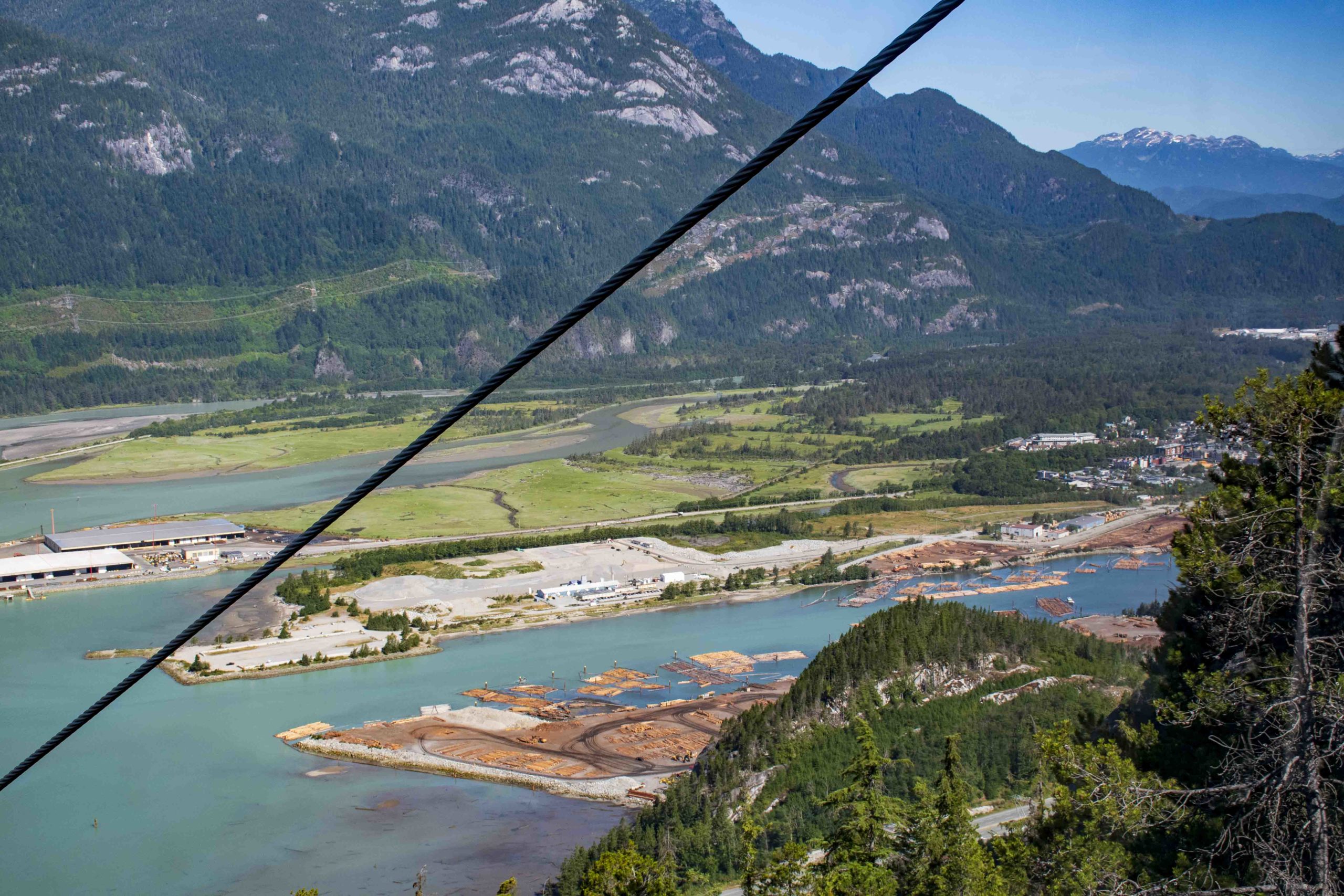 At a recent public open house, the Squamish Community Forest unveiled its vision for sustainable land use, cultural preservation, and wildfire mitigation over the next five years. The Squamish Community Forest functions on a Community Forest Agreement (CFA) and equal shareholding between Skwxwú7mesh Úxwumixw (Squamish Nation) and District of Squamish. This was their first ever partnership, as Squamish mayor and Community Forest chair Armand Hurford confirmed. The discussion that followed was centred around the sustainability and balance of cultural and environmental values. This year, the Community Forest has been given a $40,000 grant from the Silviculture Innovation Program (SIP) to implement silviculture in collaboration with the Nation’s Rights and Title and Cultural teams—a part of the Community Forest’s imminent five-year plan.
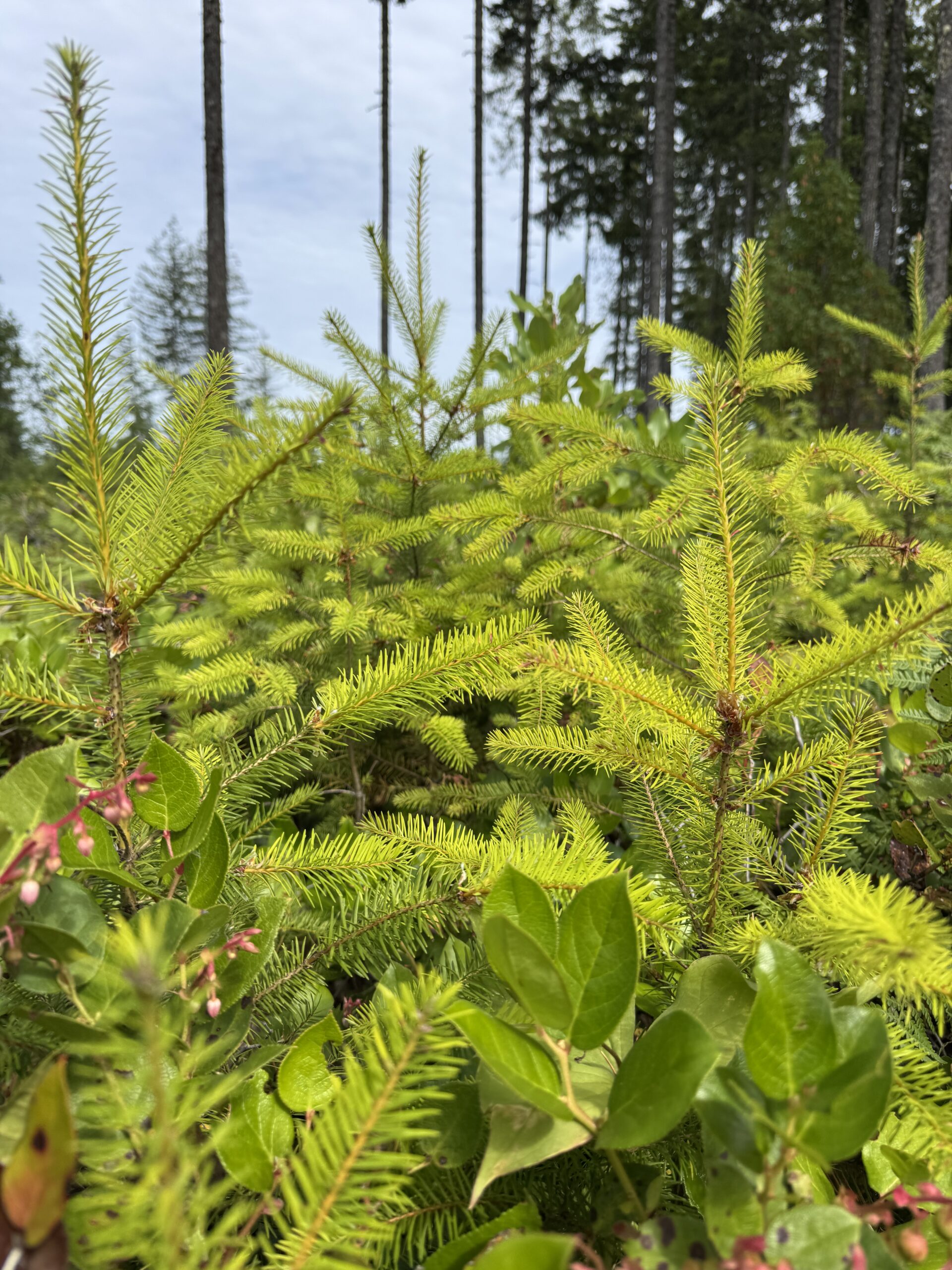 The best time to plant a tree is 10 years ago. Or 20. That’s what I was told by the two retired foresters who put 2,000 one-year-old seedlings in the ground on my farm back in 2017. I had signed on with what was then called the 50 Million Tree program run by Forests Ontario, which subsidized plantings for private landowners. …the Forests Ontario program made tree planting easy. At 40 cents a stem, those trees cost me $800. While 2,000 trees seems like a lot, they cover just under one hectare. We got the seedlings in the ground a couple years before Doug Ford nixed the initiative in 2019. But then, Justin Trudeau created the
  The provincial government has awarded a pair of contracts to build firebreaks in areas of the Avalon Peninsula ravaged by this summer’s historic wildfire season — fires that forced hundreds of people from their homes and destroyed more than 200 structures. A firebreak is an intentionally created gap where burnable material, like vegetation and trees, are cleared in an effort to stop a fire from spreading further by removing flammable materials that could feed it. It was employed as a firefighting tactic against the Kingston, Martin Lake and Paddy’s Pond fires. According to a list of recently disclosed provincial government procurement contracts, Conception Bay South-based Platinum Construction Company Limited was awarded a $51,600 contract. Another contract, valued at $419,983.35, was awarded to Jerseyside-based Tier 1 Capital Corporation to build firebreaks in Burnt Point and Salmon Cove. Both contracts were awarded shortly after the PC party won a majority government on Oct. 14.
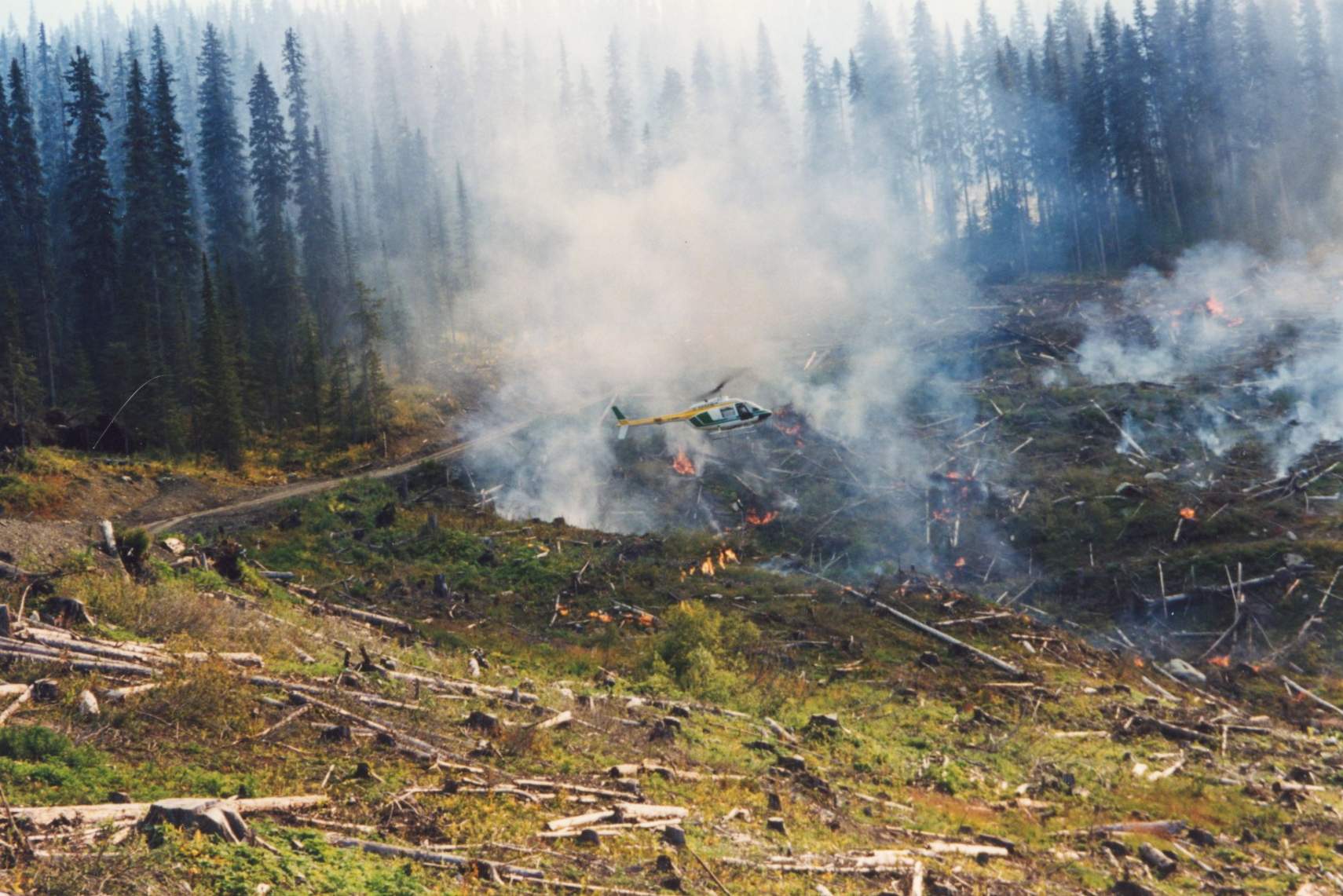 Oregon — Deschutes County is preparing to deploy $3.4 million for wildfire mitigation projects to reduce the likelihood of catastrophic wildfire in La Pine. The money comes from the U.S. Department of Agriculture and is part of a $200 million funding package to assist fire-prone areas across the country. Work is expected to begin in the spring on a variety of projects ranging from fuels reduction to community education, according to Lauren Street, a natural resources specialist with Deschutes County. The project is expected to continue for five years. La Pine was one of 58 recipients nationwide to benefit from community wildfire defense grants. The grants are funded by the Biden-era bipartisan infrastructure law of 2021. Elsewhere in Oregon, the Sweet Home Fire and Ambulance District is set to receive $8.7 million, the largest grant for any project in the state.


 At face value, the amount of forest in Australia is officially increasing, and has been since 2008. But if an old-growth tree is felled in a forest and seedlings grow elsewhere, is the official account ecologically sound? Not according to new analysis, which suggests that the way Australia calculates forest cover obfuscates the impacts of ongoing deforestation. Australia calculates forest cover as a net figure, in which forest losses are “netted off” against forest gains. That is problematic, according to a report led by Griffith University’s Climate Action Beacon, because new forests do not store as much carbon or have the same wildlife benefits as established forests that are being destroyed. Prof Brendan Mackey of Griffith University, one of the study’s co-authors, described measuring forest losses and gains in net terms as “an accounting sleight of hand”.


 In this newsletter you find these stories and more: