 BC launched a new forestry advisory council to balance forest health and industry success. In related news: the United Steelworkers welcomed the new council, while industry voiced concern over the lack of front-line representation. In other Business news: International Pulp Week is approaching; FPAC hired Darren Sleep as Chief Scientist; Mark Oulton receives King’s Counsel designation; April housing starts rebounded in the US and Canada; and US builder confidence fell.
In Forestry/Wildfire news: the first-ever National Risk Assessment for US forest biomass has been approved; a Michigan researcher looks at assisted tree migration; and Colorado brickbats for the Fix Our Forests Act. Meanwhile: do forest carbon credits actually work; BC’s wildfire forecast is bleak (but don’t worry); and Newfoundland’s wildfire season is underway.
Finally, a moving forest in shopping carts is coming to Toronto. And Happy Victoria Day—the frogs are back on Tuesday.
Kelly McCloskey, Tree Frog News Editor

 Kitselas First Nation is expanding its role in the forestry sector with the purchase of a new forest tenure from A&A Trading Ltd. The deal includes Forest License A16836 and Road Permit RP16688, giving Kitselas an annual allowable cut of just over 10,000 cubic metres. The total purchase price was just under $1.58 million and was approved by Chief and Council in July 2024. The acquisition is supported by Kitselas Development Corporation and Kitselas Forestry LP. An initial $800,000 was transferred to Kitselas in 2024, with the potential for a second distribution to fully cover the purchase. This move strengthens Kitselas’ economic position and gives the Nation more control over its lands and resources. Kitselas Forestry LP will manage the new tenure alongside existing operations, maintaining partnerships with trusted industry players.

 ROSEBURG, Ore. —
  Georgia-Pacific has announced it will permanently close its Cedar Springs containerboard mill in Georgia later this year, impacting approximately 535 employees. The company informed workers on May 14 that most positions at the site will be eliminated by August 1, 2025, with all roles eventually affected. While production will continue temporarily to meet existing customer commitments, the mill’s operations are set to wind down in the coming months. Georgia-Pacific cited multiple factors behind the decision, emphasizing that the mill could no longer competitively serve its customers in the long term. The company stressed that the closure is not a reflection of the employees’ performance. “Our focus now is to operate safely and support our employees through this transition,” the company stated, pledging to treat all affected workers with “dignity and respect.”
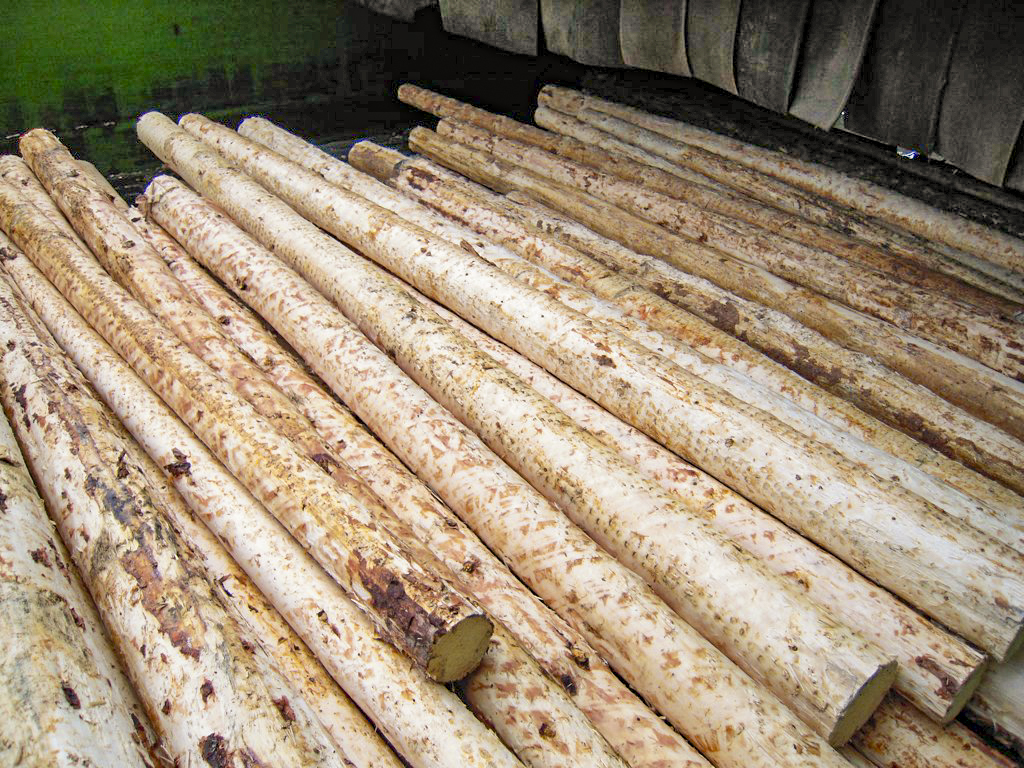 A construction industry crash in China is sending shockwaves through the timber trade here. “There’s elephants in the forest,” said Rotorua-based forestry consultant Jeff Tombleson. China was by far the largest importer of New Zealand logs – 92% in the year to June last year. But Tombleson said it had been “throttling back” on the quantity taken since China’s property market started contracting in 2021. Mega-infrastructure projects there such as new cities, ports and railways were nearing completion, he said. He said most of the New Zealand timber exported to China was used on construction sites for concrete-casting (boxing), a technique used in 60% of the country’s multi-storey builds. Since 2019, New Zealand’s isolating export log prices have occasionally “come back” to sub-$100 per cubic metre from an average of $132. At the lower level, he said harvesting for most of the small forests’ estate was not viable and because there was little or no domestic demand, they shut their gates.

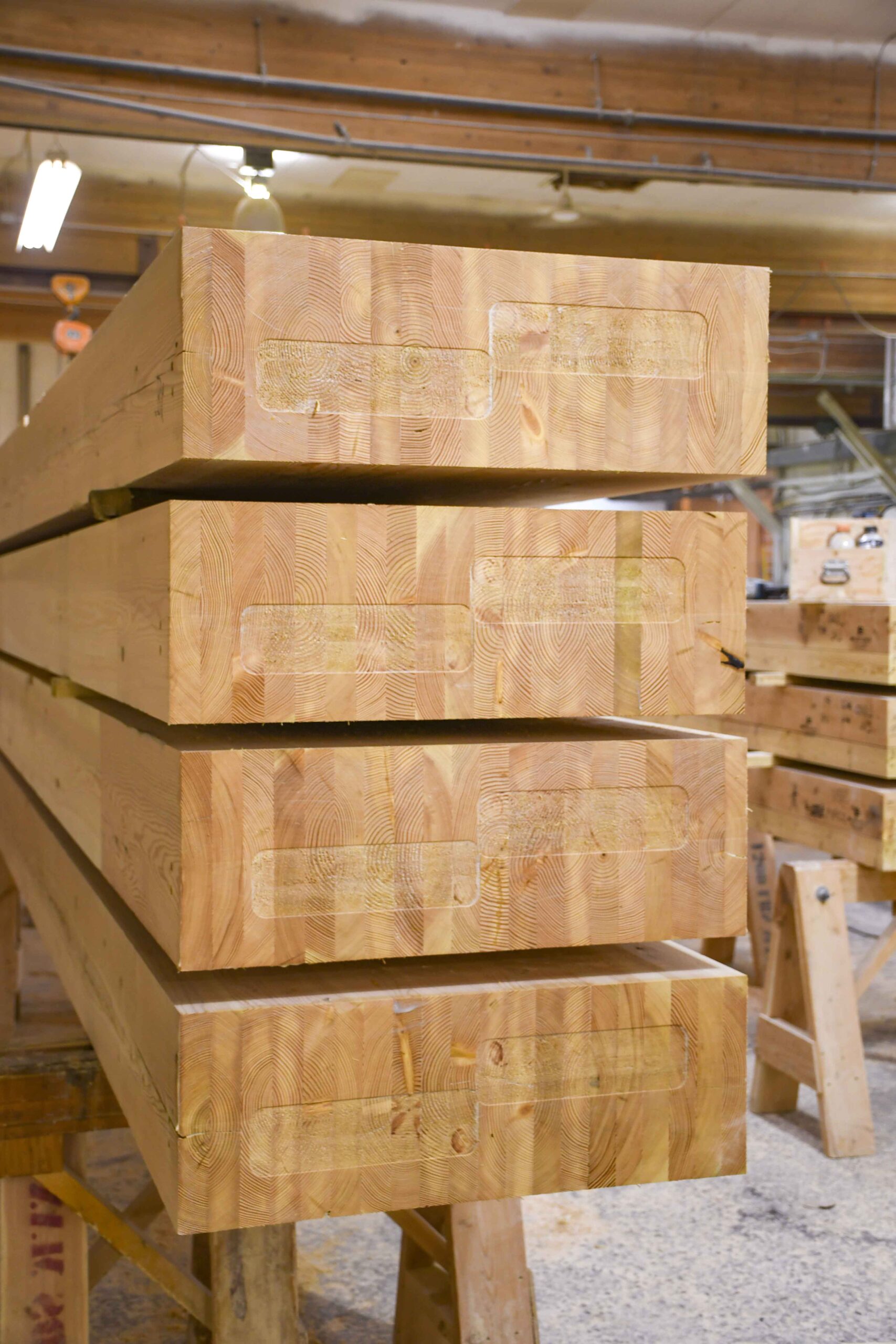 We are taking a look at developments throughout the Kootenay region. All of these developments are in the planning, permitting stage or development is underway. …Castlegar: Kalesnikoff Mass Timber Project Completion In Sight — Completion is in sight for one of West Kootenay’s biggest projects. Last year the BC government’s Manufacturing Jobs Fund (BCMJF) contributed some $6.7 million to assist Kalesnikoff Mass Timber Inc. to expand by establishing a new prefabricated mass-timber and cross-laminated timber modularized building facility, and purchasing new machinery to drive production of building components that will be used for rapid housing construction. The $34 million Mass Timber facility will create 90 jobs… This is the third Kalesnikoff operation in the region. Nelson: Spearhead Timberworks Set to Expand – Spearhead Timberworks, recently received a $7.5-million grant from the B.C government to expand its North Shore facility. The new facility will allow it to upgrade and increase production of its own custom glue-laminated timber.

 It could be another dangerously smoky summer for some in the United States as Canada prepares for a busy wildfire season with forecasts also signaling extreme heat is in store for both countries in the coming months. But when it comes to wildfire threats this season, the call is also coming from inside the house for the US: Violent wildfires have already raged in multiple states this year, millions were under red flag warnings this week and an active summer is on the horizon. In Canada, wildfires have scorched tens of millions of acres, displaced hundreds of thousands of people and killed multiple firefighters since the country’s record-breaking 2023 fire season. Some fires from the past two years also poured smoke into large population centers in Canada and the US, cratering air quality and ushering in orange-tinted, apocalyptic-looking skies. …Large wildfires produce dangerous smoke that can reach communities hundreds of miles away.

 A new University of Alberta study calculates that there are 277 billion trees in the North American boreal forest, including 30 billion in Alberta, and it could benefit climate mitigation. Estimated using a sophisticated machine learning algorithm, the numbers are 31 per cent higher than a count made through an earlier attempt in a major 2015 global study. “Our research provides by far the most accurate and credible answer to the question of how many trees are in our boreal forests,” says study lead Fangliang He, a forest ecologist and Canada Research Chair in Biodiversity and Landscape Modelling in the Faculty of Agricultural, Life & Environmental Sciences. The work fills a crucial knowledge gap that “reduces the uncertainty in estimating and managing tree density to promote forest productivity that enhances forest carbon sink potential,” he adds. “Knowing that there are 31 per cent more trees than previously estimated suggests our boreal forests have greater capacity to mitigate climate change.”

 The Trump Administration aims to increase lumber production in the U.S. while simultaneously reducing wildfire risk on federal lands across the country, including Dixie National Forest. However, some are concerned the president’s decision could make matters worse. On March 1, President Donald Trump signed an executive order, the Immediate Expansion of American Timber Production, to streamline permitting processes. It directs the U.S. Forest Service and the Bureau of Land Management to use the Endangered Species Act’s emergency regulations to the maximum extent possible to “facilitate the Nation’s timber production.” Additionally, the order directs federal members of the Endangered Species Committee to develop and submit a report to the president identifying “obstacles to domestic timber production infrastructures specifically deriving from implementation of the ESA and recommends procedural, regulatory, and interagency improvements.” …According to the Center for Biological Diversity, there are over 400 federally listed species that depend on national forest lands, such as grizzly bears, spotted owls and wild salmon.
 With the passing of the 25th anniversary of the 2000 Cerro Grande Fire on May 10—during yet another bone-dry spring of the Modern Megadrought—we should consider a wildfire variation of the adage, “Those who don’t learn from (fire and forestry) history are doomed to relive it.” In the 1990s, Los Alamos and Los Alamos National Laboratory (LANL) were warned, repeatedly, that they were vulnerable to wildfire. Today, Los Alamos and New Mexico in general, despite Cerro Grande and other fires, have not acknowledged or addressed the dangerous reality of today’s forests. As a correspondent for the Santa Fe New Mexican in the 1990s, I authored multiple stories featuring foresters and wildland firefighters who saw Los Alamos’ peril. I also witnessed, firsthand, the power and destruction of wildfires—Cerro Grande, Dome, Missionary Ridge, Los Conchas—in places I love. …Instead, it’s time to demand municipal, county, state, and federal leaders who acknowledge and aggressively address the wildfire threat.
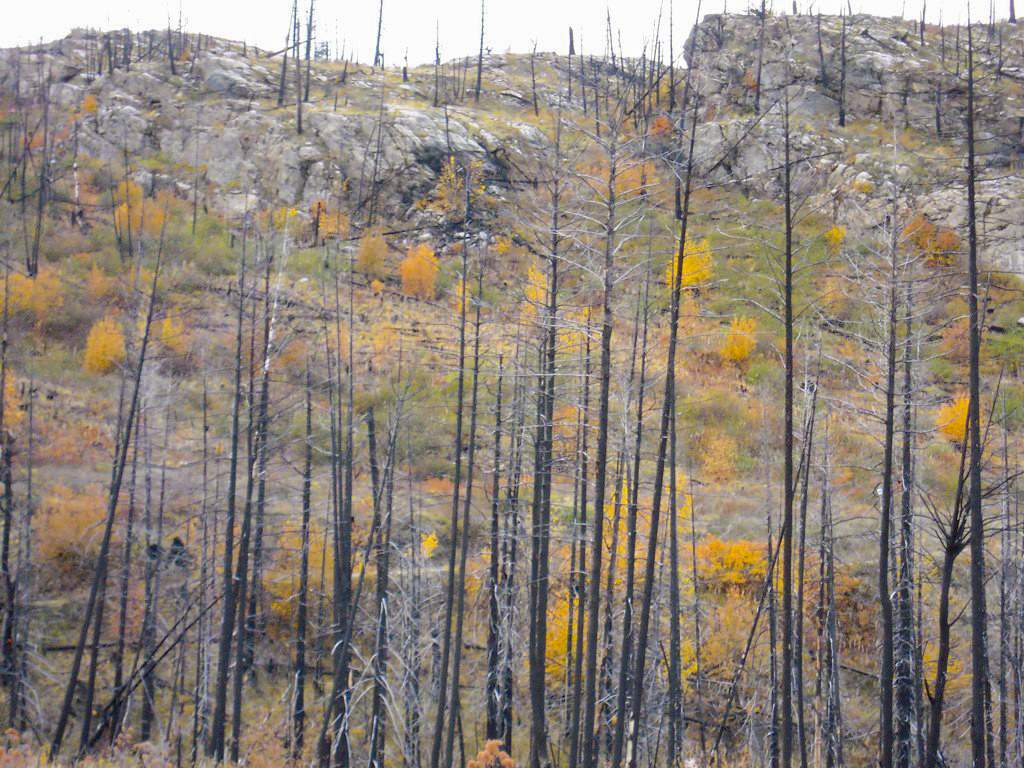 After Oregon’s devastating 2020 Labor Day fires, the Legislature passed a bill that was supposed to lead to more wildfire awareness and resilience. Among other things, Senate Bill 762 created a map of areas at high risk of fire. But that map led to a huge backlash from property owners — a backlash so strong that a few weeks ago, the state Senate voted unanimously to eliminate it. Jeff Golden is a Democratic state senator from the Rogue Valley. He voted to create the map in 2021, now he’s voted to get rid of it. …“We delegated to Oregon State University, which has credentials — among the best in the world in terms of maps like this — and gave them almost no direction, just said, ‘We need a map to fulfill this purpose. Let us have it within the next 18 months.’” At the time, very few lawmakers were worried about what would come next.
 Washington, D.C. – Today, Representatives Ryan Zinke (R-MT-01) and Joe Neguse (D-CO-02) introduced the Collaborative Forest Landscape Restoration (CFLR) Program Reauthorization Act of 2025, which would extend and expand a successful program focused on reducing wildfire risk, restoring forest health, and supporting rural economies through proven, locally driven strategies. Senators Mike Crapo (R-ID) and Jeff Merkley (D-OR) introduced companion legislation in the Senate. Originally authorized in 2009, the CFLR program is a model of how communities, industry partners, landowners, and local governments can work together to improve forest conditions and prevent catastrophic wildfires. In its first decade, CFLR projects treated and restored 5.7 million acres of forest, improved 1,000 miles of trails, and maintained over 25,000 miles of forest roads helping keep public lands open and safe.
 Prime Minister Mark Carney announced his new cabinet on Tuesday with a speech at Rideau Hall outlining his priorities — and like the speech, which did not mention climate change, the cabinet itself signals a potential shift in a new direction. Carney’s cabinet signals a “potential downgrading” of climate change and environment, says Mark Winfield, a professor of environmental governance at York University. …Carney appointed longtime business executive Tim Hodgson to serve as energy and natural resources minister and Toronto—Danforth MP Julie Dabrusin to serve as minister of environment and climate change. Dabrusin steps into the post held under Trudeau by Steven Guilbeault, who drew the ire of the energy industry and its political allies. Immediately following Dabrusin’s appointment, Alberta Premier Danielle Smith attacked her, too. Smith promptly took to social media after the swearing-in ceremony on May 13 to call Dabrusin “another anti-oil and gas Environment Minister.” [A subscription is required to access this full story]
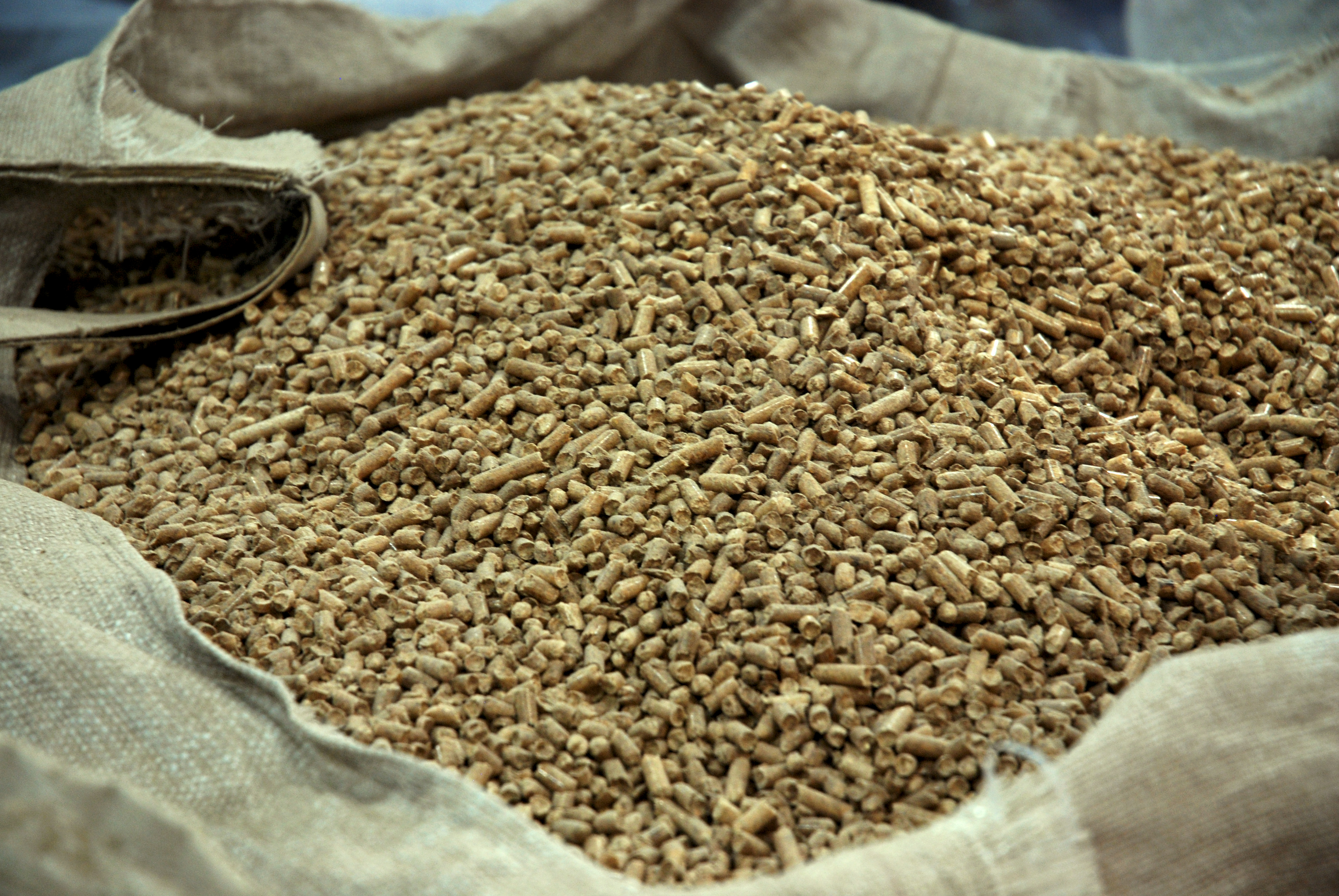 The US agriculture secretary has said the UK could take more US wood pellets as biomass amid ongoing trade talks. Brooke Rollins told reporters the US is ‘100% confident’ that the country’s wood chips adhere to UK sustainability requirements. Rollins met with UK energy secretary Ed Miliband and energy minister Michael Shanks on 13 May. Her visit to London saw her promoting agricultural produce – including US wood pellets. This is despite ongoing questions surrounding the actual sustainability of the biomass sector. In particular, Drax, which is subsidised by the UK taxpayer, has come under scrutiny on several occasions.
 FALLON, Nev. – A proposed wood pellet processing plant in Churchill County is facing significant opposition from nearby residents who say it’s a great project in the wrong place. The facility, which would operate 24/7, is being proposed on McLean Road in Fallon. The man behind the proposal, Alex Pedan, is seeking a special use permit to open the plant, but neighbors are raising red flags over concerns about noise, dust, and declining property values. Amber Sanchez lives near the site and says she was notified about the proposal on April 29. She’s concerned that not everyone in her neighborhood received the same letter. …During Wednesday night’s Churchill County Planning Commission meeting, residents filled the room to speak out against the plan. Some said they supported the idea of a wood pellet business — just not in a residential or agricultural area. …In response to community concerns, Pedan claimed the plant’s equipment would be housed indoors, within a sound-insulated structure.
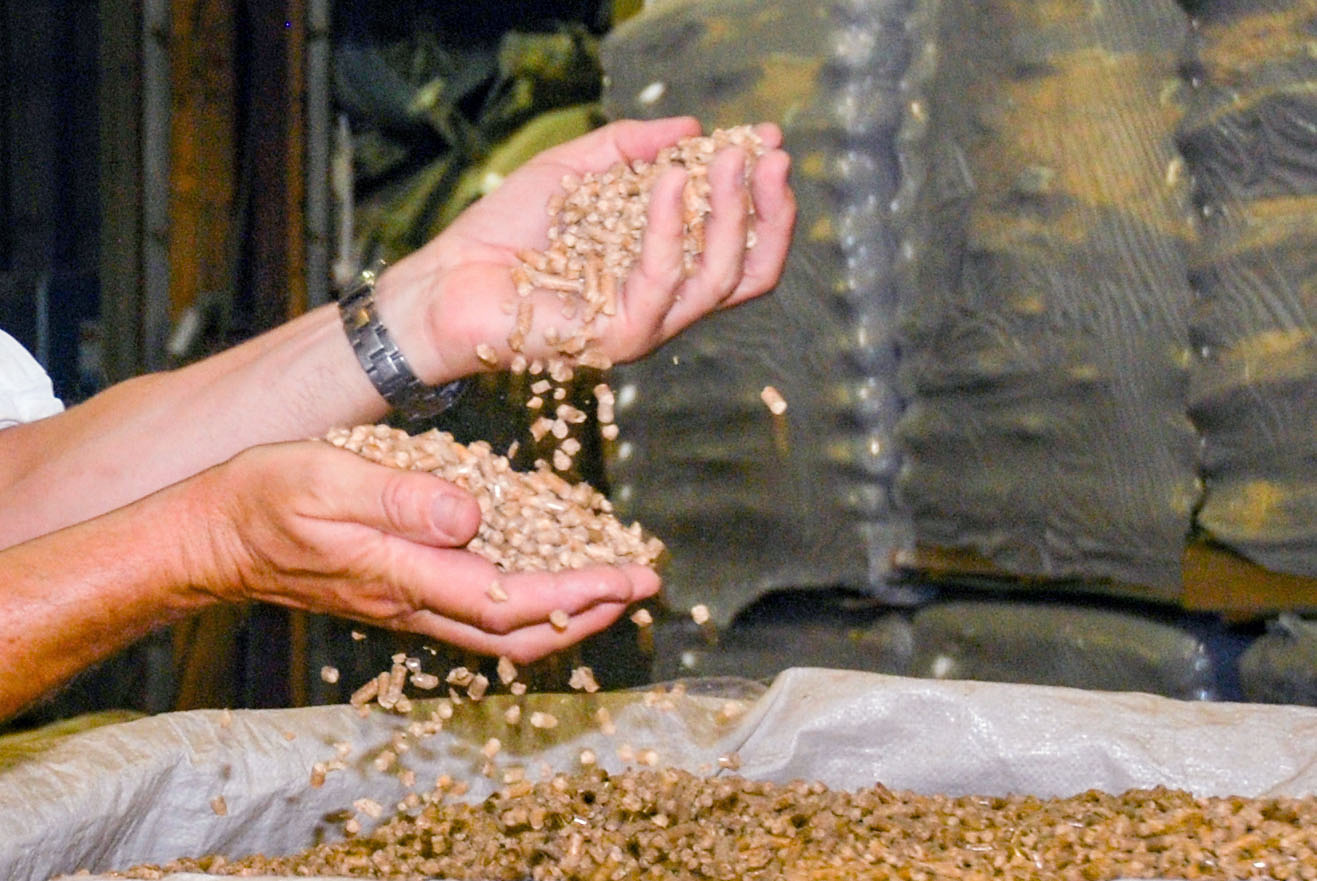 The UK could potentially take more US wood pellets to burn for electricity amid ongoing trade talks, Donald Trump’s agriculture secretary has said. Brooke Rollins, who met with Energy Secretary Ed Miliband and Energy Minister Michael Shanks on Tuesday, said America is “100% confident” that its wood chips meet the UK’s sustainability requirements. Ms Rollins has been promoting US agricultural produce, including American wood pellets, on a visit to London this week as trade talks between the two countries continue following the preliminary deal struck on Thursday. But the biomass sector has long faced accusations of sourcing and burning wood from environmentally important or rare forests. Campaign and media investigations have alleged that Drax, which runs the UK’s biggest power station in Yorkshire, has used wood from environmentally important forests in North America.

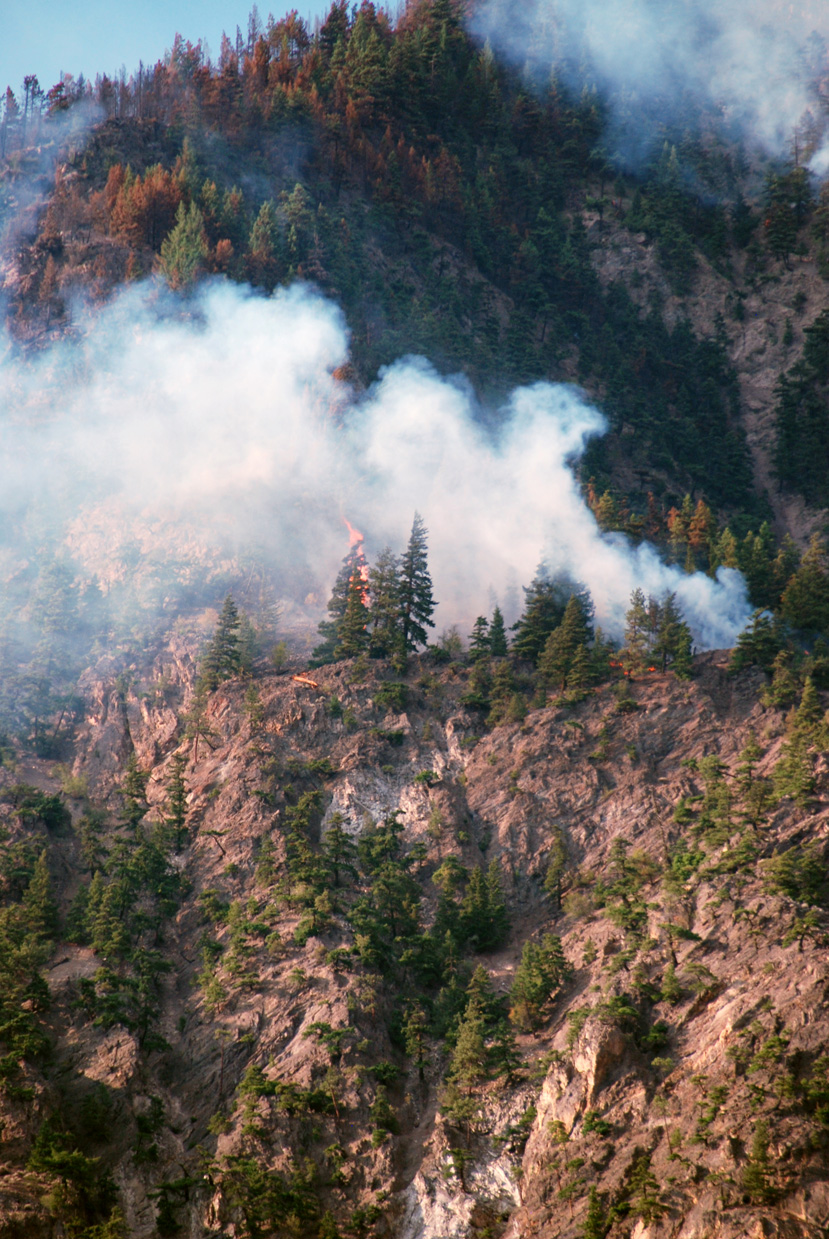
 A major wildfire burning in central Canada has killed two people and forced 1,000 more to evacuate their homes, kicking off a fire season authorities warn could prove devastating. Canadian federal police confirmed on Wednesday that two people died in the small community of Lac du Bonnet, in the central province of Manitoba, which is experiencing unusually hot, dry and windy conditions. Manitoba’s premier, Wab Kinew, said he was “deeply saddened to learn of the tragic loss of two Manitobans due to the wildfires”. “My heart goes out to their loved ones,” he added in a post on Twitter/X. In 2023, during Canada’s worst wildfire season, there were no recorded civilian deaths. Chris Hastie of the Royal Canadian mounted police told reporters that authorities “were aware that these individuals had been trapped in the fire”.
 Dozens of firefighters from British Columbia arrived in Manitoba over the weekend to help local first responders battle an out-of-control wildfire in northern Manitoba. Manitoba Premier Wab Kinew said Friday he put out a call to the Canadian Interagency Forest Fire Centre (CIFFC) for help from other jurisdictions to fight the flames. British Columbia responded, sending 42 firefighters. “I’m just happy to say that B.C. has answered the call. We’re there for other provinces. I know they’ll be there for us,” Kinew said at a news conference Friday. According to Manitoba’s fire map, a 20,000-hectare fire west of The Pas was still burning out of control as of Monday morning. It broke out over a week ago, engulfing 100 hectares, with heavy winds and little moisture causing it to more than quadruple in size in 24 hours.
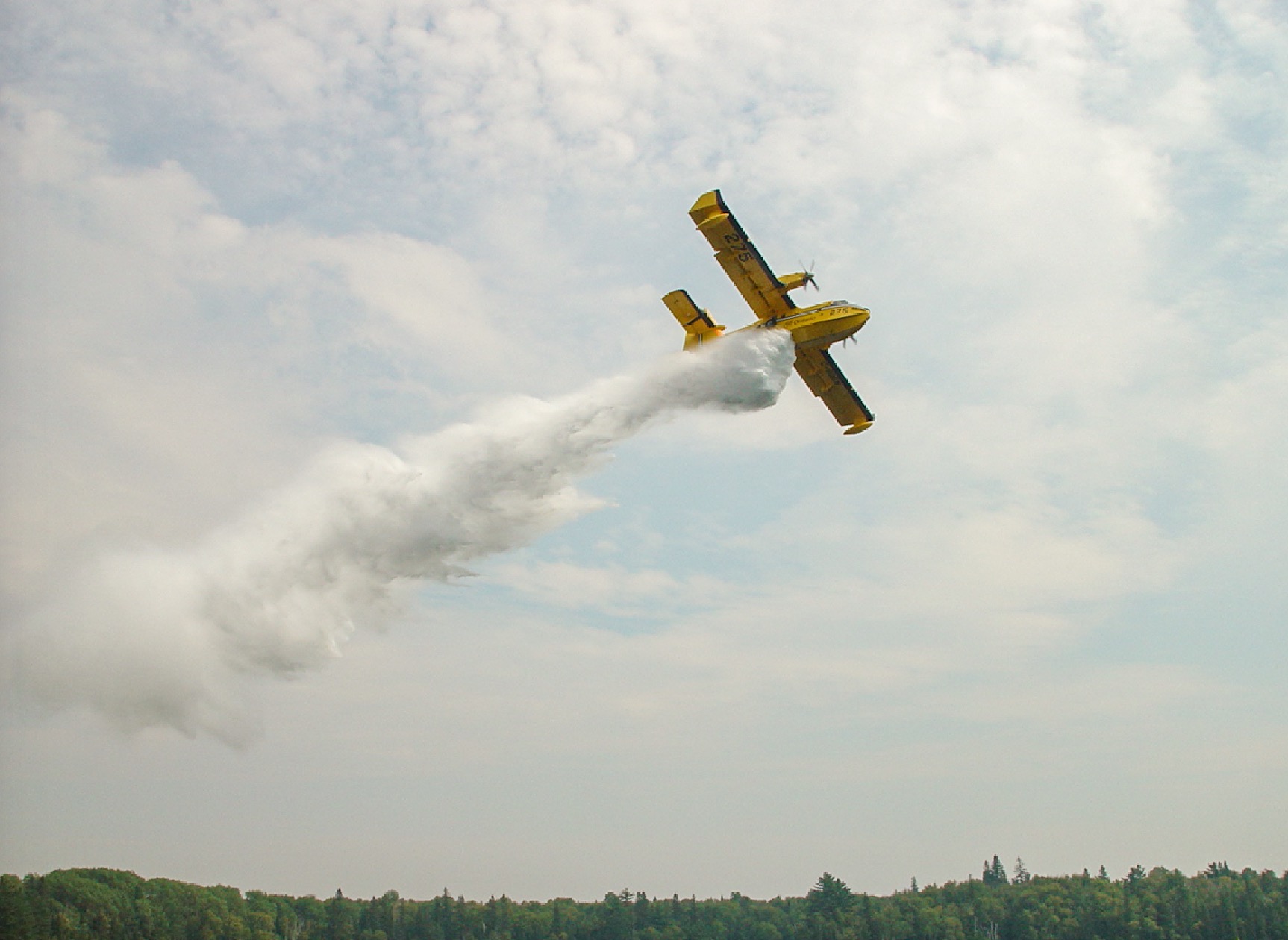 ATIKOKAN — A forest fire forced the closure of a section of Highway 11 in Northwestern Ontario. Ontario 511 reported the closure of both lanes of the highway at 5:27 pm EDT Monday. The road was blocked between Highway 623 at Sapawe and Highway 633 near Kawene. According to witnesses at the scene, Ministry of Natural Resources waterbombers were working steadily on the fire. The MNR estimated the fire had burned 180 hectares by 8:30 pm, and listed the outbreak as “not under control.”
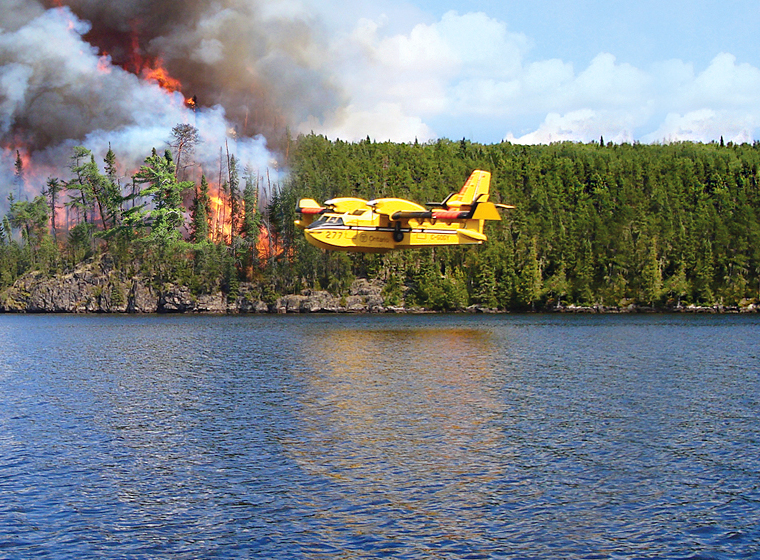 KENORA — The largest wildfire of the season in Northwestern Ontario has consumed 1,300 hectares of forest, but Ministry of Natural Resources crews have been aided by more favourable weather conditions. Heading into the weekend, there were concerns about the fire’s proximity to Wabaseemoong Independent Nations, as it was only 12 kilometres to the south and the fire was exhibiting some extreme behaviour. However, there was minimal growth on the fire’s perimeter on Saturday, and the wind changed direction, blowing from the south to direct fire activity and smoke away from the community. The MNR expects southerly winds will persist for a few days.
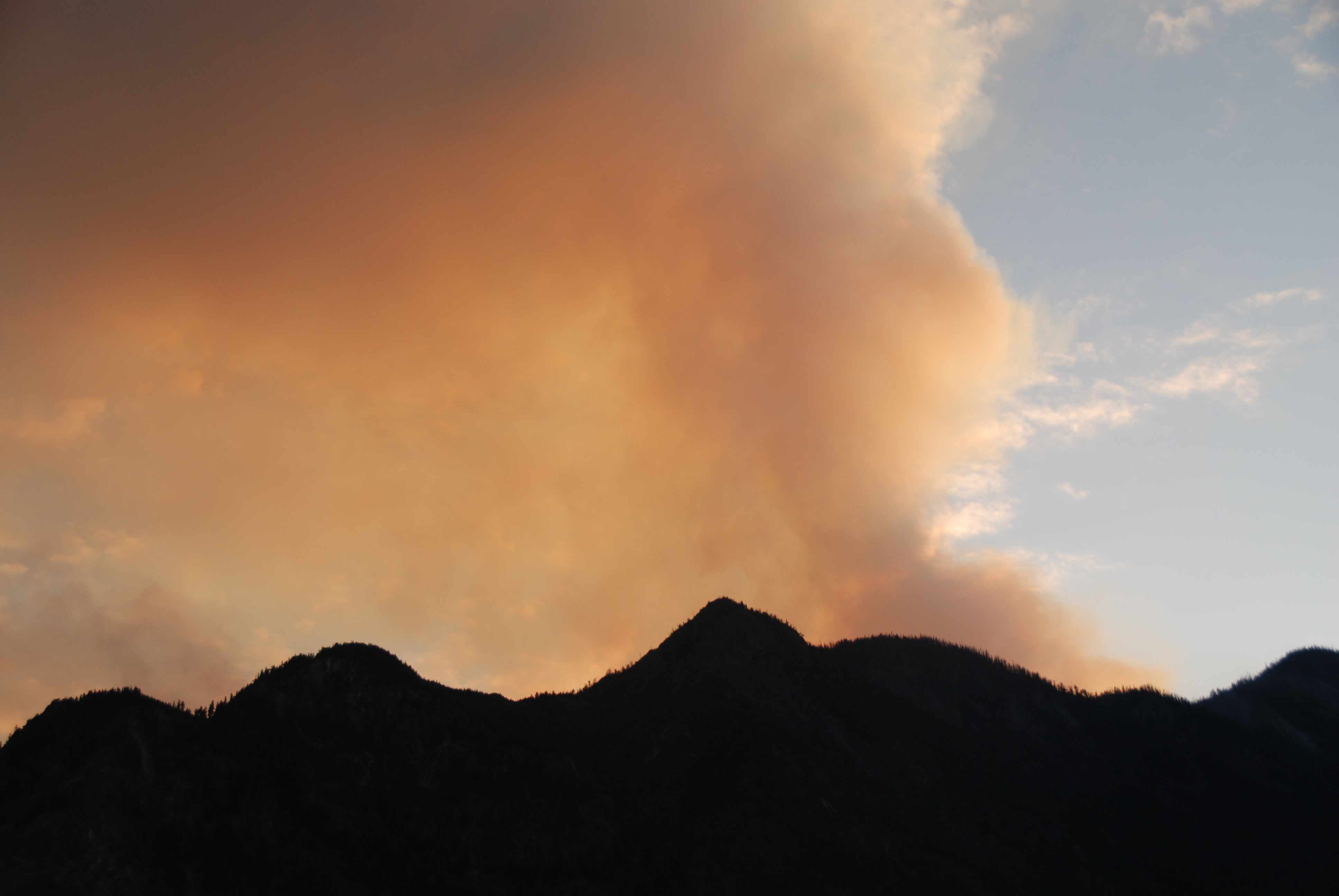 Severe wildfires raging in a Siberian region of Russia have engulfed more than 600,000 hectares of forest, local authorities have warned. In the Eastern Siberian territory of Zabaykalsky Krai, a federal-level state of emergencies has been in place since late April, Russian state news agency TASS reported. Despite huge efforts to tackle wildfire outbreaks in the region, which borders Mongolia, 49 forest fires continue to burn, with a total area exceeding 629,000 hectares, the Russian Ministry of Emergency Situations said Wednesday. Since the beginning of this year, more than 1.4 million hectares of land have been affected by wildfires, according to figures from Russia’s Federal Agency for Forestry published on Tuesday, about three times the total area affected by fires in the United States and Canada so far this year combined.