 President Trump’s trade war goes global—blows up postwar order. In related news: Bloomberg says US emerges as the biggest loser; Politico says Trump’s math is crazy; Canada dodges bullet but will fight existing levies; New Zealand says timber exemption may be temporary; how tariffs will hit US construction; and what’s at stake for softwood lumber.
In other news: Teal Jones loses bid for damages over Haida Gwaii; Canfor Corporation and International Paper release their sustainability reports; Oklahoma’s governor looks to dissolve its forestry service; BC’s Ravi Parmar appoints Makenzie Leine as new Deputy Minister of Forests; and Louisiana Pacific updates its management team. Meanwhile: a new NAHB survey on who makes the decision on which products use; and caring for trees after the ice storm.
Finally, Don Wright says Canada should fight tariffs like Muhammad Ali, not Joe Frazier.
Kelly McCloskey, Tree Frog News Editor


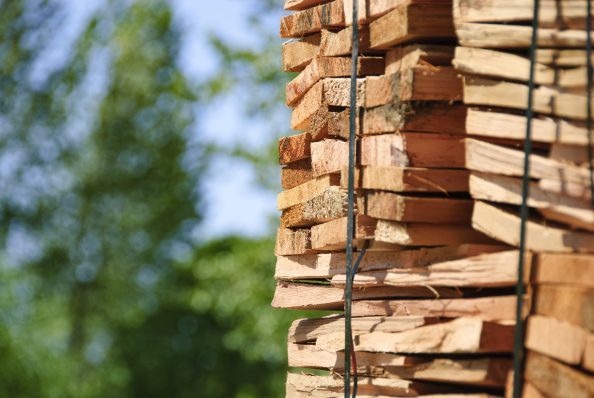 Teal Cedar Products has lost a bid for damages against the B.C. government over its declaration of First Nations rights on Haida Gwaii. The company argued the recognition of title over the lumber-rich but highly protected island archipelago deprived it of its ability to harvest despite Teal holding tree farm and forest licences in the area. It argued the B.C. government didn’t act in good faith, essentially expropriated property where Teal had business interests, and failed in a promise to keep the company whole during its negotiations with the Haida Gwaii Management Council over Indigenous title to the former Queen Charlotte Islands. B.C. Supreme Court Judge Brenda Brown rejected all three rationales and dismissed the claim for damages against either of the defendants, the B.C. government or the management council. …Teal obtained the two tenures from TimberWest in 2008, before selling them to A&A Trading Ltd. in late 2016.



 Vancouver, BC — This week, the BC Council of Forest Industries (COFI) will welcome more than 600 industry, government, and Indigenous leaders to Prince George for a sold-out COFI 2025 Convention, running April 2-4. As one of the largest annual gatherings of the forest sector in Western Canada, the convention focuses on urgent challenges facing the industry—and the path forward. Attendees are set to explore how the sector can respond to rising US tariffs, global trade uncertainty and regulatory complexity. Discussions will center on strategies to improve industry competitiveness, strengthen partnerships with First Nations and sustain local jobs, while positioning BC as a global leader in sustainable forestry. … A highlight of the convention will be the release of a new study comparing international forest jurisdictions by Glen O’Kelly, CEO of O’Kelly Acumen, benchmarking BC’s performance against leading forestry regions—including Sweden, Finland, Austria, the US, and Brazil.
 COFI 2025 – April 2-4 in Prince George, BC — As BC’s forest sector grapples with significant turbulence – including US tariffs, geopolitical uncertainty, and sector-wide challenges in BC – strong leadership and collaboration are essential to securing a sustainable and competitive future. The “Calm, Cool, & Collaborative: Leadership for Turbulent Times” panel at the 2025 COFI Convention will bring together senior decision-makers from industry, government, and First Nations. These influential voices will share their insights on navigating market uncertainty, shaping effective policies, and strengthening community resilience. Jon our panelists: Hon. Ravi Parmar, Minister of Forests, Province of BC; Chief Councillor John Jack, Huu-ay-aht First Nations; Juan Carlos Bueno, President & CEO, Mercer International; and Lisa Dominato, Councillor, City of Vancouver for a lively discussion moderated by Greg Stewart, President, Sinclar Group Forest Products Ltd. & Chair, COFI Board of Directors.


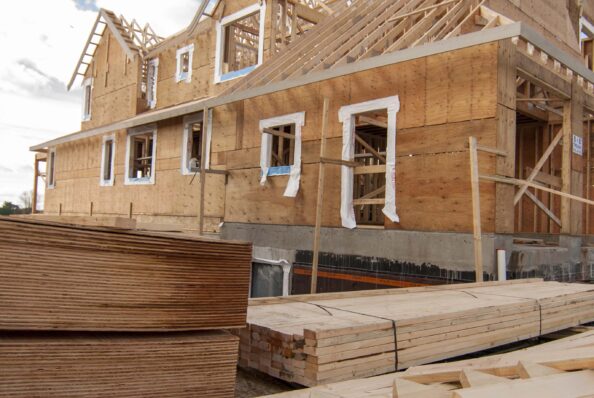 In the course of their business, home builders and remodelers buy many different products— ranging from lumber and other wood products to electrical and plumbing fixtures, a variety of materials used to finish various areas of the house, appliances, and even tools. The National Association of Home Builders (NAHB) recently surveyed both its single-family builders and its remodelers, asking them who’s most often responsible for choosing these products. In a separate question, NAHB also asked where these products are purchased irrespective of who chooses them because even when they’re not the ones driving the product choice, builders and remodelers often know where the product is being purchased. …The survey results show that, irrespective of who actually makes the purchase, it is the builders and remodelers themselves who most often influence product selection and therefore should most often be the prime targets for manufacturers looking to effectively market building products.
 From laundry detergent to dishwasher tablets, cleaning products are an indispensable part of life. Yet the chemicals that make these products so effective can be difficult to break down or could even trigger ecosystem-altering algal blooms. Now, researchers reporting in ACS’ Langmuir have addressed those challenges with an environmentally compatible detergent made of tiny wood fibers and corn protein that removes stains on clothes and dishes just as well as commercial products. …The researchers combined cellulose nanofibers from wood with zein protein from corn to create an emulsion. Cellulose can attract and repel water, so it is effective at forming such emulsions and attracting different types of stains. The zein protein, on the other hand, helps stabilize the emulsion and trap oils.
  Indonesia is one of the active exporters of logs and sawn wood, so the waste generated is very large. One of the applicable technologies developed for the utilization of wood saw waste is to process it into liquid smoke through the pyrolysis process. The application of liquid smoke to plants can affect plant’s growth and production processes due to the presence of acetic acid and methanol. The purpose of this research was to find out about the properties of Surian sawn waste liquid smoke and how it could be used as a biofertilizer an Arabica coffee seeds. …The effectiveness of liquid smoke from sawn wood waste for the increase in height, stem diameter, and the highest number of leaves of coffee seeds was obtained at a concentration of 2.5%.


 In this newsletter, we are pleased to share great stories of the impactful work happening in communities throughout our province. As the world continues to navigate the challenges affiliated with climate change, British Columbia’s forestry sector is playing a key role to mitigate its impacts and contribute to a more sustainable future. We take pride in investing in projects that provide enduring economic and social benefits for our local communities and are helping take action on this global issue. Last month, in collaboration with the Provincial Government, we shared more specifics about 70 recently funded projects moving forward to help local communities, community forests, First Nations, and other project partners enhance their wildfire prevention efforts and/or expand fibre-recovery initiatives. …In years past, much wood waste from harvesting operations was piled and burned in slash piles. Today, we invest in projects that recover this waste and use it to make forest products and generate green energy.
 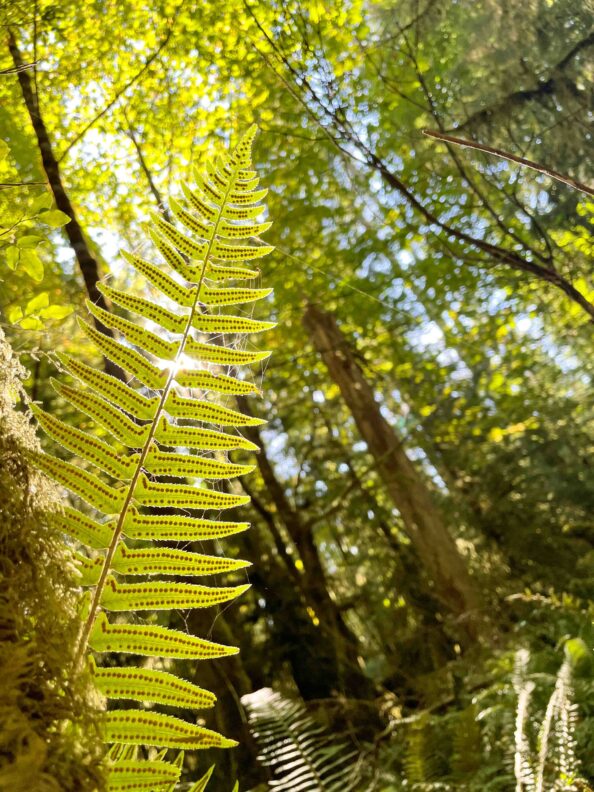 A draft co-management framework and plan to manage North Cowichan’s 5,000-hectare municipal forest reserve likely won’t be presented until sometime in 2026. The municipality and the Quw’utsun Nation (which consists of Cowichan Tribes, Halalt First Nation, Lyackson First Nation, Penelakut Tribe, and Stz’uminus First Nation) agreed in April, 2024, that they would work together to establish a co-management framework and plan for the forest reserve, and that work is still ongoing. North Cowichan’s communications director Barb Floden said the municipality and the Quw’utsun Nation issued a joint request for proposals to support the development of the co-management plan in February, which will be closing soon, and it is expected that the draft framework and plan will be ready next year. “The public will be kept informed of the process through joint statements and updates at council meetings,” Floden said.
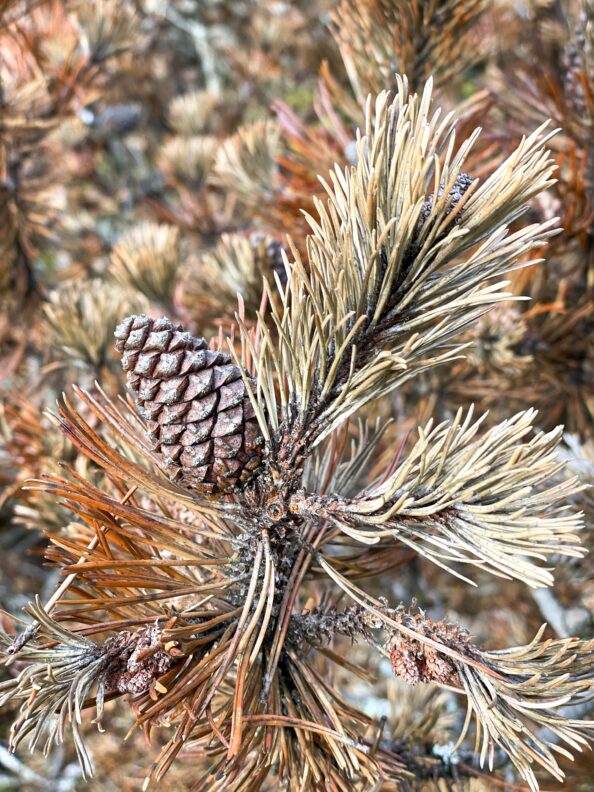 Ontario is ready to respond to this year’s wildland fire season, which lasts from April 1 until October 31. This year, the government has filled nearly 100 additional permanent positions to support the 2025 fire season and help ensure people and resources are in place to protect communities. “We are ready to protect people, communities and properties across Ontario from wildland fires,” said Mike Harris, Minister of Natural Resources. “When wildland fires hit, our brave and dedicated FireRangers, pilots and support staff are prepared to battle these fires and protect Ontarians.” Last year, the province partnered with the federal government to invest a total of $64 million in the wildland fire program. This investment has allowed Ontario to enhance its firefighting capacity for the 2025 fire season and includes funding for forest fire suppression equipment and technology, such as fuel systems, trucks and emergency management software.
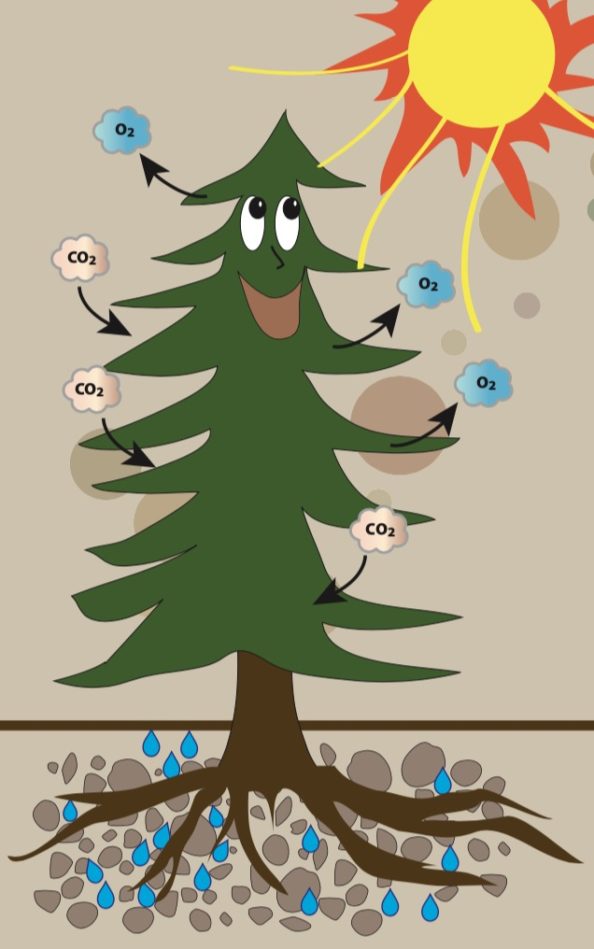 A recent study published by the Colorado State Forest Service took a deeper look into the impact of Colorado’s trees and how they store carbon. The findings reported that some of Colorado’s forests release more carbon than they draw due to dying trees that are actively decomposing. …it should be kept in mind that this data applies to recent years, and results fluctuate and can be nuanced. “(The) bigger picture of this report found that Colorado’s forests hold a lot of carbon, and that continues to this day, and it’s just in recent years that it’s releasing slightly more carbon than it adds,” Vorster said. “But when you just put it in perspective, if you were to compare the amount of carbon that it holds compared to what it releases, it’s like 0.06%, so a very tiny fraction of it at least every year. … It’s pretty close to a balance.”



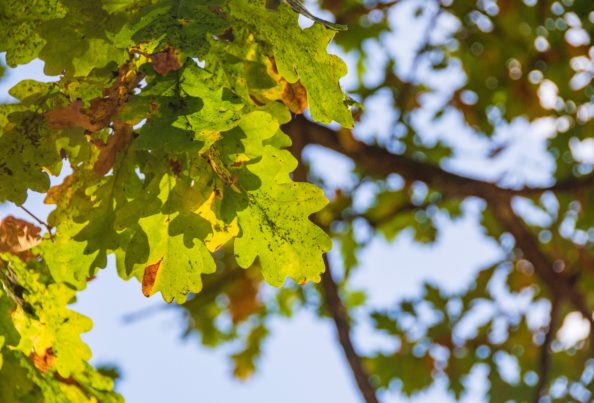 A quiet collapse is sweeping through America’s hardwood log export industry, completely devastating working families in rural communities who’ve been left behind as trade battles play out far above their heads. On March 4, China abruptly banned imports of U.S. hardwood logs, citing pest concerns — though industry insiders believe it was thinly veiled economic retaliation to the Trump administration’s recent tariffs. The impact was immediate and massive: China is the dominant buyer of U.S. logs, importing the vast majority of what America exports. Without that market, the entire industry lost its economic lifeline, according to Seth Riggio, a 35-year-old log broker based in Greenville, South Carolina. The move set off a chain reaction that has pushed loggers, exporters, truckers, and rural communities across the country into financial ruin. …These aren’t corporations with reserves. Most loggers don’t have savings accounts or college degrees. What they have are contracts, equipment, and a forest to work.
 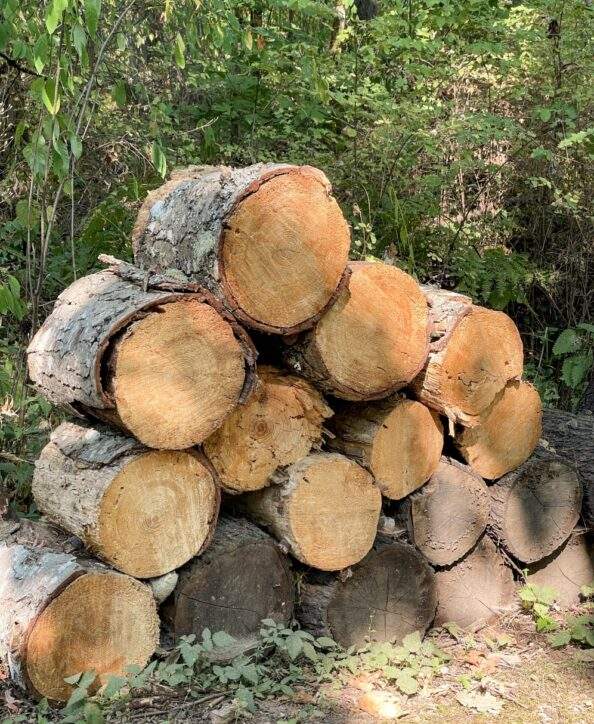 Millions of federal dollars promised to Maine woodland to improve harvest practices has been stalled for months without explanation. Landowners and logging companies are increasingly anxious about the funding blockade, and will have to make tough decisions if the money doesn’t come through. Baskahegan Co. Vice President Kyle Burdick said it was banking on federal reimbursements to sustain logging operations on its Down East timberland this year. But if the money doesn’t come through, it will have to potentially lay off logging contractors. Baskahegan was one of six Maine landowners that last year agreed to try out forestry practices that thin out woodlands to encourage bigger tree growth. The pilot project, funded through a $32 million climate smart commodities grant from the U.S. Department of Agriculture, was intended to store more carbon and generate valuable wood products in the future. The funding has been blocked since President Donald Trump put money …under review.
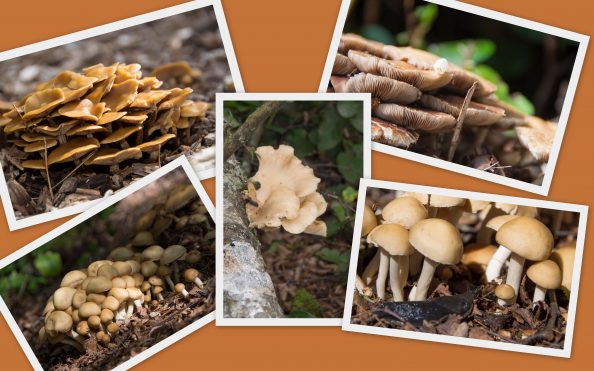 Gland, Switzerland – The number of fungi species on the IUCN Red List of Threatened Species has surpassed 1,000, confirming that deforestation, agricultural expansion and urban development are driving these species to decline worldwide. The IUCN Red List now includes 169,420 species, of which 47,187 are threatened with extinction. The addition of 482 newly assessed fungi species brings their number on the IUCN Red List to 1,300, of which at least 411 are at risk of extinction. “Fungi are the unsung heroes of life on Earth – yet they have long been overlooked. …we have taken a vital step forward: over 1,000 of the world’s 155,000 known fungal species have now been assessed for the IUCN Red List of Threatened Species, the most comprehensive source of information on extinction risk. Now, it’s time to turn this knowledge into action and safeguard the extraordinary fungal kingdom,” said Dr Grethel Aguilar, IUCN Director General.
 Living trees absorb carbon, aiding climate change mitigation. But what role do dead trees play in carbon storage? UVM researchers found that large, downed trees in streams tie up tremendous stores of carbon—and this pool of carbon storage is growing over time. Moreover, large trees in streamside forests proved important for recruiting carbon into streams over time—reflecting the environmental value of big, old trees. “We know that about 20% of global annual greenhouse gas emissions come from land use and deforestation,” University of Vermont professor and study author Dr. William Keeton said, “but we can also use forests and other land cover as what we call a natural climate solution—finding ways to sequester and store more carbon in vegetation.” Keeton had long suspected that water-bound wood in old-growth forests was surely storing carbon—but how much? Turns out, quite a lot.
 At least a half-dozen large wildfires continued to burn in the Blue Ridge Mountains of South Carolina and North Carolina on Thursday, leading to states of emergency and evacuations as firefighters deployed from other parts of the US to help bring the blazes under control. In North Carolina, progress was being made in containing two of the largest wildfires burning in the mountains, but officials warned that fire danger remained from dry and windy conditions. The news was worse in South Carolina, where two fires nearly doubled in size on Wednesday. Hundreds of people have been asked to leave their homes in the two states. Wednesday’s dry weather led to several new fires in western North Carolina and prompted the state’s governor, Josh Stein, to declare a state of emergency in 34 western counties. At least nine fires were active in that part of the state, officials said.