 The US will no longer track climate change-fuelled weathers disasters, including floods and wildfires. In related news: a new study says climate-fuelled wildfires contributed to US deaths; new data says CO2 emissions are levelling off but still rising; BC groups seek to drive the transition to wood-based biomass energy; Nova Scotia accelerates its clean energy reviews; and Michigan opens a new biomass facility in Grand Rapids.
In Business news: the US Lumber Coalition pans BC Premier Eby’s suggestion for a US-Canada resolution on softwood lumber; a podcast on America’s insatiable appetite for lumber; and how the EU deforestation law aggravates the US. Meanwhile: fibre shortages create downtime at two Tolko Okanagan mills; Minnesota’s Beltrami County approves West Fraser’s mill upgrade plan; Interfor reports Q1 net loss of $35 million; and the UPM Plywood strikes in Finland are ending.
Finally, can Carney’s prefab solution solve Canada’s housing crisis? Its complicated.
Kelly McCloskey, Tree Frog News Editor
 Professionals working in the lumber and sawmill sector and looking to advance their careers can gain specialized training through BCIT’s Associate Certificate in Industrial Wood Processing, starting June 2025. The IWP program was developed with industry subject matter experts and informed by industry leaders to support upskilling and professional development within the sector. The program is 1-year, delivered online and part-time to allow students to balance work and studies.
 MONTRÉAL, RICHMOND, BC, and
 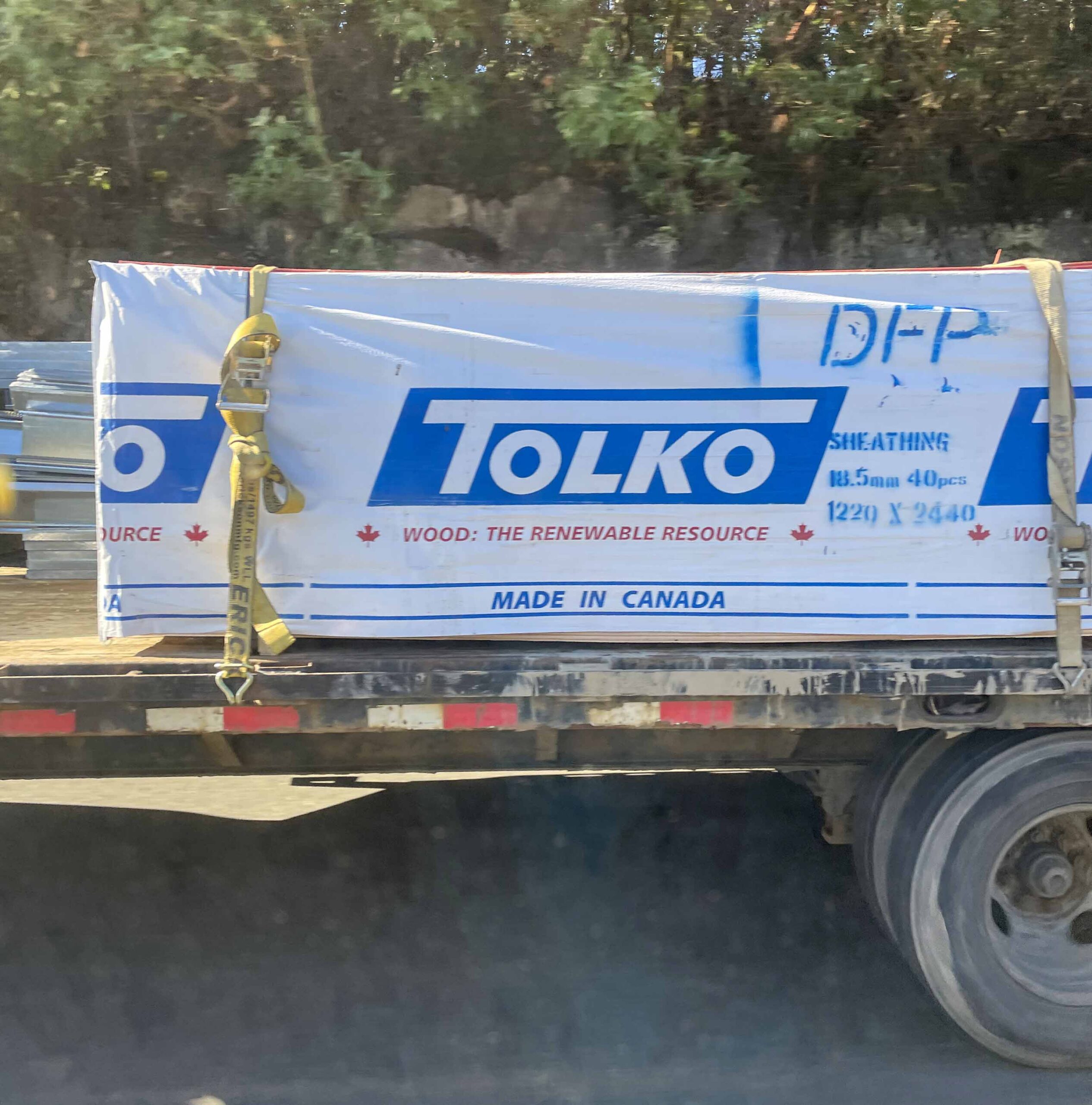 A lack of economical fibre will result in downtime at a pair of North Okanagan Tolko operations. Plants in Armstrong and at White Valley, near Lumby, will take approximately one week of downtime beginning as early as May 12 at Armstrong Lumber, and May 15 at White Valley. Employees have been notified. “BC regulatory and policy burden continues to impact the availability and accessibility of economic fibre,” said the Vernon-based company in an email. “We’re actively managing our log inventory, and the logs we have available are being deliberately directed to mills to make products where we can deliver the most value — accelerating our production of specialty, value-added (plywood, veneer and lamstock) and engineered wood products. “We recognize the impact this has on our employees and their families, and we will continue to provide as much notice as possible to help them manage through this uncertainty.”
 The rapid response of firefighters and workers at Pioneer Log Homes east of Williams Lake to prevent a log pile fire from spreading to other piles in the yard is being credited for saving the construction site from being destroyed. The fire on the west side of the building site at 1527 Old Cariboo Highway 97 (Mile 153) was reported to the 150 Mile House Volunteer Fire Department just after noon Monday and after a mutual aid request fire crews from City of Williams Lake and volunteer departments in Miocene and Wildwood were also dispatched to the scene. They spent nearly half a day dousing the burning logs until the fire was fully extinguished at about 11:30 p.m. Monday. No estimate has been determined on the cost of the logs lost in the fire, which was confined to one large pile covering an area estimated at one hectare.
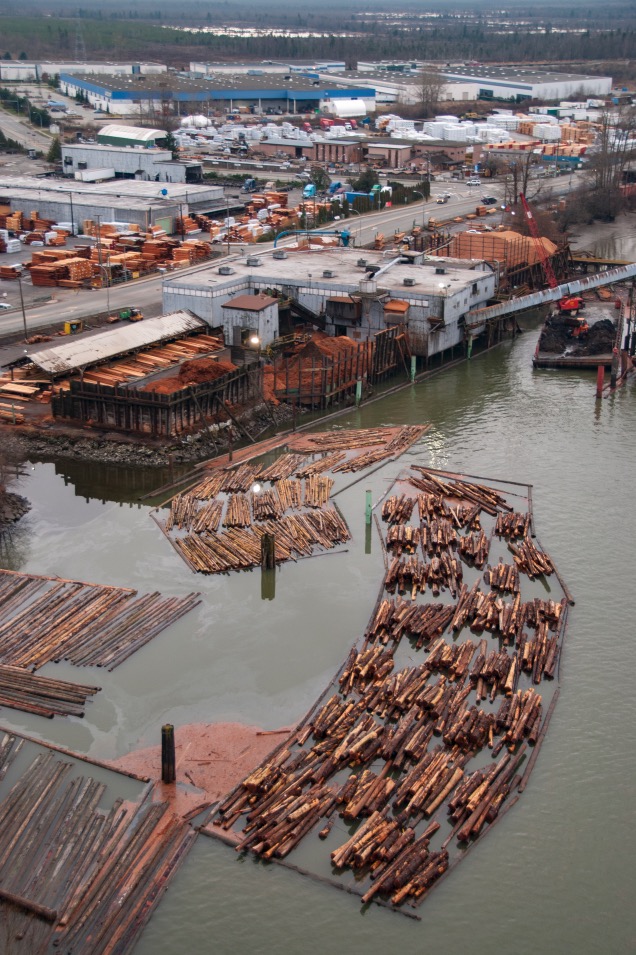 A high-stakes meeting between Prime Minister Mark Carney and United States President Donald Trump on Tuesday is being closely watched by politicians in Victoria. Ravi Kahlon, minister of housing and municipal affairs, said the province is being pragmatic… “We’re not expecting an agreement, and we’re also realistic that any agreement made with President Trump can be changed with a tweet the next day,” Kahlon said Tuesday. …Kahlon says the key for B.C. is to rely on its resources and to increase diversified trade with other countries. …Adding that breaking down interprovincial trade barriers will also help. …Meanwhile, B.C.’s forestry minister, Ravi Parmar, says Carney needs to prioritize B.C’s softwood lumber industry during his talk with Trump. …Western Canadian director for the United Steelworkers, Scott Lunny, tells 1130 NewsRadio that if the goal for the Trump administration is to rewrite the free trade agreement, we should “quit the nonsense and get on with that.”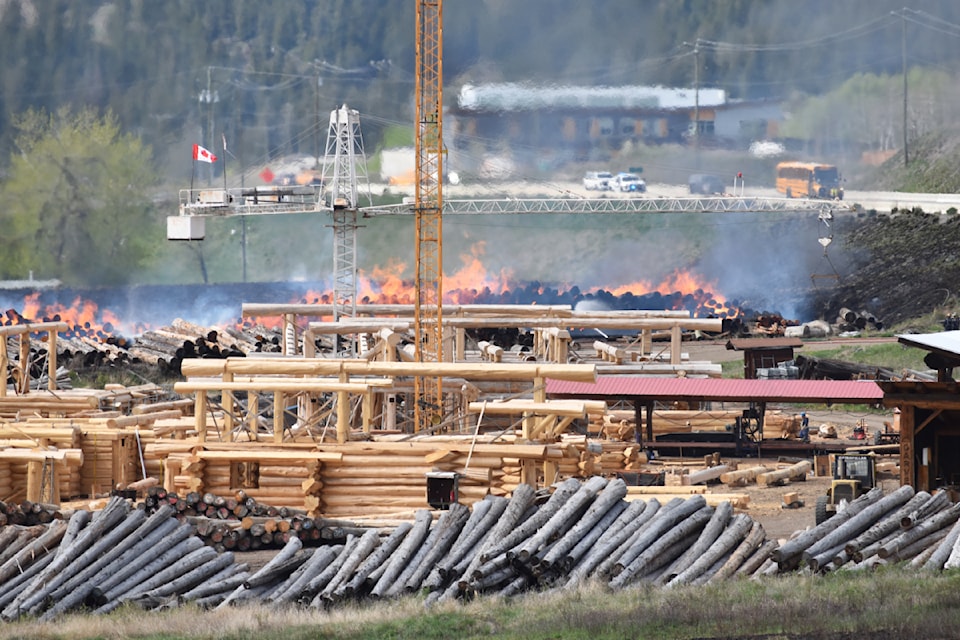
 As the next step in its plan to protect Ontario workers in the face of tariffs and economic uncertainty, the provincial government is expanding its Skills Development Fund (SDF) by nearly $1 billion over the next three years, for a total of $2.5 billion. This funding will help train and reskill Ontario workers, including those directly impacted by layoffs resulting from tariffs and ensure they have the necessary support to find good-paying jobs and help strengthen Ontario’s economy. “We’re already seeing the impact of President Trump’s tariffs and the economic uncertainty he has created on Ontario workers,” said Premier Doug Ford. “Today’s announcement of a further $1 billion in SDF funding is just the latest step in our plan to protect Ontario by investing in workers and making sure they have the support they need to succeed, no matter what comes our way.”
 This newsletter includes:





 This multi-day Conference, Finding Opportunity in Complexity, will explore the interconnected dimensions of climate change, forest fire management, biodiversity conservation, Indigenous forest stewardship, socio-economic considerations, and the evolving forest industry. From October 5-8, 2025, you can experience beautiful Binesii-wiikwedong (Thunder Bay), on the shore of Anishinaabewi-gichigami (Lake Superior) and the surrounding area. The boreal forests of the “Lakehead”, the traditional territory of Fort William First Nation, have provided a cultural and spiritual foundation for Indigenous Peoples for generations, along with a diverse suite of ecosystem services. Over time the area’s forests have also become a source of economic prosperity, making the region a hub of forest management, scientific inquiry, and policy development. Join us as we transform the challenges of complexity into opportunities by considering the history of forest management, celebrating the contributions and diverse perspectives of our peers, and looking toward resilient and healthy future forests.
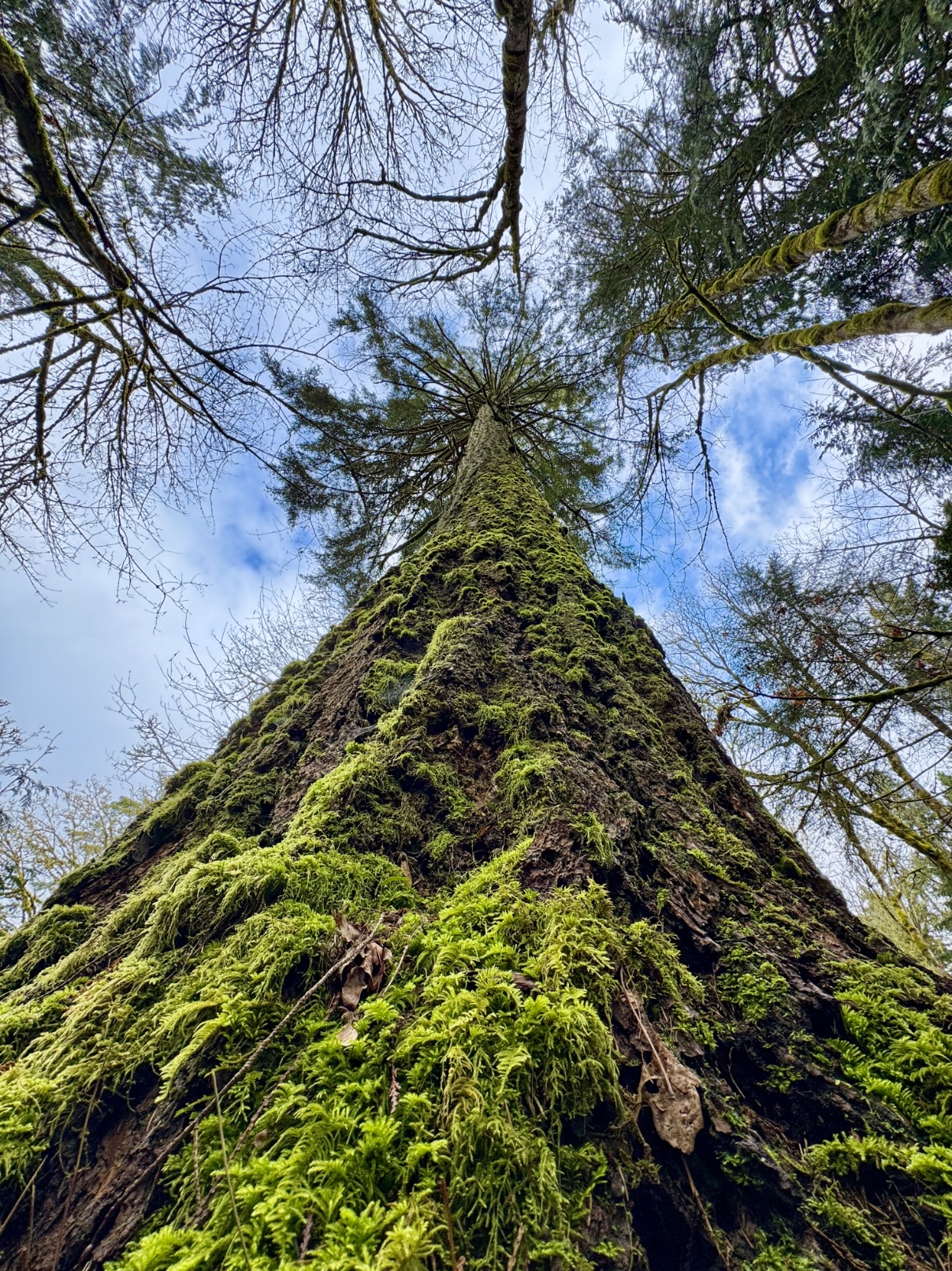 Forests are fundamental to Canadians. As “hewers of wood and drawers of water,” forests are as much a part of Canadian DNA as hockey sticks and maple syrup. …Canada harvests a relatively small portion – less than 0.5% – of its forests annually, adhering to sustainable practices. Every hectare harvested is carefully managed to ensure full regeneration, maintaining ecosystems and biodiversity while continuing to support the communities and livelihoods that depend on them. Harvesting takes years of meticulous planning. In fact, before a single tree is cut, forestry companies study and analyze the forest ecosystems before developing and presenting the government and the public with 100 to 200-year plans, repeating the process every ten years with improved information. [The Hill Times requires a subscription for full access to this story]
 The May News & Views includes the following headlines:



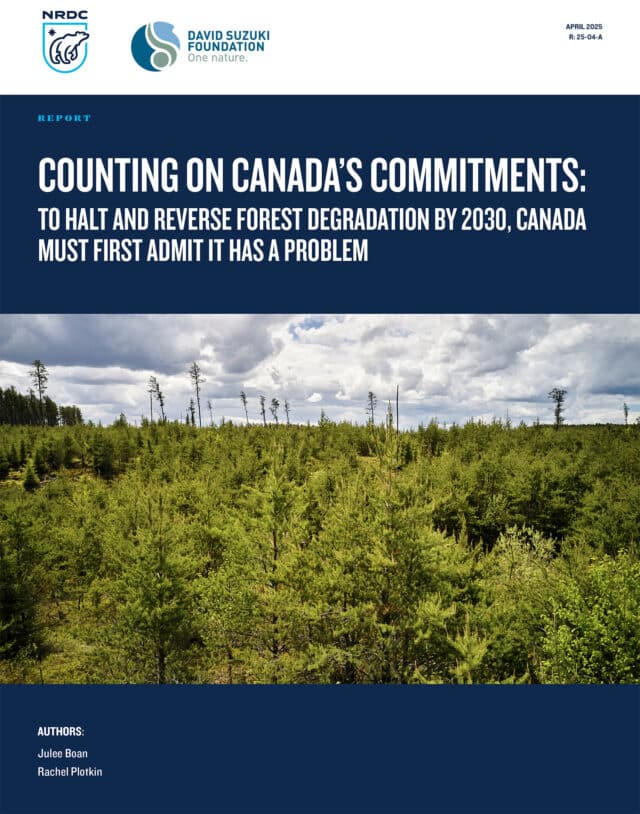 THUNDER BAY — The health of Canada’s forests is an issue if the county is to meet its climate targets, according to a recent study. Co-authored by Julee Boan, partnership director for the Global Nature International Program at the Natural Resources Defense Council, with Rachel Plotkin, the boreal project manager at the David Suzuki Foundation,
 The Alaska Division of Forestry & Fire Protection (DOF) is working with the Anchorage Fire Department (AFD) Wildfire Division to implement a shaded “fuel break” in the Anchorage Hillside area extending from Hilltop Ski Area Road to Prospect Drive. Known as the East-West Connector, this project was scheduled to begin May 5 and represents a renewed effort to reduce wildfire risk through coordinated mitigation work across the Municipality of Anchorage. Wildfire Division Chief, Anchorage Fire Department, Jon Glover shared this statement: “The collaboration between the State of Alaska Division of Forestry & Fire Protection and the Anchorage Fire Department on the East-West Connector shaded fuel break represents exactly the kind of partnership our community needs. This project is more than a line on a map, it’s a commitment to proactive wildfire mitigation and public safety. Together, we’re building resilience and delivering long-term value to the residents we serve.”
 NEW HAMPSHIRE yield tax on timber, often called the “timber tax,” was established in 1949 and has been locally collected to offset property taxes ever since. …The yield tax on timber has been an essential tool for promoting conservation, helping the timber industry, and stabilizing municipal revenues in heavily timbered towns. …The legislation would, “…encourage conservation of the forest resources of [New Hampshire] by releasing growing wood and timber from the yearly burden of local property taxes and substituting a yield tax….” The timber tax has been very effective achieving these goals… The current policy strikes an excellent balance between industry and conservation. There is a new government-promoted industry threatening New Hampshire’s timber industry, loggers, timber processors, and heavily timbered towns that depend on timber tax revenues. Carbon credits.
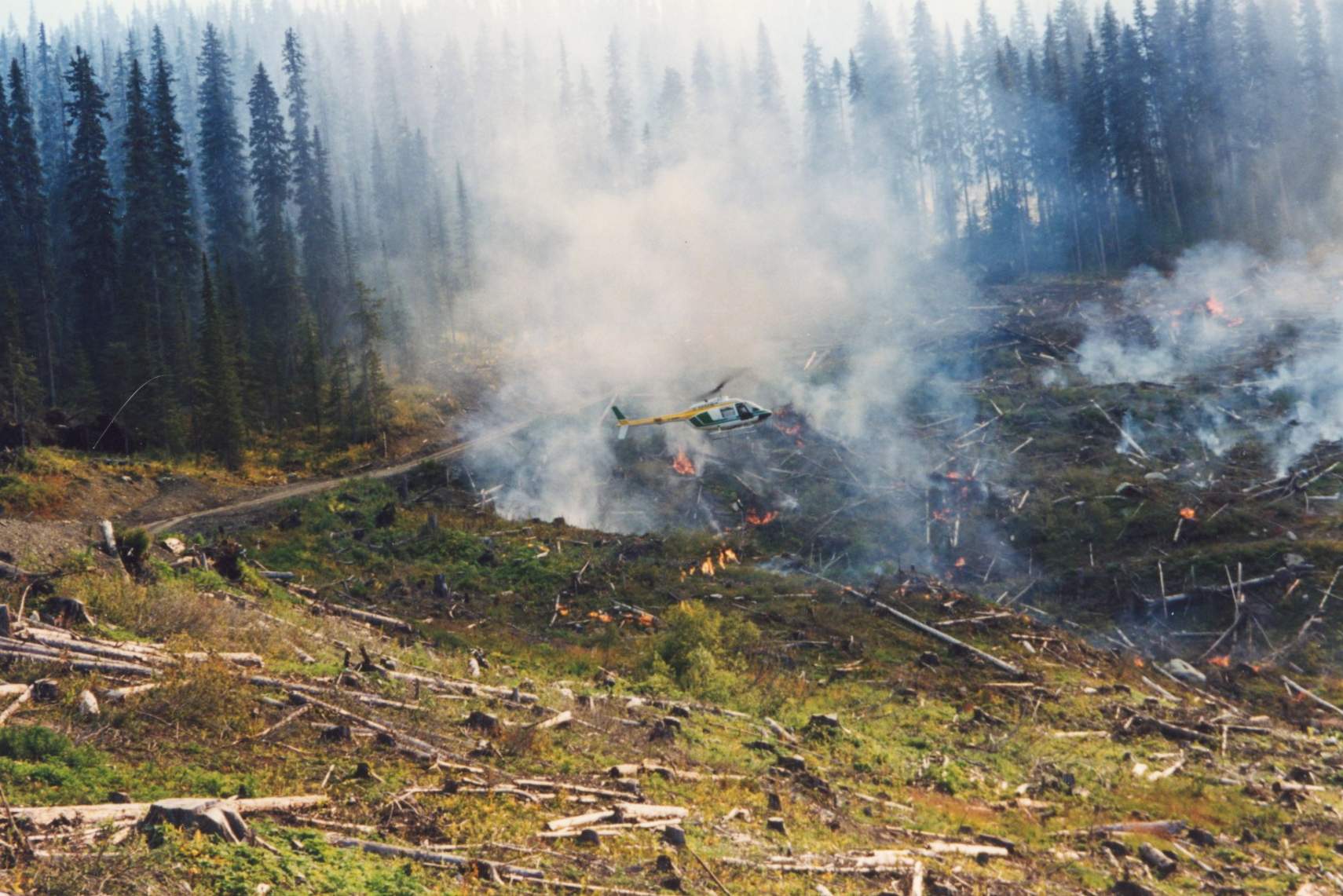 British Columbia’s worker protection agency says a planned burn by the province’s wildfire service during the devastating 2023 fire season could have killed or injured multiple firefighters who became “trapped by extreme fire behaviour” that cut off their escape. Inspection reports by WorkSafeBC say the BC Wildfire Service didn’t adequately ensure safety during the burn in the Shuswap region on Aug. 17 that year, and a group of trapped Brazilian firefighters had to retreat to a “safe zone.” WorkSafeBC says they had to burn off fuel around their truck and spend the night because of low visibility, smoke, fire activity and falling trees. They were picked up the next day by another crew that “cut their way into the site.” …The employer did not provide adequate information, instruction, training or supervision for the crews involved, the report says, and the incident “could have resulted in multiple serious injuries or fatalities of workers.”


