 US President Trump triggered a continental trade war with tariffs—as Canada, Mexico and China respond-in-kind. Not surprisingly, Trump’s announcement is leading to higher consumer prices, falling stock prices and higher lumber futures. In related news: the US also plans to triple anti-dumping duties on Canadian lumber; BC Premier Eby says the double whammy will devastate forestry; the BC Lumber Trade Council calls the move unjustified; and the US Lumber Coalition says they can fill the lumber gap.
In other news: Trump’s call for more logging gets Forest Resources Council support—despite claim that it is ‘legally murky‘; BC’s forest critic calls for a tax on US thermal coal; Amix Group buys Western’s Port Alberni sawmill; Stimson Lumber is planning a mill expansion; a sawdust explosion hits Mark Richey Woodworking; and Domtar’s Bill Edwards receives an Excellence in Leadership Award.
Finally, Canada’s pulp & paper sector is less exposed, but US investigation may target paper et al.
Kelly McCloskey, Tree Frog News
 Vancouver — The BC Lumber Trade Council (BCLTC) strongly opposes the U.S. Department of Commerce’s preliminary decision to increase anti-dumping duties on Canadian softwood lumber to 20.07%. This unjustified move will negatively impact forestry workers and communities in British Columbia, while further burdening homebuilders, consumers, and the broader construction sector in the United States. “It is deeply disappointing that the U.S. continues to impose these protectionist trade measures” said Kurt Niquidet, President of the BC Lumber Trade Council. “The fact remains that the United States relies on Canadian softwood lumber imports and these duties will harm not only the B.C. forestry industry, but also U.S. consumers, who will bear some of the cost”. Ongoing rebuilding efforts in North Carolina and California, where affordable and reliable lumber is critical to recovery, will be more expensive as a result of this decision.
 Landscape to Local: Integrated solutions to wildfire, conservation, community safety and economic development: As wildfires intensify and land use policies evolve, finding solutions requires cooperation across governments, First Nations, local communities, labour and industry. The “Landscape to Local” panel will tackle critical issues, shedding light on real world strategies, innovative practices and community-driven approaches to address the dual challenges of protecting our forests while supporting local economies. Join our distinguished panel of experts: John Kitzhaber, Former Governor of Oregon; Ward Stamer, MLA for Kamloops-North Thompson and BC Conservative Critic for Forests; Klay Tindall, General Manager of Lil’Wat Forestry Ventures; James Whitehead, Engagement Analyst with the Mitigating Wildfire Initiative at SFU’s Wosk Centre for Dialogue; and Moderator Zara Rabinovitch, Vice President of Sustainability & Public Affairs at COFI.
 A key government program designed to help older forestry workers transition into retirement has officially closed after assisting more than 2,200 individuals since its inception in 2019. The Bridging to Retirement Program, launched in response to economic challenges in the forestry sector, has distributed over $92 million in funding, helping affected workers retire early while opening up job opportunities for younger employees, according to the government. The program, which began in October 2019, reached capacity and officially ceased intake on February 26, 2025. Initially funded with $40 million, the program was later expanded to $50 million and renewed in 2021 with a three-year funding commitment. Eligible workers aged 55 and older were provided with financial support of up to $75,000 each, based on their experience and employer contributions. …When first announced in 2019, the provincial government pledged $69 million in forestry support programs to mitigate job losses, strengthen community resilience, and promote economic recovery. …While the program has concluded, new concerns loom over the B.C. forestry sector.
  At the 2025 COFI Convention, we’re diving deep into B.C.’s forest sector competitiveness and sustainability—and how we compare to leading global regions. Join Kurt Niquidet, COFI’s VP & Chief Economist, and Glen O’Kelly, CEO of O’Kelly Acumen, as they reveal findings from a new study benchmarking B.C. against 10 international jurisdictions—including Sweden, Finland, Austria, the U.S., and Brazil. Key insights include: Strengths & Weaknesses – What industry leaders are saying about B.C.’s competitive position; Global Comparisons – How B.C. stacks up on economic and sustainability performance; and Opportunities for Growth – Strategies to strengthen B.C.’s competitive edge. This is a must-attend conversation for anyone invested in the future of B.C.’s forest industry. Don’t miss it—Register before the end of Early Bird Pricing on March 3!


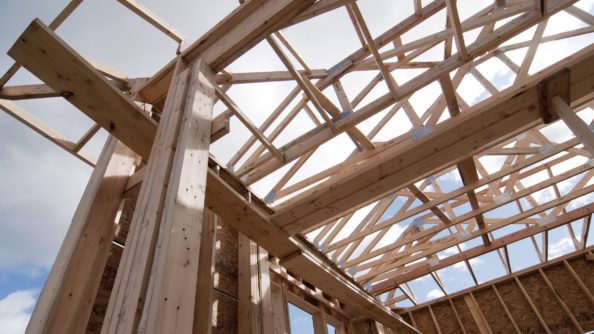 BOZEMAN, Mont. – The Trump administration’s tariffs are stirring discussions in Montana, with concerns about their impact on local economies. At Montana State University, Dr. Nicole Karwowski, an assistant professor of economics … explains that while tariffs can benefit certain business and factory owners, as well as shareholders of domestic firms, the broader impact tends to be negative. She highlights that these beneficiaries gain from the increased costs international companies face when competing in the U.S. market. The local economy in Bozeman is particularly affected, Karwowski says, due to the rising cost of construction materials. “We import a lot of our timber from Canada. And housing prices are already skyrocketing in places like Bozeman especially. So the different types of construction materials and raw materials are increasing in cost because of these tariffs. Then we’re going to see it harder to be building more in places like Bozeman,” she said.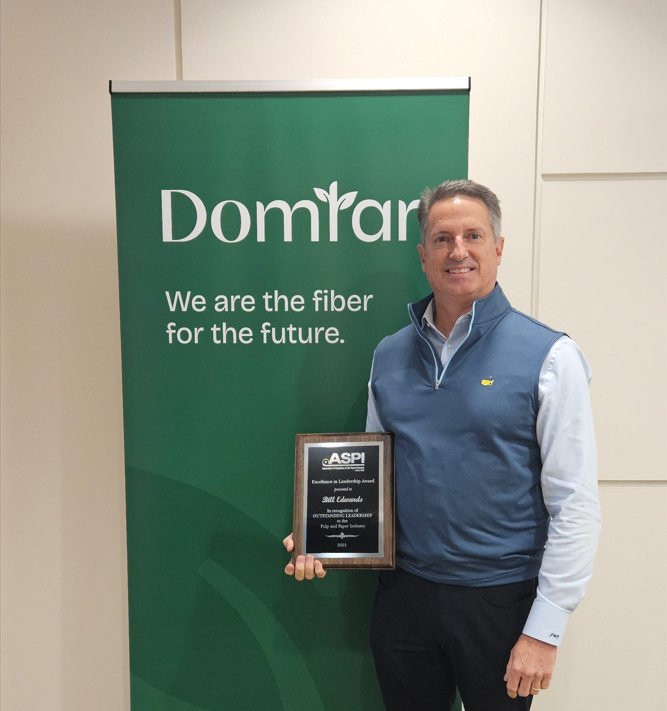
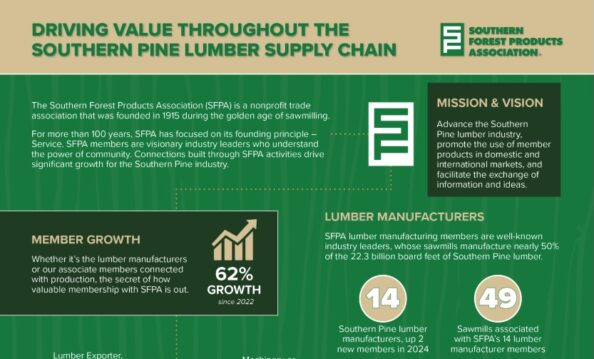 The Southern Forest Products Association believes strong partnerships are essential for sustaining growth and success. That starts with our most valuable partnership — our members. Their commitment is the driving force behind our success. The 2024 SFPA Value Report recaps the association’s: International market development and success in driving demand for Southern Pine lumber exports; A new, consolidated website; Digital promotion efforts; Membership growth; and Industry collaboration.





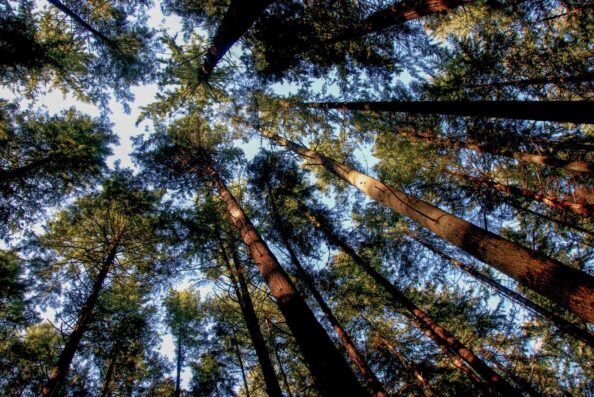 A new wildfire risk reduction project in Bella Coola is set to benefit the community by improving forest safety and supporting local jobs. North Coast-Haida Gwaii MLA Tamara Davidson says the initiative will help reduce wildfire threats while increasing the fibre supply for the forestry industry, which continues to face challenges from U.S. tariffs on softwood lumber. The Bella Coola Community Forest is a cherished part of the region for both locals and visitors, said Davidson. Projects like this not only help protect against wildfires but also provide valuable community education and create good-paying jobs—critical as we deal with climate change and rising wildfire risks. The Bella Coola Community Forest organization is receiving nearly $149,000 to complete wildfire mitigation work in an area south of Hagensborg and the Bella Coola airport.
 BURNABY, BC
 VICTORIA – Workers and communities throughout B.C. are benefiting from Forest Enhancement Society of BC (FESBC) supported projects that reduce wildfire risk and increase fibre supply, keeping local mills and energy plants running in the face of U.S. tariff threats and unjustified softwood lumber duties. With $28 million from the Province, FESBC is supporting 43 new and expanded fibre-recovery projects and 31 new and expanded wildfire-mitigation projects. “In tough times, I want workers in our forest sector to know I’ve got their back,” said Ravi Parmar, Minister of Forests. “Whether it’s better utilizing existing sources of fibre or helping protect communities from wildfire, the projects are supporting workers and companies as they develop new and innovative forest practices.” Projects are taking place in all eight of the Province’s natural resource regions, helping create jobs, reducing wildfire risk and supporting B.C.’s pulp and biomass sector. They will be complete by the end of March 2025, in advance of wildfire season.
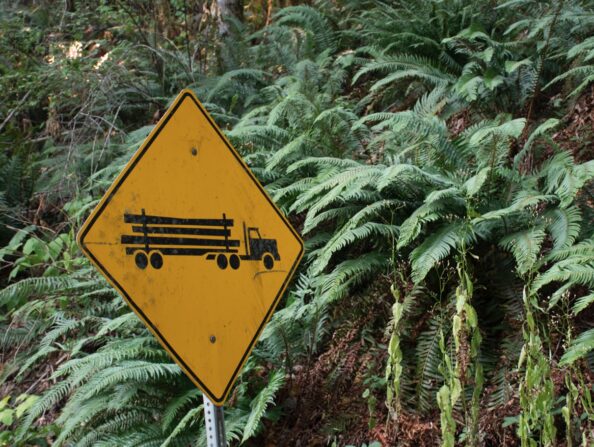 The province’s review of B.C. Timber Sales (BCTS) is based on a false contention the industry is running out of wood because of allowable annual cut reductions, says the Valhalla Wilderness Society (VWS). VWS said the Ministry’s review of BCTS to ensure the province’s forestry sector “is continually evolving to overcome challenges and create a guideline for a stronger, more resilient future” is barking up the wrong tree. VWS’ Anne Sherrod said the province’s intention to protect more old-growth and reform forestry in a more environmentally beneficial manner lasted only until the forest industry applied enough pressure. …Logging companies were already moving their mills and jobs out of B.C. long before U.S. President Donald Trump was elected, said Sherrod, and claims the province continues to reduce the allowable annual cut, or isn’t signing permits fast enough and environmentalists are depriving them of wood, are just excuses.
 The Willow Creek watershed project will restore wetlands and watercourses in the Homalco First Nation’s territory to reduce flooding and other climate disaster risks, but also boost cultural values and sustainable economic development, said Xwémalhkwu (Homalco) Chief Darren Blaney. Wetlands and riparian areas are critical because they slow and store water moving across the landscape during heavy rains to prevent floods and reduce the wildfire risk created when forests dry out. The Xwémalhkwu, whose territory is in the Campbell River area, recently secured $1.5 million in provincial funding for watershed mapping to identify flood risks and environmentally important areas, Blaney said. The project will focus on balancing the community’s climate resiliency with ecological needs. …Collaborating with partners like Strathcona Regional District will create a holistic approach to flooding that will also protect downstream neighbours, like Campbell River’s Willow Point community, David Carson, Homalco’s emergency planning and land use consultant noted.
 Recently there has been discussion about upcoming forest harvesting plans on Tree Farm Licence 47 on Quadra Island. This area is within the unceded and core territory of the We Wai Kai Nation, who approves all forest management activities on the TFL. The Nation and Mosaic Forest Management have worked closely to develop a constructive relationship based on the recognition that as title holder, We Wai Kai has the right to ensure that resources on Quadra Island are being managed consistent with their conservation values and their right to benefit economically from resource extraction on their title lands. The Nation’s logging company, Way Key, is conducting all harvesting on the TFL on Quadra. Both We Wai Kai and Mosaic recognize there is interest in future harvesting activities. We also know that Islanders want a map that identifies where the old growth is (as part of a spatially explicit strategy) before harvesting occurs.
  YELLOWKNIFE, NT

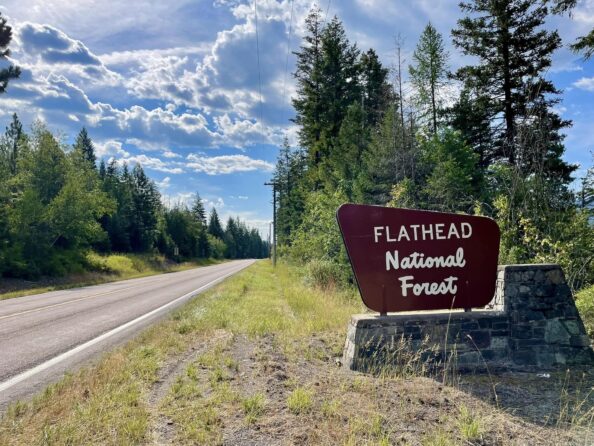 President Donald Trump’s plans to use the “God Squad” and emergency provisions of the Endangered Species Act to promote widespread logging on public lands are likely illegal and little more than rhetoric without the force of law, legal experts say. …The timber order’s directives say they must comply with existing law and do not create any enforceable law, making them little more than “a lot of hot air,” said John Leshy, a former Interior solicitor in the Clinton administration in San Francisco. “It’s core could be summed up as ‘study, consider, recommend,’” Leshy said. The caveats that end the order “deprive even those exhortations of any enforceability or effect.” Murray Feldman, a partner at Holland & Hart LLP in Boise, Idaho, said the executive order is an “aspirational statement.” The order doesn’t satisfy the qualifications for an emergency under ESA regulations, the use of which is generally limited to human health risks, he said.
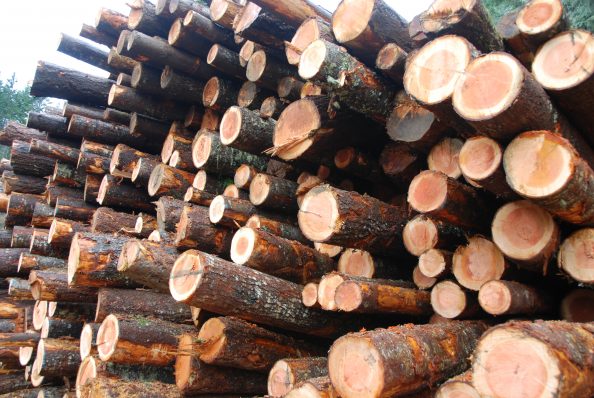 RAPID CITY, S.D. – South Dakota Gov. Larry Rhoden says during one of his several meetings with USDA Secretary Brooke Rollins last week, he and Wyoming Gov. Mark Gordon had an extensive conversation about the Black Hills and timber contracts. “Just what’s at stake for the Black Hills as far as wildland fires, dangers, the insect infestations and just our timber industry and the future of that in general,” said Rhoden. Rhoden continued on saying he was “very encouraged by the conversation we had with her, that we’re going to take steps to rectify that.” Rhoden says the current amount of timber harvested is far below what is allowed. “Not even close, and under the Biden administration we were just banging our heads against the wall. We would provide the facts and the data, and they were ignored,” the governor explained.
 Each spring, the U.S. Forest Service hires dozens of seasonal biologists to venture into remote Northwest forests on federal land and set up acoustic recorders to monitor for sounds indicating the presence of northern spotted owls, a threatened species. There are only as many as 5,000 northern spotted owls left in the Northwest… The counting is crucial for preventing the owls’ extinction. But President Donald Trump ordered a hiring freeze that means the Forest Service cannot hire more than 40 seasonal scientists to count the owls, according to Taal Levi, an associate professor at Oregon State University who works on owl monitoring. The monitoring typically involves about 60 scientists working from central California to Canada, Levi said. It also means the agency will likely go without dozens more scientists needed to monitor threatened and endangered salmon, frogs and other fragile species….
  A major shift in environmental policy seems to spreading around the world. The most high-profile indicator of the shift is Germany, where Social Democratic Chancellor Olaf Scholz and his Green Party coalition partner were thrown out of office on Sunday… The only question left is how far the green wave has receded in Germany — and across Europe. The French government has been accused of watering down environmental regulations. Elsewhere in Europe, green parties have been “kicked out of government” in Austria, Belgium and Ireland. While the Canadian policy establishment resists declaring a trend, the carbon war has moved down the priority ladder, as evidenced Monday during the French-language Liberal leadership debate. A party that’s about to pick Mark Carney, the planet’s top climate-policy powerbroker, as leader, rolled through two hours of debate without coming up with anything coherent to offset its about-face removal of its own consumer carbon tax.
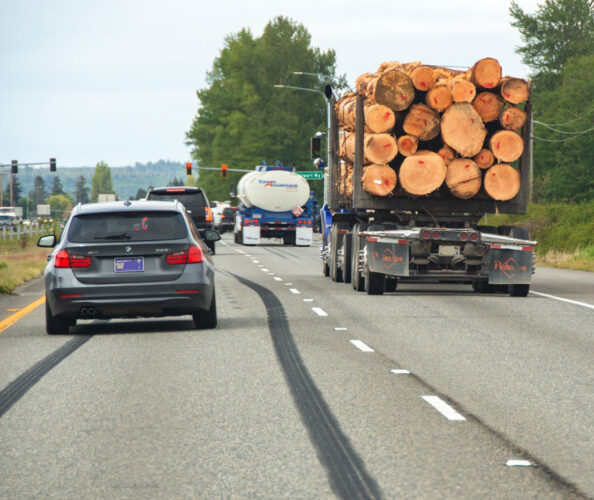 British Columbia is set to require Canadian products to fulfil renewable fuel standards for gasoline and diesel, a move Energy Minister Adrian Dix said was aimed at building a “cleaner, stronger and more self-reliant” province. Dix said B.C. is too reliant on fuels from outside Canada, making the province vulnerable to market fluctuations and other external pressures. At the same time, he said the United States provides “dramatic subsidies” for its own biofuel industry to a degree that curtails the industry in B.C. and Canada. “For too long, B.C. biofuel producers have operated in a market where their American counterparts benefited from subsidies that gave them a considerable competitive advantage,” he told the news conference announcing the changes. …Ian Quartly, chief financial officer of Tidewater Renewables, joined Dix and said the changes are a positive step toward supporting an economically viable domestic renewable fuels industry.
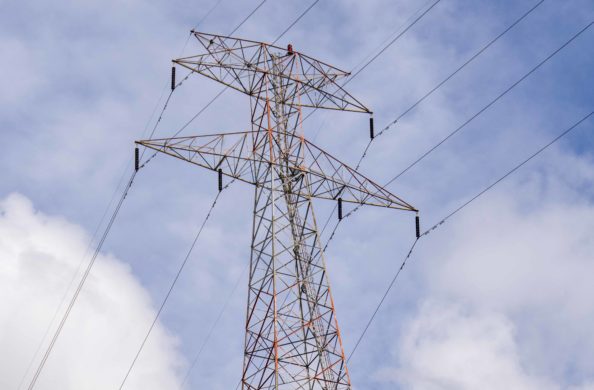 …”We’re focused on … looking at clean fuel for the power plant, and attracting industries that use clean fuel to produce a value-added product,” said Denis Caron, the president and CEO of the Port of Belledune in New Brunswick. …The Conservation Council of New Brunswick is “first and foremost … happy” the port wants to transition away from fossil fuels to more renewable technologies, said Moe Qureshi, director of climate research and policy. But it’s “not very happy” about the biomass plan for N.B. Power’s Belledune generating station. Burning wood isn’t an efficient way to generate electricity, Qureshi said, and it would be difficult to regrow trees at the rate they are burnt up as wood pellets. …N.B. Power is looking at using black wood pellets at Belledune, Caron said. These are more energy dense and similar to coal, and may not require any refitting or capital spending at the power plant.
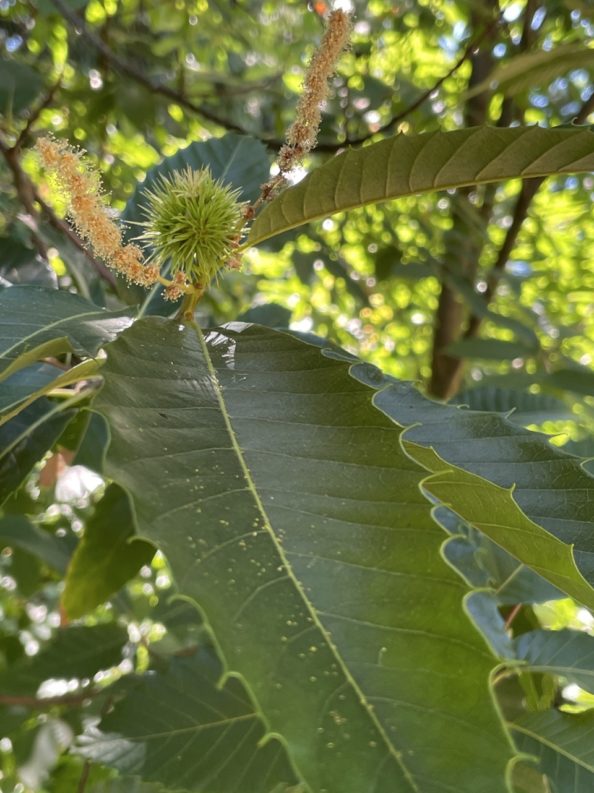 NEW YORK — Chestnut Carbon, a leading developer of nature-based carbon removal solutions, announced today that they have completed the first issuance and sale of Improved Forest Management (IFM) credits sourced from their conservation membership program branded as Forest Carbon Works. The issuance of more than 64,000 credits, or tons of carbon removal, were sold to multiple corporate buyers, including JPMorganChase. These transactions totaled $2.2 million. Chestnut’s U.S.-based IFM membership program, Forest Carbon Works, provides an opportunity for private forest owners to access income-generating carbon markets while preserving the integrity and legacy of their land. The program includes landowners in 36 states with more than 150,000 acres enrolled as of February 2025. These carbon removal credits are certified through Verra on the voluntary carbon market (VCM) and undergo rigorous third-party audits.
 The Alberta Occupational Health and Safety Appeal Body has denied an appeal from a West Fraser Mills worker who was suspended for one day without pay and received a disciplinary letter that he claimed was retaliation for acting in compliance with workplace safety rules. The appeal panel upheld the original ruling, noting that it properly applied the standard of review in determining the employer had met its burden of proof. The case involved S.G., an employee of West Fraser Mills Ltd., operating as Ranger Board. S.G. filed a complaint under section 19 of Alberta’s Occupational Health and Safety Act (the Act), alleging the discipline was imposed in retaliation for acting in compliance with occupational health and safety requirements.
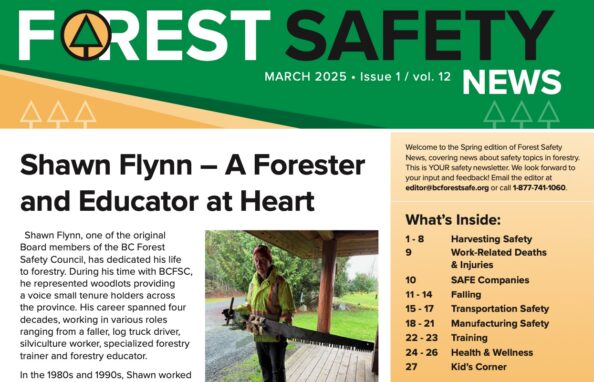 Don’t miss the March edition of the BC Forest Safety Council newsletter. It’s jam-packed with information about Safety Heros like Shawn Flynn and Brian Penny. Health updates about pain management, off-road vehicles, managing the last of the snow and daylight savings! How do you stay safe when you find yourself under water? Does your team have an emergency response plan? Plus, what’s new, upcoming events, and even a cheerful rabbit for you to colour in your down moments! Check out this month’s BC Forest Safety News
 A B.C. company has been fined just under $9,000 for the death of a worker. A WorkSafeBC penalty summary posted online says Crescent Bay Construction Ltd. was fined $8,995.26 on Jan. 23 for the incident at a worksite in Beaton, located south of Revelstoke on the shores of Upper Arrow Lake. “This firm was performing maintenance work on a bridge deck on a forest service road,” said the penalty summary. “WorkSafeBC attended the site after a worker was struck by a tree that fell from a cliff face above the work area. The worker sustained fatal injuries.” WorkSafeBC says their investigation determined “the firm did not adequately identify the hazard of dangerous trees or assess the risks they presented to workers.” The company also failed to “conduct a dangerous tree assessment by a qualified person before work began and failed to ensure the health and safety of all workers at the worksite, both high-risk violations.”
 Consultation on proposed B.C. Exposure Limits (ELs) based on the new or revised 2021, 2022, 2023, and 2024 ACGIH TLVs for selected chemical substances. The American Conference of Governmental Industrial Hygienists (ACGIH) regularly publishes a list of substances for which they have set new or revised Threshold Limit Values (TLVs). A TLV is the airborne concentration of a chemical substance where it is believed that nearly all workers may be exposed over a working lifetime and experience no adverse health effects. TLVs may be expressed as an 8-hour time-weighted average (TWA), 15-minute short-term exposure limit (STEL), or ceiling limit. Before adopting new or revised TLVs published by the ACGIH, WorkSafeBC reviews relevant data on health effects and the availability of validated sampling methods. …We are requesting stakeholder feedback on the proposed B.C. ELs for 22 substances. Feedback will be accepted until 4:30 p.m. on Friday, March 14, 2025.
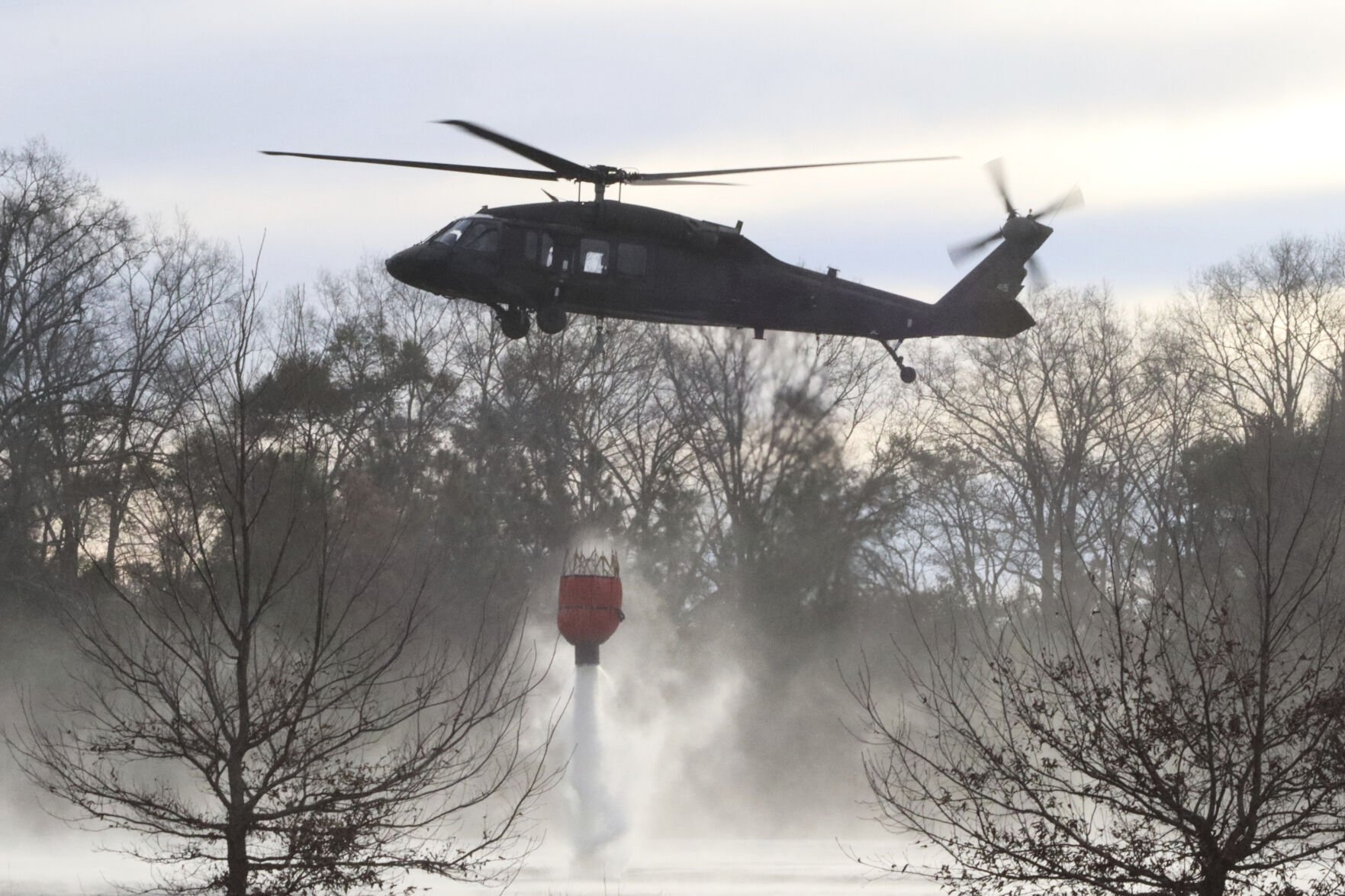
 Authorities in Japan have warned that the country’s biggest wildfire in decades is likely to spread, after it damaged dozens of homes and forced more than 1,000 people to flee. Fires continued to rage a week after they broke out in the city of Ofunato, on the north-east coast, with weather officials speculating that this year’s unusually dry winter and strong winds were to blame. As of Monday, the fire had spread through about 2,100 hectares of land, damaged 84 homes and forced 1,200 residents to take refuge in school gymnasiums and other shelters. A further 2,000 are staying with friends or relatives. …More than 2,000 self-defence force [SDF] troops and firefighters have struggled to control the flames as they spread through heavily forested mountainous areas bordering Ofunato, which was among communities destroyed in the March 2011 earthquake and tsunami.
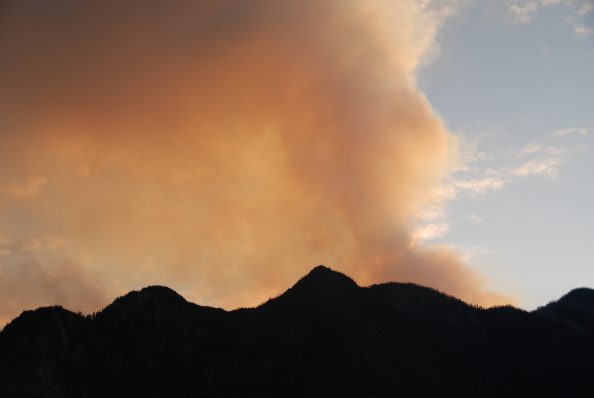 MORIOKA, JAPAN — One person has died, and more than 80 homes appear to have burned down after a wildfire broke out in a northeastern Japan city, local authorities said Thursday, as the region faced its third fire in about a week. Since Wednesday, the blaze has scorched more than 600 hectares in Ofunato, Iwate Prefecture, the municipal government said. With the fire still spreading, about 3,300 residents have been ordered to evacuate. Firefighters battled the blaze through the night, while helicopters were deployed in the morning to contain it from the air. The Fire and Disaster Management Agency requested emergency support from firefighting departments in eight nearby prefectures, and they sent about 690 personnel combined. …Efforts to contain the blaze Wednesday were carried out at ground level as the strong winds precluded waterbombing by helicopters. When the latest fire broke out, strong wind and dry air warnings were in place in the area.