 Irving Paper will close half its Saint John, New Brunswick operation due to ‘uncompetitive’ electricity rates. In other Business news: Trump says tariffs on Canada and Mexico ‘will go forward’; how the tariff threat is already driving up housing costs; and BC’s Legislature votes to condemn the tariff move. In related news: the US just launched its 7th review on lumber duties; while BC’s opposition leader says the province should fight back with counter measures.
In Forestry/Climate news: Canada signs nature agreement with Northwest Territories; a BC ENGO calls for caribou habitat protection; US forestry firings wreak havoc in rural economies; will the Fix our Forests Act work; and this CEO says climate change is about economics not politics. In Wood Product news: innovations courtesy of Eco Guardian, Sterling Structural, and Cambium; and is it time to normalize mass timber construction?
Finally, a special feature on Trump’s re-emergence and political risk in Canadian forestry.
Kelly McCloskey, Tree Frog News



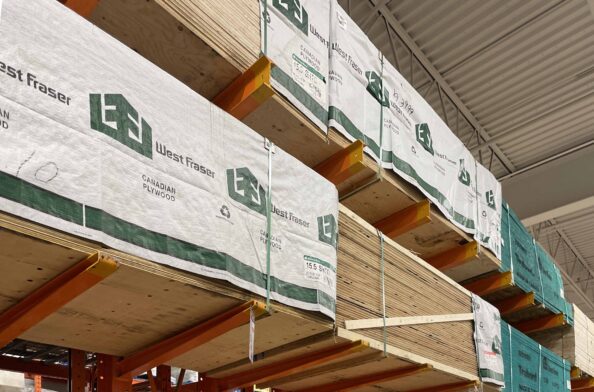 Production at High Prairie Forest Products would be impacted by potential tariffs on forest products going to the United States. General manager Brandon Marsh addressed Big Lakes County council about the negative impacts at its regular meeting Feb. 12. …“Here in High Prairie, we rely on our southern neighbours for roughly 50 per cent of our trade,” said Marsh, “This 25 per cent tariff would greatly reduce our ability to move the volume of product we produce here in our community. With the existing solid wood lumber agreements with the U.S., we already have varying levies of penalty applied to our product, which gets compounded with an additional dumping duty. …Part of West Fraser Forest Products Co. Ltd., the High Prairie operation has a staff of about 140 full-time employees while also supporting a large contractor base for other services. Those people rely an a strong market for their jobs to support families and communities, he said.
 Hinton Town Council will add its voice in support of the Alberta Forest Products Association (AFPA) advocacy efforts. Nicole Galambos of the AFPA – of which both West Fraser and Mondi are members – appeared as a delegation before council with a presentation called Trade Barriers and Albert’s Forest Industry. “Today [there are] some pressing trade challenges facing our sector, particularly some of the softwood lumber duties and tariffs, in addition to emerging US trade barriers and global competition,” Galambos told council, asking for their help. …AFPA suggested there are six steps the Government of Alberta can take to support the forest industry, the first of which is advocate for Alberta forest products in the US. The second is keep Alberta’s regulatory costs low, with Galambos pointing out that high costs have led to mill closures in BC. The third is … a Build With Alberta Wood Act similar to those in BC and Quebec.
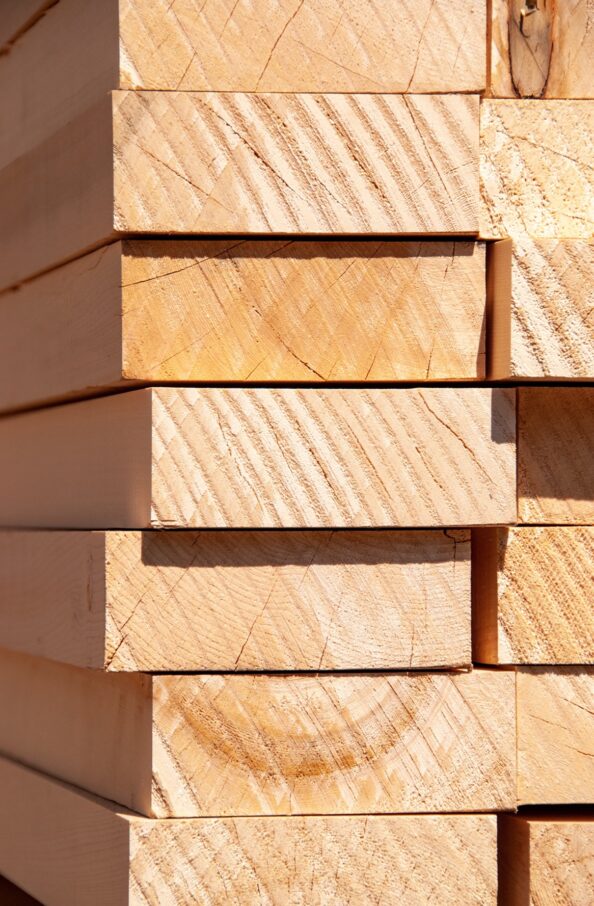 VICTORIA — B.C.’s Forests Minister Ravi Parmar says the expectation of more duties and additional tariffs piled onto Canadian softwood lumber would “absolutely be devastating” for the country’s industry. Parmar says the government expects the U.S. Commerce Department will issue anti-dumping duties by Friday of as much as 14 per cent, on top of the current 14.4 per cent duty. It comes after U.S. President Donald Trump told media on Air Force 1 that his administration was eyeing a 25 per cent tariff on lumber some time around April. Parmar says he knows many forestry workers are going to be worried about their jobs and he’ll continue to fight for them. He says the extra tariffs are “very likely” and Canada should take Trump at his word. …He said provincial and federal governments need to continue to make the case that while such tariffs hurt Canadians, they will also hurt Americans.
 B.C.’s rookie forests minister Ravi Parmar had a strong case to make as he travelled to Sacramento last week to meet with California business and government representatives. The state lost more than 16,000 structures in the recent wildfires … and California’s construction industry knows it will need B.C. and Alberta lumber for a rebuild that will take years. …Parmar says U.S. insurance companies confirmed that high-sticking Canada with more border fees for lumber will drive up costs for California fire claims and other new construction. A classic case for this dysfunctional relationship is Interfor Corp. …now one of the biggest lumber producers in the world, with a strategy to respond to trade attacks by expanding U.S. production. …Canadian forest companies shifting their investment to the U.S. involves other factors, such as pine beetle damage and governments restricting timber supply to satisfy often overblown environmental protests. But the effect is what Trump is after, moving jobs from Canada to the U.S.
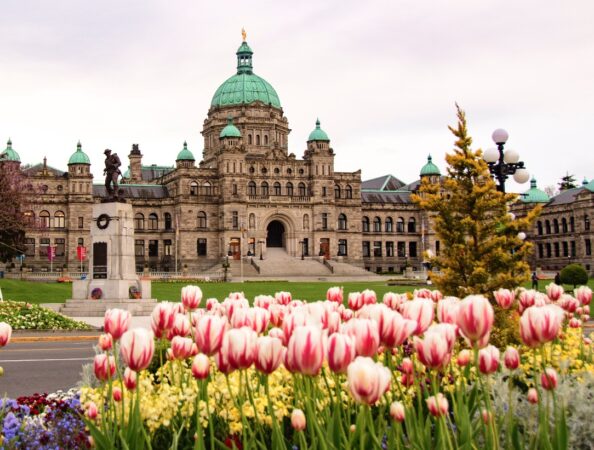 The first session of B.C.’s 43rd Parliament opens Feb. 18, with traditional rituals like the Speech from the Throne. …This threat [of US tariffs] has since become much more real. Double-digit tariffs from the United States on key exports such as energy, minerals and lumber now loom over B.C. with some potentially reaching or exceeding 50 per cent in the case of aluminum and lumber. “The lumber industry, in particular, is vulnerable,” Werner Antweiler, Chair in International Trade Policy, at UBC’s Sauder School of Business said. “They are not very profitable at the moment and any further setback in terms of accessing the U.S. market will really hit hard. So I’m really worried about jobs in the lumber industry.” …But the threat of tariffs could also spur developments that government has previously neglected. They include efforts to finally break down barriers between provinces.
 TUPPER LAKE, N.Y. — Immigrations and Customs Enforcement conducted a raid Feb. 18 at Tupper Lake Pine Mill in New York state and detained nine employees. In a statement …the parent company of the mill, The Matra Group, said that the employees were authorized to work in the U.S. …“Nine employees were detained, all of whom were, to our knowledge, authorized to work in the United States, as we verify all employees through the I-9 process,” Nicholas Drouin, Matra co-president and director of manufacturing said. All U.S. employers must follow that process to verify workers’ identities and employment eligibility. …The mill — formerly known as the Tupper Lake Hardwoods Inc. — is owned by the Quebec-based Matra Group, a lumber harvesting and distribution company.
  WASHINGTON —
 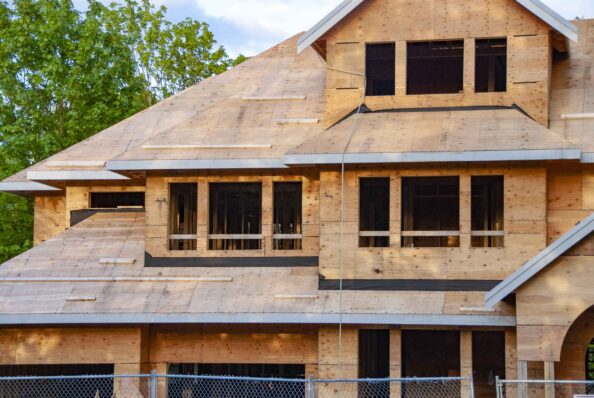 President Donald Trump “thrives on unpredictability”, said Lawrence Yun, chief economist for the National Association of REALTORS. In the last 30 days alone, multiple tariffs by Trump have been announced, imposed, called off and hotly debated. Now, the tariffs are beginning to take shape. And homebuilders are wary. …The real outcry, though, regards lumber. Roughly 30% of the lumber used in the United States last year was imported – more than 85% from Canada. …the housing industry is sharing concerns. Shortly after Trump’s inauguration, the NAHB applauded his day-one executive order that urged government agencies to take action to lower housing costs and expand supply. But NAHB chairman Carl Harris said raising tariffs will have the opposite effect. …“Tariffs on lumber and other building materials increase the cost of construction and discourage new development, and consumers end up paying for the tariffs in the form of higher home prices,” Harris said in a press release.
 High Point, N.C. — After a successful first year, British Columbia wood expert
  The Government of British Columbia recently approved and enacted changes to the BC Building Code to enable just a single staircase for new small multi-unit residential buildings. However, in response to Vancouver City Council’s approved directive requesting City staff to consider similar changes to the separate Vancouver Building Code, City staff are strongly opposing such a flexible allowance, primarily due to safety concerns. This negative recommendation to City Council takes into account critical feedback previously provided by fire rescue departments in BC during the provincial government’s consultation on its proposed changes. The provincial government’s new regulations enable residential buildings up to six storeys — designed for no more than 24 residents per floor — to have just one egress staircase. Previously, such buildings with three or more storeys required at least two egress staircases.
 The demand for sustainable, nontoxic furniture is rising as consumers become more conscious of their environmental impact and indoor air quality. While many brands claim to be “eco-friendly,” not all live up to the promise. From responsibly harvested wood to green packaging, truly sustainable furniture goes beyond marketing buzzwords. Understanding the end-to-end process of furniture manufacturing can help consumers make informed choices and avoid greenwashing. Interior designers play a crucial role in guiding homeowners toward authentic selections that prioritize longevity, health and environmental responsibility.
 In the February newsletter you’ll find these stories and more:
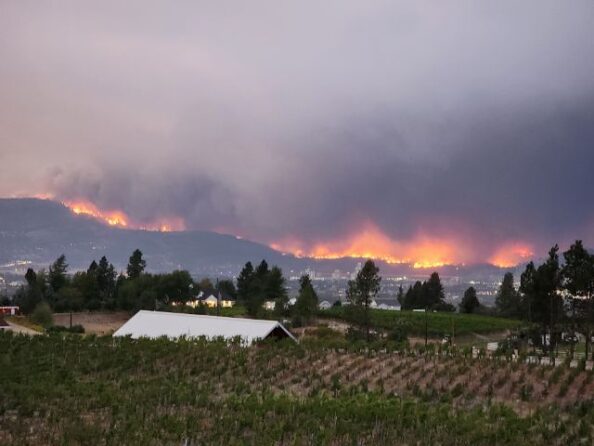 Kelowna, B.C. – A new documentary, B.C. is Burning, is tackling British Columbia’s wildfire crisis by exploring forest management solutions. The project was sparked in 2024 when Kelowna entrepreneur Rick Maddison, who lost his home in the 2003 Okanagan Mountain Park wildfire, came across an article by retired forester Murray Wilson about wildfire prevention. The two teamed up to create a film focused on solutions rather than devastation. “I’m hoping if these ideas in the film are adopted, more communities can be protected from this ongoing threat,” says Maddison. …The documentary features interviews with leading experts, including scientists, carbon specialists, and forestry professionals, providing a comprehensive look at the problem and potential solutions. “We’ve spoken with some of the leading people in the field,” says Wilson. “Their insights could change how we manage our forests—and how we protect our communities.” The team is hoping to raise $45,000 to finish production and distribution of their film.
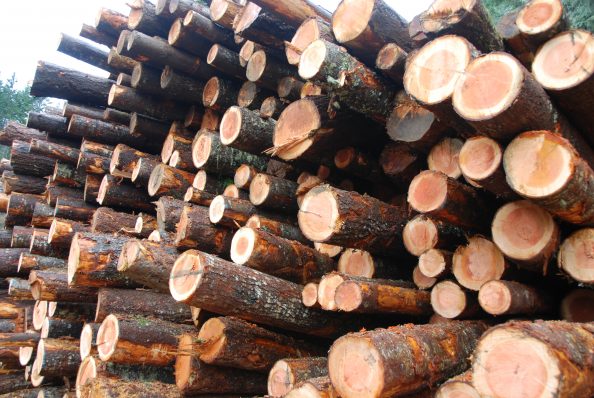 In 2019, the residents of Glade, B.C., learned they had no right to clean drinking water, after members of the Kootenay community waged a legal battle against forestry companies logging in their watershed. A judge sided with the timber companies, arguing that their economic interests outweighed the community’s concerns about its water supply. A similar story has emerged in Wynndel, B.C. — another town in the drought-stricken region — as residents worry about planned logging in their watershed, Duck Creek. Here, in the Kootenays, logging on both private and Crown land is pretty widespread. One resident told reporter Steph Kwetásel’wet Wood that forestry in the area has gotten out of hand, and lack of management on sustainable practices has turned the practice into “corporate slaughter.” …about five per cent (or 4.5 million hectares) of B.C.’s forests are privately owned, which means that the public has little insight, and even less say, into what happens.
 Bat species considered to be at risk seem to be in “relative abundance” on the east coast of Vancouver Island. Scott Wilson, wildlife research biologist with Environment and Climate Change Canada, gave a first look into data he’s been gathering during a presentation Feb. 20 hosted by Nanaimo and Area Land Trust and Nature Nanaimo. “I’ve worked on migratory birds most of my life and the bats a bit more recently, and we know so much less about bats in comparison to migratory birds,” said Wilson. “I’d say we’re where we were 30 years ago with birds in terms of understanding their habitat needs and their ecology.” …The data shows that in the Nanaimo area, wetlands were significantly preferred by the myotis species, with a relative abundance 6-10 times higher compared to non-wetlands. They were also preferred by the silver-haired hoary and big brown group, but less significantly, with the species also frequenting meadow bluffs.


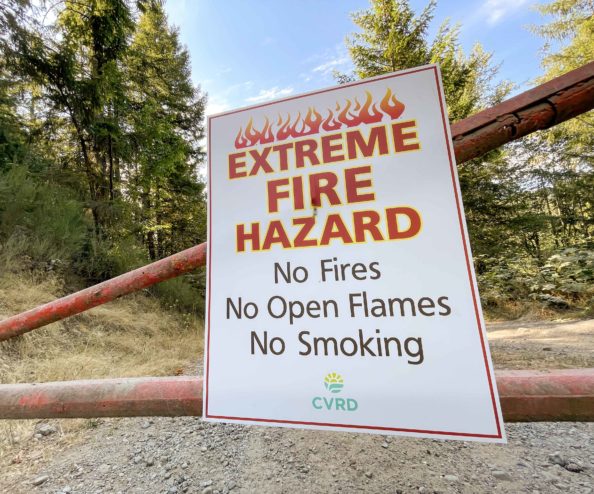 Big, dense forests full of highly flammable wildfire fuel surround Hope. But the town itself isn’t as doomed to fiery destruction as one might initially fear. While there is plenty of potential for wildfires in the area, a new report presented to Hope council says Hope itself benefits from several geographic features that keep the risk to homes and businesses to moderate levels. The wildfire risks facing Hope have been comprehensively catalogued in the community’s first wildfire resilience plan, a draft of which was presented to council earlier this month. The report warns that a severe wildfire could burn wide swaths of the forests surrounding the town. The forests are dense and full of coniferous trees that bake in hot, dry summer weather. In Hope, the highest risk areas are those that buttress the nearby woods.
 …More than 150 scientists and experts had collectively spent thousands of hours working on a draft report, a first-of-its-kind assessment of nature across the United States. But President Trump ended the effort, started under the Biden administration, by executive order. On Jan. 30, the project’s director, Phil Levin, sent an email telling team members that their work had been discontinued. But it wasn’t the only email he sent that day. “This work is too important to die,” Dr. Levin wrote in a separate email to the report’s authors, this one from his personal account. “The country needs what we are producing.” Now key experts who worked on the report, called the National Nature Assessment, are figuring out how to finish and publish it outside the government. …Rajat Panwar, a professor of responsible and sustainable business at Oregon State University who was leading the chapter on nature and the economy, was preparing slides to present his section when he got the news.
  PORTLAND, Ore. — An environmental nonprofit is sounding the alarm over the federal funding cuts and hiring freeze instituted by President Donald Trump’s administration, which it said could threaten the population of Oregon’s endangered spotted owl. The widespread layoffs and cuts instituted by the Trump administration have set off a series of protests across the country and around Portland, some of which have focused specifically on the thousands of U.S. National Parks and Forest Service workers who have been fired. The Northwest Forest Plan and the U.S. Bureau of Land Management (BLM) require the endangered owl population to be monitored, but the Center for Biological Diversity said in a news release that the federal freeze means the monitoring “either won’t occur or will be greatly reduced.”
 Fewer wildfires occur in North American forests today than in past centuries, but this decline has increased the risk of more intense wildfires, according to a study published in Nature Communications. While it may seem unexpected, frequent low-intensity surface fires help maintain forest health by naturally reducing fuel buildup over large areas. Researchers from the Cooperative Institute for Research in Environmental Sciences at the University of Colorado Boulder and the U.S. Forest Service’s Rocky Mountain Research Station compared wildfire frequency across two periods: 1600 to 1880 and 1984 to 2022. Using data from 1,850 tree-ring records in historically burned areas, they assessed past fire activity and compared it with modern fire perimeter maps from Canada and the United States. The findings show modern-day fires are much less frequent than they were in past centuries, despite recent record-breaking fire years, such as 2020.
 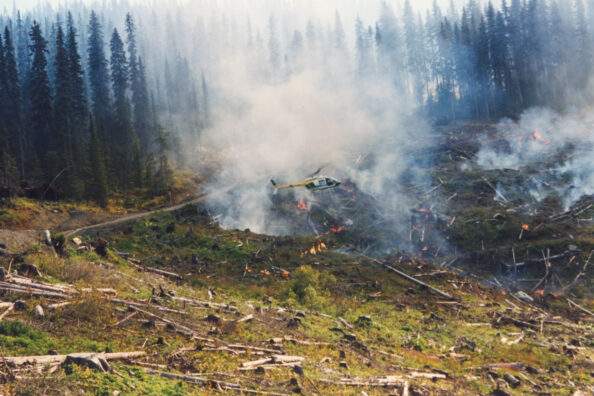 SEATTLE — The termination letters that ended the careers of thousands of U.S. Forest Service employees mean fewer people and less resources will be available to help prevent and fight wildfires, raising the specter of even more destructive blazes across the American West, fired workers and officials said. The Forest Service firings …are part of a wave of federal worker layoffs, as President Donald Trump’s cost-cutting measures reverberate nationwide. Workers who maintained trails, removed combustible debris from forests, supported firefighters and secured funds for wildfire mitigation say staffing cuts threaten public safety, especially in the West, where drier and hotter conditions linked to climate change have increased the intensity of wildfires. …U.S. Rep. Kim Schrier, a Washington state Democrat, said on the social platform X that the Forest Service layoffs are already hurting the state, “and it is only going to get worse. Fire season is coming.”
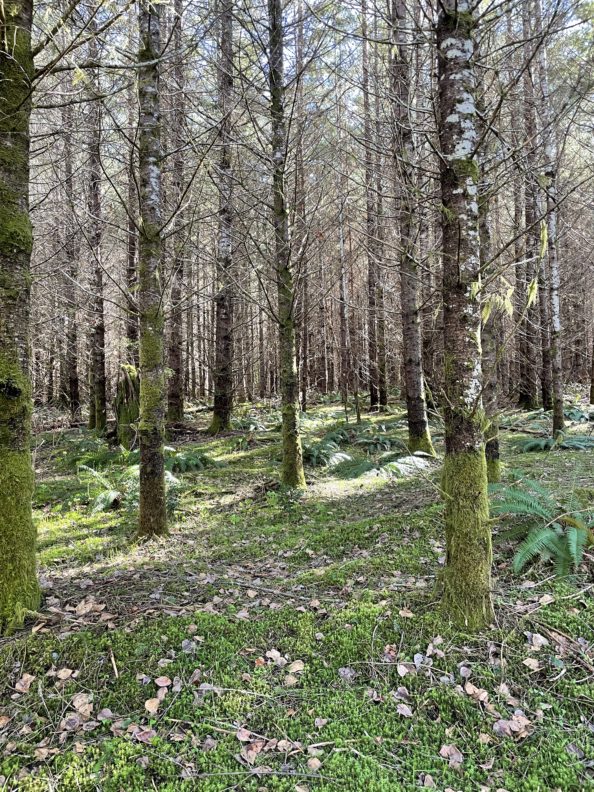 There’s no two ways about it: the U.S. Forest Service is at an impasse, seized by uncertainty like hardly ever before. In its quest for a supposedly leaner, more decentralized government, the Trump administration, led by DOGE chieftain Elon Musk, is taking an ax to the federal workforce. The Forest Service in particular is hemorrhaging manpower: it was reported on Friday that Trump had pink-slipped 3,400 workers. That is roughly one-tenth of USFS personnel. “These cuts are particularly impactful for the Northwest because we have vast expanses of national forest and public land,” says Rep. Kim Schrier. However much the PNW has to lose, this is no mere regional issue. It’s an affront to Mother Nature herself, Schrier says, because “we’re taking away people who do what we call ‘wildfire mitigation’: they do the work that thins the forests to prevent catastrophic wildfires. They do that year-round so we aren’t choking on smoke all summer.”


 When U.S. President Donald Trump was elected, Canadian officials issued a weaker than expected 2035 emission reduction target to account for the new political reality. Energy and Natural Resources Minister Jonathan Wilkinson said in an interview that after the U.S. election, the government looked at the opportunities and weighed the risks. Competitiveness was top of mind, more so than tariff threat, he said. “Certainly the United States does factor into the competitiveness issue,” he said. “Clearly the United States is moving away from any kind of regulation relating to climate.” …Wilkinson’s comments are the clearest indication yet of American influence on Canada’s plan to navigate the unfolding energy transition away from fossil fuels and toward clean energy. …Caroline Brouillette, executive director of Climate Action Network Canada, characterized Canada’s “weak” target as “obeying in advance” to U.S. interests.
 Carbon offsets are unreliable, fraud-ridden financial tokens that often fail to make any environmental impact at all. And if Mark Carney gets his way, they’re going to be Canada’s next big industry. In his carbon reduction pitch, Carney
 Turkey is poor in oil and gas while its renewable energy sector is heavily reliant on a mix of hydro, wind and solar. But another element is heating up: biofuel – fuel derived directly from biomass, such as wood or plant matter – is gaining interest domestically and creating an export market not available to other renewables. Demand for and output of biomass pellets used in stoves, furnaces and heaters as an alternative to coal or wood to cope with Turkey’s often freezing winters have increased in recent years. Produced by crushing and compressing wood waste, the pellets have a higher per-kilo energy output than gas, coal or oil, and far lower emission levels, according to promoters. Studies estimate Turkey has the raw material to produce up to 1.8 million tonnes of pellets annually, although installed processing capacity has yet to reach this level.
 In December 2024, Drax and Pathway Energy announced a multiyear deal that could see Drax supplying upward of 1 million metric tons of wood pellets to Pathway’s currently proposed sustainable aviation fuel (SAF) plant on the U.S. Gulf Coast. In the months leading up to the announcement, Drax had hinted at such prospects, indicating plans to develop a pipeline of biomass sales opportunities in North America, including in the SAF market. Drax CEO Will Gardiner confirmed as much during a November quarterly earnings call. Currently, Drax has 17 operational wood pellet production plants across North America and a 450,000-metric-ton facility under construction in Longview, Washington. While Drax is well known in the industrial wood pellet industry, Pathway Energy is a new and unique market participant. Pellet Mill Magazine interviewed Pathway Energy CEO Steve Roberts to introduce the company, technology and plans.
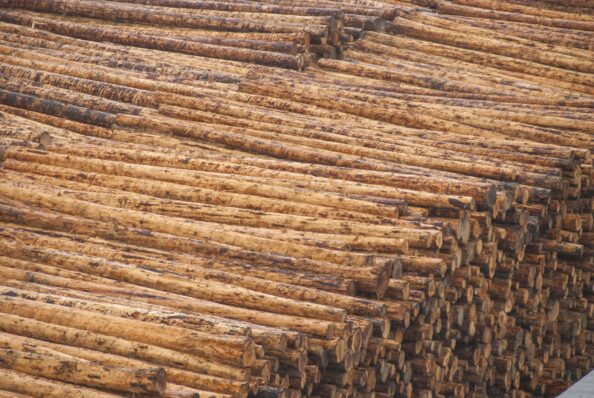 Norwegian forestry companies are making history by revolutionizing how timber is transported. Beginning in 2027, Viken AT Market and AT Skog will be the first in the forestry industry to ship timber on zero-emission vessels—a game-changing move that signals a dramatic shift toward sustainable maritime logistics. This breakthrough is made possible through a partnership with Skarv Shipping, which will provide vessels powered by ammonia and electricity, significantly reducing emissions compared to conventional diesel-powered ships. Norway’s timber industry plays a crucial role in the country’s economy, exporting approximately 1 million tons of timber annually to European markets. However, most of this transport has relied on traditional diesel-powered vessels, which contribute to greenhouse gas emissions. In an effort to push the industry forward, Viken AT Market is committing to zero-emission transport, securing a long-term shipping agreement with Skarv Shipping and Arriva Shipping.
 Are you ready for a workplace emergency? In this month’s newsletter you’ll find all this and more: