 Citing reduced packaging demand, International Paper announced it is closing four eastern US plants. In related news: Sylvamo upgrades two South Carolina paper mills; Kruger diversifies its Wayagamack, Quebec paper mill; San Group owners speak to their company’s downfall; and Interfor and Western Forest Products report Q4 losses. Meanwhile: Trump’s tariffs put upward pressure on lumber and housing prices; and HBS Dealer readers comment on whether the tariffs are needed.
In other news: Trump’s downsizing push reduces wildfire mitigation monies—eliminates 3,400 US Forest Service jobs; Canada and New Brunswick invest in wildfire equipment; Parks Canada ramps up plans for wildfire mitigation; Alabama bills would allow heavier truck traffic; and Boston University unveils design for new tall timber tower.
Finally, we’re gearing up to make improvements to the Tree Frog News. Last call to tell us what you think by completing our short survey!
Kelly McCloskey, Tree Frog News

 Vancouver —Forest Professionals British Columbia (FPBC) honoured 11 individuals as part of its recognition program in Victoria on February 6. FPBC recognized four Distinguished Forest Professionals, one Forest Professional of the Year, one volunteer of the year, and five authors for best magazine article at the 77th FPBC forestry conference recognition banquet. Mark Hay, RPF, of Vernon, Steve Kozuki, RPF(Ret), of Williams Lake, Randy Waterous, RFT, of Grand Forks, and the late Cindy Stern, RPF, of Parksville, were honoured as Distinguished Forest Professionals. This category recognizes significant accomplishments over a career, for providing outstanding service to the profession of forestry and for furthering the principles of FPBC. It is the profession’s highest honour for a registrant. Colin Mahony, PhD, RPF, of Victoria, is the Forest Professional of the Year, recognizing a Registered Professional Forester (RPF), Registered Forest Technologist (RFT), or Affiliated Forest Professional (AFP) for recent, outstanding service to the profession of forestry and furthering the principles of FPBC.
 Revenge, they say, is a dish best served cold. And for an endangered owl breeding program in Canada, it’s also a dish best served dead. For the price of a coffee, spurned and disgruntled lovers can revel in the satisfaction of having a dead rat named after an ex, before it is fed to a northern spotted owl. The British Columbia-based breeder is running its

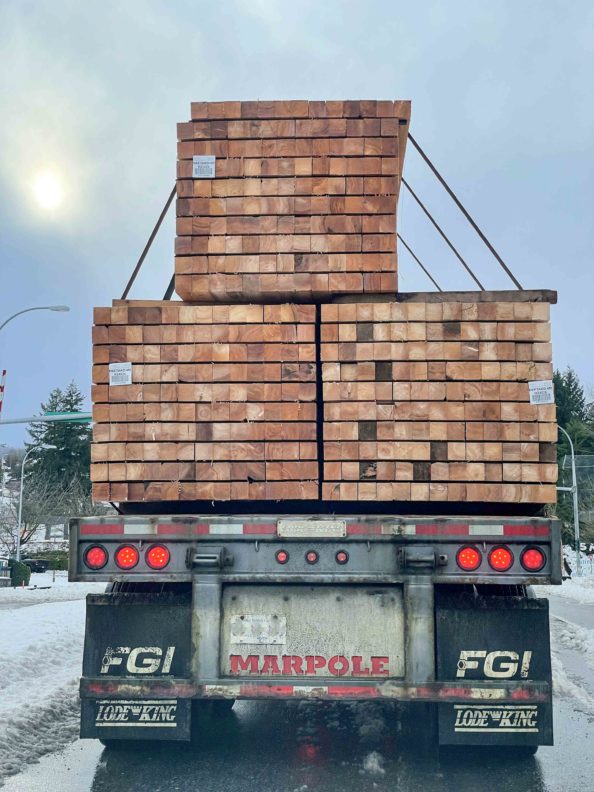 Data provided by the National Association of Home Builders (NAHB) and Fastmarkets Random Lengths confirm that cost of lumber is a very small component of the price of a new home. Consequently, duties on a share of that lumber imported from

 VANCOUVER, British Columbia — Western Forest Products Inc. and Eastwood Forests, LLC announced today that Western has completed the sale of approximately 14,500 hectares of fee simple land on northern Vancouver Island in British Columbia, to a Canadian affiliate of the Eastwood Climate Smart Forestry Fund I LP for $69.2 million. “Eastwood has a dedicated focus on delivering climate benefits by supporting responsible forest management globally and we believe they will be excellent stewards of this land and partners in the region,” said Steven Hofer, President and CEO of Western. “The sale reflects our ongoing focus on optimizing and investing in our BC operations. We plan to use the sale proceeds to reduce our debt and support our accelerated transition to higher value products manufacturing, including the previously announced continuous kiln investments in BC.” “This forestland fits perfectly with Eastwood’s interest and experience in sustainable forest management and climate change mitigation,” said Alex Finkral, CEO of Eastwood.
 The largest creditor of the San Group wants to take control of some other Vancouver Island businesses connected to the former sawmill company. Kingsley Group operates in Coombs, and court documents show that it has some close ties to the San Group. The Royal Bank of Canada, which is owed $6.7 million from the Kingsley Group, wants to recall its loan and secure the company’s assets. The bank is owed more than $107 million from the San Group. It comes as the San Group’s Alberni Valley mills remain for sale as a court-appointed-monitor tries to drum up interest. …Kamal Sanghara and Sukhjit Sangara are directors with a 32.5 per cent stake each in Kingsley Group, and both are former owners of the group. …CHEK News spoke with Sukhijit Sanghera, a former owner of San Group at Kingsley, and asked if the San Group moved money to Kingsley Trucking and other places to hide assets or prop up Kingsley’s business.
 British Columbia’s lumber industry is facing uncertainty, as looming tariffs threaten the sector. “We don’t know what’s going to happen, businesses don’t like that because you can’t make investment plans,” said Nick Arkle, CEO of Gorman Bros. Lumber. …“About 60 per cent of our lumber in B.C. for the last couple of years has been going to the U.S., which in a way is funny because we have the president saying ‘We don’t need their trees.’ Well, that’s false,” BC Forest Minister, Ravi Parmar said. Gorman Bros. Lumber in West Kelowna sends about 50 per cent per cent of its product to the States, while about 30 per cent stays in Canada. “The U.S is a strong market, you never want to walk away from a market, where first of all you have loyal friends, partners, and customers, people we’ve sold to for 30 to 40 years in some cases,” Arkle said.
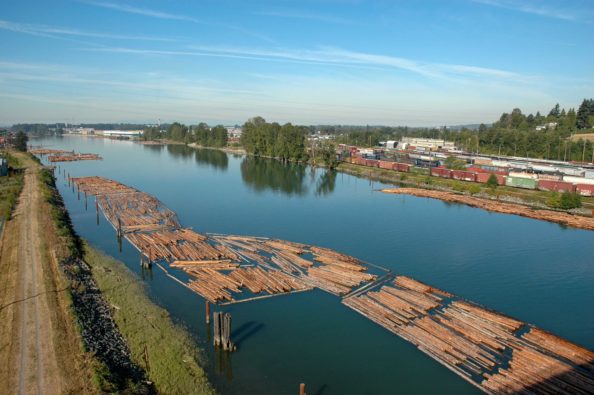 The minister responsible for forestry and local MLA Ravi Parmar said a new council on softwood lumber will bring industry expertise together to help navigate the economic concerns with U.S. duties, and any potential tariffs that could be coming Canada’s way. While many people across the country have let out a sigh of relief about the pause on U.S. tariffs, Parmar said those in the forestry industry are still feeling the economic threat loom. “We’re already dealing with duties to the tune of 14.4 per cent. With tariffs on top of that—we could be dealing with 50 to 55 per cent duties and tariffs on our softwood lumber going into the United States,” he said, adding how that scenario would be devastating. …However, Parmar acknowledged the softwood lumber dispute with the U.S. has been a long-time problem, adding that his task of getting the industry back on its feet is made difficult by the duties.


 Ending the forced use of paper straws: Today, President Donald J. Trump signed an Executive Order to end the procurement and forced use of paper straws. The Federal government is directed to stop purchasing paper straws and ensure they are no longer provided within Federal buildings. The Order requires the development of a National Strategy to End the Use of Paper Straws within 45 days to alleviate the forced use of paper straws nationwide. Bringing back common sense: The irrational campaign against plastic straws has forced Americans to use nonfunctional paper straws. This ends under President Trump. …President Trump has made it a top priority to promote a clean and healthy environment for the American people.
 A 13-storey high-rise approved for development in Sydney is slated to become the tallest commercial mass timber building in New South Wales. The building has been designed by architecture and urban design practice Tzannes for property developer NGI Investments. …The weight of the building was a significant consideration during the design process. The structure needed to be lightweight as the site is located above subterranean railway tunnels. Tzannes’s approach for addressing has involved transferring the load from the building’s western side to a central core using a hybrid concrete and steel structure. This system then supports 12 timber commercial floors, with 11 levels rising above the load transfer structure and one suspended below. According to a communique issued by Tzannes, “all timber and steel elements will be crafted for future disassembly and reuse.”


 MONTREAL — CN and Tree Canada have awarded ten Canadian communities with $50,000 grants for tree planting and greening projects. These grants, totaling $500,000, are made possible through CN EcoConnexions – From the Ground Up program that invests in community greening projects along CN’s rail network across Canada. …CN has also funded 45 additional $10,000 grants through Tree Canada’s Community Tree Grants program, supporting municipalities in their efforts to expand and maintain urban forests. Through the From the Ground Up program, CN has helped municipalities enhance their natural environments, improve social well-being, and engage residents who value green spaces. …Together with mass reforestation projects, CN and Tree Canada, along with other partners, have planted over 2.4 million trees through EcoConnexions initiatives, with a goal of planting a total of 3 million trees by 2030. Tree Canada works closely with grant recipients to help ensure the long-term success of their greening projects.
 GRAND FORKS – The Forest Practices Board has finished a complaint investigation into Interfor Corporation’s logging practices north of Grand Forks. The complainant believed Interfor did not properly manage whitebark pine and caused environmental damage during site preparation for planting. The board found that Interfor planned and implemented special management practices for whitebark pine in the cutblock during its operations from late 2021 into early 2022. The investigation also determined that Interfor’s mounding activities – a technique that uses an excavator to scoop and pile soil to create raised planting spots for seedlings – did not cause environmental harm. “Interfor retained whitebark pine trees, avoided scarring them and preserved the species’ natural seed bank,” said Keith Atkinson, chair, Forest Practices Board. “Interfor also planted around 5,200 whitebark pine seedlings on the cutblock, incurring extra expenses to help maintain the species into the future.”

 The overall goal is to have a working forest while sustaining ecological and cultural values so that future generations have access to forest areas just as diverse and healthy as those currently enjoyed. For Sunshine Coast Community Forest (SCCF) operations manager, Warren Hansen, ecosystem-based management (EBM), a tool introduced in its operations in 2021, “came from the heart” of what the community wants from SCCF. In his opening remarks at a Jan. 30 Community Advisory Panel and public information webinar, he noted that SCCF’s board and community advisory panel are committed to using EBM in stewarding its tenure by harvesting timber in a way that curbs losses of biodiversity. The overall goal is to have a working forest while sustaining ecological and cultural values so that future generations have access to forest areas just as diverse and healthy as those currently enjoyed. To do that, SCCF relies on advice from contractors including Laurie Kremsater and Anna Yuill, who presented an overview of EBM to about 35 people tuned into the webinar.

 Dear Premier Houston, On January 21st, you sent a letter to your caucus addressing potential actions your government could take in response to US President Trump’s threat of tariffs, later made available in the Chronicle Herald. We are extremely concerned with some of the content of your letter …as well as the disrespectful way you have described the interests of Nova Scotians and the environmental groups that represent them, referring to opposition voices to unsustainable resource extraction activities as “special interest” groups. …we are left wondering if your term “special interest” group refers only to organizations based in Halifax, or urban areas in general, or perhaps only to organizations led by scientists and other experts in environmental fields. In this case, where does Nature Nova Scotia fall? Our staff and board are rural Nova Scotians, some of us woodlot owners, and foresters, but we are also scientists, and we are certainly environmentalists.
 WASHINGTON, D.C. – Senator Mike Lee (R-Utah), Chairman of the Senate Committee on Energy and Natural Resources, and Senator John Curtis (R-Utah) joined Representatives Mike Kennedy (R-Utah-03), Burgess Owens (R-Utah-04), Blake Moore (R-Utah-01), and Celeste Maloy (R-Utah-02), to introduce the Utah Wildfire Research Institute Act. This bill establishes a federal wildfire research institute at Utah State University to study wildfire ecology and develop innovative solutions to reduce wildfire risks. The institute will collaborate with local, state, and federal partners to improve forest and rangeland management and implement strategies for long-term ecological restoration. “Robust forest management strategies are essential to protecting Utah’s nearly 22 million acres of forests from catastrophic wildfires. The Utah Wildfire Research Institute Act will significantly enhance our state’s wildfire preparedness by bolstering the tools and resources available to proactively manage and protect our forests and communities,” said Chairman Lee.
 Washington D.C.–The Sustainable Forestry Initiative (SFI) is proud to announce a groundbreaking new project to advance climate smart forestry practices across the United States, supported by a generous investment of over $800,000 from the Doris Duke Foundation. The project, Advancing Carbon Stewardship Practices for Large Landowners in the United States, will use a forest sector-focused approach to advance forest management and conservation activities to both enhance the carbon sink and reduce sources of emissions from forests. Forests … are experiencing increased frequency and severity of fire, drought, pest outbreaks, and disease—all of which negatively impact forest and community health, economic development, and resiliency while threatening our safety. “We are so thankful for this investment from the Doris Duke Foundation to leverage our network, scale, and the SFI Forest Management Standard, which includes progressive requirements on climate and fire,” said Kathy Abusow, President and CEO of SFI.
  A bipartisan group of senators introduced legislation Thursday that would create a new Wildfire Intelligence Agency, seeking to streamline the federal response to fires. The bill, led by Sens. Alex Padilla (D-Calif.), Tim Sheehy (R-Mont.), John Hickenlooper (D-Colo.) and Steve Daines (R-Mont.), came in the wake of recent blazes that decimated parts of Southern California, primarily in the Los Angeles region. “The scale of the wildfire crisis demands a singular, whole-of-government wildfire intelligence center to foster cross-agency collaboration and save lives,” Padilla wrote in a statement. The joint office would share information with the Department of Agriculture, the Department of Commerce and the Department of the Interior, according to the legislation. “Wildfires don’t care about state lines or forest service boundaries,” Hickenlooper said. “A centralized wildfire intelligence center will speed our response to fires and promote cross-agency collaboration to tackle them.”
 WASHINGTON – A bipartisan group of lawmakers has introduced the Future Logging Careers Act, a bill aimed at allowing teenagers from logging families to gain early hands-on experience in the industry under parental supervision. The legislation, introduced by U.S. Senators Jim Risch (R-Idaho) and Angus King (I-Maine), along with U.S. Representatives Glenn “GT” Thompson (R-Pa.) and Jared Golden (D-Maine), would amend the Fair Labor Standards Act to permit 16- and 17-year-olds to work in certain mechanized logging operations. Similar exemptions currently exist for youth working in family-owned farms. Supporters of the bill, including the American Loggers Council and the Associated Logging Contractors of Idaho, argue that the measure would help sustain family-run logging businesses by allowing younger generations to gain experience before entering the workforce as adults. Industry representatives have pointed to labor shortages and the challenges of retaining workers as key reasons for the bill’s introduction.

 SACRAMENTO, Calif. — As Los Angeles reels from deadly January wildfires that destroyed thousands of homes, California Gov. Gavin Newsom signed an order Thursday directing the state to advance long-delayed regulations requiring homeowners in high-risk areas to clear combustible materials around their homes. Newsom ordered the state to publish draft regulation next month, with a deadline to adopt those rules by the end of the year. The requirements were passed by lawmakers in 2020 and originally set to take effect by Jan. 1, 2023. Newsom signed the order after he returned from Washington to advocate for disaster aid. The rule requires homeowners to clear materials like dead plants and wooden furniture within 5 feet of their homes in fire-prone areas. As multiple fires roared through LA neighborhoods in January, the regulations still weren’t written, and the state Board of Forestry and Fire Protection told The Associated Press last month it had no firm timeline for completing them.
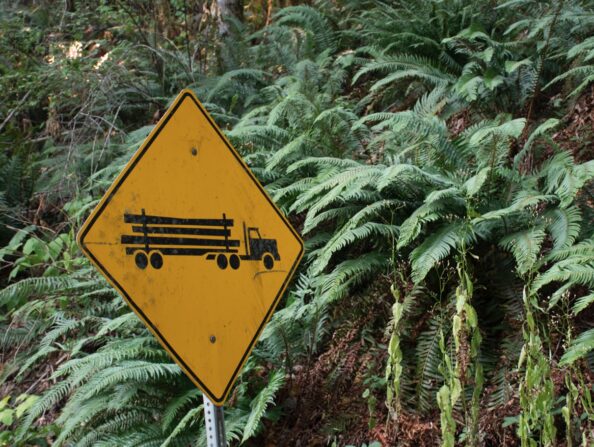 Alabama’s roads and bridges are already under immense strain, but two bills moving through the Legislature could accelerate their decline—adding 150 million dollars in maintenance costs annually, reducing highway lifespan by up to 30 percent, and forcing weight restrictions on hundreds of bridges. Senate Bill 110 and House Bill 204 would allow heavier log trucks to operate on Alabama highways while simultaneously limiting enforcement by requiring state troopers to escort overweight trucks to permanent platform scales—effectively halting roadside safety inspections for extended periods. Experts warn that these changes could have devastating consequences for infrastructure durability, public safety, and taxpayer-funded repairs. The push for heavier loads is being driven by logging and timber industry interests, which stand to benefit financially from relaxed restrictions. However, transportation and infrastructure experts warn that the cost to the public far outweighs any economic gain.
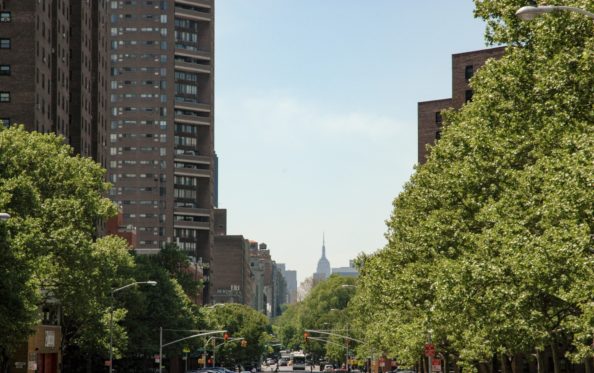 The State of New York last week announced the launch of two new interactive tools for recording and tracking the number of trees planted as part of a climate initiative to reach 25 million trees by 2033. Developed by the state’s Department of Environmental Conservation and its Office of Information Technology Services, the Tree Tracker allows state agencies and private organizations and individuals to report the number and location of trees planted, as well as planting dates, species and tree size. “New York is taking decisive action to protect our environment and strengthen communities’ ability to withstand severe weather,” Gov. Kathy Hochul said in the press release. “Our progress toward the 25 Million Tree goal is a testament to the power of community-driven action, and the new Tree Tracker will make it easier for New Yorkers to track our progress, share updates and contribute to a healthier environment for the future.”



 OTTAWA, ON
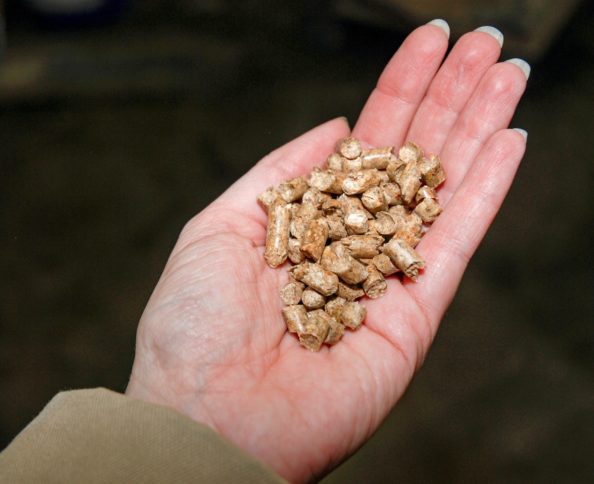 LONDON – The UK government and Drax, opens new tab have agreed a deal that will halve the energy producer’s subsidies over 2027-2031, while ensuring the group uses more sustainable sources of woody biomass, the two sides said on Monday. Drax is Britain’s largest renewable power generator. With the help of government subsidies that run until 2027, it has converted four former coal plants to use biomass to provide around 6% of the country’s electricity. Following a consultation on extending the subsidies, the government said it “cannot allow Drax to operate in the way it has done before or with the level of subsidy it received in the past”. “Biomass currently plays an important role in our energy system, but we are conscious of concerns about sustainability and the level of subsidy biomass plants have received in the past,” Energy Minister Michael Shanks said in a statement, which did not disclose the exact figures of the subsidy.
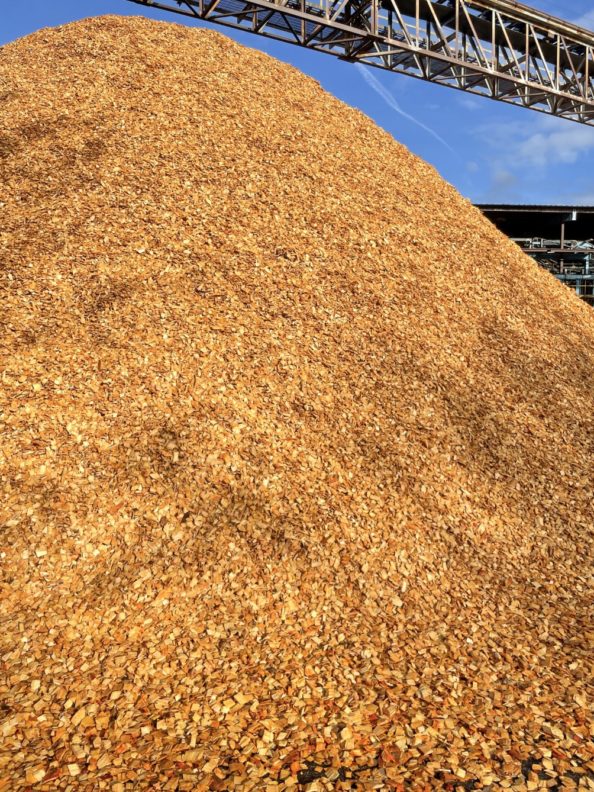 Green campaigners fear ministers are poised to award billions of pounds in fresh subsidies to Drax power station, despite strong concerns that burning trees to produce electricity is bad for the environment. Drax burns wood to generate about 8% of the UK’s “green” power, and 4% of overall electricity. This is classed as “low-carbon” because the harvested trees are replaced by others that take up carbon from the atmosphere as they grow. But many studies have shown that wood burning harms the environment, by destroying forests, and because of the decades-long time lag between the immediate release of carbon dioxide CO2 from burning and the growth to maturity of replacement trees. Drax currently receives billions of pounds in subsidies from energy bill payers, at the rate of about £2m a day according to Greenpeace, but these are scheduled to run out in 2027. A government decision to continue the support payments beyond the cut-off could come on Monday.