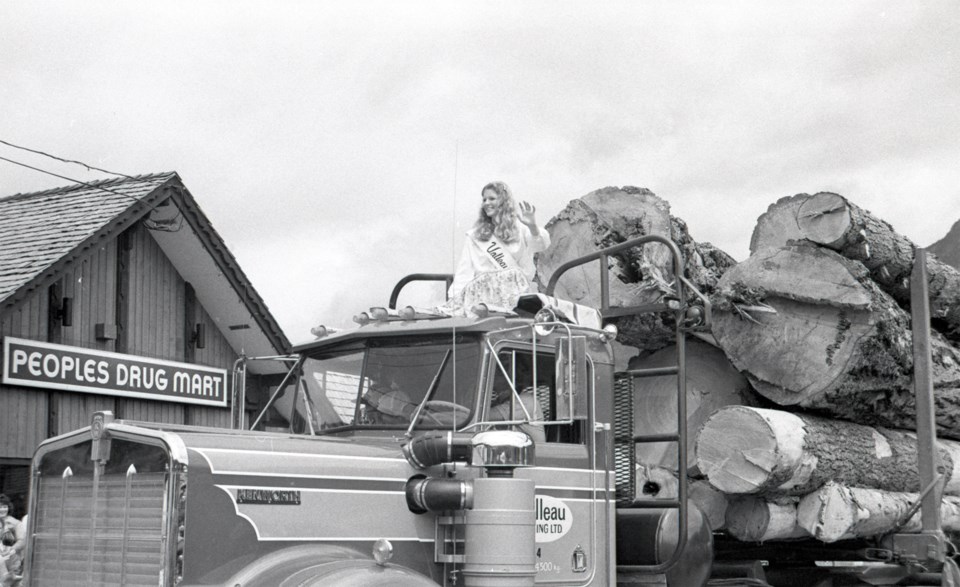
The US tariff threat and current and future softwood lumber duties add to Canada’s forest industry woes. In related coverage: BC creates a new Softwood Lumber Advisory Council, industry analysts say BC forestry needs urgent action to survive—and market diversification takes longer than you think; and Nova Scotia adds forest products to its buy local program. Meanwhile, California and Texas builders see few alternatives to Canadian lumber; and a Manitoba lumber dealer is deluged by questions.
In other news: Tolko embarks on Mississippi mill expansion; Domtar’s feasibility study on Nova Scotia pulp mill nears completion; a new study on the rising cost of home building in a time of climate change; and the University of Arkansas hosts Tall Timber: The Future of Cities in Wood Exhibition.
Finally, a special thanks to those who have responded to our readership survey. Tell us what you think of the Tree Frog News!
Kelly McCloskey, Tree Frog Editor
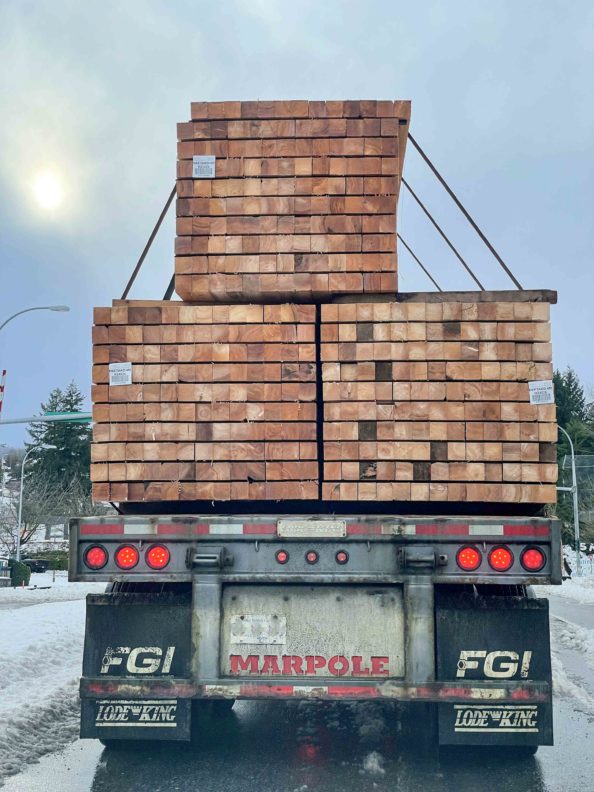
 Another questionably secured load in the bed of a truck along a San Antonio highway is stirring up conversation online. A truck was spotted carrying lumber upright with the pieces of wood skyrocketing, clearly taller than the truck itself. …A truck, avoiding state law which prohibits overhang of more than 3 feet either in front or back of a vehicle, opted to put their lumber load upright. Narrowly missing highway overhangs, the lumber appears to violate state law which says the overall height of a load hauled in Texas can’t exceed 14 feet …The beams, which protruded several feet above the back of the truck, were swaying in the wind, tied down only at a couple places at their base by a questionable and slacked set of ropes.
 Recently, the Wall Street Journal’s editorial board published a piece titled “



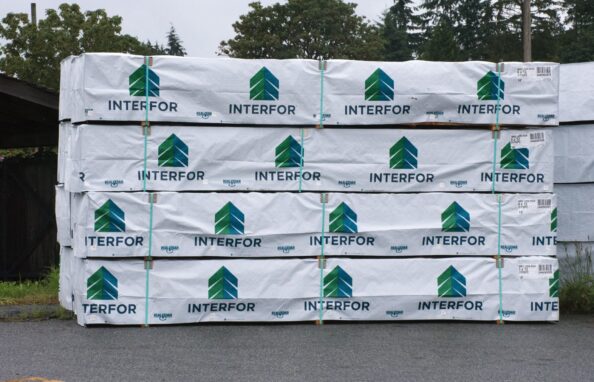 [Companies] in B.C. and across Canada, were given a last-minute, one-month reprieve Monday afternoon after Prime Minister Justin Trudeau spoke with U.S. President Donald Trump… The wood products sector sends $5.7 billion of products to the U.S., and another $962 million in pulp-and-paper products. On Monday, Interfor said it has been closely monitoring the U.S. tariff issue for some time, and as a diversified North American producer, comes into this new environment in as good a position as anyone in the industry. “Our leadership team has been hard at work identifying ways to insulate our company from tariff exposure where possible and put us in the best position to continue to thrive,” said Svetlana Kayumova, Interfor’s vice-president of corporate communications and government relations. “We know there is a housing shortage across North America, and the lumber products we produce are a vital part of the solution.” Interfor has mills on both sides of the border.
 A local forest-sector manufacturer is receiving a boost from the province to help grow its product line. Atco Wood Products — located in Fruitvale, 67 kilometres southwest of Nelson — is considered one of the top producers of softwood veneers and related by-products in the region. Through the B.C. Manufacturing Jobs Fund (BCMJF), the Government of B.C. will hand Atco $50,000 to complete planning for a new veneer-production facility, and purchase and commission new equipment to improve fibre utilization and optimize production. The company — which also manufactures veneer, ties, posts, wood chips, mulch and biomass — has evolved from its sawmilling roots, into a cutting-edge manufacturer of specialized softwood veneer and other wood products. As part of new support for forest-sector manufacturers throughout the province will help create jobs and boost local economies while diversifying the range of fibre sources used to manufacture high-value, made-in-B.C. forest products.
 Premier David Eby is tasking a new cabinet committee with co-ordinating the whole-of-government approach to protect B.C.’s workers, businesses and economy against ongoing tariff threats from the United States. Ravi Kahlon, Minister of Housing and Municipal Affairs, will chair the committee, which will act as a day-to-day war room, co-ordinating actions across government to fight back on behalf of British Columbians and grow the province’s economy. “The proposed U.S. tariffs are a direct attack on B.C.’s families,” Premier Eby said. “This threat isn’t going away anytime soon – not while this president is in power. …Minister Kahlon brings deep experience in government to the table and is uniquely positioned to co-ordinate this work across government ministries.” The B.C. government has stepped up with a three-point strategy to fight back and protect British Columbians …The new committee will ensure that B.C.’s response is fast, tough and fully focused on protecting British Columbians.

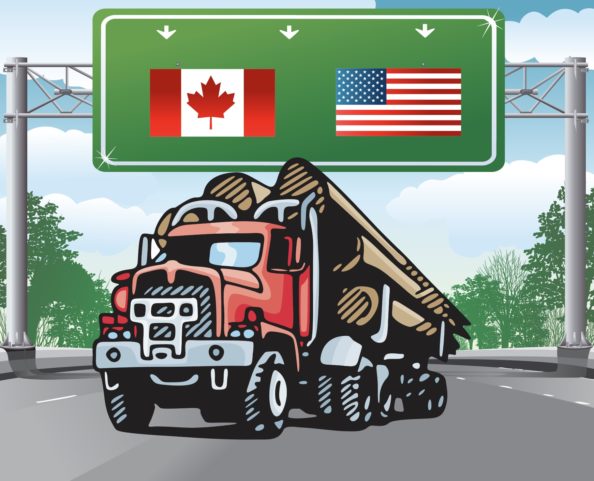 Stocks in B.C.’s three major publicly traded forestry companies were predictably down this morning (February 3), when stock markets opened after this weekend’s declaration of a trade war between the U.S., Canada and Mexico. U.S. stock markets were jolted, too, Monday morning, as was the S&P TSX composite Index. The Canadian dollar fell to $0.68 to the American dollar following Saturday’s confirmation that Trump will hit Canadian imports with 25 per cent tariffs, and 10 per cent tariffs on Canadian energy imports, beginning Tuesday. North American stocks fell sharply in early morning trading before recovering somewhat. Canadian companies that are highly exposed to the U.S. were jolted, with companies like West Fraser Timber, Canfor Corp and Interfor Corp. experiencing early morning drops of four, five and six per cent respectively, before correcting somewhat later in the morning.
 Don’t miss these headlines and more in the February Market News and Insights:



 Dear Minister Ravi Parmar: I am writing to you in reference to your recent Minister’s Statement regarding photos of tree spiking claimed to be of Fairy Creek, submitted to you anonymously and without verification. I understand from the reporter who subsequently interviewed me that the purported sender was “Friends of Fairy Creek.” My name is Kathy Code and I am a Fairy Creek Forest Defender. …Thus, I was dismayed to read your statement. Not only are you giving public voice to unsubstantiated claims from an unknown sender, but the weight of your office gives some credence to the underlying accusations. …I ask on behalf of the citizens of BC that you withdraw your statement as a means of maintaining the dignity of your office.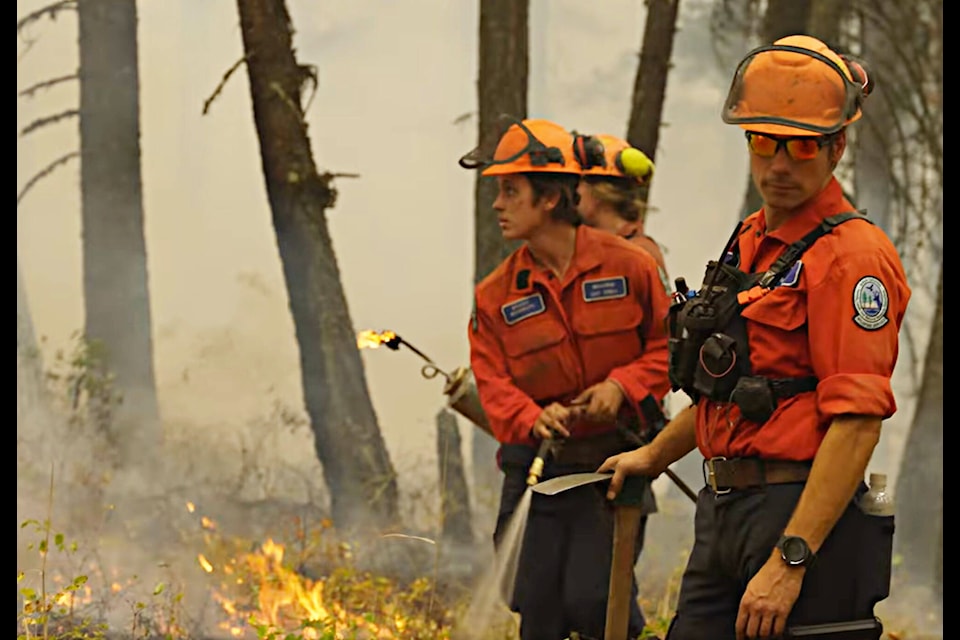



 One of the biggest policy changes needed in B.C. is to forestry policy. B.C. policy for the last 50 years has resulted in a rapid clear-cutting of a large part of our forests even as all the research indicates that: Within a 60-80 year time span, only 20-30 per cent of forests can be cut in any one area without harming the hydrological cycle. On this basis, most BC commercial forests have been severely over-cut making a mockery of the Annual Allowable Cut. …Clear-cutting results in increased risk of forest fires up to 30 years when replanted. …Re-planting is a form of green-washing giving companies cover for the forest damage they do. …Due to the increase in forest fires partially due to logging, BC forests have [become a] carbon source. …The Power of Forests: Protecting Communities and Nature with a New Forest Act effort was launched by the
 This is the beginning of convention season and that means many opportunities to learn, connect, and hear from government officials, project partners, and community organizations about problems, policies, and possibilities for the sector. The mood, thus far, is introspective, with reviews planned for BC Timber Sales and the forest sector in general. …At FESBC, we are reviewing applications for funding over the next two years. Demand for funding currently far exceeds supply. In this newsletter: A safety tip from the BC Forest Safety Council; Faces of Forestry features Erin McLeod; Information on FESBC’s 2025-27 second round of funding; Impact and benefits of the Pressy Lake Pilot Project; Nakusp & Area Community Forest’s wildfire risk reduction projects; and a podcast feature from the University of Northern British Columbia Forestry Club.
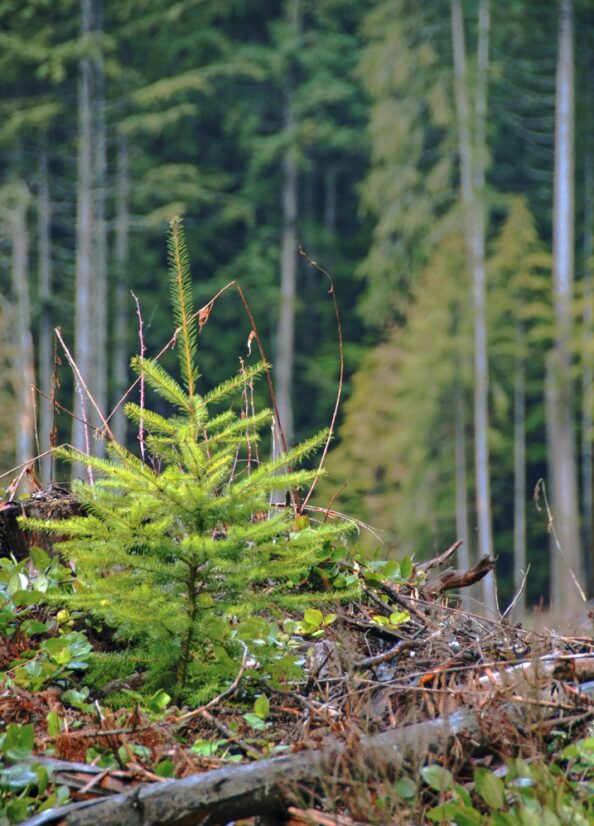 …changes in climate are expected to drive wildlife seeking refuge up mountains and further north. But for trees… the changes in climate are often coming too fast to get out of the way, especially when combined with pressures from logging, said Suzanne Simard, a professor in the University of British Columbia’s Faculty of Forestry. …In a new study published in Global Change Biology, Simard and her UBC colleagues took three-year-old interior Douglas fir seedlings from locations in southern B.C. and planted them as far north as Fort St. James, the northern limit of the species’ range … to find out how the trees would handle the human-assisted migration, and if they would do better in a colder climate. …As early as 2006, University of Alberta researcher Andreas Hamann published a study that concluded climate change could push the range of B.C.’s tree species north at a rate of 100 kilometres per decade.


 MONTREAL – With wildfires increasing in frequency and severity across Canada — impacting our health, economies, communities and wildlife — the Governments of Canada and Quebec are supporting Canadians and residents of Quebec whose lives and livelihoods are at stake. Natural Resources Canada announced a joint investment of $64 million over three years through the Government of Canada’s Fighting and Managing Wildfires in a Changing Climate Program – Equipment Fund. This joint investment is supporting Quebec’s efforts to purchase wildfire firefighting equipment, such as vehicles, drones and telecommunications equipment. By buying and upgrading equipment and hiring and training more personnel, Quebec will be better prepared to respond to wildfires and provide support when other regions in Canada experience high fire activity.
 Kenneth A. Margolis, New York — Who says bipartisanship is dead? President Trump and California Gov. Gavin Newsom have found common ground. Both seem determined to cripple the rebuilding effort in Los Angeles.
 This opinion piece is by the following groups: Central Utah Water Conservancy District, Salt Lake City Department of Public Utilities, Weber Basin Water Conservancy District, Mountain Regional Water Special Service District, Metropolitan Water District of Salt Lake & Sandy, Jordan Valley Water Conservancy District, Summit County, and World Resources Institute. After another catastrophic wildfire season in the West, it is clear that Utah can no longer put off needed investments to protect our forests and critical sources of drinking water. The consequences of delaying these essential investments grow yearly and the stakes have never been higher. …These fires are a wake-up call. Infrastructure costs should not fall on water ratepayers alone. While Utah water utilities and our partners have made progress in reducing wildfire risks in key watersheds, the wildfire crisis demands even greater levels of collaboration and funding — and both are needed now from Utah’s state Legislature.



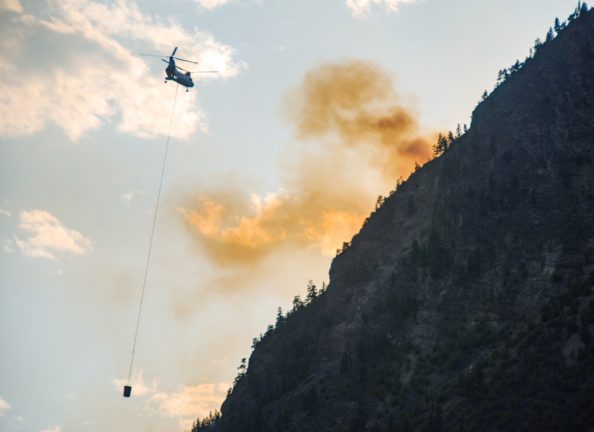 WASHINGTON – U.S. Senators Martin Heinrich (D-N.M.) and Tim Sheehy (R-Mont.) introduced the bipartisan Aerial Firefighting Enhancement Act of 2025 to strengthen the aerial wildfire suppression fleet and better combat the year-round threat of catastrophic wildfire. “I have worked to expand the operations of Very Large Air Tankers that have proven absolutely essential to firefighters battling wildfires in New Mexico, Los Angeles, and across the West,” said Heinrich. …“As a former Navy SEAL and the only aerial firefighter in the Senate, I understand government’s most solemn duty is to keep the American people safe,” said Sheehy. The bill reauthorizes the Secretary of Defense’s authority to sell excess Department of Defense aircraft and aircraft parts, acceptable for commercial sale, to persons or entities that contract with the government for the delivery of fire retardant or water by air to suppress wildfires…

 PIEDMONT TRIAD, N.C. — North Carolina has seen a rising number of wildfires recently, including two here in the Triad just last week. The North Carolina Forest Service is the agency responsible for getting those fires out, but lately it’s been difficult to do so. That’s due to the large number of vacancies across the department. “When we’re the lead agency for wildfire response, this isn’t a forest you want 100 positions consistently unfilled,” Philip Jackson, Public Information Officer for the N.C. Forest Service, said. It’s an issue the agency has been having for some time. “It’s [vacancies] pretty evenly distributed throughout all three regions across the state,” Jackson said. “You’re looking at about 30-35 unfilled positions in all three regions.”

 An international survey of frogs and toads has revealed that global warming and drought are more likely to affect the animals in the Amazon and Atlantic Rainforests. The

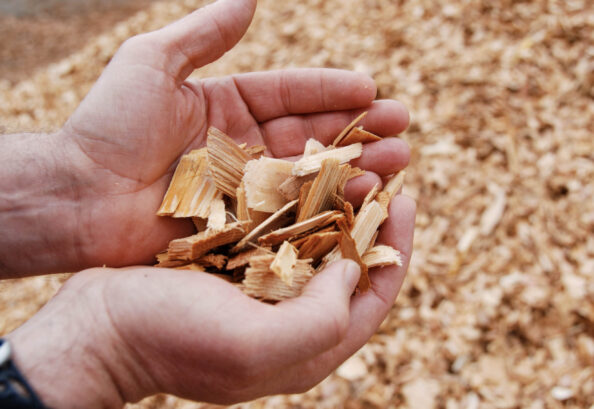


 Biochar, a charcoal-like material derived from plant biomass, has long been hailed as a promising tool for carbon dioxide removal. However, a new study by Stanford researchers highlights a critical issue: current methods for assessing biochar’s carbon storage potential may significantly undervalue its true environmental benefits. The paper points the way to more accurately evaluating biochar, and boosting its credibility as a climate change solution. The research challenges conventional durability metrics and proposes a more nuanced framework for evaluating biochar projects. It grew out of an early project looking at soil’s ability to capture carbon dioxide. …By reanalyzing the largest existing biochar durability dataset, the researchers uncovered that relying solely on hydrogen-to-carbon ratios ignores critical factors such as soil type, environmental conditions, and biochar feedstock variability. Without these factors, models often fail to predict real-world outcomes for carbon storage and benefits to soil health and crops.



 …Endless hours in front of devices are quietly rewriting the blueprint of childhood, reshaping the way that young people think, interact, develop, and experience the world. Young people today spend between 5 and 9 hours staring at screens, but less than 10 minutes a day enjoying time playing in nature. The result? Rising rates of anxiety, body image dissatisfaction, reduced attention spans, waning creativity, and sleepless nights. Brain scans show kids glued to screens experience premature thinning in the prefrontal cortex—the brain’s control centre for impulse control, attention, emotional regulation, and decision-making. …But there is a solution… The antidote is far simpler than reducing screen time. It’s the original technology: nature. …One movement helping to lead this reconnection is the forest school. Forest schools are built on a simple but radical idea: the best classroom doesn’t have walls. Here, nature is a teacher.