 US builders and lumber dealers say tariff uncertainty brings back pandemic-era supply-chain shortages. In related tariff news: RONA pivots to Canadian-made goods; Canada’s NDP leader wants to build with wood; and Ontario and Quebec companies brace for impacts. In other Business news: Northern Pulp secures extension on Nova Scotia pulp mill study; and Stein Lumber acquires Teal Jones’ Salmon Arm plant.
In Forestry/Climate news: the EU Deforestation Regulation may boost low-deforestation countries; Canada and Quebec agree to conserve nature; the National Observer says Canada’s forests are a carbon source; the Tyee says killing wolves is no way to protect BC caribou; Washington lawmakers want to cancel the owl-killing plan; a new study says acoustic monitoring for birds is good for forestry; and prescribed burning does not make Australian forests more flammable.
Finally, does the US really need Canadian wood products supply? Apparently yes.
Kelly McCloskey, Editor, Tree Frog News
 Let me propose that we respond to President Donald Trump and his supporters in a more direct fashion: by wiping them out. No, not with violent force, or vain attempts at economic annihilation, but in a way that is more, shall we say, fundamental. It would be shockingly easy to empty America’s store shelves of toilet paper. A weeks-long bog-roll panic could be provoked, right now, with only a few words from a Canadian leader. The tissue of lies behind the trade war would be wiped away, exposing the backside of Mr. Trump’s bizarre trade claims in a way that would be far more noticeable than any retaliatory tariff. …Supply chains for the rolls of tissue are so constrained, lacking in stored reserves and Canada-dependent, Kruger CEO Dino Bianco explained, that it would only take a tiny push to cause panic buying and the anxiety-inducing sound of empty cardboard tubes rattling on bathroom spindles. …It sends a clearer message: Canadians believe in trade. We want trade. And if you deprive us of it, we know how to hit you where it really hurts. [Globe and Mail subscription required for full access]
 Canadian homeowners can expect to face higher premiums when they renew their home insurance, as new U.S. tariffs add pressure on property and casualty insurers by raising the cost of building materials and appliances. …The tariffs placed by Mr. Trump on building materials such as aluminum, steel and lumber will add extra costs for insurers to the goods used in replacing and repairing homes, cars and businesses, Brett Weltman, spokesperson for the Insurance Bureau of Canada, said. “While we don’t yet have a precise picture of the scope of these effects, over time, tariffs will hurt consumers and families on both sides of the border,” he said. …Bill Premdas, executive director of KPMG’s Canadian insurance practice, said a prolonged tariff battle with the U.S. could put pressure on claims costs as many of the resources used to rebuild and repair homes are covered by cross-border trade agreements. [Globe and Mail subscription required for full access to this story]
 This year’s COFI convention will tackle the most pressing challenge facing BC’s forest sector – predictable access to fibre. Without this, BC’s global competitiveness and the family-supporting jobs forestry provides remain at risk. There is a path forward. Within the sustainable Allowable Annual Cut there are opportunities to surpass a minimum target of 45 million cubic meters of harvest while maintaining environmental stewardship. Achieving these outcomes will require changes to BC Timber Sales (BCTS), innovative approaches to forest landscape planning, stronger partnerships with First Nations, and community-led solutions. Join us for a solutions-oriented discussion, featuring distinguished experts: George Abbott, Treaty Commissioner, Former BC Cabinet Minister & Member, BC Timber Sales Review Task Force; David Elstone, Managing Director, Spar Tree Group; Makenzie Leine, Vice President, Business Development, A&A Trading; Jennifer Gunter, Executive Director, BC Community Forest Association; moderated by Michael Armstrong, VP and Chief Forester at COFI.
 By easing the current restrictions on timber harvesting and natural gas development, B.C. Premier David Eby can reduce B.C.’s reliance on U.S. markets and improve affordability… This policy shift would create jobs, help address the cost-of-living crisis and insulate B.C. from U.S. trade volatility by diversifying its trading partners. Natural resources, namely forestry, energy, mining and agriculture, make up about 75 per cent of B.C.’s exports as of November 2024. …Yet both sectors face government-imposed constraints, from caps on logging to opposition to pipelines. Since forestry and energy dominate B.C.’s exports, robust growth depends on expanding these sectors. B.C.’s forestry industry has long been a global leader, but policies restricting access to fibre are undermining its viability. The annual allowable cut and a cap on how much timber can be harvested, along with actual cuts, have been reduced in recent years due to environmental concerns and pressure from within the NDP’s base.




 VICTORIA – The United Steelworkers union (USW) acknowledges the difficult position facing the B.C. government in its 2025 budget and applauds the thoughtful, diligent focus on priorities by Minister of Finance Brenda Bailey. U.S. President Donald Trump’s threats and the imposition of tariffs have created uncertainty for important exports, including lumber, copper, zinc and other essential products. …“Workers are calling for action to grow and diversify the economy and supply chains, reducing dependence on the U.S. market while ensuring jobs in mining, critical minerals and processing, forestry and lumber manufacturing,” said Scott Lunny, USW Western Canada Director. …B.C. should prepare for a wave of layoffs in the forest sector due to rising duties. …The USW is urging the B.C. government to increase the supply of fibre and streamline the permitting process in the logging sector to support the primary industry and facilitate ongoing efforts to expand manufacturing, Mass Timber and other value-added industries.

 SAGUENAY, QUE. — Wood, as well as aluminum, are economic drivers in Quebec’s Saguenay-Lac-St-Jean region north of Quebec City. The … looming 25 per cent tariffs are leaving businesses in Saguenay-Lac-St-Jean bracing for impact. Inotech, a company that specializes in manufacturing equipment for the wood industry, said the economic disruption started in early February, when Trump had initially promised to impose tariffs, before delaying them. “In Quebec, the entire wood market was paralyzed,” said Michel Marceau, the company’s CEO. “People are waiting to see what will happen and during this time, no one is investing,” added Michael Dufour, Inotech’s sales director. A recent study from the Canadian Chamber of Commerce identified Saguenay and Drummondville — a city northeast of Montreal — among the Canadian cities most vulnerable to U.S. tariffs.




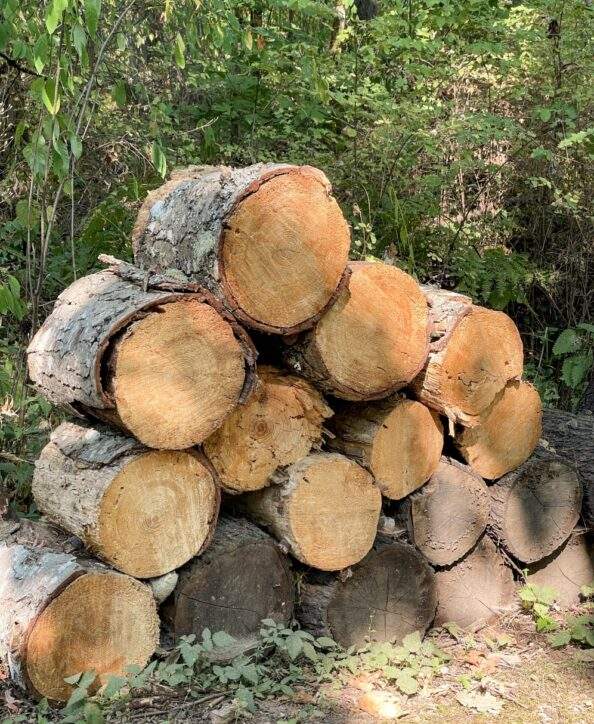 BEIJING – China suspended on Tuesday the soybean import licenses of three U.S. firms and halted imports of U.S. lumber, stepping up retaliatory action after the United States imposed additional tariffs on Chinese goods. Earlier in the day, China also imposed import levies covering $21 billion worth of U.S. agricultural and food products… Customs said it detected ergot and seed coating agent in imported U.S. soybeans while the suspension of U.S. lumber imports was due to the detection of small worms, aspergillus and other pests. …Beijing’s retaliatory measures were in response to U.S. President Donald Trump’s decision to impose an extra 10% duty on China, effective Tuesday, resulting in a cumulative 20% tariff in response to what the White House considers Chinese inaction over drug flows. …The suspension of U.S. lumber was a direct response to Trump’s move on March 1 to order a trade investigation on imported lumber.
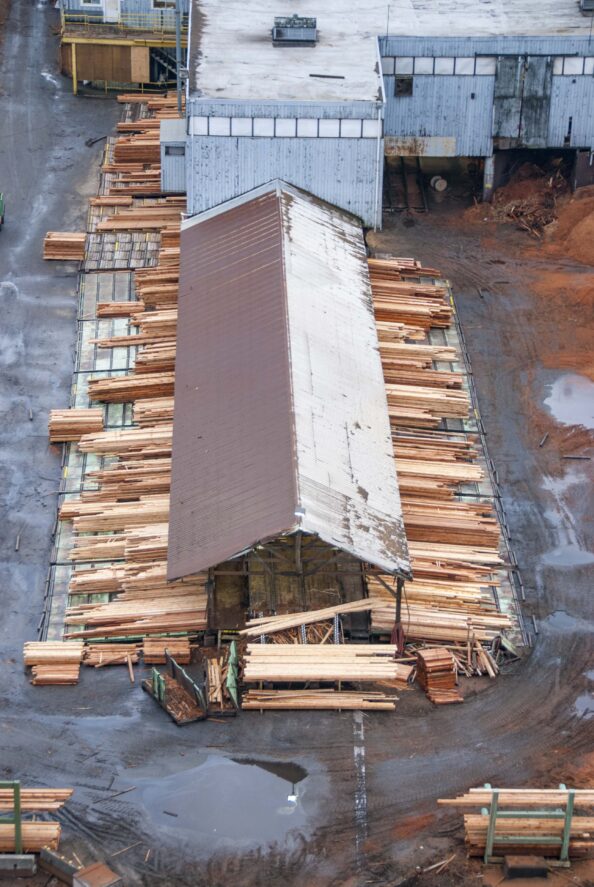 The B.C. Council of Forest Industries (COFI) welcomed B.C.’s responses to American tariffs, but questioned aspects of the provincial budget tabled Tuesday. B.C.’s forests minister, meanwhile, is calling on Ottawa to step up supports. Kim Haakstad, president and CEO of COFI, said her organization welcomes the budget’s focus on responding to new tariffs announced March 4. “We are disappointed by the absence of dedicated support for the forest sector,” Haakstad said. “As Premier (David) Eby and (Forests) Minister (Ravi) Parmar have acknowledged, the forest sector will be particularly hard hit by the new tariffs at a time when the industry is already facing significant challenges. These broad-based tariffs apply to all forest product exports … adding further pressure on workers, companies and communities already affected by softwood lumber duties.” …COFI remains committed to working with the government to advance solutions that strengthen the forestry sector, improve the provincial economy and diversify markets.
  On Tuesday, President Donald Trump’s administration imposed new tariffs on imports from Canada and Mexico while increasing existing tariffs on goods from China, a move expected to raise prices for new homes, according to a recent CoreLogic report. That’s largely because tariffs affect essential home construction materials, including wood products, cement, steel, aluminum and appliances, so homebuilding costs are projected to rise. As a result, construction costs could increase by 4% to 6% over the next 12 months, adding roughly $17,000 to $22,000 to the sticker prices for new homes, according to CoreLogic. With the cost of a newly constructed home averaging around $422,000, these added expenses may further strain affordability for first-time homebuyers, the study says.
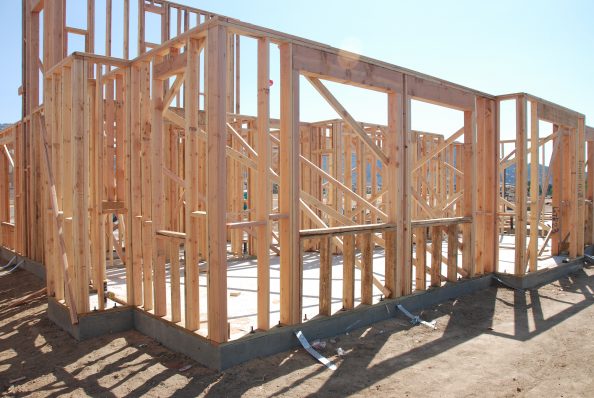 CHINO, Calif. — Where some just see lumber, Marc Saracco, a sales manager at wholesale distributor Capital Lumber Company, sees the building blocks of new communities. Although with the 25% tariffs President Donald Trump is placing on imports from Mexico and Canada, Saracco said those building blocks are expected to get more expensive. “I estimate that the tariffs from appliances to lumber would cost a homeowner between $30,000 and $40,000 per house,” Saracco said. He said it could exacerbate the current housing shortage. “We as an industry rely heavily on what they produce. About 30% of the lumber that we consume in the United States comes from Canada,” Saracco said. …”You’re talking about $600 million just in the scale of the rebuild in additional tariffs to meet those 15,000 homes that absolutely need to be rebuilt,” Saracco said. …With domestic sawmills closing, Saracco said it would take 10 to 20 years before the U.S. can internally meet lumber demand.
  These are the headlines you’ll find in this month’s newsletter:






 WINNIPEG, MB
 B.C.’s Ministry of Forests will pump $28 million into 74 wildfire-prevention projects across all eight of the province’s natural resource regions, an investment applauded by NDP MLAs given its nearly $3-million investment in Kootenay communities. Through the Forest Enhancement Society of BC (FESBC), 43 new and expanded fibre-recovery projects and 31 new and expanded wildfire-mitigation projects will receive the funding, with all 74 projects expected to be complete by end of March. …In the Kootenay natural resource region, some $2,854,000 is supporting seven projects. These include $1.6 million for Nk’Mip Forestry in Castlegar; $593,000 for the Slocan Integral Foresty Cooperative; $396,000 and $46,500 for the Nakusp and Area Community Forest in Nakusp and New Denver, respectively; $101,000 for the Harrop-Procter Community Co-operative; $96,500 for the West Kootenay Woodlot Association in Nelson; and $21,000 for the Creston Valley Forest Corporation.
 Rick Maddison, who lost his home in the 2003 Okanagan Mountain wildfire, and Murray Wilson, a retired forester of Vernon have teamed up to create the film B.C. Is Burning, a documentary that focuses on solutions, rather than devastation. “I’m hoping if these ideas in the film are adopted, more communities can be protected from this ongoing threat,” said Maddison. The project began in 2024, and the team is looking to raise funds to help finish the project and distribute the film. …“We’ve spoken with some of the leading people in the field,” said Wilson. “Their insights could change how we manage our forests — and how we protect our communities.” The team is hoping to raise $45,000. Recognizing the film’s importance for B.C.’s future, Kelowna-based Homestead Foods, a local hydroponics and sustainable farming operation, has agreed to match donations up to $22,500 to fund the final stages and the launch of the documentary. To watch the trailer and donate, visit
 QUÉBEC – The Ministry of Environment and Climate Change announced the signing of a Canada-Quebec agreement to advance the protection and conservation of nature throughout Quebec. The Government of Canada will invest up to $100 million between now and 2027 to support the objectives of Quebec’s 2030 Nature Plan and Canada’s 2030 Nature Strategy. This nature agreement reflects both governments’ commitment to implementing the Kunming-Montréal Global Biodiversity Framework and establishes a series of objectives to achieve this: Create and expand protected and conserved areas, and accelerate the conservation of natural environments on private land in southern Quebec, including through the implementation of urban park projects; Take action to address threats to biodiversity, better protect threatened or vulnerable species, and foster the recovery of at-risk species; Control invasive alien species; and Support Indigenous leadership in biodiversity conservation.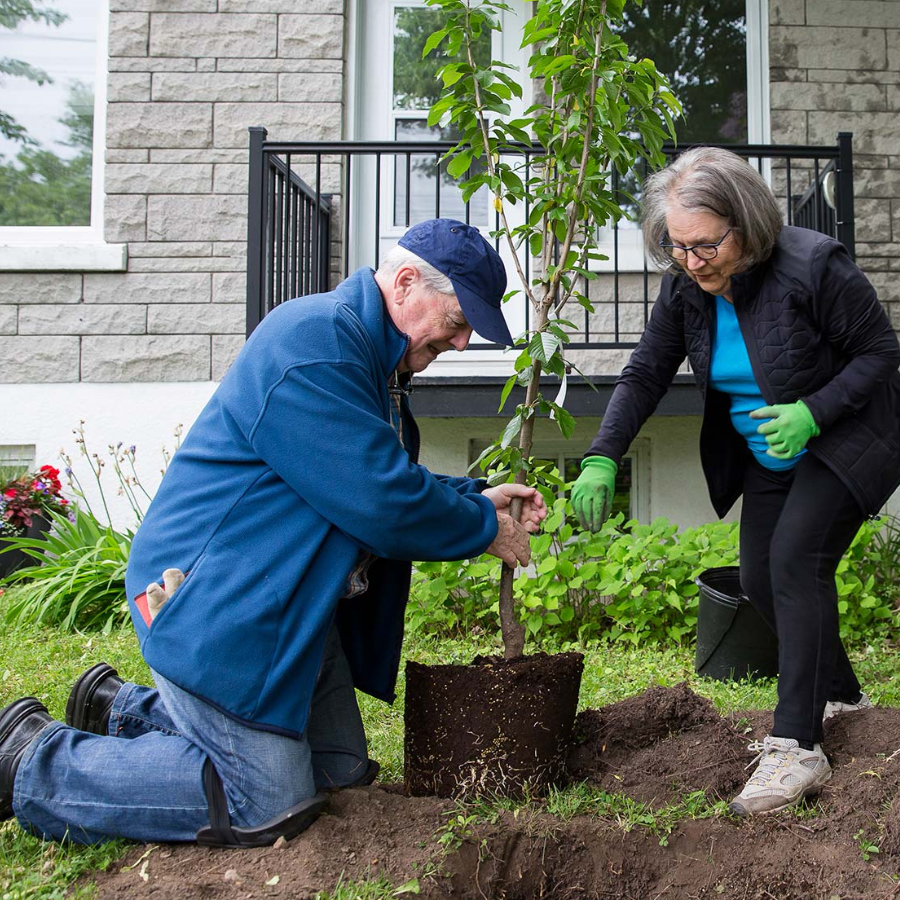

 The Trump administration touted logging as the next frontier in job creation and wildfire prevention, but those goals will face confounding challenges. Trump issued two executive orders on March 1: the first to boost timber production on federal land and the second to address wood product imports. The moves were cheered by the timber industry. “These are common sense directives,” said Travis Joseph, president of the American Forest Resource Council, a timber industry trade group. “Our federal forests have been mismanaged for decades and Americans have paid the price in almost every way – lost jobs, lost manufacturing, and infrastructure.” Timber groups and rural lawmakers also said the orders could help manage overstocked forests and reduce the threat of wildfire. But conservation groups and forestry experts say cutting down more trees doesn’t inherently reduce wildfire risk and can actually increase it. The plan also faces pushback about environmental concerns and economics.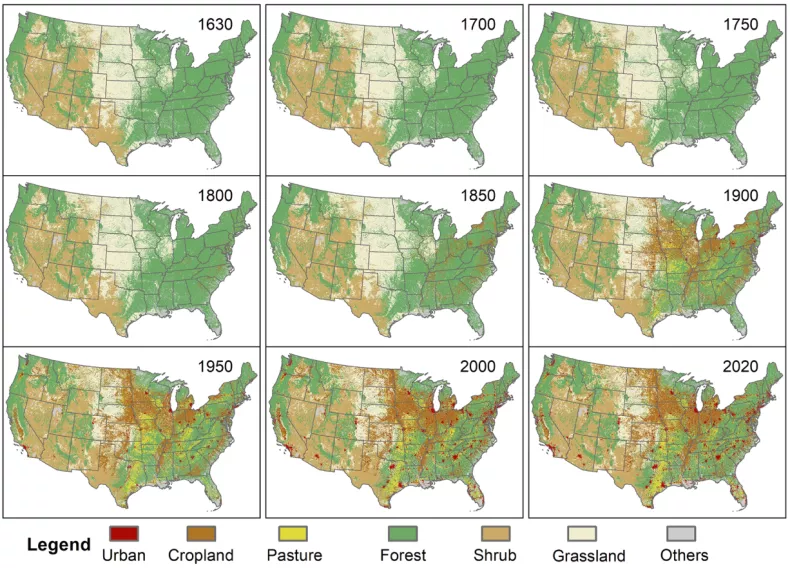
 FRANKFURT – Bayer has told U.S. lawmakers it could stop selling Roundup weedkiller unless they can strengthen legal protection against product liability litigation, according to a financial analyst and a person close to the matter. Bayer has paid about $10 billion to settle disputed claims that Roundup, based on the herbicide glyphosate, causes cancer. About 67,000 further cases are pending for which the group has set aside $5.9 billion in legal provisions. The German company has said plaintiffs should not be able to take Bayer to court by invoking U.S. state rules given the federal U.S. Environmental Protection Agency has repeatedly labelled the product as safe to use, as have regulators in other parts of the world. “Without regulatory clarity (Bayer) will need to exit the business. Bayer have been clear with legislators and farmer groups on this,” analysts at brokerage Jefferies said in a note on Thursday, citing guidance Bayer’s leadership provided in a meeting.
 President Donald Trump took action last weekend to increase domestic logging by circumventing environmental protections and to staunch the flow of imported lumber products primarily from Canada. A pair of executive orders — one addressing timber and wood product imports, the other addressing logging on federal lands — drew praise from the logging industry, condemnation from environmental and wildlife groups, and concern from the construction industry over higher prices. The order rolls back the degree to which the agencies have to comply with the Endangered Species Act or consider negative impacts of logging. …[making] it easier for environmentally damaging clear-cut logging to be approved. …The executive order on timber production … can exempt projects from complying with the landmark law. …allowing projects to proceed even if they will harm a protected species or result in extinction. Historically, the committee has been used to aid recovery from natural disasters, not to expedite resource extraction.
 Thousands of fired workers at the Department of Agriculture must get their jobs back for at least the next month and a half, the chair of a federal civil service board ruled Wednesday. The ruling said the recent dismissals of more than 5,600 probationary employees may have violated federal laws and procedures for carrying out layoffs. The decision from Cathy Harris, the chair of the Merit Systems Protection Board, is a blow to the Trump administration’s effort to drastically and quickly shrink the federal bureaucracy. Though it applies only to the USDA, it could lay the groundwork for further rulings reinstating tens of thousands of other probationary workers whom the Trump administration has fired en masse across the government. But it’s far from a final resolution of the legality of the mass terminations.
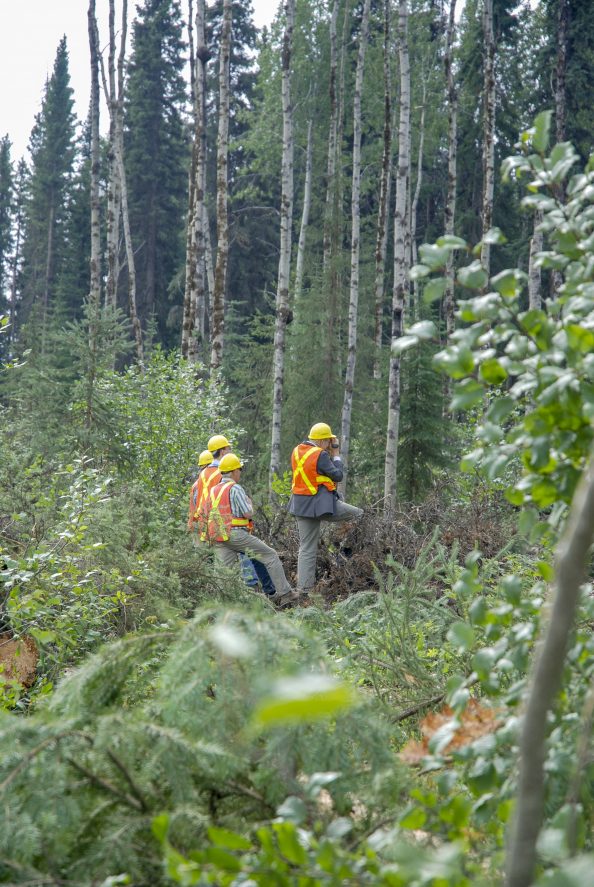 …in the early 2000s, a group of scientists and businessmen began arguing that forest thinning was too much for the government to take on. If Arizona had any hope of decreasing the risk of catastrophic forest fire, private industry would have to play a part. From this debate emerged Arizona Forest Restoration Products, a company that had planned to make oriented strand board from the low-dollar trees. …But …the Forest Service unexpectedly awarded the contract in 2012 to Pioneer Associates, a group it favored, even if they were arguably less qualified and had gathered almost no funding for their proposal. …Pioneer quickly went defunct, and the company that took over its contract, Good Earth, only thinned a fraction of what it promised. …And a cautionary tale as we fall into a pattern of on-again, off-again federal infrastructure funding cuts and threatened tariffs, which were enacted and then delayed on Canada and Mexico until April.
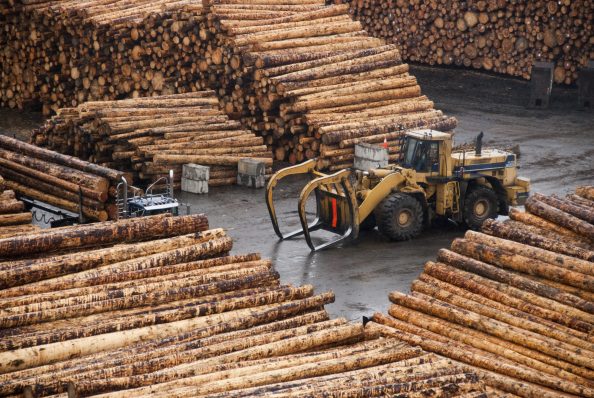 Republican-led policy directives could rewrite forest policies that affect public lands in Oregon and the rest of the West. New executive orders from the Trump administration call on federal agencies to fast-track logging projects by circumventing endangered species laws, and to investigate whether lumber imports threaten national security. …Some experts say it’s too soon to tell how these directives will affect Oregon’s timber market, particularly Trump’s order on fast-tracking timber sales to benefit logging companies and mills. Mindy Crandall, associate professor of forest policy at Oregon State University, said Canadian imports make up a large chunk of the U.S.‘s softwood lumber supply. Oregon also leads the nation
 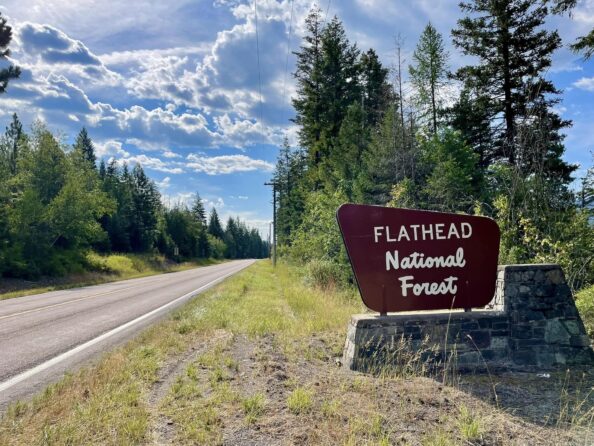 Four conservation groups filed suit in January over the Round Star logging project west of Whitefish on the Tally Lake Ranger District. In the suit against the Flathead National Forest, the Alliance for the Wild Rockies, Council on Wildlife and Fish, Yellowstone to Uintas Connection and Native Ecosystems Council argue that the project is ill-conceived and encroaches on lynx, grizzly and elk habitat. “Lynx critical habitat is the worst place for clearcuts,” said Mike Garrity, executive director of the Alliance for the Wild Rockies, in a Jan. 9 press release. “The surest way to drive lynx to extinction is to continue massive deforestation of the West.” However, local loggers say that the lawsuit is a deterrence to the bigger picture of forest management.


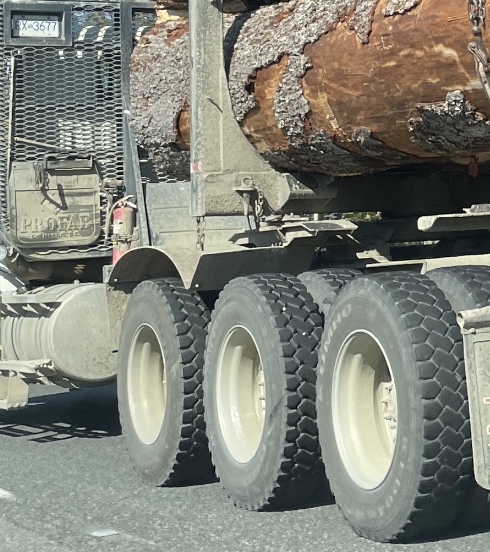 Legislation introduced by the Alabama Forestry Association would significantly worsen the condition of local and state roads and bridges, as well as hinder safety inspections of commercial vehicles. “The legislation is to allow significantly heavier axle weights to be hauled by large trucks — a move that is difficult to comprehend when the truckers already complain of sky-high liability insurance rates and serve as the primary target of advertising by personal injury law firms,” said Alabama Department of Transportation Deputy Director George Conner… “The math is simple: heavier truck axle weights are exceptionally dangerous and destroy roads and bridges; even heavier axle weights will be more dangerous and will destroy roads and bridges even more quickly.” …The Forestry Association’s proposal would increase the legal limit for a single axle from 20,000 pounds to 22,000 pounds while increasing the legal limit for two axles (tandem axles) from 34,000 pounds to 44,000 pounds.
 Here are the headlines from the winter newsletter. Click the read more link to see these stories and more. We hope you enjoy reading it and we welcome your feedback.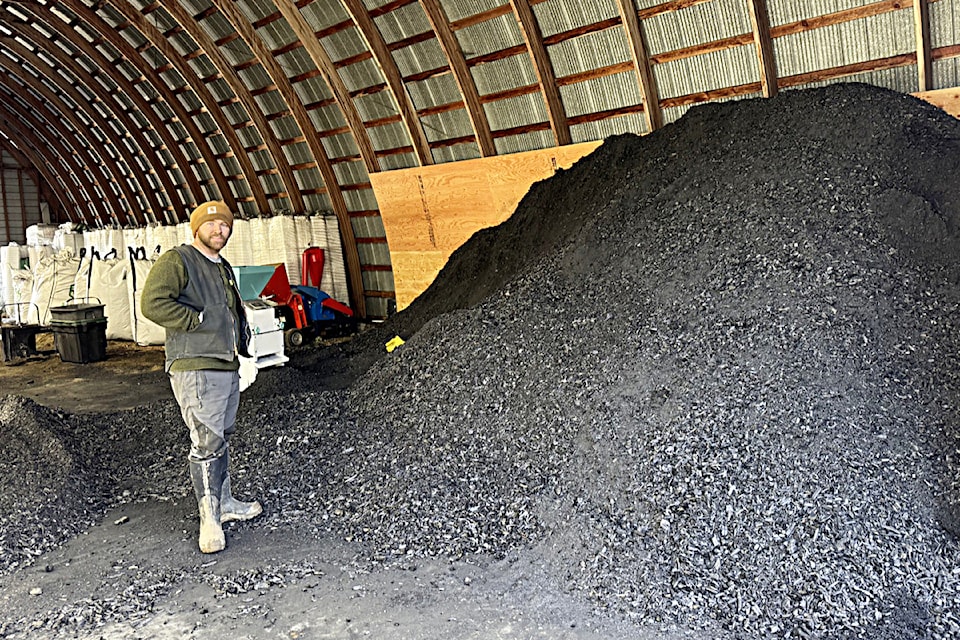
 …sustainable aviation fuel (SAF) is considered the most practical option for decarbonizing air travel, which in Canada accounts for about four per cent of Canada’s total greenhouse gas emissions. Biofuels made from … wood waste can lower fossil fuels’ carbon intensity and … require no major modifications to airplanes. B.C. has all of the conditions and resources needed to develop a sustainable aviation fuel industry, according to a panel discussion on SAF by the Greater Vancouver Board of Trade. But right now, most of the SAF that airlines are buying comes from suppliers in the U.S. and Europe. Despite the efforts of companies like Parkland Corp., a sustainable aviation fuel production industry is having a hard time getting off the ground in Canada. It all comes down to costs, and the Americans can produce SAF at a more cost competitive price than Canadian producers can, thanks in no small part to subsidies in the U.S.
 The harvesting and burning of forest biomass to produce energy continues to surge, according to a new report entitled

 Join us for the Interior Safety Conference (ISC) on Thursday, May 1, 2025! This annual event is a must-attend for BC forestry professionals, offering a unique opportunity to delve into safety-related issues and learn ways to enhance safety across the industry. This Year’s Theme: Building Safety Through Shared Experiences. Gain powerful insights and practical knowledge through a series of compelling presentations by industry experts and speakers. The conference is FREE for anyone working in any phase of the forest industry, from silviculture to harvesting to wood products manufacturing.
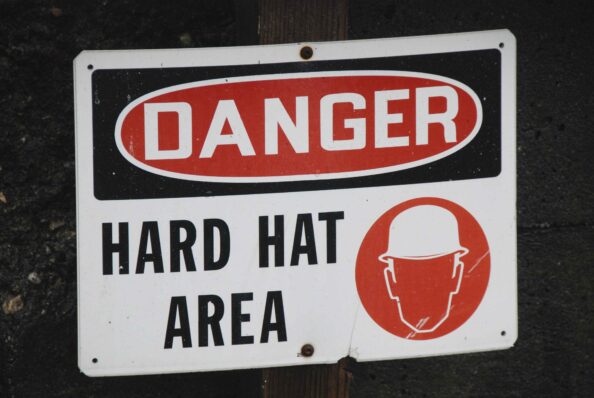 A Washington timber company has been fined nearly $115,000 for child labor violations after a 17-year-old worker was injured while working in a logging operation. The Washington State Department of Labor & Industries issued the citation against MVR Timber Cutting Inc. following an investigation into the incident. The investigation began in May 2024 when L&I received a report of a workplace injury involving the teen, who fractured his foot while jumping between tree stumps. Upon learning that the minor was working as a member of the company’s logging crew, L&I expanded its investigation. …In January, L&I fined MVR Timber Cutting Inc. $56,000 for allowing the minor to work in logging operations 56 times. State regulations prohibit minors under 18 from working in jobs requiring more extensive personal protective equipment than boots, gloves, and safety glasses. Additionally, state law bans teens from working in hard hat zones, prompting L&I to issue an additional $56,000 fine for the 56 violations of that regulation.