 Kevin Lynch opines on how Canada can best navigate Trump’s trade war—as supply chain disruptions loom. In related news: BC’s forest industry seeks action on trade; Ontario’s premier plans to protect forestry; US Kitchen Cabinet manufacturers urge tariff action; and the US Lumber Coalition says Canada wants to avoid liability. Meanwhile: Northern Pulp seeks another extension of creditor protection; International Paper reports Q1, 2025 loss; and Builders FirstSource released its Social Responsibility report.
In other news: Ontario announced $6.8M for workplace safety; BC streamlines permitting for renewable-energy projects; Colorado lawmakers advocate for forestry-worker reinstatements; and Washington state launches thinning project near Mount Pilchuck. Meanwhile, registration is open for Boston’s Mass Timber+ Conference; and the latest from BC’s First Nations Forestry Council.
Finally, a guitar-shaped mass-timber airport terminal is set to be built in Macon, Georgia.
Kelly McCloskey, Tree Frog News Editor
 The BC Truck Loggers Association is pleased to share and invite you to access the newly developed B.C. Timber Harvest Rate Model. The tool was built using data provided by contractors as a joint project of the TLA, ILA and NWLA. The tool calculates the hourly rates for equipment used in BC’s forest industry. It’s designed to give contractors a baseline rate for a selected piece of equipment, serving as a starting point. The rates in the model reflect the required revenues of a contractor who runs a reasonably efficient operation; however, they may vary based on specific operations. The parameters (such as labour and fuel) can be adjusted in the model to calculate rates tailored to specific needs.




 The April Monthly Update includes these stories and more:

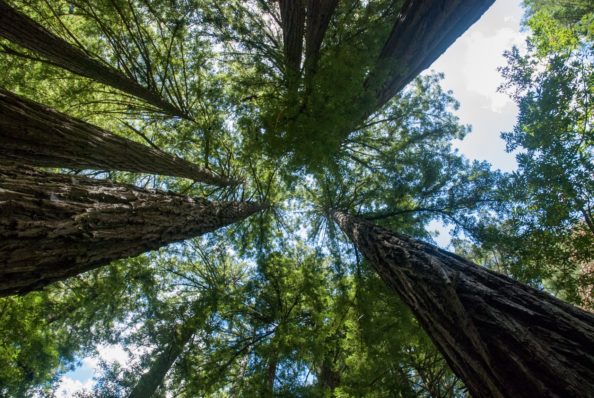 After we marked Earth Day last week, the significance of forests for conservation, community benefits and human health has never been more urgent to acknowledge. Forests play many critical roles for nature and people: they provide habitat for hundreds of species, act as water filters, reduce air pollution, and are places of community connection, recreation and refuge. However, many pressures, including severe storms and wildfires, invasive alien species and habitat loss threaten these ecosystems, the benefits they provide and the relationships they support. …The economic value of our forests is just as vital as their ecological importance. According to the Forest Products Association of Canada, more than 200,000 Canadians earn their livelihood directly from forestry, sustainable agriculture and eco-tourism, contributing an impressive $87 billion in annual revenue. …The call is clear: safeguarding Canada’s forests means safeguarding ourselves. Our natural resiliency, our economic prosperity and our health require us to do our part.
 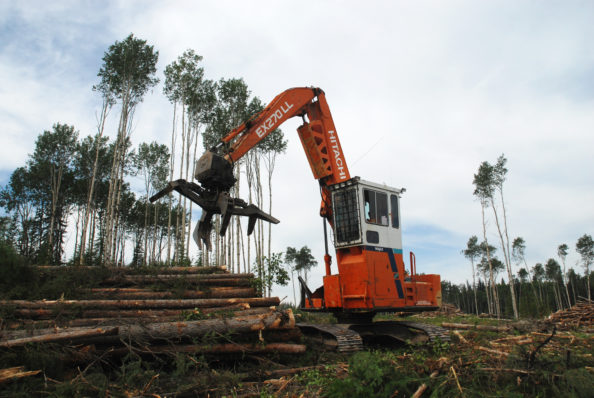 …As northern B.C. sawmills have closed over the past few years, a common refrain has been in each company press release. Punishing tariffs, high log costs, lack of access to B.C.’s plentiful timber and uncertainty in permitting processes… Is this the opening we need to dispense with the notion we need to begin turning B.C. into one big park for the world to enjoy? …Although B.C. has lost many of our lumber manufacturing facilities, our main ingredients are still here – our forests, its trees and a workforce, which when combined, provides for some of the best quality forest products in the world. Despite the economic hit our rural communities and residents have sustained with the loss of our forest industry, it is only a temporary setback, if we treat it as such, and do not let our governments succumb to the “end the forest industry” ideology that is so prevalent today.
 The Trump administration’s attempt to weaken the Endangered Species Act is easy to criticize. This month, it proposed a rule that would limit what constitutes “harm” under the law to only direct actions against wildlife, such as hunting, wounding or trapping. Destroying their habitats would no longer count. …As scientists warn that the world is entering a period of mass extinction, lawmakers would be wise to rethink federal conservation strategies. This means reforming the Endangered Species Act to better incentivize citizens to protect the country’s precious biodiversity. …The government could, for instance, turn protected species into assets by giving landowners financial incentives to assist in conservation efforts. …President Donald Trump and his party are unlikely to embrace these reforms. But Congress in recent years has shown that there is strong bipartisan appetite to strengthen protections for endangered species. The best way forward is to embrace market-oriented strategies.
 A big change could be coming to U.S. wildlife conservation policy. In mid-April, the National Oceanic and Atmospheric Administration and U.S. Fish and Wildlife Service announced a proposal to change how the term “harm” would be defined in the Endangered Species Act. …According to Paula Swedeen, policy director at Conservation Northwest, the goal of the change is to bring the definition of “harm” in the ESA closer to what the Trump administration believes is its originally-intended meaning. …Washington state has its own conservation plans that are already in place on state lands. According to Swedeen, there’s reason to think that the changes to the ESA won’t impact those too much. …According to Swedeen, the spotted owl is one of the best examples of how endangered species could be put at risk by the proposed new ESA reading. …changes could also impact other endangered species in Washington, like the grizzly bear
 BRUSSELS – For fashion companies grappling with the EU’s ambitious anti-deforestation law, a recent tweak from the European Commission may appear to offer some relief. As the December deadline looms for the landmark EU Deforestation Regulation (EUDR), Brussels has eased what some companies claimed were daunting reporting requirements. Instead of the initially mandated declaration for every shipment of goods linked to forest destruction, companies now only need to submit a single annual due diligence statement. …The Commission hopes this new simplification – which also includes allowing authorised representatives to file for company groups and enabling reuse of statements for re-imported goods – will shave off a significant 30% in reporting burdens and associated costs for affected businesses. However, the EU Commission’s simplification is being met with concern by environmental campaigners. As Reuters reported, the streamlining of paperwork has sparked fears that the teeth of the EUDR might be blunted.
 The
The 
 In Ocean County, the Jones Road Wildfire continues burning into its sixth day. Roads are now back open including Wells Mills Road. The command post sits at Wells Mills County Park. As of Sunday, over 15,000 acres have burned, and it is now 65% contained. Four structures were threatened as of Sunday. Evacuations have been 100% lifted for residents previously evacuated in Lacey and Ocean townships. Crews Sunday were working on hotspots and patrolling the fire perimeter.