 Uncertainty reigns as Donald Trump’s ‘Liberation Day’ on tariffs arrives this afternoon. In related coverage:
- Telegraph-Journal: New Brunswick considers reducing stumpage fees
- Financial Post: A reality check on Trump’s ‘Liberation Day’ beefs
- USA Today: GOP to join Dems in opposing fentanyl-related tariffs on Canada
- Truck LoggerBC Magazine: Surviving Trump’s tariffs—it will be a long time before we have a new normal
In other Business news: COFI’s new study on BC’s forest sector competitiveness and sustainability; the TLA’s Bob Brash remains hopeful—hands the reigns off to new Executive Director Peter Lister; and the Canadian Wood Council’s latest Environmental Product Declarations.
In Forestry/Wildfire news: Alberta ENGOs warns of logging impacts on caribou herds; Oregon NGOs celebrate old-growth logging victory; California wildfires threaten world’s oldest trees; a documentary on BC’s worst wildfire seasons; and Out on A Limb—a new series on First Nation-led innovation in forest management.
Finally, the BC Council of Forest Industries’ AGM starts tonight. Check here for daily updates.
Kelly McCloskey, Tree Frog News Editor




 Vancouver, BC — This week, the BC Council of Forest Industries (COFI) will welcome more than 600 industry, government, and Indigenous leaders to Prince George for a sold-out COFI 2025 Convention, running April 2-4. As one of the largest annual gatherings of the forest sector in Western Canada, the convention focuses on urgent challenges facing the industry—and the path forward. Attendees are set to explore how the sector can respond to rising US tariffs, global trade uncertainty and regulatory complexity. Discussions will center on strategies to improve industry competitiveness, strengthen partnerships with First Nations and sustain local jobs, while positioning BC as a global leader in sustainable forestry. … A highlight of the convention will be the release of a new study comparing international forest jurisdictions by Glen O’Kelly, CEO of O’Kelly Acumen, benchmarking BC’s performance against leading forestry regions—including Sweden, Finland, Austria, the US, and Brazil.


 Indonesia is one of the active exporters of logs and sawn wood, so the waste generated is very large. One of the applicable technologies developed for the utilization of wood saw waste is to process it into liquid smoke through the pyrolysis process. The application of liquid smoke to plants can affect plant’s growth and production processes due to the presence of acetic acid and methanol. The purpose of this research was to find out about the properties of Surian sawn waste liquid smoke and how it could be used as a biofertilizer an Arabica coffee seeds. …The effectiveness of liquid smoke from sawn wood waste for the increase in height, stem diameter, and the highest number of leaves of coffee seeds was obtained at a concentration of 2.5%.

 In this newsletter, we are pleased to share great stories of the impactful work happening in communities throughout our province. As the world continues to navigate the challenges affiliated with climate change, British Columbia’s forestry sector is playing a key role to mitigate its impacts and contribute to a more sustainable future. We take pride in investing in projects that provide enduring economic and social benefits for our local communities and are helping take action on this global issue. Last month, in collaboration with the Provincial Government, we shared more specifics about 70 recently funded projects moving forward to help local communities, community forests, First Nations, and other project partners enhance their wildfire prevention efforts and/or expand fibre-recovery initiatives. …In years past, much wood waste from harvesting operations was piled and burned in slash piles. Today, we invest in projects that recover this waste and use it to make forest products and generate green energy.
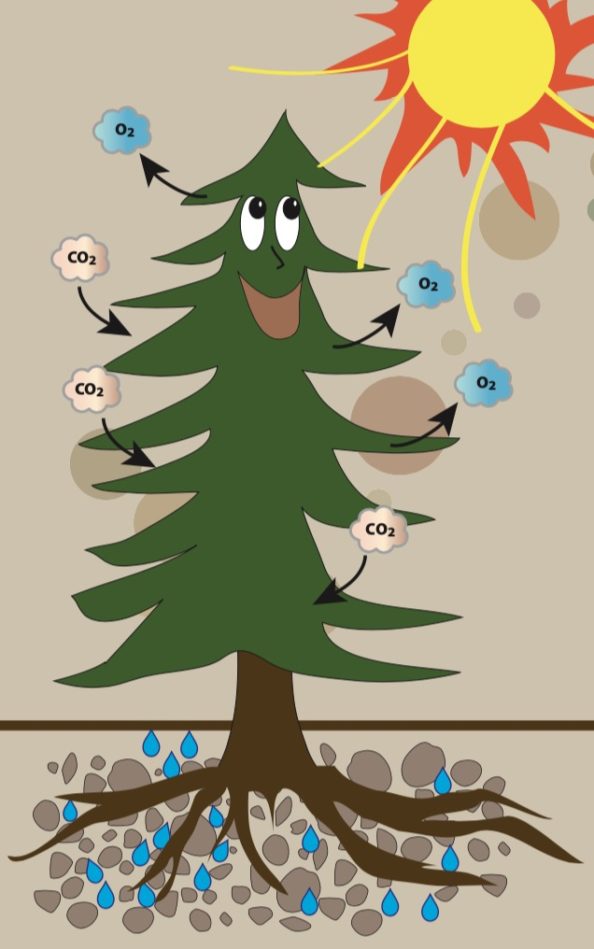 A recent study published by the Colorado State Forest Service took a deeper look into the impact of Colorado’s trees and how they store carbon. The findings reported that some of Colorado’s forests release more carbon than they draw due to dying trees that are actively decomposing. …it should be kept in mind that this data applies to recent years, and results fluctuate and can be nuanced. “(The) bigger picture of this report found that Colorado’s forests hold a lot of carbon, and that continues to this day, and it’s just in recent years that it’s releasing slightly more carbon than it adds,” Vorster said. “But when you just put it in perspective, if you were to compare the amount of carbon that it holds compared to what it releases, it’s like 0.06%, so a very tiny fraction of it at least every year. … It’s pretty close to a balance.”


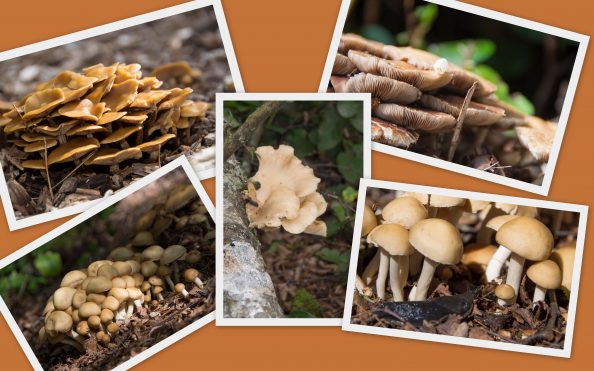 Gland, Switzerland – The number of fungi species on the IUCN Red List of Threatened Species has surpassed 1,000, confirming that deforestation, agricultural expansion and urban development are driving these species to decline worldwide. The IUCN Red List now includes 169,420 species, of which 47,187 are threatened with extinction. The addition of 482 newly assessed fungi species brings their number on the IUCN Red List to 1,300, of which at least 411 are at risk of extinction. “Fungi are the unsung heroes of life on Earth – yet they have long been overlooked. …we have taken a vital step forward: over 1,000 of the world’s 155,000 known fungal species have now been assessed for the IUCN Red List of Threatened Species, the most comprehensive source of information on extinction risk. Now, it’s time to turn this knowledge into action and safeguard the extraordinary fungal kingdom,” said Dr Grethel Aguilar, IUCN Director General.
 Living trees absorb carbon, aiding climate change mitigation. But what role do dead trees play in carbon storage? UVM researchers found that large, downed trees in streams tie up tremendous stores of carbon—and this pool of carbon storage is growing over time. Moreover, large trees in streamside forests proved important for recruiting carbon into streams over time—reflecting the environmental value of big, old trees. “We know that about 20% of global annual greenhouse gas emissions come from land use and deforestation,” University of Vermont professor and study author Dr. William Keeton said, “but we can also use forests and other land cover as what we call a natural climate solution—finding ways to sequester and store more carbon in vegetation.” Keeton had long suspected that water-bound wood in old-growth forests was surely storing carbon—but how much? Turns out, quite a lot.
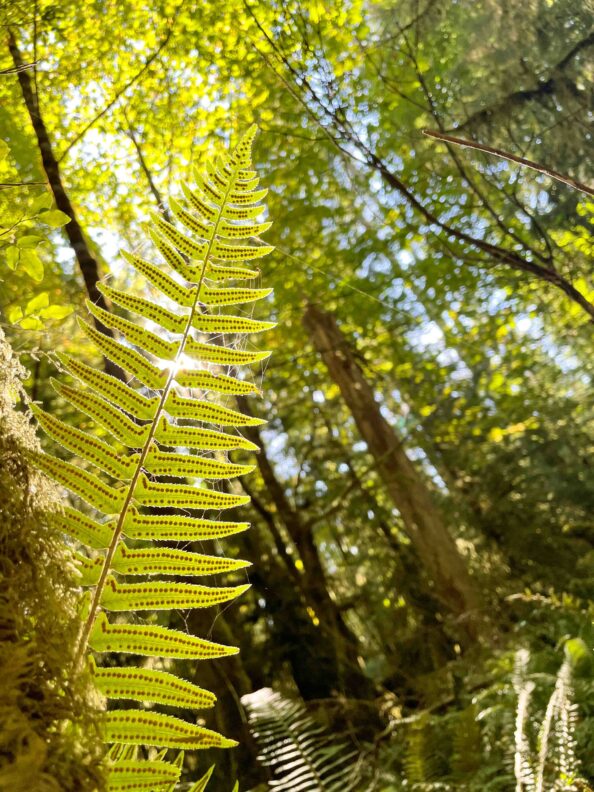 In the past, intact forests absorbed 7.8 billion tonnes of CO₂ annually – about a fifth of all human emissions – but their carbon storage is increasingly at risk from climate change and human activities such as deforestation. A new study from the Potsdam Institute for Climate Impact Research (PIK) shows that failing to account for the potentially decreasing ability of forests to absorb CO₂ could make reaching the Paris agreement targets significantly harder, if not impossible, and much more costly. “Right now, our climate strategies bet on forests not only remaining intact, but even expanding,” explains Michael Windisch, the study’s lead author and PIK guest scientist. “However, with escalating wildfires like in California, and continued deforestation in the Amazon, that’s a gamble. Climate change itself puts forests’ immense carbon stores at risk.” … “We must act immediately to safeguard the carbon stored in forests,” Windisch emphasises.
  At least a half-dozen large wildfires continued to burn in the Blue Ridge Mountains of South Carolina and North Carolina on Thursday, leading to states of emergency and evacuations as firefighters deployed from other parts of the US to help bring the blazes under control. In North Carolina, progress was being made in containing two of the largest wildfires burning in the mountains, but officials warned that fire danger remained from dry and windy conditions. The news was worse in South Carolina, where two fires nearly doubled in size on Wednesday. Hundreds of people have been asked to leave their homes in the two states. Wednesday’s dry weather led to several new fires in western North Carolina and prompted the state’s governor, Josh Stein, to declare a state of emergency in 34 western counties. At least nine fires were active in that part of the state, officials said.