 Canfor announced the closure of its Darlington and Estill sawmills in South Carolina. In other Business news: Indiana highlights its $10B hardwood industry; Harvard reports worsening US housing affordability; the Western Governors release a new housing plan; and Europe’s timber industry undergoes a consolidation wave. On the Wood Promotion front: Ontario launches an advanced wood construction plan; BC’s Forestry Innovation Investment shares its 2024/25 year in review; and the Softwood Lumber Board June program highlights.
In Forestry/Climate news: four US senators push back on the Forest Service reorganization; more debate over the benefits and risks with Trump’s roadless rule rollback; Montana advances the Bonanza timber project; debates continue over carbon capture’s role in climate policy; a California nonprofit pivots from pellets to wood chips; the Squamish Nation and BC strengthen forest stewardship; and Mosaic hears from 7,600 respondents on outdoor access.
Finally, with summer here, so is the wildfire season—here’s the latest from FESBC.
Kelly McCloskey, Tree Frog News Editor
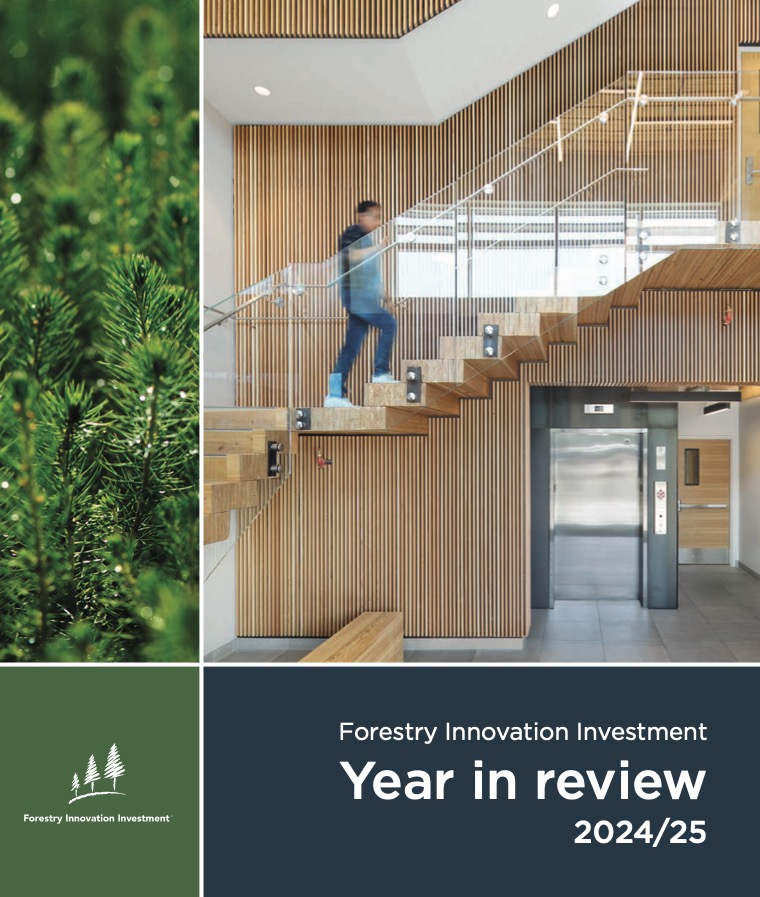 Forestry Innovation Investment (FII) is proud to share our “Year in Review”, a compilation of market development activities completed by FII and our many industry, association, government, academic, and research partners over the past year. Throughout 2024/25, B.C.’s forest sector faced significant headwinds, as difficult industry and market dynamics were compounded by trade threats. Despite these ongoing challenges, the forest sector continues to play a vital role in B.C.’s economy and remains a key global supplier of sustainable forest products and advanced wood building systems. To support a resilient forest economy, FII and its partners are actively working to diversify markets for B.C. forest products both domestically and internationally—a goal that has become increasingly important amid current trade uncertainty. Our commitment to a collaborative delivery approach means we build on the strengths and shared resources that other organizations bring to this important work.
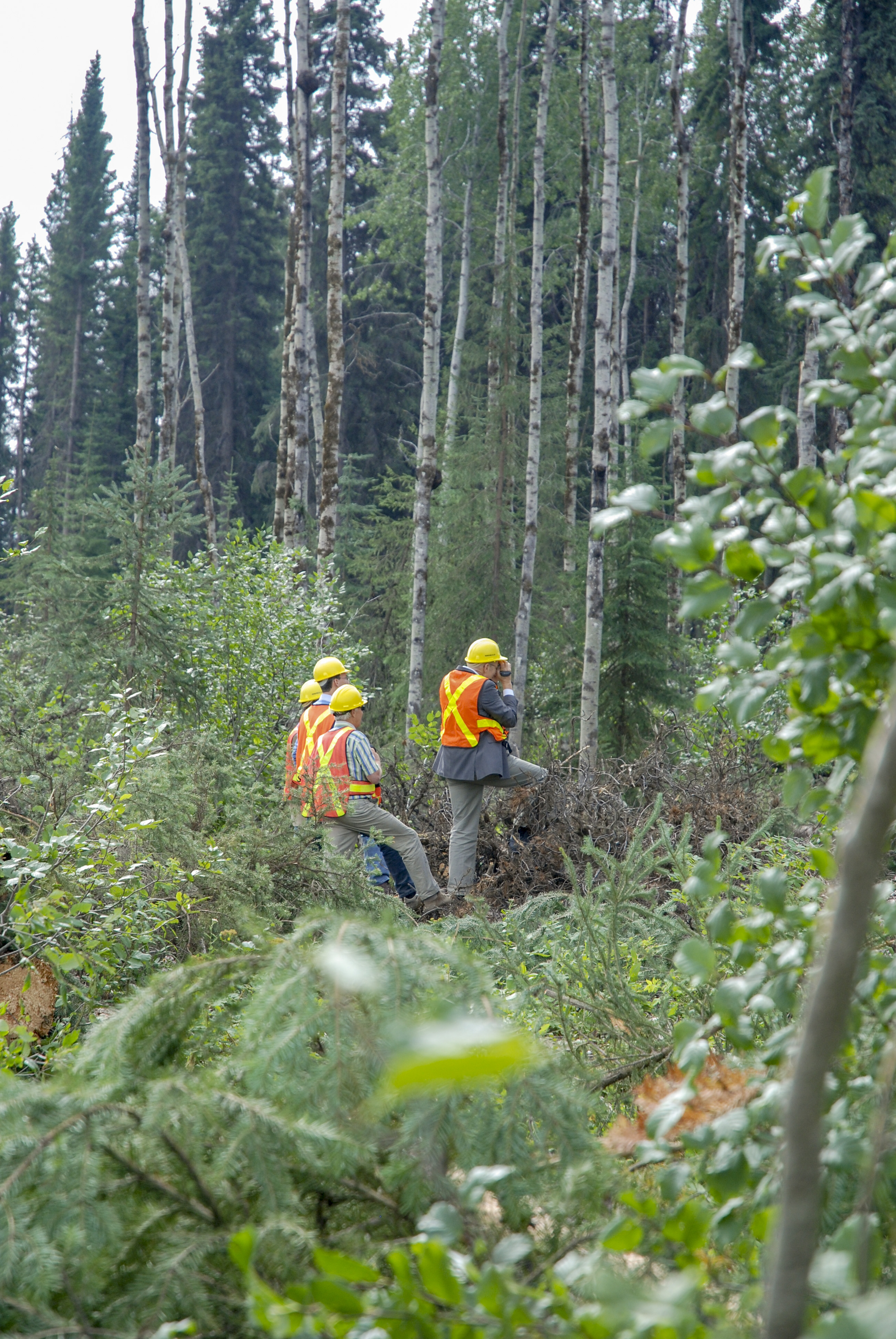 MACKENZIE — The District of Mackenzie has seen challenges in recent years with a downturn in British Columbia’s forestry industry, but Mayor Joan Atkinson said that diversifying into other industries has made a big impact on her community. … “We suffered a huge loss in taxation from 2024 to 2025 as a result of the closure of two large industrial facilities, but this community has always been resilient,” said Atkinson. …Canfor said it was indefinitely curtailing activity at its Mackenzie sawmill in July 2019. … Paper Excellence permanently shuttered its Mackenzie pulp mill in April 2021. Atkinson noted two factors that have helped the local forestry industry. The first was Forests Minister Ravi Parmar announcing a change in an appraisal system that makes it more economically viable for companies to operate in Northern BC. The second is ownership of nearby timber supply areas by First Nations.
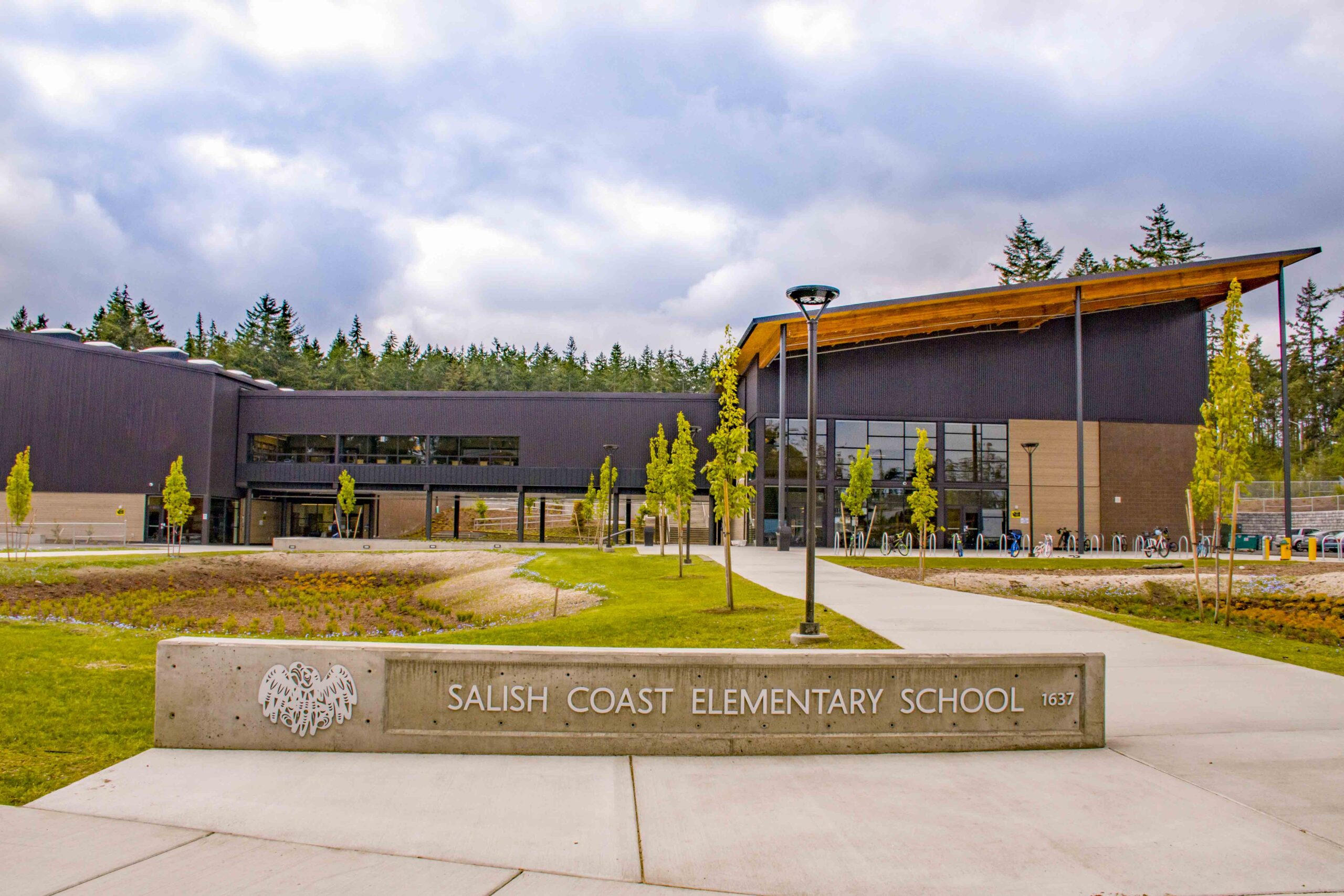 The U.S. Senate unanimously passed a bill to reauthorize a program that has provided billions to schools, roads and other services in rural Oregon and Idaho. The U.S. Forest Service’s “Secure Rural Schools and Self-Determination Program,” was initially crafted in 2000 to help offset the loss of timber revenue in rural counties. The program expired at the end of 2023, but the recently passed “Secure Rural Schools Reauthorization Act of 2025” would reauthorize the funding for more than 4,000 school districts and 700 counties across the country through the 2026 fiscal year. The bill’s lead sponsors include U.S. Sens. Ron Wyden and Jeff Merkley, both Oregon Democrats, and U.S. Sens. Jim Risch and Mike Crapo, both Idaho Republicans. …This year, bill sponsors are urging the U.S. House to reauthorize the program. Without its passage in the House, rural counties in Oregon, Idaho and across the country will fall short of funds that support local services.
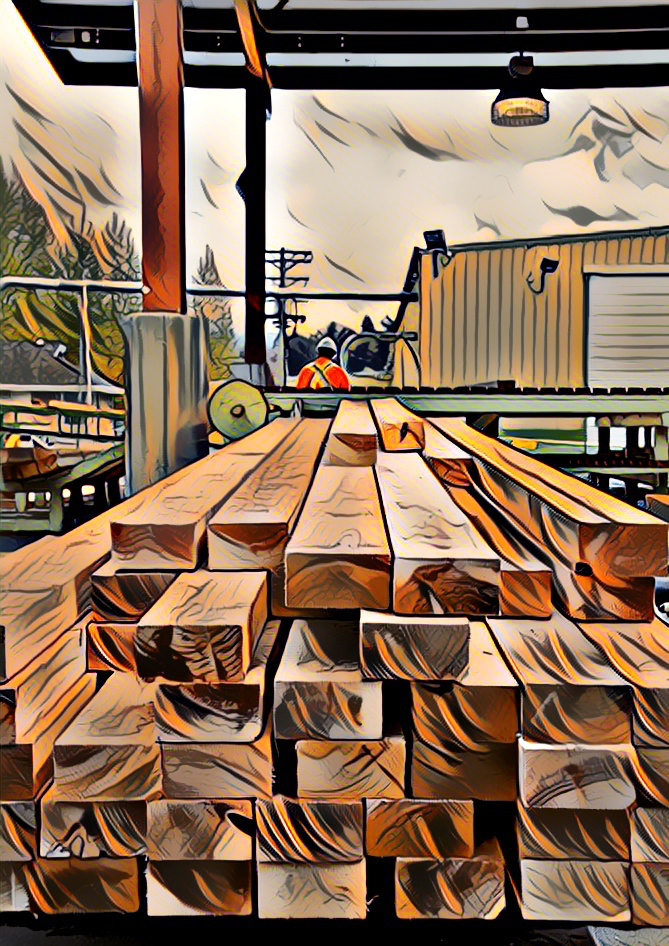 …In August 2024, a lumber mill owned by K & D Products and nestled in Panguitch, Garfield County’s largest city, went up in flames. Reports stated that, while the blaze didn’t get to the timber, the site’s machinery was severely damaged. The destruction landed a heavy blow to the community and the Frandsen family, who have owned and operated the mill for generations. …Between the area’s lumber heritage and the need to balance out tourism’s seasonal employment waves, Fiala gained enthusiastic support from state and local governments to build another sawmill. With his business partner, Barco — a logging company — Fiala acquired 25 acres north of Panguitch and began clearing space and bringing in power, water and gas. When the K & D Products sawmill burned during Fiala’s development, he spoke to the Frandsens and together they worked out a way for Fiala to take over what was left of the old mill and utilize it for his new business.
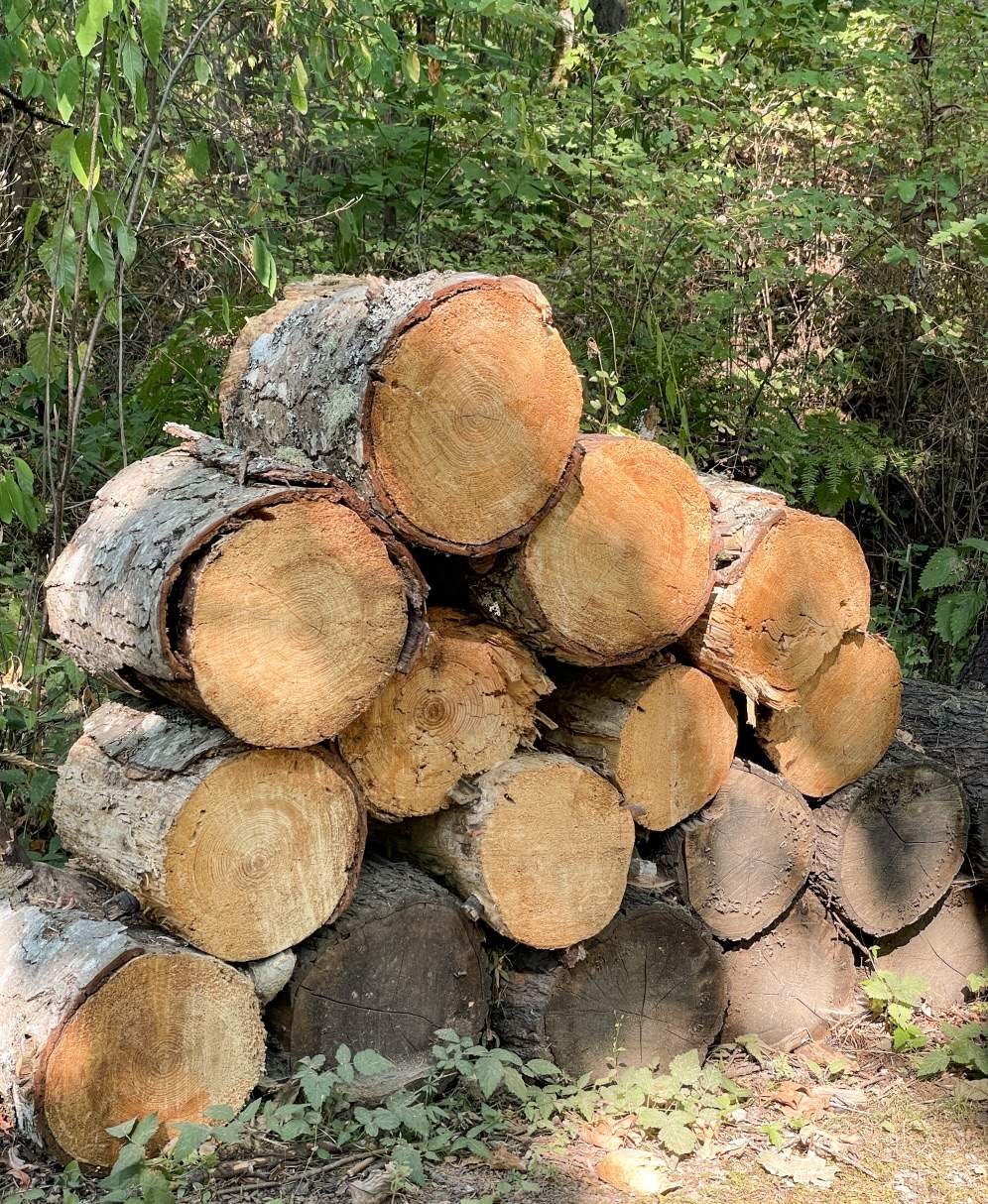 GEORGETOWN COUNTY, S.C. —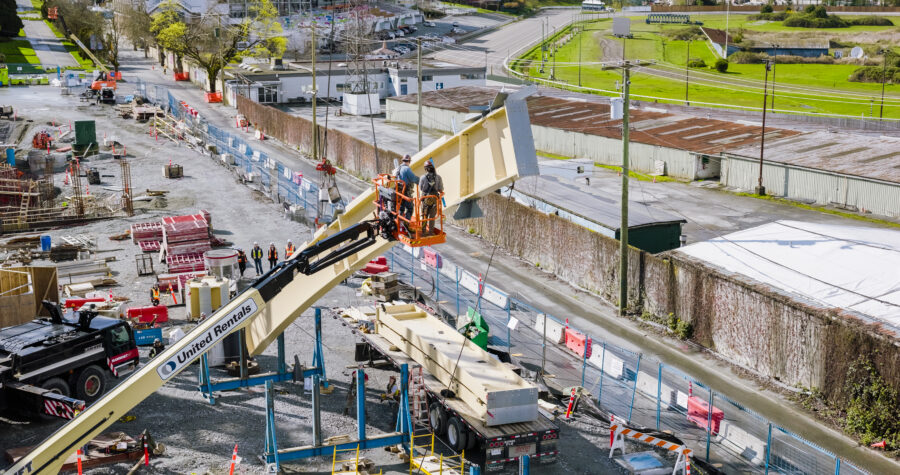


 UK waste wood market processed over 96% of material, annual statistics published this month by the Wood Recyclers’ Association (WRA) showed. The association said that there was “strong demand” for material in 2024. According to the statistics, 4.5 million tonnes of waste wood arose in the UK last year. Of this, 4.33 million tonnes (96%) were sent for reuse, recycling or recovery, the figures showed. The organisation compiled the 2024 figures through its annual survey of members who handle approximately 90% of the market, combining the findings with latest industry data. The figures are somewhat similar to 2023 which saw 97% of the material processed.
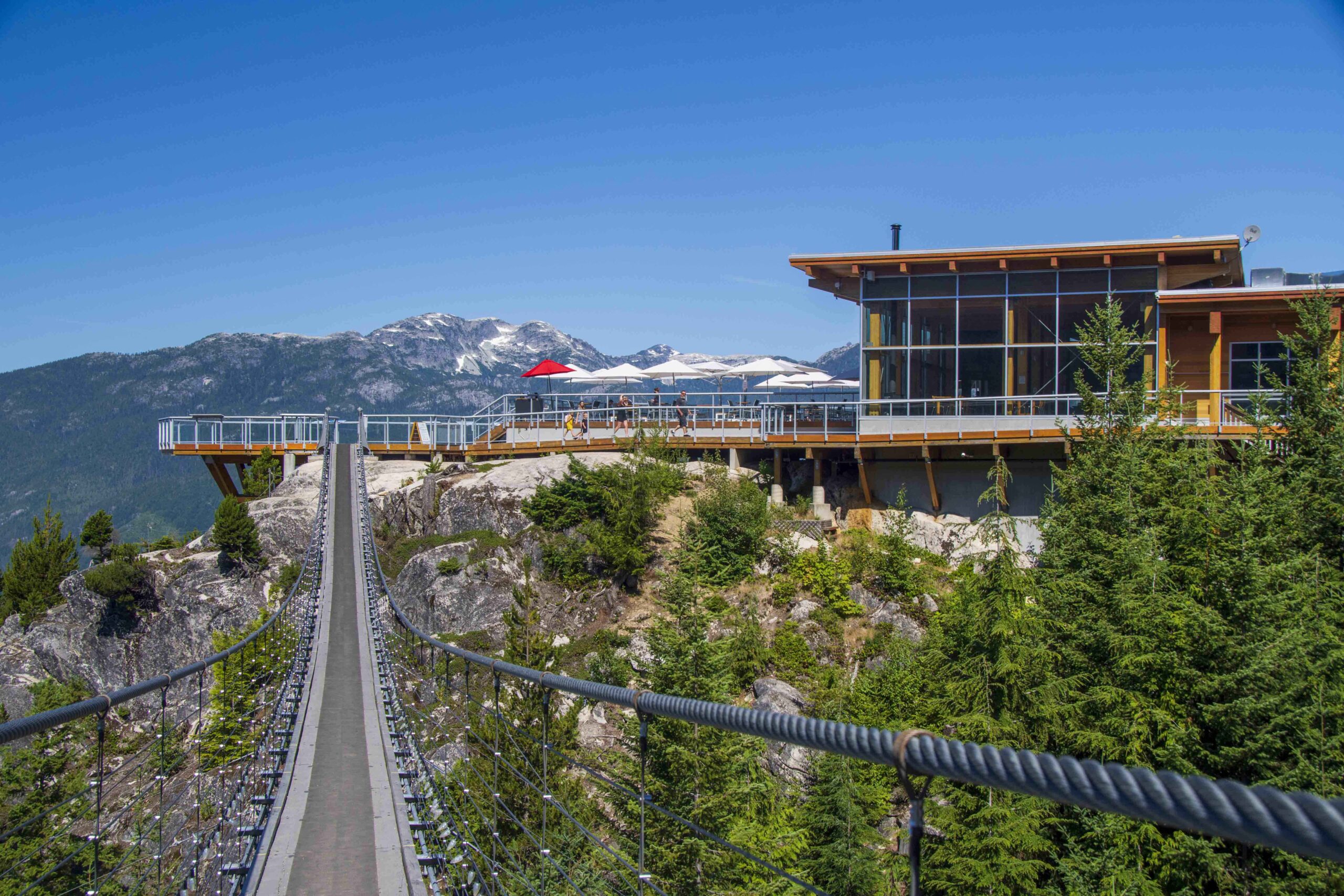 Sḵwx̱wú7mesh Úxwumixw (Squamish Nation) and the Province have signed an agreement to guide forest stewardship in Squamish Nation territory at a ceremony held at the top of the Sea-to-Sky gondola overlooking Átl’ḵa7tsem (Howe Sound). “This agreement will ensure our cultural sites and key environmental areas are protected for future generations. These have been our lands for thousands of years, and the fact they are now back under our direct control provides a greater sense of security for our people, and a strong optimism for our future,” said Sxwíxwtn Wilson Williams, Councillor and elected spokesperson, Sḵwx̱wú7mesh Úxwumixw (Squamish Nation). …The next step will be to complete a ministerial order, which will include consultation with First Nations, and engagement with the public. It aims to establish objectives for the forestry sector to follow in alignment with the agreement and provide the Squamish Nation certainty in sites of high value.
 It’s been hot in southern Ontario [with] apocalyptic news coverage out of Toronto…. “The world is burning,” announces the headline of a parenting advice column in The Globe and Mail. “Should we tell our children?” The author’s children are not told about forest fires… They are not told about the huge, ongoing increase in greenhouse gas emissions in Asia, cancelling out many times over the modest reductions achieved at great cost in North America and Europe. …The answer… is that natural variability is larger than the trend line produced by statistics. It’s true that Canada has seen more communities damaged or destroyed by fire, but that’s largely because there are more communities. …The Second World War was nearing its end, but the war on forest fires was just beginning, with the deployment of heavy equipment as well as aircraft. Saving timber was the goal, and the unintended consequences have piled up ever since.
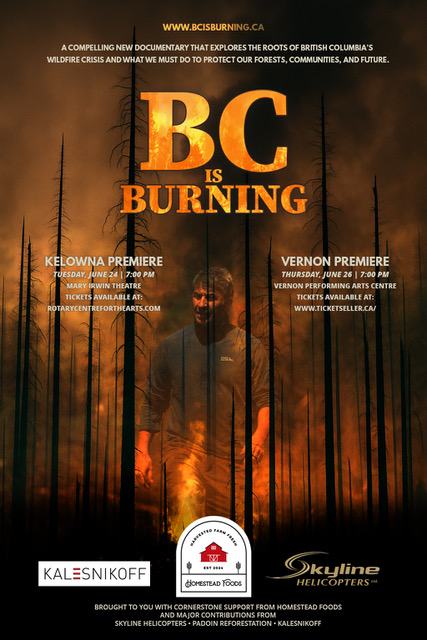 New film reveals the roots of B.C.’s wildfire crisis—and what we must do to stop it. A powerful new documentary exploring the causes and consequences of British Columbia’s escalating wildfire crisis will premiere to the public at the Vernon Performing Arts Centre Thursday June 26 at 7:00 pm. Titled B.C. is Burning, the 45-minute film delivers a sobering but hopeful look at what’s fueling today’s megafires—and the science-based solutions that could protect our forests, our communities, and our future. B.C. is Burning was independently produced and funded through community support, with Homestead Foods generously contributing half of the total budget. We also gratefully acknowledge major support from Skyline Helicopters, Padoin Reforestation, and Kalesnikoff.
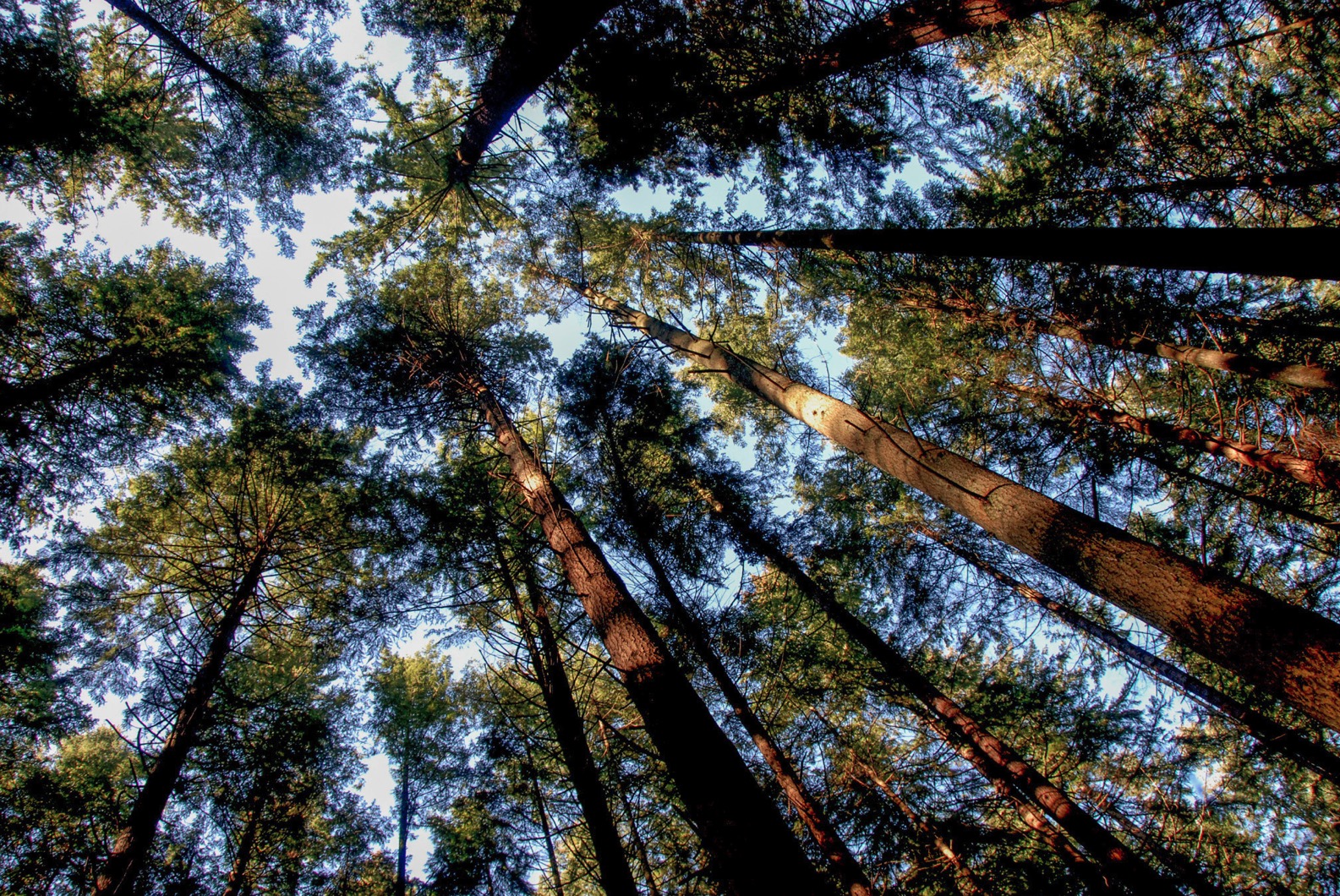 Elphinstone and West Howe Sound community associations’ efforts to have B.C. Timber Sales (BCTS) defer the 35.2 hectare Elphinstone Highlands cutblock (TA0519) from its current Q1 sales schedule received support from the Sunshine Coast Regional District (SCRD) board. Provision of a letter of support for the deferral requests was endorsed at the board’s June 12 meeting. According to the BCTS Chinook area sales schedule released April 17, TA0519 was slated to go to auction by June 30. In a June 18 email response to Coast Reporter, the Ministry of Forests stated that “Sales schedules are issued to notify of upcoming proposed timber sales auctions. BC Timber Sales starts accepting bids when a licence is placed on BC Bid for auction… TA0519 is a partial harvest/commercial thin sale and was pulled from BC Bid due to an administrative error. It is anticipated that TA0519 will be reposted this fiscal year.”
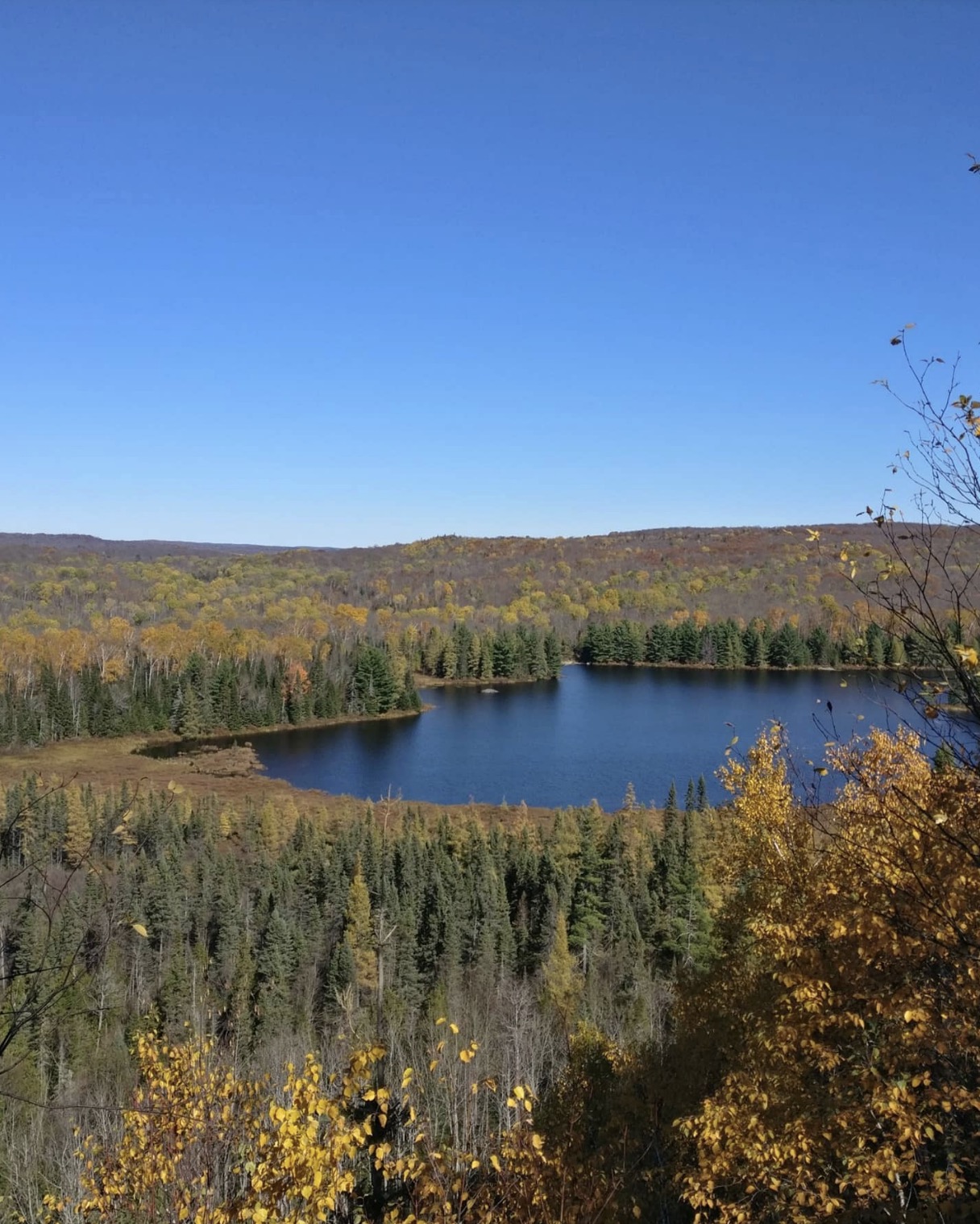 The U.S. Forest Service has proposed lifting the rule that bars roads in designated wilderness areas. The change could open 1.2 million acres of federal land in Arizona to logging. Agriculture Secretary Brooke Rollins proposed canceling the 25-year-old “roadless rule” that created some 58 million acres of wilderness areas throughout the west. Arizona’s forested wilderness areas come to about 1.2 million acres of the 11 million acres of Forest Service land in Arizona. …Environmental groups immediately decried the proposal. They said it would increase the danger of wildfires and destroy wilderness areas essential to wildlife and many forms of recreation. …However, a century of logging, cattle grazing and fire suppression has dramatically increased tree densities across forested Northern Arizona … from about 50 per acre to more like 1,000 per acre in the past century. …The Four Forests Restoration Initiative has tried and mostly failed to ramp up logging on six million acres of non protected forest already criss-crossed with roads.
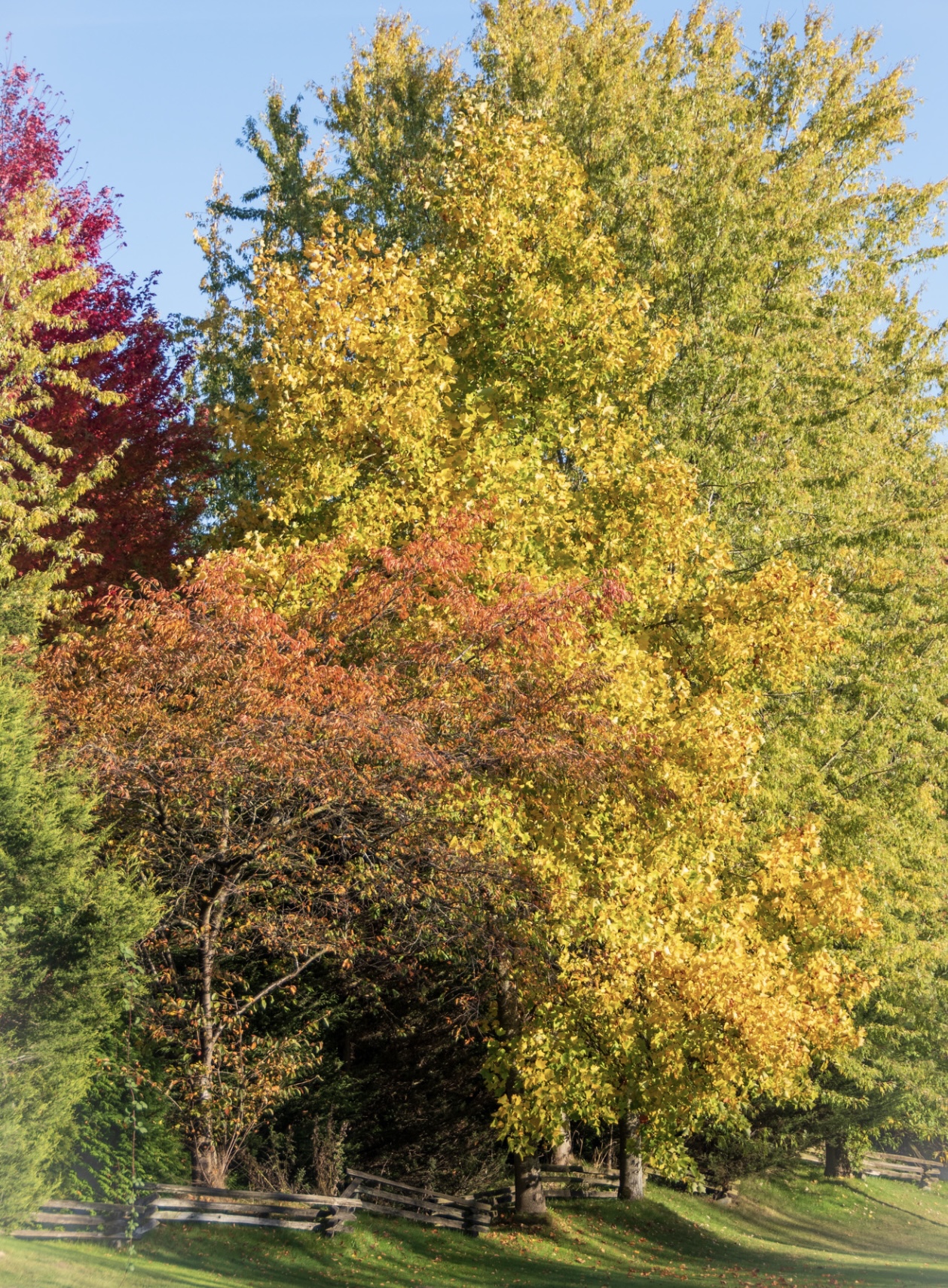 A proposal to sell public lands through the U.S. Senate’s budget reconciliation bill died by the sword of parliamentary procedure Monday, though the budgetary battle over public lands is not yet over. The Senate parliamentarian … nixed a provision to sell up to three million acres of Bureau of Land Management and U.S. Forest Service land across 11 states, including Wyoming, finding that it violated a rule limiting budget reconciliation bills to measures that are directly related to federal spending. The provision, which framed the sale as a way to alleviate the housing crisis by opening up more land for development, has roiled Westerners of all political persuasions since it was unveiled June 11. …U.S. Sen. Mike Lee, R-Utah, the architect of the provision, will introduce a new measure removing Forest Service land from the bill and narrowing the amount of BLM land for sale to tracts within 5 miles of population centers.

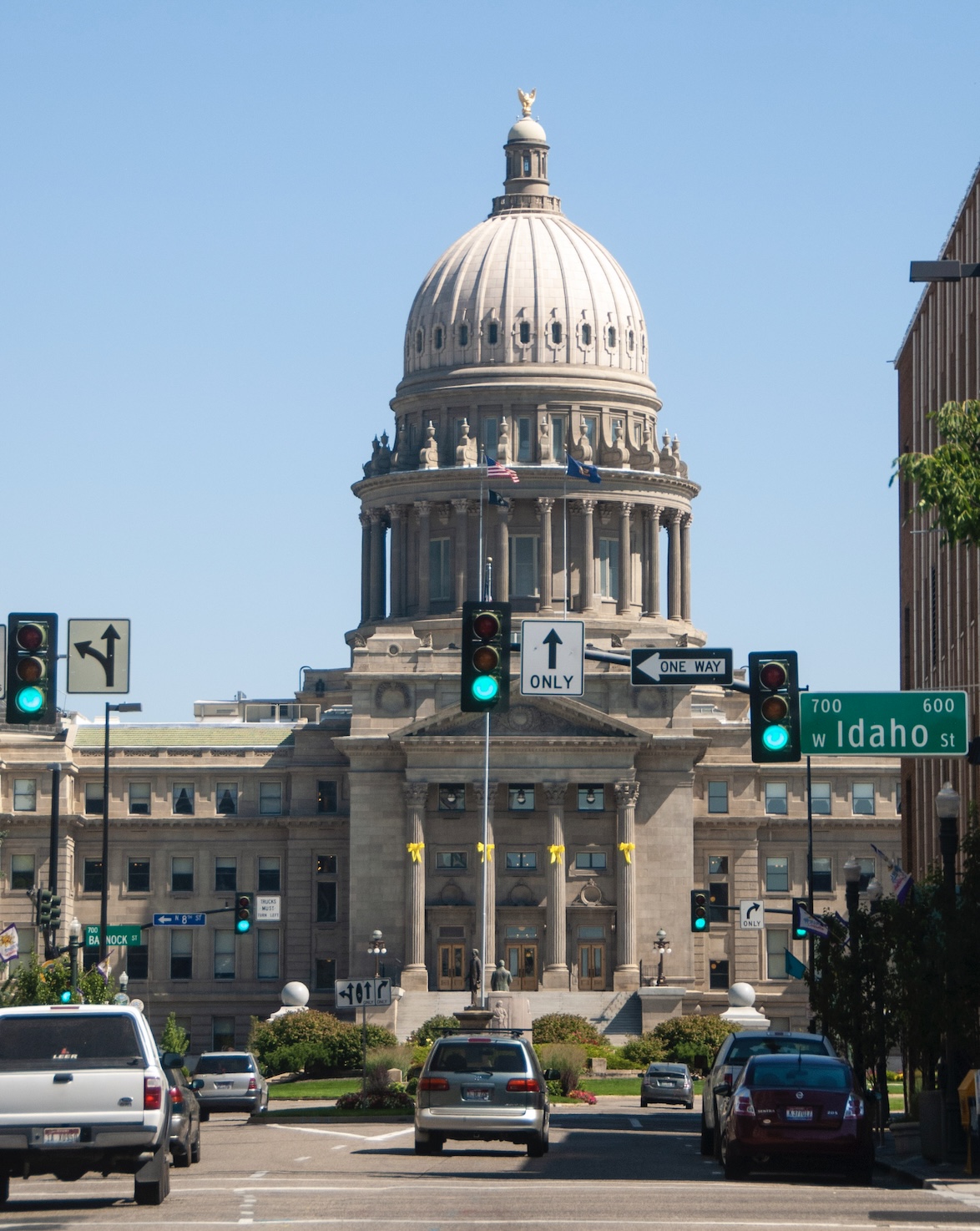 The Idaho roadless rule is not included in the effort by the Trump administration to rescind the national rule. A spokesperson for the U.S. Department of Agriculture said, “the Idaho state-specific roadless rule was part of the Administrative Procedures Act petitions and will not be affected by rescinding the 2001 Roadless Rule.” The rule, a collaboratively written offshoot of the national rule, was spearheaded by then-Gov. Jim Risch in 2006. It is more flexible than the national rule and allows limited logging and road building in some of the state’s roadless forests that are not otherwise protected as wilderness areas. But it also offers more stringent protections to the most remote areas. …Risch’s Idaho-specific roadless rule, implemented in 2008, overrides the national rule and forbids logging and roads on 3.2 million acres of the state’s 9 million acres of inventoried roadless areas. Some logging and roads are allowed, under limited circumstances, on the remaining 6 million acres.
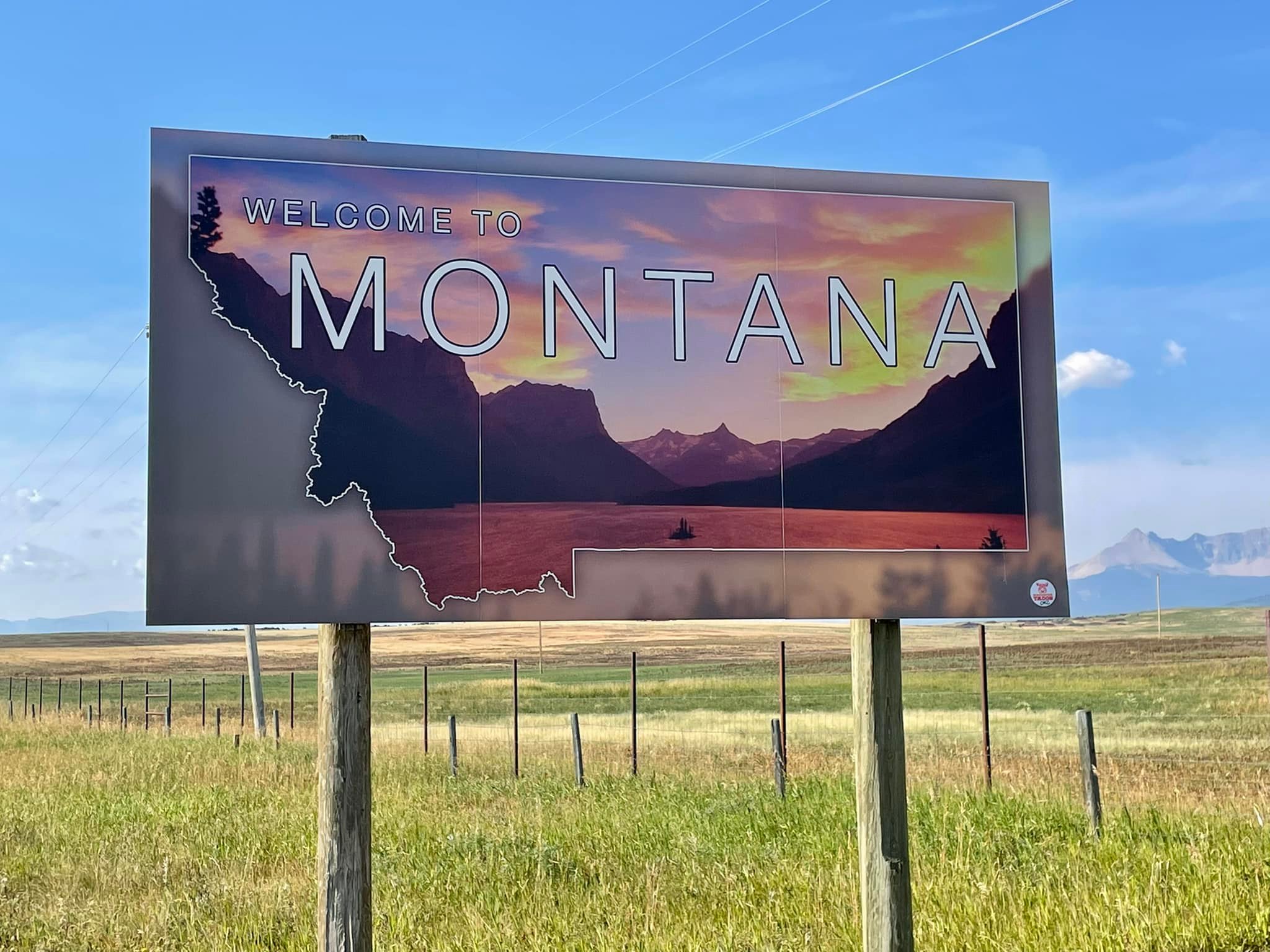 Less than two weeks have passed since the public learned of a Senate proposal to sell off public lands, and now, the U.S. Department of Agriculture has removed roadless protections for more than 58 million acres of federal land across the nation. …Helena Hunters and Anglers …decided to call an emergency meeting for Tuesday to discuss the implications of the announcement. If roadless areas were truly gone, the group might not continue their yearly monitoring of roadless areas. Montana has almost 6.4 million acres of inventoried roadless areas… Helena Hunters and Anglers has been monitoring some of those roadless areas for the past few years to assess their condition, and some of the findings aren’t good. …A number of other conservation organizations immediately criticized the action, calling it another handout to corporations to the detriment of the American public and future generations. The Colorado-based Center for Western Priorities said Rollins’ reasons were suspect.

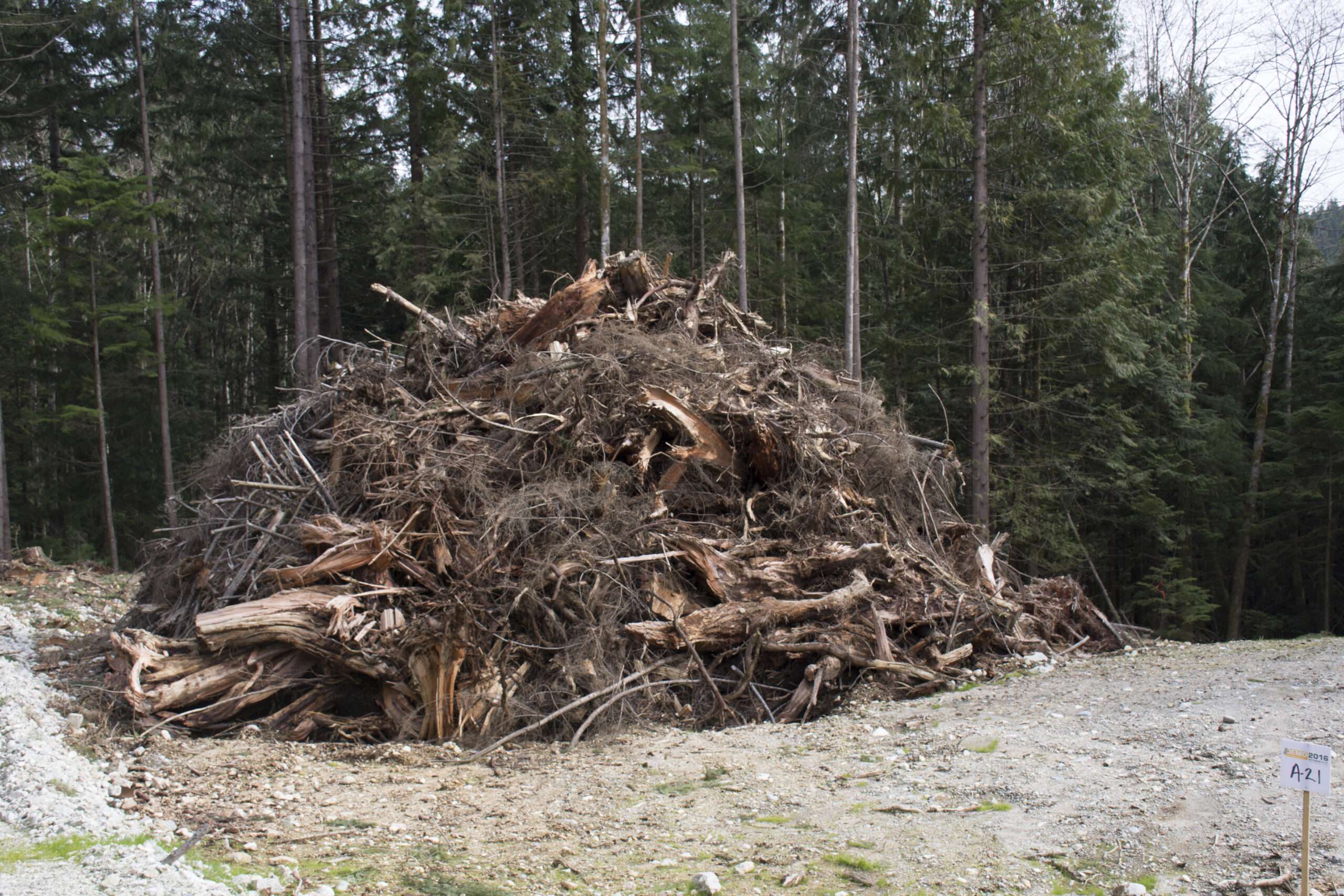 The world’s sawmills and plantation forests offer a powerful weapon against climate change, a new study has found. A paper published in Nature Geosciences found that burying the vast quantities of wood waste produced in the course of logging and processing trees could markedly slow Earth’s heating. Heat waves like the one currently afflicting the East Coast in the U.S. have been made far more likely by centuries of unchecked burning of fossil fuels — which release heat-trapping chemicals like carbon dioxide. …But in addition to the need to halt that burning, researchers found that burying waste from trees … offers an unparalleled way to counteract its impacts. …the study burying waste could reduce the Earth’s heating by 0.42 degrees Celsius, or about one-sixth of the estimated 3 degrees Celsius that scientists believe the Earth is on track to heat up by the end of the century.
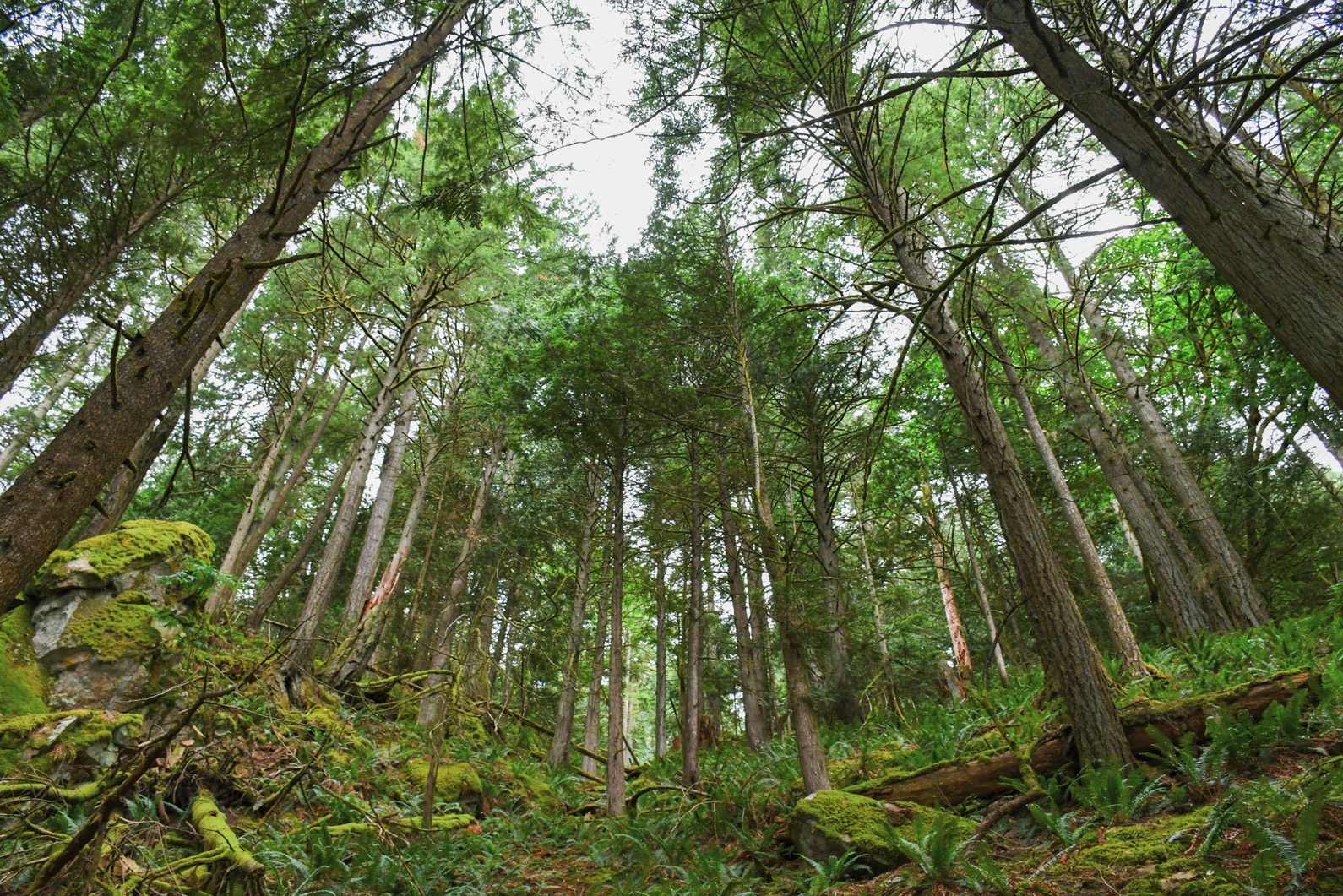 Naturally-regenerating forests are often ignored by policymakers working to curb climate change even though they hold an untapped potential to rapidly absorb planet-warming carbon from the atmosphere, scientists found in a research paper published Tuesday. These so-called secondary forests, which have regenerated themselves after being razed, often for agriculture, can help bring the world closer to the net-zero emissions target needed to slow global warming, the research published in the journal shows. That is because these young forests, which are made of trees between two and four decades old, can remove carbon from the atmosphere up to eight times faster per hectare than forests that were just planted, they found. It comes as companies worldwide are raising millions of dollars to regrow forests from scratch to generate carbon credits they can sell to polluting industries seeking to offset their greenhouse gas emissions.

 PANGUITCH, Utah — The France Canyon fire has increased to 23,353 acres and is currently at 10% containment, according to the latest information posted by the U.S. Forest Service – Dixie National Forest. Officials say fire activity increased at around 2 p.m. on Sunday, June 22, pushing eastward into the Kings Creek Campground area. Firefighters had to conduct a tactical firing operation to protect the campground. A total of 749 personnel are battling the fire and working on securing structures within Wilson Peak, the Hillsdale and Johnson Canyons. Firefighters are also working to keep the fire west of East Fork Road. Efforts are also underway to protect the Bryce Woodland community on the southwest side of the wildfire perimeter.