
Wildfires are on the move again in Canada, the United States and Europe. In related news: Ontario wildfire crews sound the alarm over fatigue and funding. In Forestry news: Colorado fights a beetle outbreak with synthetic pheromones; BC groups pan logging in caribou habitat; Finland unveils new carbon sink measures; Australia releases a national Timber Fibre Strategy; and the Maine Forest Products Council slams media for misrepresenting biomass.
In Business news: Sumitomo announces its first US timber industrial complex; Trump extends the tariff deadline to August 1; homebuilders brace for construction cost spike; and 2024 US multifamily completions hit a 38-year high.
Finally, BCIT is looking for Natural Resource instructors; the CIF’s 2025 conference registration is open; and BCCFA launched a new wildfire outreach tool.
Kelly McCloskey, Tree Frog News Editor
 With Trump’s 90-day
  OTTAWA — The federal government is taking steps to help people who have lost important documents as a result of wildfires this year. Lena Diab, the federal minister of immigration, refugees and citizenship, announced special measures to help people displaced by wildfires and evacuations earlier this year. According to Diab’s announcement, Canadian citizens and permanent residents whose documents like passports, citizenship certificates and permanent resident cards were lost or damaged because of wildfires this year can apply for free replacements. …Temporary residents… who were impacted by wildfires can also apply to restore or extend their status in Canada or renew their permits free of charge. The 90-day requirement for temporary residents to apply for the restoration of their status is also being waived for people impacted by wildfires, and foreign emergency workers coming to help fight wildfires in Canada are having their application and biometric fees waived.
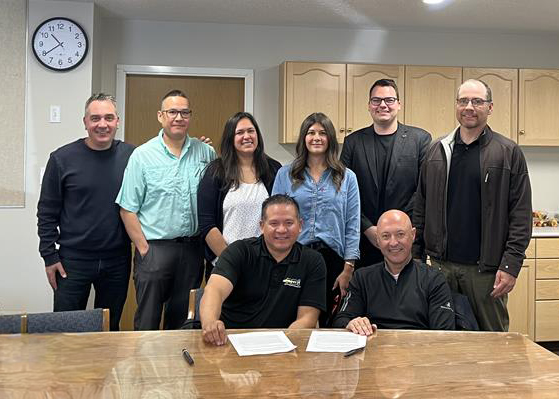
 Domtar (formerly Paper Excellence) has signed a purchase agreement with Cranberry Business Park Ltd. for the sale of the remaining half of its lands at the former Tis’kwat paper mill site in Powell River. “We are looking forward to contributing to the economic future of Powell River and the region,” stated Craig Austin and Thomas Ligocki, from Cranberry Business Park Ltd., in a media release. “With waterfront access and abundant energy sources, this site has so much potential. We are proud to be part of the revitalization of the city’s Historic Townsite, alongside our neighbour at Tis’kwat, the Tla’amin Nation.” “It was a priority for Domtar to find a buyer who would ensure that the lands continue to generate jobs and economic benefit for the broader community well into the future,” stated Carlo Dal Monte, vice-president, Domtar Legacy Assets.

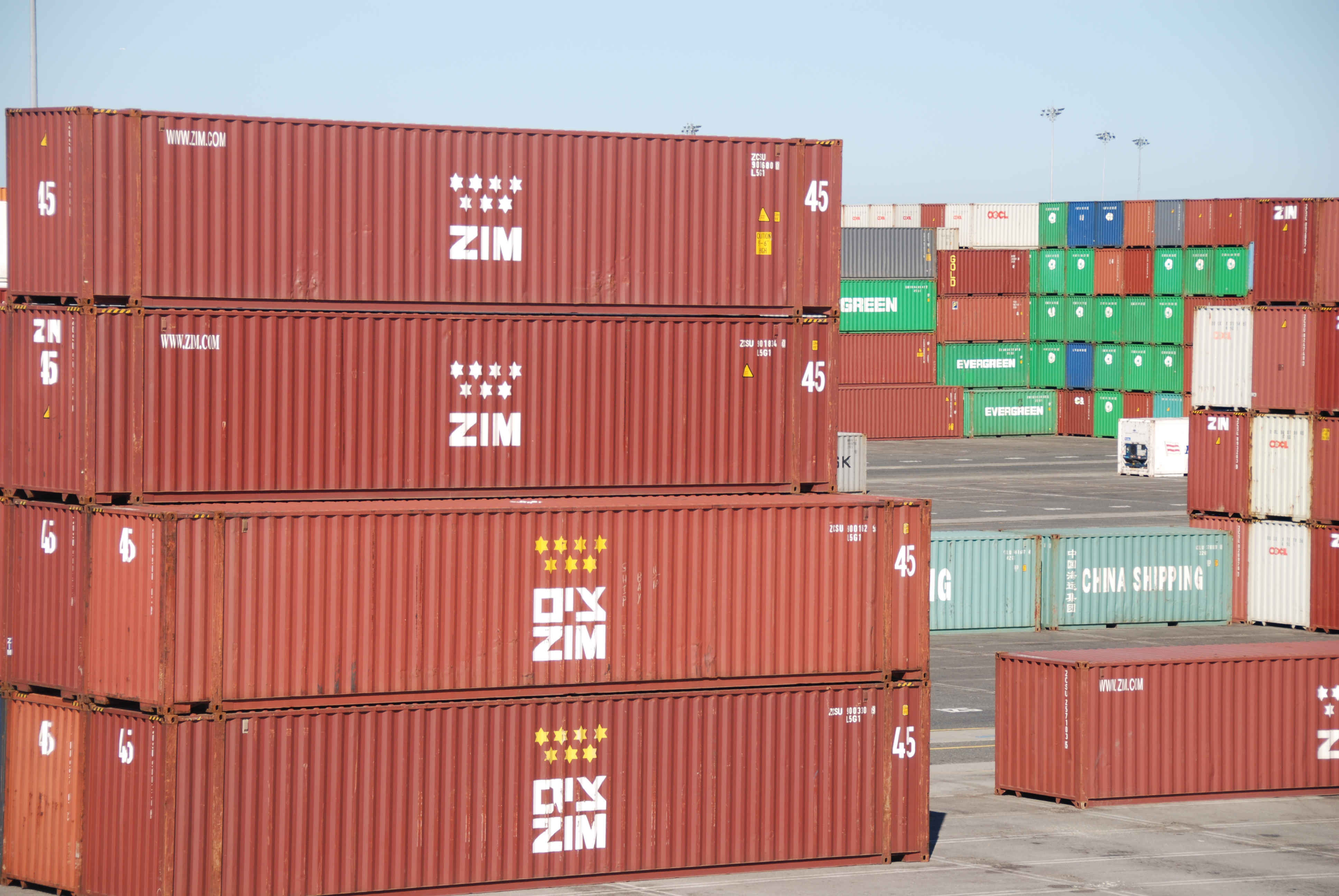 President Donald Trump’s trade war risks reigniting next week when a
  WASHINGTON — Sen. Mike Lee, R-Utah, said late Saturday that he had dropped his contentious plan to sell millions of acres of public lands from the sweeping domestic policy package that the Senate will soon begin debating. Lee made the announcement on social media after it became clear that the plan faced insurmountable opposition from within his own party. At least four Republican senators from Western states had said they planned to vote for an amendment to strike the proposal from the bill. The plan had also triggered intense pushback from conservative hunters and outdoorsmen across the American West, who had warned that it threatened the lands where they hunted and fished. …Lee said that, because of the strict rules governing the budgetary process … he was “unable to secure clear, enforceable safeguards to guarantee that these lands would be sold only to American families — not to any foreign interests.”
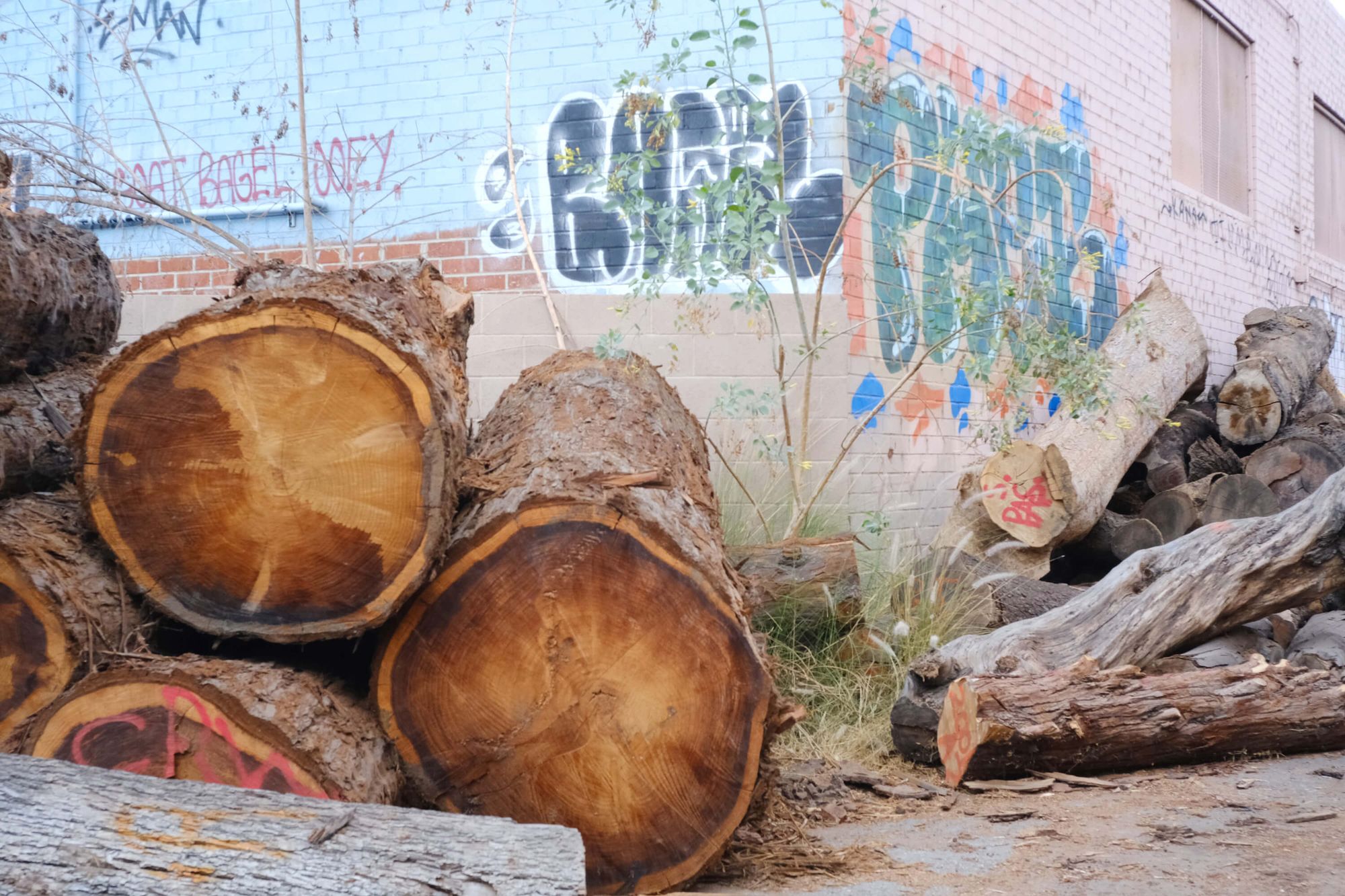
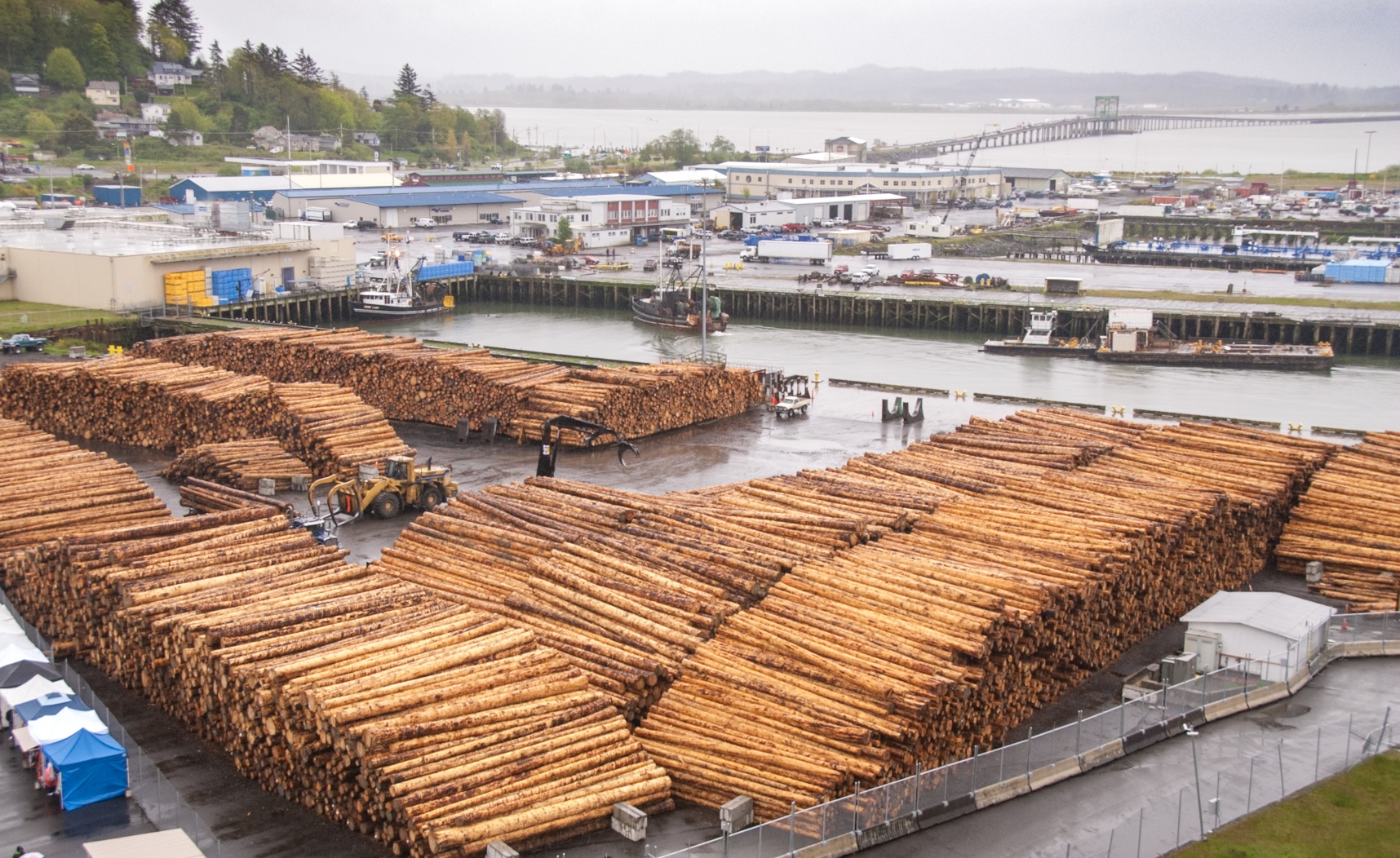 Congressional Republicans have passed their domestic policy bill that makes sweeping changes to entitlement programs like Medicaid and SNAP, significantly increases funding for immigration enforcement efforts and cuts funding for a number of environmental programs. …In Oregon, the impacts of the legislation will be significant. An analysis …found the state would be disproportionately hit by the cuts to Medicaid. The Senate’s version of the bill would also cut funds to the state’s timber counties, and could reshape Oregonian college tuition and student loans. …Oregon will see more logging, less timber money going to local communities and less support for private forest owners. …However much more is logged, Oregon counties will not get a cut. That’s a change from current practice. Many counties in rural areas rely on a cut of revenues from timber sales on federal public lands to pay for schools, law enforcement and public infrastructure.
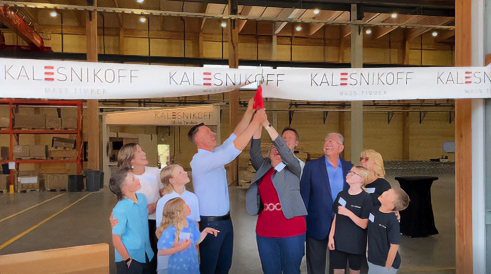 Kalesnikoff Mass Timber recently opened its new 100,000-square-foot mass timber prefabrication and modular facility in Castlegar, B.C., 400 miles east of Vancouver. Starting small just before the Second World War, Kalesnikoff today is a family-owned, fourth-generation company that produces dimensional lumber, glulam beams and columns, glue-laminated timber (GLT) panels, cross laminated timber (CLT) and prefabricated components. The new facility, which is built entirely out of Kalesnikoff’s own mass timber… enables Kalesnikoff to provide new products that can be used for prefabricated walls, flooring, modules and full modular construction. Chief operating officer Chris Kalesnikoff says it’s the first vertically integrated mass timber operation in North America. Kalesnikoff was started by Chris’s great-grandfather and two of his brothers in 1939 as a logging operation. His grandfather and his father (Ken) expanded the sawmill into value-added wood products.

 The fashion industry is often seen as a voracious, thirsty villain that extracts billions of liters of water out of the environment. …These conditions are the biggest ‘WHY’ for Spinnova, a Finnish startup that works tirelessly to create technology for sustainable natural fibers to match its growing demand. …But before we delve into the details, would you believe the core idea for Spinnova was actually born from… a spiderweb? Back in 2009, Juha Salmela, a cellulose expert from Finland attended an Oxford University conference. He heard a presentation from a leading spider researcher, who explained the similarities between spiderweb’s protein and nanocellulose. And, that happened to be his Eureka moment. What if wood fiber could be spun into textile fiber in a similar manner? Fast forward to 2023, the wood-based Spinnova fiber was born. …The process at Spinnova starts with sourcing cellulose-rich raw materials such as FSC-certified wood pulp.
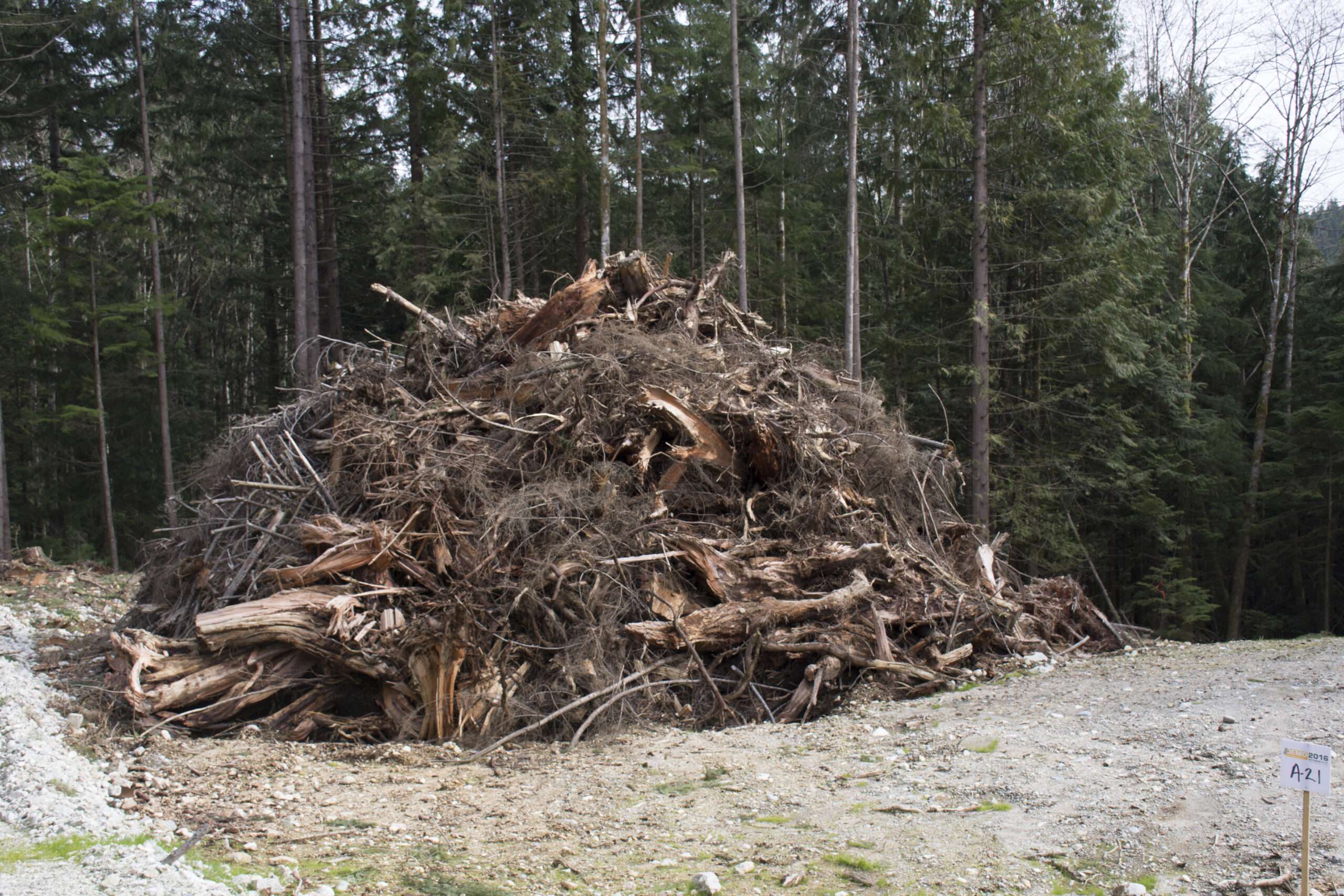 On the Easter long weekend, there was a wildfire on Egmont Forest Service Road that had to be controlled by the local fire department because a logging slash pile being burned was left unattended. How big does a wildfire have to get before the shíshálh Nation or the province will finally fulfill their promises to the residents around North Lake in Egmont? …Four years ago we participated in a community engagement process with BC Timber Sales and the shíshálh Nation regarding the cutting of 60,000 cubic metres (thousands of trees) around North and Klein Lakes. …One of the bigger concerns that we had was the removal of hundreds of large burn piles created by the logging. We were promised by both BCTS and the shíshálh Nation that the burn piles would be dealt with after the logging ended. It is now two years later and the burn piles have not been removed.
  With wildfire season in full swing, an immigration consultant says there is a simple way to end the shortage of qualified people to fight wildfires: Let existing, trained firefighters who are non-residents stay once their work permits expire by letting them choose a path to permanent residency. Jennie McCahill is representing Irish national Jake McGavin, a team leader with a wildfire-fighting contractor called Carmanah Wildfire, which is based in Sidney but has firefighting crews spread all over B.C. …McGavin, who turns 29 in September, is in his third season fighting wildfires in B.C. He’s been lucky to have received a pair of two-year work permits, but the second is soon to run out. …He wants to stay in Canada not only because he’s fallen in love with B.C. …”Unfortunately, Immigration, Refugees and Citizenship Canada does not recognize wildland firefighting as skilled work.”
 Llenllenéy’ten (High Bar) First Nation (HBFN) has signed a historic Joint Development Agreement (JDA) with West Fraser Timber Co. Ltd. (West Fraser). The JDA was signed during HBFN’s National Indigenous Peoples Day event in Clinton on June 21. A press release issued by High Bar on June 24 stated that “The landmark agreement highlights HBFN’s commitment to sustainable forest management through partnership with the private sector to achieve mutually beneficial outcomes.” The relationship ensures fibre supply for West Fraser, and opens the door for more diverse fibre product development. At the same time, HBFN notes that the agreement creates a path toward increased resource revenues and decision-making authority for HBFN, which marks a meaningful step toward economic reconciliation. Under the JDA, West Fraser will transfer a portion of its timber harvesting rights to Llenllenéy’ten (High Bar) First Nation.

 The clock is ticking to register and make plans for the 38th Forest Products Machinery & Equipment EXPO from August 6-8 in Nashville, and you do not want to miss it! EXPO is the epicenter of the entire wood products manufacturing sector – held only every other year – with numerous exhibitors showcasing state-of-the-art machinery and specialized services designed for the forest products industry. This event brings together thousands of industry leaders and decision-makers eager to explore cutting-edge products and solutions, spanning advancements in hardwood and softwood log processing, remanufacturing, pallet industries, bioenergy, engineered wood products, and pressure treatment. Seize this unparalleled opportunity to explore new machinery, engage with key decision-makers, reimagine your sawmill operations, and propel your business to new heights.
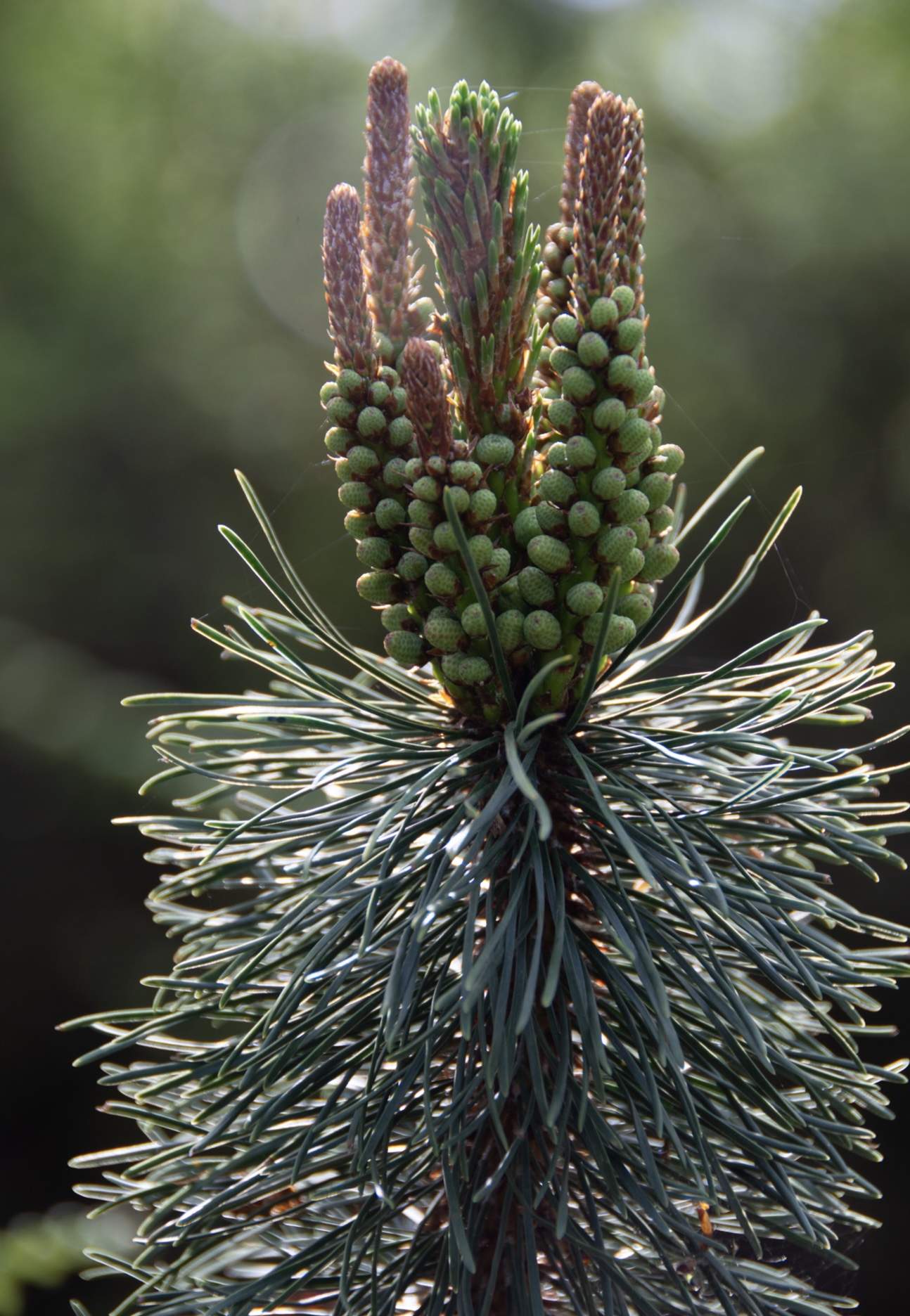 In the parched summer of 1988, wildfires ripped through more than one-third of Yellowstone National Park during the most severe fire year in park history. Approximately 1.2 million acres scorched by September. …While new forests sprouted in most of Yellowstone’s charred woodlands, recent research has identified that 16 percent of the forests consumed by the fires still have few trees. A recent study found that much of this land has transformed into green meadows full of grasses and wildflowers. Of the roughly 965 square miles of forest killed by the fires, 158 remain unforested, largely due to a lack of available seeds to start the next generation of trees. Seventy square miles of the previously forested land is now open meadow… The forests that [recovered quickly] were full of lodgepole pines with serotinous cones. …Alternatively, the areas that remain unforested were mainly above 8,200 feet in elevation and dominated by subalpine fir, Engelmenn spruce and non-serotinous lodgepole pines.
 The Forest Stewardship Council (FSC) reaffirms its support for the Green Claims Directive (GCD) and the Empowering Consumers Directive (ECD) and welcomes the European Commission’s recent decision not to withdraw the GCD proposal. These legislations are critical in the fight against greenwashing and ensuring that consumers have access to accurate, reliable, and verifiable information. FSC, together with ISEAL, has contributed concrete feedback into the GCD and ECD discussions since their onset, with the aim of raising the bar for environmental claims and ensuring the provisions will work in practice. Together, the two proposals offer a powerful framework to ensure that environmental claims and labels placed on the EU market are trustworthy and transparent. Labels rooted in robust, independent certifications like FSC, support companies to enhance accountability and consumer trust.

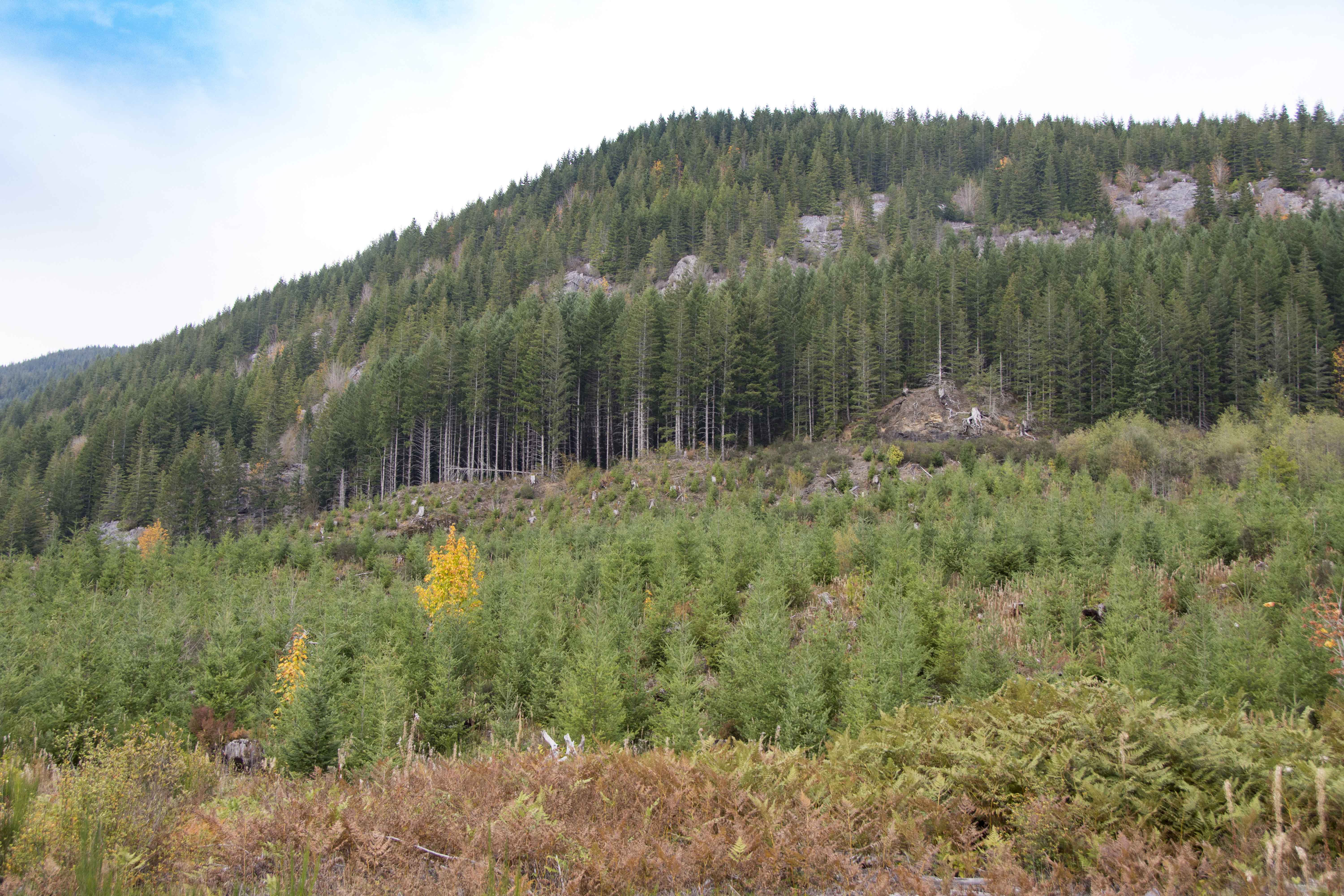 Young forests regrowing from land where mature woodlands have been cut down have a key role to play in removing billions of tons of atmospheric carbon dioxide (CO2) and combating climate change, a new study reveals. …Forest regeneration offers a cost-effective method for carbon removal, but rates vary by location and forest age. Researchers have discovered that young secondary forests, particularly those aged between 20 and 40 years, exhibit the highest rates of carbon removal—locking away up to eight times more carbon per hectare than newly regenerating forests. …Their study reveals that if 800 million hectares of restorable forest begin regenerating in 2025, up to 20.3 billion metric tons of carbon could be removed by 2050, but delays sharply reduce this potential.
 Halifax spent more than $160,000 on the wrong type of wildfire protective gear, and the union for municipal firefighters says the mix-up is just one example that the department is not properly preparing for wildfires. In the aftermath of the
  Engineered wood manufacturers from across North America were named winners of APA – The Engineered Wood Association’s 2024 Safety and Health Awards — the premier safety award program for North America’s engineered wood products industry. The program promotes and recognizes operational excellence with the goal of reducing injury and illness rates. The Safest Company Award went to three members: Domtar won in the category of three or fewer mills, West Fraser won for companies with four to 10 mills, and LP earned the title for companies with 11 or more member mills. There were two winners in the prestigious Innovation in Safety Award category. Domtar’s Larouche, Quebec, mill won the Equipment-Based Innovation in Safety Award for their submission, “Distancing Handle,” while LP’s Jasper, Texas, mill won the Jack Wagner Process-Based Innovation in Safety Award for their submission, “Safety Champions – Future Leader Development – Safety Projects.”
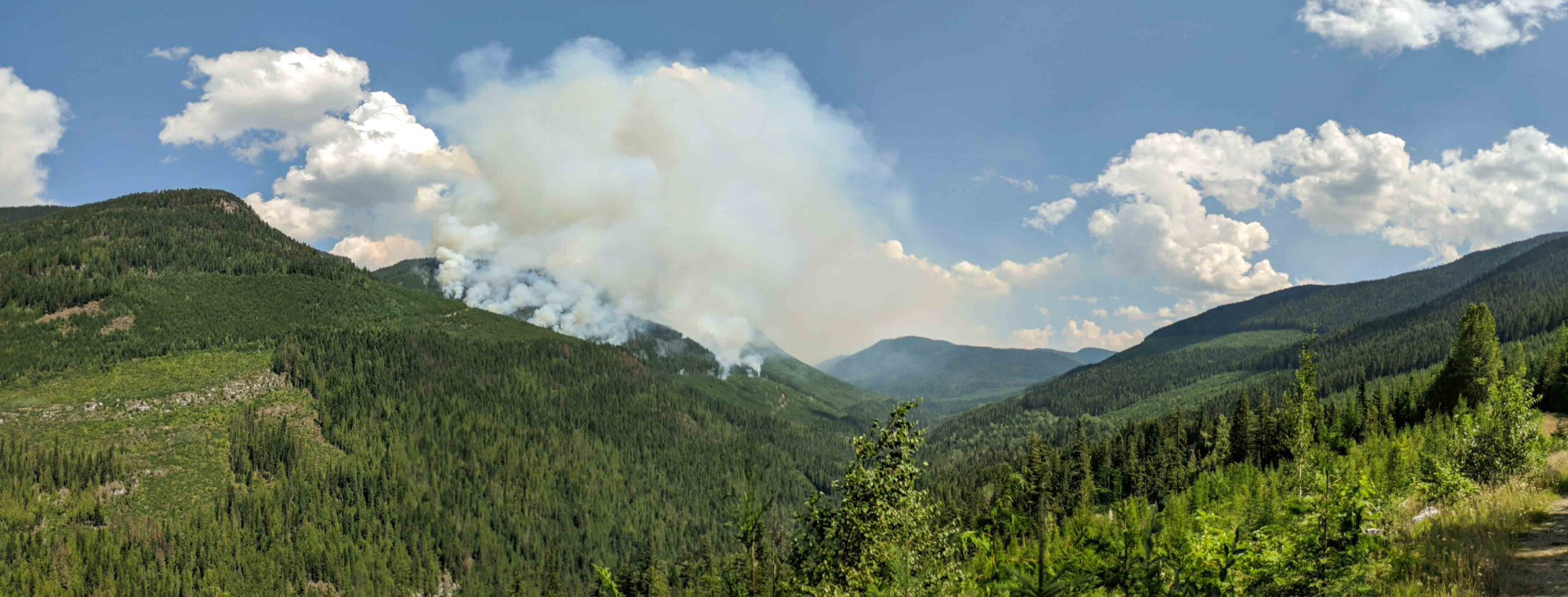
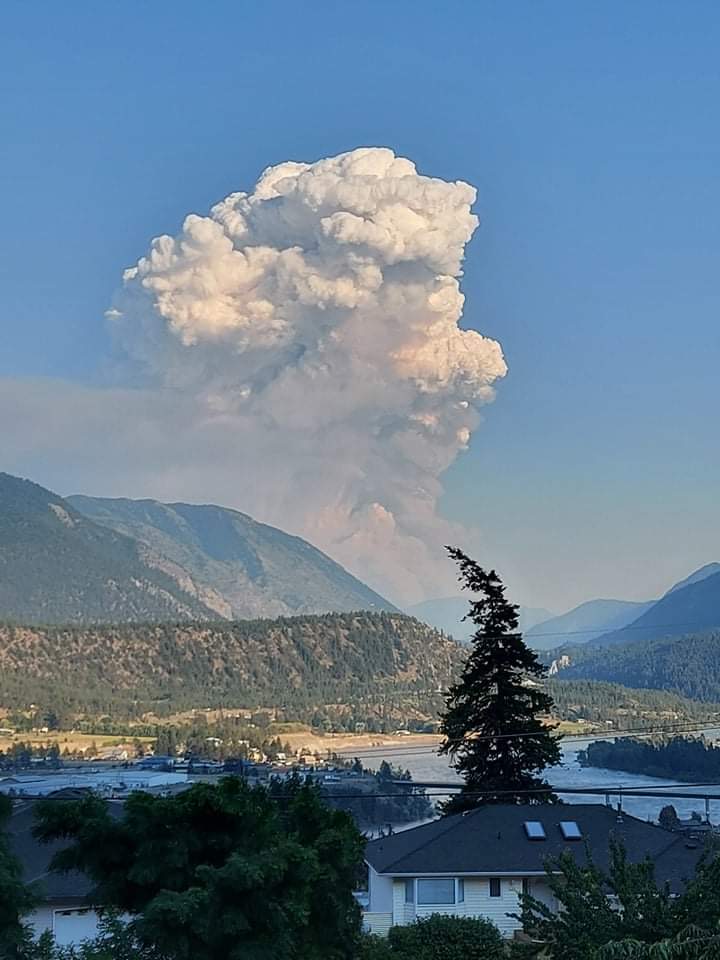 The Thompson-Nicola Regional District has declared a local state of emergency for the Blue Sky Country region due to an encroaching out-of-control wildfire near Lytton, B.C. It has also issued an evacuation order for two properties on Spencer Road South as the blaze poses “immediate danger to life.” The BC Wildfire Service says the Nikaia Creek wildfire is about six hectares in size and is one of more than 70 wildfires burning across the province. It says crews, supported by firefighters from Lytton First Nation, made “good progress” overnight and they are now focused on the north and south flanks of the blaze. The Thompson-Nicola Regional District also issued an evacuation alert Monday night for nine properties in the Harper Lake area near Chase, B.C., due to the rapidly growing Mount Scatchard wildfire.
 ISTANBUL/PARIS/BRUSSELS – Firefighters battled wildfires in Turkey and France on Monday and more than 50,000 people were evacuated as an early summer heatwave hit Europe. Health alerts were issued in France, Spain, Italy, Portugal and Germany. Even the Netherlands, used to a milder climate, issued a warning for high temperatures in the coming days, coupled with high humidity. “Large parts of Western Europe are experiencing extreme heat and heatwave conditions that are normally observed in July or August, rather than June,” said the EU’s Copernicus Climate Change Service. …In Turkey, wildfires raged for a second day in the western province of Izmir, fanned by strong winds, Forestry Minister Ibrahim Yumakli said. More than 50,000 people have been evacuated from five regions, including more than 42,000 in Izmir, Turkey’s AFAD emergency management authority said.