
North and South Carolina are battling wildfires, as South Korea cleans up, and Canada prepares for what’s coming. In related news: a new documentary on BC’s Wildfire Service; the premier of Alberta blames Park’s Canada for the Jasper fire; and Washington’s budget woes put fire preparations at risk. Meanwhile: Oklahoma firefighters react to forestry chief firing; Oregon’s wildfire-risk maps revisited; what Los Angeles can learn from the 2019 Paradise fire; and KB Homes unveils a fire-resilient neighbourhood.
In Business news: the Canfor/Teralta Prince George hydrogen project is paused; Maine-based TimberHP files for bankruptcy; and Netherland’s Vattenfall cancels its biomass plant plans. Meanwhile: ex-BC forest minister Mike de Jong is running as an independent; a podcast on the future of wood construction; and the Softwood Lumber Board expands its mass timber accelerator program.
Finally, Part II on political risk in the Canadian Forest Sector – a good weekend read!
Kelly McCloskey, Tree Frog News Editor

 COFI 2025 – April 2-4 in Prince George, BC — As BC’s forest sector grapples with significant turbulence – including US tariffs, geopolitical uncertainty, and sector-wide challenges in BC – strong leadership and collaboration are essential to securing a sustainable and competitive future. The “Calm, Cool, & Collaborative: Leadership for Turbulent Times” panel at the 2025 COFI Convention will bring together senior decision-makers from industry, government, and First Nations. These influential voices will share their insights on navigating market uncertainty, shaping effective policies, and strengthening community resilience. Jon our panelists: Hon. Ravi Parmar, Minister of Forests, Province of BC; Chief Councillor John Jack, Huu-ay-aht First Nations; Juan Carlos Bueno, President & CEO, Mercer International; and Lisa Dominato, Councillor, City of Vancouver for a lively discussion moderated by Greg Stewart, President, Sinclar Group Forest Products Ltd. & Chair, COFI Board of Directors.
  COFI 2025 Convention: April 2-4, Prince George, BC — The global trade landscape is evolving rapidly. Economic uncertainty, shifting regulations, and geopolitical challenges are reshaping market access for Canadian forest products. Staying competitive requires a clear understanding of emerging risks and strategic opportunities. At the COFI 2025 Convention, a panel of industry experts will examine the forces shaping international trade and explore actionable strategies to enhance industry resilience. Presenter and Moderator Russ Taylor, President, Russ Taylor Global will lead the discussion with panelists: Kate Lindsay, Senior VP & Chief Sustainability Officer, Forest Products

 From laundry detergent to dishwasher tablets, cleaning products are an indispensable part of life. Yet the chemicals that make these products so effective can be difficult to break down or could even trigger ecosystem-altering algal blooms. Now, researchers reporting in ACS’ Langmuir have addressed those challenges with an environmentally compatible detergent made of tiny wood fibers and corn protein that removes stains on clothes and dishes just as well as commercial products. …The researchers combined cellulose nanofibers from wood with zein protein from corn to create an emulsion. Cellulose can attract and repel water, so it is effective at forming such emulsions and attracting different types of stains. The zein protein, on the other hand, helps stabilize the emulsion and trap oils.
 A draft co-management framework and plan to manage North Cowichan’s 5,000-hectare municipal forest reserve likely won’t be presented until sometime in 2026. The municipality and the Quw’utsun Nation (which consists of Cowichan Tribes, Halalt First Nation, Lyackson First Nation, Penelakut Tribe, and Stz’uminus First Nation) agreed in April, 2024, that they would work together to establish a co-management framework and plan for the forest reserve, and that work is still ongoing. North Cowichan’s communications director Barb Floden said the municipality and the Quw’utsun Nation issued a joint request for proposals to support the development of the co-management plan in February, which will be closing soon, and it is expected that the draft framework and plan will be ready next year. “The public will be kept informed of the process through joint statements and updates at council meetings,” Floden said.
 Ontario is ready to respond to this year’s wildland fire season, which lasts from April 1 until October 31. This year, the government has filled nearly 100 additional permanent positions to support the 2025 fire season and help ensure people and resources are in place to protect communities. “We are ready to protect people, communities and properties across Ontario from wildland fires,” said Mike Harris, Minister of Natural Resources. “When wildland fires hit, our brave and dedicated FireRangers, pilots and support staff are prepared to battle these fires and protect Ontarians.” Last year, the province partnered with the federal government to invest a total of $64 million in the wildland fire program. This investment has allowed Ontario to enhance its firefighting capacity for the 2025 fire season and includes funding for forest fire suppression equipment and technology, such as fuel systems, trucks and emergency management software.
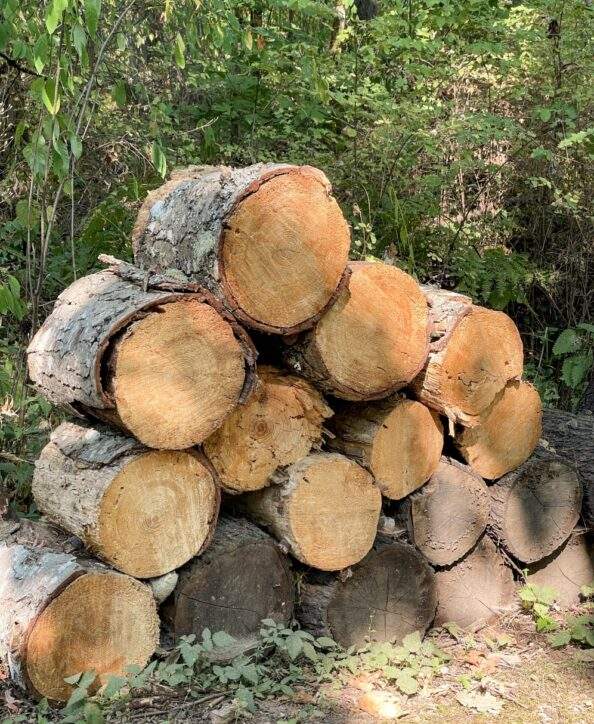
 A quiet collapse is sweeping through America’s hardwood log export industry, completely devastating working families in rural communities who’ve been left behind as trade battles play out far above their heads. On March 4, China abruptly banned imports of U.S. hardwood logs, citing pest concerns — though industry insiders believe it was thinly veiled economic retaliation to the Trump administration’s recent tariffs. The impact was immediate and massive: China is the dominant buyer of U.S. logs, importing the vast majority of what America exports. Without that market, the entire industry lost its economic lifeline, according to Seth Riggio, a 35-year-old log broker based in Greenville, South Carolina. The move set off a chain reaction that has pushed loggers, exporters, truckers, and rural communities across the country into financial ruin. …These aren’t corporations with reserves. Most loggers don’t have savings accounts or college degrees. What they have are contracts, equipment, and a forest to work.
  Millions of federal dollars promised to Maine woodland to improve harvest practices has been stalled for months without explanation. Landowners and logging companies are increasingly anxious about the funding blockade, and will have to make tough decisions if the money doesn’t come through. Baskahegan Co. Vice President Kyle Burdick said it was banking on federal reimbursements to sustain logging operations on its Down East timberland this year. But if the money doesn’t come through, it will have to potentially lay off logging contractors. Baskahegan was one of six Maine landowners that last year agreed to try out forestry practices that thin out woodlands to encourage bigger tree growth. The pilot project, funded through a $32 million climate smart commodities grant from the U.S. Department of Agriculture, was intended to store more carbon and generate valuable wood products in the future. The funding has been blocked since President Donald Trump put money …under review.
 BENGALURU/JAKARTA