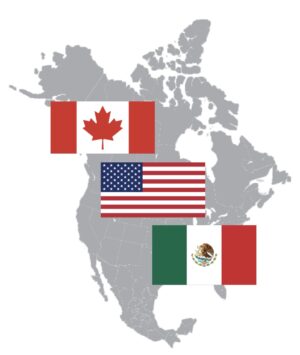
 As Canada’s trade deal with the US and Mexico faces a crucial review, many US industries are urging the Trump administration to preserve the agreement and to stop putting tariffs on imports from its northern and southern neighbours. Ahead of the public hearings scheduled this week, some of the heaviest hitters in the U.S. manufacturing, industrial and retail sectors have submitted briefs extolling the agreement’s benefits to the domestic economy. …CUSMA is “the most pro-US manufacturing trade agreement in history,” said the National Association of Manufacturers, the largest organization in a sector that contributes $2.9 trillion US to the nation’s GDP. …The National Association of Home Builders calls on the Trump administration to scrap all tariffs on building material imported from Canada and Mexico, including Canadian softwood lumber, which it says “fills a unique niche in residential construction that is not easily replaced with domestic sources.”
 The much-pilloried Canada-U.S.-Mexico trade agreement was signed seven years ago this weekend—on November 30, 2018. A year later, it was amended to address rules of origin for autos, digital trade, IP, dairy and, who could forget, a sunset clause. We can all do the math. The December 10, 2019 amendments set in motion a 16-year term for the agreement, with a mandatory review every six years. Which means we’ll see more of a requiem than a birthday bash next week when Mark Carney is in Washington to help kick off the 2026 FIFA World Cup. But don’t bury CUSMA just yet. Despite the U.S. President’s freeze on negotiations, officials from both countries are talking every day and laying the groundwork for what will be an intense 2026. Not many insiders seriously expect CUSMA to go away; they’re working on changes—modifications, enhancements, renovations, depending on your point of view—that will continue to change the fabric of continental commerce.
 The United Steelworkers union (USW) welcomes the federal government’s new measures to support Canada’s steel and softwood lumber sectors, calling them a meaningful step forward in the face of US tariffs and global market instability. The package includes tighter import controls, a 25% surtax on steel derivatives, strengthened border enforcement, expanded liquidity supports for softwood producers, a top-up to the Work-Sharing program, lower interprovincial freight costs, and new domestic-content requirements for federal projects. …Marty Warren, USW National Director… underscored that the Work-Sharing top-up will help workers stay on the job during temporary downturns and also pointed to the importance of strengthening procurement rules. On softwood lumber, the union welcomes the government’s efforts… “But let’s be honest, forestry towns cannot rebuild on temporary fixes. A long-term resolution to the softwood lumber dispute with the United States is essential. Without it, workers and communities remain vulnerable to decisions they cannot control.”


 Help is on the way for Canadian steel producers and those in softwood lumber affected by the ongoing trade dispute with the United States. Multiple senior government sources confirmed that Prime Minister Mark Carney will announce measures on Wednesday to protect the steel industry, which has been hit with 50 per cent tariffs by the Trump administration. The measures include cutting limits to the amount of steel that can be imported into the country from nations that do not have a free trade agreement with Canada. …The Carney government will also increase the total money available to struggling softwood lumber companies to $1.2 billion. It’s a $500-million increase from the previously announced Softwood Lumber Development Program, which gives companies access to government-backed loans. …Trade talks between the two countries have been put on pause for the last month.
 President Donald Trump has yet to follow through on his threat to impose an additional 10 percent tariff on Canadian imports, four weeks after he halted “all trade negotiations” over an anti-tariff ad the province of Ontario ran. Trump’s announcement had Canadian exporters preparing for a worst-case scenario: a sweeping levy layered on top of existing double-digit duties. …The White House did not say whether it still plans to impose the tariff when asked for comment. But a separate US official suggested the Trump administration had opted to hold off on additional duties — which would have sent tariffs on Canadian goods to 45% — and instead continue to dangle the threat as the two sides gear up for future talks. “The Canadians know what’s on the table,” said the official. Volpe said a personal intervention by Carney in Asia last month may have helped matters, too.
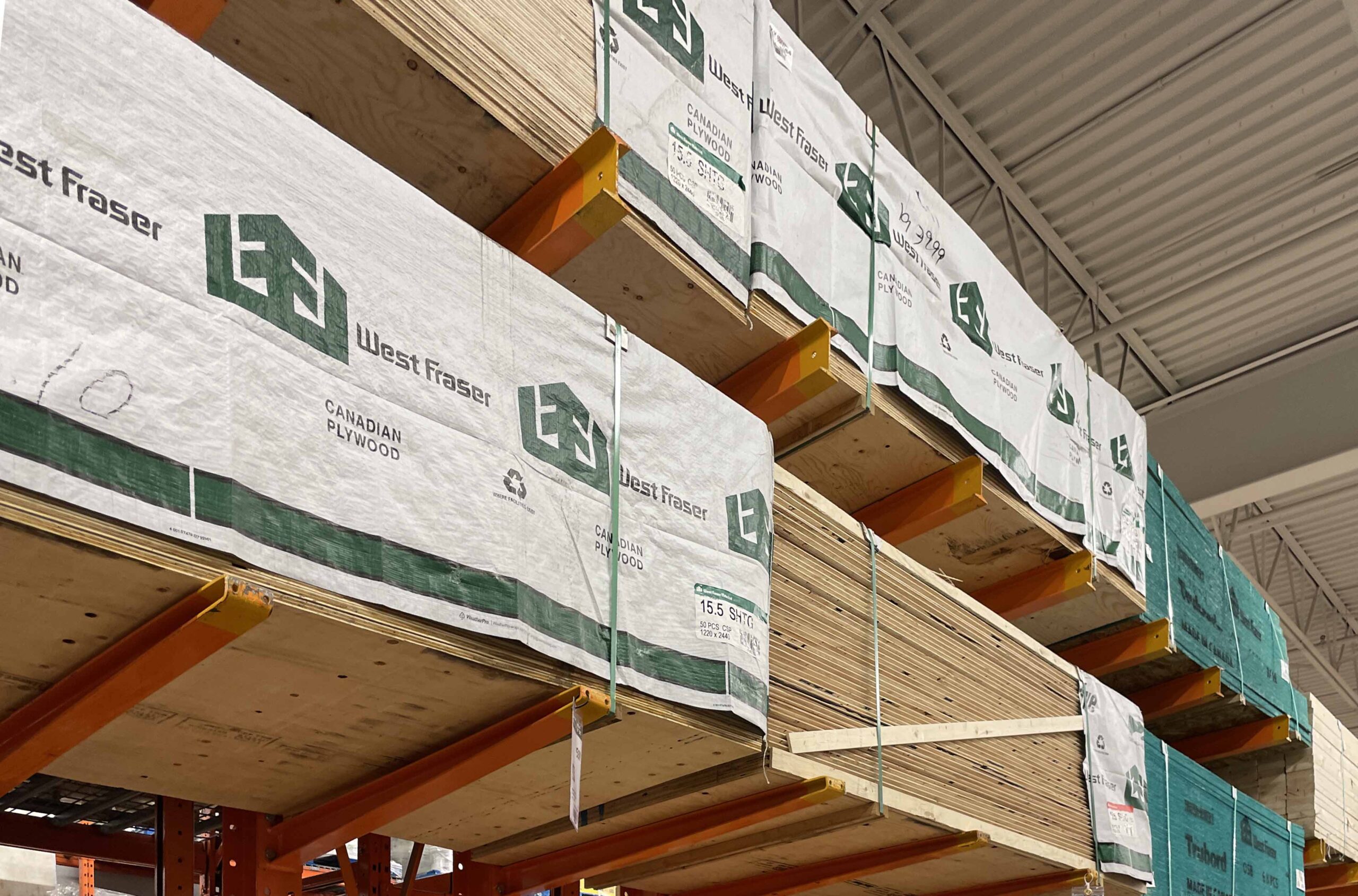 The District of 100 Mile House’s mayor and one of its councillors went to Victoria for meetings with provincial government officials over the impending West Fraser Mill closures on Monday, Nov. 24. During the Mayor’s Report at the Nov. 25 District of 100 Mile House Council meeting, Mayor Maureen Pinkney and Coun. Donna Barnett both revealed details about a visit to Victoria regarding issues surrounding 100 Mile, including the impending permanent closure of the 100 Mile West Fraser mill, as well as frequent closures of the emergency department at the 100 Mile Hospital. On Nov. 6, West Fraser Lumber announced in a release that it would be closing its 100 Mile House lumber mill following a two-month wind-down.

 MACKENZIE, BC — Forestry company Conifex Timber announced that it will temporarily curtail operations at its Mackenzie, BC sawmill for a planned four-week period commencing December 15, 2025. The curtailment is being implemented in response to, among other things, continued weakness in North American lumber markets. The curtailments will begin on December 15, for a planned four-week duration, Conifex said, adding that it is expected to reduce production by roughly 13 million board feet. The North American timber industry has gone through several curtailments in response to US President Trump’s decision to implement tariffs. …The company said it does not anticipate any challenges in securing sawlogs to maintain capacity operations in the future, once market conditions permit a return to full operations. It also expects to see gradual recovery in demand in the second half of 2026.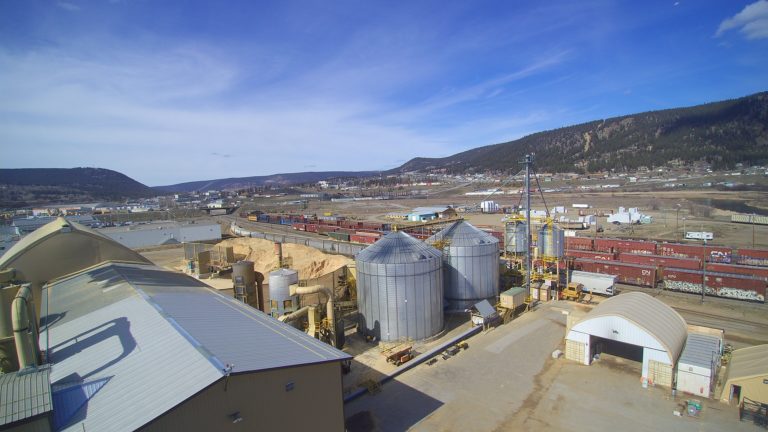





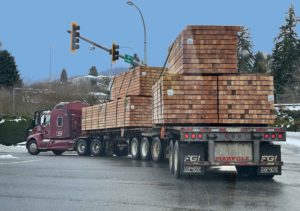 Ottawa threw the beleaguered softwood lumber industry a bone. …The new measures include $500 million in new loan guarantees for softwood lumber companies. “Loans are only good if i can sell my prioduct and pay for those loans,” said Brian Menzies, at the Independent Wood Processors Association of BC. “At 45%, I can t sell my product into the United States.” Other steps announced include cutting freight rates. …The measures are window dressing – say some – when compared to the impact of the steel industry supports. “I’m afraid we’ve come to the point that ‘Sophies choice’ is happening and softwood lumber is the child who’s going to be left behind,” said Menzies. It’s a concern shared at Leslie Forest Products, in Delta where James Sanghera said the measures won’t make a difference. “Most of the wood we’re sending down to the States is going on truck.”

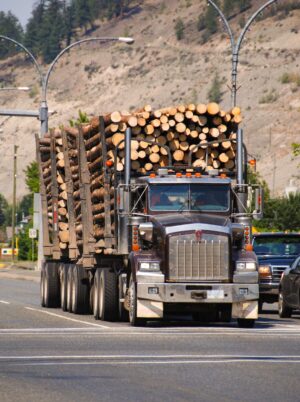 The looming closure of a lumber mill in central BC is highlighting the forestry industry’s challenges in accessing an economically viable timber supply — with one academic urging an “emergency response” to deal with it. West Fraser Timber announced it would shut its mill in 100 Mile House by the end of the year. BC’s forestry industry has taken major hits over the last few years, as escalating US duties on softwood lumber imports have piled atop challenges like a major beetle infestation and wildfires, leading to thousands of jobs lost. …UBC professor Gary Bull explained that to have an “economically viable fibre supply,” it needs to make sense financially for a company to transport logs from a forest to its mill. And the viability is complicated by the fluctuating price of lumber. …Bull estimated that insect outbreaks and wildfires have contributed to a 50 to 60 per cent reduction in available fibre near 100 Mile House.


 Private woodlot owner Andrew Clark says this year is one of the toughest he’s seen in the six decades he’s worked in the woods. For him, sales are ‘maybe 50 per cent’ of what they were last year. “It is the lack of markets which are the result of the tremendous uncertainty that the industry is in now because of the actions of the American government,” he said. He feels some of the federal government’s new supports – announced this week – could help. Prime Minister Mark Carney announced Wednesday a $500-million increase to the previously announced Softwood Lumber Development Program, which gives companies access to government-backed loans, totaling $1.2 billion. He also said Ottawa is working with railway companies to cut freight rates when transporting Canadian lumber across the country by 50 per cent. But Clark says the current situation – with the U.S. duties and tariffs amounting to 45 per cent – isn’t sustainable.
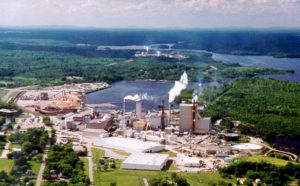

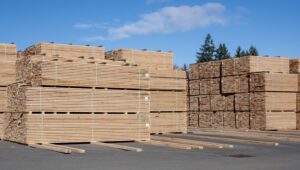 Pierre Poilievre says he’d succeed where Prime Minister Mark Carney has failed, and that New Brunswick’s softwood lumber sector would quickly get a “tariff-free” deal with the US if he was in charge. …Ottawa responded by releasing a financial aid package for the industry that includes up to $700 million in federal loans, “$500 million to supercharge product and market diversification. …Poilievre said that “one of my top priorities as prime minister will be to go down to Washington, get a deal on lumber, make the pitch that they will get more affordable homes if we can get tariff-free access to their market.” …MP Dominic LeBlanc sent a statement…. “In the coming weeks, we will take further urgent action, building on the significant support for the sector announced on August 5, 2025. In addition, Build Canada Homes, a new federal agency that will build affordable housing at scale, will prioritize the use of Canadian-made materials. [Access may require a Telegraph-Journal subscription]



 KINCHELOE, Michigan — A unique manufacturing facility opened in September along a CN line in Kincheloe, Michigan. Located in the Chippewa County Industrial Park in Michigan’s upper peninsula, the $7.3 million, 20,000-square foot facility serves as a transportation and logistics hub for wood and lumber dealer Maple Transport. The facility features a rail spur and is situated near Interstate 75. The new manufacturing hub will support Michigan’s $20 billion forest products industry and serve other new or expanding businesses, Maple Transport officials say. Project funding included $5.8 million from the U.S. Economic Development Administration, $1.25 million in matching dollars from the Michigan Economic Development Corp., and contributions from the Chippewa County Economic Development Corp. and a Strategic Site Readiness Program grant. Construction began in spring 2024 on the manufacturing facility, which Maple Transport will use to ship wood products, CN officials said in an email. The facility will be served by both CN and trucks.