 Forest Products Association of Canada (FPAC) released its 2025 Annual Report, outlining a year marked by significant economic headwinds, escalating trade pressures, and growing uncertainty for hundreds of rural and northern communities that rely on a strong forest sector. Despite these challenges, FPAC members, partners, and employees across the country continued to advance critical work to support families, protect jobs, and strengthen Canada’s forest-based economy. FPAC Board Chair, David M. Graham, noted that while 2025 was one of the most difficult years in recent memory, the sector enters 2026 well positioned to contribute to a more resilient, future ready Canadian economy. Key federal actions including improved procurement guidelines to support greater use of Canadian wood in government projects, the launch of Build Canada Homes to accelerate affordable housing construction, and new Investment Tax Credits to encourage biomass use for heat and power represent important steps forward for the industry and its workforce positioned to contribute to a more resilient, future ready Canadian economy.
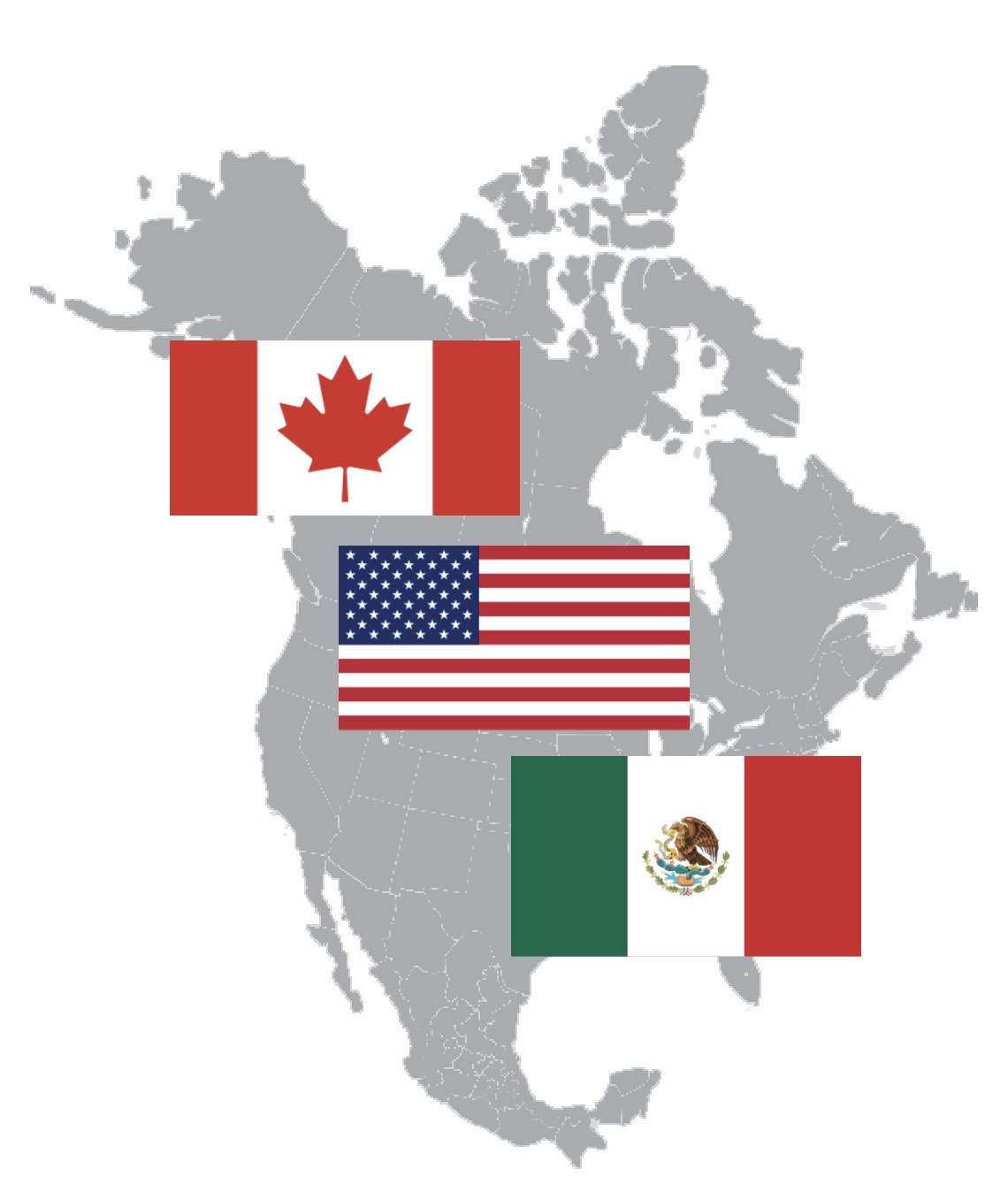 Prime Minister Mark Carney has chosen former Privy Council clerk Janice Charette to head Canada’s trade negotiations as it prepares for a review of the North American trade pact. Charette’s title is chief trade negotiator to the United States, according to a Monday news release from the Prime Minister’s Office (PMO). She’ll be a senior adviser to Carney and Canada-U.S. Trade Minister Dominic LeBlanc. “Charette brings extraordinary leadership, expertise and a deep commitment to advancing Canada’s interests,” Carney said in the release. “She will advance Canadian interests and a strengthened trade and investment relationship that benefits workers and industries in both Canada and the United States.” The announcement comes as the federal government prepares for a scheduled review of the Canada-U.S.-Mexico Agreement (CUSMA) this year. It also comes a day after Mark Wiseman, a global investment banker and pension fund manager, took the reins as Canada’s next ambassador to Washington.
 Almost three years after declaring bankruptcy, and more than two years under new owners, legal proceedings for Penticton’s Structurlam are continuing through the courts as it fights with the company that sent it into bankruptcy in the first place. In January, the case returned to the BC Supreme Court in Vancouver to order two Canadian engineering firms to produce documents and reports for the proceedings as Structurlam faces $80 million US in claims from Walmart, according to a decision published on Feb. 11. In 2023, Structurlam began bankruptcy proceedings after Walmart ended its contract to build the company’s new home office campus in Arkansas. …In July, Walmart filed a claim for over $80 million US for allegedly defective, nonconforming, rejected, nondelivered, or returned goods that it had paid for and alleged costs to replace said goods. The January 2026 B.C. Supreme Court decision orders two engineering firms to provide their documentation.
 WINDSOR, Ontario — For months, trade negotiations between Canada and the United States have been stalled. This week that all changed when US President Trump announced negotiations were back on. During his social media tirade about Windsor, Ontario’s Gordie Howe Bridge, and a list of other perceived transgressions, Trump wrote… we will start negotiations, IMMEDIATELY.” While Trump’s political speed bump threatens to derail the planned opening of the commercial corridor, some industry leaders see an opening to accelerate negotiations. “Trade conversations have now restarted, a few weeks ago conversations weren’t happening. I see this as a positive,” says Canadian Association of Moldmakers Nicole Vlanich. …With Trump restarting trade negotiations that he once brought to a screeching halt, business leaders in Windsor hope this will be an important first step towards paving a clearer picture for economic growth for both the Canadian and US economies.
 WASHINGTON, DC — In a vote that GOP leaders fought hard to avoid, a half dozen Republicans sent a blunt message to President Trump that they do not support the tariff regime that he has made the centerpiece of his second term. Six Republicans joined with Democrats in the vote to effectively repeal the president’s tariffs on Canada, the culmination of months of consternation in the GOP over the president’s trade war that has quietly rattled even some of his staunchest loyalists in Congress. …The Senate has already passed a similar measure to cancel Trump’s tariffs on Canada, which — unlike most measures — can be passed with a simple majority rather than 60 votes. But even if the Senate does agree to this same House measure, Trump would still have the power to veto it. The House did not secure enough votes to protect a veto override.
 Some of Canada’s major labour organizations are urging Ottawa to put workers at the centre of any renegotiation of the Canada-US-Mexico Agreement as preparations begin for the pact’s mandatory 2026 review. Leaders met with Dominic LeBlanc, the federal minister responsible for Canada–US trade, for what they described as a high-level roundtable on the future of CUSMA amid rising trade tensions and renewed threats of U.S. tariffs. Canadian Labour Congress president Bea Bruske said unions delivered a “clear and urgent message” that Canada should not accept a revised trade deal that weakens domestic industry or costs Canadian jobs. …Bruske was joined by leaders from several large manufacturing and building trades unions representing sectors heavily exposed to trade policy decisions, including auto manufacturing, construction and resource-based industries. Bruske said the upcoming CUSMA review should strengthen Canadian industries and working-class communities, not “hollow them out” in the rush to renew the agreement.








 The BC government is forecasting that the natural gas industry will play a larger role as the top driver of provincial resource revenue, while warning about tough times in the former economic powerhouse of forestry. Natural gas royalties are expected to ring in at nearly $1.3-billion for the 12 months ending March 31, 2027, up 38%. …The government is anticipating $521-million in forestry revenue for the 2026-27 fiscal year, up 3%, but still down sharply when compared with several years ago. …In the 2020-21 fiscal year, forestry revenue surpassed $1.3-billion and natural gas royalties reached $196-million. …Tuesday’s budget introduces a temporary Stumpage Payment Deferral Program in an effort to ease the cash crunch for companies. The voluntary program covers the first 11 months of 2026. …The government anticipates that the trend of depressed annual volumes of tree harvesting will continue over the next several years, restricting the production of softwood lumber. [to access the full story a Globe & Mail subscription is required]
 The United Steelworkers union found positives in a difficult BC budget. …Recognizing the uncertainty created by US trade policy… USW Western Canada Director Scott Lunny said… “Today’s budget advances the government’s work towards long-term economic stability, including BC’s goal of securing $200 billion in private-sector investment over the next decade in sectors including mining, forestry and manufacturing”. …USW noted positives, including: a continued commitment in funding to strengthen permitting capacity in resource industries; a $400- million Strategic Investments Special Account to leverage federal government dollars for investment and job creation in key sectors like value-added forestry, responsible mining, manufacturing and clean energy; and unprecedented investment in skilled trades funding as well as a training grant to encourage apprenticeships. …”While we welcome the $20 million to help workers and employers in tariff-impacted sectors like steel and forestry, there is still a missing commitment to stabilizing and sustaining the primary forestry sector,” said Lunny.
 The only thing more surprising than the collapse of the co-operation agreement between the BC Greens and NDP would have been if the two sides had agreed on a new deal. …The Co-Operation and Responsible Government Accord (CARGA)… didn’t seem to be meeting anyone’s needs. For the NDP, the deal was supposed to act as a safety net for a slim one-seat majority. …It worked for last year’s budget. But outside of that, the Greens refused to back the NDP on three other confidence matters. And for that, the government agreed to advance the Green causes… [including] an early review of CleanBC and another review of the forestry system. For the Greens …it was a mixed bag, at best. The NDP did launch reviews of CleanBC and forestry, but then didn’t accept the resulting recommendations. The documents seem destined for that dusty shelf in the legislature library where unwanted reports go to die.

 Municipal leaders are on the front lines of BC’s economy, where the health of the forest sector directly impacts jobs, services, and long-term community stability. This timely panel brings together mayors from across the province for a practical, solutions-focused discussion on what a competitive and resilient forestry future means for families and local economies — and what’s needed to ensure forestry remains a cornerstone industry for generations to come. Featuring mayors Maria McFaddin (Castlegar), Brad West (Port Coquitlam), Leonard Krog (Nanaimo) and Gary Sulz (Revelstoke), the conversation will offer grounded municipal perspectives from communities both large and small. The session will be moderated by Karen Brandt, Senior Vice President, Public Affairs and Partnerships with Mosaic Forest Management. Expect candid insights, local realities, and a forward-looking discussion on strengthening forestry and the communities it supports.
 Efforts to support forestry workers displaced by the closure of the Crofton pulp mill and the ongoing curtailment at the Chemainus sawmill are expanding, as local leaders press the federal government for clearer and more robust income supports. The District of North Cowichan says its Mill Closure Response Working Group met for the first time last week, bringing together municipal, provincial and federal representatives, along with labour, industry and impacted workers, to coordinate next steps. …“The stories we heard at the first working group meeting show how urgent this is,” North Cowichan Mayor Rob Douglas said. “This is why we’re continuing to press the federal government to extend employment insurance supports for all impacted workers and to release the forestry industry support funding announced last summer. People need income security while they plan their next steps.” Updates and resources for affected workers and businesses are available at
 The national head of the union representing workers at the Crofton pulp mill is not in favour of efforts to have a special task force formed locally to investigate the reasons for the troubles in the forest industry. Geoff Dawe is the president of the Public and Private Workers of Canada which represents more than 400 workers at the Crofton pulp mill, which will soon close permanently. He spoke to North Cowichan’s council at its meeting on Jan. 21 about a proposed motion by Coun. Tek Manhas for the municipality to set up the special task force that, if approved, would undertake an investigation into the reasons for the closure of the Crofton mill and the ongoing curtailment of the Chemainus sawmill, impacting another approximately 150 workers. …Dawe said his concern is that a task force that is not working collaboratively with his union and its workers may get into some finger pointing at government…
 COFI 2026 CEO Panel to Tackle the Forest Sector’s Future: The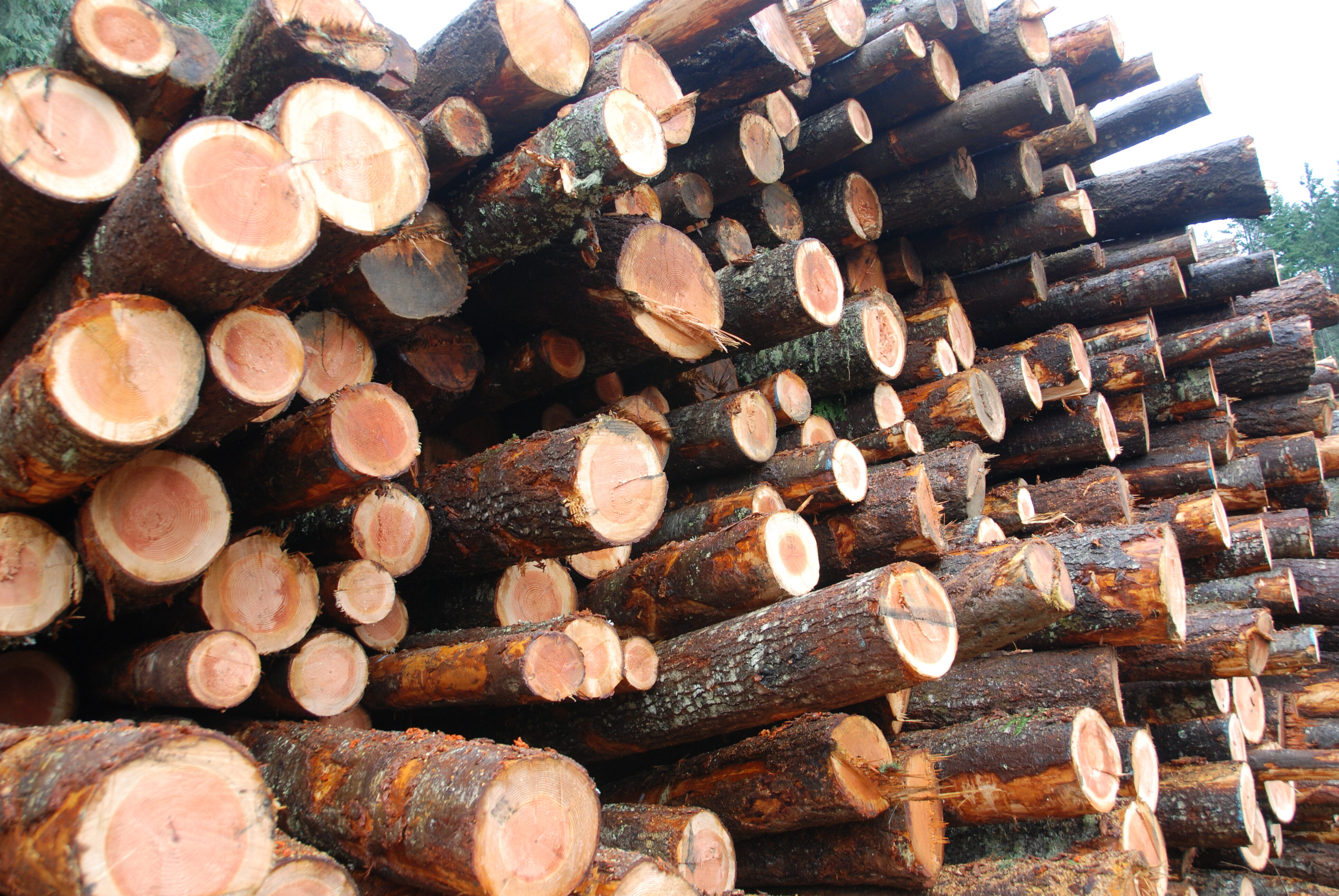












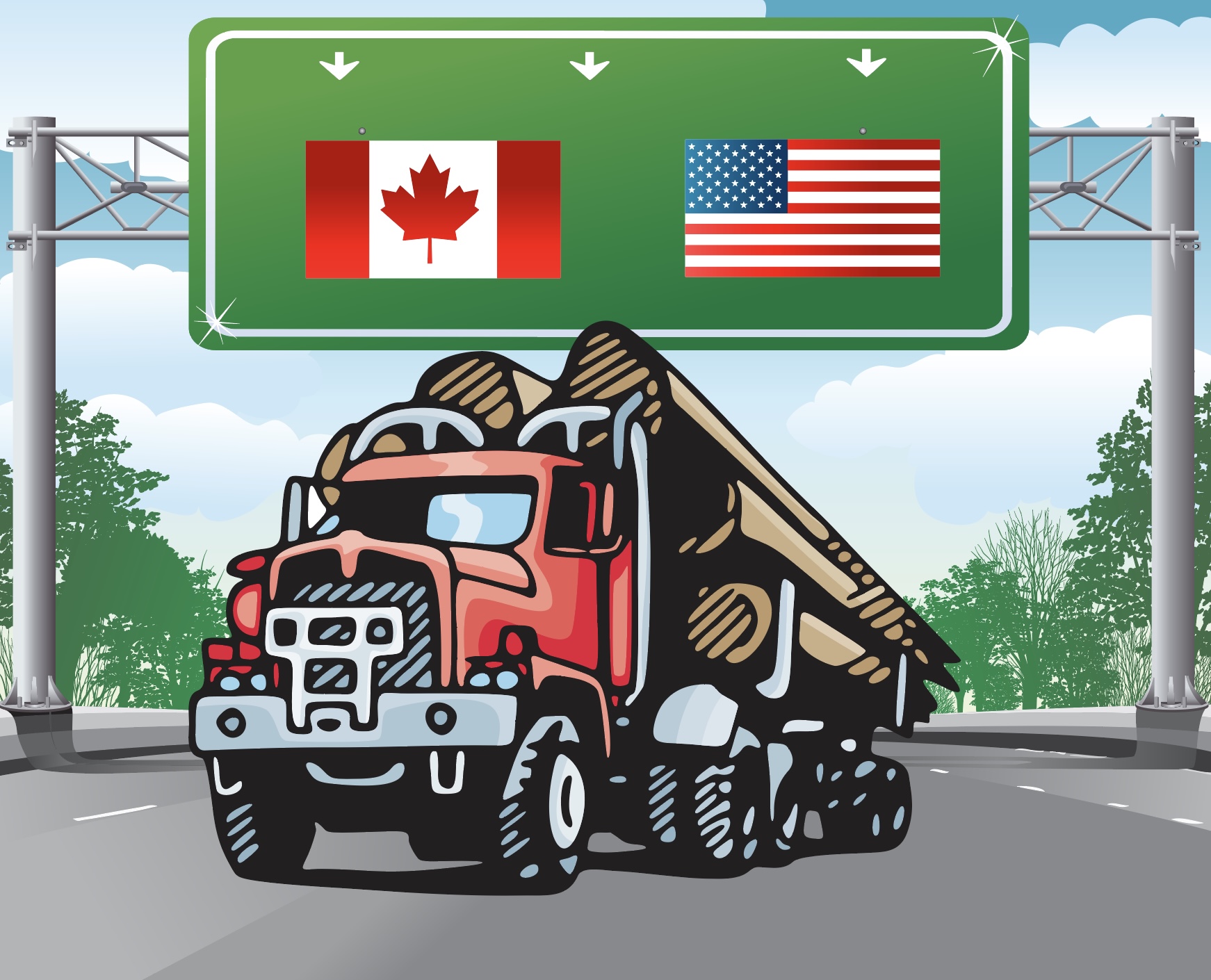 The head of the New Brunswick Forest Products Commission was in front of a legislative committee Thursday, answering MLA’s questions about the state of the industry. The commission is a liaison of sorts between the provincial government, saw and pulp mills and wood marketing boards. Tim Fox acknowledged the Commission has been working to try and help the industry through challenging times, but he said everyone has to work together. “There’s obviously our sawmills who are impacted by the tariff situation and that has spilled over into the private woodlot sector as well,” he said after the meeting. …Private producers have recently expressed frustration over how little support there’s been for woodlot owners to help them through the ongoing U.S. tariff situation. Countervailing and anti-dumping duties on softwood are almost a decade old, but U.S. President Donald Trump added another 10 per cent in the fall, bringing tariff totals to 45 per cent.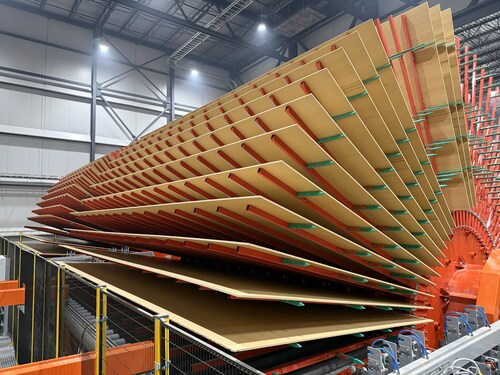


 The unravelling of our trade relationship with the US compels us to act decisively. The chaotic diplomacy of the Trump Administration should encourage Canada to build up economic capacity where Canadians possess both agency and an existing industrial base to rely upon. This capacity‑building goal dovetails with the inherent purpose of the Sustainable Jobs Action Plan (SJAP). …Acting on these priorities, industry can direct its capital and follow its own strategic objectives, but it will do so in an environment that better reflects Canada’s long‑term economic goals. The SJAP can play a pivotal role. …One can look to the forestry sector. …Forestry faces an existential crisis from the 45% U.S. duties and tariffs imposed on Canadian lumber. …However, the sector also holds immense potential for manufacturing a variety of high value‑added products while also being a renewable resource key to decarbonizing construction.






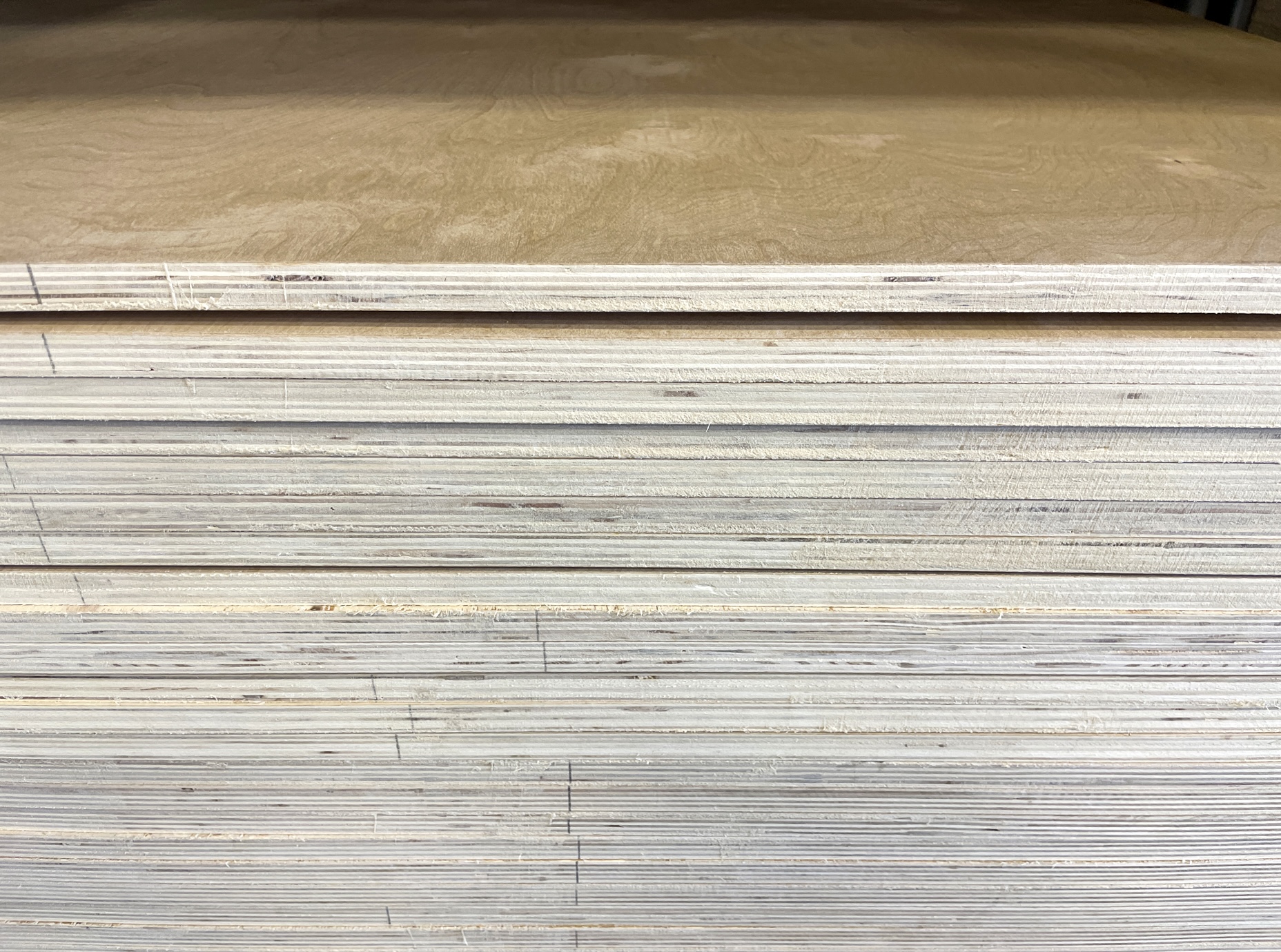 PORTLAND, Ore. – Layoffs are expected at the beginning of April for Roseburg Forest Products Co.’s Riddle Plywood facility, according to a WARN notice filed this week. The notice, filed Feb. 4, says the company expects to permanently lay off 146 team members at the Riddle By-Pass Road location, though the facility will remain open. These layoffs are expected to take place after a 60-day WARN period. The company said April 5 “will be the last day of work for a majority of the affected team members before the layoff and that the remaining affected team members, if any, will be within 14 days of that date.” Impacted positions span a number of job titles, though the majority consist of Layup WAT Operators, Finish End WAT Operators, and Common Laborers.

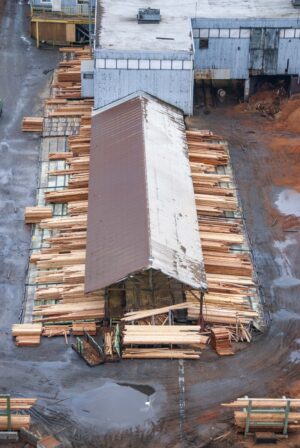 Montana’s forestry industry is entering this year with more questions than answers, from low lumber prices to high housing costs for workers to questions about tariffs, but there is room for strategic adaptation. That’s according to an economist who gave an update on the sector in the 2026 Montana Economic Report, put out by the Bureau of Business and Economic Research at the University of Montana. …Scott said the number of people employed in the private sector in forestry in Montana statewide has dropped in 2025. …His main points are that while timber harvests are down, the federal government is making a push to increase harvests. …He said the Trump administration’s tariff policy remains another wildcard. “A combination of lumber and trade-related tariffs has been implemented to bolster domestic demand, by raising the cost of Canadian lumber… it is still too early to tell whether these measures will meaningfully shift trade flows.”


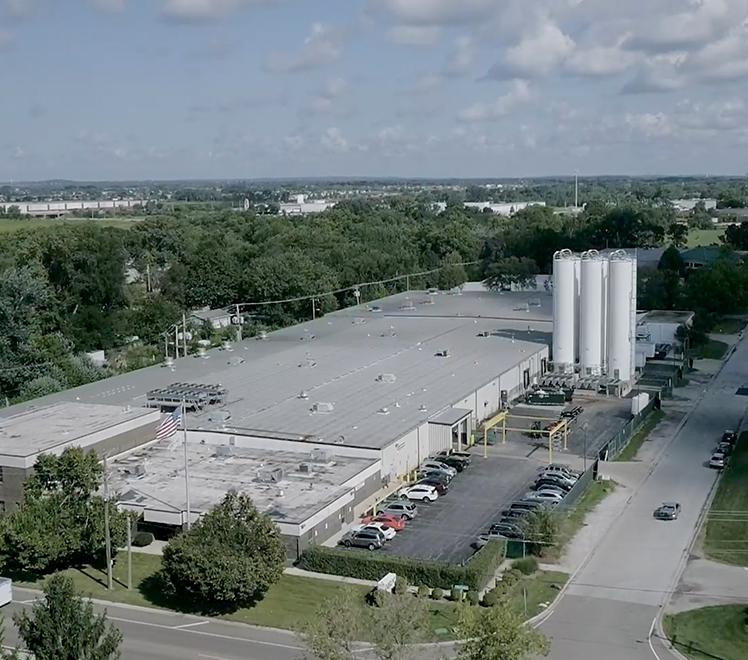
 Duties on Canadian imports are driving up domestic sales at some Maine lumber companies. …Protection from historically lower Canadian lumber prices has given Pleasant River Lumber the confidence to add an additional manufacturing shift in Enfield, according to co-owner Jason Brochu. Photo by Katherine Emery. …Historically Canadian companies have both outbid them for timber harvested in Maine and undercut American lumber prices when they export the finished lumber product back across the border. …An industry analyst and two other mill leaders said that inflation and a sputtering housing market make it unclear whether the tariffs will have a positive or negative effect on business in the long run. The effects of the tariffs will also vary based on the different products sawmills make. …Sawmills rely on certainty, said Alden Robbins, of Robbins Lumber, and neither the markets nor foreign trade relationships have been stable recently.



 FINLAND — Metsä Group’s demo plant for a new lignin product has started up in Äänekoski, Finland. The plant uses lignin extracted from the bioproduct mill’s production process as its raw material and it has a nameplate capacity of two tons of a new type of lignin product per day. The plant was built in cooperation with the equipment supplier ANDRITZ. Dow, a leading materials science company, is a key partner. Metsä Group’s new lignin products are called Metsä LigO™. According to Ismo Nousiainen, CEO of Metsä Fibre, part of Metsä Group, the company aims to use the wood raw material, including side streams of pulp production, as efficiently as possible to generate the greatest possible added value. …”The purpose of the new demo plant is to ensure the functionality of the lignin product’s production process, as well as the product’s characteristics and suitability for the market.”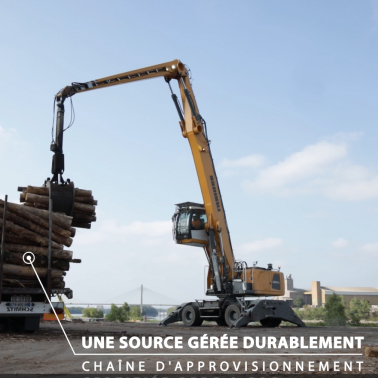

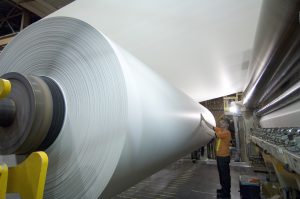 Finland’s forest industry could be forced to reduce capacity again as rising raw material costs and weaker market conditions weigh on profitability. That assessment comes from Juha Varis, senior portfolio manager at S-Bank. …The warning comes amid a more challenging environment for pulp and paper producers. Wood prices remain elevated while demand for several forest industry products has developed more weakly than expected, increasing investor expectations that production cuts may follow. …Björn Wahlroos said that a large and modern pulp mill in Finland could be forced to shut down due to a lack of raw material. His remarks triggered wider discussion within the sector. …Varis said overcapacity in the European forest industry is evident across several segments. He added that investors expect some reduction in capacity but that it remains unclear which companies or plants might be affected.
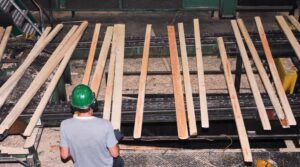 Australia’s forestry industry says cheap imported timber products are flooding the local market and taking up increased space in local homes and buildings. South Australian Forest Products Association (SAFPA) chief executive Nathan Paine said international trade conditions, fuelled by US tariffs, were responsible for imports reaching Australia at about half the price of local timber. This timber includes laminated veneer lumber (LVL) — a construction product that competes with locally grown radiata pine. …Analysis from Forest and Wood Products Australia showed LVL imports had increased 63% in 2025 compared to a year earlier. …Primary Industries Minister Clare Scriven said the state government could stand behind its past support for the timber industry. Housing Industry Australia chief executive of industry and policy Simon Croft said the pandemic’s trade disruptions had caused a spike in construction costs.