B.C. Forests Minister Ravi Parmar is in Ottawa pushing the federal government to prioritize a softwood lumber deal with the US. That’s as a US lumber lobby group praises the Trump administration for reducing ‘harmful’ Canadian imports with the use of tariffs.
 TORONTO — Canadian businesses hit by targeted U.S. tariffs are struggling to respond as the trade war drags into its second year. …industries like metal production, lumber and automobiles continue to face steep duties more than a year after U.S. President Donald Trump upended the global status quo. Companies have cut staff, pulled back on production and pushed for government action as the heavy duties continue to shake the crucial and long-standing trade relationship with the U.S. …“Because of the way that these tariffs are imposed … five to six key manufacturing subsectors are really, really hurting versus the rest of the economy”, said Claire Fan, senior economist at RBC. …The softwood lumber industry was hit by harsh duties back in 2017, which Trump has since added to, resulting in production down over 25 per cent since the first round, she noted. The result is 22 mills closed since 2022 and another 50 with reduced operations…
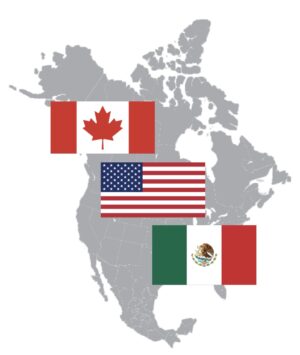
 In a world of colourful economic pie charts and slick bar graphs, the image of a three-sided circle is both awkward and uncomfortable. Yet this image may depict the emerging fate of the Canada-US-Mexico Trade Agreement. For Canada, the wild ride through Trumpian trade policy has now entered a decisive phase. …Some rules of the road ahead are beginning to take shape. First there is a recognition and begrudging acceptance that there will be some tariffs where CUSMA had none. …Secondly, despite warm commitments to the trilateral CUSMA relationship, Canada and Mexico are engaged in separate bilateral discussions with the US. …Enter the three-sided circle. Here the current comprehensive trilateral agreement would evolve into three bilateral trade agreements bound by a core centre that holds common rules and undertakings. …In triaging the trade-wounded, no sector deserves a bigger fix than Canada’s softwood lumber industry. Its market access to the US has been battered by 40 years of aggressive protectionism.
 Trade watchers say they are shocked at the latest tactic being used by the US to shore up its tariff wall against Canada after a legal setback last month. US Trade Representative (USTR) launched investigations into 60 economies under Section 301(b) of the U.S. Trade Act of 1974 to determine whether they have failed to impose or enforce bans on imports produced with forced labour. But critics in the Washington beltway say the 301 probes are basically a “show trial” and that the verdict is sure to go against trading partners such as Canada. Canada is being grouped together with China and dozens of other countries for these investigations. The probes will examine whether Ottawa’s forced-labour rules and framework… are sufficient for screening goods produced by child or forced labour. …“This has nothing to do with forced labour,” said Inu Manak, at the Council on Foreign Relations. …He thinks the administration is constructing a pretext to defend the tariffs it’s already planning.
 While Canada’s economy is far more reliant on exports to the US than vice versa, Canadian negotiators have crucial ammunition in their efforts to land a trade deal that reduces or eliminates tariffs imposed by US President Trump. …Canada’s attempts to negotiate relief from Trump’s tariffs on such exports as steel, aluminum, automobiles and softwood lumber are now wrapped into fresh talks on renewing the Canada-US-Mexico Agreement (CUSMA). …Barry Appleton, says Canada needs to shift its strategy by exerting its leverage as a crucial U.S. customer. …Inu Manak, says the US needs Canadian natural resources to achieve the industrial policy goals set out by the US administration. …Canada is among the top sources of foreign direct investment in the U.S., largely as a result of decisions by pension funds. …The US has repeatedly emphasized the importance of steady access to a reliable supply of critical minerals.
 Kemptville, ON — Under the leadership of Canadian Forest Owners (CFO), the Ontario Woodlot Association (OWA), along with partnering associations nationwide, has appointed BrokerLink as our exclusive insurance broker. This


 Richard Eaton, senior judge on the US Court of International Trade, has extended the US administration’s deadline for refunding about US$166 billion in tariffs. Eaton had orginally ordered US Customs and Border Protection to begin the refunding process at the start of the month after the US Supreme Court struck down global tariffs set by president Trump. …The administration has been inundated with lawsuits from companies like Costco, FedEx, and Pandora Jewelry – all looking to get their money back since Eaton’s order meant that everyone who had paid tariffs was entitled to a refund. Barnes, Richardson & Colburn partner Larry Friedman said that the order was one he had hoped for, “but never expected to see.” A US Customs and Border Protection official indicated in a legal filing that its system could not handle the volume of work.
Related coverage:
- WoodWorking Network: Court provides hope for speedy recovery of tariff refund
- The National Law Review: What every company should know about the ITC order
- By Thomson Hine LLP: CIT Suspends Earlier Order Directing IEEPA Tariff Refunds
 The Honourable Patty Hajdu, Minister of Jobs and Families and Minister responsible for the Federal Economic Development Agency for Northern Ontario announced an investment of up to $94.5 million over five years through the Sectoral Workforce Solutions Program (SWSP). This investment will produce consistent, foundational labour market information (LMI) across key sectors, providing the information needed to help better coordinate the supply and demand of skilled labour while supporting a stronger economy. Through this initiative, 14 organizations will develop a range of informational products and employer toolkits to help workers and businesses adapt to current labour market challenges. The investment will support organizations in key sectors, including construction, trucking, advanced manufacturing, aerospace, tourism, forestry, agriculture, mining, energy, information and communications technology, the environment, and the bio-economy.


 The final step in a $120-million investment into BC’s forestry sector by a West Kelowna family-owned forestry company has concluded, following the Minister of Forests’ official approval of a tenure transfer from Weyerhaeuser to Gorman Group. “Gorman Group is investing in the future of forestry, investing in a new chapter for Princeton, and investing in the transformation of the community into a real forestry hub,” said Ravi Parmar, Minister of Forests. …“By approving this tenure transfer, we are supporting a company that believes in value-added manufacturing, using every fibre to its fullest potential and keeping jobs here at home.” …The transferred tenures total approximately 682,000 cubic metres. …“We recognize that any Crown tenure transfer comes with important responsibilities and obligations to First Nations, communities and employees who depend on the long-term stewardship of the land and the careful use of the fibre,” said Nick Arkle, CEO, Gorman Group.
 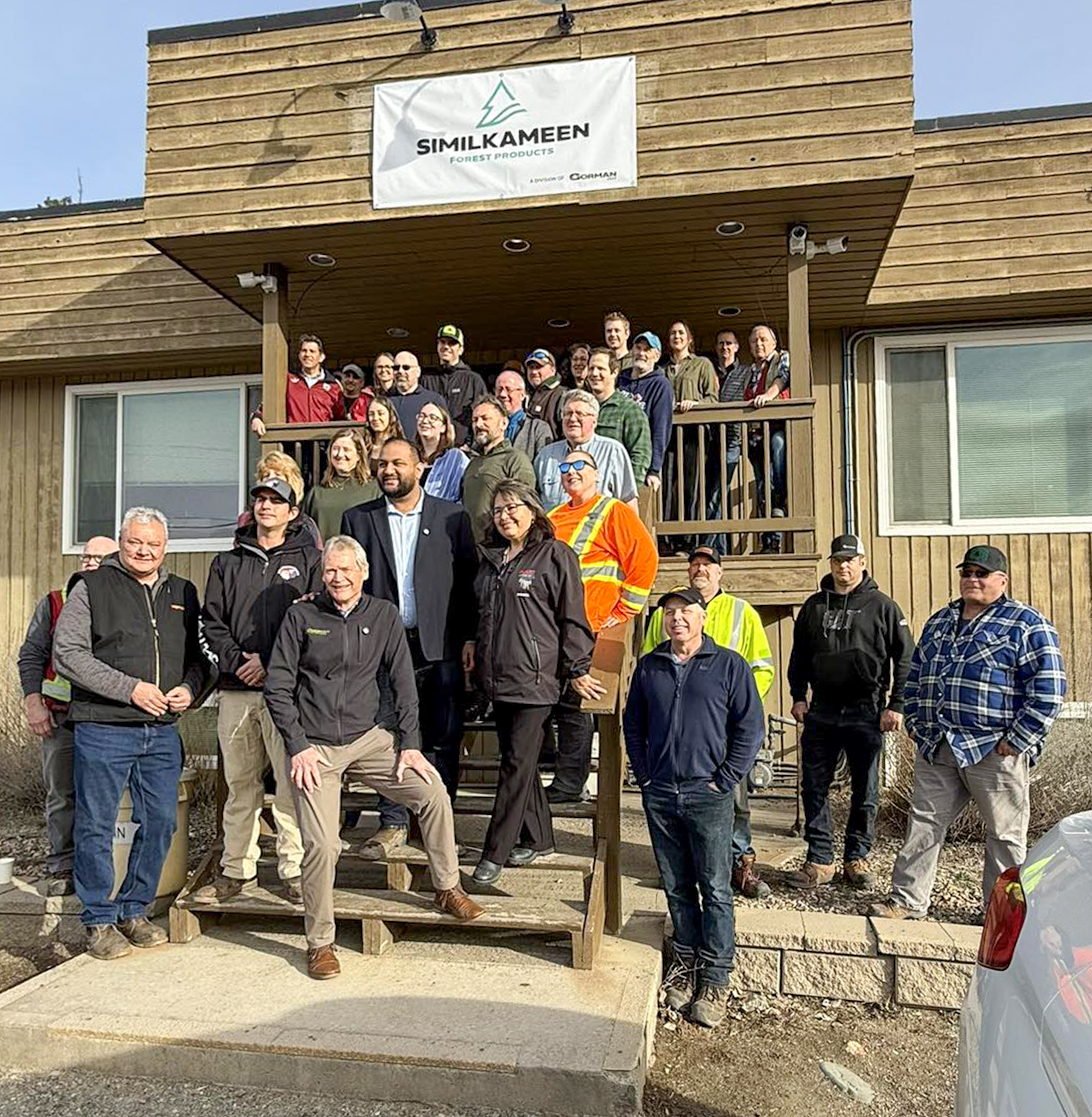 Princeton’s mill celebrated not just new owners but a new name as well with the handover of forestry tenures from Weyerhaeuser to West Kelowna-based Gorman Bros on March 19. …The transfer of the timber tenures has happened quickly since being announced in September 2025, as far as tenure transfers go and especially with the new legislative requirements to consider public interest. Forests Minister Ravi Parmar said “Here you have a company that is continuing to make investments in BC in a time where things are tough right now in forestry. …That speaks well to the future of forestry and gives me the hope and optimism.” …The Ministry of Forests received nearly 300 letters in support of the Gorman tenure transfer from individuals, businesses, First Nations, contractors, community forests and unions during the public input period. “This is a good step forward for a sustainable forestry sector,” Princeton Mayor Spencer Coyne said.

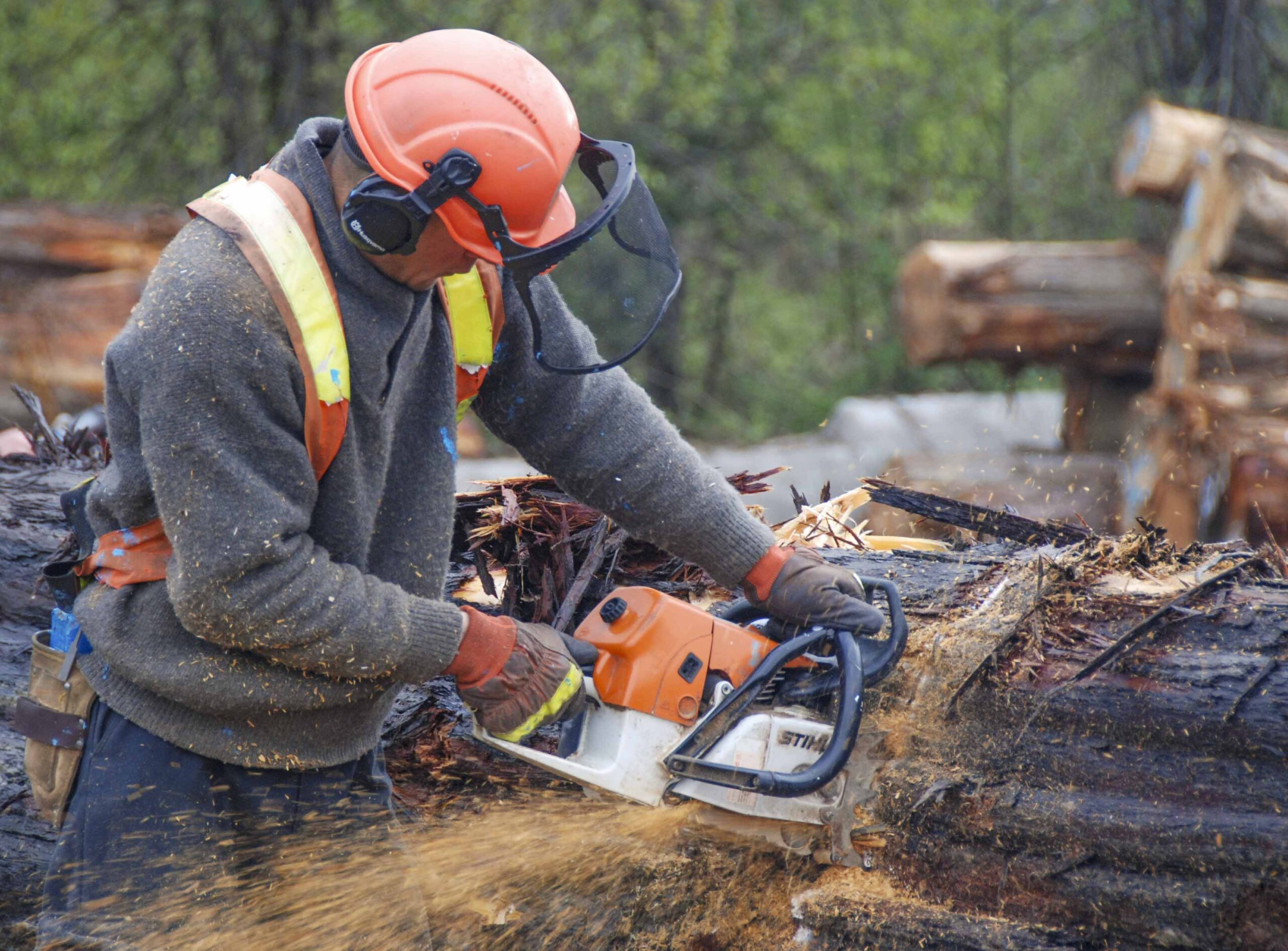 Last year was hard on workers in some industries within B.C.’s resource sector, particularly forestry, and 2026 doesn’t look like it’s starting much better. Statistics Canada’s February labour force survey, the report that tracks overall unemployment, tracked job losses in both the natural resources and manufacturing sectors for both the previous month and for the 12 months since the same month in 2025. Natural resources … had a year-over-year loss of 9,300 jobs from February 2025 to February 2026. The manufacturing classification, which includes lumber production, had a year-over-year loss of 12,200, according to StatCan. StatCan’s … survey of employment and payroll counted at least 1,200 job losses in forestry, which include logging and supporting jobs, and at least 800 job losses in sawmills between December 2024 and December 2025. …“The worst was probably in the fourth quarter (of 2025) when the full bite of the duties hit, and then the (U.S.) tariffs,” said industry consultant Russ Taylor. “That’s when we saw a lot more of the jobs falling off.”
 Northern BC communities know better than most how closely their fortunes are tied to major industry. Mills, mines and power generation facilities are more than workplaces — they’re economic anchors… When an industrial business shuts down, it stops paying most of its share of property taxes. This means …the rest of their community must now share more of the tax burden. That’s why a push to revise or eliminate the closure allowance in the BC Assessment Act deserves strong backing from municipalities across northern BC —
  Alberta — Are you passionate about forestry education and inspiring the next generation? Looking for work that’s anything but a desk job — flexible, dynamic, and always evolving. You just found your next opportunity. Work Wild, a program within the Alberta Forest Products Association, reaches out to people who are making one of the most important choices in their lives — finding a career they love! We are looking for an engaging, people-orientated individual to join our Work Wild team in the role of Southern Alberta Forestry Educator. Reporting to the Program Manager, the Forestry Educator implements Work Wild program objectives, which include educating Albertans on forest sector practices as well as career opportunities in Alberta’s forest industry. The Forestry Educator will spend much of their time traveling to communities throughout southern Alberta engaging middle and high school students, educators, and job seekers about the variety of rewarding opportunities in Alberta’s forest sector.
 NANAIMO, BC — Snuneymuxw First Nation is calling for a temporary closure and environmental investigation of a hazardous waste services company following a January oil spill on Duke Point near Nanaimo, BC. City of Nanaimo staff were informed of oily residue near a storm drain close to the Duke Point Ferry Terminal on Jan. 5. Staff said the spill originated from a business in the nearby industrial park, and a BC Ministry of Environment spokesperson said there was an estimated 350 to 1,600 litres of oil sheen on the water between Duke Point and Mudge Island. …The First Nation, along with a Feb. 19 statement from the Ministry of Environment, said the industrial park business Environmental 360 Solutions was responsible for the spill. …Snuneymuxw Chief Michael Wyse Feb. 6 urged governments to take action to address polluting activities in their territory.b…Western Forest Products said the company has implemented multiple measures to manage “wood and wood particle water discharge.”
.png)
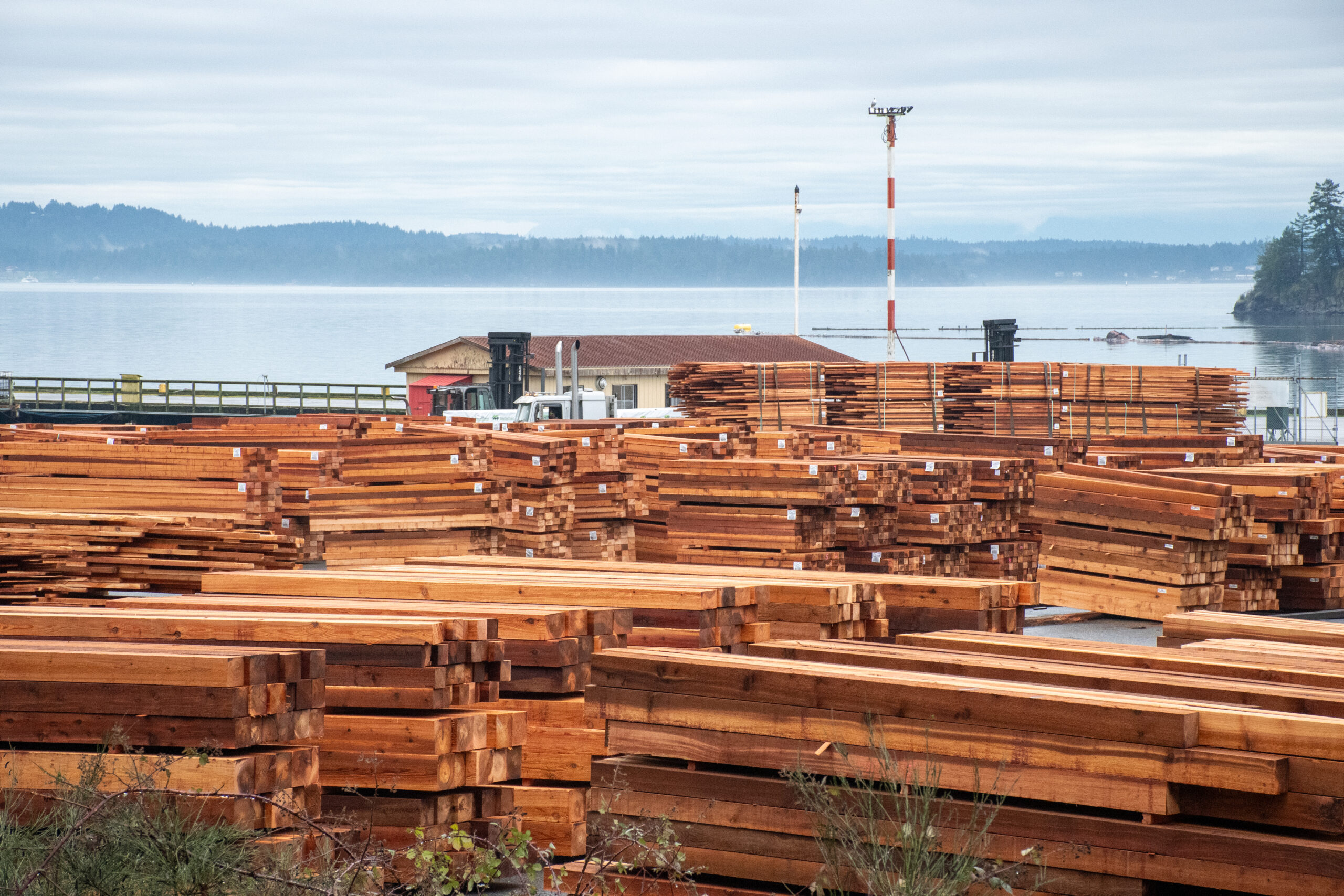 Federal help is being called on to assist laid-off workers at the curtailed Chemainus sawmill to access Employment Insurance benefits. Brian Butler, president of United Steelworkers Local 1-1937, which represents workers at the mill, Jennifer Foster, senior vice president of human resources at Western Forest Products, which owns the mill, and North Cowichan Mayor Rob Douglas recently sent a letter to Minister of Jobs and Families Patty Hajdu on the issue. “We write to you as representatives of labour, industry, and local government to request urgent federal intervention to address barriers that prevent Chemainus sawmill workers from accessing the full range of Employment Insurance supports available to them,” the letter said. …They pointed said that the workers are not facing a short-term layoff. “They have been formally advised that there will be no return to work this year, yet many are now being told their Employment Insurance benefits will soon expire,” their letter said.

 STURGEON COUNTY, AB — Corey Hogan, Parliamentary Secretary to the Minister of Energy and Natural Resources, announced a federal investment of over $4.4 million for ten projects that will strengthen the forest sector in Alberta, Manitoba and Saskatchewan. These projects will advance manufacturing and processing, diversify Canada’s forest products and their export markets and support First Nation and Métis groups and forestry businesses. Among the projects funded, Western Archrib Enterprises Ltd. is receiving $2.3 million through the Investments in Forest Industry Transformation program to commission a 160,000-square-foot mass timber plant in Sturgeon County, Alberta. The facility represents a total capital investment of over $80 million and will transform Western Archrib’s operations to a fully automated manufacturing line, increasing production capacity from 12 million to 30–35 million board feet annually. This investment will strengthen Alberta’s supply chain for advanced wood-based building material, such as mass timber panels, which directly support the construction industry and housing supply.


 Acadian Timber, one of Canada’s largest forest landowners, wants to close the performance gap between New Brunswick and its business in Maine, a goal its new interim CEO says is achievable despite labour and market challenges. …Malcolm Cockwell, who was named interim boss last month, said, “There are a lot of strong companies here that are investing in their facilities and running them pretty consistently even in challenging markets. Maine is a little bit more hit-and-miss with facilities not being as consistent with their operating schedule and a number of facilities dropping out over the last couple of years.” Acadian has just under 1 million hectares of land under management across New Brunswick and northeastern Maine, with approximately 313,000 hectares of freehold timberlands – privately owned forest land – in New Brunswick and 121,000 in Maine. …One way to make that happen in Maine is to improve Acadian Timber’s contractor base.
 The Supreme Court of Canada is being asked to consider a clash between Aboriginal title and private land in a New Brunswick case that would have significant national implications. Last December, the New Brunswick Court of Appeal ruled that the Wolastoqey Nation could not seek a declaration of Aboriginal title over private property as part of its claim against the province. The decision was a sharp contrast to a lower-court ruling in BC last summer. After a trial that stretched five years, the BC Supreme Court declared that the Cowichan Tribes had Aboriginal title to about 800 acres in the Vancouver suburbs. In the Wolastoqey case, Justice Ernest Drapeau wrote that he was “unable to see” how Aboriginal title could co-exist with private land. He stated that a declaration of Aboriginal title over such land “would sound the death knell of reconciliation.” …The Wolastoqey are Tcalling on the top court to enter the fray to settle the legal uncertainty. [to access the full story a subscription is required]

 OTTAWA — The federal government is being accused of creating an uneven playing field in Canada’s shipping industry, and critics claim the Prime Minister’s Office is unwilling to rectify it. Later this spring, Ottawa is expected to launch a federal subsidy program to help reduce the cost of shipping lumber and steel between provinces by 50%. But the subsidies — promised by Carney back in November — will only go to rail companies. “We support this initiative to give a boost to those Canadian industries. But what we were asking was for parity because many destinations and commodities, only maritime transport can handle that,” said Etienne Duchesne, business development project manager at Desgagnés, a maritime shipping company based in Quebec. …In the House of Commons last week, Bloc Québécois MP Claude DeBellefeuille said the government was creating “unfair competition between rail transportation and marine transportation,” putting jobs and supply chains at risk.
 USW members voted overwhelmingly this winter to ratify a new four-year master agreement that provides significant annual wage increases and additional benefits for about 2,400 members of nine local unions at Domtar paper facilities across the United States. The contract, which runs through December 2029, followed months of member preparations and bargaining during a period of major changes in the company and across the paper industry. It was the first time USW members bargained a new agreement since Paper Excellence acquired Domtar in 2021 and then Resolute in 2023. …“With new ownership and leadership at the table, we knew this round of bargaining would be challenging,” said International Vice President Luis Mendoza, who oversees the union’s paper sector. …The agreement… included a signing bonus, a boost in pension payments, wage increases of more than 12% over the life of the contract, and continued affordable health care coverage.
 If you want to understand why the American starter home seems to have gone extinct, don’t look at greedy developers, rapacious investors or discriminating banks. Look at the government policies that make building these homes all but impossible. New research puts hard numbers on one part of the problem — and they’re staggering. …Federal, state and local governments have accelerated this decline by increasing construction costs through several channels. …In some cities, such as Los Angeles, the time it takes to get building permits amounts to almost half the construction time. …Land in many localities is made artificially expensive by regulations that dictate home sizes, yard sizes, building setbacks, parking and more. …Federal policies pile on more costs. …Canadian lumber, for example, is roughly 80% of all US imports and is currently subject to “trade remedy” taxes of more than 25%. Similar duties cover a wide range of products that US homebuilders use every day.

 WASHINGTON — The Senate passed a bill Thursday aimed at boosting the supply of housing and bringing down prices, marking a rare bipartisan breakthrough on a major issue. The 21st Century ROAD to Housing Act, written by Sens. Tim Scott, R-S.C., and Elizabeth Warren, D-Mass., won 89 votes. Ten senators voted against it. Scott is the chairman of the Banking, Housing, and Urban Affairs Committee, and Warren is the ranking member. The
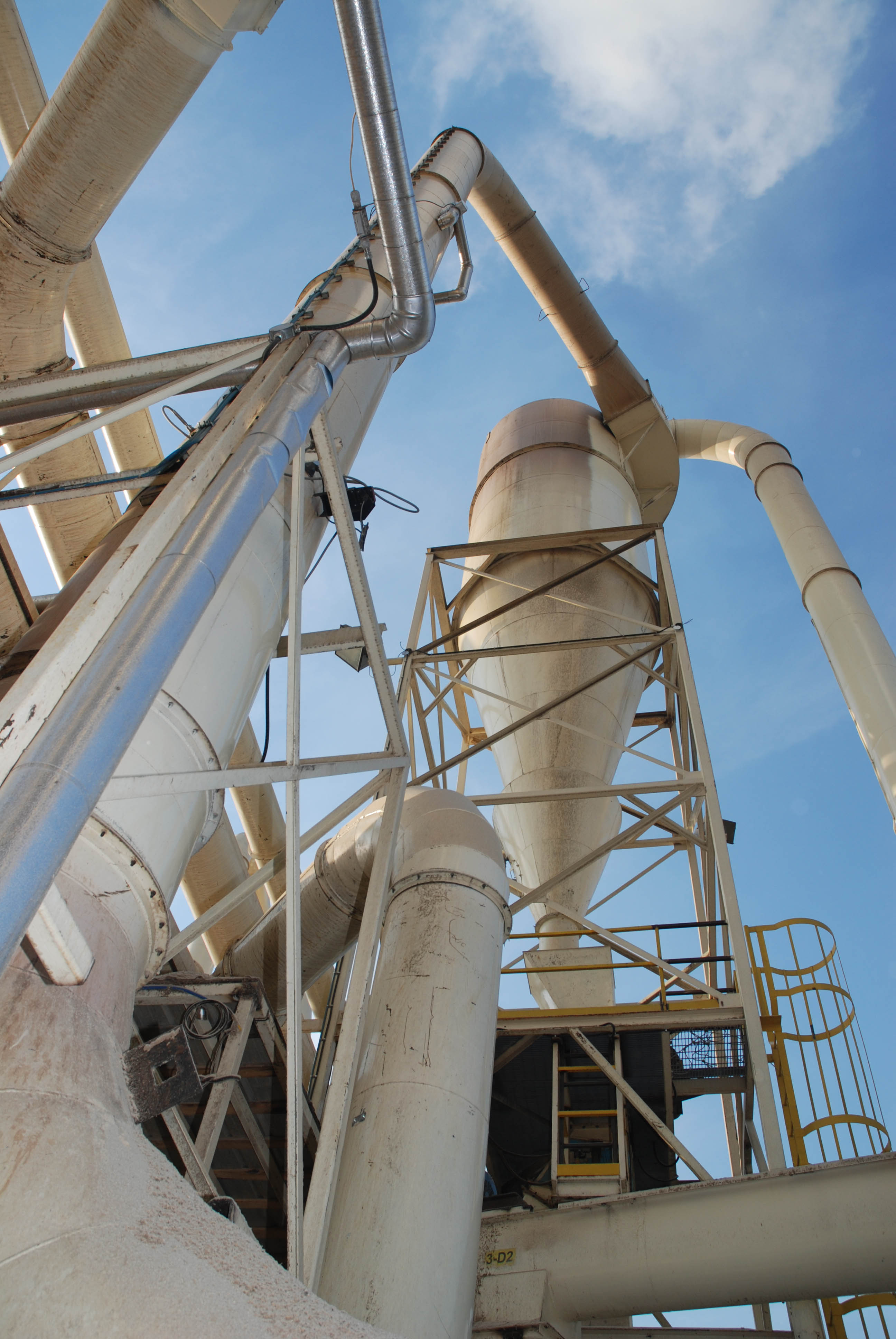 Arizona — Efforts to scale up forest thinning across northern Arizona are intensifying, as local officials, industry representatives and environmental groups warn that time is running short to reduce wildfire risk and protect critical watersheds. “Everybody is aware now that there is a biomass issue, but very, very, very few people have any real knowledge of the solution,” Eastern Arizona Counties Organization Executive Director Pascal Berlioux said during a recent Natural Resources Working Group meeting. A broad coalition is advocating for construction of a second biomass-burning power plant, arguing it is essential to prevent the collapse of the region’s wood products industry. Without that industry, leaders say, large-scale thinning efforts could stall, increasing the likelihood of severe wildfires threatening forest communities.
  WASHINGTON STATE– Current and former employees are suing Western Forest Products’ Vancouver operation, alleging the company failed to give employees breaks and pay wages owed. …Western manufactures lumber at its Fruit Valley location and formerly operated a Columbia Vista sawmill that closed after a fire last year. …The group of current and former employees also allege Western Forest Products didn’t keep accurate payroll records. The complaint states about 40 employees could have been impacted by the alleged practices. Babita Khunkhun, spokesperson for Western Forest Products, said “While we cannot comment on the specifics of the allegations at this time, we take all employee concerns seriously,” Khunkhun said. The company is reviewing the lawsuit and will respond through the appropriate legal process, she added. Western Forest Products recently unveiled plans to expand its Fruit Valley manufacturing operation.

 Portland based Hampton Lumber, one of the nation’s largest lumber manufacturers, confirmed on Thursday that it has parted ways with CEO Randy Schillinger. Steve Zika, vice chair of the Hampton board and its chief executive for 20 years before Schillinger was named to the position in June 2023 has served in an interim capacity since early December, the company said in an emailed statement. [A Portland Business Journal subscription is required to access this full story]
 PENSACOLA, Florida — West Fraser is requesting a tax break from Escambia County as the lumber company prepares for a planned expansion at its McDavid sawmill. Escambia County staff prepared a draft ordinance proposing the Canadian-based lumber company receive a 70% ad valorem tax exemption for a period of five years. …West Fraser applied for an EDATE for the assessed value of certain improvements. If the exemption is granted… over the next five years, the estimate of the taxable value lost to the county if the exemption is granted is $70,252,000 improvements to real property. In 2023, the board adopted a resolution supporting West Fraser’s expansion and agreed to consider the lumber company’s EDATE application when it was submitted. The county is scheduled to vote March 26 at its board meeting on scheduling a public hearing to consider establishing an EDATE for West Fraser.
  At the Advanced Bioeconomy Leadership Conference, US Department of Agriculture Administrator J.R. Claeys announced the USDA is guaranteeing $115.2 million across eight states (
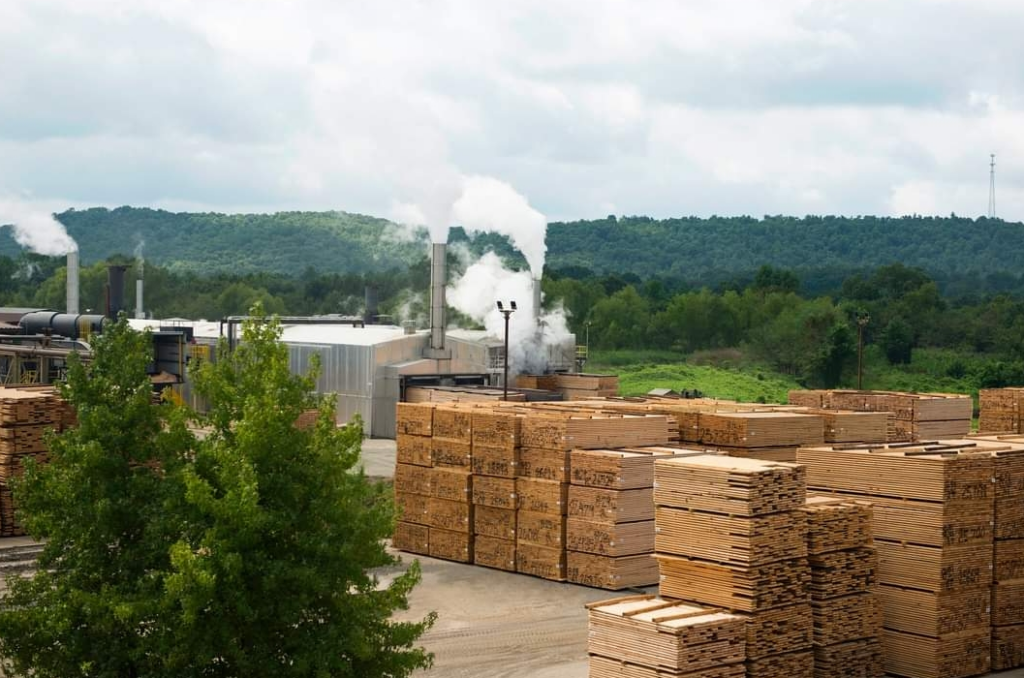
 KINGSPORT — Domtar’s Kingsport mill told the Tennessee Department of Environment and Conservation that it will try a method to improve wastewater quality at its wastewater lagoon this week. The mill said it will add an oxidant near the outlet of the lagoon’s settling zone for about 30 days to see if it would improve the effluent water quality. “It will be fed at a low rate of approximately 1 [part per million] with monitoring and testing being done at our effluent sample point before the discharge to the river,” the letter states. The mill has also tried chemical treatments and injecting liquid oxygen to address sulfuric odors attributed to the 25-acre wastewater lagoon.It is currently constructing a new wastewater treatment system, an anaerobic digester, to address wastewater odors attributed to the mill. Construction is expected to complete near the end of 2026.
 METCALFE, Georgia — Plantation Pine Products officially opened their doors at the former site of Hood Industries, signaling an exciting new chapter in a timber mill with a storied history. …The $25 million investment is set to provide 100 jobs, with the first mill employees reporting for duty in July, when it will once again come alive. Operated by Steve Conner, Plantation Pine Products will be one of the many “bread and butter businesses” of Thomasville. …“Forestry is woven into the fabric of rural Georgia in a way that no other industry can match,” Michelle Shaw said for the Georgia Department of Economic Development. …The reopening of the mill comes at a crucial time following the devastation of Hurricane Helene in 2025 and reinforces the resiliency of timber producers across Georgia.

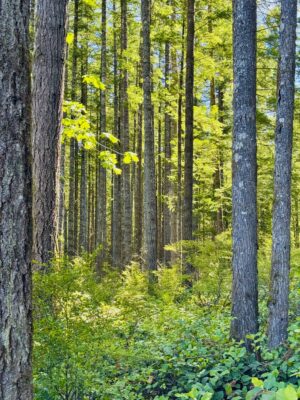 Ukraine’s state forestry sector has reported its strongest financial performance to date. Despite operating during wartime conditions, the industry delivered a significant increase in profitability last year. The results were announced during the annual public report presented by Viktor Smal, head of the State Forest Resources Agency of Ukraine. According to the report, the state enterprise Forests of Ukraine generated net profits of UAH 6.9 billion, equivalent to approximately US$167 million. The result represents a 2.76-fold increase compared with 2024. The achievement is considered a milestone for the country’s forestry management system. Industry leaders attribute the growth largely to procurement reforms introduced after 2020. These reforms were designed to improve transparency and reduce financial leakage within the sector. …Profitability within the forestry industry also improved considerably. The sector recorded an overall profitability rate of 22.8%. This figure increased by 12.3% points compared with earlier results.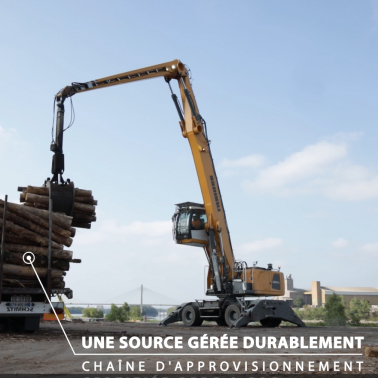
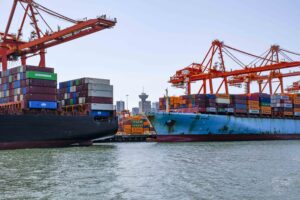 The outsized impact that oil prices have on the global economy means higher fuel and energy prices are all but guaranteed for many countries, not just those in the conflict region. …In the forest products sector, softwood lumber trade is one of the most directly exposed segments. Europe accounts for about one-third of the global softwood supply. Sweden and Finland are among Europe’s top exporters, along with Germany and Austria. …Lumber shipments out of Europe rely heavily on shipping routes through the Mediterranean, the Suez Canal, and the Gulf. Shipping costs are expected to escalate as fuel prices and risk premiums rise. Spikes in freight and insurance, along with rising energy costs in production and transport, could quickly start to make Nordic lumber less competitive while tightening margins. …Prolonged disruption in that region could force Nordic lumber producers to redirect volumes to Europe, North Africa, and Asia, causing price pressures in those markets.