 Yesterday, we featured Part II of our in-depth Q&A with political risk expert Robert McKellar, a follow-up to an August 2024 op-ed that sparked a much-needed conversation in the forest sector. A few weeks ago, in Part I of our follow-up, we explored the return of President Trump, his leadership style, and why political risk—once seen as a problem for unstable regions—is now very real for Canadian forest companies. McKellar identified major political forces impacting the Canadian forest sector—including the growing China-West rivalry and Canada-US trade friction—to help companies assess the relevance of political risk for themselves.
Part II, just published, picks up where we left off. It tackles the latest developments on duties and tariffs, asks whether Canadian-owned U.S. subsidiaries are in Washington’s crosshairs, and examines how U.S.-China trade friction could shape lumber demand. Yesterday’s announcement, that Trumps tariffs may be more targeted than initially threatened, simply adds to the uncertainty. …This isn’t your typical policy commentary—it’s a practical guide for companies looking to anticipate, adapt to, and even leverage political disruption. Although it’s a long read, we think it’s an important one.

 As a federal election kicks off, the trade war with the US is casting a long shadow over voters’ choices, and whoever forms the next government will have the tall order of trying to draw this conflict to a close. …International trade experts say that will be much easier said than done. The two economies are more integrated than ever before, and President Donald Trump’s chaotic governing style makes it extremely difficult to know how to even begin to unravel this dispute. …Carney met with the country’s premiers and leaders from long-time allies in other countries to chart a short- and long-term response to the tariffs. He has conceded there’s a limit to how much Canada can do to respond. …Russell Williams at Memorial University said because Trump keeps threatening Canada’s existence, a political, rhetorical de-escalation is essential before any compromise on trade can be reached.
 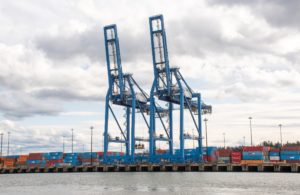 US President Donald Trump’s coming wave of tariffs is poised to be more targeted than the barrage he has threatened, aides and allies said. …The White House is narrowing its approach to take effect on April 2, likely omitting a set of industry-specific tariffs while applying reciprocal levies on a targeted set of nations that account for the bulk of foreign trade with the US. …The White House is still planning to unveil the reciprocal -tariff action on that day, though. …The fate of the sectoral tariffs, as well as tariffs on Canada and Mexico that Trump said were justified by fentanyl, remains uncertain. …The administration is now focusing on applying tariffs to about 15% of nations with persistent trade imbalances with the US… such as Australia, Brazil, Canada, China, the European Union, India, Japan, South Korea, Mexico, Russia, and Vietnam.
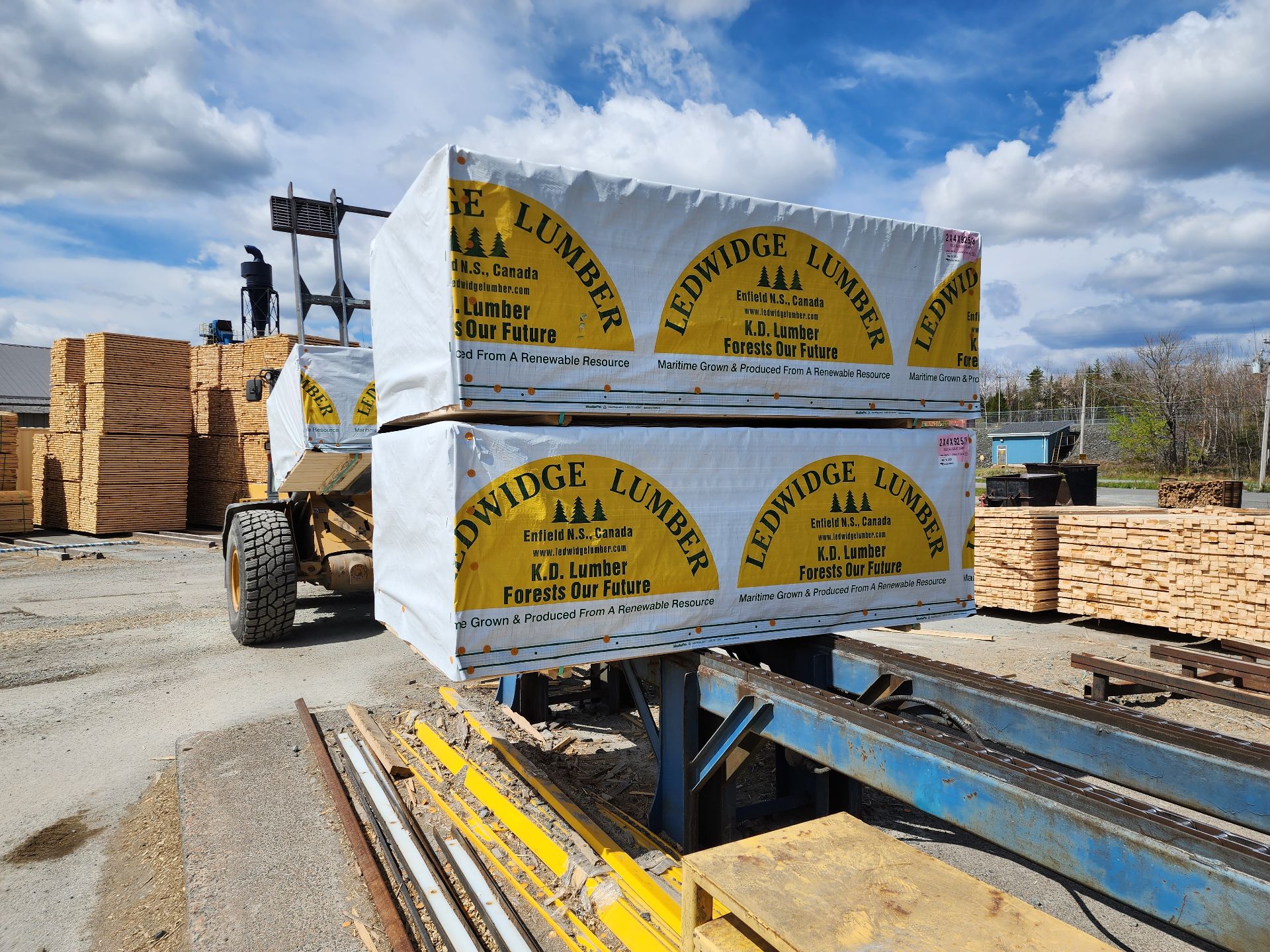
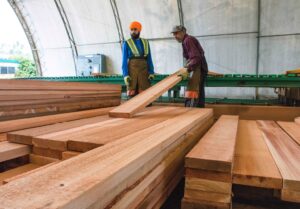 US builders pay a premium for the spruce, pine and fir (SPF) lumber that BC produces and could soon face additional tariffs after Trump’s proclamation that America doesn’t need the province’s wood. They like it, particularly for framing walls because SPF is lighter, stronger and tighter-grained than the more abundant southern yellow pine lumber that has a reputation for warping. …“There’s just this gap between what the U.S. can supply and what their demand is,” said Kurt Niquidet, president of the B.C. Lumber Trade Council. ..“There’s no way American supply, in the short-term, can do anything but rely on Canadian lumber,” Russ Taylor said. “Tariffs are just going to push the price up and create shortages,” Taylor said. “It’s just going to be market chaos, as it will be with OSB panels as it will be with pulp and newsprint.”

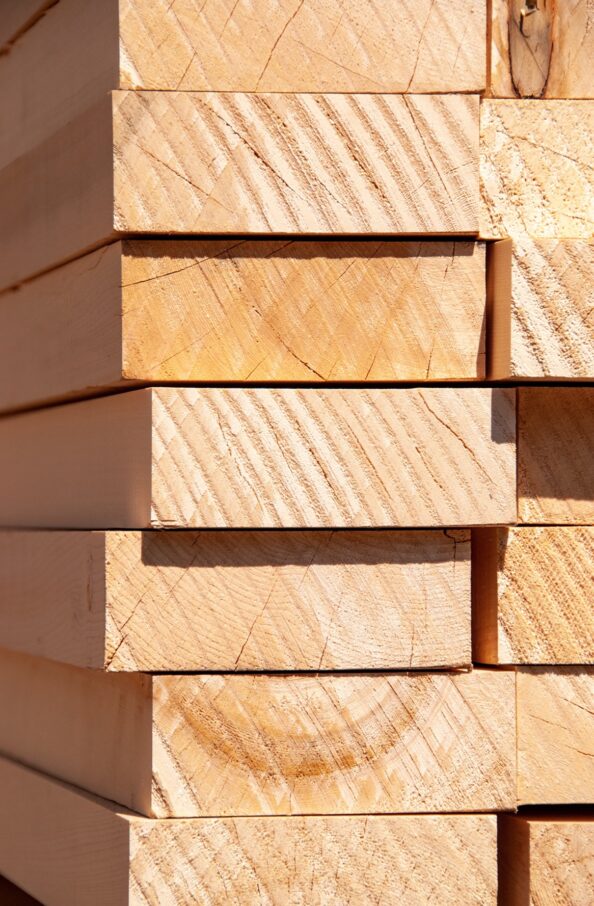
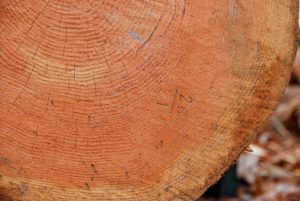 Despite decades of a fractious trade relationship between softwood producers in Canada and those in the U.S., the Canadian softwood lumber industry hasn’t liked to trumpet what it considers the superiority of its product because the two markets are so intertwined. Production has increased at U.S. sawmills in the past decade, including at facilities owned by companies with head offices in Canada. That’s now changing, with Canadian producers wanting to make plain to consumers in Canada, in the U.S. and no doubt, to potential new markets around the world, that the spruce, pine and fir grown north of the 49th parallel is a superior product. That’s because the growth rings are tighter than those found in the lumber in the U.S. South. It takes from 70 to 100 years before spruce, pine and fir (SPF) trees are considered ripe for harvesting in the B.C. Interior. By comparison, southern yellow pine trees are harvested after about 35 years. [a paid subscription is required to read this story]
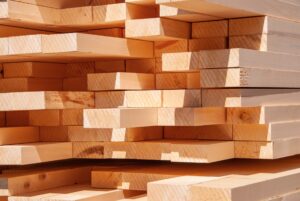 As the cross-border trade war escalates, Canada’s softwood lumber industry has an advantage on its side that no tariff can completely erase – its product is objectively better than much of the timber harvested from US forests. Softwood supplies, especially from BC and Alberta, are widely viewed as more desirable for wood framing because the growth rings are tighter than those found in lumber in the US South. In the milder climate of the U.S. South, the growing season is much faster. It takes about 35 years before southern yellow pine (SYP) trees are harvested. …Canada’s secret weapon, however, is hiding in plain sight. Tighter growth rings tend to result in quality two-by-four or two-by-six SPF boards for home builders, meaning walls that will stay straight. Compared with American SYP lumber, Canadian SPF is also lighter in weight. …Eastern SYP is currently selling at lower prices when compared with SPF. “SYP is an imperfect substitute for SPF,” RBC Capital Markets analyst Matthew McKellar said. [to access the full story a Globe & Mail subscription is required]
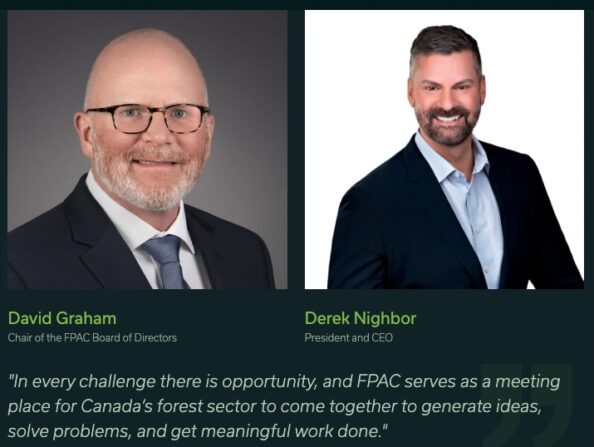 This year, Canadian forest companies and their employees continued to navigate a rapidly changing political, economic, and trade environment. Customers, investors, and local communities have a shared interest in good environmental outcomes and sustaining and growing family-supporting jobs. As a global leader in sustainable forest management and responsible sourcing, Canada’s forest sector and its people have met these challenges head-on. In 2024, FPAC and its members continued to make meaningful strides on climate action, biodiversity conservation, and expanded partnerships with Indigenous Peoples and inclusion of Indigenous knowledge into Sustainable Forest Management. Buyers of Canadian forest products can be confident that measures to improve environmental performance, strengthen relationships with Indigenous Peoples, and provide the highest quality of products are being implemented across our operations and throughout the country – ensuring that forestry practices in Canada contribute to maintaining and supporting the ecosystems, wildlife, and people that rely on them now and for generations to come.
 COFI 2025 Convention: April 2-4, Prince George, BC — The global trade landscape is evolving rapidly. Economic uncertainty, shifting regulations, and geopolitical challenges are reshaping market access for Canadian forest products. Staying competitive requires a clear understanding of emerging risks and strategic opportunities. At the COFI 2025 Convention, a panel of industry experts will examine the forces shaping international trade and explore actionable strategies to enhance industry resilience. Presenter and Moderator Russ Taylor, President, Russ Taylor Global will lead the discussion with panelists: Kate Lindsay, Senior VP & Chief Sustainability Officer, Forest Products
 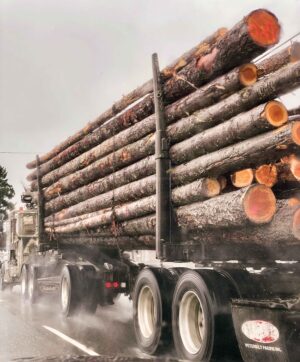 The two BC regions that include resource-reliant communities like Smithers, Vanderhoof and Terrace stand to lose the most from tariffs, according to new research from the Institute for Research on Public Policy. …While BC stands to be the least affected province, tariffs are likely to cause the greatest disruptions in regions of Bulkley-Nechako and the Kitimat-Stikine. The first region depends heavily on forestry, while the second includes Rio Tinto’s aluminum smelter in Terrace. Counting existing countervailing duties, BC forest products could face tariffs exceeding 50 per cent, if not higher. …Almost three-in-10 workers in Bulkley-Nechako hold jobs in export-oriented industries with about 5.6% of the total work exposed to US tariffs. …Rounding out of the Top 5 are the Peace River and Cariboo (both 5.5%) and Kootenay-Boundary (5.4%). Regions potentially least affected by the tariffs include the Capital Region (1.5%), Squamish-Lillooet (1.4%) and the Central Coast (1.2%). Greater Vancouver’s exposure is 2.8% and the fast-growing Fraser Valley is 4%.
 As Canada faces an urgent need for housing, BC’s forest sector has a critical role in meeting this demand with sustainable, high-quality wood products. Developing new strategies for how we generate and move wood fibre across the supply chain in partnership with First Nations, utilize the right wood in the right buildings, and deploy innovative pre-fab and off-site construction methods will be essential to increasing the domestic use of wood. Don’t miss this conversation on how we can help address Canada’s housing needs while driving economic growth and supporting sustainable forestry. Panelists:
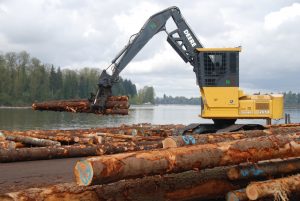 The federal government is providing about $20 million in funding to support BC’s forestry sector. Energy Minister Jonathan Wilkinson says it’s more important than ever to support the sector, which is subject to American duties on softwood lumber and now faces the additional threat of steep tariffs. NRCan says the funding will support 67 projects. …About $11.3 million will flow through the Investments in Forest Industry Transformation program for six projects that are adopting new technologies. More than $7 million will go through the Indigenous Forestry Initiative to 50 projects advancing economic development opportunities. Another $1.6 million will go to nine projects promoting the commercialization of wood-based products in the construction sector, while $600,000 will go to projects aimed at strengthening international partnerships and decreasing market barriers. …Ottawa has also announced $5 million in funding for four projects in B.C. and one in Yukon aimed at helping laid-off workers from the forestry and mining sectors.
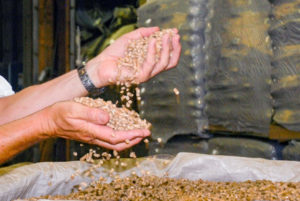 The federal government is providing funding to support BC’s forestry sector. …In what could mark a turning point for the Fort Nelson economy, a long-awaited pellet mill project is poised for significant progress with a $250,000 funding injection. The Fort Nelson First Nation is set to receive the funding, which will bolster its partnership with Peak Renewables. Together, they aim to convert an idle former Canfor sawmill into a large-scale wood pellet plant. …The region, historically reliant on its resource sector, has faced a number of challenges in bringing the project to fruition. In November 2020, the Fort Nelson First Nation extended a $1 million interest-free loan to Peak Renewables to advance the project. Originally, the pellet mill was slated to begin operations in early 2022. Since then, no new timeline has been provided as to when the mill may become operational.
 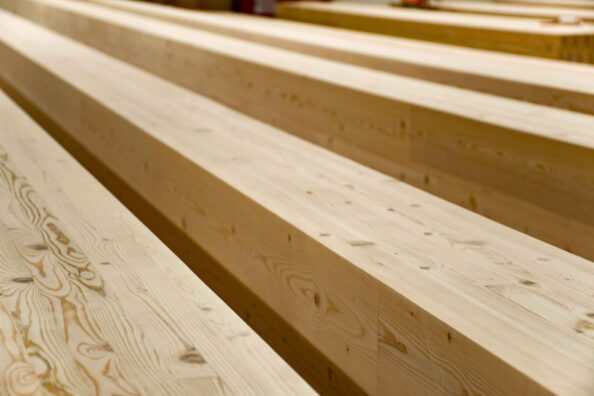 Several Cariboo businesses are receiving money from the BC Government to aid in some of their major projects. …$422,000 will be given to Tsi Del Del Development Corporation, 94 Mile House, to purchase equipment for the creation of a sort yard for biomass that aims to centralize the processing of waste wood … in order to manufacture higher value products. This project will create up to 16 jobs. …OT Timber Frames in 150 Mile House $235,000 to expand their production facility and two CNC machines to scale-up the production of prefabricated homes, including a new product offering, and year-round employment for staff, creating 5 jobs and protecting 20. …And $10,000 to Massive Canada Building Systems in Williams Lake to establish a new 91,000 square foot mass timber modular home manufacturing facility that will prefabricate laneway homes, apartment units, townhouses and commercial projects using mass-timber building products. This project will create 71 jobs. Funds provided through the Manufacturing Jobs Funds.
 Ravi Parmar, Minister of Forests, celebrated the official opening of Canoe Forest Products’ new kiln. The new kiln was made possible with funding from the Province’s BC Manufacturing Jobs Fund (BCMJF). …Canoe received more than $2.2 million in November 2023 to commission a new kiln, boosting both production and sustainability at its operation in Salmon Arm and help protect 200 jobs. …Parmar accompanied Canoe employees, community guests, and Nick Arkle, CEO of the Gorman Group, at an opening ribbon-cutting ceremony. …Parmar is also visited Tolko Industries who received $8 million to help expand Tolko’s Heffley Creek operation. Family-run Gilbert Smith Forest Products in Barriere received $1.1 million to support facility modernization and new equipment. AcuTruss Industries in Vernon received $100,000 to support the purchase and commissioning of equipment to manufacture precision cut I-joists through automation.
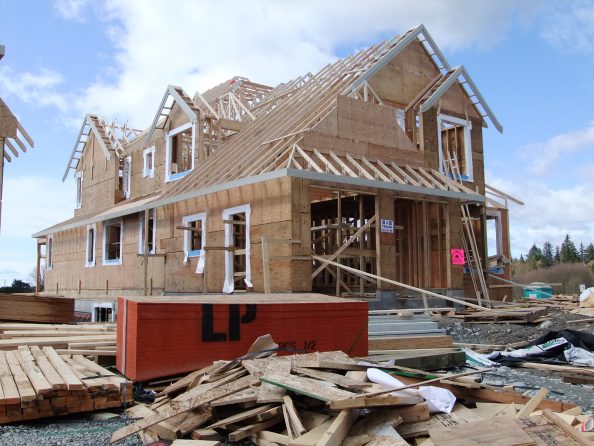 Lumber and other costs could soar … but that’s not even the biggest problem. First, Canada was hit with tariffs. Then it wasn’t. Then came March 4, a.k.a. Tariff Tuesday. Then the U.S. stock markets tanked and big American industries — including the auto sector — ramped up their tariff objections. Then we had Oops Never Mind About Those Tariffs For Now Thursday. …As it stands, Canada has a second tariff reprieve on goods covered under the Canada-U.S.-Mexico Free Trade Agreement. Until April 2. So this trade war is far from over. Whether directly or due to instability, it affects every aspect of our economy — and that includes housing. …While builders can use Canadian lumber, of course, other materials and products are traditionally imported largely from the U.S. These include appliances, glass windows and doors, ceramic tiles, hardware components such as fasteners, and machinery and tools.
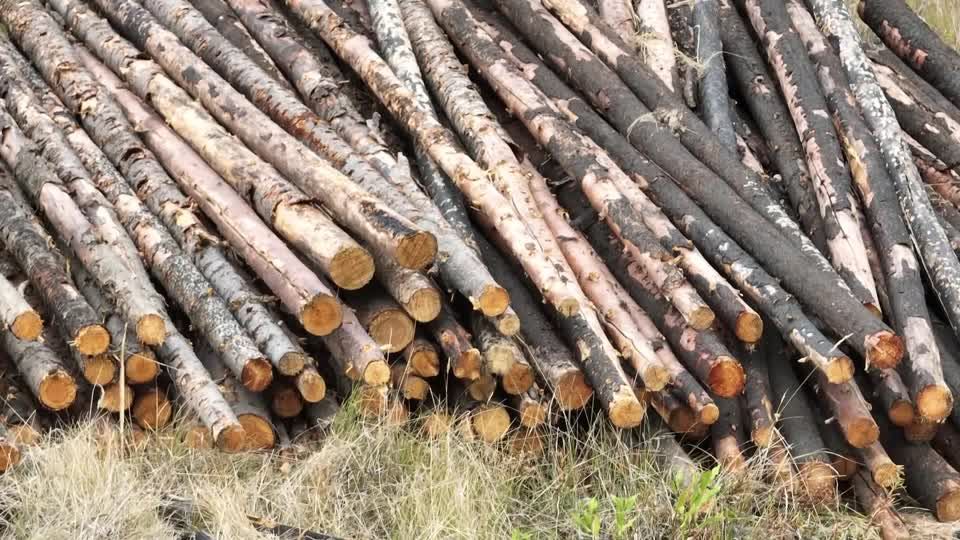


 A Vernon internet personality known for her funny online responses has shifted to creating political content with an upcoming federal election and ongoing trade war with the United States. Vernonite Elle James, known online as Shameless Elle, has been creating content for years, primarily making humorous reaction videos. Things started to shift for James during the most recent U.S presidential election.
  …Donald Trump is plunging North America into a trade war and clogging the flow of goods between Canada and the U.S. …Canada’s forestry industry is in the crosshairs, with a 25 per cent tariff on lumber and pulp and paper products. The likely result is higher prices on everything from the materials used to build homes to basic necessities like toilet paper. Quebec’s economy is deeply rooted in its forests… Toilet paper is a big part of that flow. Two years ago, Canada exported over $1.6 billion worth of TP, with the U.S. receiving almost all of it. …Even if American mills had the capacity to process more lumber, they’d still face a workforce problem. It’s ironic that the U.S. is penalizing Canada — a responsible steward of the trees — right after we delivered firefighters, equipment and water bombers to protect California’s trees. Canada offered its support to the U.S., but now we’re getting burned.
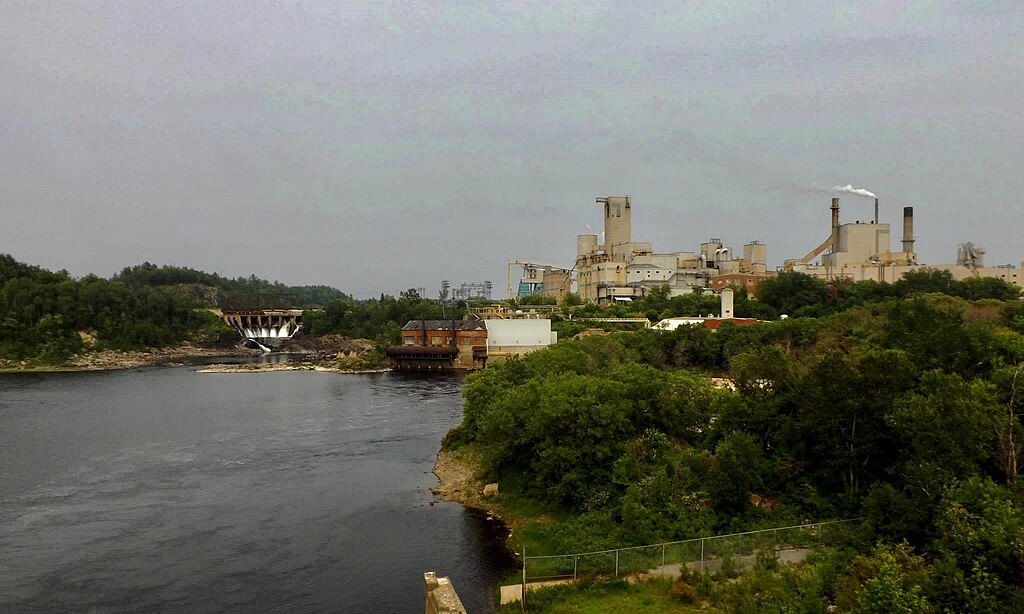

 SAGUENAY, QUE. — Wood, as well as aluminum, are economic drivers in Quebec’s Saguenay-Lac-St-Jean region north of Quebec City. The … looming 25 per cent tariffs are leaving businesses in Saguenay-Lac-St-Jean bracing for impact. Inotech, a company that specializes in manufacturing equipment for the wood industry, said the economic disruption started in early February, when Trump had initially promised to impose tariffs, before delaying them. “In Quebec, the entire wood market was paralyzed,” said Michel Marceau, the company’s CEO. “People are waiting to see what will happen and during this time, no one is investing,” added Michael Dufour, Inotech’s sales director. A recent study from the Canadian Chamber of Commerce identified Saguenay and Drummondville — a city northeast of Montreal — among the Canadian cities most vulnerable to U.S. tariffs.
 Canada could be on the lower end of Trump’s threatened global tariffs next week, the Star has learned. Nothing, however, is guaranteed until Trump decides ahead of his April 2 deadline and no government officials are taking any assurances for granted, sources said. …Canadian sources with knowledge of discussions between the two countries say White House officials have suggested Trump may impose three escalating levels of tariffs on America’s trading partners, with Canada getting hit on the lower end of the scale. …Despite a recent news report the tiered-approach is not on the table, the sources said it aligns with the government’s understanding of what’s about to hit next week. Flavio Volpe, head of the Canadian Auto Parts Manufacturers Association, said, “I wouldn’t take any comfort from that… it may just be that some other countries have been levied a higher universal tariff”.
 The American Wood Council (AWC) continues to do critical work on behalf of its members, and it is our pleasure to share notable examples from this past year… AWC continued to position U.S. wood products as a sustainable solution to address the environmental impact of the built environment. …Our codes and standards teams worked together to secure some important wins in the initial Group A ICC code cycle, including references to the ANSI Fire Design Specification. …As we look to this year, the new Administration means many changes in policy and regulations. We at AWC are prepared to continue to work hard to advance public policies that support market growth and protect the industry from adverse federal legislation and regulation. Our sector tells a truly bipartisan story, and we look forward to a fresh start with new opportunities to promote our industry and all of the good it does for the country.
 Following the US government’s imposed tariffs on steel and aluminium, Cepi has called on the European Commission to continue negotiations, citing the potential for future tariffs including pulp and paper and aiming to avoid supply chain disruptions. Cepi is currently taking part in a consultation launched by the European Commission. …The confederation asks the Commission to exclude from such EU retaliation list products that risk being in short supply in the EU. …According to Cepi, the EU imports around 900,000 tonnes of pulp per year from the US and close to 600,000 tonnes of paper and board, while the EU exports about 1600,000 tonnes of paper and board to the US and around 350,000 tonnes of pulp. It states that since a multilateral agreement of all major pulp and paper producers in January 2004, there have been no import tariffs on both sides of the Atlantic.
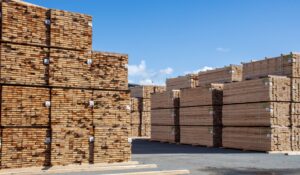 The Commerce Department’s Bureau of Industry and Security (BIS) has formally launched two Section 232 investigations that could lead to import restrictions on copper and lumber and timber, according to Federal Register notices scheduled for publication on Thursday. Trump signed an executive order on Feb. 25 ordering the copper probe and another on March 1 for lumber and timber. Both instructed Commerce Secretary Howard Lutnick to start the investigations, which threaten to further strain trade relations with Canada and other trading partners. The Section 232 law allows up to 270 days for a probe, but White House officials said they expect Lutnick to move faster. In one sign of that, BIS set an extremely short period for public comment in the two investigations, ending on April 1. that coincides with the deadline for executive branch agencies to compete a number of trade reports for the White House. [to access the full story a PoliticoPro subscription is required]

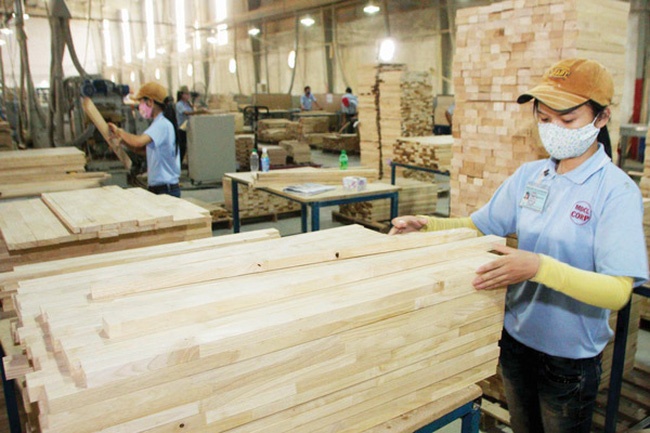




 KUALA LUMPUR, Malaysia — The proposed classification of two timber species commonly found in Malaysia as unsustainable by the United States and the European Union (EU) under the Convention on International Trade in Endangered Species of Wild Fauna and Flora (CITES) will result in the cancellation of Malaysian timber exports to the US and the EU. The Timber Exporters’ Association of Malaysia (TEAM) treasurer Wong Kar Wai said that in addition to impending tariffs, the US and the EU are proposing to classify certain timber species common to Southeast Asia, including Malaysia – namely Shorea, locally known as Meranti, and Apitong, known as Keruing – under CITES despite being sustainably harvested and processed. “Keruing is a special type of timber primarily used for floorboards, with the US being its main market. A major buyer is the US military, which uses Keruing for the flooring of trucks and tanks due to its durability and strength.