
President Donald Trump said tariffs on some goods from Canada and Mexico planned for April 2 “could go up,” and would not predict whether the United States will have a recession in 2025. On Fox News Sunday morning, Trump said reciprocal tariffs would go into effect on April 2 and the one-month reprieve granted to Mexico and Canada was a “little bit of a break.” …But Trump has continued to make changes to tariff plans. On Friday, he threatened new tariffs on Canadian lumber and dairy products. Those tariffs could go into effect on Monday. …Meanwhile, Commerce Secretary Howard Lutnick confirmed Sunday on NBC’s “Meet the Press” that Trump’s promised 25% tariffs on steel and aluminum imports will go into effect Wednesday and tariffs on Canadian dairy and lumber products will “start on April 2.” …Lutnick indicated the tariffs will continue until Trump is “comfortable” with how both countries are handling the flow of fentanyl.
Related coverage in:
- CBS News: Canadian ambassador Kirsten Hillman on “Face the Nation”
- Washington Examiner: Lutnick signals lumber tariffs on Canada not before April

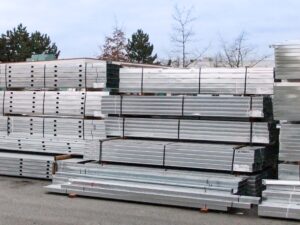 US Commerce Secretary Howard Lutnick signaled he doesn’t expect a reprieve on 25% tariffs for steel and aluminum imports scheduled to take effect on Wednesday. The levies, ordered by U.S. President Donald Trump in February, include imports from Canada and Mexico — which are among the top foreign suppliers — and apply to finished metal products, too. U.S. steelmakers have urged Trump to resist exemptions to the tariffs, which risk hitting US companies that use aluminum and steel. Administration officials have said the policy is aimed at cracking down on efforts by countries including Russia and China to bypass existing duties. Last week, Trump imposed sweeping tariffs on imports from Canada and Mexico but later walked back some of the changes — offering a one-month reprieve to automakers and then expanding that pause to all imported goods covered by the free-trade agreement between the US, Canada and Mexico.
 Let me propose that we respond to President Donald Trump and his supporters in a more direct fashion: by wiping them out. No, not with violent force, or vain attempts at economic annihilation, but in a way that is more, shall we say, fundamental. It would be shockingly easy to empty America’s store shelves of toilet paper. A weeks-long bog-roll panic could be provoked, right now, with only a few words from a Canadian leader. The tissue of lies behind the trade war would be wiped away, exposing the backside of Mr. Trump’s bizarre trade claims in a way that would be far more noticeable than any retaliatory tariff. …Supply chains for the rolls of tissue are so constrained, lacking in stored reserves and Canada-dependent, Kruger CEO Dino Bianco explained, that it would only take a tiny push to cause panic buying and the anxiety-inducing sound of empty cardboard tubes rattling on bathroom spindles. …It sends a clearer message: Canadians believe in trade. We want trade. And if you deprive us of it, we know how to hit you where it really hurts. [Globe and Mail subscription required for full access]
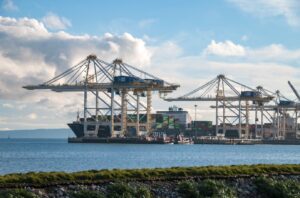 President Donald Trump on Thursday signed executive actions that delay for nearly one month tariffs on all products from Mexico and Canada that are covered by the USMCA free trade treaty, a significant walkback of the administration’s signature economic plan that has rattled markets, businesses and consumers. The executive actions follow a discussion Trump held Thursday with Mexican President Claudia Sheinbaum and negotiations between Canadian and Trump administration officials. …Energy from Canada, however, is not included in the USMCA, the White House official said. So that lower 10% tariff is expected to remain in place… but the Trump reduced the tariff on Canadian potash to 10%. …Canada will now pause their planned second round of tariffs on over 4,000 US goods until April 2, Canadian Minister of Finance Dominic LeBlanc said.
 GENEVA — Canada has requested consultations with the United States on “unjustified tariffs” at the
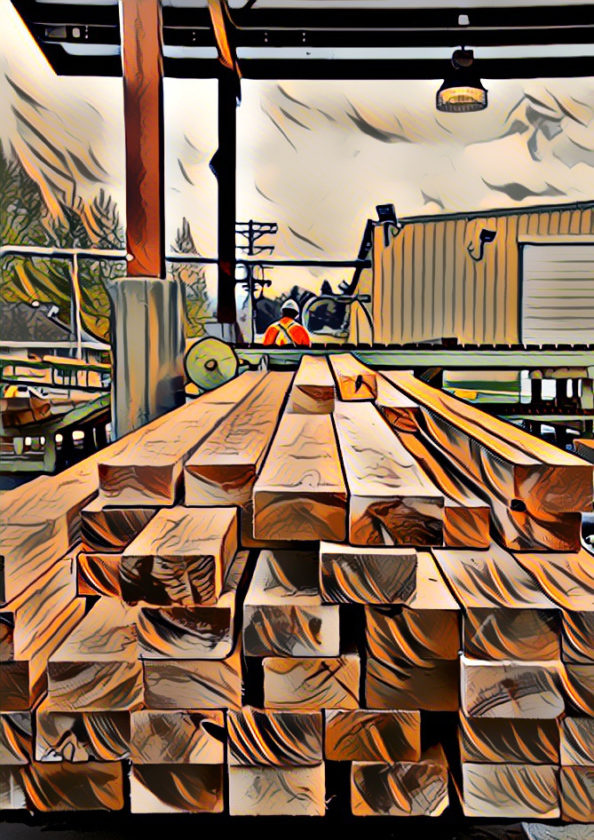 Canadian homeowners can expect to face higher premiums when they renew their home insurance, as new U.S. tariffs add pressure on property and casualty insurers by raising the cost of building materials and appliances. …The tariffs placed by Mr. Trump on building materials such as aluminum, steel and lumber will add extra costs for insurers to the goods used in replacing and repairing homes, cars and businesses, Brett Weltman, spokesperson for the Insurance Bureau of Canada, said. “While we don’t yet have a precise picture of the scope of these effects, over time, tariffs will hurt consumers and families on both sides of the border,” he said. …Bill Premdas, executive director of KPMG’s Canadian insurance practice, said a prolonged tariff battle with the U.S. could put pressure on claims costs as many of the resources used to rebuild and repair homes are covered by cross-border trade agreements. [Globe and Mail subscription required for full access to this story]
 WASHINGTON — A day into Donald Trump’s North American trade war, the U.S. president remained adamant that tariffs would benefit America even as a key member of his team has floated that a compromise could materialize Wednesday. Trump addressed a joint session of Congress Tuesday night by making a case for his massive tariff agenda. …Ottawa introduced immediate 25% retaliatory tariffs. …Following a second day of sharp decline, U.S. Secretary of Commerce Howard Lutnick said… the government was looking to “work something out” in a deal that could be announced on Wednesday. …Lutnick tied the deal to the Canada-U.S.-Mexico agreement, which was negotiated under the first Trump administration to replace the North American Free Trade Agreement. …Trump also ordered 25% tariffs on all steel and aluminum imports into the United States on March 12… m[and he] signed an executive order to implement “reciprocal tariffs” starting April 2. Other tariff targets include automobiles, copper, lumber and agricultural products.

 US President Trump on Saturday
 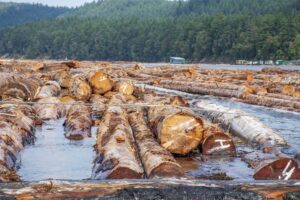 Donald Trump has ordered a probe into dumping in the US lumber market, setting the stage for the industry to join the widening basket of commodities targeted by Washington’s global trade war. The president directed the Department of Commerce to investigate whether imports of lumber and wood products were undermining domestic loggers in a way that posed a risk to US national security, days after ordering a similar review of the copper industry. …Forestry is big business for Canada. In 2022, the sector contributed C$33.4bn to real GDP, or about 1.2%. In the same year Canada’s forest product exports were valued at C$45.6bn, with the majority destined for the US. …Derek Nighbor, FPAC president, said any increase in tariffs on lumber would hurt forest sector employees on both sides of the border. …But Andrew Miller, chair of the US Lumber Coalition, said: “Canada’s unfair trade comes at the direct expense of US companies and workers.”




 This year’s COFI convention will tackle the most pressing challenge facing BC’s forest sector – predictable access to fibre. Without this, BC’s global competitiveness and the family-supporting jobs forestry provides remain at risk. There is a path forward. Within the sustainable Allowable Annual Cut there are opportunities to surpass a minimum target of 45 million cubic meters of harvest while maintaining environmental stewardship. Achieving these outcomes will require changes to BC Timber Sales (BCTS), innovative approaches to forest landscape planning, stronger partnerships with First Nations, and community-led solutions. Join us for a solutions-oriented discussion, featuring distinguished experts: George Abbott, Treaty Commissioner, Former BC Cabinet Minister & Member, BC Timber Sales Review Task Force; David Elstone, Managing Director, Spar Tree Group; Makenzie Leine, Vice President, Business Development, A&A Trading; Jennifer Gunter, Executive Director, BC Community Forest Association; moderated by Michael Armstrong, VP and Chief Forester at COFI.
 By easing the current restrictions on timber harvesting and natural gas development, B.C. Premier David Eby can reduce B.C.’s reliance on U.S. markets and improve affordability… This policy shift would create jobs, help address the cost-of-living crisis and insulate B.C. from U.S. trade volatility by diversifying its trading partners. Natural resources, namely forestry, energy, mining and agriculture, make up about 75 per cent of B.C.’s exports as of November 2024. …Yet both sectors face government-imposed constraints, from caps on logging to opposition to pipelines. Since forestry and energy dominate B.C.’s exports, robust growth depends on expanding these sectors. B.C.’s forestry industry has long been a global leader, but policies restricting access to fibre are undermining its viability. The annual allowable cut and a cap on how much timber can be harvested, along with actual cuts, have been reduced in recent years due to environmental concerns and pressure from within the NDP’s base.
 VICTORIA – The United Steelworkers union (USW) acknowledges the difficult position facing the B.C. government in its 2025 budget and applauds the thoughtful, diligent focus on priorities by Minister of Finance Brenda Bailey. U.S. President Donald Trump’s threats and the imposition of tariffs have created uncertainty for important exports, including lumber, copper, zinc and other essential products. …“Workers are calling for action to grow and diversify the economy and supply chains, reducing dependence on the U.S. market while ensuring jobs in mining, critical minerals and processing, forestry and lumber manufacturing,” said Scott Lunny, USW Western Canada Director. …B.C. should prepare for a wave of layoffs in the forest sector due to rising duties. …The USW is urging the B.C. government to increase the supply of fibre and streamline the permitting process in the logging sector to support the primary industry and facilitate ongoing efforts to expand manufacturing, Mass Timber and other value-added industries.


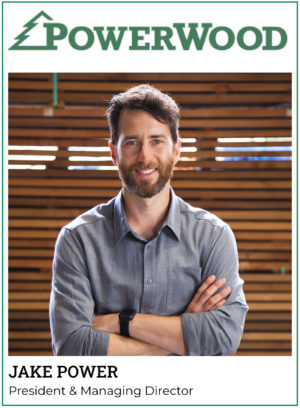 Overnight, Jake Power went from reflecting on one of the best months that his Agassiz-based custom sawmill has ever had to staring into a potential recession sparked by U.S. President Donald Trump’s tariffs. Power, along with every other British Columbian, woke up to the reality of a trade war. …“Our business was growing, our customers were doing well,” said Power, CEO of Power Wood. “Now, I think we all expect a North American recession if this continues.” …Premier David Eby declared that “all bets are off” in terms of his response to standing up for the province. …Trade economist Werner Antweiler said he worries the most about B.C.’s forest industry, which was “already struggling (at) the edge of profitability.” …There is another looming danger in a trade war if it results in continuing depreciation of the Canadian dollar versus the U.S. currency, according to economist Bryan Yu.

 Vancouver — The BC Lumber Trade Council (BCLTC) strongly opposes the U.S. Department of Commerce’s preliminary decision to increase anti-dumping duties on Canadian softwood lumber to 20.07%. This unjustified move will negatively impact forestry workers and communities in British Columbia, while further burdening homebuilders, consumers, and the broader construction sector in the United States. “It is deeply disappointing that the U.S. continues to impose these protectionist trade measures” said Kurt Niquidet, President of the BC Lumber Trade Council. “The fact remains that the United States relies on Canadian softwood lumber imports and these duties will harm not only the B.C. forestry industry, but also U.S. consumers, who will bear some of the cost”. Ongoing rebuilding efforts in North Carolina and California, where affordable and reliable lumber is critical to recovery, will be more expensive as a result of this decision.
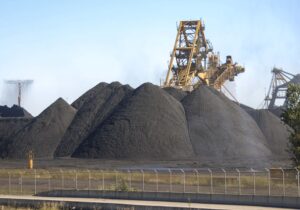 KAMLOOPS — The U.S. Department of Commerce has announced plans to almost triple the anti-dumping duties on Canadian softwood lumber. …“It’s going to be devastating for our industry if we can’t come up with some cost saving methods to be able to not only be more competitive but also trading with our largest partner when it comes to our softwood lumber agreement. …Kamloops-North Thompson MLA and Forest Critic Ward Stamer believes B.C. needs to place a carbon tax on coal as a response. “Our party proposed a carbon tax on U.S. thermal coal through our ports last Monday, and really what we should be doing — whatever they are charging us in duties, we should be charging them back with a carbon tax. …The BC Conservatives asked for an update on their carbon tax proposal during Monday’s question period.

 Landscape to Local: Integrated solutions to wildfire, conservation, community safety and economic development: As wildfires intensify and land use policies evolve, finding solutions requires cooperation across governments, First Nations, local communities, labour and industry. The “Landscape to Local” panel will tackle critical issues, shedding light on real world strategies, innovative practices and community-driven approaches to address the dual challenges of protecting our forests while supporting local economies. Join our distinguished panel of experts: John Kitzhaber, Former Governor of Oregon; Ward Stamer, MLA for Kamloops-North Thompson and BC Conservative Critic for Forests; Klay Tindall, General Manager of Lil’Wat Forestry Ventures; James Whitehead, Engagement Analyst with the Mitigating Wildfire Initiative at SFU’s Wosk Centre for Dialogue; and Moderator Zara Rabinovitch, Vice President of Sustainability & Public Affairs at COFI.





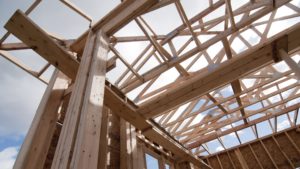 When President Trump threatened new tariffs on Mexico, Canada and China at the beginning of February, Steve Martinez flew into action. The Idaho-based general contractor spent hundreds of thousands of dollars on materials like lumber, windows, cabinetry and steel to stockpile them before the tariffs hit. …Since his lenders wouldn’t finance these purchases, he is paying out of pocket and using cash. Then after the president abruptly walked them back, Martinez was left with an upended business plan, less cash and feeling confused about what to do next. “I can’t keep ping ponging back and forth,” Martinez said. …Builders have been doing what they can to insulate themselves from higher import costs, from stockpiling materials and appliances to shrinking the size of the homes they will build. But if tariffs take effect long term, they will only be able to absorb so much cost. [to access the full story a WSJ subscription is required]
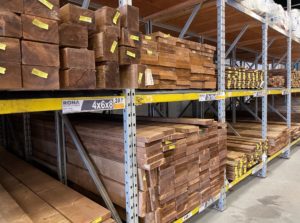 As we enter what are typically the most profitable months for US builders, widespread uncertainty regarding pricing is casting a pall over the industry. Northeastern Retail Lumber Association (NRLA) crystallizes these concerns, noting that: “Despite repeated delays of tariffs on imports from Mexico and Canada, prices continue to fluctuate unpredictably, leading to hoarding by customers, delayed orders for restocking, and customers abandoning purchases due to sudden cost increases.” The NRLA says the current situation recalls the tumult of pandemic-era supply chain shortages. “Now, dealers are reporting the same patterns: unpredictable cost increases, uncertainty in securing supply, and customers unable to move forward with purchases due to rapidly shifting prices.” …NRLA writes that daily price changes are making it impossible for retailers to provide accurate quotes, which constricts pricing guarantees. …NRLA dealers are reporting that even U.S.-made manufactured materials are seeing price increases.
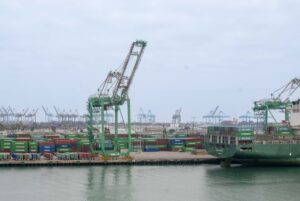 Thousands of US companies opened for business on Friday with no idea whether they had to pay tariffs. …In imposing the tariffs, Mr. Trump misused the 1977 International Emergency Economic Powers Act. Congress passed IEEPA to give presidents tools to respond quickly to emergencies like wars or terrorist attacks. …IEEPA has never been used for tariffs, and courts should rule that it can’t be. …US trade laws require the president to identify and investigate specific trade practices that harm the U.S. and then propose remedies, such as tariffs or negotiations. A president may impose tariffs on specific goods if fact-finding determines that imports threaten US national security. Mr. Trump’s reasons for imposing tariffs on Canada don’t appear to satisfy these standards. …Faced with Mr. Trump’s tariff threats, Canadian, Mexican and European officials have indicated that they are open to collective action against China, the world’s biggest exporter and a major source of US trade deficits. [to access the full story, a WSJ subscription is required]
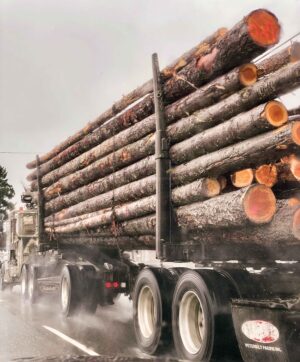 China suspended on Tuesday the soybean import licences of three U.S. firms and halted imports of U.S. logs, stepping up its retaliation for Donald Trump’s decision to impose an extra 10% duty on China. …The suspension of U.S. logs was a direct response to Trump’s move on March 1 to order a trade investigation on imported lumber. Trump had earlier told reporters that he was thinking about imposing a 25% tariff rate on lumber and forest products. “The announcement of import restrictions on U.S lumber and soybeans linked with phytosanitary issues follows a long history of similar measures by Beijing,” said Even Pay, agriculture analyst at Trivium China. …China is one of the world’s largest importers of wood products and the third-largest destination for U.S. forest products. It imported around $850 million worth of logs and other rough wood products from the U.S. in 2024, according to Chinese customs data.


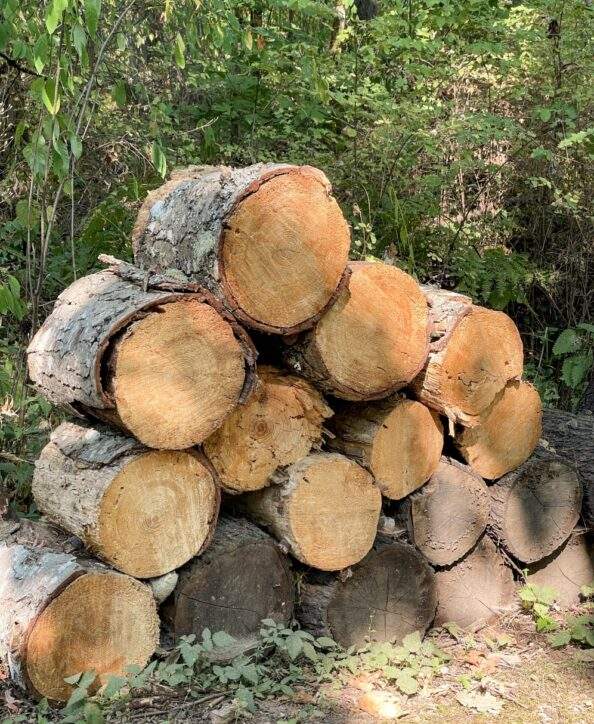 BEIJING – China suspended on Tuesday the soybean import licenses of three U.S. firms and halted imports of U.S. lumber, stepping up retaliatory action after the United States imposed additional tariffs on Chinese goods. Earlier in the day, China also imposed import levies covering $21 billion worth of U.S. agricultural and food products… Customs said it detected ergot and seed coating agent in imported U.S. soybeans while the suspension of U.S. lumber imports was due to the detection of small worms, aspergillus and other pests. …Beijing’s retaliatory measures were in response to U.S. President Donald Trump’s decision to impose an extra 10% duty on China, effective Tuesday, resulting in a cumulative 20% tariff in response to what the White House considers Chinese inaction over drug flows. …The suspension of U.S. lumber was a direct response to Trump’s move on March 1 to order a trade investigation on imported lumber.



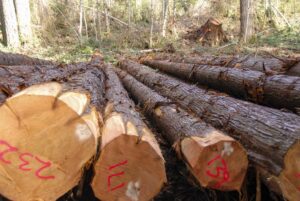 AUGUSTA, Maine — Tariffs on Canadian imports and Ottawa’s retaliation on American goods could sever—or at least strain—the close ties between the forest product industries of Maine and eastern Canada. The state exported $775 million in forest products to Canada in 2023. …Much of the wood Maine sends across the border is in the form of raw logs, according to Dana Doran of Professional Logging Contractors of the Northeast. The timber goes to Canada for processing… and the finished wood products are then frequently re-imported and sold in Maine. …Doran has doubts that these tariff efforts will achieve their intended effect of boosting domestic production. “Most of those Canadian manufacturers have already invested in the United States,” Doran said. …However, others acknowledge that—even if foreign companies benefit—shifting the processing of wood back into the U.S. aligns with the White House’s protectionist aims.
 NEKOOSA, Wisconsin — Partnering with Omya, a producer of essential minerals, the mill built an on-site plant to ensure a reliable source of precipitated calcium carbonate, a key papermaking ingredient. The new PCC plant came online in September 2024, solving several supply challenges. …In 2020, the PCC plant that supplied multiple Wisconsin paper mills, including Domtar’s Rothschild and Nekoosa facilities, closed. …Domtar and Omya researched constructing a four-story PCC plant at the Nekoosa mill. …In July 2022, the companies agreed to build a 27,500 dry-ton-per-year Omya-designed, owned and -operated PCC plant within the Nekoosa mill’s existing footprint. …“By executing this high-ROI, three-year project with a strategic partner, Nekoosa now has an unlimited supply of PCC on-site that allows for flexibility in our papermaking schedules and effective grade development,” says Jason McCauley, Nekoosa mill general manager.
