 Sweeping new tariffs announced by Donald Trump provoked dismay, threats of countermeasures and urgent calls for talks to find ways to rescind the stiff new import taxes imposed on goods from countries around the globe. …Trump maintains they will draw factories and jobs back to the United States. …European Commission President Ursula von der Leyen said it was a “major blow to the world economy.” …British Prime Minister Kier Starmer said he hopes to get the tariffs lifted with a trade deal. …Financial markets were jolted. …China’s Commerce Ministry said Beijing would “resolutely take countermeasures to safeguard its own rights and interests,” without saying exactly what it might do. …Mexican President Claudia Sheinbaum said she would wait to see how Trump’s announcement will affect Mexico, which like Canada was spared for goods already qualified under their free trade agreement with the United States, though previously announced 25% tariffs on auto imports took effect Thursday.
Related coverage in:
 OTTAWA — Canada’s exemption from Donald Trump’s global tariffs was “like dodging a bullet into the path of a tank”, say business leaders as other levies are poised to hit key industries that drive the country’s economy. …Canada was noticeably absent, alongside trade ally Mexico. Prime minister Mark Carney said 25% tariffs on Canadian steel and aluminum, as well as on automobiles, will come into effect within hours. Canada would “fight these measures with countermeasures” he said. Already, Canada had put a 25% tax on C$30bn worth of US goods in response to Trump’s tariffs. …Carney warned that while Trump had preserved key elements of the bilateral relationship, the global tariffs “fundamentally change the international trading system”. …On Wednesday, a bipartisan group of senators passed a resolution to end the national fentanyl emergency the president invoked to justify the 25% tax on Canadian imports. …House speaker Mike Johnson is unlikely to bring the measure to a vote.
 Democrats in the U.S. Senate are moving forward on a resolution to block sweeping tariffs targeting Canada as President Donald Trump presses Republican lawmakers to continue backing his trade agenda. Sen. Tim Kaine plans to force a vote on Trump’s use of the International Economic Emergency Powers Act, also called IEEPA, to declare an emergency over fentanyl trafficking to hit Canada with devastating duties. “The president has justified the imposition of these tariffs on, in my view, a made-up emergency,” Kaine said Tuesday. U.S. government data shows the volume of fentanyl seized at the northern border is tiny. The Annual Threat Assessment report, released last week, does not mention Canada in its section on illicit drugs and fentanyl. The vote will test whether Republican senators continue to back Trump’s tariffs on Canada — tariffs that, according to polling, are not supported by most Americans.
 The United States is scheduled to unveil reciprocal tariffs on a wide array of trading partners, including Canada. Dubbed “Liberation Day” by Donald Trump, the measures are meant to even things out with those who, in Trump’s eyes, have unfairly taken advantage of the US with tariffs and other non-tariff barriers. …Aside from steel, aluminum and autos, which are already facing separate tariffs, here are the issues the U.S. has singled out as problematic in their trade with Canada that could factor in to the Liberation Day announcement, and what economists and trade officials have to say about them. What Trump says: He has lumped his anger about dairy and lumber tariffs together, threatening to act immediately on unfair treatment by Canada. He also said the U.S. does not need any Canadian lumber. Reality Check: There is far from enough lumber produced in the U.S. to meet building demand.
 White House aides have drafted a proposal that would levy tariffs of roughly 20% on most imports, the Washington Post reported. The report cited three people familiar with the matter. It also said White House advisers cautioned that several options are still on the table, meaning the 20% tariffs may not come to pass. Another plan being considered is the country-by-country “reciprocal” approach, according to the Washington Post. The report comes a day before April 2, when President Donald Trump is set to announce his larger plans for global trade. The date has loomed over Wall Street, where stocks have been struggling in part due to uncertainty around rapidly changing global trade policy. Unlike the tariffs already announced by the Trump administration, the new plan is expected to be more widespread and permanent as opposed to targeting specific countries or industries.


 Teal Cedar Products has lost a bid for damages against the B.C. government over its declaration of First Nations rights on Haida Gwaii. The company argued the recognition of title over the lumber-rich but highly protected island archipelago deprived it of its ability to harvest despite Teal holding tree farm and forest licences in the area. It argued the B.C. government didn’t act in good faith, essentially expropriated property where Teal had business interests, and failed in a promise to keep the company whole during its negotiations with the Haida Gwaii Management Council over Indigenous title to the former Queen Charlotte Islands. B.C. Supreme Court Judge Brenda Brown rejected all three rationales and dismissed the claim for damages against either of the defendants, the B.C. government or the management council. …Teal obtained the two tenures from TimberWest in 2008, before selling them to A&A Trading Ltd. in late 2016.

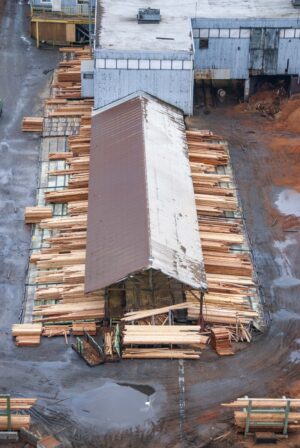 Another wave of sawmill closures swept across British Columbia in 2024, from West Fraser’s Fraser Lake facility to Canfor’s operations in Polar, Vanderhoof, and Fort St. John. As the Northern View reported, Chief Robert Michelle of the Stellat’en warned that “the economic impact for our communities will be dire,” citing job losses not just in the Fraser Lake mill but also among log haulers, restaurant workers and gas station employees… It is clear that current conditions cannot sustain profitable operations, leaving businesses struggling and workers unemployed. The fundamental issue lies in how Victoria approaches forest policy. The government faces mounting pressure from multiple stakeholders. Environmental groups advocate for reduced harvesting levels, while Indigenous communities seek both greater access to timber supplies and a larger role in forest management. While environmental protection and Indigenous rights are important considerations in forest management, and rightly so, the government’s approach has failed to balance these priorities with economic sustainability.
 Vancouver, BC — This week, the BC Council of Forest Industries (COFI) will welcome more than 600 industry, government, and Indigenous leaders to Prince George for a sold-out COFI 2025 Convention, running April 2-4. As one of the largest annual gatherings of the forest sector in Western Canada, the convention focuses on urgent challenges facing the industry—and the path forward. Attendees are set to explore how the sector can respond to rising US tariffs, global trade uncertainty and regulatory complexity. Discussions will center on strategies to improve industry competitiveness, strengthen partnerships with First Nations and sustain local jobs, while positioning BC as a global leader in sustainable forestry. … A highlight of the convention will be the release of a new study comparing international forest jurisdictions by Glen O’Kelly, CEO of O’Kelly Acumen, benchmarking BC’s performance against leading forestry regions—including Sweden, Finland, Austria, the US, and Brazil.


 Willis, a business of WTW, and The Nature Conservancy (TNC) have launched a new $2.5 million wildfire resilience insurance for the Tahoe Donner Association in Truckee, California. Described as “first-of-its-kind,” this policy directly links insurance costs to proactive wildfire risk mitigation efforts. Developed in partnership with UC Berkeley’s Center for Law, Energy and the Environment, the policy aims to demonstrate how ecological forest management practices can lead to reduced premiums and increased insurance availability. Such techniques include tree thinning to improve the health and growth of the remaining trees and planned fires to clear out flammable vegetation, both proven to reduce wildfire risk and make forests healthier. Tahoe Donner has completed forest management projects over 1,520 acres since 2015. …This new policy, covering 1,345 acres of Tahoe Donner’s land, secures a 39% lower premium and an 89% lower deductible than would have been possible without the nature-based forest management.
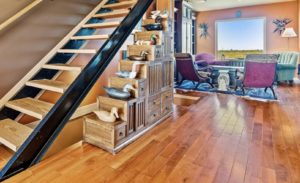 CALIFORNIA — The US Department of Justice (DOJ) announced that it had reached an $8.1 million settlement in a civil False Claims Act case based on alleged customs violations by defendants Evolutions Flooring, a San Francisco-based importer of wood flooring, and its owners Mengya Lin and Jin Qian. …The complaint shows how DOJ and relators may formulate such cases. Evolutions and its owners were accused of knowingly evading customs duties, including antidumping duties, countervailing duties, and section 301 tariffs, on wood flooring manufactured in the People’s Republic of China. Acting at the direction of its owners, Evolutions allegedly mispresented the country of origin of certain flooring imports – declaring them as Malaysia-origin – to avoid the high duties applicable to China-origin products. Evolutions also allegedly falsely declared the true manufacturer of the imported merchandise.




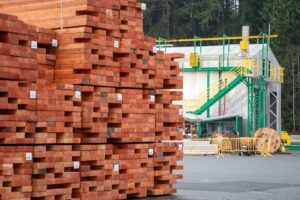 NEW ZEALAND — The temporary exemption of tariffs on timber and lumber imported into the US provides some relief to New Zealand exporters. Though this exemption could be short lived based on the outcome of the Section 232 investigation aimed at determining the effects imports of timber, lumber and their derivative products have on the US supply chain. Exports of radiata pine products from New Zealand to the US were estimated at $358 million, making the US our third largest export market behind China and Australia. …The exemption comes about through internal US lobbying, by the likes of the American Building Materials Alliance and National Association of Home Builders. …The administration has recognised that raising costs on timber and lumber would hurt housing affordability and weaken an important supply chain. …We thank our kindred Associations in the US for making this happen. We now wait for completion of the s. 232 investigation.