 TORONTO – Incoming U.S. president Donald Trump’s escalating rhetoric around implementing tariffs on Canadian products are sparking worry and disbelief, though some companies are staying quiet. …Trump’s threats show he doesn’t understand how interconnected the Canada-U.S. auto business is, said Flavio Volpe, president of the Automotive Parts Manufacturers’ Association. … Imposing 25 per cent tariffs on auto imports would likely lead to widespread shutdowns in the sector because automakers would be booking substantial losses on every car produced, he said. …Kurt Niquidet, president of the BC Lumber Trade Council, urged in a statement for the U.S. and Canadian governments to find a fair and sustainable solution. …Niquidet emphasized that U.S. consumer demand exceeds what domestic mills can supply and that tariffs would disrupt the supply chain and lead to higher costs for American families. …Companies are generally staying quieter so far. Forestry firms like Canfor and West Fraser declined to comment directly.

 Donald Trump is threatening to use “economic force” to make Canada the 51st American state. While his comments may be reckless, they are in part due to Canada’s over-reliance on the US market in terms of trade. The benefits of international trade are undoubtedly positive. It’s well-established that when countries can produce a product or service more cheaply than others, giving them what’s known as a “comparative advantage,” all other nations engaged will gain from that trade. …But the key challenge Canadian policymakers face is an over-reliance on the US as Canada’s primary market, with 75% of all Canadian exports headed south. …Canada can no longer take easy access to the U.S. market for granted. …Bringing down barriers to trade across Canadian provinces would create conditions that could enable Canadian companies to be more competitive internationally, and beyond the U.S. market in particular.
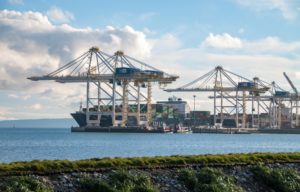 The union representing 45,000 dock workers on the U.S. East and Gulf Coasts and their employers on Wednesday said they reached a tentative deal on a new six-year contract, averting further strikes that could have snarled supply chains and taken a toll on the U.S. economy. The International Longshoremen’s Association (ILA) and the United States Maritime Alliance (USMX) employer group, called the agreement a “win-win.” The deal includes a resolution in automation, which had been the thorniest issue of on the table. …”This agreement establishes a framework for implementing technologies that will create more jobs while modernizing East and Gulf coast ports.” Terms of the deal were not disclosed. ILA and USMX have agreed to continue operating until the contract is ratified. …Employers at the ports stretching from Maine to Texas include terminal operators like APM, owned by Maersk, as well as China’s COSCO Shipping and Switzerland’s MSC.