 US homebuilder confidence remains low as permits slide, but expectation of an interest rate cut boosts future sales expectations. In other Business news: the future of Domtar’s Glenwood, Arkansas sawmill is in question; and UPM extends its pulp mill closures in Finland. Meanwhile: AF&PA joins trade-group opposition to proposed US rail merger; and the American Journal of Transportation opines on Trump’s tariff war impact on trade, trucking and home ownership.
In Forestry/Wildfire news: Canada’s growing Wildland Urban Interface increases fire danger; what to know about the newly created US Wildland Fire Service; and wildfires continue to rage in Oregon’s Lane County; as fire bans are lifted for northern Vancouver Island. Meanwhile: Plilomath, Oregon adapts with mass timber; the Canadian Wood Council features Toronto’s Limberlost Place; and the BC Institute of Technology advances careers in the lumber and sawmill sector.
Finally, a US Lumber Coalition commentary claims most of lumber duties paid by Canadian mills will go into the US Treasury.
Kelly McCloskey, Tree Frog News Editor
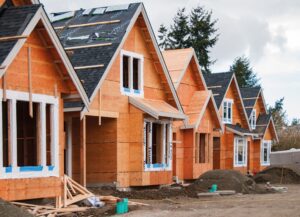 President Trump ordered fresh tariffs on softwood timber, lumber, and wood furnishings, even as housing groups warn the move could drive up construction costs and furniture-industry advocates said the levies would lead to US job losses. The tariffs may, however, prove more legally durable than Trump’s reciprocal country-by-country penalties because they fall under Section 232 of the Trade Expansion Act, the same legal tool the White House has used to justify duties on steel and aluminum. …The measures hit Canada especially hard because the country already faces duties of more than 35%, a result of recent but separate trade initiatives. Publicly traded lumber producers most directly exposed include Canada’s West Fraser Timber, Canfor, and Interfor. In the US, Weyerhaeuser, Boise Cascade, and Louisiana-Pacific are the closest listed peers, with stocks prices that often move in step with lumber tariffs and demand. US-based furniture retailers may also experience pain, with many dependent on foreign wood.
 Canada’s GDP managed to grow for the first time in four months in July, even as the economic impacts of American tariffs began settling in, according to Statistics Canada. On Friday, the agency reported that the gross domestic product increased by 0.2% in July compared with the month prior. In addition, Statistics Canada gave a preliminary estimate for August’s reading to show that the economy was “essentially unchanged in the month.” July’s figure was slightly higher than the 0.1% increase most analysts polled were expecting. …“Canada’s economy is tracking very soft growth in Q3. While not a recession, it’s still an economy that’s bumbling along,” said Derek Holt at the Bank of Nova Scotia. “The combined effect leaves us tracking growth of only about 0.7 per cent at a seasonally adjusted and annualized rate in Q3 — that’s hardly much of any rebound from Q2.”
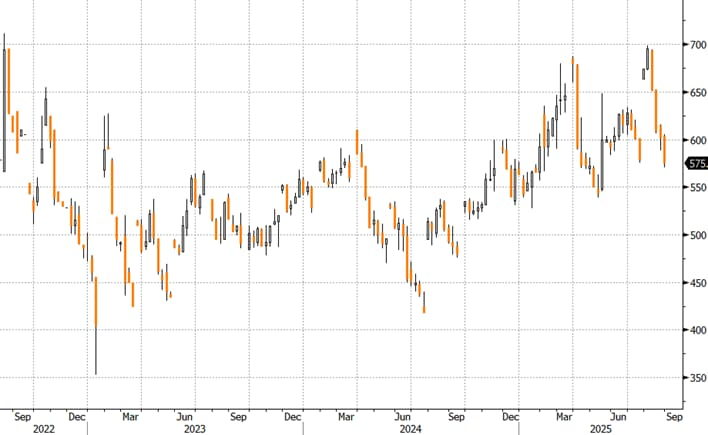
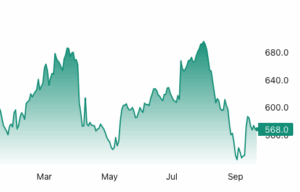 Lumber futures fell back below $570 per thousand board feet in September, reflecting the struggles in the US housing market. Builders are scaling back new construction amid a recent inventory glut and growing economic uncertainty, while the Trump administration’s fluctuating stance on tariffs for imported lumber over the past few months has added further volatility. Meanwhile, a significant gap remains between the number of homes for sale and the demand from Americans seeking housing. Affordability challenges have caused many buyers to withdraw in recent months, keeping construction activity muted throughout 2025. However, recent cuts in US interest rates, along with prospects of further easing, have helped curb some of the losses. Without a substantial increase in new home demand, the subdued pace of construction is likely to persist, as builders continue to compete with the steadily growing inventory of existing homes. [END]
 When the Trump administration more than doubled import fees on Canadian softwood lumber earlier this year, the goal was to support domestic prices and boost US production. Instead, prices have plunged, and mills on both sides of the border are scaling back. A benchmark for the commodity mostly used in construction has plunged 18% since an August peak to the lowest in seven months, driven by sluggish homebuilding activity and a glut of inventory. The drop shows how protectionist measures aren’t always enough to protect domestic industries from broader market dynamics at a time when high interest rates and elevated costs are squeezing consumers and weighing on their confidence, dampening demand for new homes. …“The US producers were looking for more of a price bump from the duties, and they didn’t get one,” said Brooks Mendell, at Forisk Consulting. “The interpretation of that is, well, the demand isn’t there.”

 Major concerns are being expressed on both sides of the border regarding the higher US duties on Canada’s softwood lumber. …The current 35.19% duty, along with any steeper tariff, is detrimental to US homebuilders and homebuyers longer term, warns Rose Quint, of NAHB Survey Research. Higher mortgage rates of 6% to 7% since 2022 have already weakened housing demand and caused lumber prices to edge downwards. The real effect of tariffs might be delayed by wholesalers having stocked up building materials earlier in the year to avoid higher tariffs “Years of building above and beyond our traditional baseline is required to make up the 1.5 million deficit that we have in new housing units,” Quint adds. …Affordability challenges already existed and will be further worsened by the higher costs. …The overriding hope among the Canadian producers and American homebuilders is that a suitable agreement will be reached between the US and Canada.
  Higher duty rate and possible additional tariffs have transportation modes on edge. The softwood lumber dispute threatens to have repercussions on various transportation modes, particularly trucking. “Our members are saying their business is still okay, even with the softer rates due to mill overcapacity, but they’re worried that if anyone pushes on this wall with more tariffs, there’s nothing to hold it up,” says Dave Earle, the BC Trucking Association’s CEO. …Trucking has already been dealing with the overcapacity that was put in place for the greater demands for deliveries for most everything during the pandemic but has not subsided. …In terms of rail services, CPKC has seen its forest product shipments rise this year to date based on revenue ton miles. …At the Port of Vancouver in British Columbia, the potential to export more lumber is significant with approximately half of last year’s containers leaving the port empty.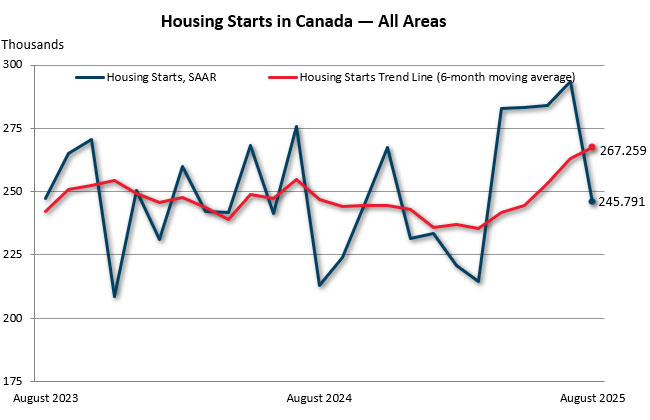


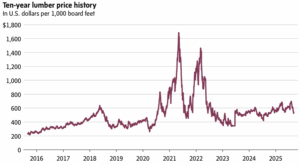 A “normal” annual softwood lumber price cycle sees prices dropping from Labour Day until early in the new year when buying starts again for the spring construction season. We are also expecting three interest rate cuts this year from the US Federal Reserve. With lower mortgage rates expected, will we see increasing demand for lumber? …The short term outlook for lumber prices continues to see weakness with price projections as low as US$450 per thousand board feet until the spring construction season. Looking into 2026 and 2027, prices are expected to recover to the mid-US$500 to low-US$600 per thousand board feet range. Ongoing duties, the upcoming court rulings on tariffs and the protracted housing shortage will all impact the price of lumber over the next two years. [to access the full story, a Globe & Mail subscription is required]
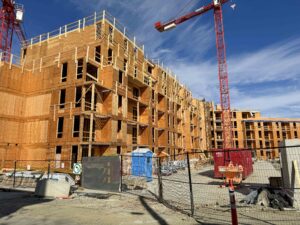 The Canada Mortgage and Housing Corporation (CMHC) released its
 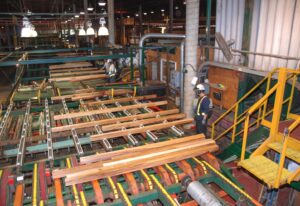 Falling lumber prices are sounding an alarm on Wall Street about potential problems on Main Street. Wood markets have been whipsawed of late by trade uncertainty and a deteriorating housing market. Futures have dropped 23% since hitting a three-year high at the beginning of August and ended Friday at $535 per thousand board feet. The price drop might have been greater—but two of North America’s biggest sawyers said last week that they would curtail output, slowing the decline. Crashing wood prices are troubling because they have been a reliable leading indicator on the direction of the housing market as well as broader economic activity. …Analysts and traders say there will have to be further cuts to ease the glut of wood. That might not be a problem, given how higher duties have pushed up Canadian sawmills’ break-even prices while demand wanes. “We anticipate further closures or curtailments,” said Truist Securities analyst Michael Roxland. [to access the full story a WSJ subscription is require]
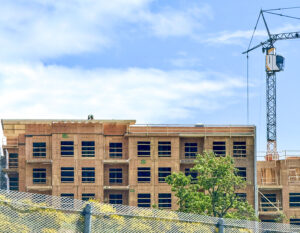 Canada’s new homes market is booming with near record housing starts — with one exception, Ontario.
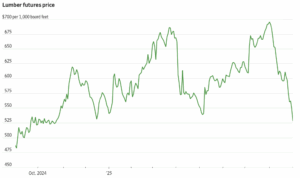
  Lumber futures fell again Wednesday, dropping to their lowest prices since last autumn. …Futures for September delivery shed $6 or about 1.1%, to end at $524 per thousand board feet. Futures have now declined 18 of the past 22 trading sessions. The selloff—about 25% over the past month—is reminiscent of the wild trading in lumber during the Covid-19 pandemic [but this time] …the continuing gyrations have been driven by trade policy. Lumber buyers stocked up ahead of a big increase in the duties levied on Canadian imports. …President Trump’s threats for additional tariffs on imported wood added incentive to hoard lumber. …The $54 difference in price between lumber futures for delivery this month and those for November in midday trading was well above the cost of warehousing wood for two months and a sign that traders’ demand outlook is bleak, Stinson Dean said. [to access the full story a WSJ subscription is required]

 Lumber prices, which shed more than 20% in August, have continued to fall to start September, hitting their lowest price this year thanks to a glut of wood that was piled up ahead of a big increase in duties on Canadian imports. “There has clearly been a speculative inventory accumulation at every level from mills to single location lumber dealers,” said Matt Layman, who publishes Layman’s Lumber Guide “For the first time in my 40-plus year career there is indeed a wall of wood that must be liquidated.” As with many raw materials, the lumber market has been whipsawed by President Trump’s tariff threats. The White House is studying tariffs on imported lumber in the name of national security. …Any lumber tariff will come on top of duties on Canadian softwood lumber that rose to about 35% for most producers, from 15% last year. [to access the full story a WSJ subscription is required]
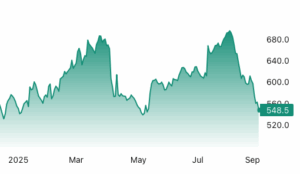 Lumber futures fell to $550 per thousand board feet in September, the lowest in nearly four months, amid softer demand for new home building and ample supply. US building permits fell 2.2% in July to a seasonally adjusted annualized rate of 1.362 million, the lowest since June 2020. Although the market anticipates a potential rate cut in September, rates are expected to remain restrictive, and high inflation expectations are expected to support long-maturity yields, which dictate mortgage costs. Seasonal slowdown in construction is set to magnify the drop in housing construction. On the supply side, Canadian mills continue to push large volumes of surplus lumber into the US market, far exceeding actual demand and creating an oversupply situation. Additionally, ongoing tariff issues between the US and Canada add further uncertainty, as potential changes in trade policy could significantly affect US lumber prices.›
 Lumber futures have come under strain after the initial tariff-driven upswing has fizzled out and the cracks in the housing market are beginning to show… retreating from an early August high of ~$695 per thousand board feet to about $560, a decline of nearly 19.5%, making it just shy of the 20% mark that would push it into a technical bear market. Lumber futures saw a surge driven by tariffs and optimism over lower interest rates, which pushed prices to their highest levels in more than three years. However, the enthusiasm soon faded away, as recent housing data disappointed, and builders scaled back due to higher input costs, weaker demand and looming affordability challenges. Housing affordability remains stretched even with potential rate cuts, requiring better wage growth or increased supply for meaningful improvement, according to Rafe Jadrosich, Senior US Homebuilders and Building Products analyst.
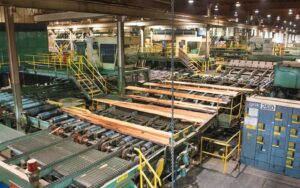 Lumber buyers placed unsuccessful bets on tariffs and interest rates Lumber prices have dropped by more than 14% from a record high in early August. Many home builders, contractors and retailers wagered that higher U.S. tariffs on imports would boost the cost of lumber, while lower interest rates would lift demand for the building material. But those bets have failed to pay off – and lumber prices have tallied a steep decline from a record high reached only three weeks ago. That price decline could lead to a drop in production at a time when home-building and housing demand starts to heat up. The demand component for spring 2025 was a “complete swing and a miss,” said Greg Kuta, at lumber broker Westline Capital Strategies. …On Tuesday, lumber futures for September delivery settled at $595.50 per thousand board feet. …Canadian mills are losing out with lumber prices well under the cost of production,” Kuta said.
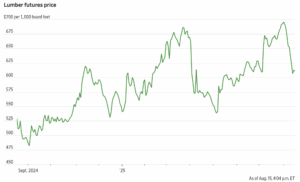 Lumber futures have dropped about 12% since hitting a three-year high two weeks ago, a sign that wood buyers stocked up before duties on Canadian two-by-fours more than doubled this month and that traders are worried about the U.S. housing market. Futures for September delivery fell to around $610 per thousand board feet late Friday and have declined in nine of the past 10 trading sessions. On-the-spot prices are also down, according to Random Lengths. …Jordan Rizzuto, chief investment officer at GammaRoad Capital Partners… said that besides indicating that lumber was piled high in U.S. lumberyards before the higher duties took effect, the whipsaw in wood prices is a warning sign for other asset classes. “Lumber’s price behavior over the past several weeks relative to countercyclical and defensive assets suggests potential weakening of new construction and cyclical sectors of the economy,” he said. [to access the full story a WSJ subscription is required]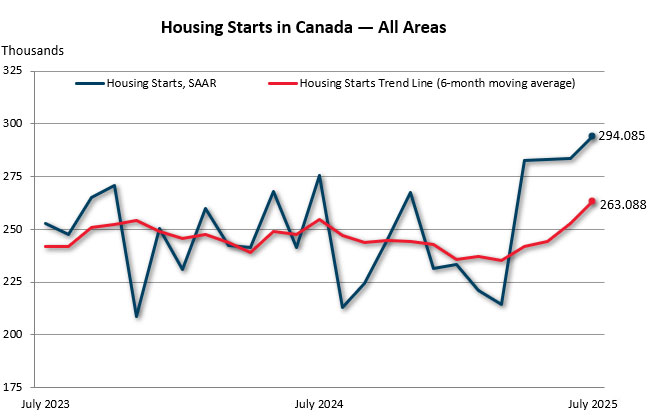
 BURNABY, BC — Interfor announced that it has entered into an agreement with a syndicate of underwriters led by RBC Capital Markets and Scotiabank, under which the Underwriters have agreed to purchase, on a bought deal basis, 12,437,800 common shares of the Company at a price of $10.05 per Common Share for gross proceeds of $125 million. The Company has agreed to grant the Underwriters an over-allotment option to purchase up to an additional 15% of the Common Shares. …The Company intends to use the net proceeds of the Offering to pay down existing indebtedness and for general corporate purposes. …Proceeds of the Offering are expected to further enhance Interfor’s flexibility to navigate near-term market volatility. The Offering is scheduled to close on or about October 1, 2025.
 Weakening U.S. housing construction has put another dark cloud over BC’s forest industry, increasing the likelihood of more mill shutdowns and layoffs. Lumber prices flatlined in recent weeks due to weak demand, just as new, higher duties in the Canada-U.S. softwood lumber dispute took effect. That means BC mills are operating at losses of up to US$220 per thousand board feet of two-by-fours, according to industry consultant Russ Taylor. …Taylor said market conditions during September are typically favourable for sawmills, but they’re decidedly negative this year. His forecast is that they will remain weak for the rest of the year, which will likely result in mills taking downtime. “We’re seeing it already,” said Kim Haakstad, CEO of the B.C. Council of Forest Industries. “We’re seeing temporary curtailments, we’re seeing extended holiday breaks, we’re seeing reconfigured shift schedules. …Haakstad said Parmar’s recognition of the urgency for change was encouraging.
 VANCOUVER, BC — Conifex Timber reported results for the first quarter ended March 31, 2025. EBITDA was negative $3.2 million for the quarter compared to EBITDA of $4.9 million in the first quarter of 2025 and negative $7.1 million in the second quarter of 2024. Net loss was $8.3 million for the quarter versus net income of $0.6 million in the previous quarter and net loss of $9.7 million in the second quarter of 2024. …Lumber production in the second quarter of 2025 totalled approximately 35.3 million board feet, representing operating rates of approximately 59% of annualized capacity. Second quarter production was negatively impacted by operating the sawmill on a four-day configuration, necessitated by reduced log availability.
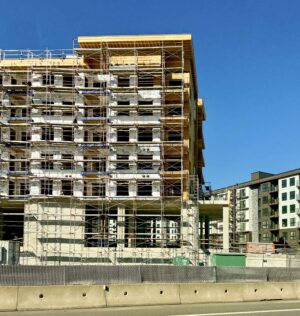 Housing starts and pre-sales in much of Southern Ontario have earned failing grades and are on track to get even worse, a new study warns — a situation that “should alarm policymakers across all three orders of government.” The report from University of Ottawa’s Missing Middle Initiative compares housing starts and sales in 34 municipalities across the Greater Toronto Area and neighbouring Southern Ontario cities for the first six months of 2025 with the same period from 2021–2024. It found starts are down 40% relative to that four-year average, with pre-construction condo sales plunging 89 per cent and other homes 70 per cent. The reduction in starts has direct employment implications, and the collapse in pre-construction sales, the study says, is “a clear indication that Ontario’s housing situation will get worse before it gets better, and that market weakness is not isolated to the condo market.” …The study paints a similarly bleak picture for the first half of 2025.
 Cardboard-box demand is slumping, flashing a potential warning about the health of the American consumer given that goods ranging from pizzas to ovens are transported in corrugated packaging. A historic run of pulp-mill closures is also signaling problems for the companies that make corrugated packaging as well as the timberland owners who sell them wood. International Paper, the country’s biggest box maker, announced last month the shutdown of two US containerboard mills, which make the brown paper that is folded into corrugated packaging. …It is a surprising turn in the e-commerce era. Box makers and analysts say demand presently suffers from uncertainty in US boardrooms and export markets because of President Trump’s tariffs as well as from weakening consumer spending. The sputtering housing market has also hurt, reducing the need for moving boxes as well as packaging for building products and appliances. [to access the full story a WSJ subscription is required]

 Single-family housing permits slipped for the seventh month in a row, highlighting affordability headwinds and weak demand. While multifamily permits ticked up, the sector’s volatility leaves the outlook uncertain. The split underscores a housing market still under strain, with single-family softness weighing on broader growth prospects. Over the first seven months of 2025, the total number of single-family permits issued year-to-date (YTD) nationwide reached 565,208. On a year-over-year (YoY) basis, this is a decline of 5.7% over the July 2024 level of 599,308. For multifamily, the total number of permits issued nationwide reached 286,836. This is 2.6% higher compared to the July 2024 level of 279,618.
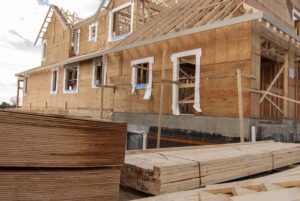 Housing starts in the US fell last month to the lowest since May, as bloated home inventory slowed builders’ appetites to boost production. New residential construction decreased 8.5% last month to an annualized rate of 1.31 million homes, government data released Wednesday showed. The median forecast in a Bloomberg survey of economist was for 1.37 million starts. Meantime, starts of one-family homes fell 7% to an annualized 890,000, the lowest in more than a year. Multifamily construction, which has helped lift overall construction in recent months, also declined, falling nearly 12% to a three-month low. …Traders expect the Federal Reserve to trim interest rates multiple times this year, starting on Wednesday. And separate data out Wednesday showed mortgage rates fell last week to the lowest level in nearly a year, spurring a surge in refinancing.


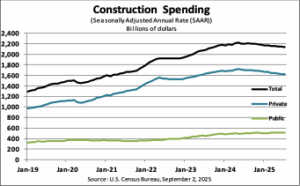 Construction spending in the United States reached $1,232.7 billion during the first seven months of 2025, a 2.2% decrease from $1,259.9 billion in the same period of 2024. Residential construction accounted for $524.7 billion, down 4.0%, while nonresidential construction declined 0.8% to $707.9 billion, according to the U.S. Census Bureau. Private construction dropped 3.8% year-to-date to $946.5 billion. …Public construction increased 3.8% to $286.2 billion over the same period. …For the month of July 2025, construction spending was at a seasonally adjusted annual rate of $2,139.1 billion, down 0.1% from June and 2.8% below July 2024. Private sector construction decreased 0.2% from the previous month, while public construction rose 0.3%.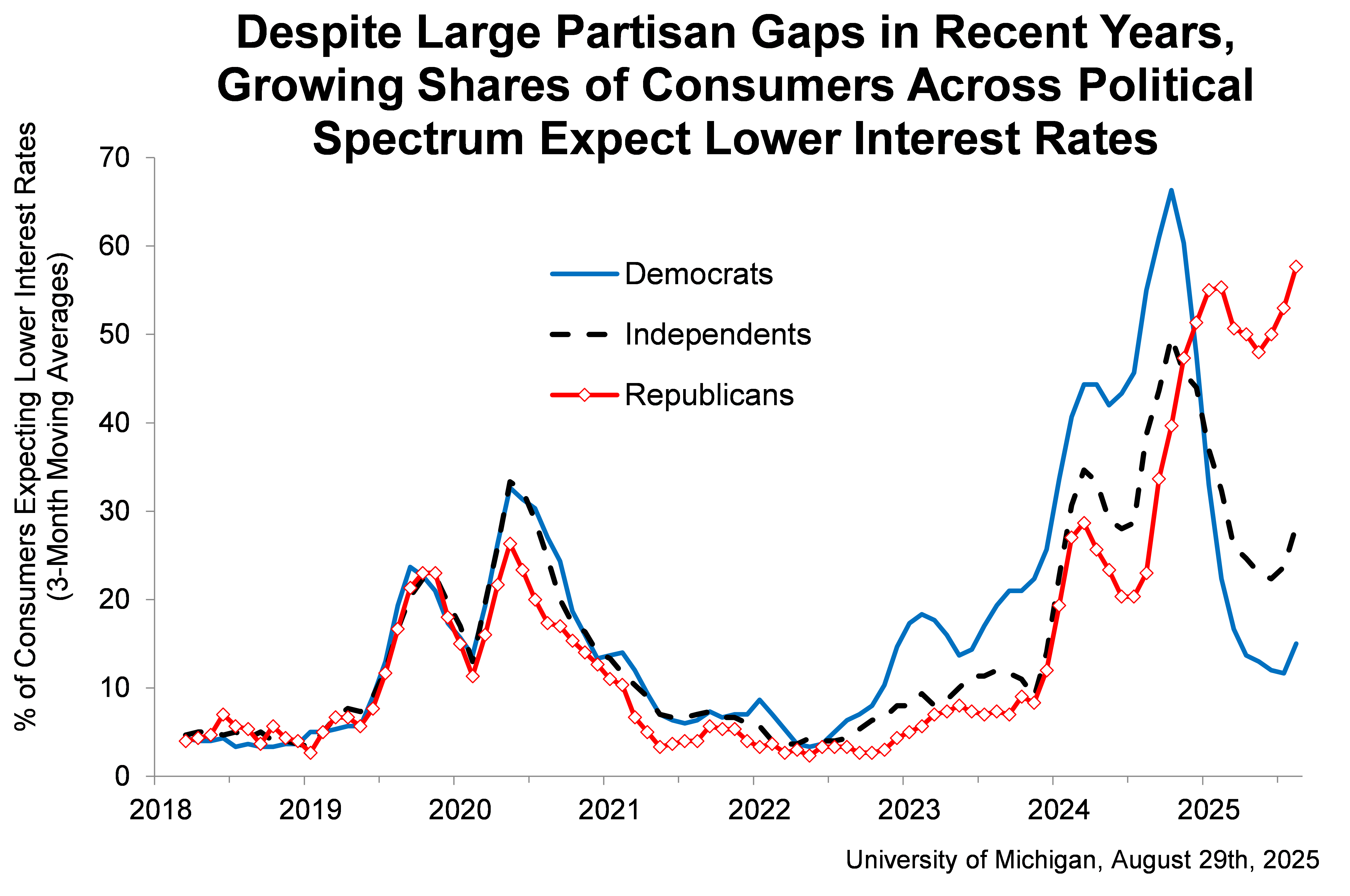


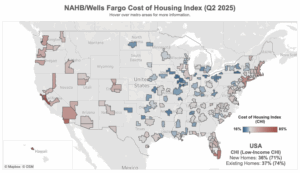 While new homes remain largely unaffordable, builder efforts to improve housing affordability paid dividends in the second quarter of 2025, according to the latest data from the NAHB/Wells Fargo Cost of Housing Index (CHI). The CHI results from the second quarter of 2025 show that a family earning the nation’s median income of $104,200 needed 36% of its income to cover the mortgage payment on a median-priced new home. Low-income families, defined as those earning only 50% of median income, would have to spend 71% of their earnings to pay for the same new home. …The second quarter of 2025 marked the largest historical gap where existing home prices exceeded those of new homes. …The percentage of a family’s income needed to purchase a new home was unchanged at 36% from the first to the second quarter, while the low-income CHI fell from 72% to 71% over the same period.
 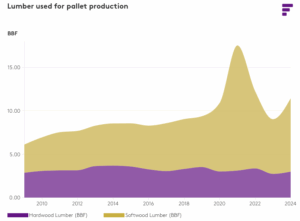 Economic uncertainty has clouded the pallet market outlook, as July’s job report revealed weaker-than-expected job growth. The elimination of the de minimis tariff exemption for low-value shipments is expected to improve pallet demand. Anticipated interest rate cuts will have a knock-on effect on housing affordability, stimulating the construction sector which in turn impacts lumber prices. …As pallet usage has grown, softwood has become the dominant material used in pallet manufacturing due to its abundance and cost-effectiveness. Hardwood mills were hit hard, and many saw closures, after the Chinese property market collapsed as that was its biggest end-use market. This Canadian softwood lumber supply shock does certainly leave the door open for the hardwood pallet to regain some market share. Supply and demand indicators are pointing to higher prices towards the end of 2025 and into 2026.

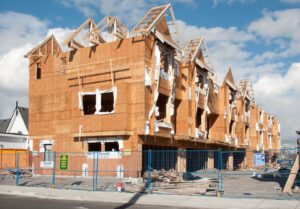 Boosted by a surge in the multifamily sector, US housing starts saw a sizeable jump in July, posting the highest total of starts since February. Housing completions were also up in July, while building permits were down. According to the numbers released by the US Census Bureau on Tuesday, overall housing starts totaled 1.428 million in July, up 5.2% from June and 12.9% above July 2024. It was the highest number of overall starts since February’s 1.490 million. The sector was paced by buildings with five or more units, which had 470,000 starts in July, up from 421,000 in June. This is the highest total of multifamily starts in more than a year. Single-family housing starts were also up, coming in at 939,000 for July. This reflects a 2.8% increase month over month; however, totals are still low compared to most months over the last year. …Odeta Kushi, at First American, said the single-family housing starts numbers are concerning.



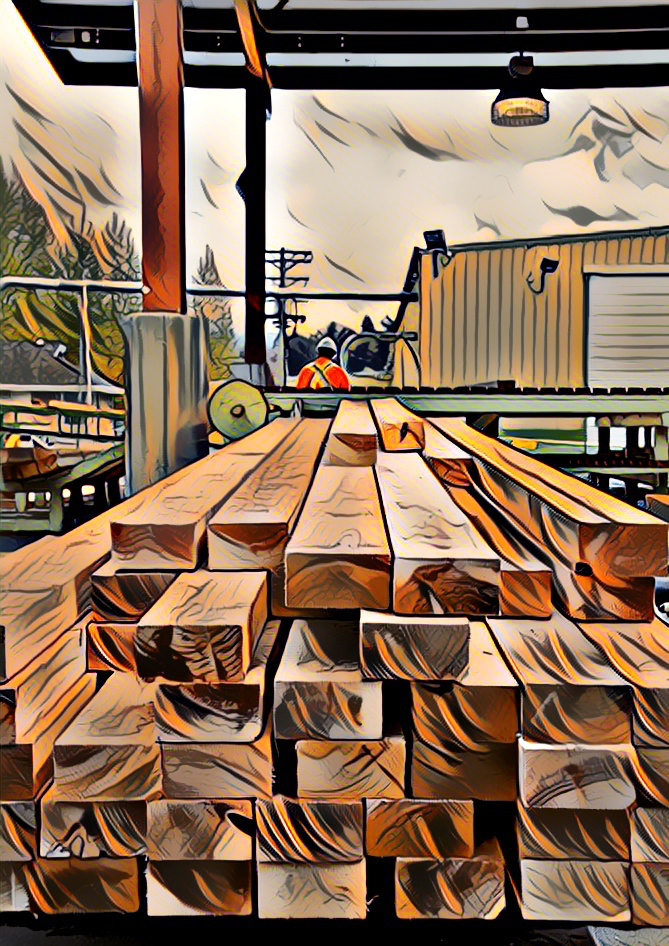 This study investigates the economic impact of sawmill entry and exits in Michigan between 2019 and 2023, a period marked by ongoing structural changes in the industry, including the closure of several large mills and the opening of smaller or mid-sized operations. Using observed employment changes… we applied an employment-based multiplier analysis to estimate how net sawmill job losses affected the statewide economy. The results show that while only 273 direct jobs were lost due to net changes from sawmill entry and exit during this period, the broader ripple effects were much larger, approximately 820 jobs and $211 million in output loss. These effects were most pronounced in labor-intensive sectors such as logging and transportation, as well as in downstream sectors like wholesale trade and real estate. The findings highlight the central role of sawmills in regional supply chains and states labor markets, with two-thirds of job losses occurring outside the mills themselves.


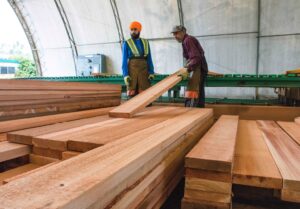 Despite the ongoing decline in construction activity in Russia, domestic demand for lumber increased in July. The volume of apparent lumber consumption in the country rose by 16% in July compared to the same period last year, while construction decreased by 14%. Prices for key lumber categories in July remained at the previous month’s level. …On export markets, Russian exporters faced mixed dynamics. In July, the volume of lumber exports from Russia increased by 18% compared to June, but shipments were 13% lower than a year earlier. China remains a key destination for Russian suppliers, but Russian exporters are facing growing competition from Belarusian companies offering lower prices. The situation for Russian exporters is further complicated by a general decrease in China’s lumber purchases due to the ongoing crisis in its construction sector. Lumber exports from Russia to Japan remain weak: shipment volumes dropped by 19% year-over-year.