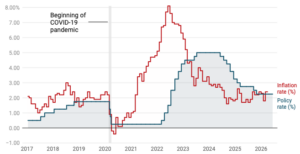
 The Bank of Canada is leaving its benchmark interest rate unchanged as it tries to chart a course through global uncertainty. The central bank’s policy rate remains at 2.25 per cent today after its fifth consecutive hold. Bank of Canada governor Tiff Macklem says in prepared remarks that the economy was softer than expected in the first quarter of the year but global oil prices are also staying higher than first thought, which could keep the annual rate of inflation near three per cent for the next few months. The Bank of Canada can’t effectively respond to rising inflation and a weaker economy at the same time, so Macklem says leaving the policy rate unchanged balances those risks. The central bank sees a rebound in economic growth on the horizon but Macklem warns uncertainty is high around the war in Iran and US trade policy.
 There have been consistent signs that the housing market is poised for a rebound. Russ Taylor has been tracking North American lumber markets for decades. The data, he said, keeps telling a different story. …”If things are unaffordable and there’s uncertainty and consumer confidence is weak, then nothing happens. People might be saving more money if they’re not spending it, but everyone’s worried about jobs and everything else, so they’re not spending.” The number Taylor keeps coming back to is lumber consumption. In 2016, the country consumed roughly 50 billion board feet. In 2025, the number was almost exactly the same. Ten years of demographic tailwinds, rising equity, and persistent housing shortage arguments, and consumption has not budged. …Housing starts have been declining every year since their 2021 peak, and Taylor expects 2026 to continue that trend. Repair and remodeling, which accounts for roughly 40% of US lumber consumption, has been similarly stagnant since the COVID period.
 North American lumber futures climbed to approximately USD 597.50 per thousand board feet on June 3, their highest level since April, as persistent supply constraints continued to offset subdued housing demand. North American lumber futures rose to around USD 597.50 per thousand board feet on June 3, reaching their highest level in eight weeks. The move represents a 4.1% increase from a month earlier and reflects a market still dealing with the impact of Canadian import disruption. The price rise comes despite historically soft housing starts, showing that supply concerns remain an important driver for the market. Mills and distributors are holding limited inventories, while seasonal restocking ahead of the summer building season has added support to prices. …The net result is a structurally tight supply position. Mills and distributors are holding limited inventories, while buyers are entering the summer building season with restocking needs.
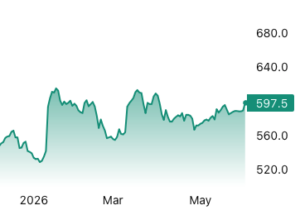 Lumber increased to 598.00 USD/1000 board feet, the highest since April 2026. Over the past 4 weeks, Lumber gained 3.57%, and in the last 12 months, it increased 0.5%.
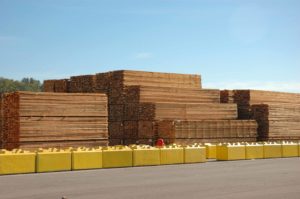
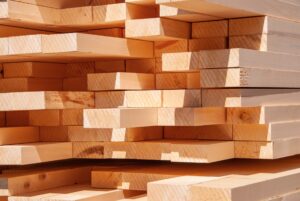 Framing lumber sales were slow to get started after the long holiday weekend in the US in most markets. Many buyers paused early to assess market conditions – especially prospects for shipping any new orders – before resuming moderate replenishment as the week progressed. Prices shifted modestly. Recent trends in sales of western S-P-F were little changed. Discounts grew increasingly tougher for buyers to procure as order files lengthened and mills cleared existing accumulations. …Lumber futures were little changed week to date, with the front month trading near par with the cash market in most deliverable species. …Southern pine mill sales outpaced producers’ ability to ship the loads, and backlogs of sold lumber continued to accumulate throughout the distribution pipeline. Prices shifted mildly with sales frequently reported on both sides of last week’s reported levels. …In the Inland market, prices were predominantly flat, or mildly higher in a few cases.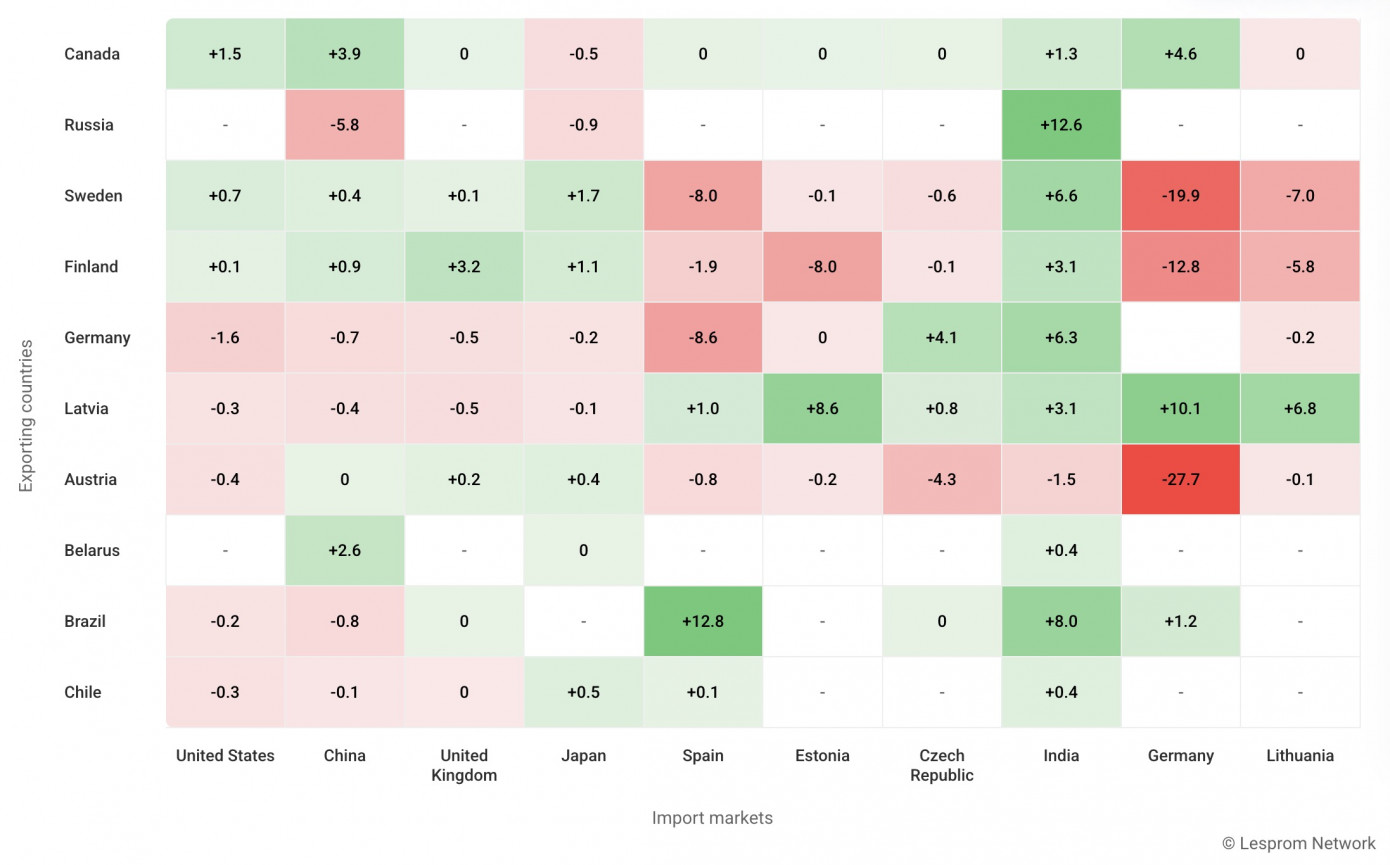
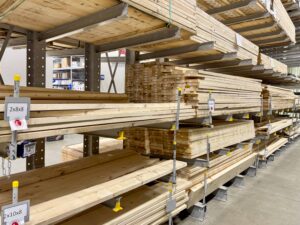 Rising mortgage rates aren’t the only thing freezing the housing market. Builders are contending with a fresh wave of sticker shock on the job site, as soaring prices for copper, lumber, diesel and aluminum drive up the cost of putting homes in the ground. A mix of geopolitical turmoil, tariffs and supply-chain disruptions is rippling through construction materials markets at a moment when affordability is already stretched thin, the Wall Street Journal reported. The result is higher costs for developers, more uncertainty for homebuilders and even fewer paths to affordable homeownership. Copper has become one of the industry’s biggest headaches. …Lumber prices are climbing again, too. Canadian sawmill closures and tariffs tied to the long-running U.S.-Canada softwood dispute have tightened supply heading into peak building season. …The broader concern for developers is that construction inflation could become self-reinforcing. Higher material costs feed broader inflation fears, which in turn keep borrowing costs elevated.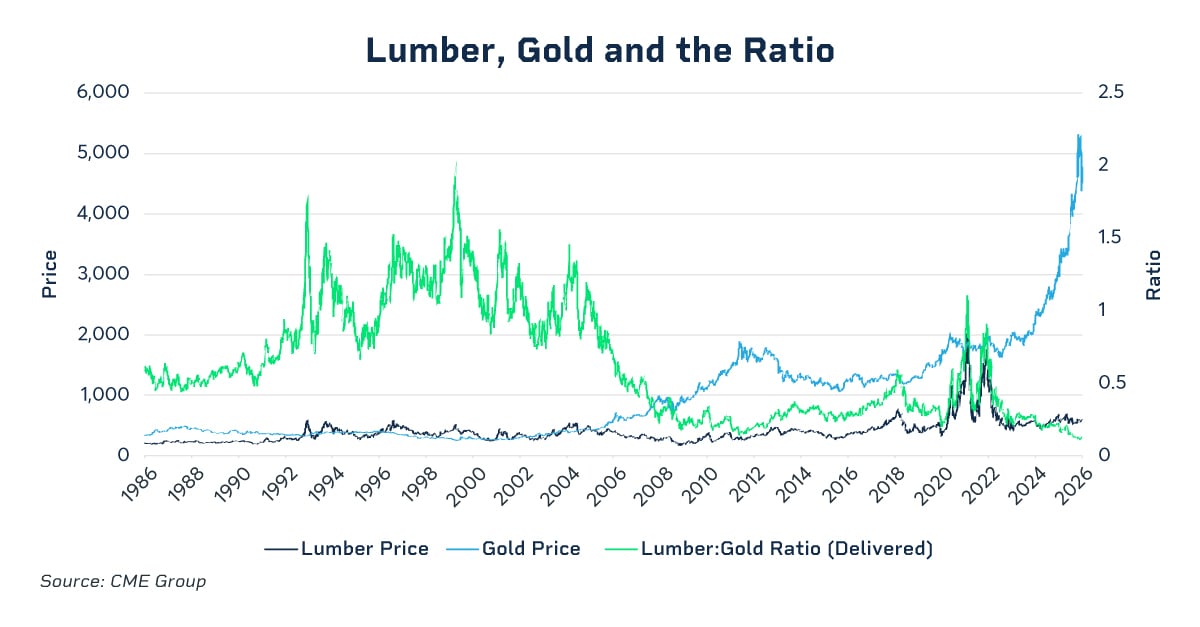

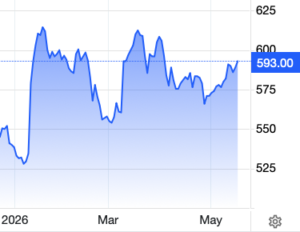 Lumber futures have been trading below $600 per thousand board feet since early April, as weaker consumer sentiment and uncertainty surrounding developments in the Middle East weigh on demand. At the same time, supply constraints in several regions have partially offset the decline in demand. Profitability for Canadian mills remains under pressure from elevated duties and tariffs. The US has recently outlined preliminary antidumping and countervailing duties on Canadian softwood lumber, with the antidumping rate reduced from 20.6% to 10.7% and the countervailing duty trimmed from 14.6% to 14.2%, bringing the combined rate to about 25.9%. Including an existing 10% Section 232 tariff, total effective duties on Canadian imports are expected to remain near 35.9% once they take effect in August. Despite these measures aimed at supporting domestic producers, US sawmill utilisation remains relatively weak at around 64%, with capacity use trending lower since 2017.
 BURNABY, BC — Interfor Corporation recorded a net loss in Q1’26 of $63.3 million, compared to a net loss of $104.6 million in Q4’25 and a net loss of $35.1 million in Q1’25. Adjusted EBITDA was $30.7 million on sales of $643.2 million in Q1’26 versus an Adjusted EBITDA loss of $29.2 million on sales of $600.6 million in Q4’25 and Adjusted EBITDA of $48.6 million on sales of $735.5 million in Q1’25. Highlights include: Lumber production of 856 million board feet was up 103 million board feet versus the preceding quarter driven primarily by higher operating rates at the U.S. Northwest and B.C. operations. Q4’25 production was impacted by temporary production curtailments in response to weak market conditions. Due to weak market conditions and other factors, Interfor indefinitely curtailed operations at its Ear Falls, Ontario sawmill in Q1’26 and at its Nairn and Gogama, Ontario sawmills in April 2026.
 NEW YORK — Mercer reported first quarter 2026 Operating EBITDA of $7.8 million, a decrease from $47.1 million in the same quarter of 2025 and an increase from negative $20.1 million in the fourth quarter of 2025. In the first quarter of 2026, net loss was $52.0 million compared to $22.3 million in the same quarter of 2025 and $308.7 million in the fourth quarter of 2025. Mr. Juan Carlos Bueno, CEO, stated: “Our pulp sales realizations showed resilience this quarter as softwood pulp markets held steady, while hardwood pulp performance trended upward on favorable demand-supply dynamics. However, elevated fiber costs across our supply chain and a slower-than-anticipated recovery in prices continued to weigh on our results. …Mass timber momentum continues to build, backed by an order book and commitments of $171 million that support a multi-year production plan. …European softwood pulp prices increased compared to the fourth quarter of 2025 due to supply constraints, although these gains were offset by higher discounts.
 VANCOUVER, BC — Canfor Corporation reported its first quarter of 2026 results. …The Company reported an operating loss of $72.5 million for the current quarter, compared to an operating loss of $415.9 million for the fourth quarter of 2025. After taking into consideration a $20.0 million reversal of a previously recognized inventory write-down, the Company’s adjusted operating loss was $92.5 million for the first quarter of 2026, compared to an adjusted operating loss of $145.0 million for the fourth quarter of 2025. These results largely reflected improved performance in both the lumber segment and, to a lesser extent, the pulp and paper segment. Canfor’s President and CEO, Susan Yurkovich, said, “While we saw an improvement in results, largely due to a supply-driven uptick in North American lumber pricing and higher production levels, demand remained relatively subdued. …Global pulp markets continued to face significant headwinds during the first quarter, with pulp producer inventories remaining elevated.”

 VANCOUVER, BC — West Fraser Timber reported the first quarter results of 2026. First quarter sales were $1.334 billion, compared to $1.165 billion in the fourth quarter of 2025. First quarter earnings were $(188) million, compared to earnings of $(751) million in the fourth quarter of 2025. First quarter Adjusted EBITDA was $(66) million compared to $(79) million in the fourth quarter of 2025. Included in first quarter Adjusted EBITDA in the Lumber segment is ($114) million of duty adjustments related to prior periods compared to nil in the fourth quarter of 2025. …North America Engineered Wood Products segment Adjusted EBITDA of $11 million, and Europe Engineered Wood Products segment Adjusted EBITDA of $10 million. …Sean McLaren, West Fraser’s President and CEO said “Excluding the impact of prior year duty adjustments, we were pleased to see all of our core segments – lumber, NA EWP, and Europe EWP – report positive Adjusted EBITDA.”
  The Bank of Canada held its policy interest rate at 2.25 per cent for the fourth consecutive time on Wednesday, but warned that it would be closely watching the impact of rising oil prices on inflation in the coming months amid ongoing uncertainty caused by the war in Iran. …Inflation has been close to two per cent for over a year but rose to 2.4 per cent in March after slowing to 1.8 per cent in February. The central bank base case forecast is that inflation will peak in April at about three per cent before returning to the two per cent target in early 2027, but that is assuming global oil prices decline. U.S. tariff measures along with the uncertainty surrounding the Canada-United-States-Mexico Agreement (CUSMA) have also added to the uncertainty ahead of the July 1 CUSMA review deadline, especially since the Canadian government has not yet launched formal discussions with U.S. officials.
 Lumber futures fell to $566 per thousand board feet, the lowest in seven weeks, as broader uncertainty and ongoing trade tensions weigh on sentiment. The US has recently outlined preliminary antidumping and countervailing duties on Canadian softwood lumber, with the antidumping rate reduced from 20.
 B.C.’s housing market remained tepid into April as sales pointing to another disappointing spring market. Seasonally adjusted home sales decreased by 1.1 per cent in April to 5,227 units after a 0.5 per cent drop in March. This was also the lowest monthly figure since November 2023. …Weak housing market conditions are likely to progress in the near term given the shaky geopolitical climate, sluggish economic growth and weak labour market conditions. …On the manufacturing front, sales in B.C. rose marginally in March. …Wood product manufacturing also declined for the third consecutive month, falling 2.4 per cent to $728 million. This represents the lowest level since May 2020, when sales were $623 million. Year to date, durable goods sales are up 2.6 per cent.
 VANCOUVER, BC — Conifex Timber reported results for the first quarter ended March 31, 2026. EBITDA was negative $7.7 million for the quarter compared to EBITDA of negative $12.6 million in the fourth quarter of 2025 and positive EBITDA of $4.9 million in the first quarter of 2025. Net loss was $9.4 million for the quarter versus a net loss of $11.4 million in the previous quarter and net income of $0.6 million in the first quarter of 2025. In March 2026, Conifex Mackenzie Forest Products, entered into a $19 million secured term loan with the Business Development Bank of Canada under the Softwood Lumber Guarantee Program… to support working capital and operations. In early February 2026, Conifex resumed sawmill operations at the Mackenzie Mill under a two-shift configuration following an extended period of single-shift operation. …The Power Plant continued to operate on its normal schedule.

 VANCOUVER, BC — Western Forest Products reported a net loss was $19.9 million in the first quarter of 2026, compared to net income of $13.8 million in the first quarter of 2025 and net loss of $17.5 million in the fourth quarter of 2025. …The company reported Adjusted EBITDA of negative $13.6 million in the first quarter of 2026. In comparison, the Company reported Adjusted EBITDA of $3.5 million in the first quarter of 2025 and Adjusted EBITDA of negative $6.2 million in the fourth quarter of 2025. Other highlights include: Lumber production of 118 million board feet (versus 154 million board feet in Q1 2025), Lumber shipments of 113 million board feet (versus 156 million board feet in Q1 2025), Cedar lumber shipments of 25 million board feet (versus 31 million board feet in Q1 2025), Average lumber selling price of $1,422 per mfbm (versus $1,348 per mfbm in Q1 2025), and Average BC log sales price of $193 per m3 (versus $134 per m3 in Q1 2025).
 Premier David Eby’s plummeting approval numbers aren’t the only figures the NDP government needs to worry about when it comes to the backlash over Indigenous reconciliation and private property rights. Many B.C. businesses are reporting they plan to scale back operations due to the conflict as well. Almost 74 per cent of B.C. businesses plan to decrease investment due to uncertainty over the Declaration on the Rights of Indigenous Peoples Act, according to a new survey of senior executives Wednesday by the Business Council of B.C. The majority cite increased time, cost, complexity or uncertainty in permitting caused by the court rulings, policy flips and changing landscape around the NDP’s DRIPA. As many as one-third said they plan to reduce hiring. “The desire to work with Indigenous communities to create prosperity for all remains strong but the message from business leaders is clear: DRIPA isn’t working,” said BCBC president Laura Jones.

 MONTREAL — Stella-Jones announced financial results for its first quarter ended March 31, 2026. Sales for the first quarter reached $791 million, versus sales of $773 million in the corresponding period last year. Excluding the impact of 2025 acquisitions of $42 million and the unfavourable currency conversion effect of $30 million, pressure-treated wood sales increased by $10 million, or 1%, largely driven by an increase in wood utility poles volumes. …Eric Vachon, President and CEO said “Our performance continues to be supported by disciplined operations. As part of our commitment to continuous improvement, we are advancing targeted initiatives across the business, with a current focus on optimizing our Railway Ties production network, enhancing efficiency and supporting future growth. We are also progressing our strategic growth priorities, notably with the finalization of the site selection for our new U.S. steel lattice manufacturing facility.”
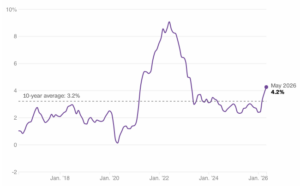 Annual inflation rose to a three-year-high of 4.2% in May, underscoring how elevated energy prices are rippling through the US economy, according to new data from the Bureau of Labor Statistics. Prices rose 0.5% on a monthly basis, driven higher by the US-Israeli war with Iran, the latest Consumer Price Index shows. The higher cost of energy accounted for 60% of the monthly increase. …“[4.2%] is still too hot for comfort, but the more important news was that the increase was concentrated mainly in energy, especially gasoline, rather than spreading widely across the economy,” economist Sung Won Sohn, at Loyola Marymount University. …May’s release is the first inflation report since Kevin Warsh was sworn in as the chair of the Federal Reserve, succeeding Jerome Powell. With inflation moving in the wrong direction and the labor market showing signs of resilience, economists expect the US central bank to keep rates unchanged — or even consider raising them.

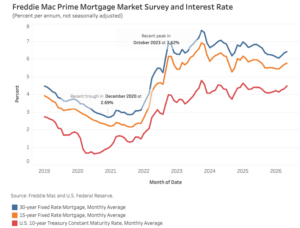 Mortgage rates continued to increase in May as inflation accelerated. According to Freddie Mac, the 30-year fixed-rate mortgage averaged 6.41% in May, up 7 basis points over April. Since the conflict in the Middle East began, the 30-year mortgage rate has increased by 36 basis points. The average 15-year rate averaged 5.76% in May, up 7 bps from April, and up 33 basis points since the end of February. Even so, both rates remain lower than a year ago by 41 bps and 19 bps, respectively. The 10-year Treasury yield, a key benchmark for long-term borrowing, averaged 4.47% in May, 16 bps higher than the previous month. …Persistently high inflation has also strained household budgets. As people used more of their disposable income or drew down on savings to cover everyday expenses, the personal saving rate fell to 2.6% in April. The rate was the lowest since June 2022 when CPI was at its peak.


 Mortgage rates this week rose to the highest level since August, more bad news for home shoppers during what is usually the busiest time of the year for home sales. The average rate on a 30-year fixed mortgage rose to 6.51% this week, from 6.36% last week,
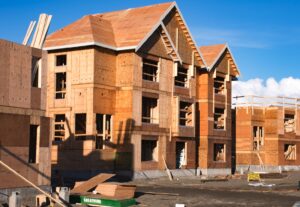 US housing starts declined in April as construction of single-family homes dropped by the most in nearly a year, suggesting builders are growing cautious amid higher mortgage rates. New residential construction decreased 2.8% last month to an annualised rate of 1.47 million homes, according to government figures released on Thursday. Starts of single-family homes declined 9%, the most since August, to an annualised 930,000 pace. Multifamily housing starts, however, rose more than 10% to the highest level since May 2023. The report also showed single-family permits, a leading indicator of future construction, fell 2.6% to the lowest level since August. The figures suggest home builders remain focused on working off a still-elevated inventory of new properties. …Numerous challenges remain for a sustained pickup in home building, including rising mortgage rates, flagging consumer confidence and stretched household budgets.


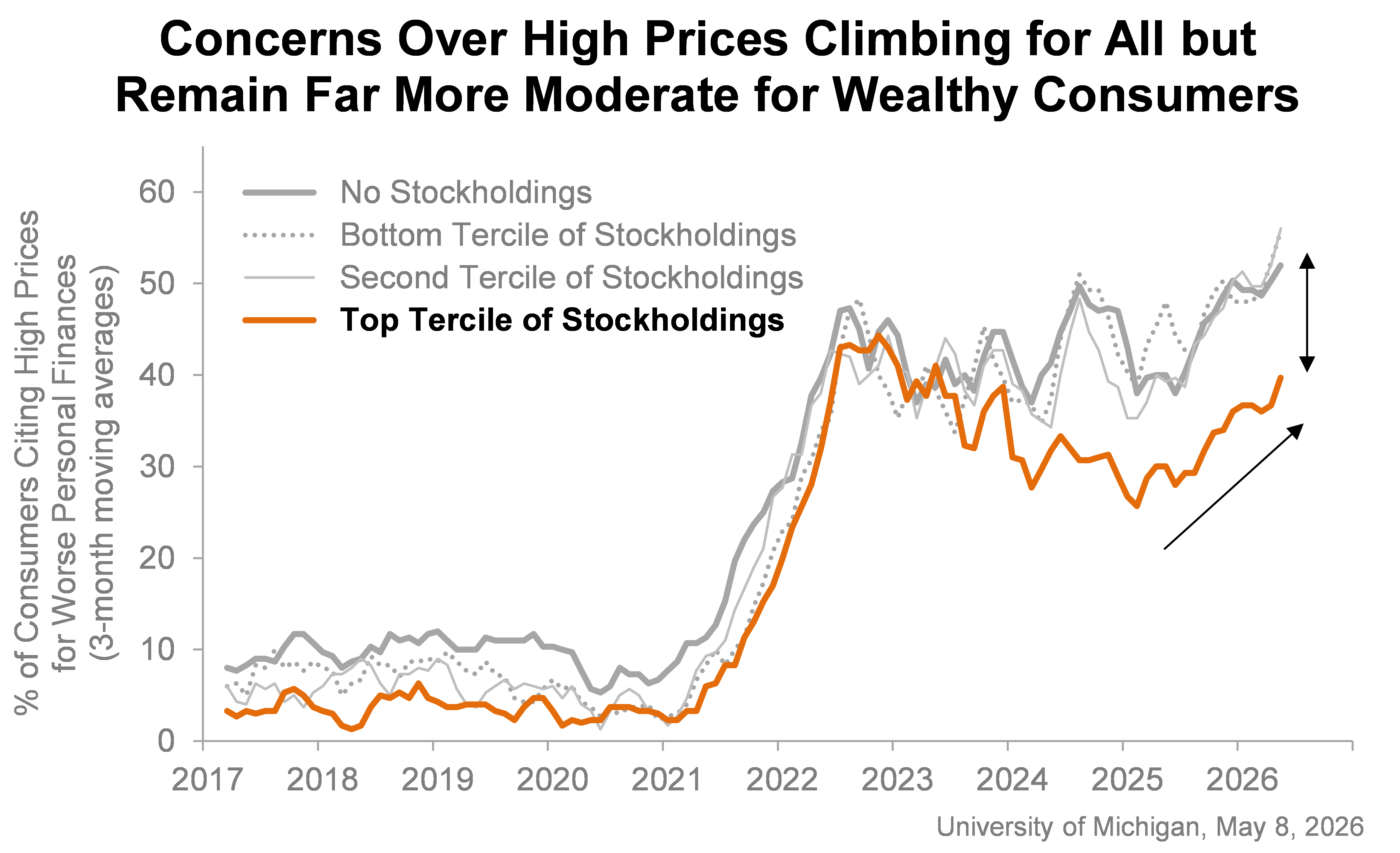


 WASHINGTON — U.S. consumer confidence unexpectedly edged higher in April amid a rally in share prices following a ceasefire in the war with Iran and improved perceptions of the labor market, helping to ease households’ financial worries for now. Despite the rise in confidence to a four-month high, the survey from the Conference Board on Tuesday showed higher gasoline prices stemming from the conflict with Iran remained a source of concern for consumers. Fewer planned vacations over the next six months and the share of those intending to drive to their holiday destinations was the lowest since April 2020. …The Conference Board said its consumer confidence index climbed 0.6 point to 92.8 this month. Economists had forecast the index easing to 89.0. It was in stark contrast with the University of Michigan’s Surveys of Consumers, which last week showed its Consumer Sentiment Index slumping to a record low in April.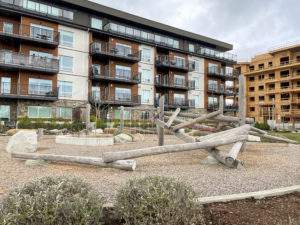





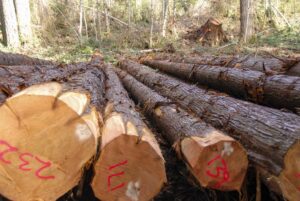 Sentiment within Germany’s timber industry remained under pressure in April, with businesses increasingly pessimistic about the months ahead despite a slight improvement in current trading conditions. …Compared with Germany’s wider manufacturing sector, the timber industry continues to underperform, with the ifo Institute’s broader manufacturing index remaining significantly stronger. The picture across the wood sector remains uneven. Companies involved in prefabricated timber construction were the only group to report positive current business conditions, while sawmills, furniture manufacturers and timber packaging businesses continued to report weak trading environments. HDH linked the relatively stronger outlook in timber construction to improving housing activity. …However, the furniture sector continues to struggle with weak consumer confidence and declining construction completions. …Despite isolated signs of recovery in construction-related segments, HDH said overall business confidence remains at a persistently low level.